The most remarkable tiny airports in the world
Small but epic airports
When it comes to airports, bigger isn’t always better. Scattered across some of the world’s most remote and extraordinary landscapes, these tiny terminals are gateways to places where lions roam the runways, polar bears patrol the perimeter and jungle, ice or ocean lie just beyond the tarmac.
Click through this gallery to discover the world's most remarkable tiny airports...
Gustaf III Airport, St Barts, the Caribbean
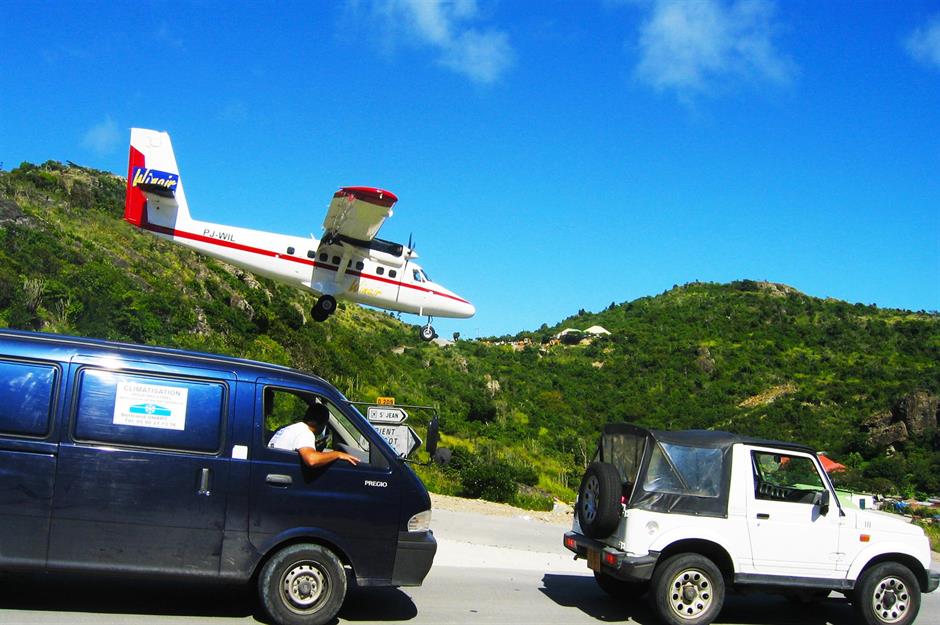
Only light aircraft with up to 19 passengers can land at Gustaf III Airport (Saint Barthélemy Airport), thanks to its short 2,119-foot (646m) runway and steep, tricky approach.
Planes descend over a hill and road, flying just feet above traffic and vegetation before landing near the beach. Pilots need special certification to operate here, making it one of the world’s most challenging airports.
Gustaf III Airport, St Barts, the Caribbean
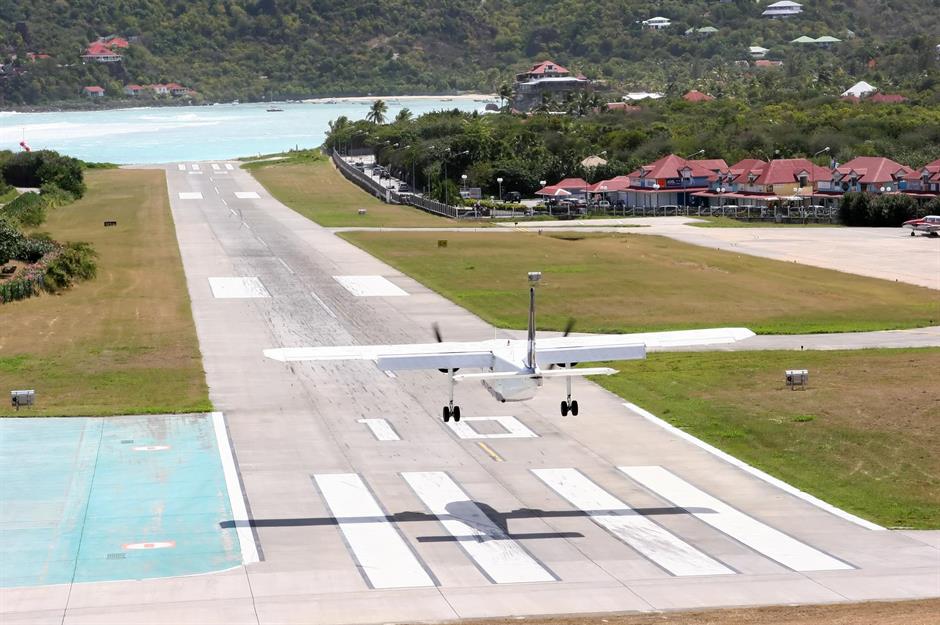
Pilots must complete specialised training (including a short-field landing qualification) before they’re allowed to land at Gustaf III Airport, navigating between two hills and dealing with frequent gusty winds.
They must also ignore the crowds of tourists who gather below the approach, waving as planes pass just overhead. Before the airport opened in 1984, light aircraft landed on a grassy savannah at St Jean, right by the sea – first used as an airstrip as early as 1946.
Sponsored Content
Lord Howe Island Airport, New South Wales, Australia
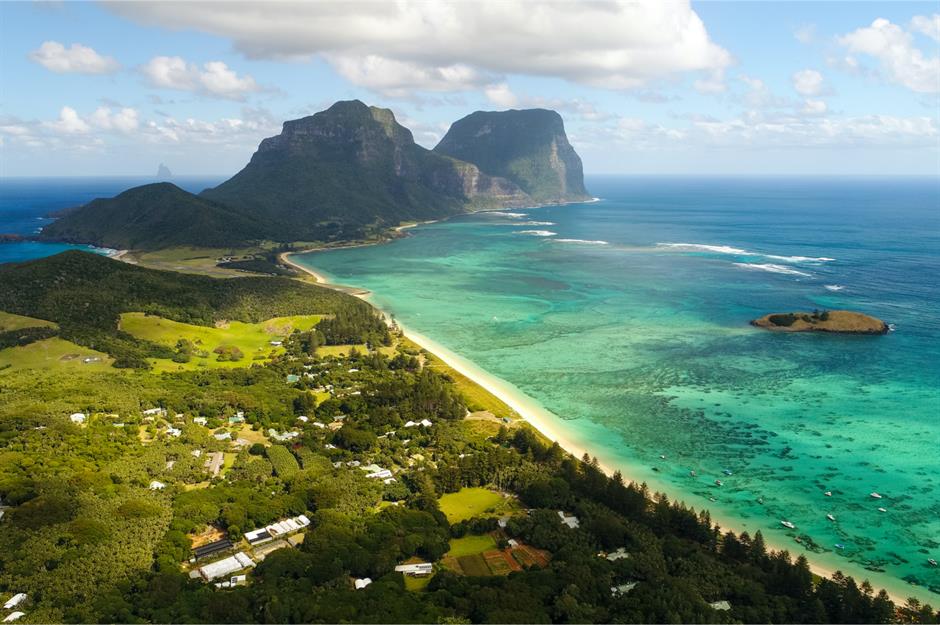
Covering a vast territory with many isolated regional communities, Australia has plenty of small airports. One particularly scenic destination that can only be reached by plane (or private yacht) is Lord Howe Island, a volcanic, crescent-shaped island in the Tasman Sea.
Home to about 380 residents, the UNESCO World Heritage-listed island caps visitor numbers at 400 at any one time to preserve its delicate ecosystem. Tourists arrive via a modest but functional airport on the island’s east coast, with regular flights from Sydney and Brisbane.
Lord Howe Island Airport, New South Wales, Australia
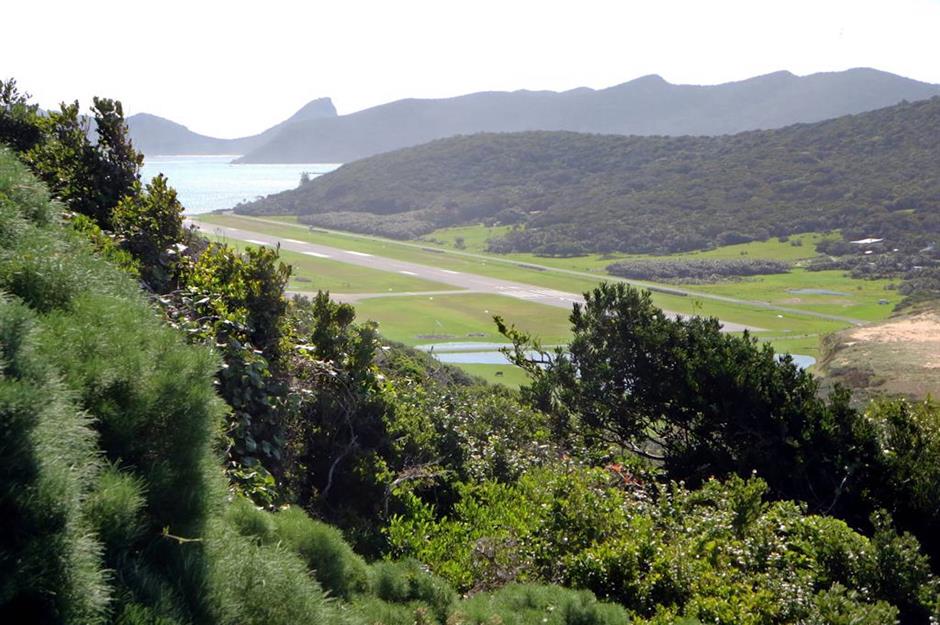
QantasLink operates regular flights to the island, offering passengers aerial views of the southernmost barrier coral reef in the world – part of the Lord Howe Island Marine Park. Approaches to the island often pass by its tallest peak, Mount Gower, before touching down on a runway just inland from Blinky Beach.
Love this? Follow our Facebook page for more travel inspiration
Land’s End Airport, Cornwall, England, UK
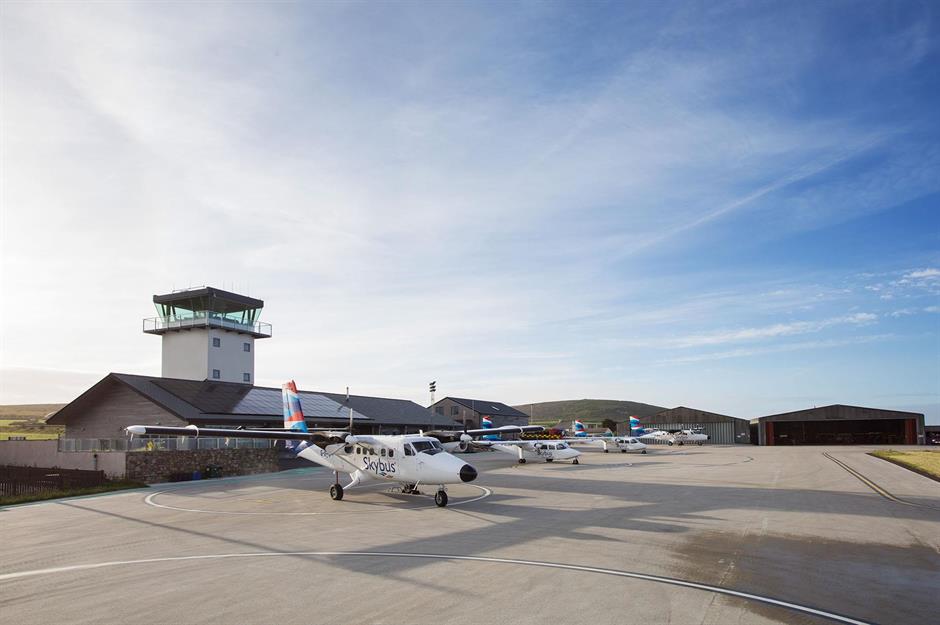
This small Cornish airport, perched near the western tip of England, has been flying passengers to and from the Isles of Scilly since 1937. In the early days, aircraft landed on the golf course at St Mary's, until the Isles opened their own dedicated airport in 1939.
Sponsored Content
Land’s End Airport, Cornwall, England, UK
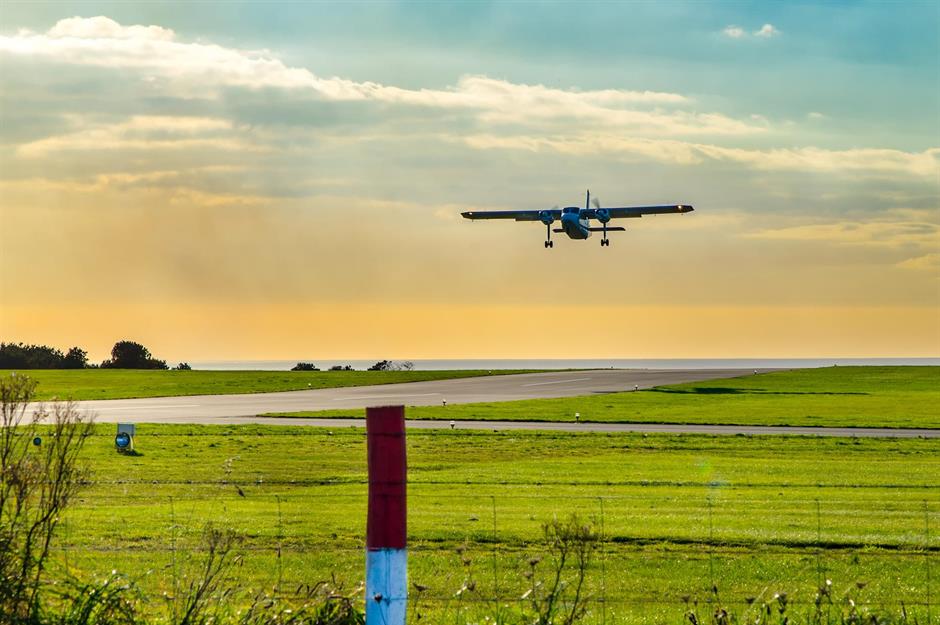
Today, the flight between Land’s End and St Mary’s takes just 15 minutes, compared to nearly three hours by ferry. Operated by Isles of Scilly Skybus, the small aircraft typically seat between eight and 19 passengers. The short journey offers stunning views of the turquoise sea and the isles’ unspoiled white-sand beaches.
Barra Airport, Outer Hebrides, Scotland, UK
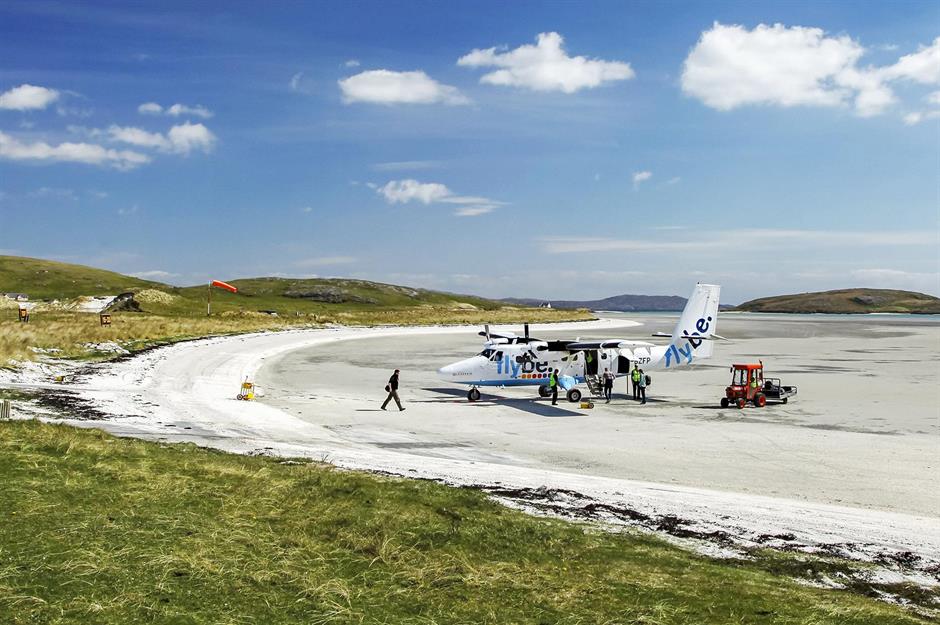
The stunning Hebridean island of Barra is known for its rugged landscapes and unspoiled coastline – but it’s perhaps most famous for its unique airport.
Instead of a traditional runway, planes land directly on the white sands of Tràigh Mhòr beach. Barra is widely considered the only airport in the world where scheduled flights land on a tidal beach.
Barra Airport, Outer Hebrides, Scotland, UK
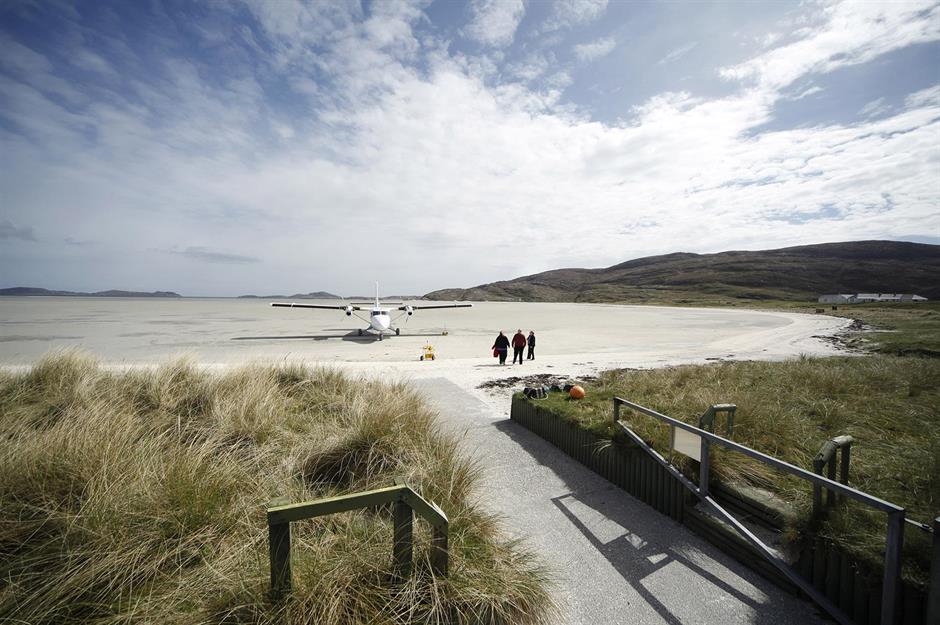
Around two Loganair flights a day land on Tràigh Mhòr beach from Glasgow. Flight times shift with the tides, which wash over the sandy runway twice daily.
Barra is one of 11 airports run by Highlands and Islands Airports Limited (HIAL), and around 10,000 passengers pass through in a typical year. The airport has a small terminal with a café, car hire and its own fire crew – more often rescuing seals than responding to emergencies.
Sponsored Content
Luang Prabang Airport, Laos
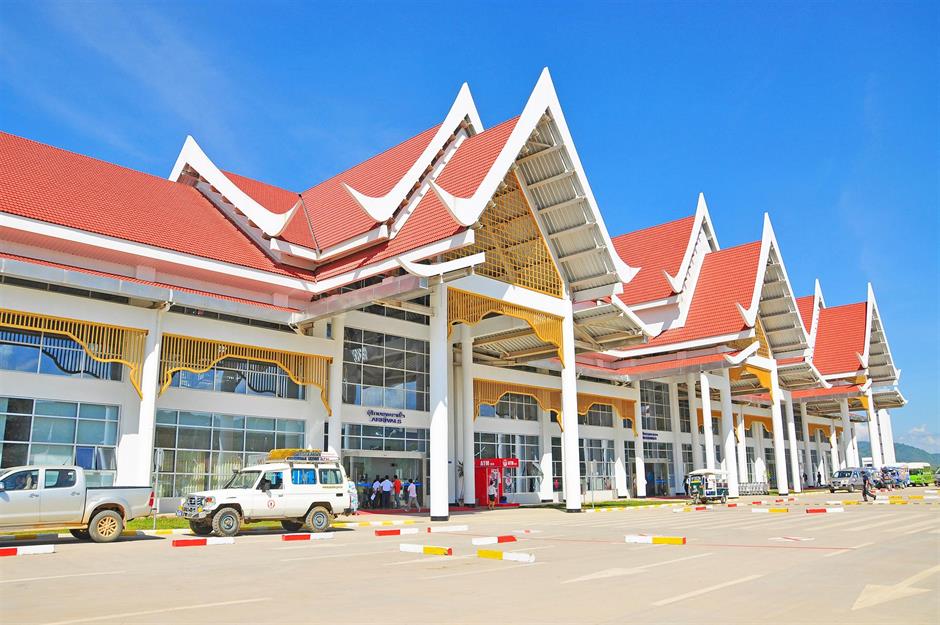
Twenty years ago, getting to Luang Prabang from neighbouring Thailand meant a two-day journey by slow boat down the Mekong River or a short flight on a small aircraft to the town’s modest airstrip.
Today, Luang Prabang – now a UNESCO World Heritage Site – has a modernised but still compact international airport, with direct flights from countries including Thailand, Vietnam, Singapore and Cambodia.
Luang Prabang Airport, Laos
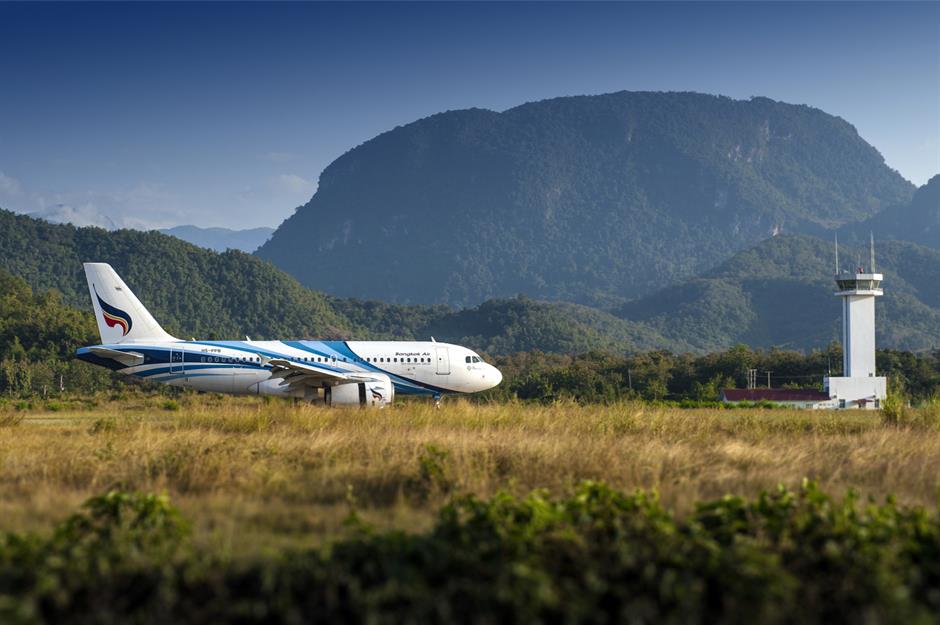
Luang Prabang’s upgraded airport, complete with a new terminal and runway, opened in 2013, replaced the ageing 1960s building with a modern, glassy structure featuring air conditioning, cafés and a few small shops.
Still charmingly compact, the airport has just one runway and offers scenic mountain views. It’s only about 15 minutes from the town centre, with tuk-tuks waiting outside for arriving passengers.
St Helena Airport, St Helena, British Overseas Territory

Sitting in the South Atlantic between Africa and South America, St Helena is one of the world’s most remote inhabited islands. Until its airport opened in October 2017, the island’s only connection to the outside world was a Royal Mail ship that sailed to and from Cape Town every three weeks.
The airport is now operational but known for its cliffside location and tricky wind conditions, which once earned it the nickname 'the world’s most useless airport'.
Sponsored Content
St Helena Airport, St Helena, British Overseas Territory
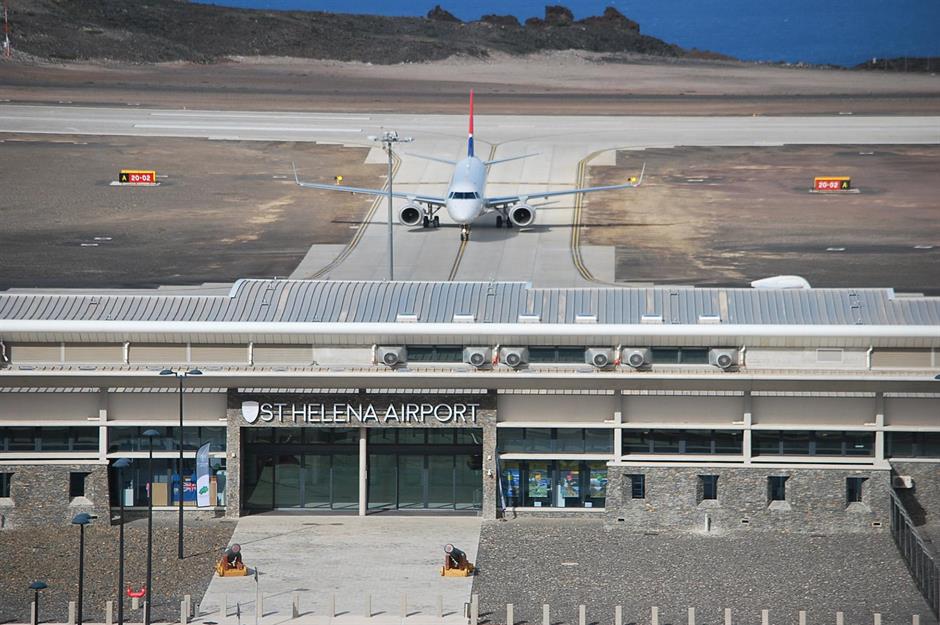
The commercial airport was intended to boost tourism and help make the British Overseas Territory more economically self-sufficient. With 502 species found nowhere else on Earth and one of the largest seasonal populations of whale sharks, the island offers plenty to entice adventurous travellers.
Paro International Airport, Bhutan
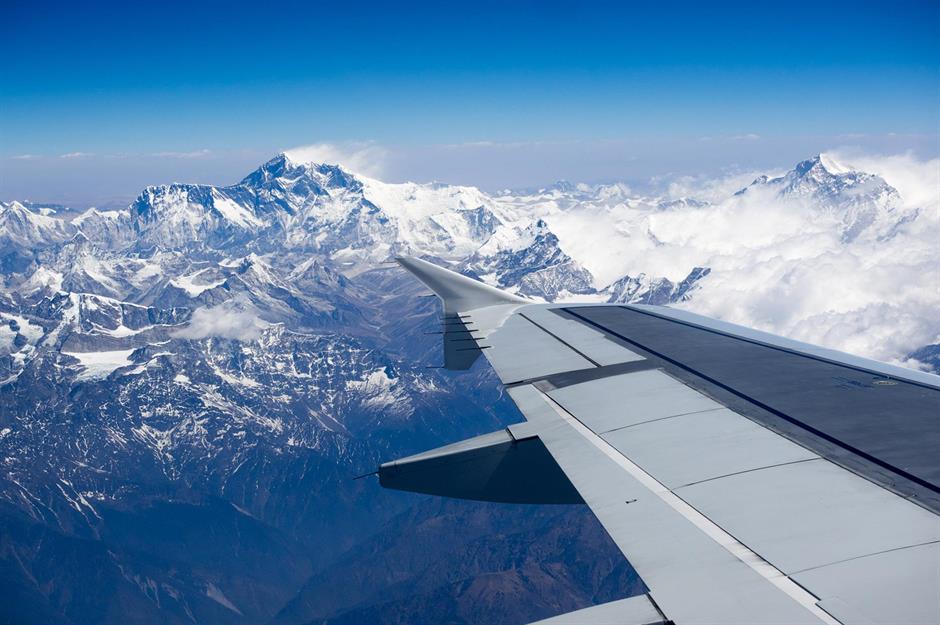
Flying into Bhutan’s only international airport is a dramatic experience, offering spectacular views of the Himalayas, including glimpses of Mount Everest on clear days. The airport is served by Druk Air and Bhutan Airlines, with flights from Nepal, India, Thailand and a few other regional hubs.
Paro International Airport, Bhutan
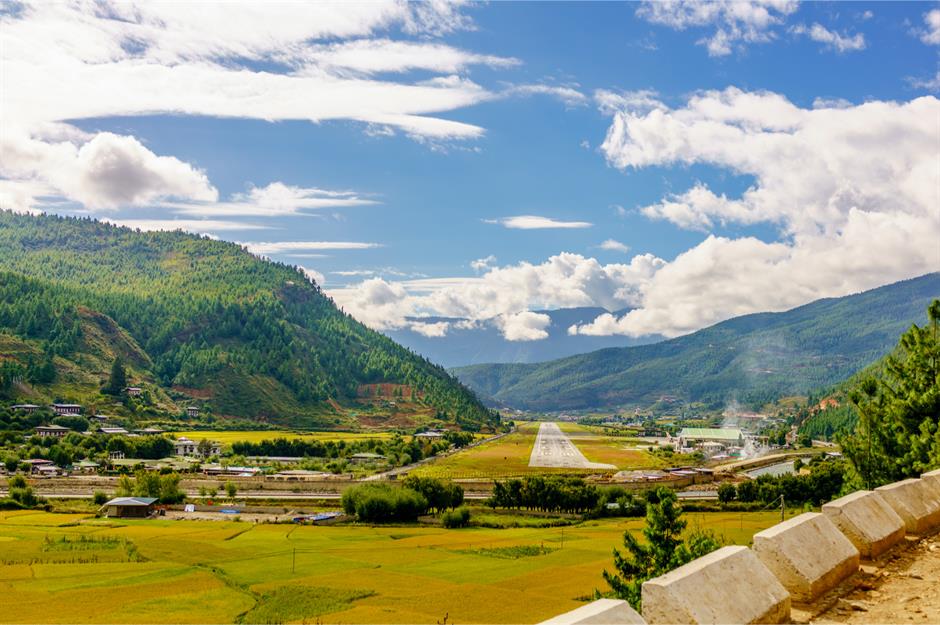
Paro International Airport is considered one of the most challenging airports in the world, with fewer than two dozen pilots certified to land there. Approaches require navigating sharp Himalayan peaks, battling crosswinds in a narrow valley and descending within metres of hillside homes.
For safety, flights operate only in daylight and clear weather. The terminal, built in traditional Bhutanese style, is modest but welcoming, with a comfortable waiting area decorated with portraits of Bhutan’s kings.
Sponsored Content
Stieglers Gorge Airport, Selous Game Reserve, Tanzania

More airstrip than airport, this is where passengers land after a 45-minute flight from Dar es Salaam to explore Tanzania’s Nyerere National Park, formerly known as the Selous Game Reserve – the largest protected wildlife area in Africa.
Local wildlife often wanders onto the runway, prompting rangers to chase them off, and pilots typically perform a flyby to ensure the strip is clear. Animals, including lions, have been known to seek shade near the terminal hut.
Stieglers Gorge Airport, Selous Game Reserve, Tanzania
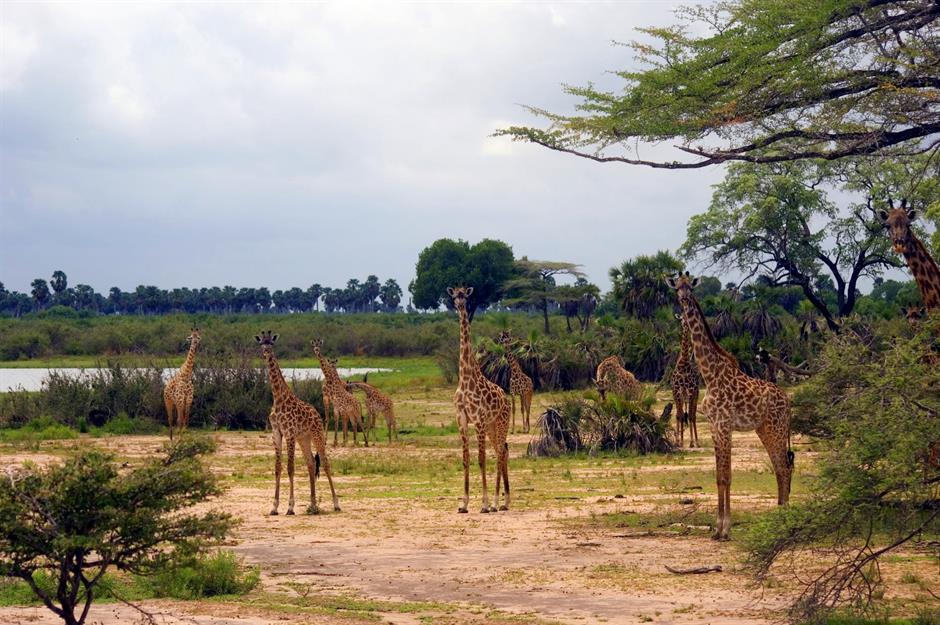
Given the rough terrain, vast distances and often impassable roads during the rainy season, flying is the most practical – and scenic – way to reach the region. As passengers descend, they’re treated to sweeping views of the Rufiji River and may spot wildlife below.
Though the thatched arrivals hut appears modest, guests are often welcomed with a glass of Champagne before being transferred to nearby lodges such as the Selous Serena Camp.
Bodensee-Airport Friedrichshafen, Germany

Friedrichshafen Airport, nestled on the shores of Lake Constance (Bodensee) in southern Germany, is famously known as the birthplace of the Zeppelin. It was here in 1900 that Count Ferdinand von Zeppelin launched the world’s first hydrogen-filled airship. The airport itself began operating flights in 1915 and has remained closely tied to aviation history ever since.
Today, the site is home to a Zeppelin hangar and the modern Zeppelin NT (New Technology) programme, which offers scenic flights over Lake Constance and the surrounding landscapes.
Sponsored Content
Bodensee-Airport Friedrichshafen, Germany
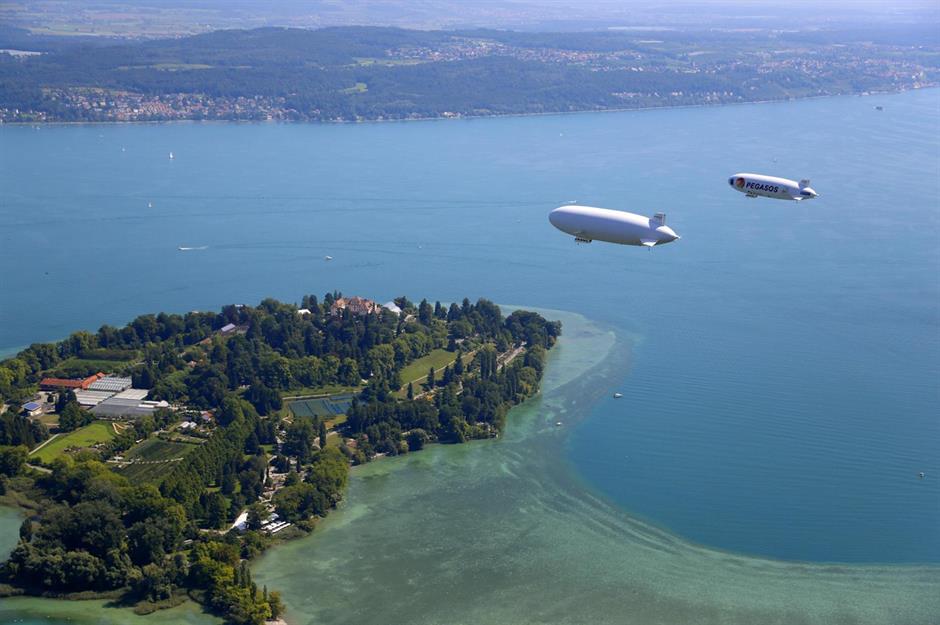
Bodensee-Airport Friedrichshafen is now an international airport, offering shops, restaurants and regular flights to destinations including Austria, Switzerland and the UK. The terminal features artwork by local artists, and just next door is the Dornier Museum, an aerospace museum dedicated to the region’s aviation heritage.
The airport is also known for having one of Europe’s most scenic approaches, with sweeping views of the Alpine foothills and the lake’s glassy expanse during descent.
Samui International Airport, Koh Samui, Thailand
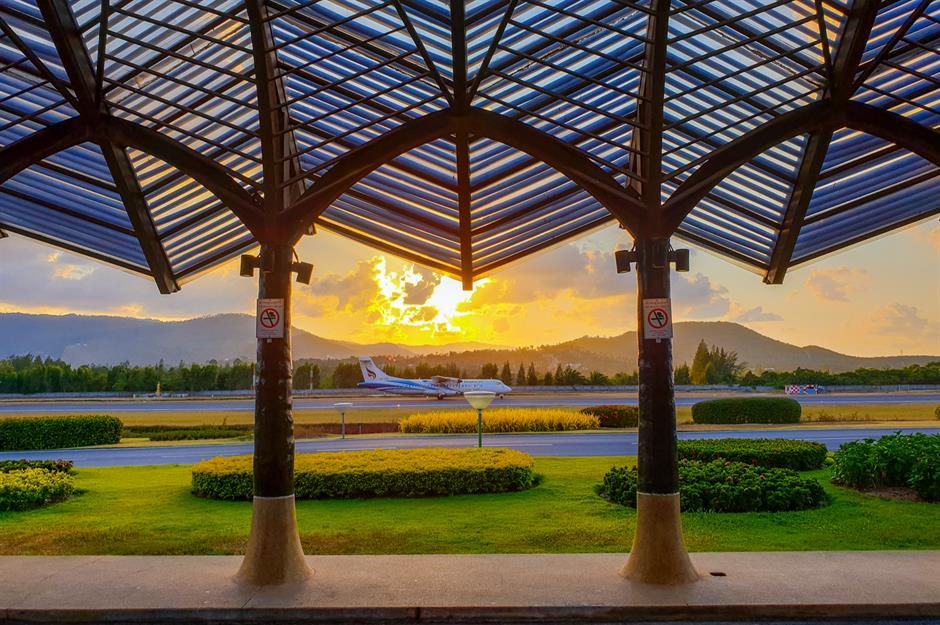
The privately owned airport on the island of Koh Samui may be small, but it’s strikingly well designed. Since its opening in 1989, the island’s popularity has soared, with regular flights to mainland Thailand and international destinations such as Hong Kong and Singapore.
Often praised for its open-air terminals, tropical landscaping and relaxed ambience, Samui Airport has even been dubbed one of the most beautiful airports in the world.
Samui International Airport, Koh Samui, Thailand
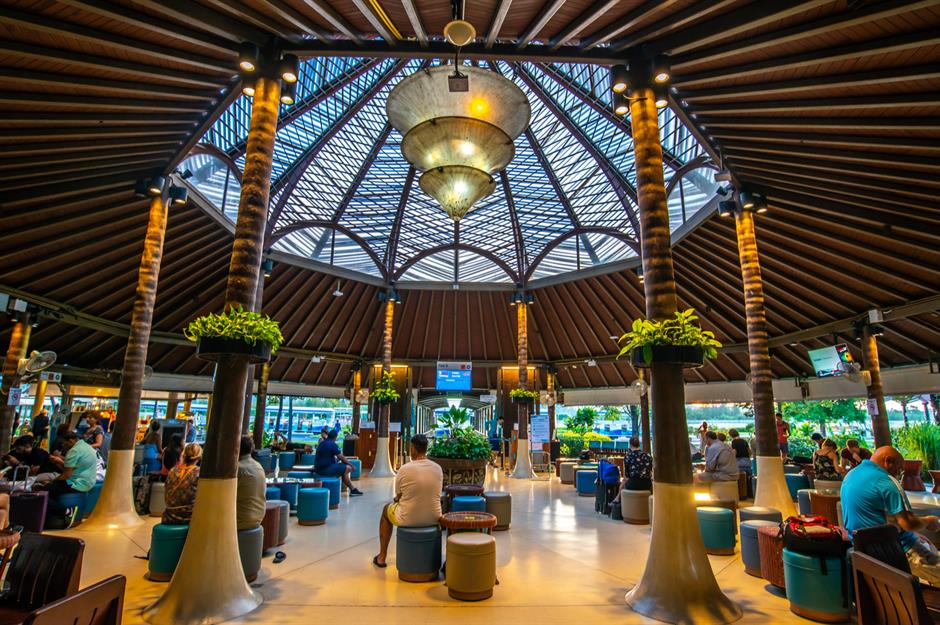
Inside, the airport features traditional Thai décor and a relaxed, holiday vibe. Passengers can enjoy pad Thai, fresh coconut juice and even a Thai massage – perhaps to soften the blow of leaving the island.
The terminal buildings are made from locally sourced wood and rattan, with thatched roofs and palm-style pillars that reflect Koh Samui’s tropical charm. There are also aquariums and landscaped gardens, with views of the island’s lush coconut groves.
Sponsored Content
Phoenix Airfield, Ross Island, Antarctica
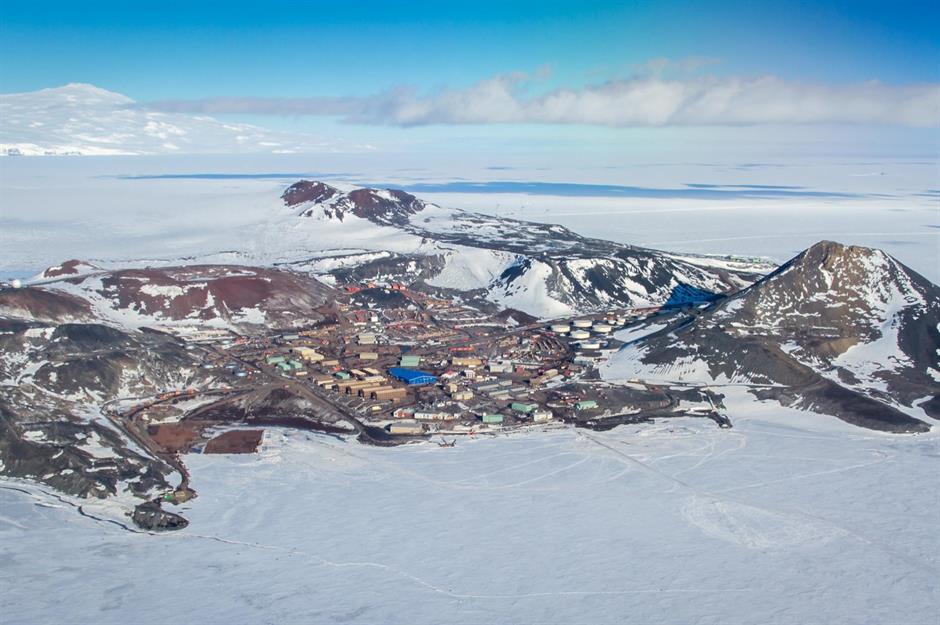
Around 975 researchers and staff live at McMurdo Station on Ross Island during the southern hemisphere summer, with numbers dropping to around 280 in winter.
As the main hub for the US Antarctic Program, it’s one of the most remote and active scientific bases in the world. With winter temperatures plunging as low as –50°C (–58°F), access is only possible via carefully maintained snow and ice runways.
Phoenix Airfield, Ross Island, Antarctica
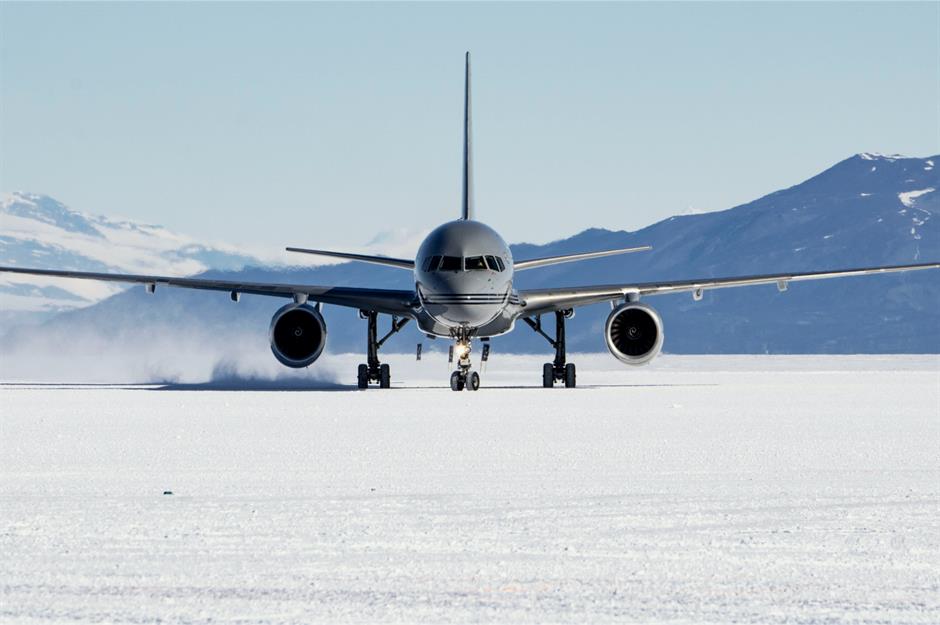
Phoenix Airfield opened in 2017 to replace Pegasus, a runway built on an ice shelf that shifted around 140 feet (43m) per year and degraded in warmer months.
Phoenix sits on compacted snow, rolled until nearly as hard as concrete, and is strong enough to handle heavy wheeled aircraft. Smaller planes often use retractable ski landing gear to prevent sinking into snowy surfaces.
Paine Field Airport, Seattle, USA
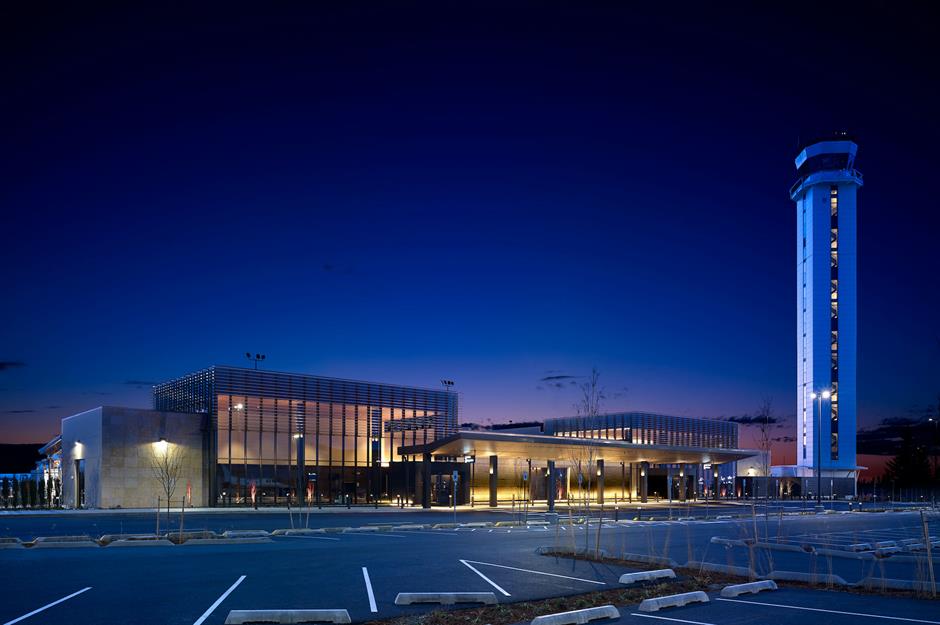
Paine Field Airport in Snohomish County opened its modern passenger terminal in March 2019. The facility has since earned praise and awards for its boutique feel and stylish design, including lounge-style seating with power outlets, fireplaces and locally focused cafés. Floor-to-ceiling windows, glass jet-bridges and aviation-themed décor add to its upscale atmosphere.
Sponsored Content
Paine Field Airport, Seattle, USA
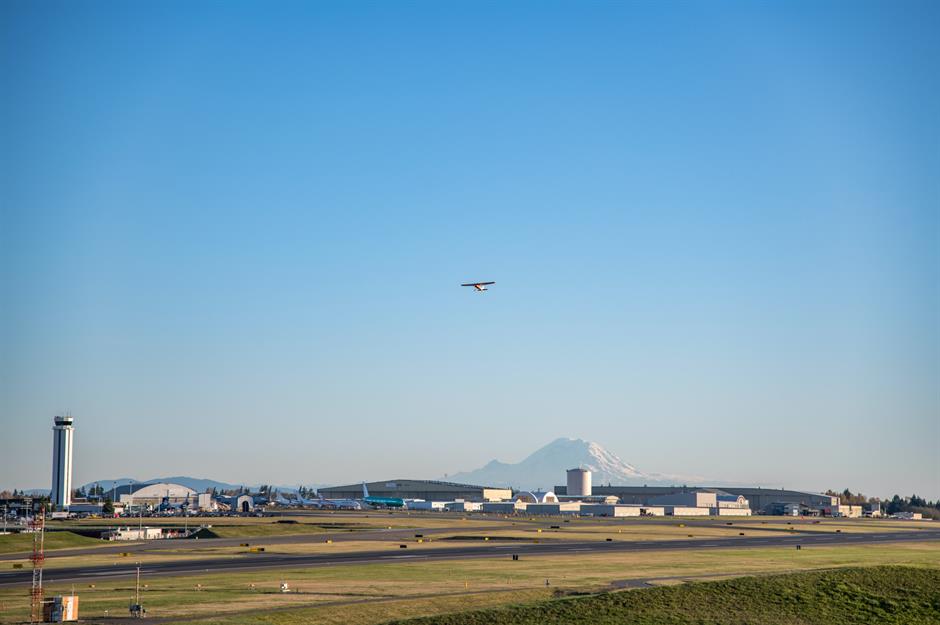
Paine Field was originally built in 1936 and later occupied by the US Army Air Corps during World War II. It was renamed Paine Air Force Base during the Korean War and remained a joint military–civil facility for years.
At its peak, the terminal handled 24 daily flights operated by Alaska and United Airlines to destinations across Washington, Oregon and beyond. United has since ceased operations, with Alaska now the sole carrier.
Svalbard Airport, Longyearbyen, Norway
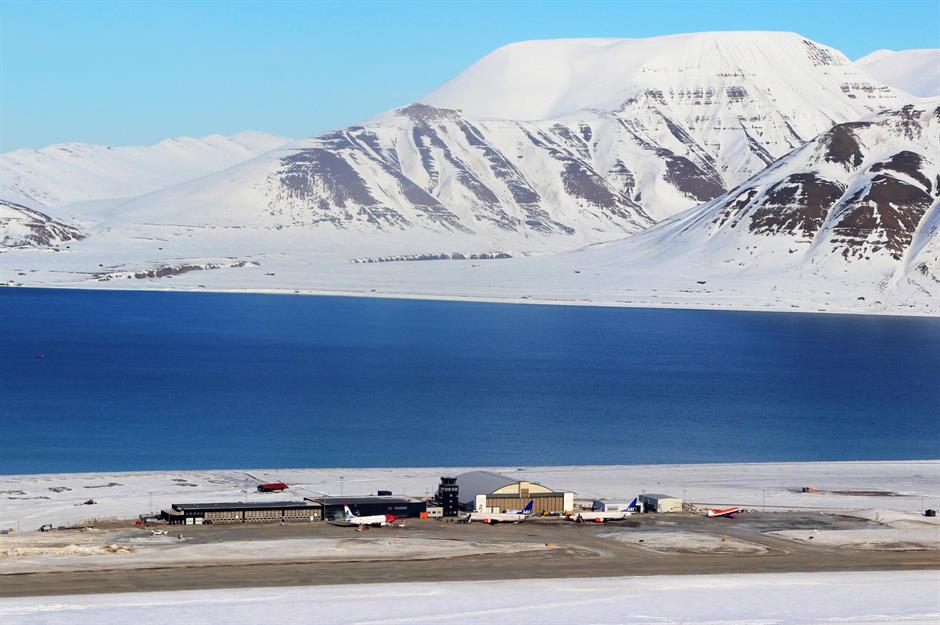
Svalbard Airport sits on the Svalbard archipelago, a scattering of islands in the Arctic sea between Norway and the North Pole. The northernmost commercial airport in the world is usually popular with tourists hoping to explore the untouched wilderness and spot some of the thousands of polar bears living on the islands.
Svalbard Airport, Longyearbyen, Norway
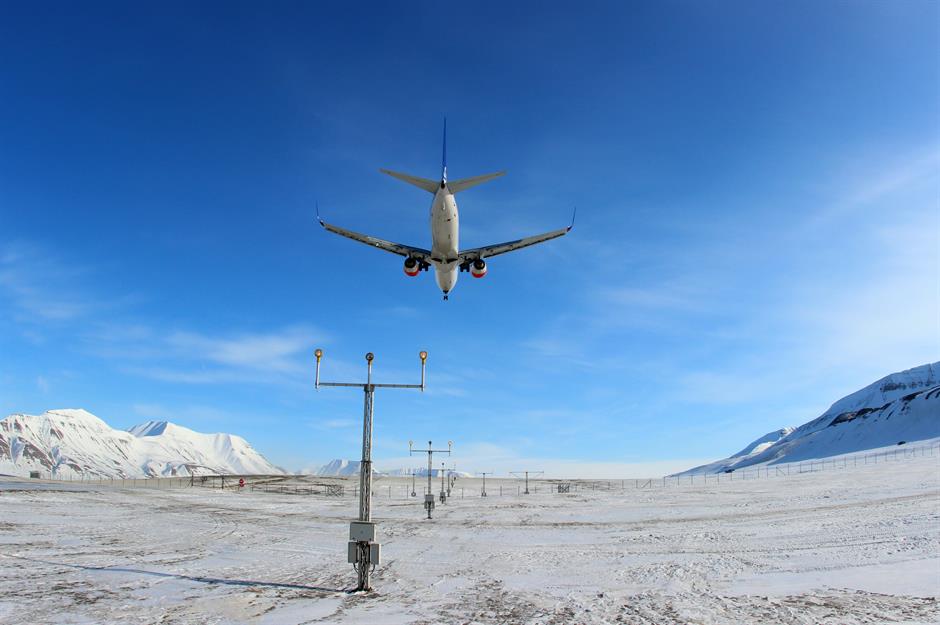
Building Svalbard Airport on permafrost was a major challenge. Since its completion in 1975, fluctuating temperatures have caused ground movement, requiring frequent runway repairs.
Located just northwest of Longyearbyen, the airport offers year-round flights to Oslo and Tromsø. Inside, a giant stuffed polar bear watches over the baggage hall – a fitting touch in a region where polar bears outnumber people.
Sponsored Content
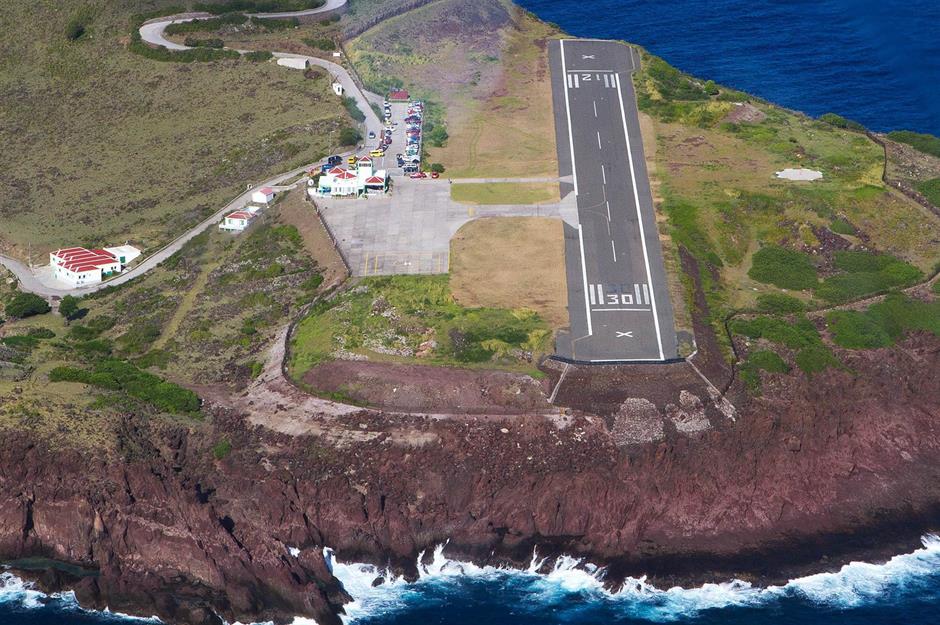
Juancho E. Yrausquin International Airport, Saba, the Caribbean
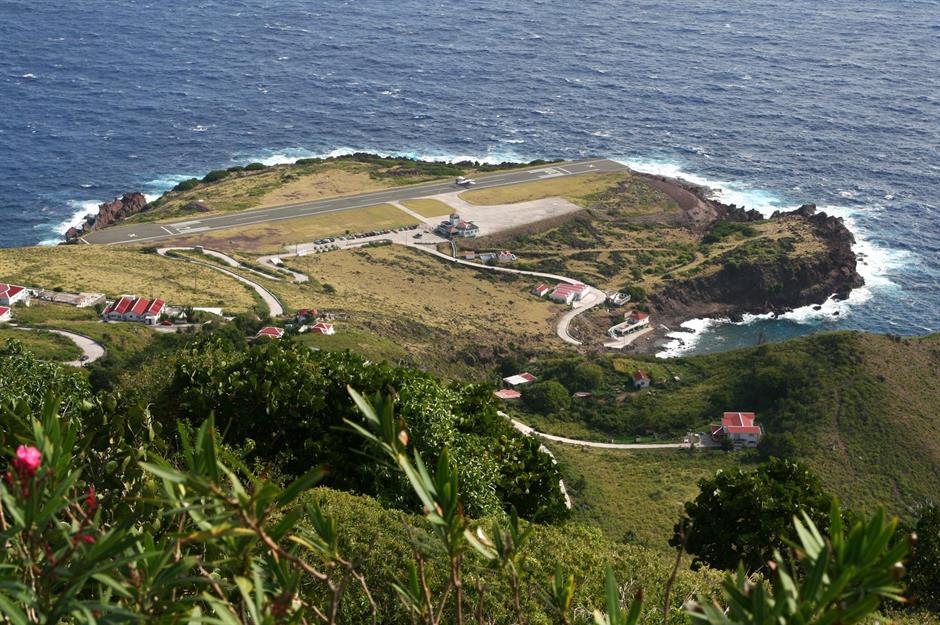
Pilots flying into Saba’s Juancho E. Yrausquin Airport must complete specialised training to land on the world’s shortest commercial runway –just 1,312 feet (400m) long.
With cliffs on one side and ocean on the other, jets are banned. There’s no control tower – pilots rely on advisory radio and make a famously dramatic approach just above the cliff edge.
Juancho E. Yrausquin International Airport, Saba, the Caribbean
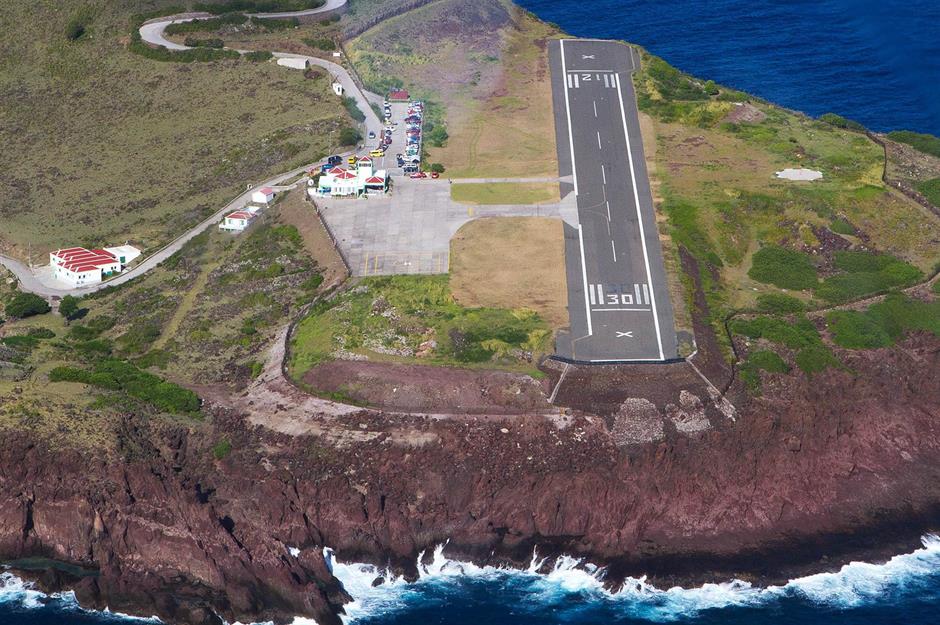
Passengers who travel to this tiny volcanic island rate it as one of the most incredible landings in the world for its panoramic views over the Caribbean Sea, as well as the jaw-dropping ending. Winair is the only commercial airline to use the airport.
Tenzing-Hillary Airport, Lukla, Nepal

Thanks to its proximity to Everest Base Camp, tiny Tenzing–Hillary Airport is one of Nepal’s busiest domestic terminals, handling over 120,000 passengers annually. But landing here is a nerve-racking experience.
Often called the world’s most dangerous airport, its short runway is perched on a mountainside, ending in a dramatic drop of nearly 2,000 feet (610m). The airport is named after Sir Edmund Hillary and Sherpa Tenzing Norgay, the first men to summit Everest.
Sponsored Content
Tenzing-Hillary Airport, Lukla, Nepal
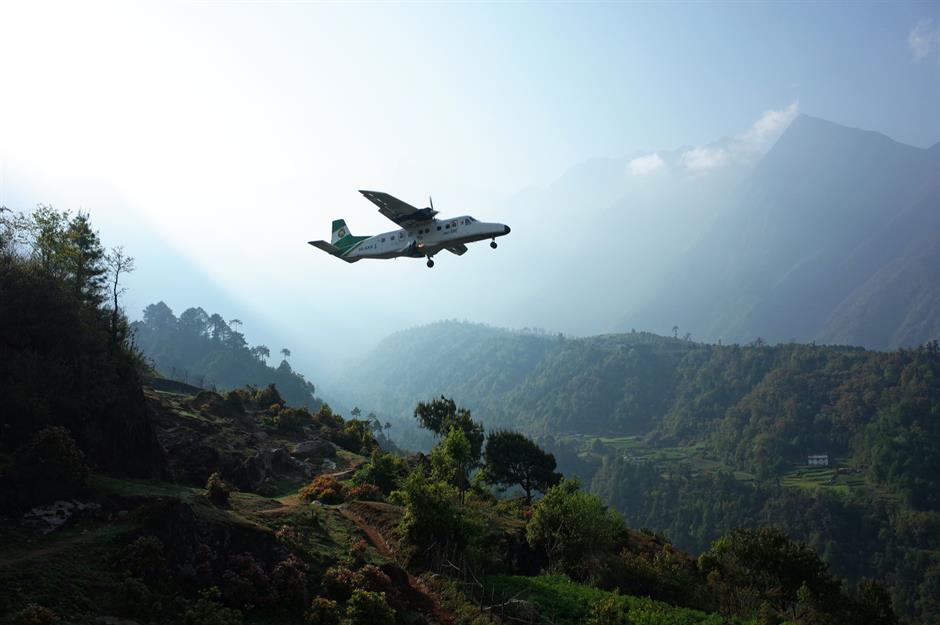
Hillary spearheaded the airport project and initially hoped to build it on flat land, but local farmers refused to sell. Instead, he purchased a steeper slope nearby.
Sherpas cleared the vegetation, and Hillary famously encouraged locals to compact the surface by performing a traditional foot-stomping dance. Today, the airport is a key gateway for climbers heading to Everest Base Camp.