The incredible stories behind the world’s biggest planes
Amazing facts about the world's biggest planes
Whether you're a self-confessed aviation expert or have never heard of Howard Hughes, you can't fail but be impressed by the world's most enormous planes. From wooden seaplanes built in the 1940s to the aircraft making space travel possible, we look at some of the world's most gigantic planes and the astonishing stories behind them.
Click through the gallery to learn about the largest planes in history, ranked by wingspan from smallest to largest...
Airbus Beluga XL: 197 feet

With its 197-foot (60m) wingspan, the Airbus A-330-700 Beluga XL may be the smallest plane on our list but it’s certainly among the most eye-catching. Designed to resemble the whale it’s named after, the cargo plane is used to transport large parts for other aircraft from Airbus manufacturing sites across Europe.
Based on the Airbus A330-200F, the XL was the next evolution of the original Beluga, the A300-600ST.
Airbus Beluga XL: 197 feet
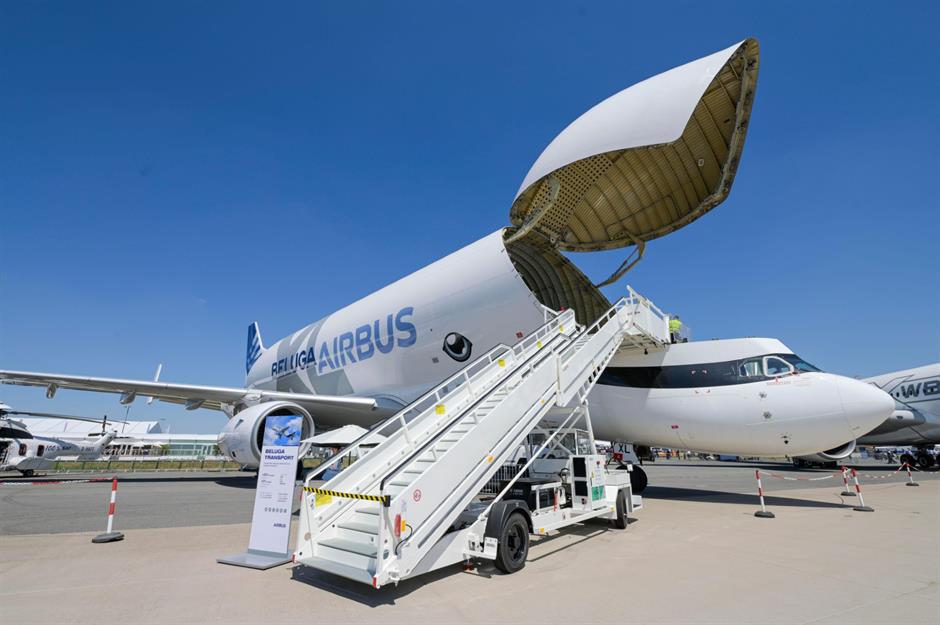
The Beluga XL offers 30% more payload than its predecessor, at 78,010 cubic feet (2,209 cubic metres) or 51 tonnes (equal to about 34 actual beluga whales!). The aircraft is 207 feet (63m) long and 62 feet (19m) high, with two Rolls-Royce Trent 700 engines.
Built in Toulouse, France, there are six Airbus Beluga XLs, with the fleet completed in June 2024. While the future of the cargo planes is in doubt, they are currently in service with Airbus Transport International.
Sponsored Content
Boeing Dreamlifter: 211 feet
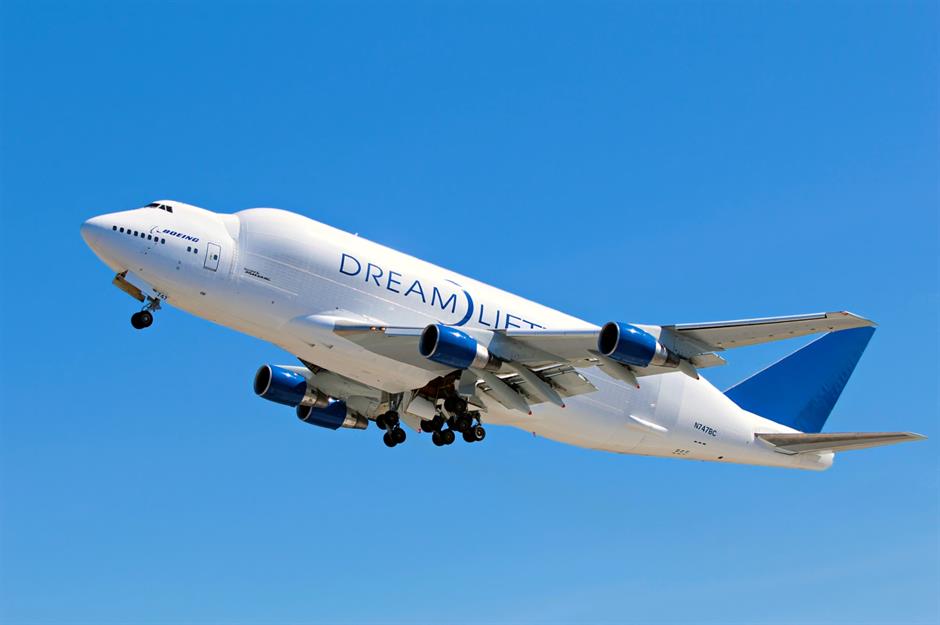
The Dreamlifter – or Boeing 747-400 Large Cargo Freighter, to give the aircraft its full name – was built to transport heavy components for the company’s 787 Dreamliner passenger plane from suppliers worldwide to its production bases in Washington and South Carolina.
The plane, which entered service in 2007, has a wingspan of around 211 feet (64.3m). It can lift 150 tonnes of cargo on take-off and transport it nearly 5,000 miles (8,046km).
Boeing Dreamlifter: 211 feet
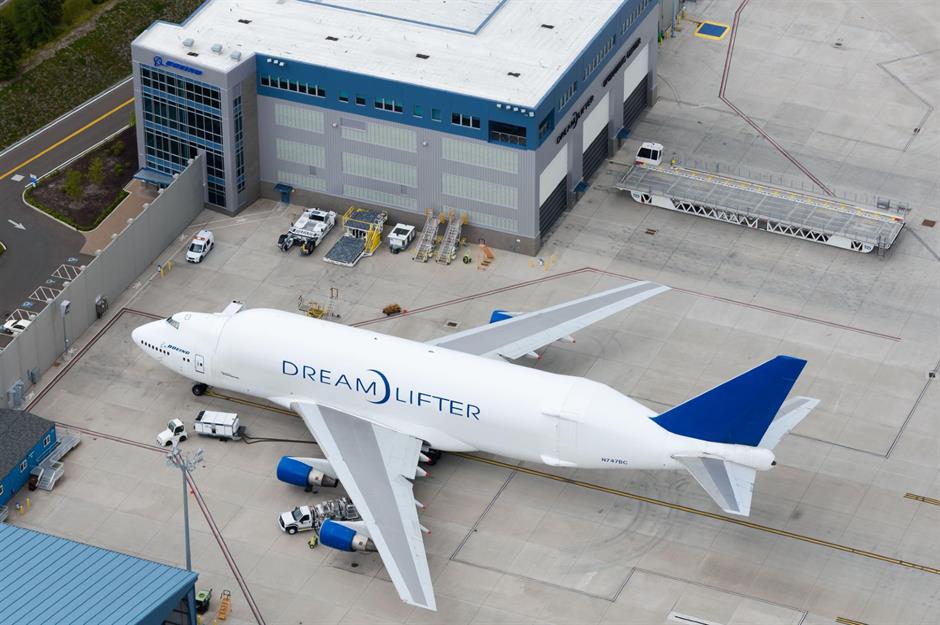
Boeing converted four of its existing Boeing 747-400 passenger aircraft into Dreamlifters. One of the largest cargo planes by volume, the aircraft can carry payloads of up to 65,000 cubic feet (1,840 cubic metres).
As well as transporting bulky parts – including the Dreamliner’s wings – three of the Dreamlifters were called into service during the COVID-19 pandemic to carry vital medical supplies.
Boeing 747-8: 224 feet
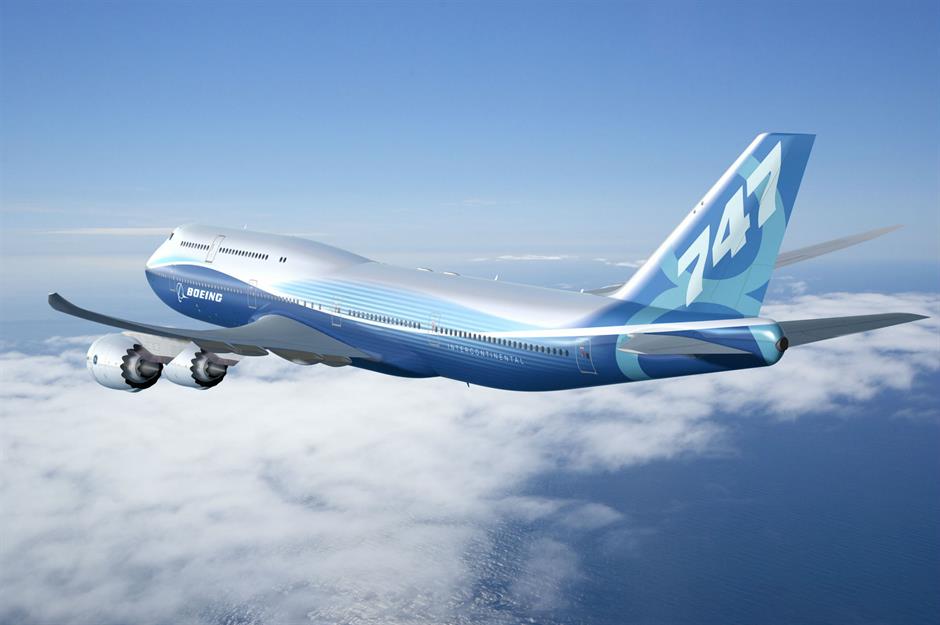
At 250 feet long (76m), with a wingspan of around 224 feet (68m) and a maximum capacity of over 600 passengers, the Boeing 747-8 is among the largest commercial airliners ever produced. At over 63 feet (19m) high, its tail is the same height as an average six-storey building.
The original 747 dates back to the 1960s and ushered in the era of the jumbo jet, and the 747-8 launched in 2005 to build on its success.
Sponsored Content
Boeing 747-8: 224 feet
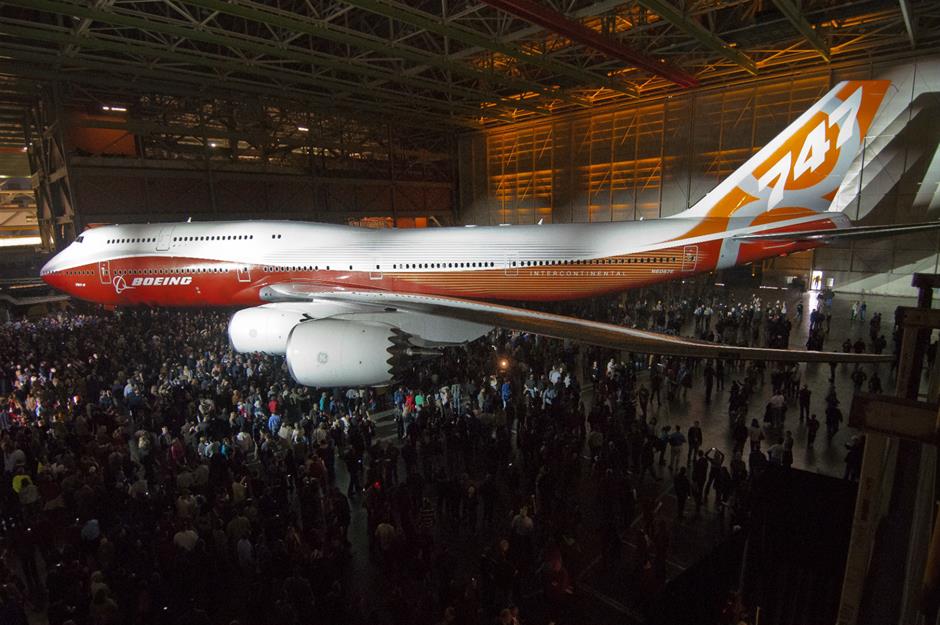
The 747-8 is longer than its predecessor – indeed, it’s the longest commercial plane currently in service. It can accommodate more passengers, but it consumes less fuel and makes less noise despite its large frame.
Powered by four potent General Electric GEnx engines, the plane can travel the length of three regulation-size football fields in just one second.
Boeing 747-8: 224 feet
.jpg)
Dubbed the 'Queen of the Skies’, 1,574 of the 747 series aircraft were purchased over its 54-year production run. They were bought by more than 100 companies and airlines and logged more than 118 million flight hours and nearly 23 million flight cycles.
Boeing 747-8: 224 feet
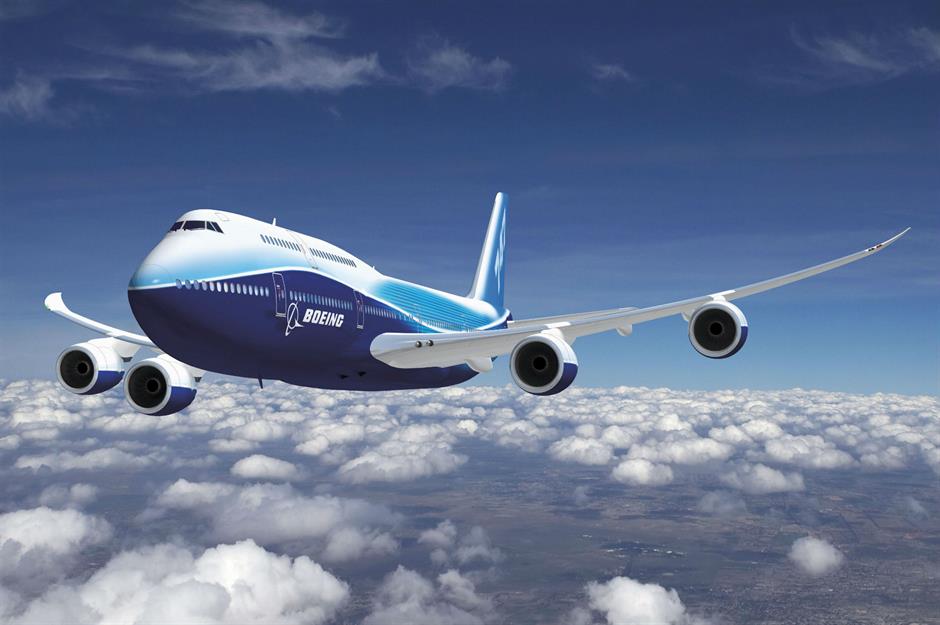
The last Boeing 747-8 was delivered in 2023 – a 747-8F freighter model which comfortably outperformed its passenger equivalent. The plane was not as commercially successful as its predecessors, but it successfully competed with the Airbus A380, ensuring that its competitors did not dominate the jumbo jet market.
Sponsored Content
Boeing 777X: 235 feet
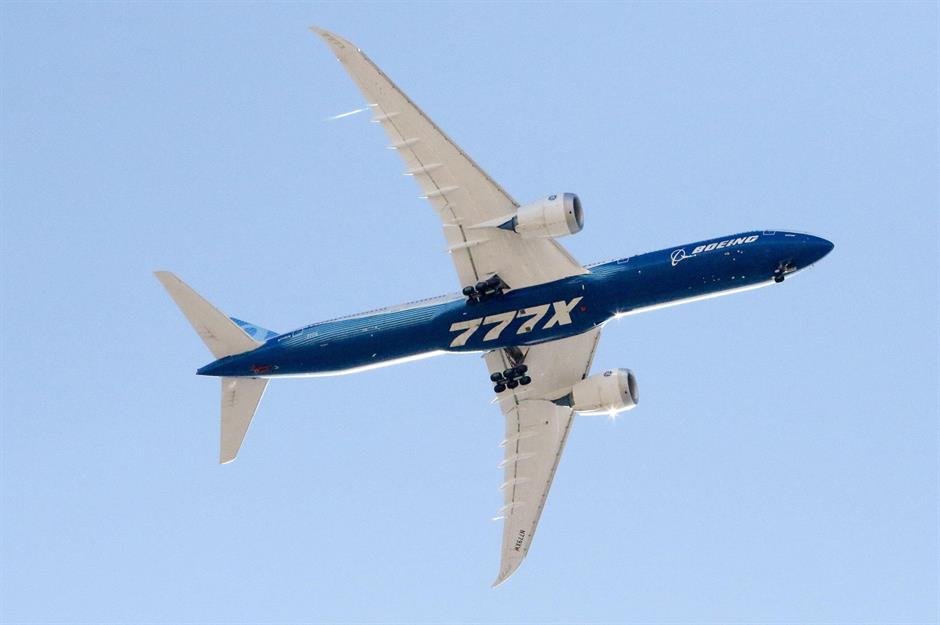
When one door closes another door opens, and the decline of the 747 series made way for the Boeing 777X to become the airline's new flagship jet. There will be two versions of the plane, the smaller 777-8 and the larger 777-9.
At 251 feet (77m), the 777-9 will claim the title of 'world's longest active passenger plane' from the 747-8 by just a single foot when it officially enters service, currently scheduled for 2026.
Boeing 777X: 235 feet
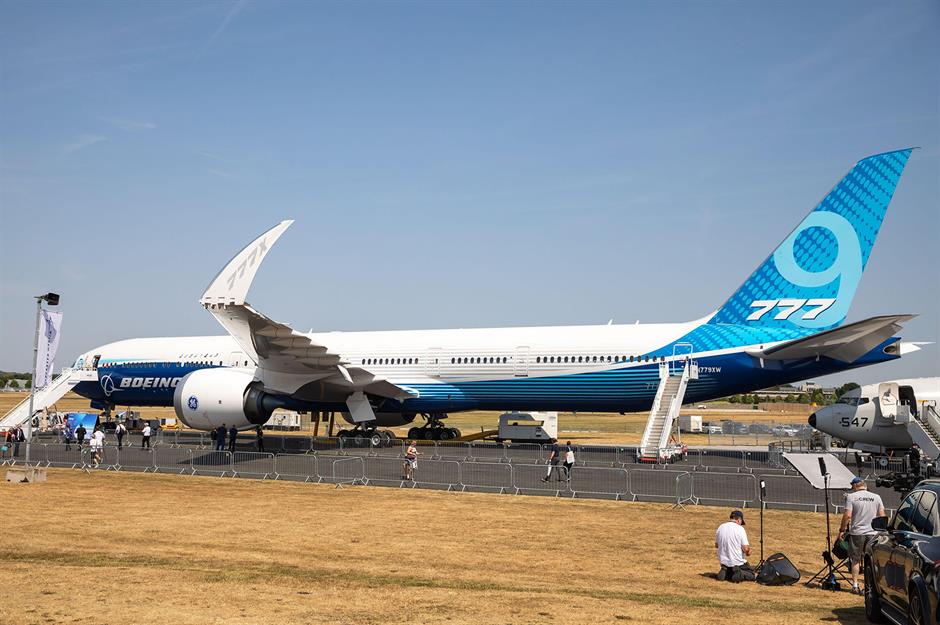
It will have a larger wingspan than its predecessor too – 235 feet (72m) – thanks to folding wingtips that improve in-flight efficiency and help it dock at more airports.
The 777-9 will boast a typical two-class seating capacity of 426 passengers – making it the highest capacity twin-engine aircraft to date. The smaller 777-8 will offer an impressive 10,048-mile (16,170km) range.
Boeing 777X: 235 feet
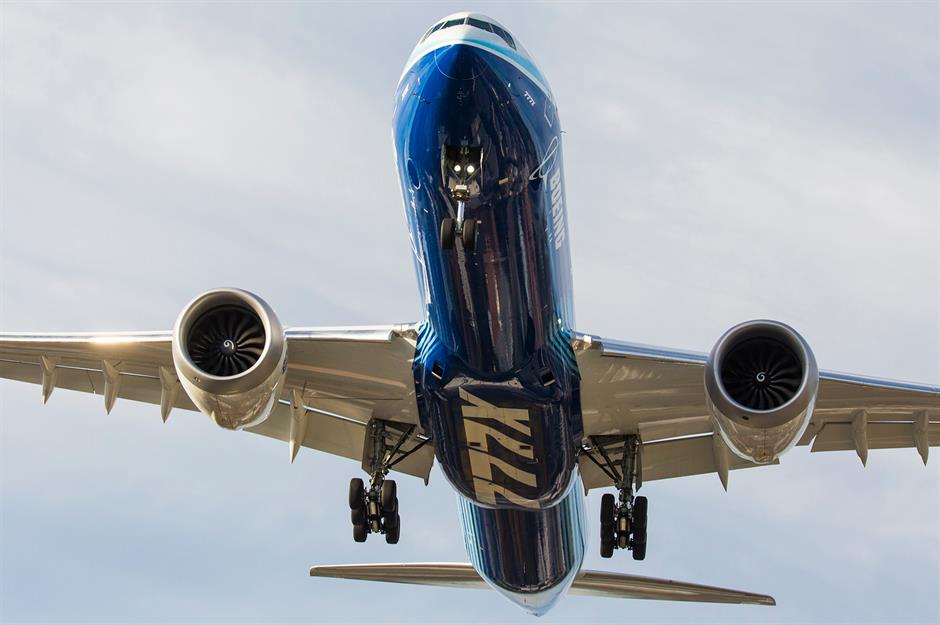
Experts predict that airlines will move towards smaller, cheaper and more efficient models over the coming years, so the 777X could be one of the last 'jumbo jet' airliners for some time.
Mid-sized aircraft have seen gains in range and efficiency in recent years, and twin-engines have already replaced cumbersome quad-jets on production lines. Only time will tell, but with 520 orders for the 777X, as of May 2025, perhaps the jumbo jet has life in it yet.
Sponsored Content
Antonov AN-124 Ruslan: 240 feet
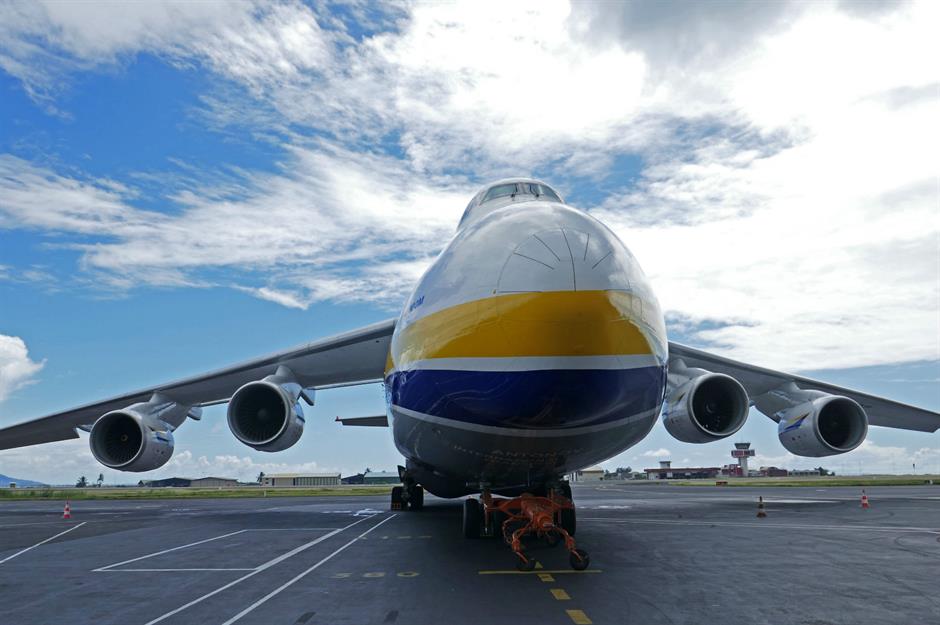
The Antonov AN-124, first manufactured in the Soviet Union in the early 1980s, remains one of the biggest aircraft the world has ever seen, and is specifically designed to carry extremely heavy loads.
Despite its age, these planes can still carry a gargantuan 150,000 kgs of payload – depending on the exact model. Fifty-five of the planes were built in total – and up to half of them are still in service.
Antonov AN-124 Ruslan: 240 feet
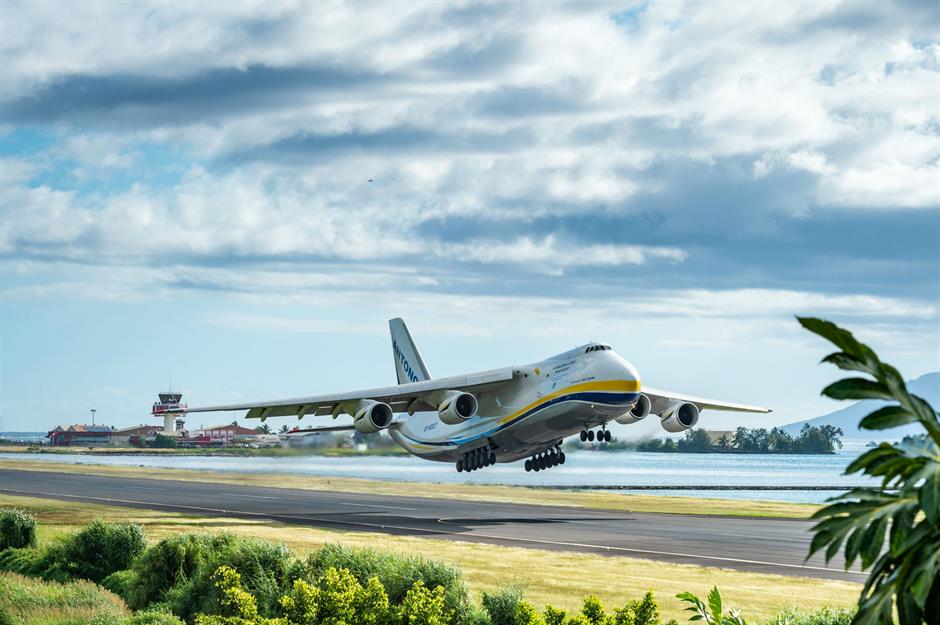
These planes held numerous world records in their time, and their 227-foot (69m) length and 240-foot (73m) wingspan still rank among the world’s largest. Each AN-124 has its own onboard crane system that can lift up to 30 tonnes, making it easy to load and unload cargo safely at airports without the need for any special ground infrastructure.
Antonov AN-124 Ruslan: 240 feet
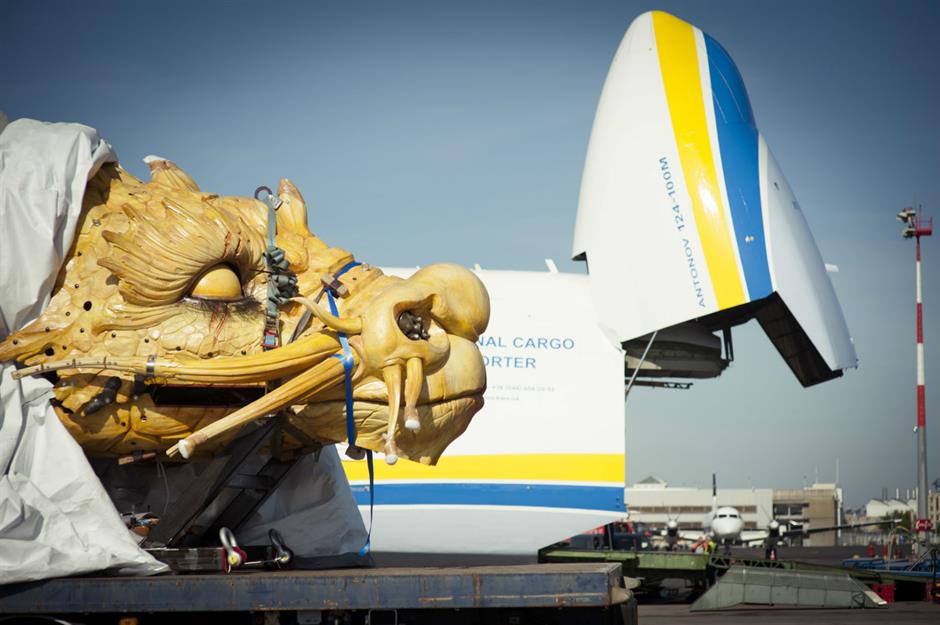
The plane's nose opens upwards to make loading cargo simpler and easier – an innovative design since incorporated by both Boeing and Airbus planes. Over the years it's carried all sorts of intriguing cargo – from transporting an entire train locomotive from Canada to Ireland in the 1990s to delivering portable generators to the hurricane-stricken region of Guadeloupe in 2017.
Sponsored Content
Airbus A380: 262 feet
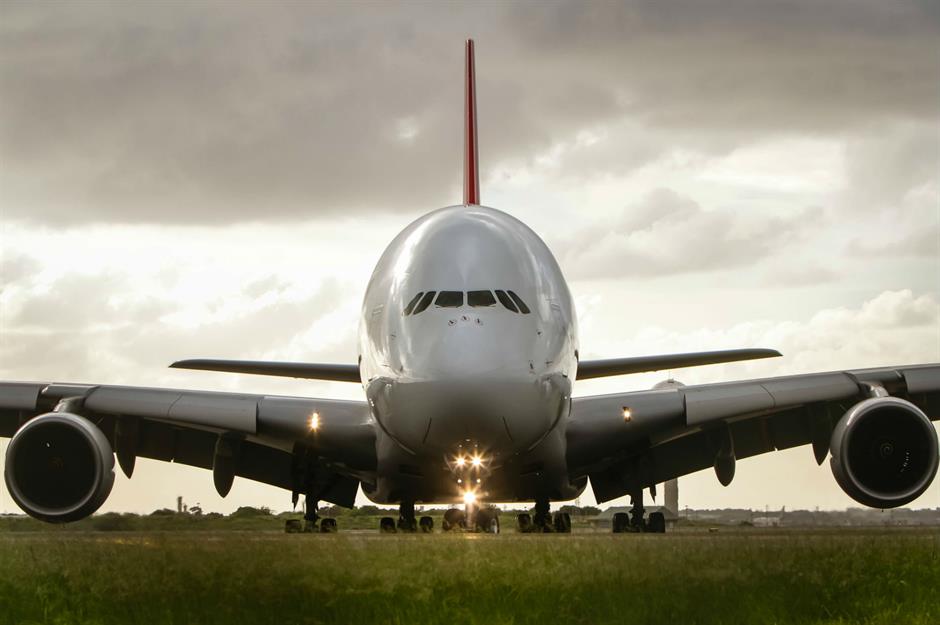
Many of the world’s largest planes are either consigned to the history books, locked in military facilities or restricted to the transport of cargo. But a trip aboard the enormous Airbus A380, the all-round biggest commercial aircraft currently flying, is within reach for anyone that can afford an air fare.
While Airbus stopped production of the plane in 2021, they remain in service around the world. Dubai-based airline Emirates has the most A380s in its fleet, with 121 in operation, as of April 2025.
Airbus A380: 262 feet
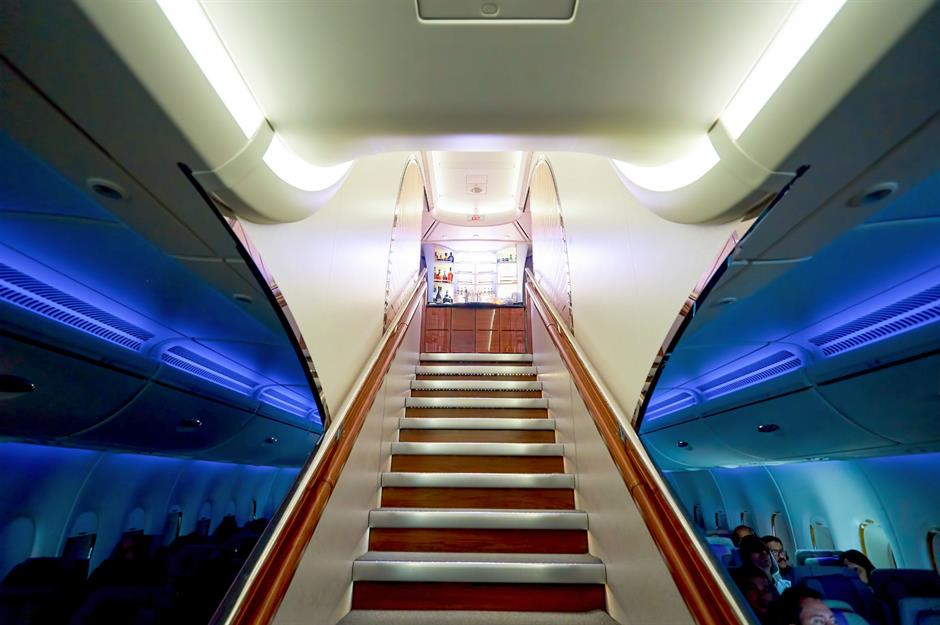
With more than 300 commercial flights every day, the plane has carried more than 200 million customers. Each plane is gargantuan – over 238 feet (73m) long and with a 262-foot (80m) wingspan.
Spread across two floors, it has a maximum capacity of more than 800 passengers. Painting the giant aircraft's exterior requires a whopping 3,600 litres of paint – enough for Michelangelo to paint the Sistine Chapel 97 times.
Airbus A380: 262 feet
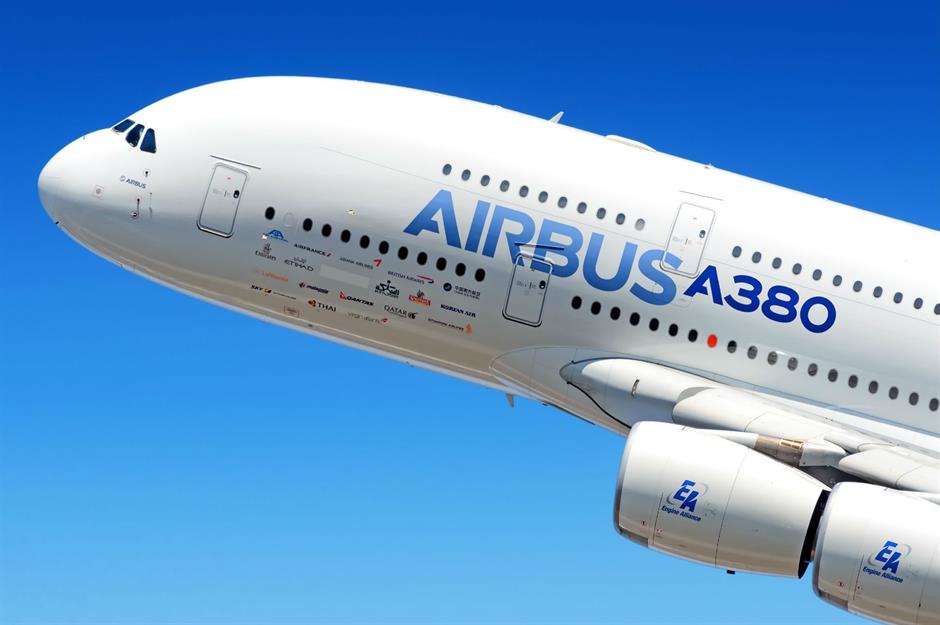
The plane is so big that airports had to make significant upgrades to accommodate it when it first entered service in 2007. But despite its size, Despite its size, the A380 is relatively fuel-efficient per passenger mile when full – comparable to hybrid cars like the Toyota Prius.
It uses two engine options, the Engine Alliance GP7200 and Rolls-Royce Trent 900, and its state-of-the-art wing and landing gear design makes it quieter than almost any other jet in the sky.
Sponsored Content
Airbus A380: 262 feet
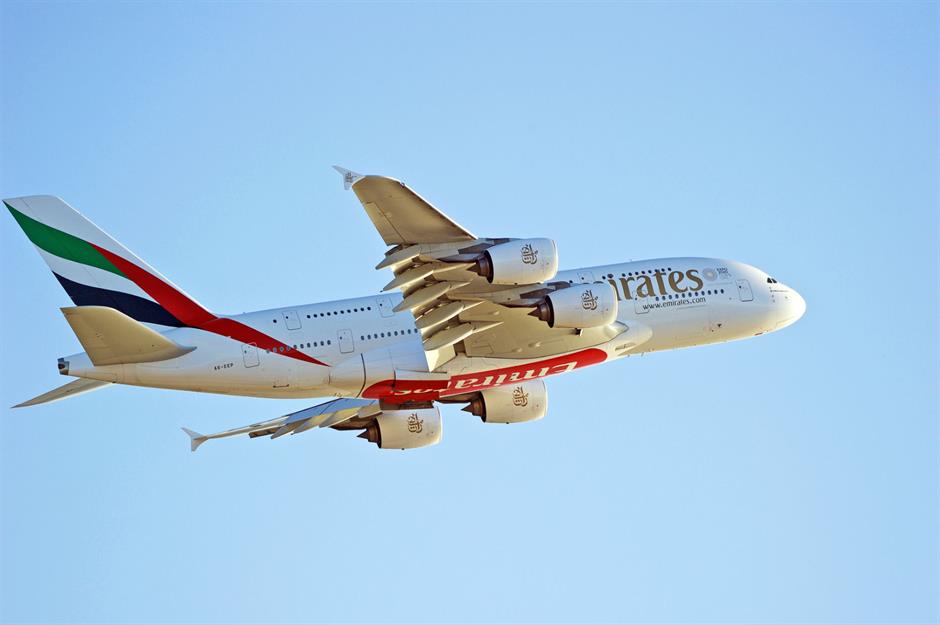
In 2014, Emirates celebrated its 50th A380 by releasing a video showing how the aircraft was made. It took 800 workers 80 days to assemble the jet from start to finish – an enormous project for an enormous plane.
More than 10,000 bolts were used to connect the fuselage, more than 4,000 were used for the wings and it took 30 people 10 days just to paint the plane.
Airbus A380: 262 feet
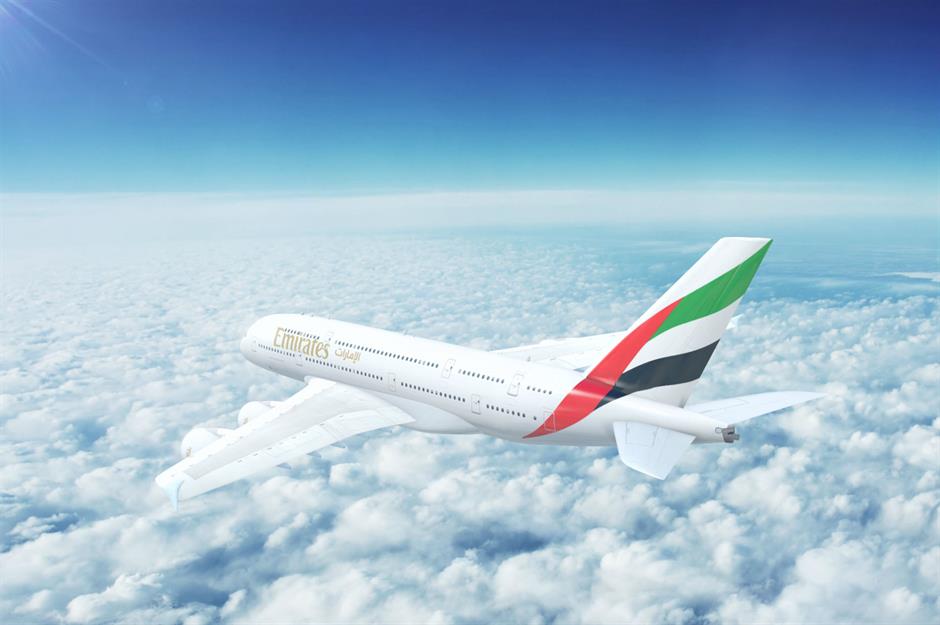
Despite its impressive reputation for in-flight comfort and specifications, the A380 was not a financial success. Airbus delivered its last A380 in 2021 – its 123rd to Emirates and its 251st overall – ending a 14-year production run.
The plane was undoubtedly a marvel of engineering, but Airbus fell well short of the 1,000 delivered models once predicted, and the over-budget programme never turned a profit. Critics say it was simply too big, and is now being outpaced and replaced by smaller, less costly aircraft.
Antonov AN-225 Mriya: 290 feet
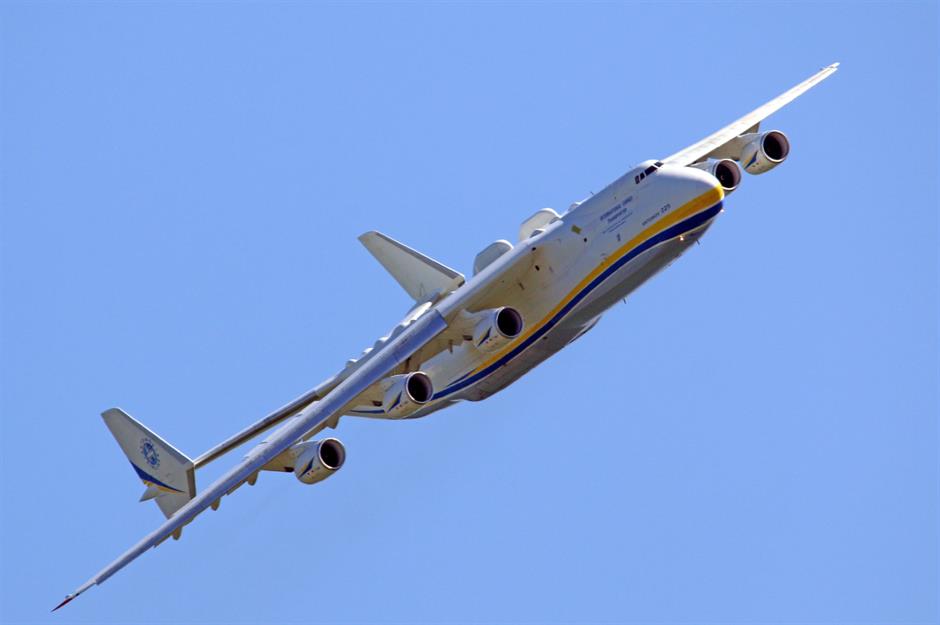
It's not the largest plane by wingspan, but the 284-tonne Antonov AN-225 Mriya is the largest aircraft ever built by weight – one of a range of world records held by the plane.
It was developed in the 1980s to transport the Buran space shuttle between facilities in the former Soviet Union. After the collapse of the Soviet Union, the AN-225 found new life as a heavy-duty cargo carrier for Ukrainian aviation company Antonov.
Sponsored Content
Antonov AN-225 Mriya: 290 feet
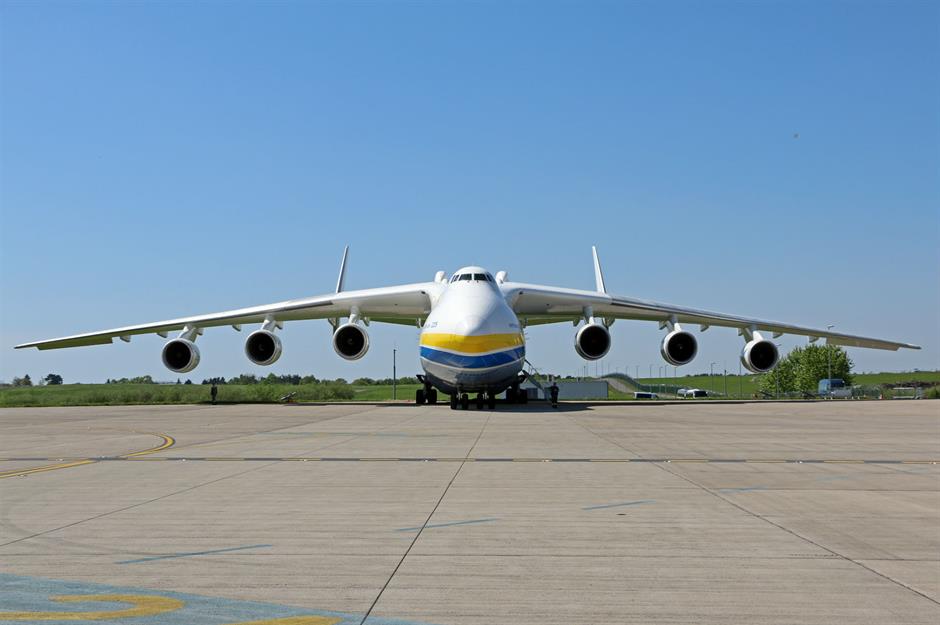
Only one of the enormous planes was ever completed, and a second AN-225 spent years in production but was eventually abandoned; its unfinished shell still sits in a hangar outside Kyiv. ‘Mriya’ means ‘dream’ in Ukrainian, and the one-of-a-kind plane became an icon as it shipped vast payloads across the continent and transported medical supplies during the COVID-19 pandemic.
Tragically, the plane was destroyed during the Battle of Antonov Airport during the 2022 Russian Invasion of Ukraine.
Antonov AN-225 Mriya: 290 feet
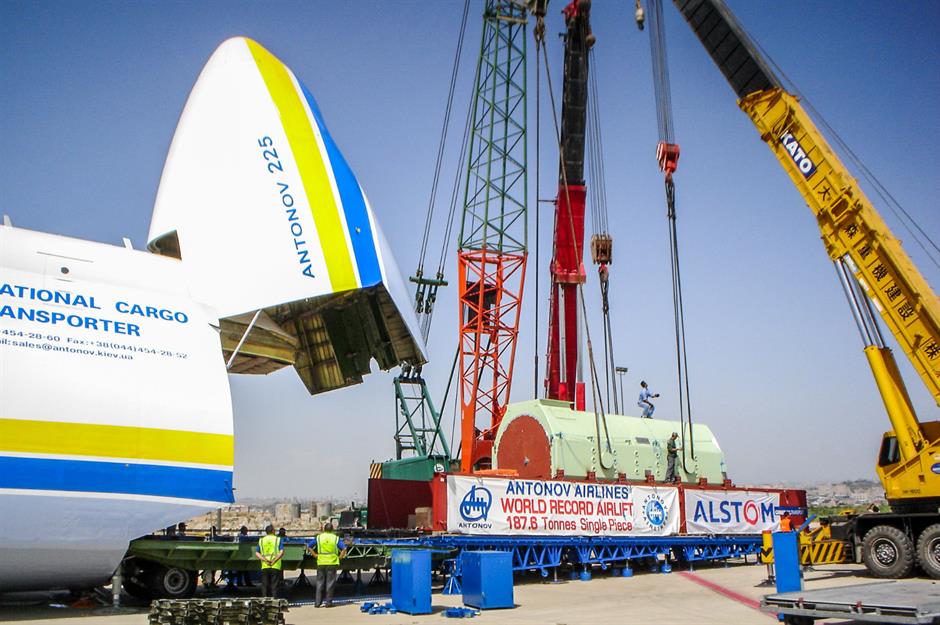
In its pomp, the giant plane made all other aircraft look puny in comparison. Powered by six turbofan engines, the AN-225 could carry up to 250 tonnes of cargo, had a wingspan of 290 feet (88m) and had 32 wheels to help distribute its weight.
To put the plane into perspective, the AN-225 had a maximum take-off weight of 650 tonnes, while the Statue of Liberty weighs just 225 tonnes. Its cargo hold was a staggering 141 feet (43m) long – that’s longer than the Wright Brothers’ first successful flight in 1903.
Antonov AN-225 Mriya: 290 feet
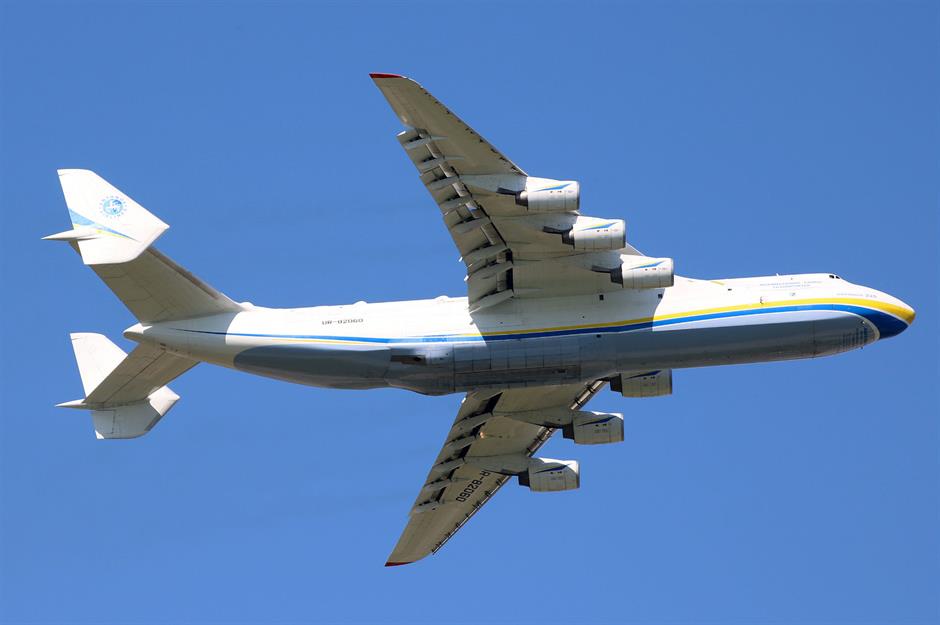
The AN-225’s wingspan never threatened the all-time record books, but it still had the largest wingspan of any plane in active service prior to its destruction in 2022. It still holds the world record for heaviest item ever airlifted – in 2009, it transported a power plant generator that weighed a staggering 187.6 tonnes.
In May 2022, Ukrainian president Volodymyr Zelensky said that Ukraine would rebuild the plane.
Sponsored Content
Hughes H-4 Hercules: 320 feet
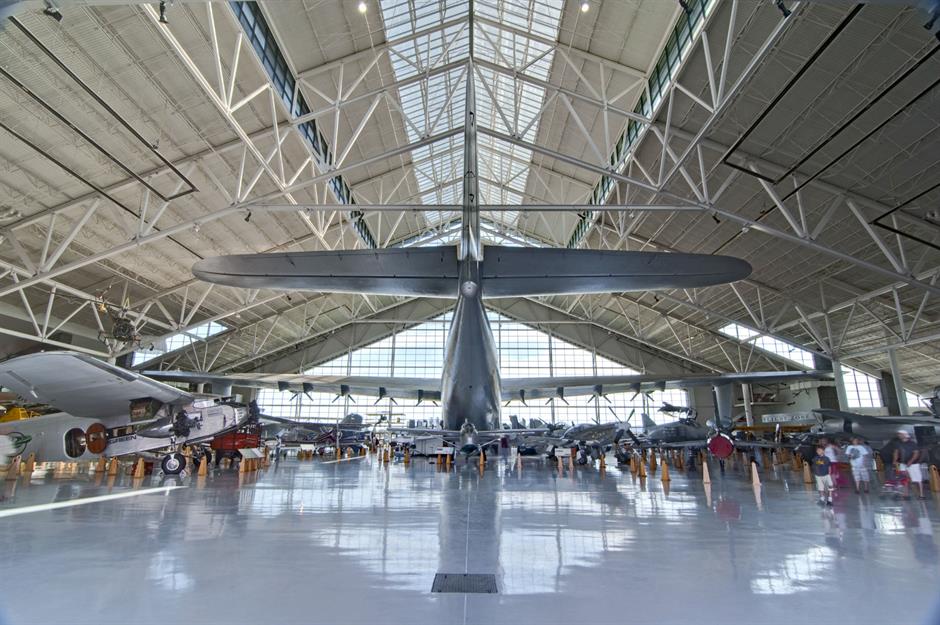
It’s hard to believe that a plane built in the 1940s would still rank among the world’s largest, but famed aviator Howard Hughes’ colossal Hughes H-4 Hercules, nicknamed the 'Spruce Goose', is as impressive as ever. It has a 320-foot (98m) wingspan, and when it was built it was six times larger than any other aircraft.
Hughes H-4 Hercules: 320 feet
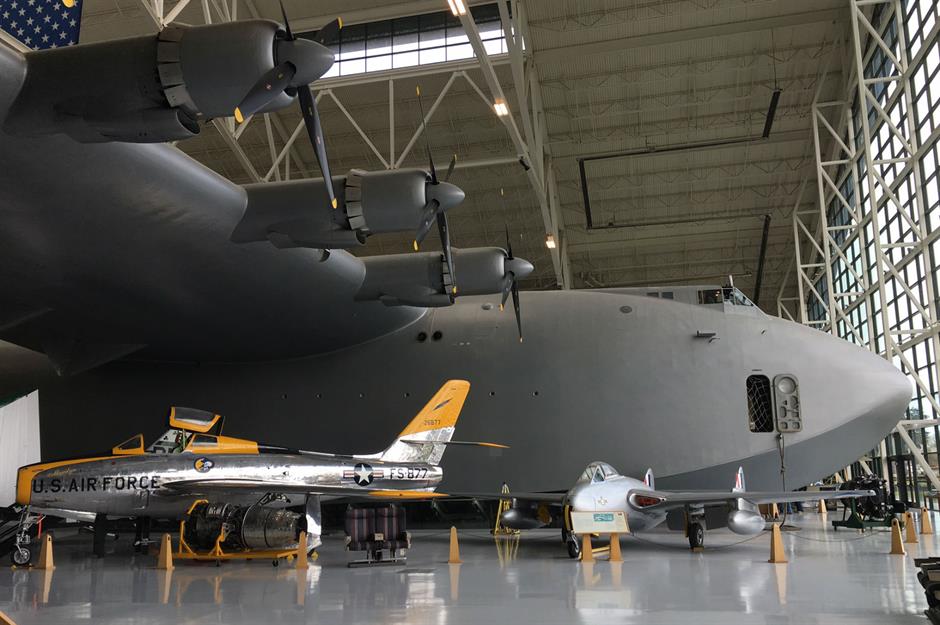
The plane was commissioned during World War II to move supplies and troops across the Atlantic Ocean at a time when hundreds of Allied ships were being sunk by German submarines. Due to wartime restrictions on metals, the Hughes H-4 Hercules was built almost entirely out of wood, making it the largest wooden plane ever built.
Hughes H-4 Hercules: 320 feet
.jpg)
The press dubbed the plane the 'Spruce Goose' because of its material, a name that Hughes reportedly despised. Not only did he feel that it insulted his engineers, but it was also inaccurate – the plane was made from birch.
Despite its incredible size and almost-as-incredible cost, the gigantic plane was sadly not destined for a life in the skies. By the time it was completed, the war was over.
Sponsored Content
Hughes H-4 Hercules: 320 feet
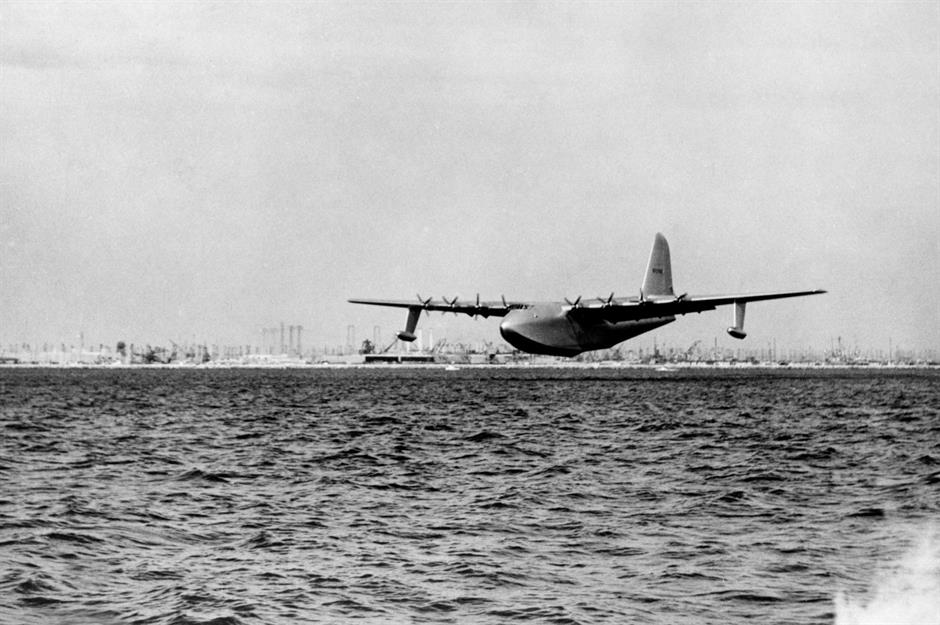
The enormous craft made just one flight in November 1947. Hughes flew it over a mile at an altitude of 70 feet (21m) for one minute, with several journalists and crew on board, just to prove that the behemoth really could make it off the ground.
The H-4 Hercules may have had a short shelf life, but Hughes was not prepared to let it waste away. The plane was kept in perfect condition and maintained by a full staff – to the point that it remained ready to fly until Hughes died in 1976.
Hughes H-4 Hercules: 320 feet
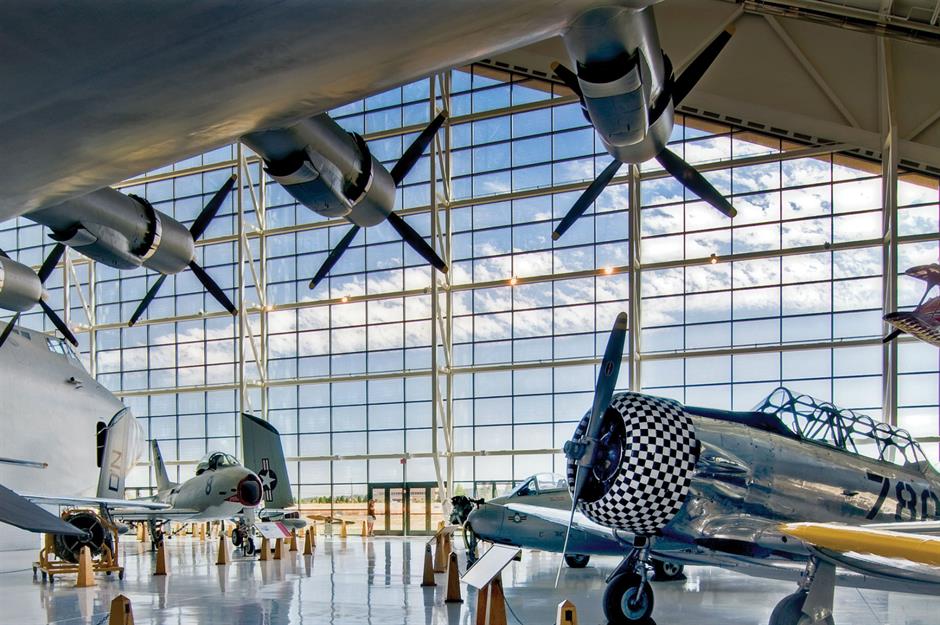
The Hughes H-4 Hercules was well-known for its unique construction and enormous wingspan. It also broke records for being the largest flying boat ever built.
The plane was kept and defended by Hughes during his life but it switched hands a number of times after his death. It now sits in the Evergreen Aviation & Space Museum in Oregon, USA.f
Stratolaunch ‘Roc’: 385 feet
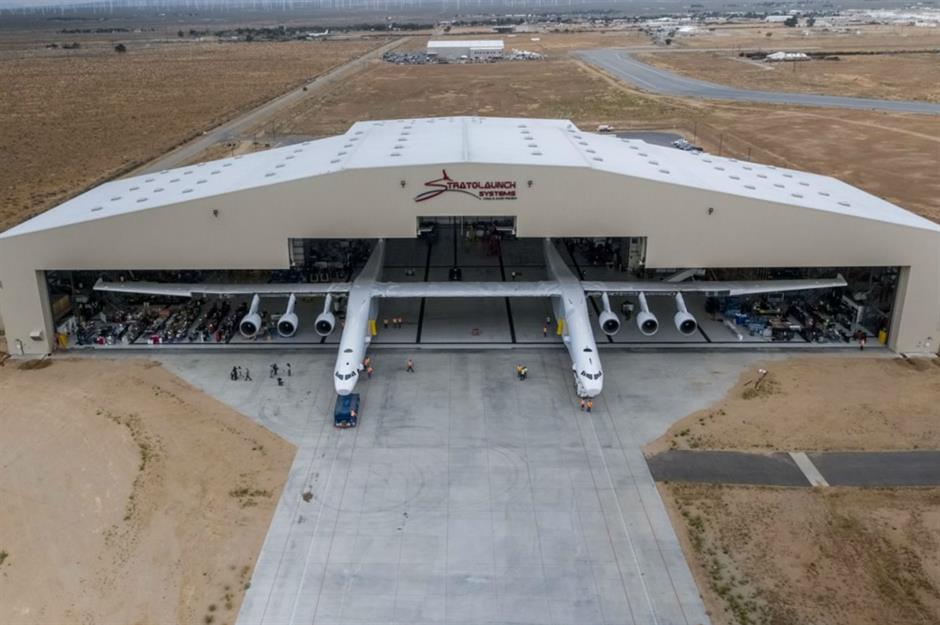
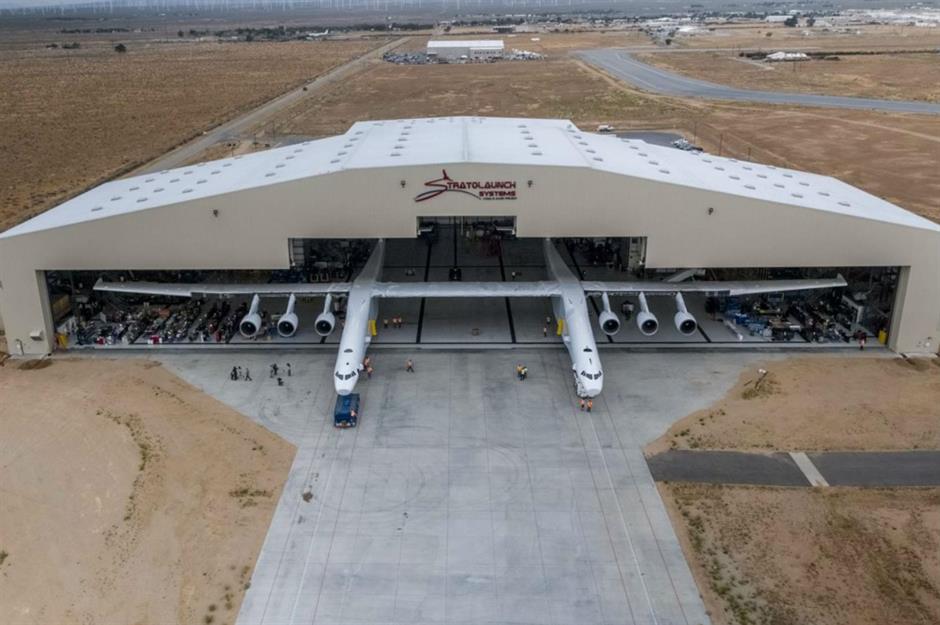
A current Guinness world record holder, the twin-fuselage Stratolaunch ‘Roc’ has the largest wingspan of any plane – an enormous 385 feet (117m). That’s greater than the length of an American football field.
The plane, dreamed up by Microsoft co-founder Paul Allen, rolled out of its California hangar for the first time in May 2017.
Sponsored Content
Stratolaunch ‘Roc’: 385 feet
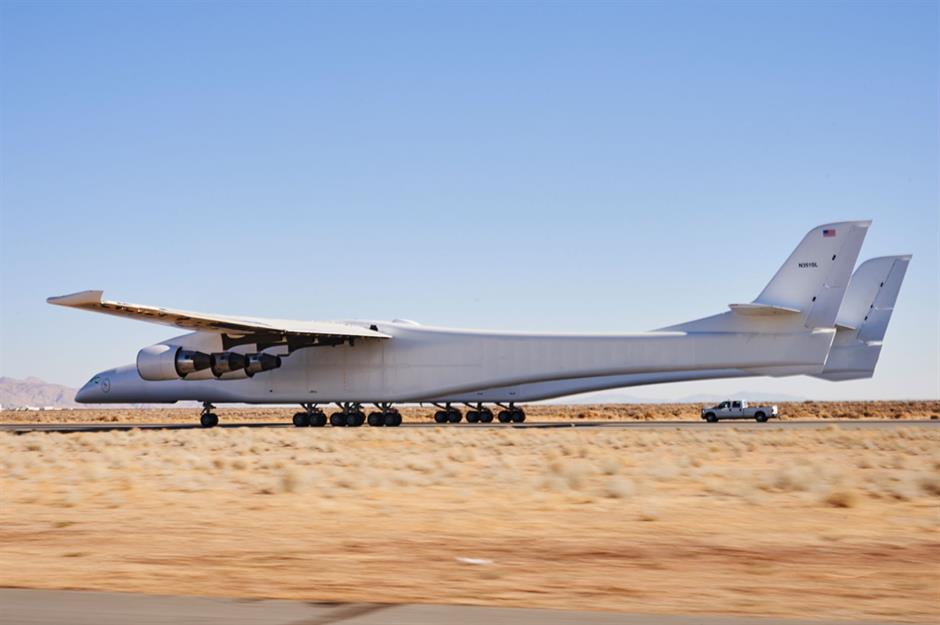
Allen, who died in 2018, had been intrigued by space exploration ever since Yuri Gagarin became the first man in space in 1961. He later became "determined to...help maximise the potential of space to improve life here on Earth".
Rather than transporting passengers, the Roc is designed to carry hypersonic vehicles and rockets to the cruising altitude of commercial aircraft and launch them into space.
Stratolaunch ‘Roc’: 385 feet
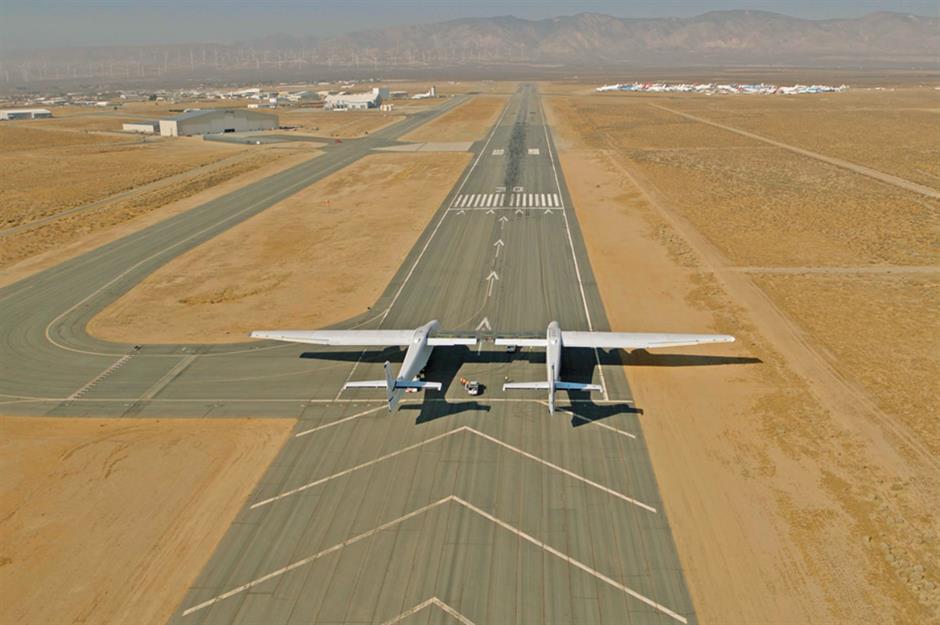
The gigantic aircraft is designed to be a reusable air launch platform. It aims to reduce the long wait times between constructing and launching satellites; give scientists the ability to launch rockets regardless of the weather; and significantly reduce the immense cost of sending rockets into space.
Alongside its record-breaking wingspan, the 50-foot-tall (15m), 238-foot-long (73m) plane is powered by six turbofan engines, has 28 wheels and two cockpits and boasts a payload capacity of more than 226.8 tonnes.
Stratolaunch ‘Roc’: 385 feet
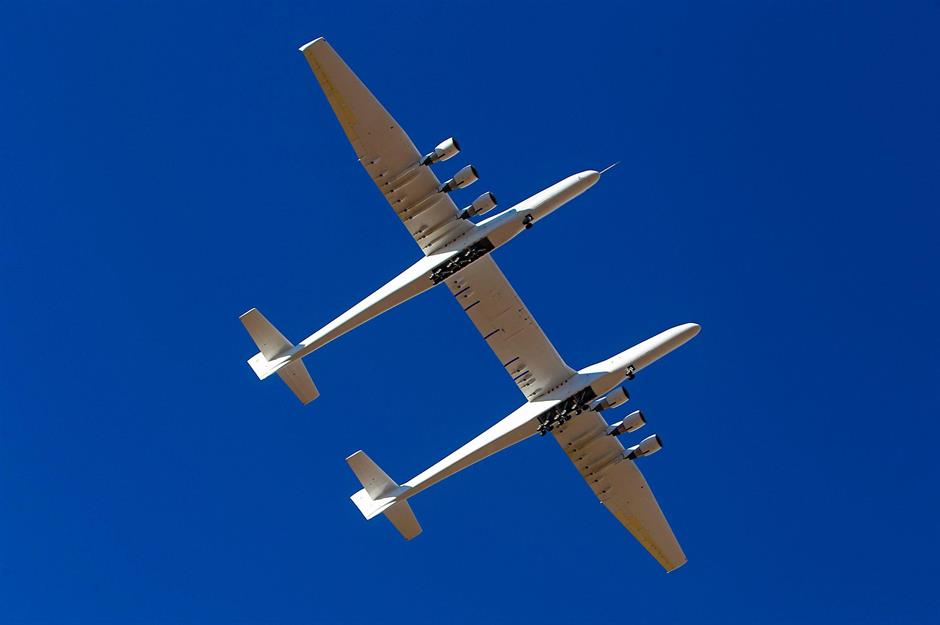
Now owned by Cerberus, the Stratolaunch Roc completed its first flight in 2019 – a two-and-a-half-hour test flight above the Mojave Desert watched by a cheering crowd.
In December 2023, the Roc completed its first test flight with a Talon-A hypersonic vehicle as its payload – its 12th flight overall, lasting three hours and 22 minutes. By June 2025, it had completed 24 test flights.
Now discover how air travel changed in every decade from the 1920s to today