20 of the worst snowstorms in US history
Ferocious winter weather
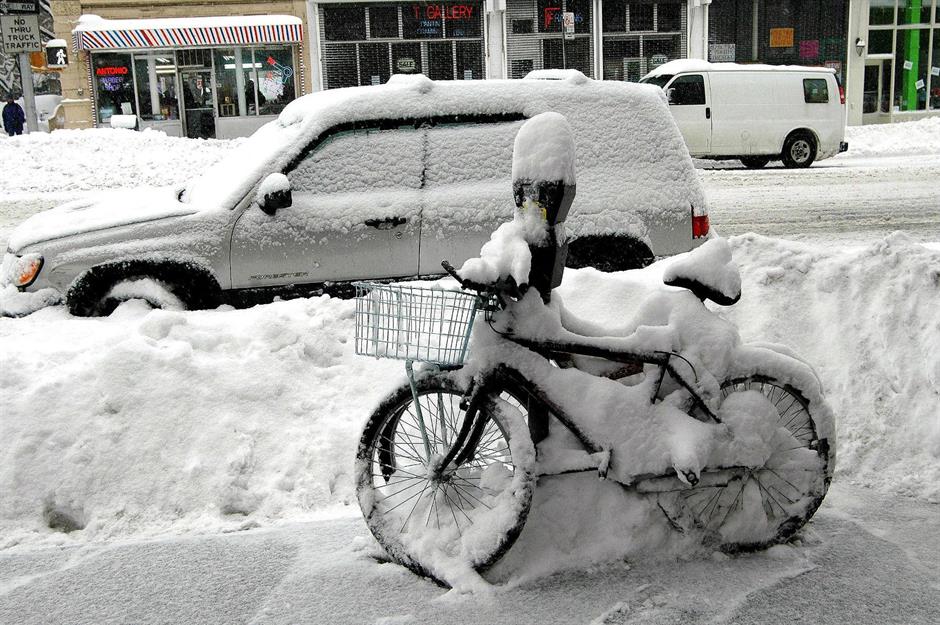
Snow can turn a city into a magical winter wonderland, but it can also leave devastation and destruction behind. We look at some of the most powerful blizzards, hurricanes, and snowfall, from the 1880s to today, that have left their mark on the USA.
Read on to discover the most ferocious storms in US history...
1888: the Great White Hurricane
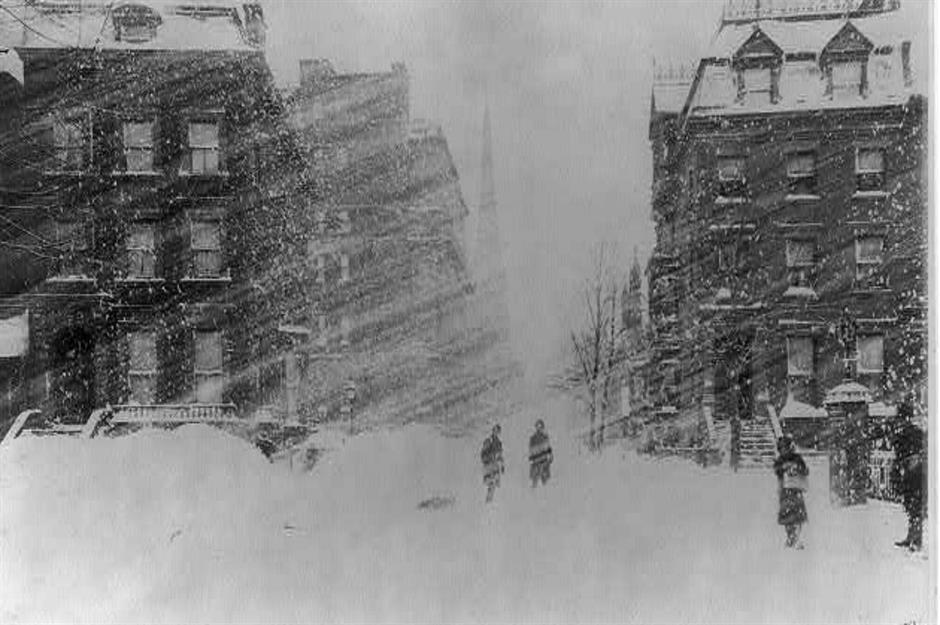
March 1888 saw one of the most severe blizzards in US history. New York and New Jersey were hardest hit, with some parts buried under 3ft 4in of snow in what became known as the ‘"Great White Hurricane."
1888: the Great White Hurricane
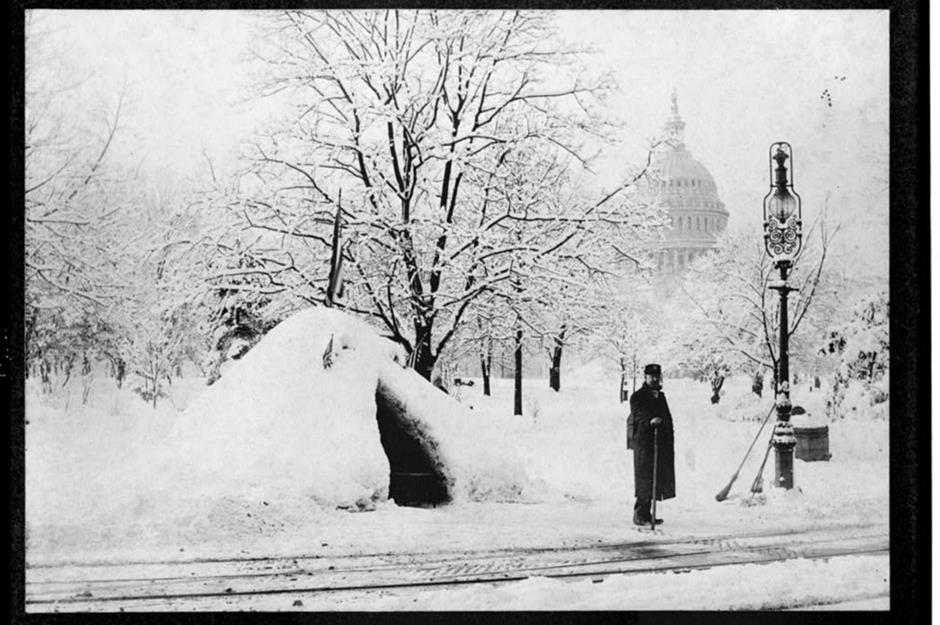
Across 10 states, about a quarter of the population of 19th-century America felt the effects. The snowdrifts brought down telephone lines and buried trains leaving passengers stranded, while fierce winds caused 200 ships to flounder.
In total it's believed more than 400 people lost their lives, the worst death toll in US history from a winter storm.
Sponsored Content
1899: the Great Arctic Outbreak
While temperatures across the country were unusually low during the early part of February 1899, it wasn't until the middle of the month that the chill really took hold. Thanks to anticyclones moving in from Canada, the Eastern states and the Midwest were the worst hit by the freezing outbreaks.
By February 10th the mercury was sitting at below -18°F in some areas, with parts of New Jersey seeing 1ft 8in of snow.
1899: the Great Arctic Outbreak
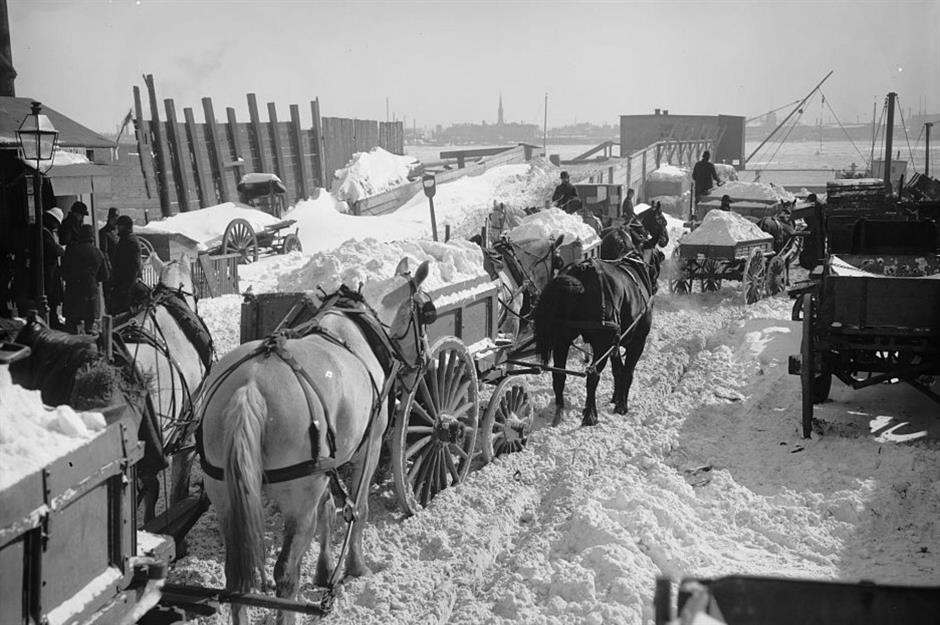
The area around Washington DC experienced 51 hours of straight snowfall, while further south ice flowed from the Mississippi into the Gulf of Mexico and blocked the river's traffic. Crops were destroyed and animals suffered badly too, with at least 100 people losing their lives to the extreme conditions.
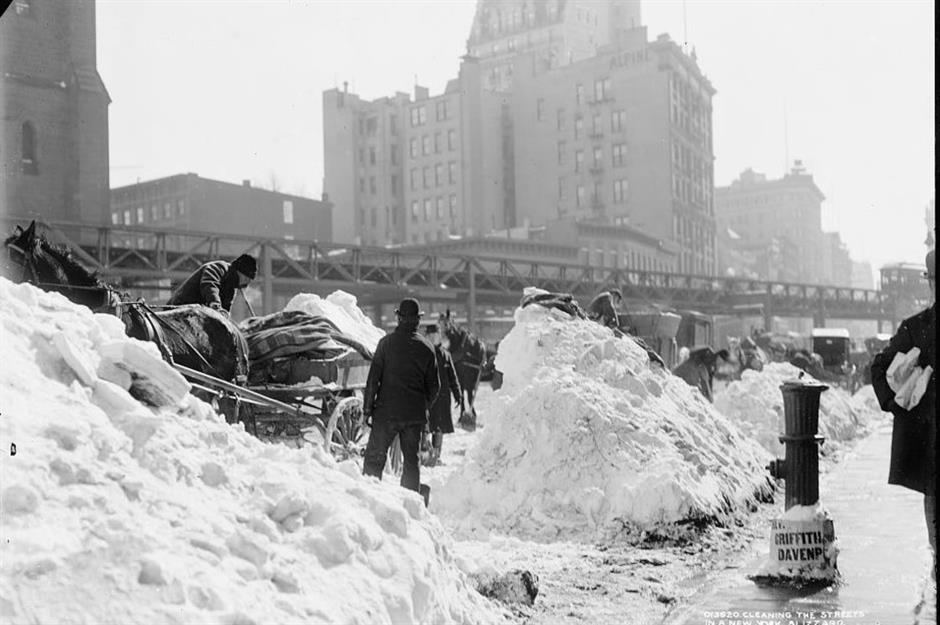
Captured here is the clean-up operation in New York City, where snow was gathered in horse-drawn carts and dumped into the river.
1913: the Great Lakes storm
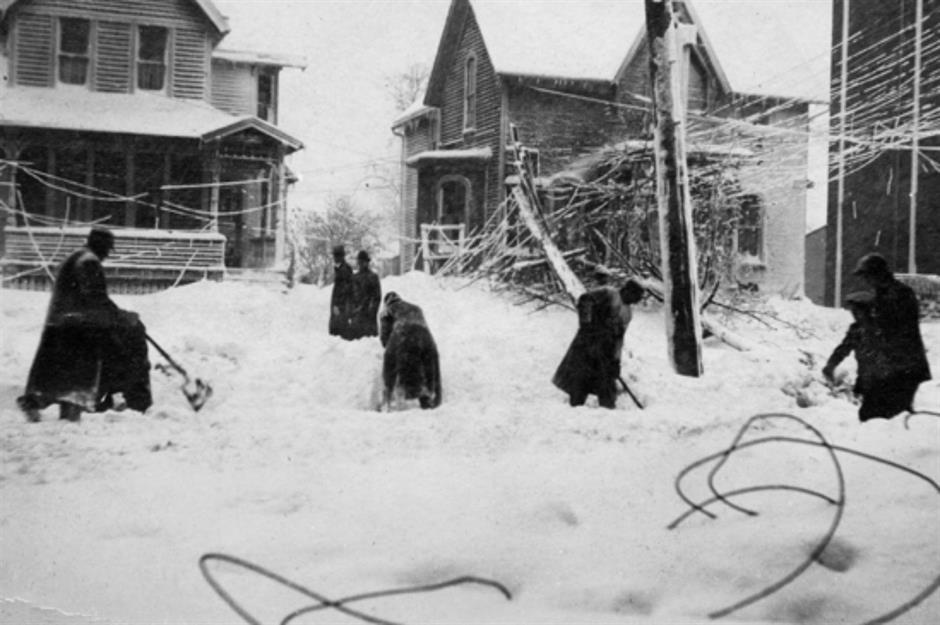
Also known as the "Big Blow" or the "White Hurricane" due to its blizzard-like qualities, the Great Lakes Storm is among the deadliest natural disasters in US history.
It battered the Great Lakes Basin from November 7-10, 1913 with gusts up to 90 miles per hour and 35-foot waves.
Sponsored Content
1913: the Great Lakes storm
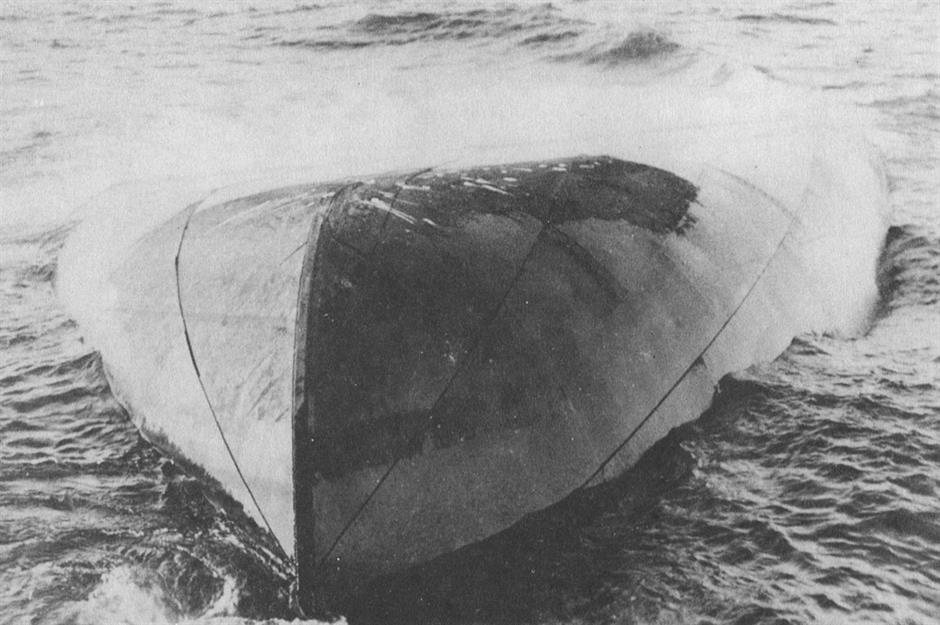
Around 12 ships sank and dozens of others were wrecked, including the Charles S. Price, pictured here, which was thrown upside down near the southern end of Lake Huron.
The storm is estimated to have killed up to 300 people – a higher number than all the other major Great Lakes disasters combined.
1922: Knickerbocker Storm
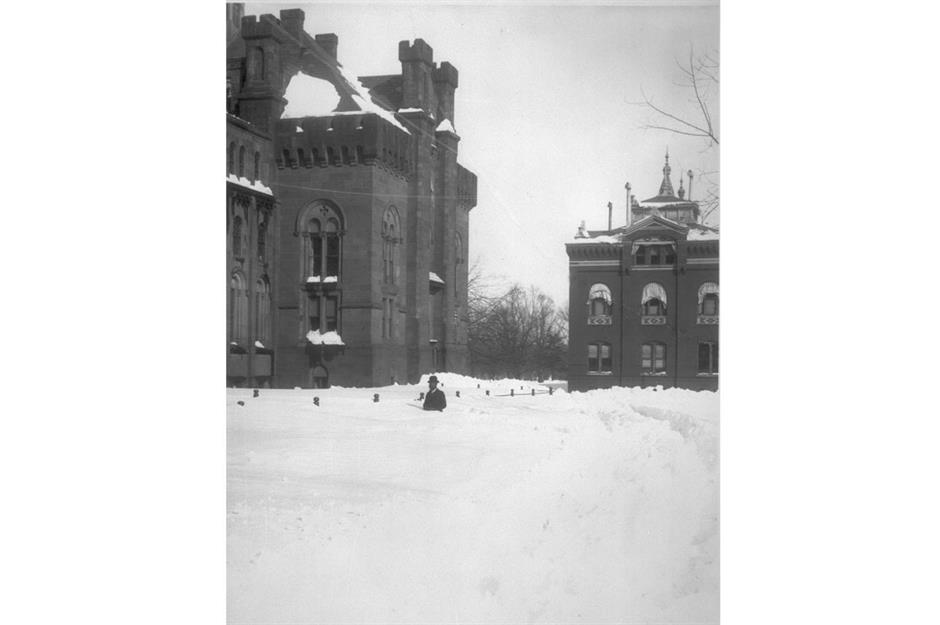
Beginning during the evening of January 27, the so-called Knickerbocker Storm saw a total of 2ft 4in of snowfall in just over 24 hours in Washington DC, a record for a single storm.
The huge snowstorm dump was a surprise as local forecasts had predicted mild weather just the day before.
1922: Knickerbocker Storm
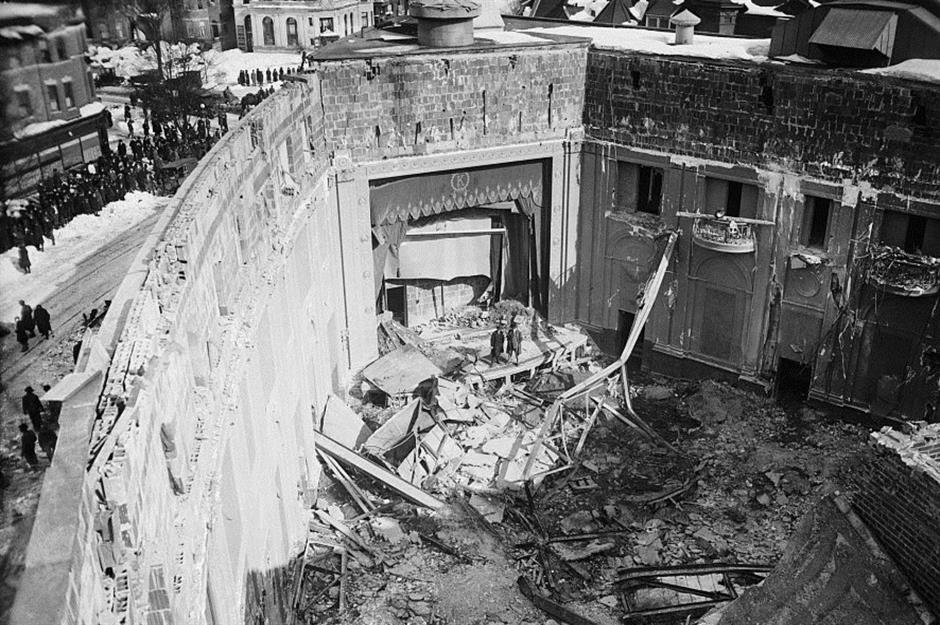
There is a tragic story behind the storm's name. It took on the title after the Knickerbocker Theater in Washington DC, whose roof collapsed under the weight of the snow on Saturday January 28, with hundreds of movie-goers inside.
Wet snow and concrete fell on audience members during an intermission, killing 98 people and injuring 133 more.
Sponsored Content
1967: Chicago blizzard
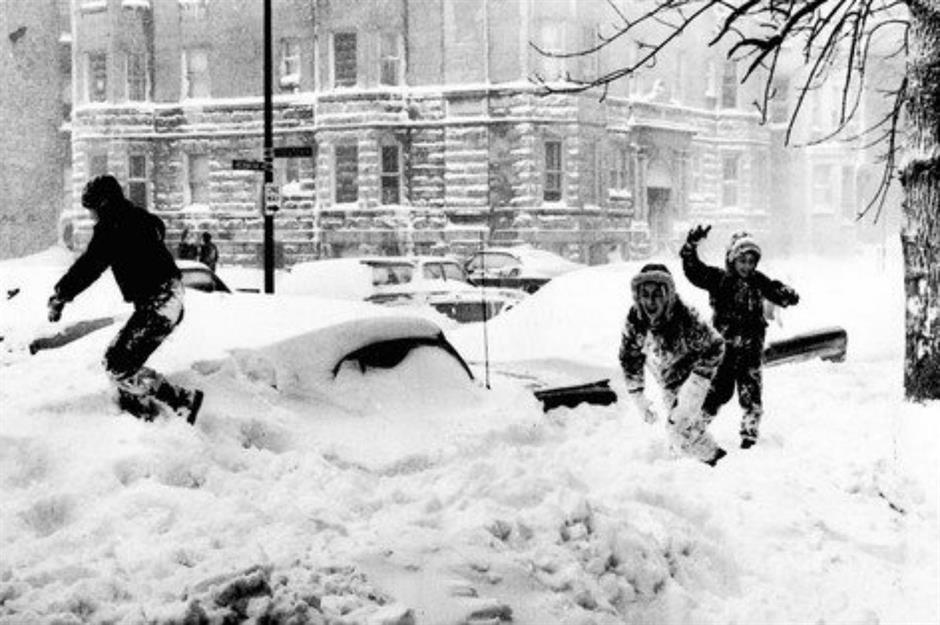
This 1967 snowstorm really caught the Windy city by surprise dropping nearly two feet of snow on Chicago on January 26 and 27 – despite only a few inches being predicted to fall.
1967: Chicago blizzard
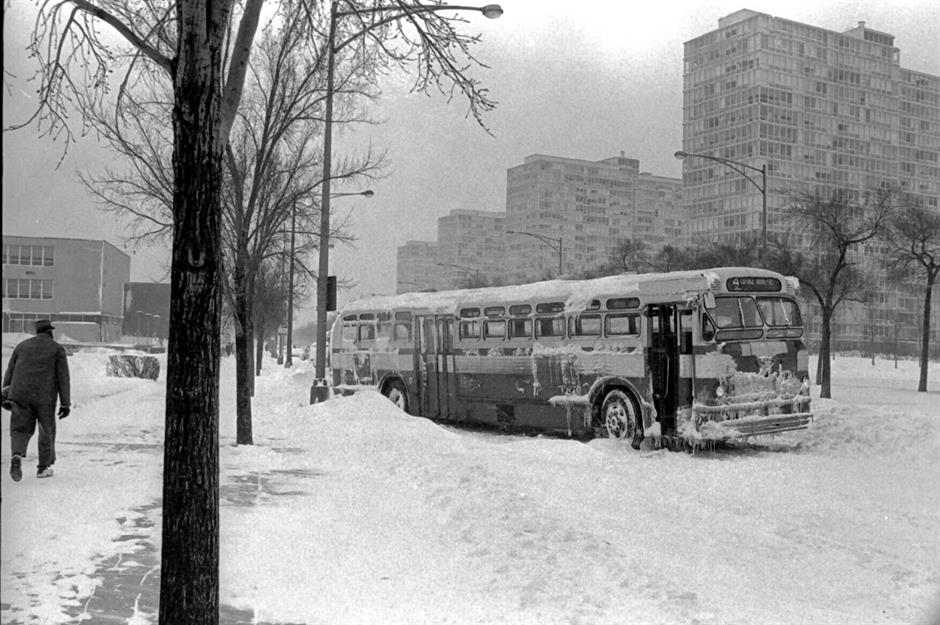
The storm paralyzed the city, leaving around 800 Chicago Transit Authority buses and 50,000 cars abandoned on the city's streets and forcing the closure of O'Hare Airport. Many commuters didn't make it home on Thursday January 26, forced to stay in hotels or at work.
By the Friday morning the city's streets were impassable with helicopters needed to deliver essential supplies to hospitals.
1993: Storm of the century
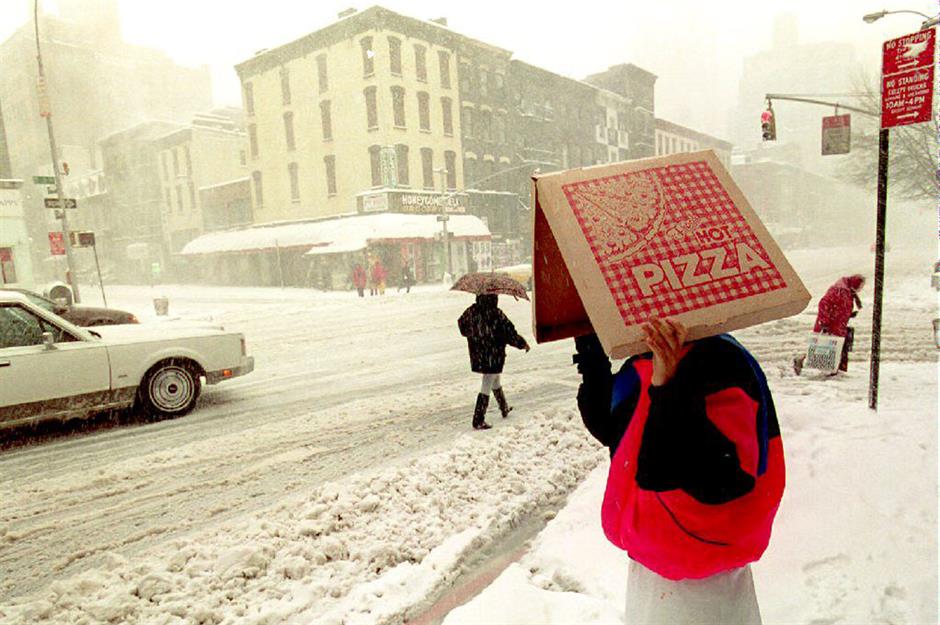
Also known as the Superstorm of 1993, the violent weather wreaked havoc as it moved up the eastern states from the Gulf of Mexico to Canada from March 12-15.
It's believed to still be one of the most costly weather events of the 20th century in the USA, with the damage thought to have been $5.5 billion ($9.9bn today).
Sponsored Content
1993: Storm of the century
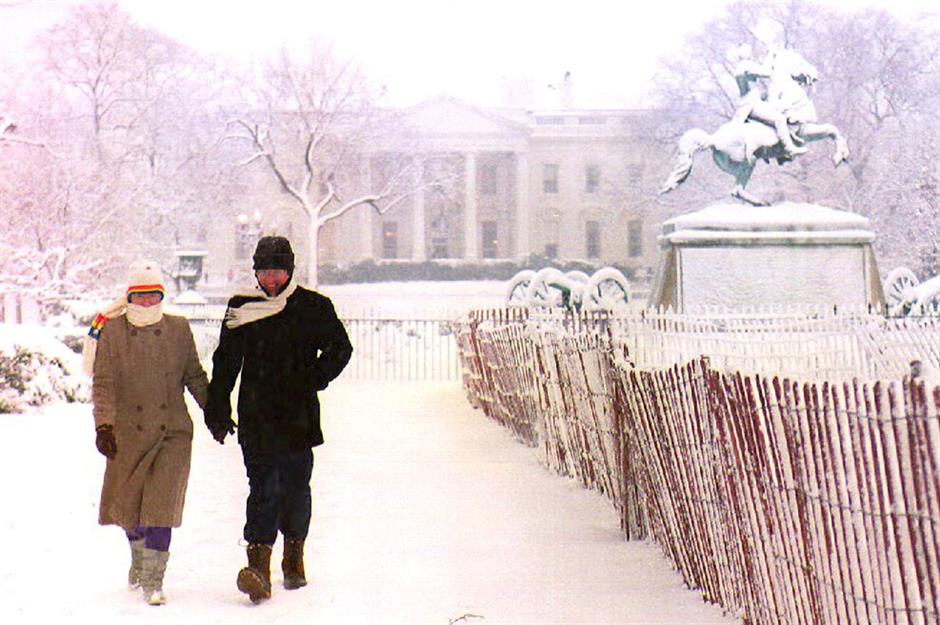
With a central pressure usually only found in Category 3 hurricanes, the storm left tornadoes, coastal flooding, crippling snow, and freezing temperatures in its wake, including in Washington DC (pictured).
Over 270 people lost their lives from 13 states.
1996: North American blizzard
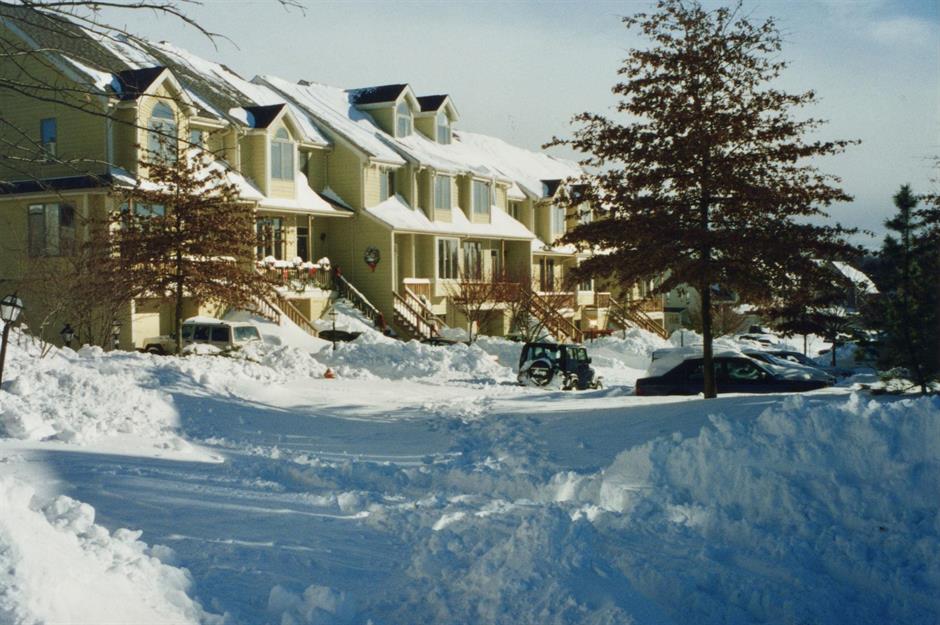
From January 6-8, one of the most devastating snowstorms struck the USA, with at least 60 people losing their lives. As the storm moved from city to city it broke records in Rhode Island, Philadelphia, Virginia, and Providence, with snow reaching heights of up to four feet in some places.
This photo shows a four-wheeled drive vehicle stranded in the snow in Baltimore, Maryland.
1996: North American blizzard
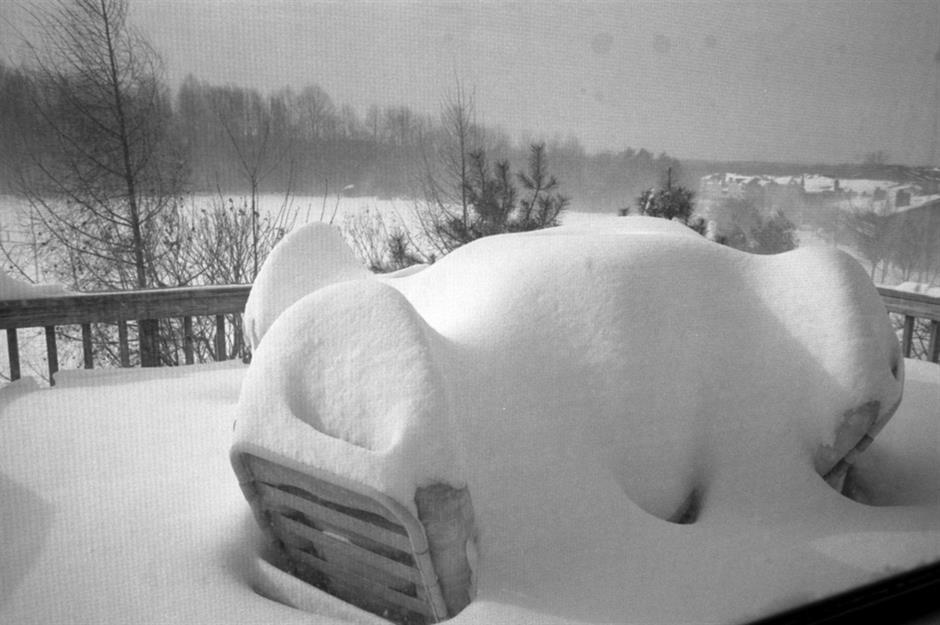
President Bill Clinton was forced to shut down the Federal Government for nearly a week due to the severe conditions and he declared DC and nine states to be disaster areas.
The blizzard took a serious toll on property all over the country, with roofs collapsing due to the sheer weight of the snow and further damage caused by coastal flooding on Long Island.
Sponsored Content
2003: Presidents' Day Storm
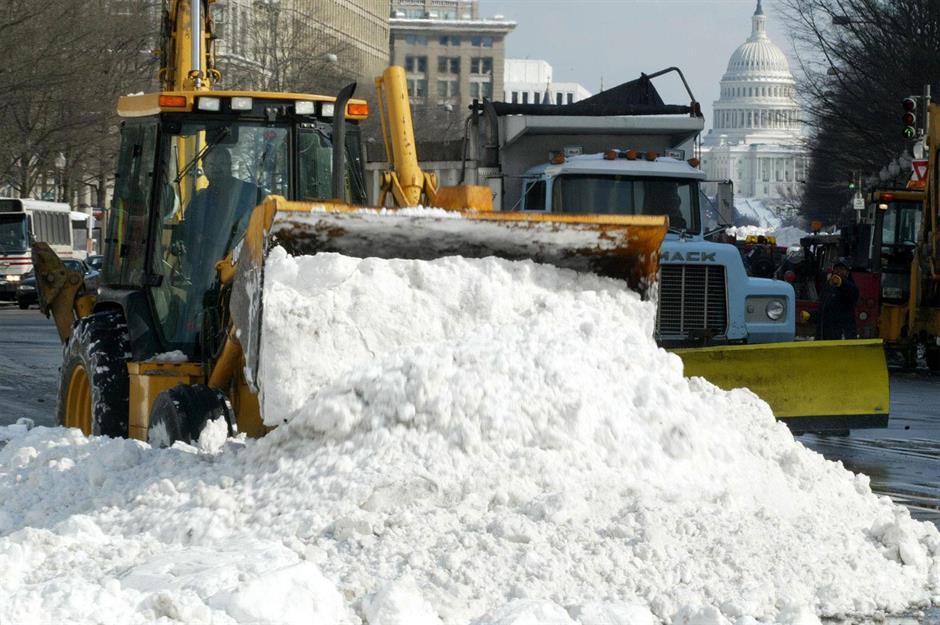
Starting on February 15 and continuing until February 18, the Presidents' Day storm of 2003 was the biggest to hit Washington DC since the infamous blizzard of 1996 and left the city shut for three days.
Pedestrians outnumbered vehicles on the streets as mountains of snow piled up due to high winds, which created huge snowdrifts.
2003: Presidents' Day Storm
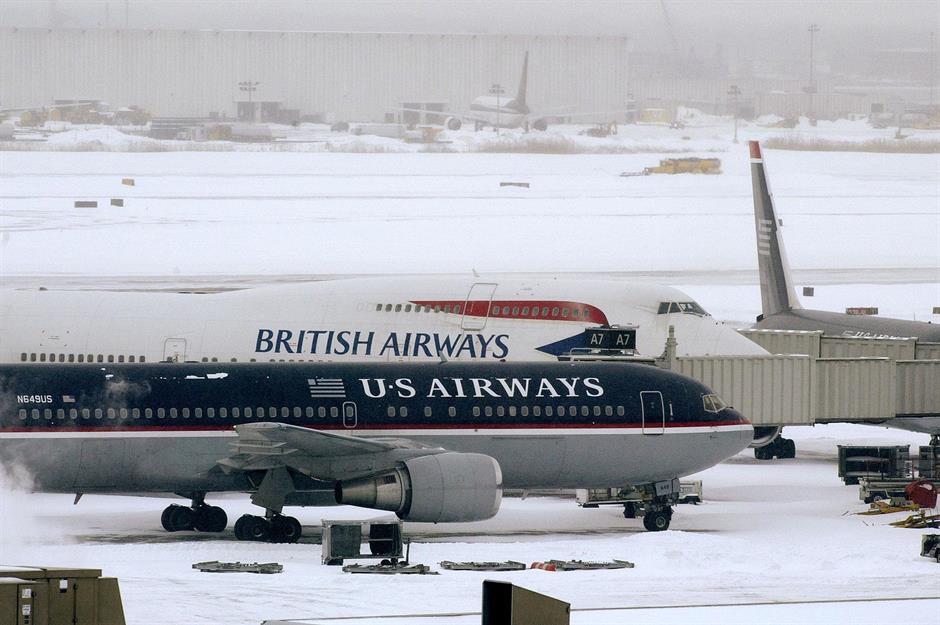
The storm caused transport mayhem along the East Coast. Flights into and out of Pennsylvania airport (pictured) were canceled due to the weather.
Meanwhile, passengers were forced to sleep on camp beds while waiting for delayed flights at LaGuardia airport in New York.
2005: Massachusetts blizzard
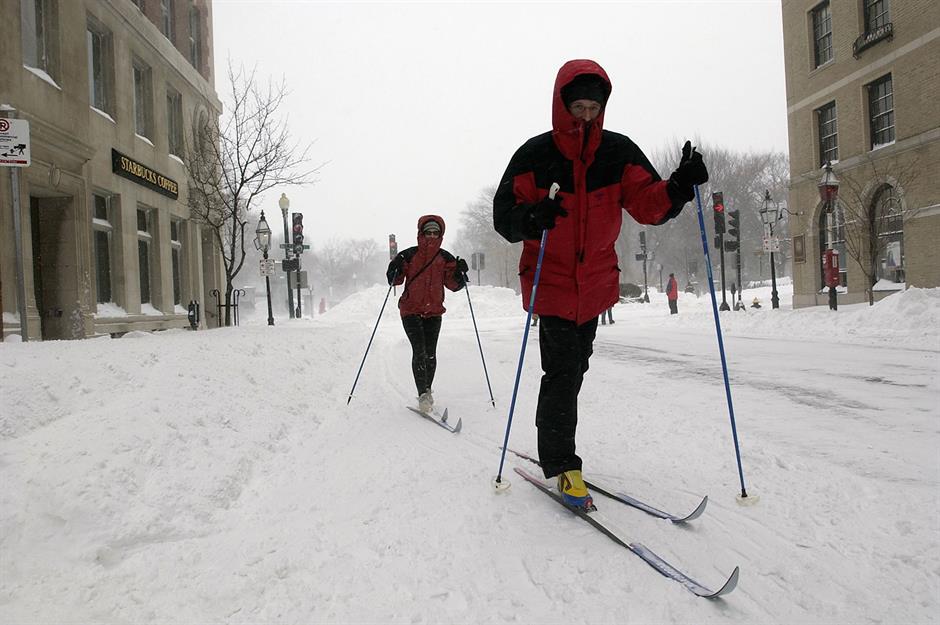
It's not often you can confidently ski through Boston city center. However, the blizzard of 2005 hit much of Massachusetts hard, with 1ft 10in of snow falling in two days from January 22-23.
But with the bulk of the snow dump occurring over a weekend, many locals braved the cold to make the most of the pristine powder.
Sponsored Content
2005: Massachusetts blizzard
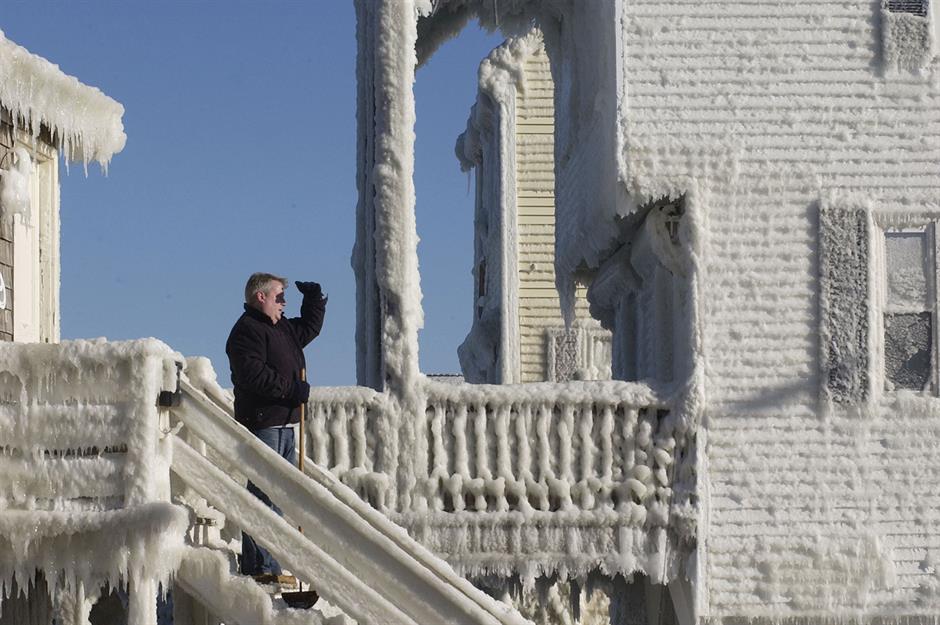
The hurricane-force winds that topped 80 miles per hour whipped the snow up into towering drifts. Pictured here is a house in Hull, just south of Boston Harbor.
Many homes suffered damage in the storm with thousands of properties around Cape Cod left without power.
2006: New York blizzard
When the Big Apple was hit by a big dump of snow from February 11-12, 2006, it was the largest on record. The two days of appalling conditions saw New York enduring "thundersnow," a lightning storm where the precipitation is snow rather than rain and a very rare weather event for the city.
2006: New York blizzard
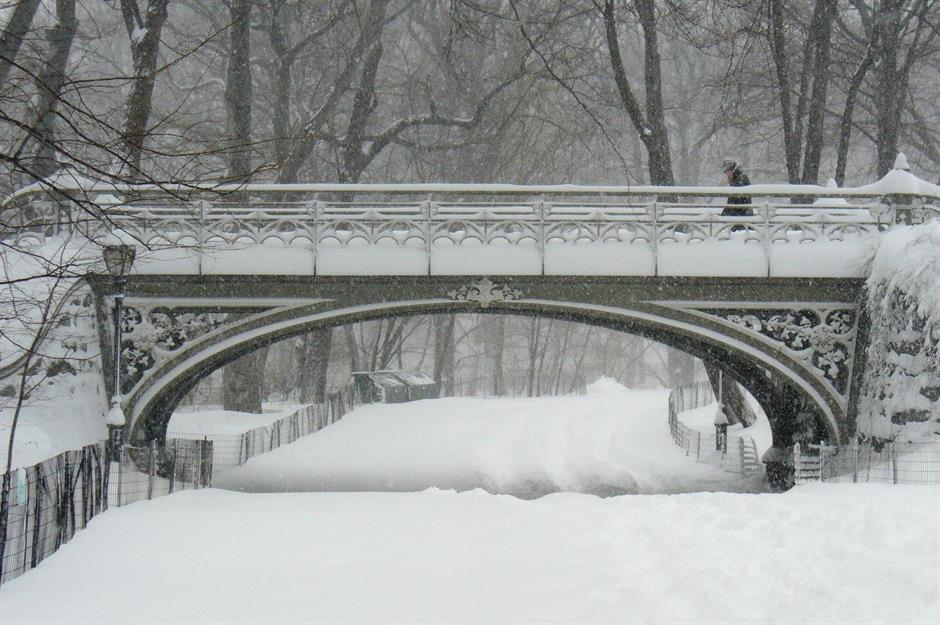
A total of 2ft 3in of snow fell in Central Park over a period of 16 hours. Three airports were closed and there were reports of thousands stranded.
Sponsored Content
2010: Snowmageddon
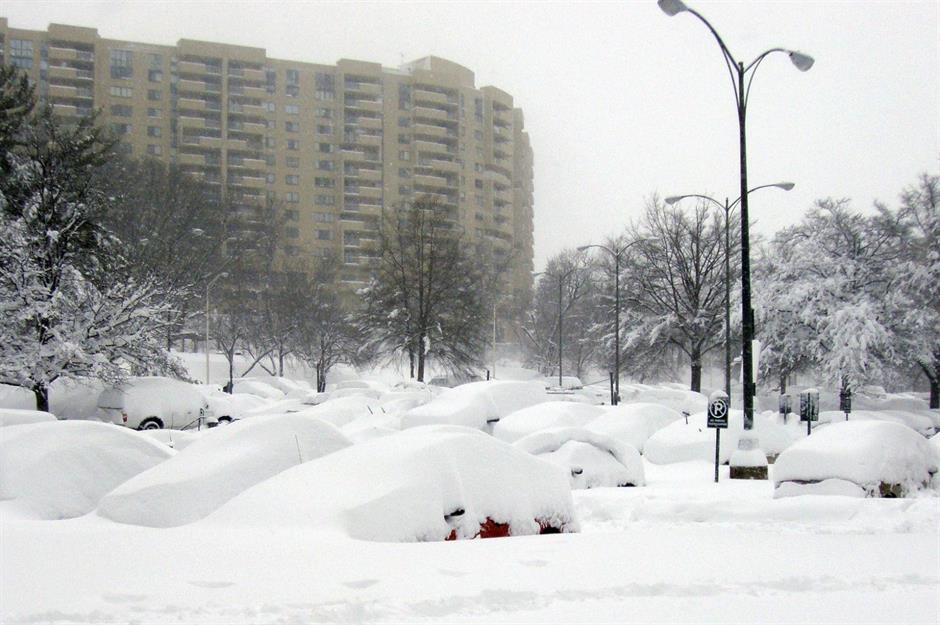
The blizzard of February 5-6, 2010, known as "Snowmageddon," stretched from California to the East Coast, covering around 69% of the country in a thick blanket.
Pictured here is a parking lot at Pentagon City, Arlington, Virginia.
2010: Snowmageddon
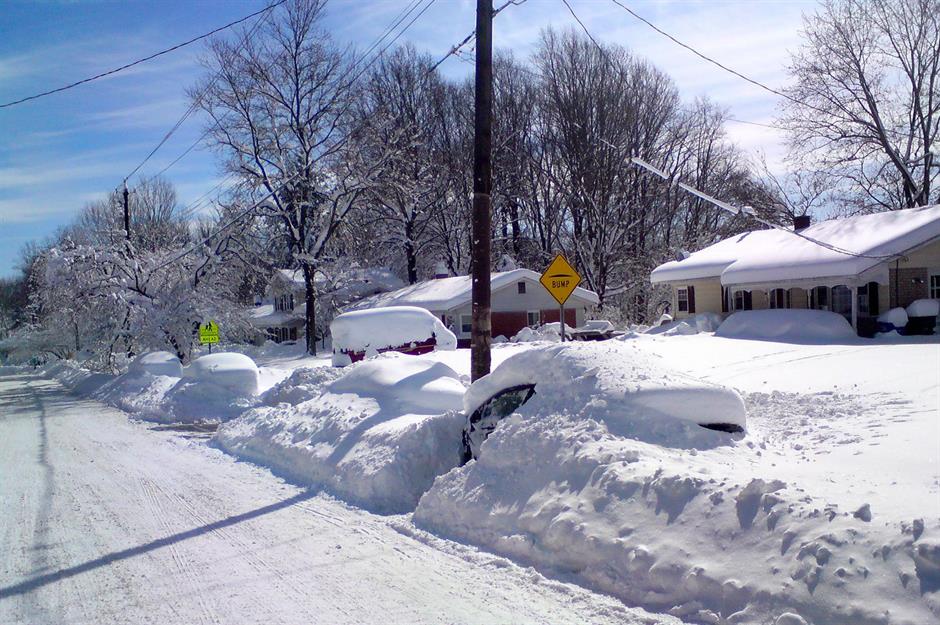
It was actually President Obama who dubbed the storm – which dumped up to 2ft 9in of snow in places such as Pennsylvania and Washington DC – as "Snowmadgeddon."
The area was hit by a second blizzard known as "Snoverkill" just five days later in what became Washington DC’s snowiest winter on record.
2010: post-Christmas blizzard
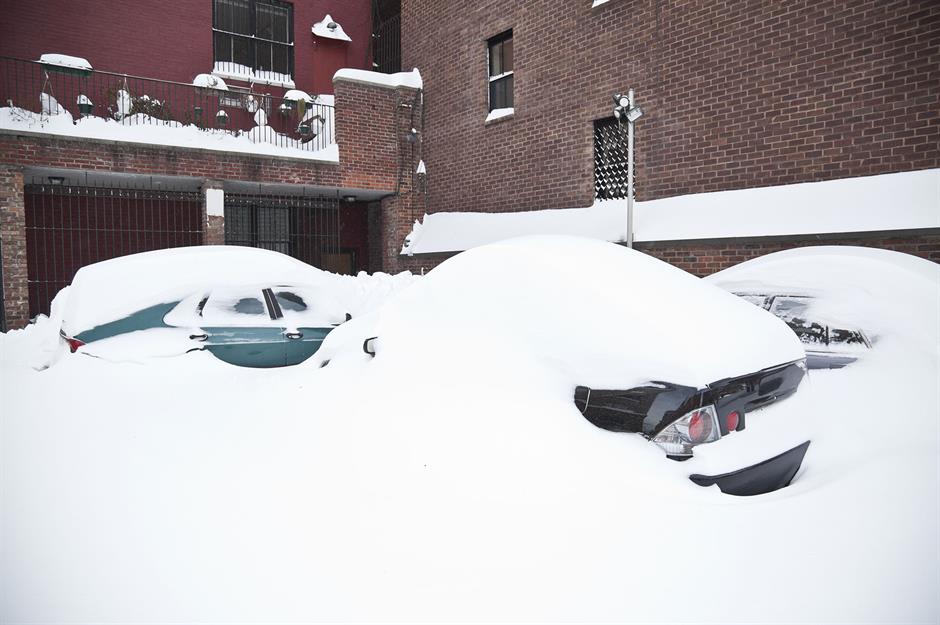
Those who missed out on a white Christmas got more than their fill of snow when a blizzard carved a path of disruption along the East Coast just after the festive season in 2010.
Pictured here is West Village in New York, on December 27, 2010.
Sponsored Content
2010: post-Christmas blizzard
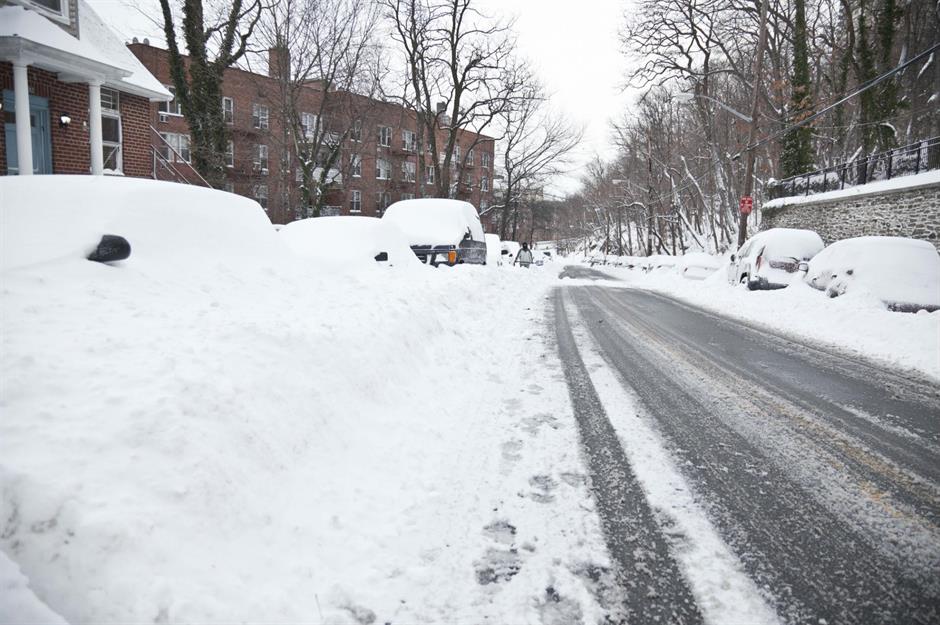
New York's transportation system took a harsh battering, with reports of passengers being stranded on the subway for up to nine hours and others sleeping overnight at Penn Station.
All three of the Big Apple's airports were closed too.
2011: Groundhog Day storm
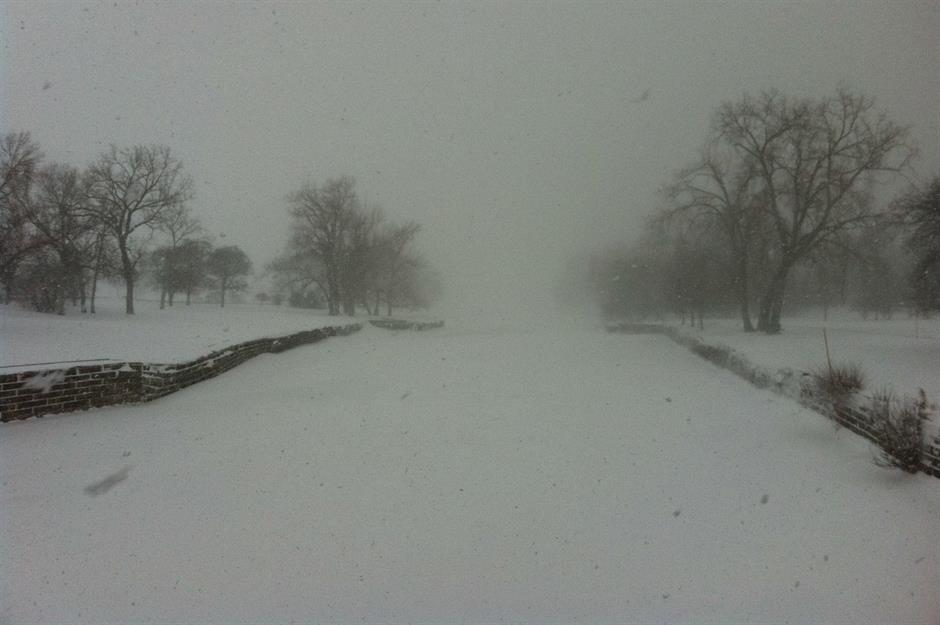
Starting on February 1, 2011, more than 1ft 8 in of snow fell in Chicago, making it the third-largest blizzard in the city's history.
Nearly 1,000 cars were stranded, with power outages disrupting life in the Windy City and across Northern Illinois.
2011: Groundhog Day storm
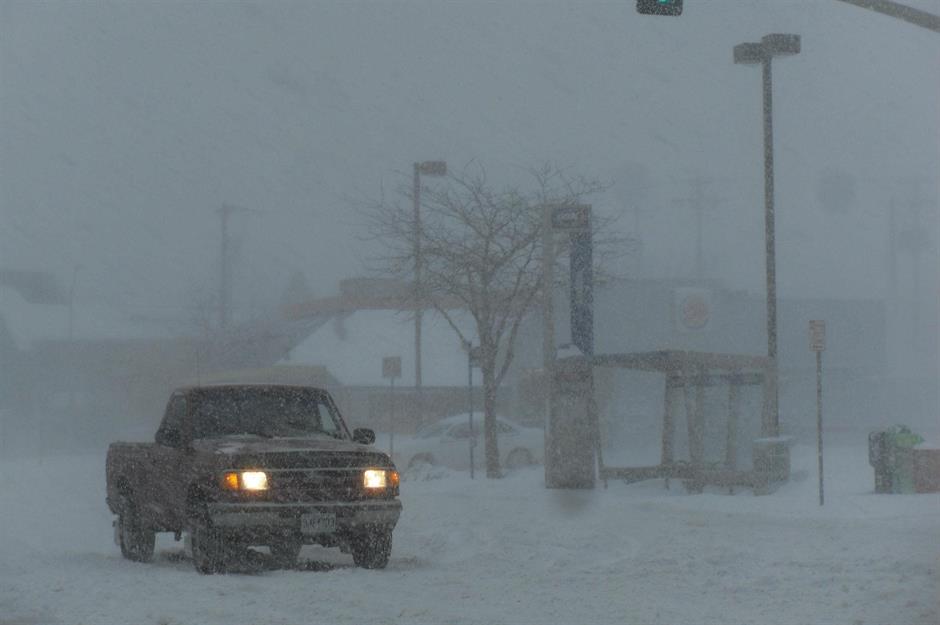
Other cities in the storm's path included Tulsa, Detroit, and New York. A state of emergency was declared in Missouri. Kansas City, pictured here, received a blizzard warning for only the third time in its history.
Sponsored Content
2014: Snowvember storm
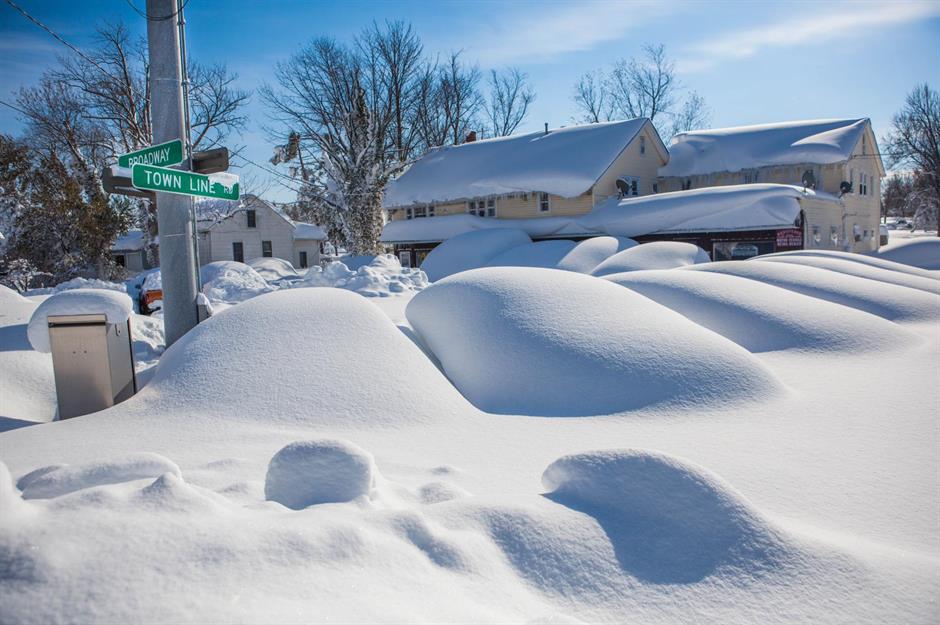
The whole country was watching Buffalo, New York, and its weather in 2014. The second-largest city in the state saw a total of seven feet of snow falling from November 17-19 due to two separate storms.
2014: Snowvember storm
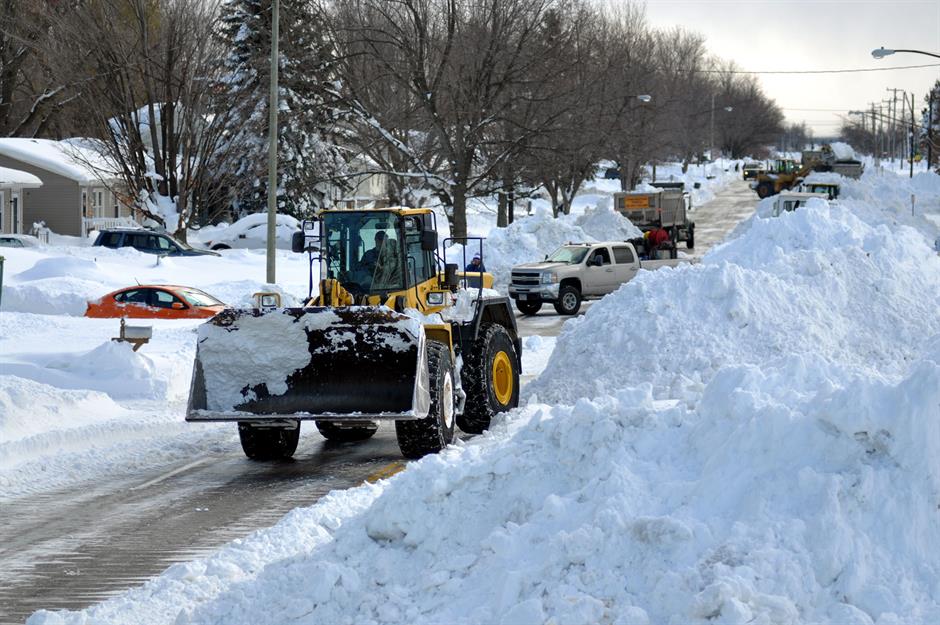
The heavy snow closed a 100-mile section of the New York State Thruway and postponed the NFL game between the Bills and Jets. The game was subsequently held in Detroit.
2016: Storm Jonas
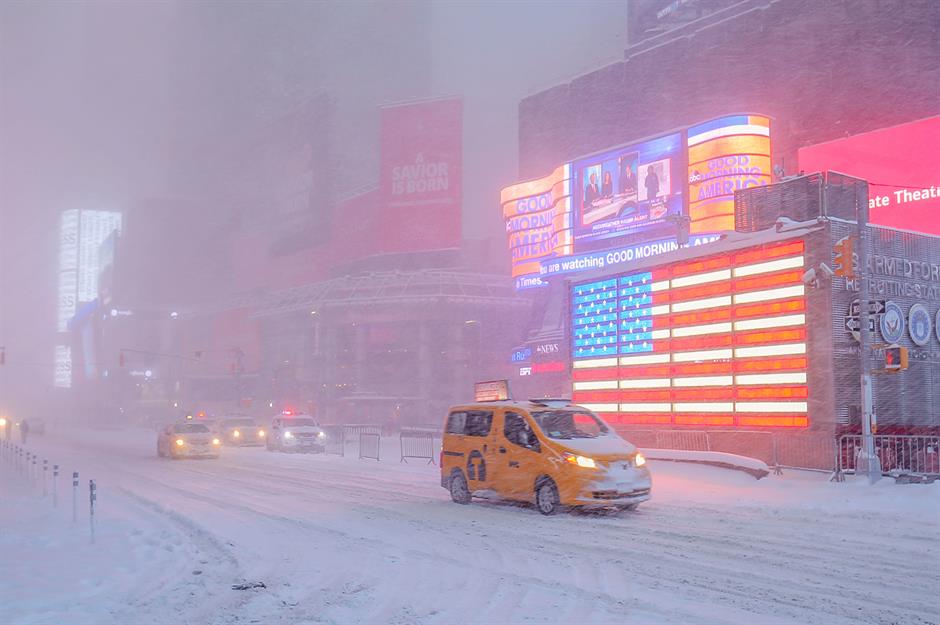
From January 22-24, 2016 Storm Jonas brought deep snow to the Eastern Seaboard. In New York Jonas beat the snowfall record of 2006 with levels reaching around 2ft 6in at JFK Airport.
Sponsored Content
2016: Storm Jonas
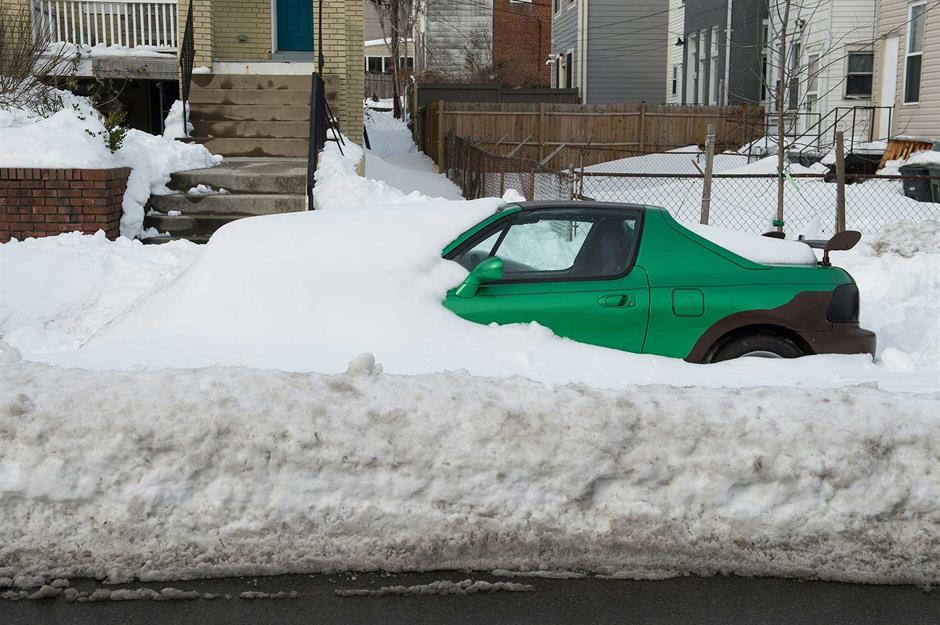
Three days after the storm passed, cars in Washington DC were still stuck. The storm caused over 50 deaths and a state of emergency was declared with travel bans put in place until the snow was cleared.
2018: "bomb cyclone"
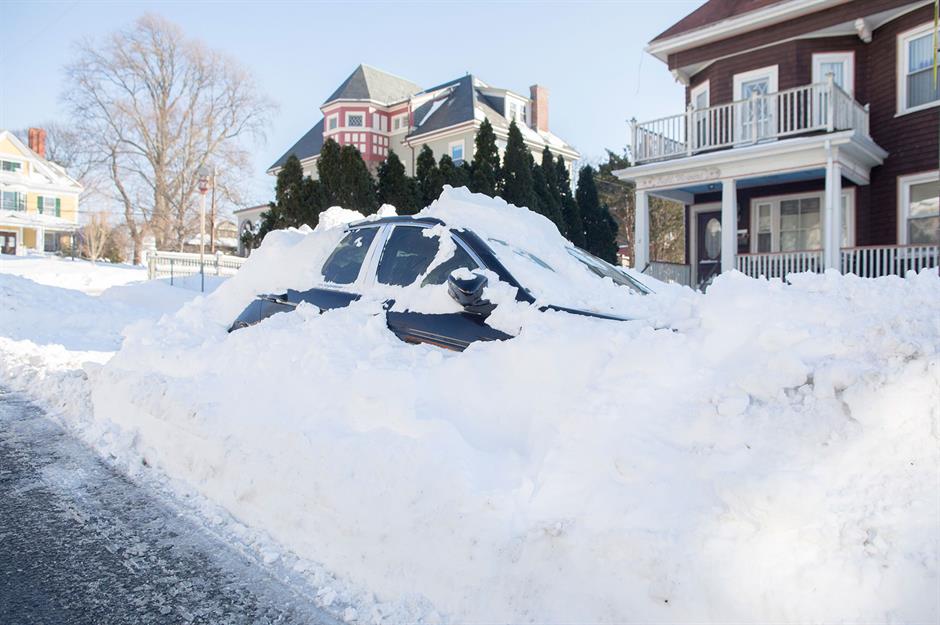
From January 2-6, 2018 a "bomb cyclone" battered the northeastern states. As this snowed-in vehicle in the Dorchester neighborhood shows, Boston was one of the worst-hit areas, with around one foot of snow falling.
2018: "bomb cyclone"
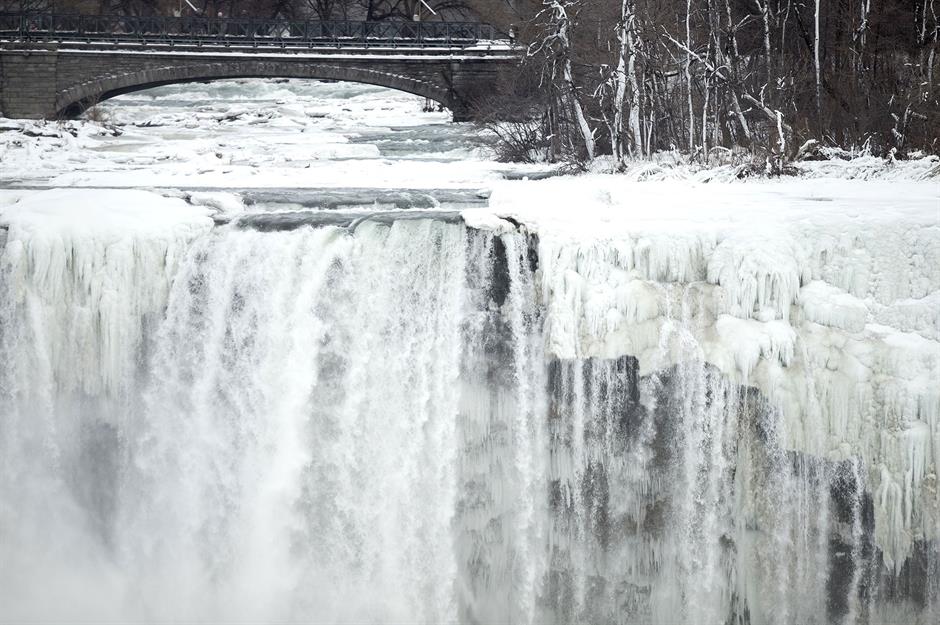
The fearsome and sudden storm caused Niagara Falls to appear as if frozen (although the water continued to flow underneath). High winds were also a problem, with the cruise ship Norwegian Breakaway sailing from the Bahamas to New York suffering severe flooding.
The "bomb cyclone" was the cause of 22 deaths.
Sponsored Content
2019: Polar Vortex
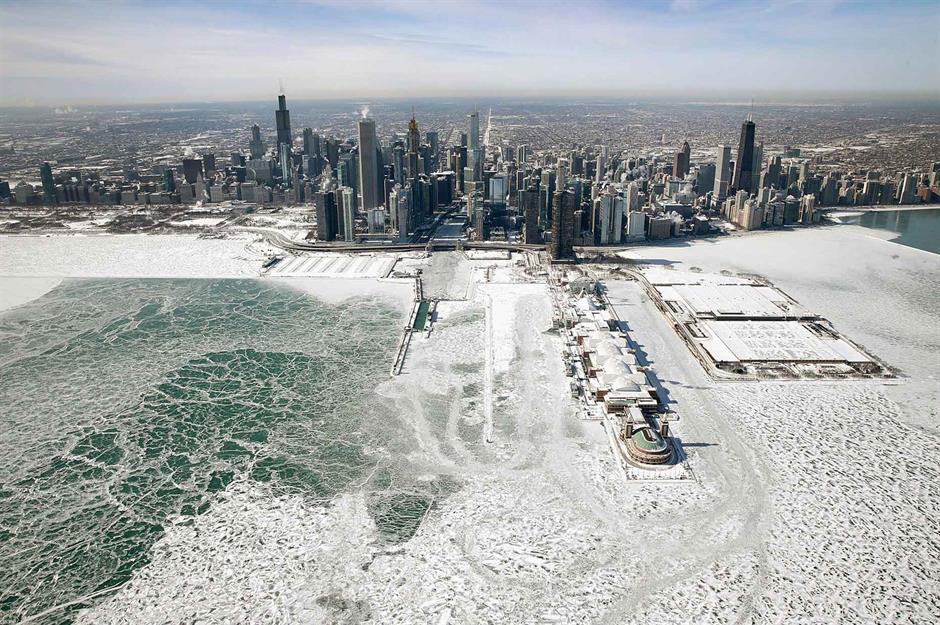
Arctic winds brought staggeringly low temperatures across the Midwest in January 2019, transforming Chicago into an icy wasteland.
Temperatures dropped to a record-breaking -23°F and the mercury dropped so low that parts of the Chicago River froze over.
2019: Polar Vortex
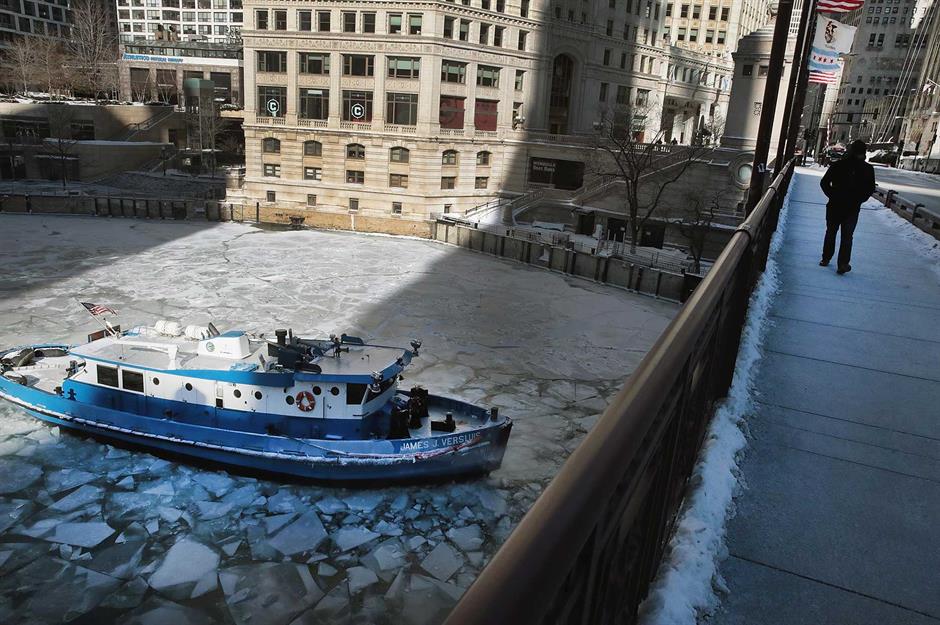
The weather was so bad that the Illinois governor declared a state of emergency due to the plummeting temperatures, which at times were colder than Antarctica. To keep the city's trains running, gas fires were used on the rail tracks while those at home were requested to turn down their heating to conserve much-needed energy.
However, it was those who were homeless or working outdoors that were hardest hit, with 21 fatalities and many others treated for frostbite.
2021: Snowstorm, southern and central states
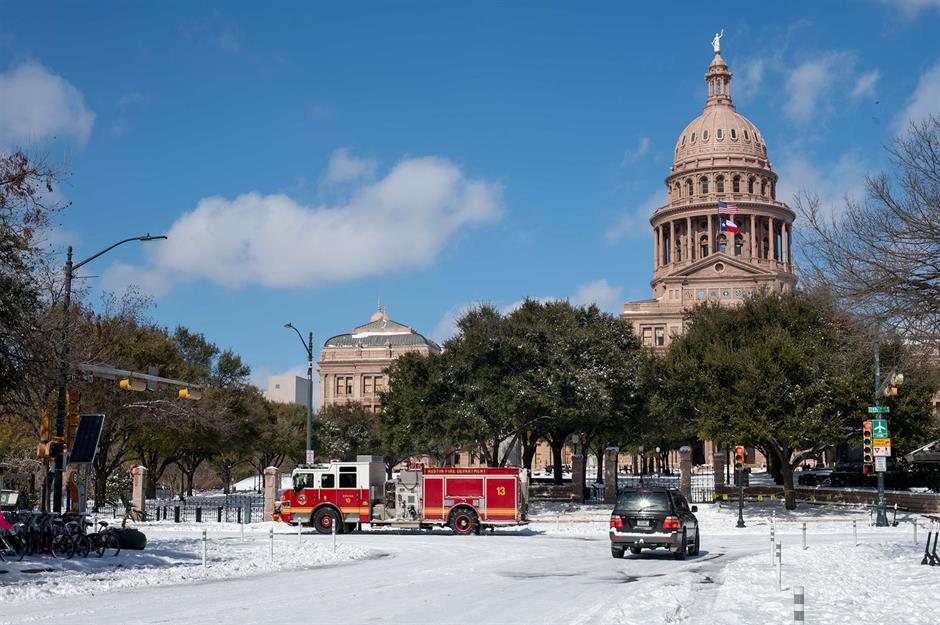
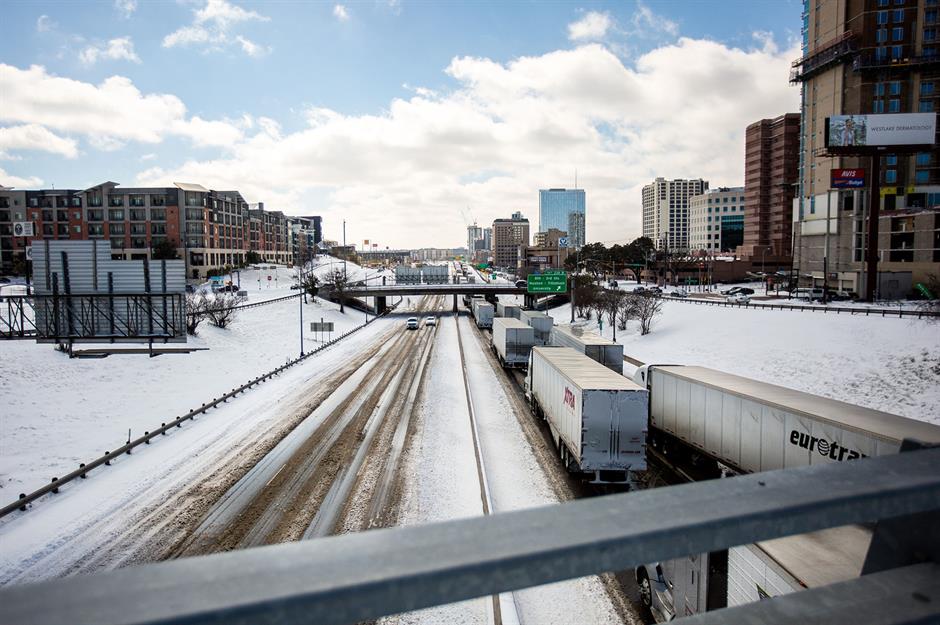
February 2021 brought some of the coldest temperatures to Texas for 30 years, as the mercury dropped to -0.4ºF on Valentine’s Day.
The freezing weather resulted in at least 21 deaths reported across Texas, Louisiana, Kentucky, North Carolina, and Missouri, but 100 million people were affected as snow covered over 70% of the US.
Sponsored Content
2021: Snowstorm, southern and central states
In Austin (pictured) the snowfall was around five inches and caused more than just traffic jams. The low temperatures prompted a surge in power usage in the Lone Star State, that resulted in blackouts as the energy grid failed.
Some of the deaths were caused by carbon monoxide poisoning due to people seeking alternative ways to stay warm, such as running cars or generators in homes and garages not built to retain heat.
2022: Snowstorm, eastern states
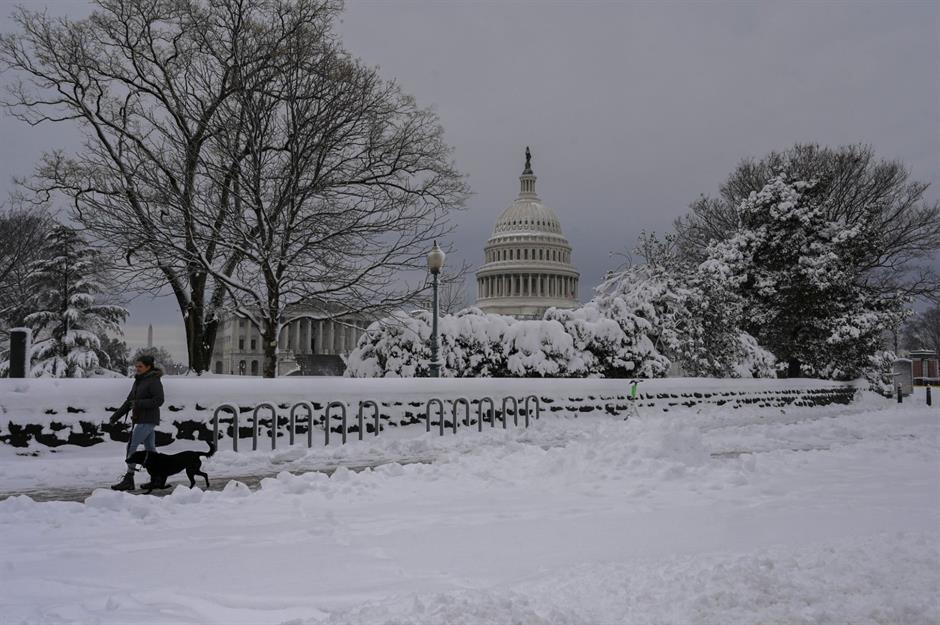
New year 2022 brought another winter storm to the eastern states, which saw record-breaking snow fall in Washington DC. The capital was hit with 8.5 inches of the white stuff on January 3, the most it had seen since the same time in 2016.
Two children were killed after trees were uprooted and fell on houses, while hundreds of thousands of people were left without power across the East Coast.
2022: Snowstorm, eastern states
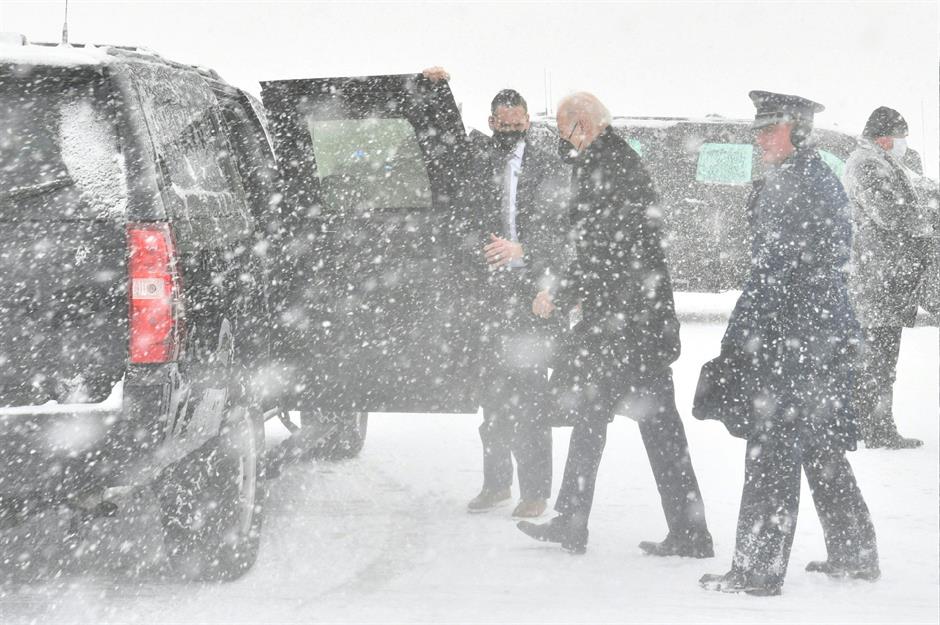
Even then President Joe Biden felt the brunt of the blizzard. His helicopter, along with thousands of other flights across the US, was grounded in Maryland, choosing instead to drive to the White House for duties.
He's pictured here at Andrews Air Force Base.
Sponsored Content
2022: Snowstorm, Pacific Northwest
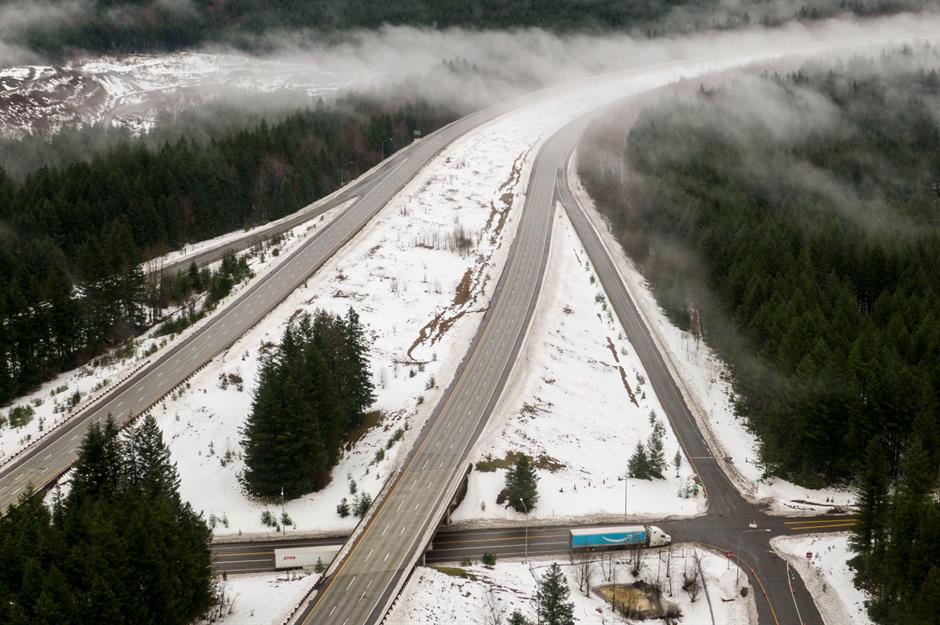
The West Coast was hit hard by both heavy rain and snowstorms in the first weeks of January 2022. A whiteout on January 7 forced Interstate 90 (pictured) over the Snoqualmie Pass to close for nearly four days. Heavy snow – two feet fell in just over 24 hours – caused a whopping 38 avalanches, which made the pass too dangerous for general traffic, with only freight vehicles able to travel first when it finally reopened on January 9.
There was further bad news for the region when a house in the Magnolia neighborhood of Seattle partially collapsed, sliding 15 feet down a steep slope during a landslide caused by record-breaking rain.