Vintage photos of camping holidays that will spark nostalgia
Carry on camping
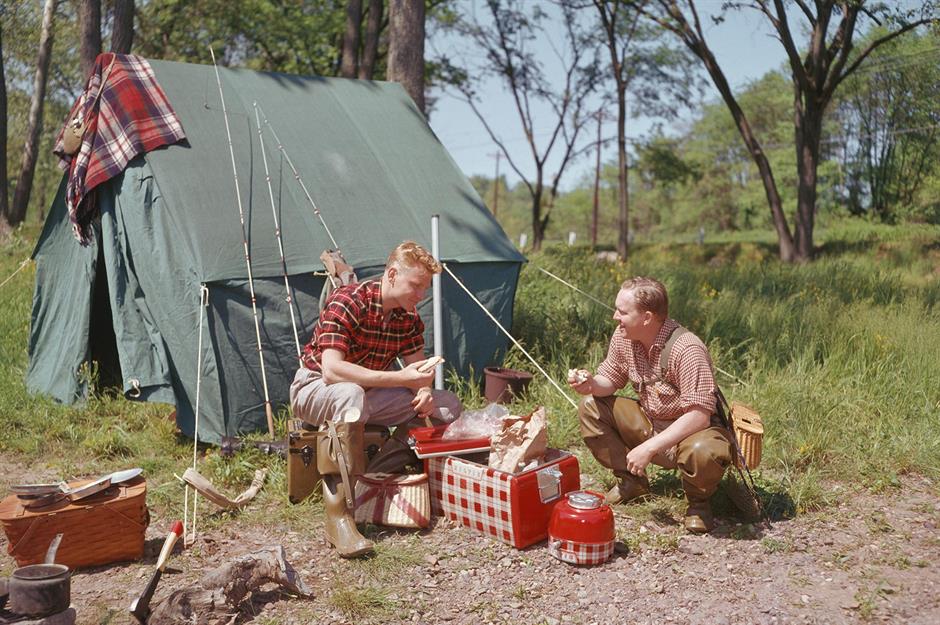
Take a step back in time and explore a century of camping and caravanning holidays, from the early 1900s to the 1990s. These vintage photos reveal changing habits, outdoor innovations and the evolving ways families and adventurers have connected with nature. From canvas tents and wood-burning stoves to luxury motorhomes, each image offers a window into the joys of holidaying in the wilderness.
Click or scroll through this gallery to relive the charm and nostalgia of camping down the decades...
1910: Campers unwind on the banks of the River Thames
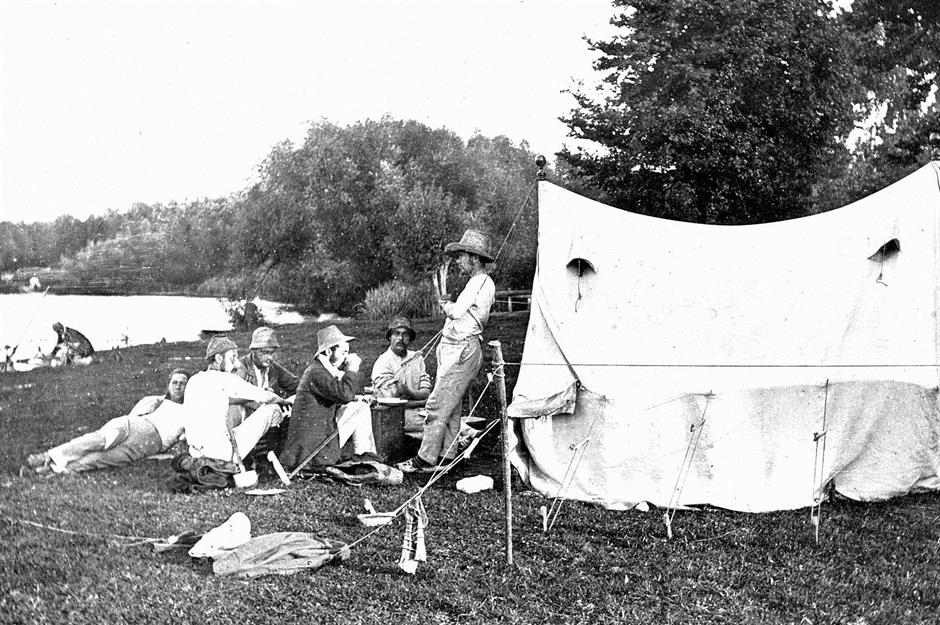
London might not seem the most obvious place to pitch a tent, yet in the late 19th and early 20th centuries, the UK capital was at the heart of a growing recreational camping craze. Pleasure boating along the River Thames had become a favourite pastime for many Victorians, and boaters often set up camp on the riverbanks for ease.
This 1910 photo captures a group of men relaxing by the water’s edge after what was likely a day spent boating. A wooden crate serves as a makeshift table, while clothes hang from the tent lines to dry in the open air.
1913: British prime minister David Lloyd George pitches up in the mountains
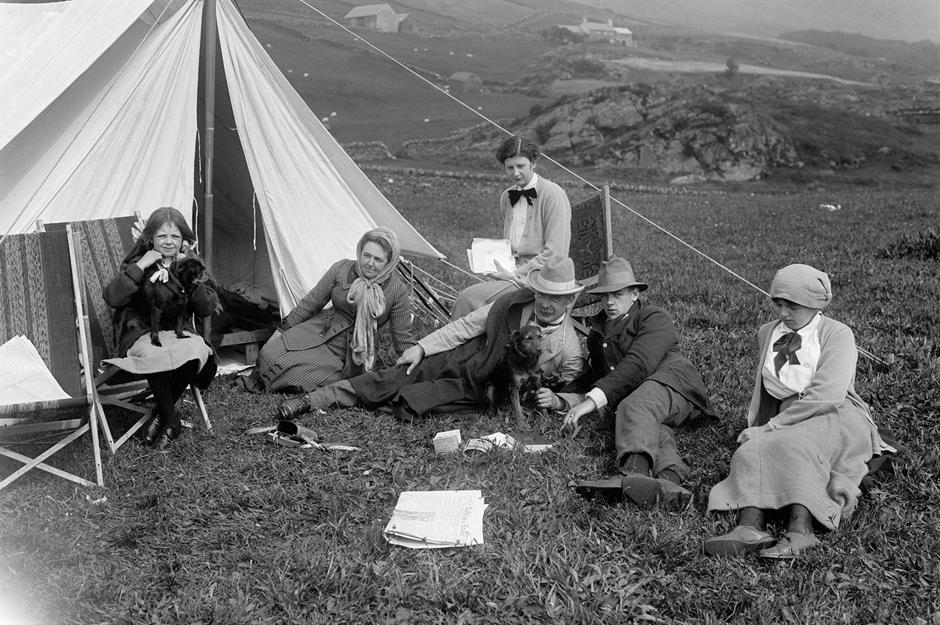
Captured during a camping holiday in May 1913, this photograph depicts David Lloyd George, then the UK’s Chancellor of the Exchequer. Just three years later, he would become the nation’s first Welsh prime minister. Deeply proud of his roots, Lloyd George often escaped the pressures of Westminster by retreating to the rugged landscapes of his native Wales.
In this scene, the politician and his family relax on the slopes of Moel Hebog, a mountain in Snowdonia in North Wales. Their campsite reflects the comforts of an upper-class excursion, complete with fabric-lined chairs and what appear to be raised bed frames inside their tent.
Sponsored Content
1921: A father gives his son a class in campcraft
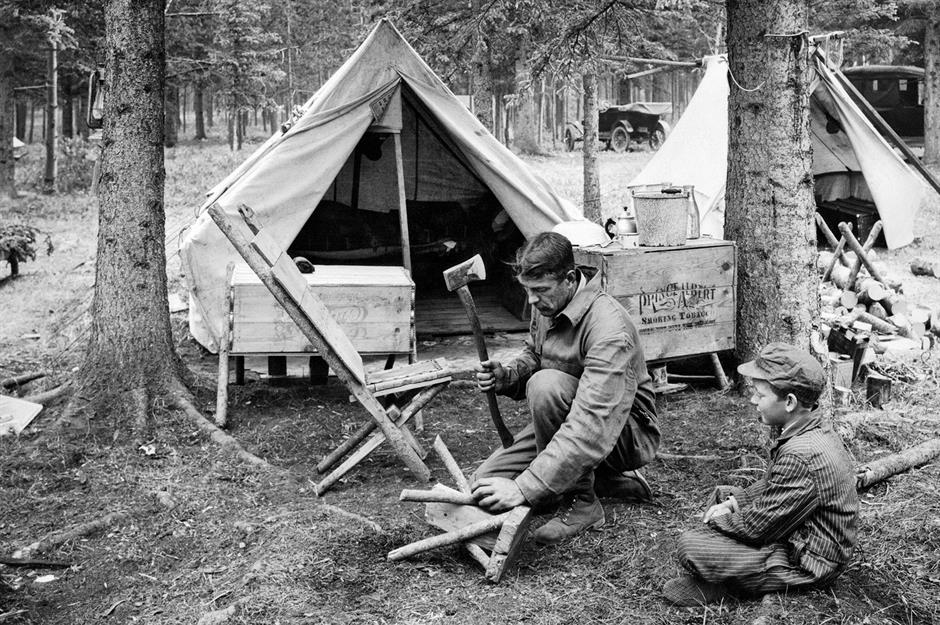
In the rugged woodlands of Banff, a rural town in Alberta, Canada, this camper makes good use of the surrounding resources to make his time in the wilderness more comfortable. Taken in 1921, the photograph shows him crafting a stool from logs and branches as his son looks on. Nearby stands a rustic wooden chair he has already constructed from local timber.
In the background, you can see motorcars parked between the trees. Auto camping – when vacationers would drive to camp sites, rather than hike – rose in popularity in the 1920s as car ownership increased.
1924: A campervan conversion offers a home on the road
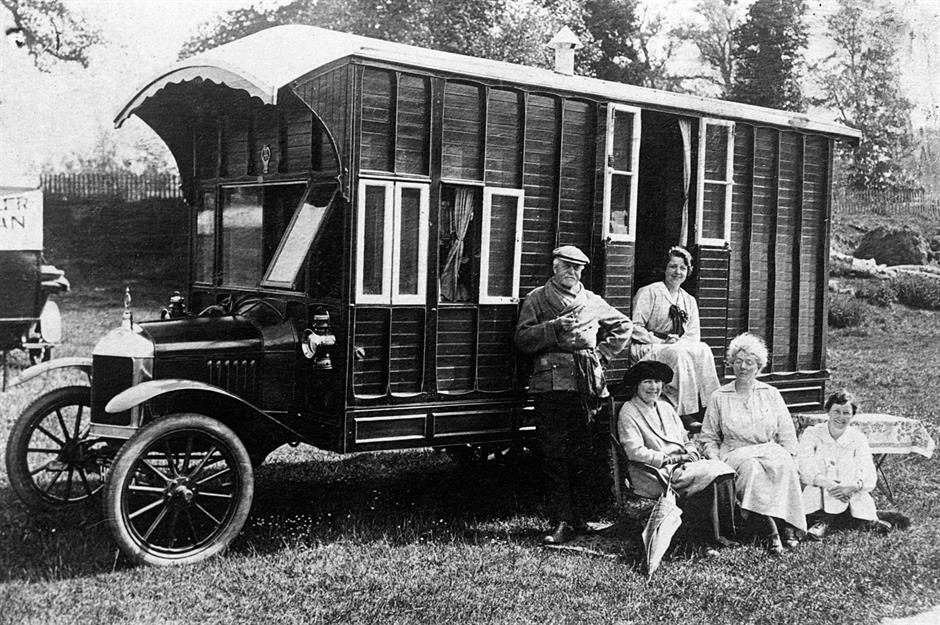
Turning vehicles into homes fit for the open road is far from a modern trend. This remarkable image from 1924 captures a family proudly posing beside their campervan conversion. Built on the chassis of a 1920 Morris Oxford motorcar, the transformed vehicle features a wood-panelled exterior, a surprisingly spacious interior and charming curtains hung in the windows.
Other wealthy campers of the era converted Packard motor trucks into luxurious homes on wheels, often featuring a sleeping loft above the cab.
1926: Boy Scouts make the most of the great outdoors
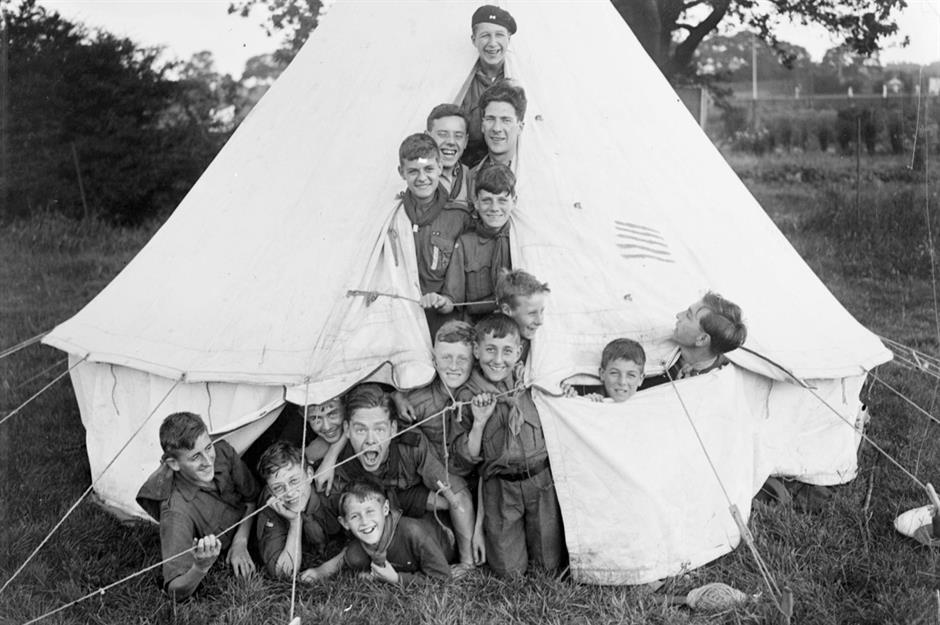
Founded in 1908 by Robert Baden-Powell, the Scout movement originated in Britain and soon expanded worldwide. The organisation was established to cultivate moral character and teach essential outdoor skills to young boys. Their training encompassed mapping, signalling, knot-tying, first aid and a variety of other practical skills rooted in outdoor life.
This photo, taken in August 1926, shows a Boy Scout troop camping in Muswell Hill, a leafy suburb on the outskirts of North London. Outdoor pursuits continue to be a core tenet of Scouting today.
Sponsored Content
1929: Campers bring their gramophone on holiday
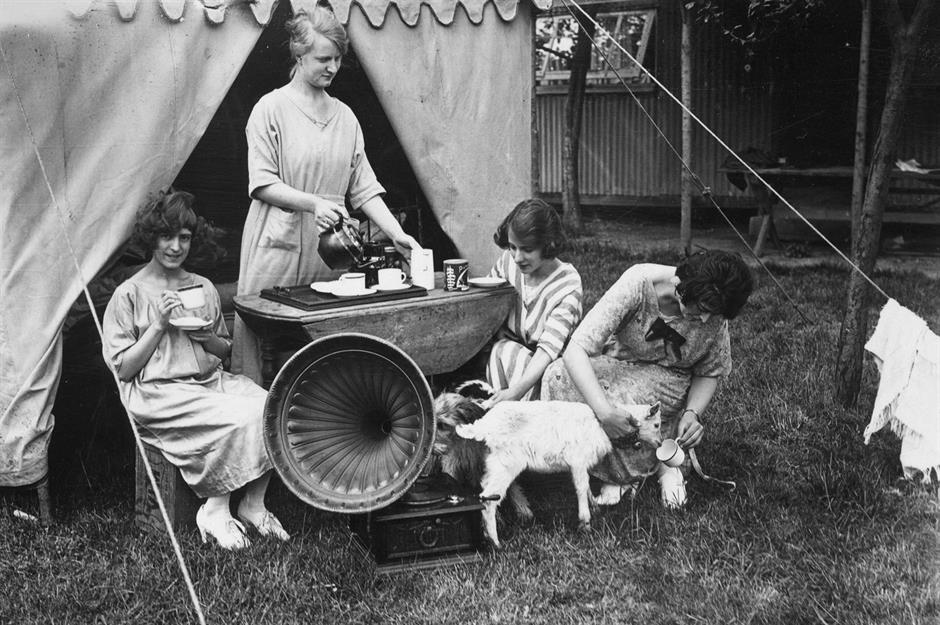
By the 1920s and 1930s, camping had evolved from a novel pastime into a mainstream holiday choice. Offering an affordable escape from the routines of daily life during the Great Depression – along with the freedom to pitch a tent almost anywhere – it appealed to people across the social spectrum.
As seen in this 1929 photograph, campers didn’t always forgo life’s little luxuries. This group, who pitched up in the Chiltern Hills of southern England, brought along a drop-leaf wooden table and even a gramophone. They’re pictured here enjoying tea and music outside their tent, accompanied by their dog and a visiting lamb.
1931: A camper collects stream water to make tea
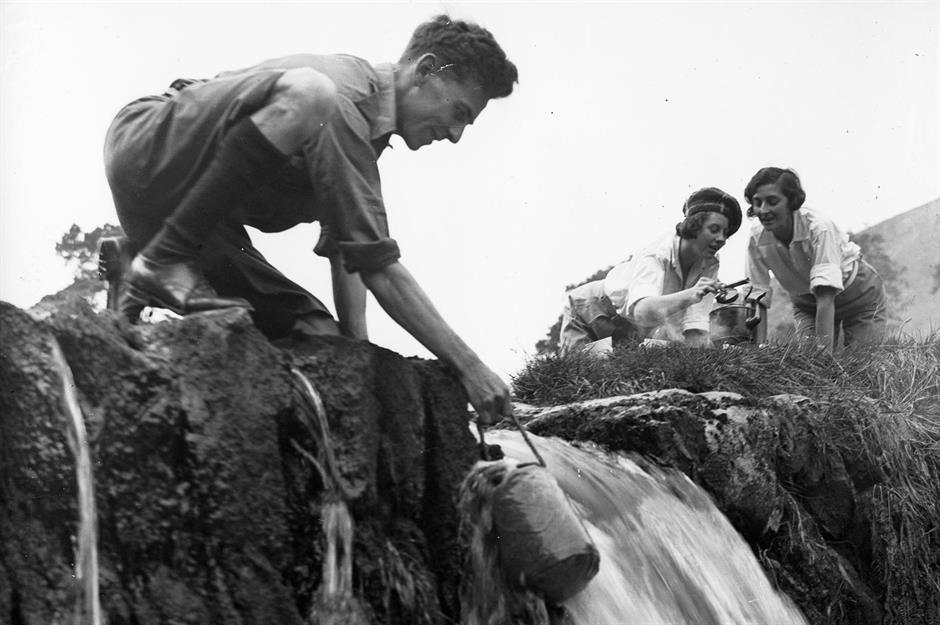
While some campers brought small comforts from home, camping in the 1930s remained a decidedly basic experience, long before the days of high-tech stoves, lightweight cookware or water purifiers. It demanded resourcefulness and careful use of the natural environment.
This photograph from 1931 shows a camper leaning precariously over a mountain stream with a bucket to collect fresh water for the stove. On the riverbank, two women tend to a metal teapot, coaxing it to a boil over a burner in pursuit of a hot cup of tea.
1933: Holidaymakers queue for the water pump at a campsite
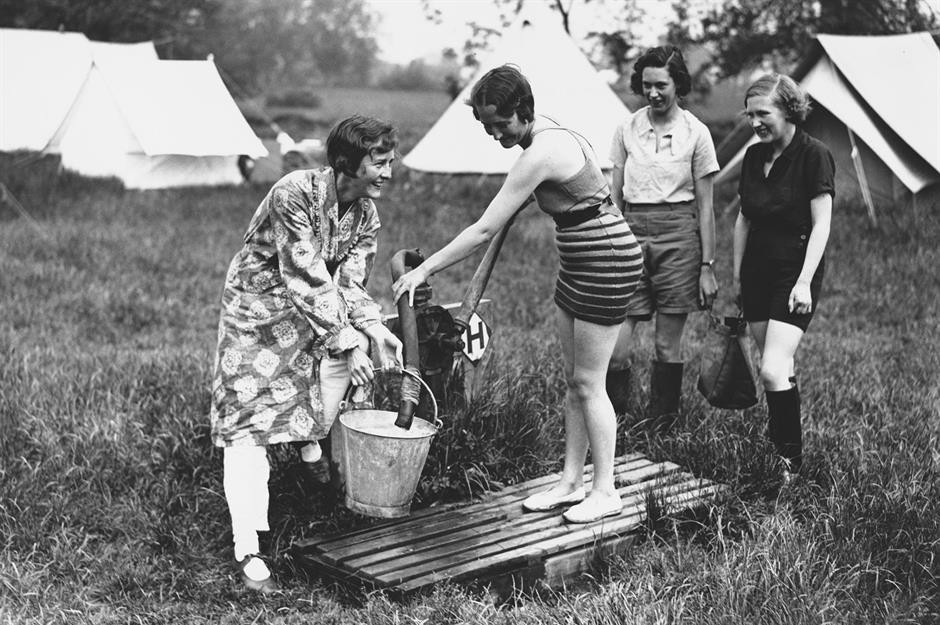
Unlike camping in the remote wilderness, larger, more established campsites often provided basic amenities such as water pumps for holidaymakers. In this 1933 photograph, campers are queuing at a water point on a Camping and Caravanning Club site in the UK.
The Club, which still exists, offers advice, community and a network of campgrounds, and was founded in 1901 by Thomas Hiram Holding. Often hailed as the father of modern camping, Holding published The Camper’s Handbook seven years later – a seminal guide for newcomers that became essential reading for early campers.
Sponsored Content
1936: Campers enjoy a tea break with their best china
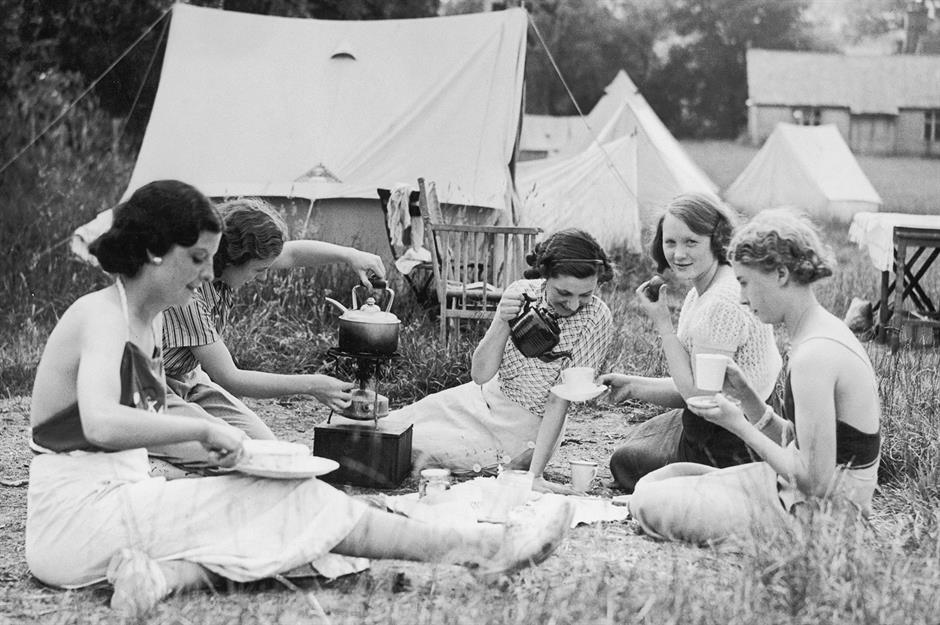
Pictured here in the summer of 1936, five friends pause for a tea break during their camping trip in the Essex countryside in southeast England. Alongside an enamel kettle and burner, they’ve brought an entire tea set from home, including a teapot, cups and saucers.
Despite the group's elegant crockery, the simple A-frame tents in the background reveal how rudimentary camping equipment still was in the 1930s. These basic military-style designs hark back to the early roots of camping, when it was predominantly associated with wartime encampments and expeditions, long before it evolved into a leisure activity.
1937: Alfresco morning routines
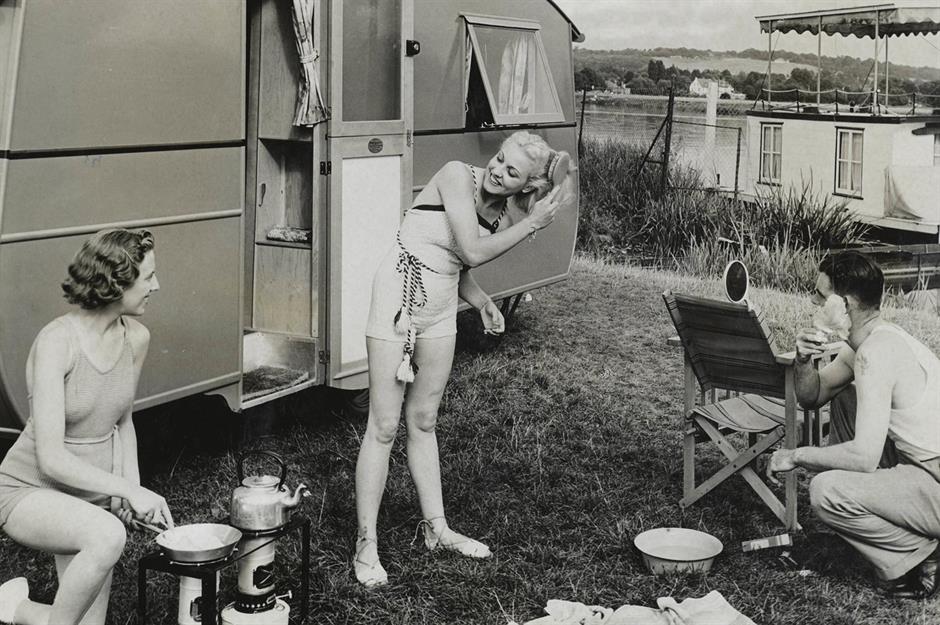
With the dawn of the motor age, the car-towed caravan emerged as a comfortable alternative to the humble tent. By the 1930s, caravans were increasingly affordable, with manufacturers producing compact, streamlined models for a growing market. Embracing the new trend, these holidaymakers – pictured in 1937 – are seen getting ready for the day beside their caravan on the banks of a scenic river.
Just two years later, the outbreak of World War II brought a natural decline in caravanning. Many caravan manufacturers shifted their focus to the war effort, producing vehicles such as ambulances and utility trailers instead.
1940s: A camper irons laundry in the heart of the Canadian Rockies
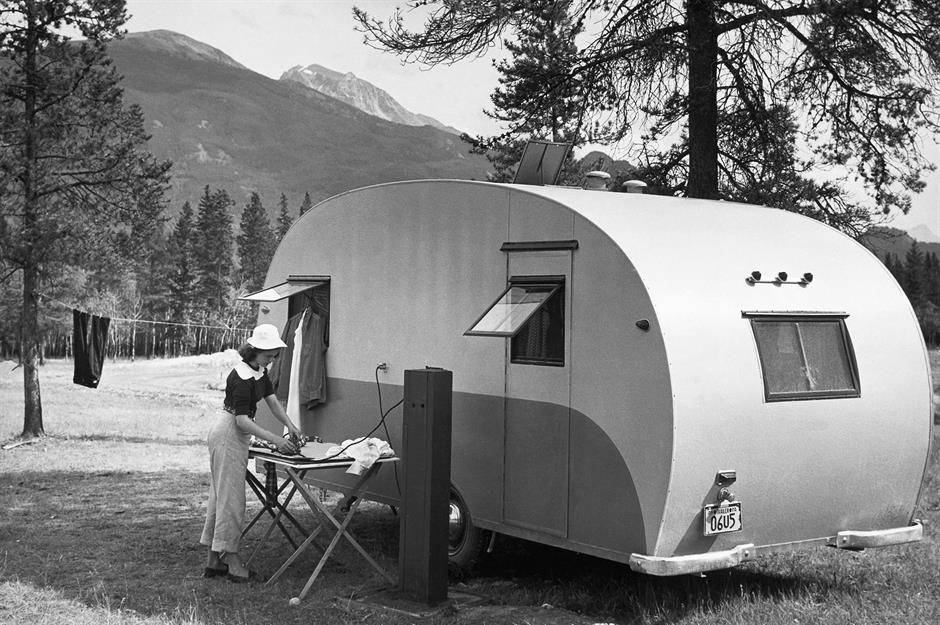
This remarkable photo from the 1940s shows a woman ironing laundry outside her caravan, surrounded by the breathtaking mountain peaks of the Canadian Rockies in Jasper, Alberta. She appears to be using an early iteration of a power outlet installed at the campground.
The caravan was manufactured by Ohio-based Trotwood Trailers, which was among the first recreational vehicle manufacturers in the US. The streamlined, curved design featured an enamelled exterior and a luxurious interior. Advertisements for the model claimed it was "the modern expression of coach-craft elegance, livability and economy".
Sponsored Content
1950: Two friends camping near Paris wake up in comfort
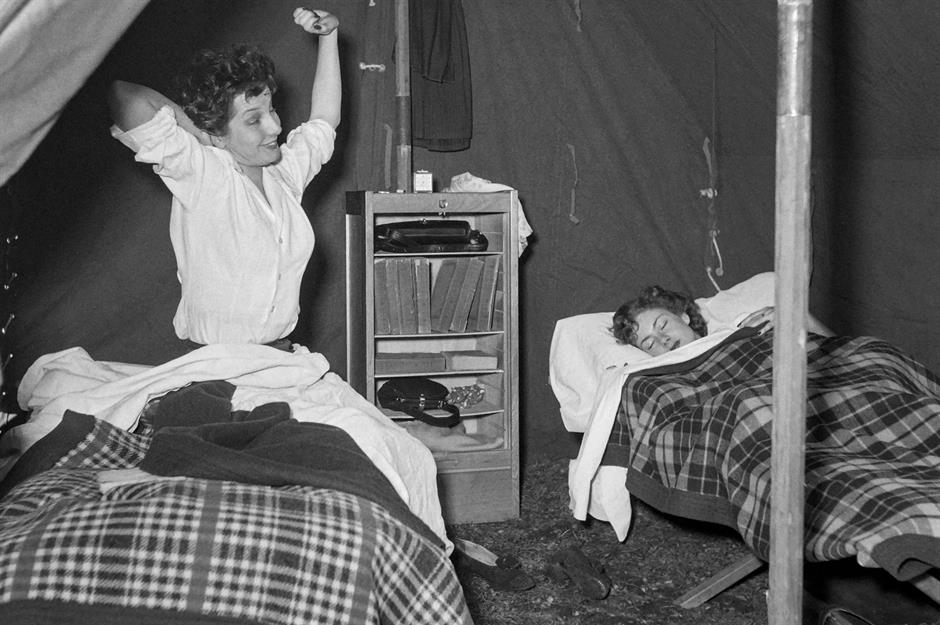
For these two friends camping at a rural spot outside Paris in 1950, sleeping under canvas didn’t mean forgoing comfort. Their cosy setup features proper bed frames and linen, along with a small wooden cabinet for storing supplies and personal belongings.
In France, the camping boom took off during the 1950s. Official campsites, known as 'campings municipaux', began to appear across the country, followed by larger commercial ventures such as Eurocamp in the 1970s. Eurocamp initially offered pre-sited family tents before expanding into mobile homes as the demand for outdoor holidays grew.
1952: Airstream glamping in Yosemite National Park
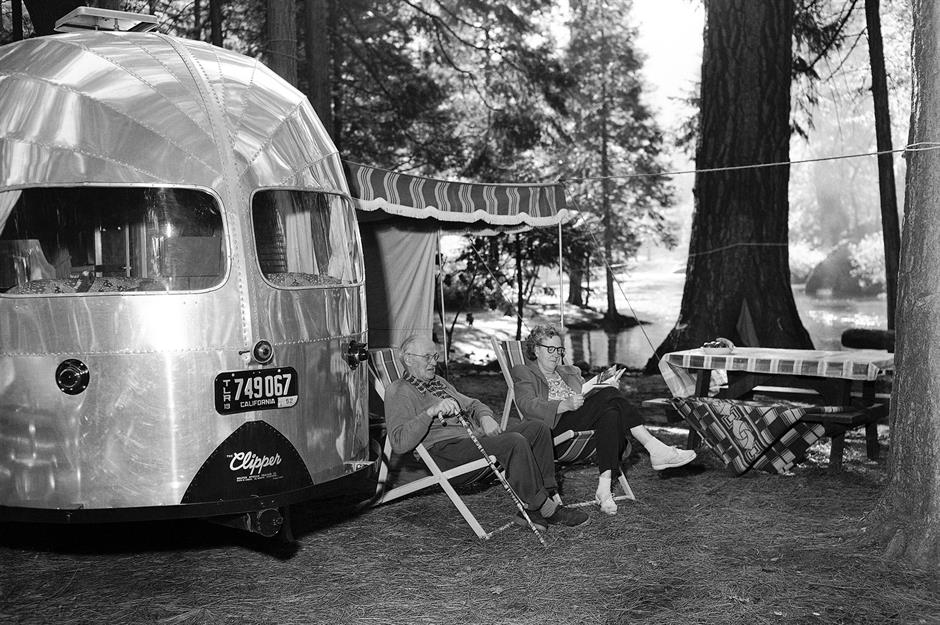
Dubbed the 'aeroplane without wings', the futuristic Airstream Clipper quickly became an iconic symbol of the American camping holiday after its launch in 1936. Its bullet-shaped aluminium body combined lightweight durability with customisable floor plans and stylish interiors, making it the ideal choice for campers with a taste for luxury.
This 1952 photograph shows Mr and Mrs Peterson, retirees from San Fernando, California, relaxing beneath the awning of their Airstream on the forested shore of a lake in Yosemite National Park.
1954: Girl Scouts pitch up for summer camp in Tennessee
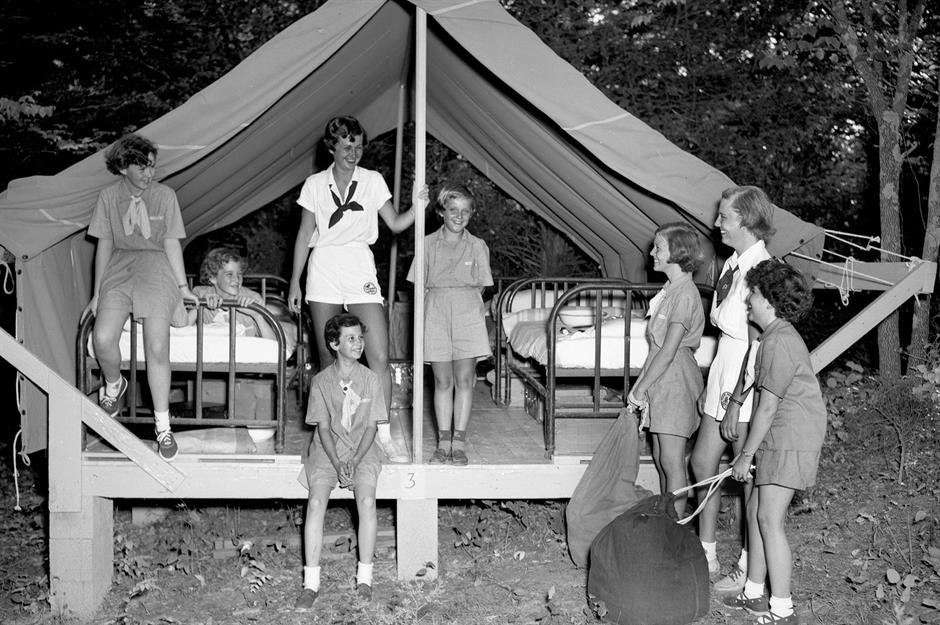
This image from 1954 captures a group of Girl Scouts arriving to meet their tent mates for an eight-week camp in White Bluff, Tennessee. Their accommodation is raised on stilts above the forest floor and sheltered by a tarpaulin, with metal bed frames providing a more comfortable night’s sleep.
Founded in 1912 in Savannah, Georgia, the Girl Scouts movement was created to empower young women and foster practical skills amid a spirit of community service. By the 1950s, older Girl Scouts had the opportunity to take part in deep-woods camping adventures, which involved cooking and sleeping in the wild and learning to navigate by compass.
Sponsored Content
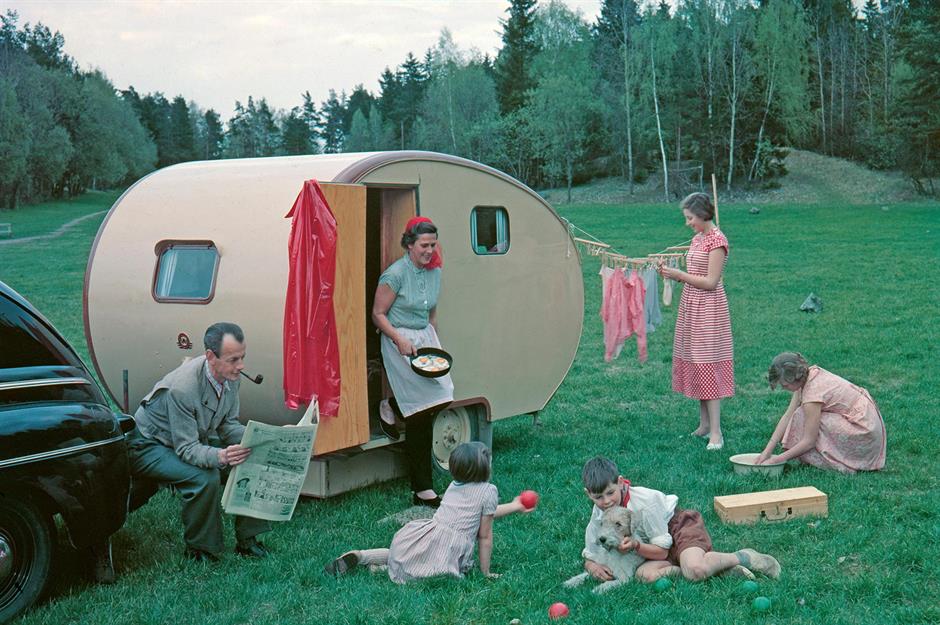
1955: Wild camping in the Swedish woodlands
While camping in many countries is limited to designated sites, Sweden embraces the right to roam, known as 'allemansrätten'. This centuries-old principle permits wild camping on most land, excluding private gardens and cultivated farmland. Revitalised in the 1940s through a government drive to make nature accessible to all, allemansrätten was formally enshrined in law in 1994.
Pictured in 1955, this Swedish family of six has pitched their teardrop trailer in a remote forest clearing. Clothes are washed in a basin and hung to dry on a makeshift line, while the youngest children play contentedly in the grass.
1956: Father and son tuck into sandwiches in the wilderness
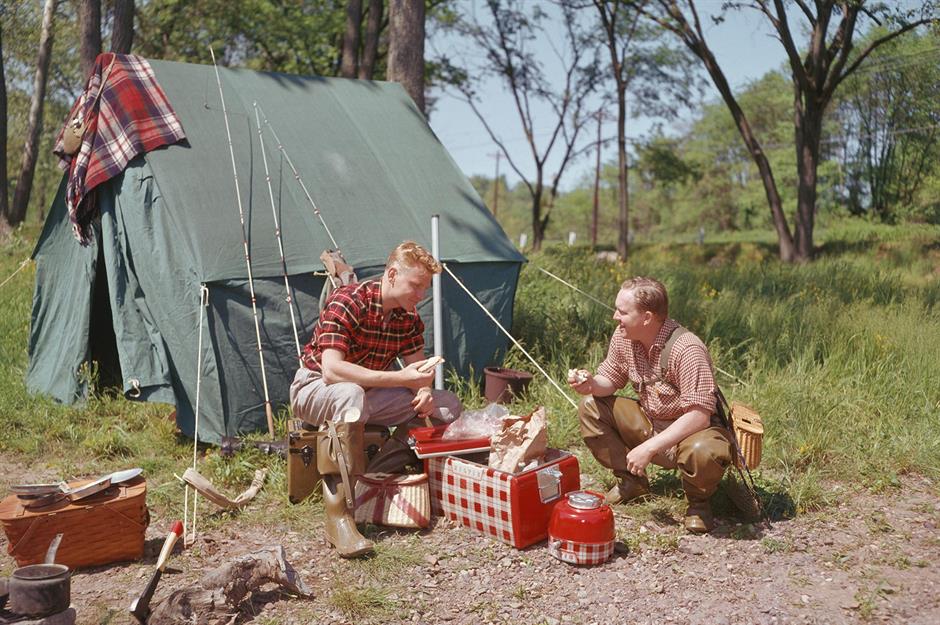
This charming image from 1956 captures a father and son tucking into sandwiches together on a camping trip. Beside them, a tartan Kiltie coolbox keeps their food fresh beneath the summer sun. It sums up the simplicity of mid-century family holidays: a packed lunch, the open air and quality time in the great outdoors.
In the early 1950s the camping industry was expanding rapidly, on the back of innovations in tent materials and backpack design. In 1953, Texan inventor Richard Laramy’s patent for a portable ice chest – the coolbox – made life on the campsite even more convenient.
1962: A hearty cookout in the Australian bush
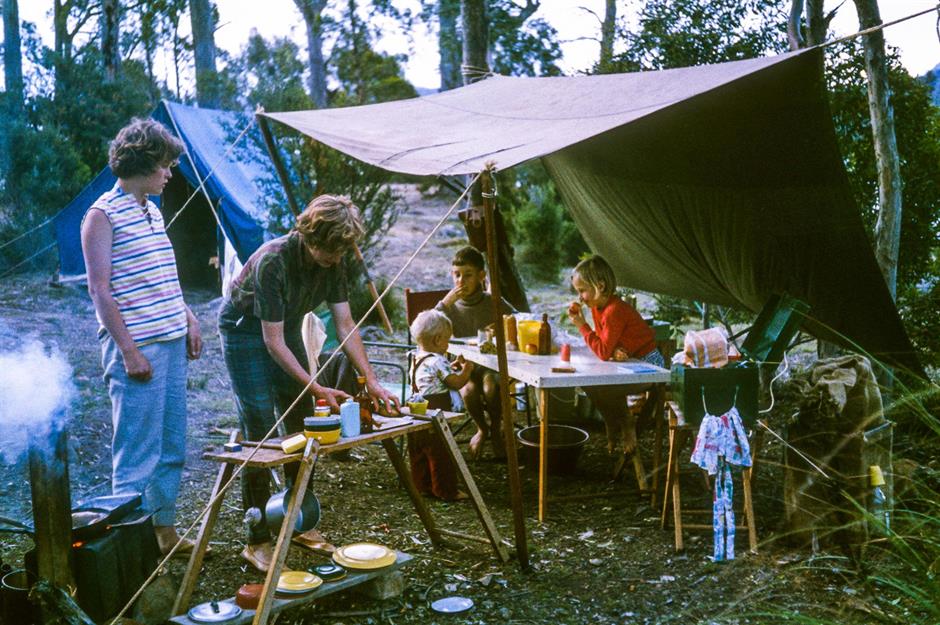
Camping is deeply woven into Australia’s recreational culture. Since the nation’s founding in 1901, families have packed their wagons with holiday essentials – sometimes including hefty pieces of furniture – and retreated into nature. By the 1950s, modern camping had surged in popularity, particularly along the country’s picturesque east coast.
The family pictured here was photographed at their campsite by Lake St Clair in Tasmania in 1962. Along with an A-frame tent strung up in the background, they've used a tarpaulin to create a sheltered kitchen, complete with dining table and food prep station.
Sponsored Content
1966: Suburban home comforts meet the open road
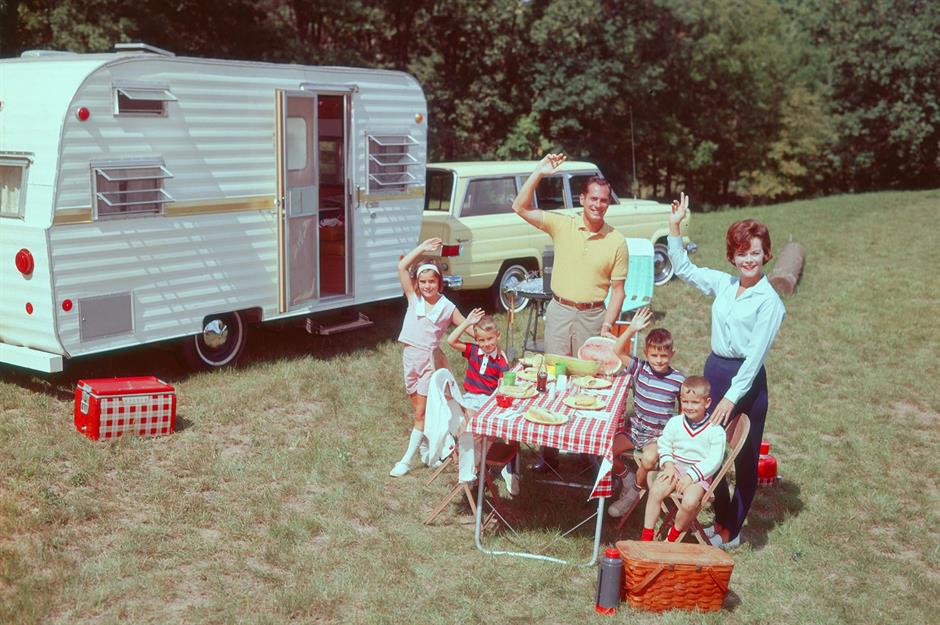
Between 1960 and 1965, camping's popularity in the US grew by 44%, with 19 million people choosing to spend their holidays immersed in nature. Trailers and motorhomes became increasingly sophisticated, like mini suburban homes on wheels. There was an underlying competitive edge: just as families might compare their cars to their neighbours’, they'd also size up their camping rigs.
This photo shows a family sitting down to a picnic lunch in 1966, complete with a chequered tablecloth. Their top-of-the-range caravan likely included a small kitchenette and foldaway beds, while washroom facilities were still generally shared in communal campsite blocks.
1968: Campers raise their tents to fend off floodwater
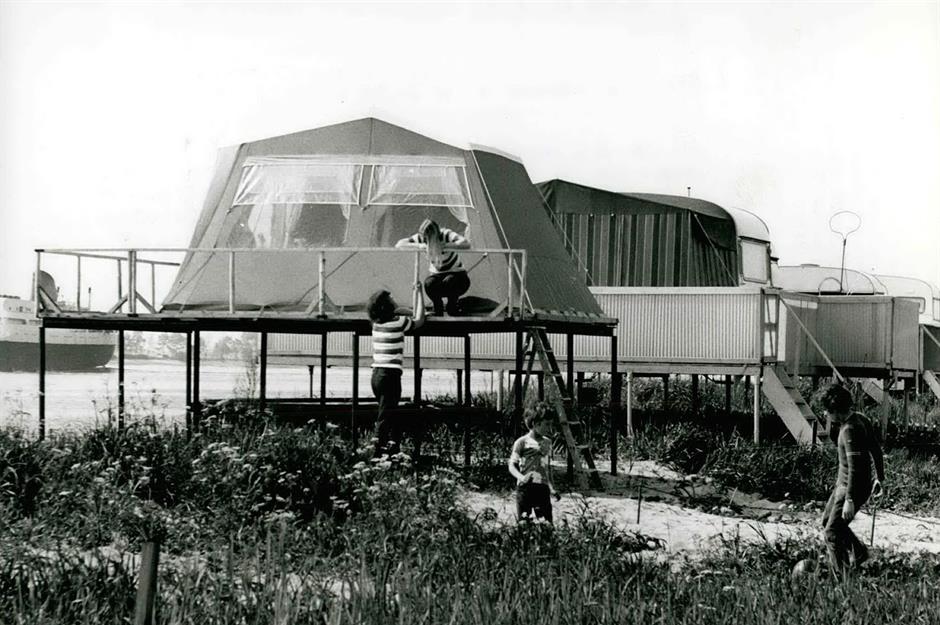
Nature’s wrath has long tested campers, and flooded tents and soggy sleeping bags are sometimes the price of adventure. This 1968 image from a waterfront campsite in Bremerhaven on Germany's North Sea coast, then part of West Germany, showcases an ingenious solution. To keep their gear from floating away, campers raised their tents and caravans on wooden platforms above the shoreline, allowing tides to sweep harmlessly below them.
The fix was inspired by a construction technique used by Stone Age lake dwellers, who built their homes on wooden piles above the water to guard against flooding.
1972: A family sits down to dinner outside their pop-up camper
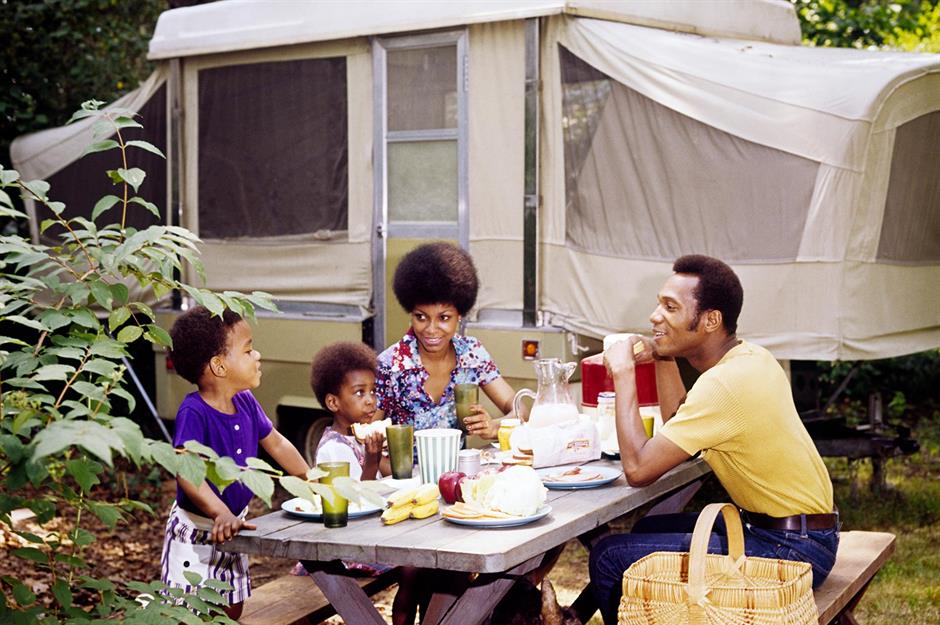
Photographed in 1972, a family of four enjoys lunch at a wooden picnic table at their campsite. Behind them stands their pop-up camper – a compact towable trailer with a soft upper shell that unfolds like a tent.
The pop-up camper’s roots trace back to the covered wagons of early nomads, though its modern form evolved alongside the motorcar in the 1910s. Early tent trailers were mass-produced for new motorists but fell out of favour during the Great Depression. Revived in the late 1960s, the lightweight, collapsible hybrid between a tent and a caravan offered families a portable, affordable taste of freedom.
Sponsored Content
1973: Finding a sheltered spot to set up camp
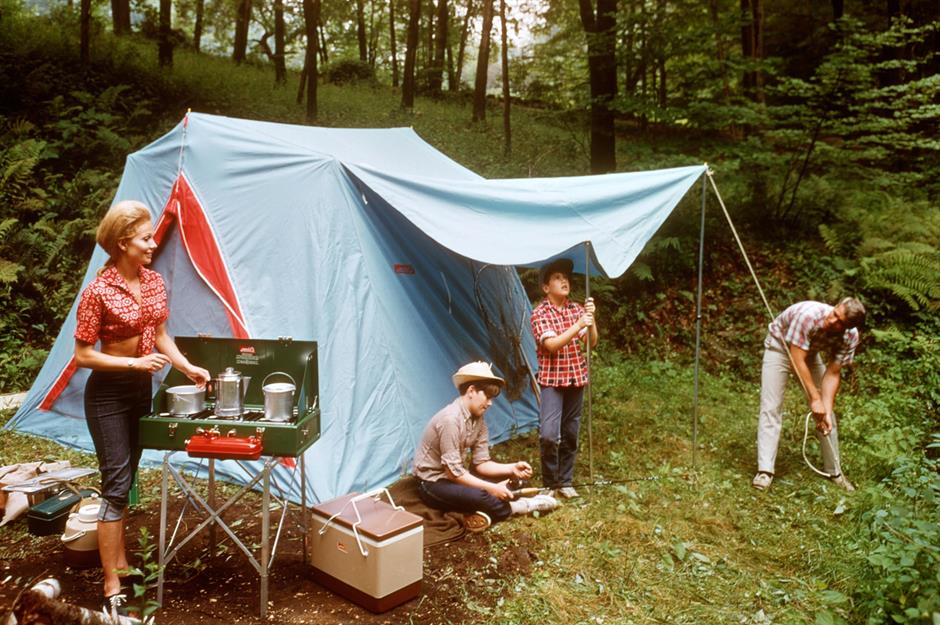
In 1973, this family was captured on camera setting up their tent in a clearing beneath the forest canopy. A departure from the basic A-frame tent, the design includes an extendable awning, offering shelter from the elements. Nearby, a green Coleman camping stove sits ready with a coffee pot and pans, a simple but effective setup.
The 1970s brought a revolution in camping equipment. Nylon and polyester transformed tent design, lightweight foam mats replaced cumbersome inflatable beds and waterproof Gore-Tex redefined outdoor clothing.
1979: A couple makes a splash catching dinner
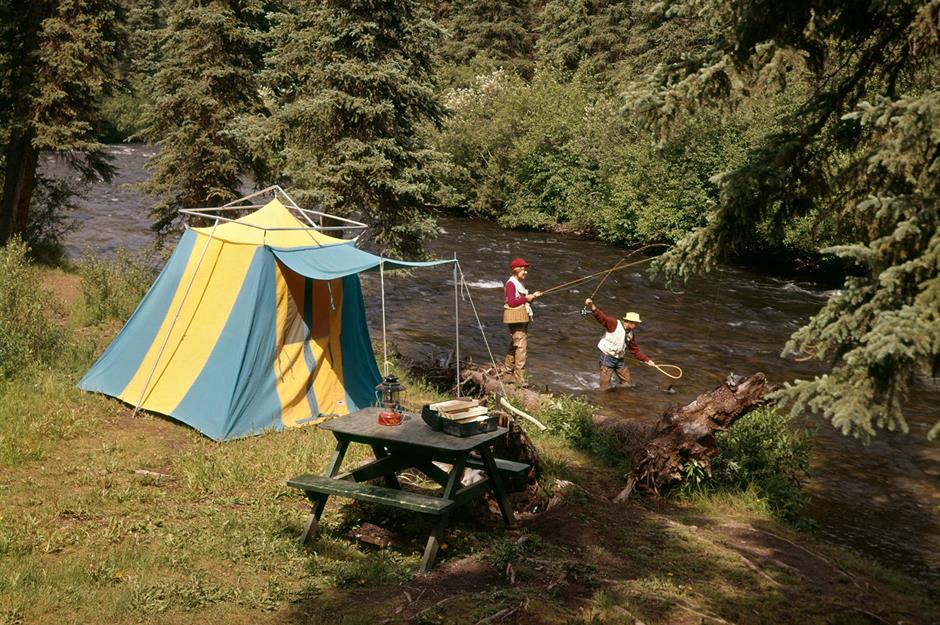
As the camping boom swept through the 1960s and 70s, TIME magazine observed that camping offered more than just a getaway, with many seeking "what Thoreau looked for at Walden". In other words, campers were searching for a deeper connection with the natural world.
That same impulse may have inspired this couple in 1979 to set up their tent along a quiet riverbank for a few self-sufficient days outdoors. Standing ankle-deep in the water, they utilise nets and fishing rods to catch their dinner, embracing self-reliance.
1997: Firing up the barbecue at an Oregon RV park
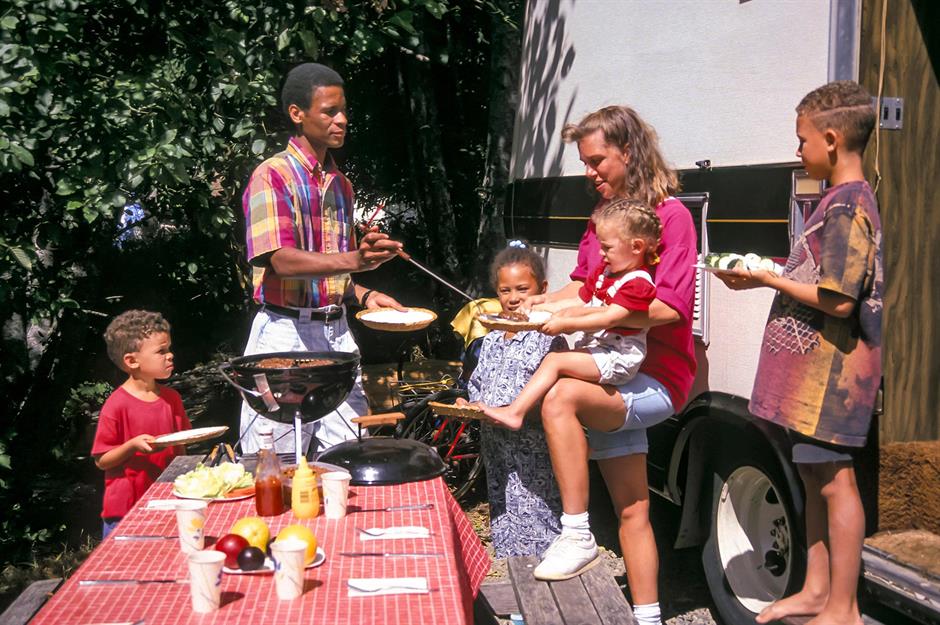
In this photo from 1997, a family enjoys a barbecue outside their motorhome in Oregon. They're likely at an RV park, where campers would get a private plot to pitch up, alongside their own picnic table and a water tap.
The late 20th century signalled a dramatic evolution for the motorhome. By the 1990s, factory-fitted RVs offered professional-grade interiors with customisable décor, compact washrooms, built-in entertainment systems, basic air-con and convertible furniture that made the limited space stretch further. Suddenly, the motorhome offered many of the same luxuries as a traditional family home.