The future is now: America’s iconic Googie architecture
Back to the future
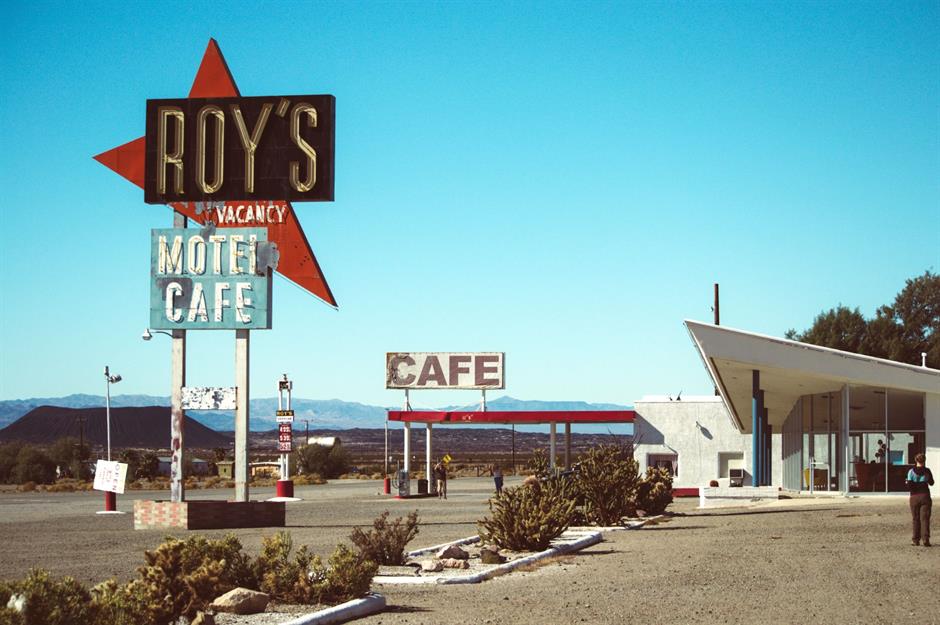
Bold, futuristic… and fast disappearing. From roadside motels and quirky diners to iconic symbols of US cities, the colorful Googie style of architecture has been part of the American landscape for more than 80 years. But many of these flashing neon logos, eye-catching signs, and space-age buildings have long gone or are under threat of demolition.
Read on as we reveal some stunning and historic examples of America's Googie architecture…
Norms, California, USA
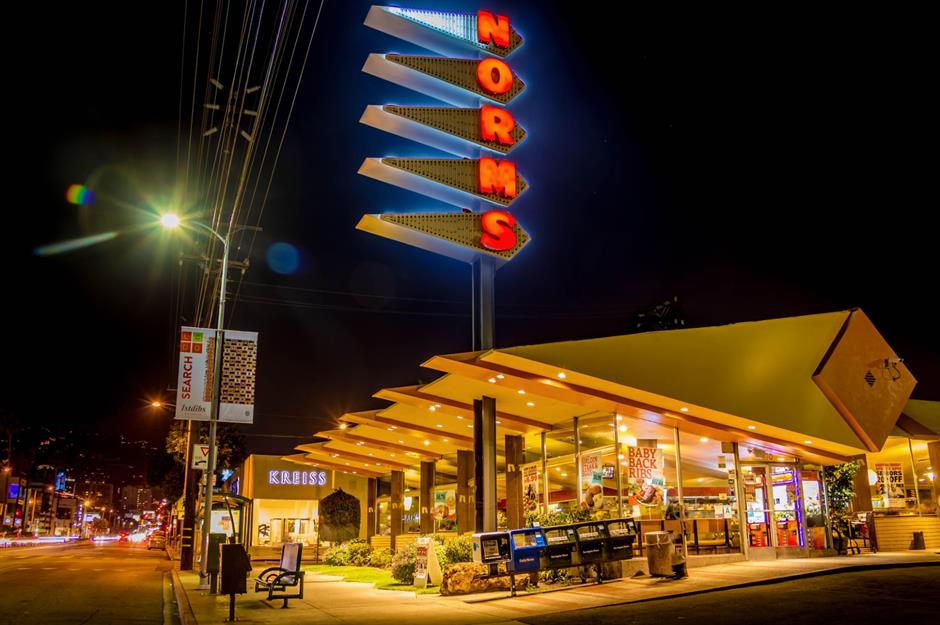
The colorful Googie style of architecture started in Southern California in the 1940s. It enjoyed its heyday in the 1950s, as US car culture grew and roadside businesses aimed to attract passing customers. Key features include futuristic, space-age buildings, quirky signs, and colorful neon designs.
One of the pioneers was the Norms restaurant chain, with its location on La Cienega Boulevard in Los Angeles (pictured) a great example of the Googie style. Opened in 1957, it’s now a designated historic and cultural monument.
Bob’s Big Boy, California, USA
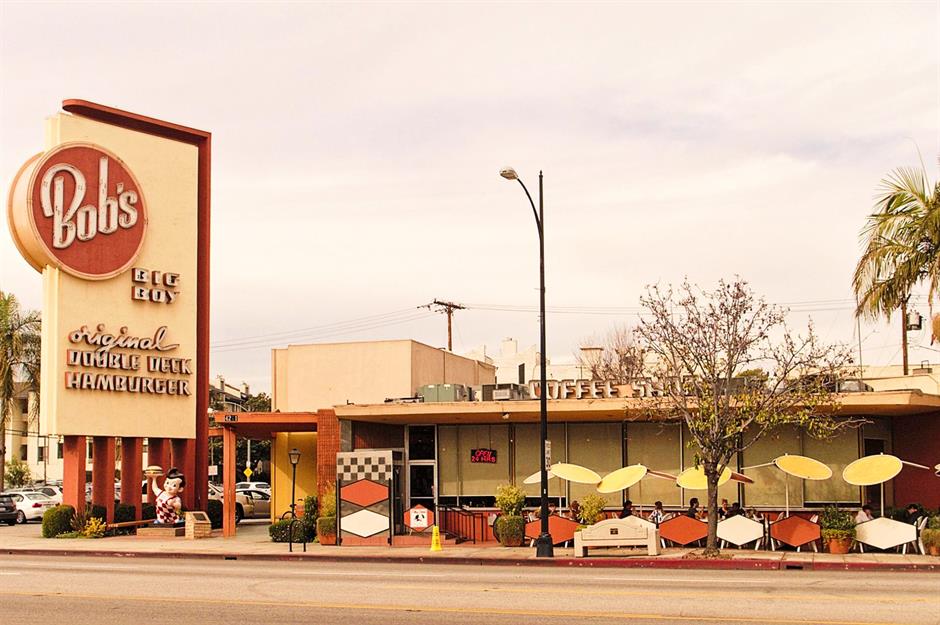
Opened in 1949, this Bob’s Big Boy coffee shop in Burbank is another iconic example of the style. Designed by Wayne McAllister, one of the leading names in Googie architecture, it was designated a California point of historical interest in 1993.
The coffee shop continues to attract visitors from across the world. Many flock here to sit in the Beatles Booth – where the Fab Four sat when they enjoyed a Bob’s Big Boy burger during their 1965 US tour.
Sponsored Content
Holiday Bowl, California, USA
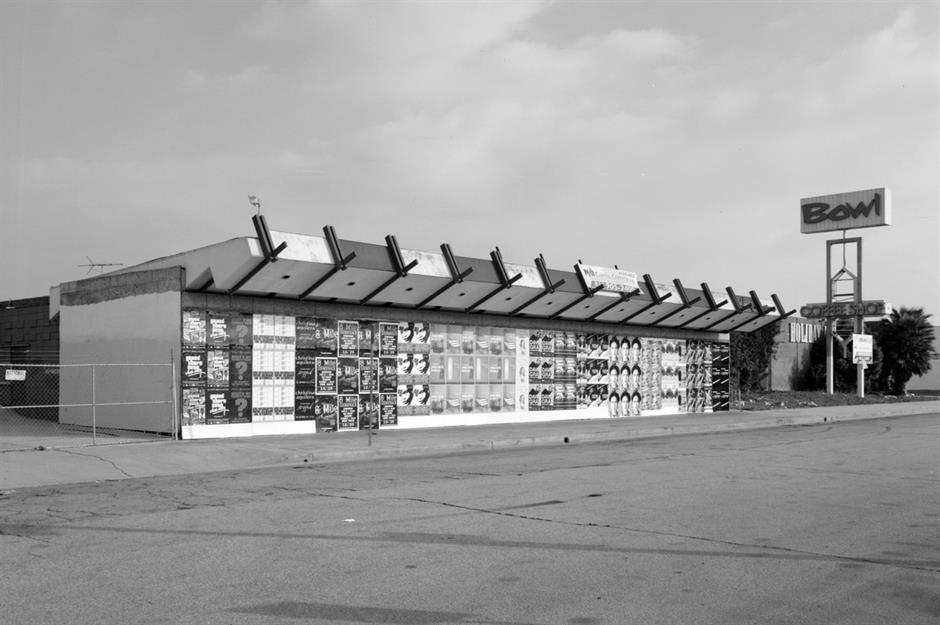
One of the more famous examples of the style was the Holiday Bowl, which opened on Crenshaw Boulevard in Los Angeles in 1958. It was designed by leading Googie architect firm Armet & Davis. As well as a bowling alley, the building became a social hub for the multicultural community – particularly the Japanese residents.
The bowling alley closed in 2000 and was largely demolished. However, thanks to local efforts, it was designated a Los Angeles historic-cultural monument – meaning its iconic Googie architecture was preserved.
McDonald's, California, USA
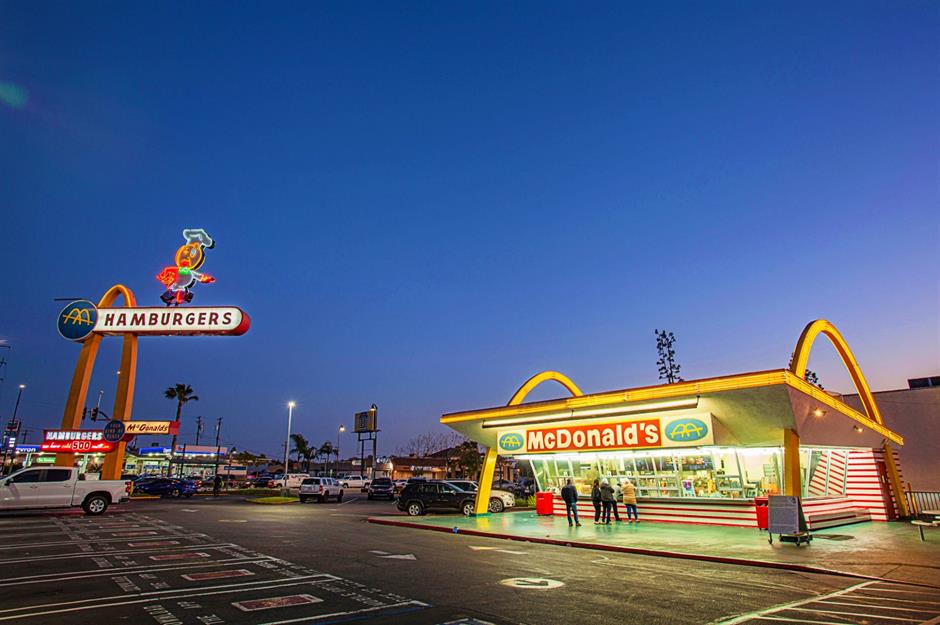
The Golden Arches have become a familiar sight around the world but Lakewood Boulevard in Downey, California is home to the oldest McDonald's. It was actually the third ever McDonald’s, opened by brothers Richard and Maurice McDonald.
After the McDonald’s Corporation shuttered it in 1994, a campaign was launched to save the building. In 1996, it reopened and continues to operate as a drive-in restaurant and a prime example of the Googie style, with its neon pink, 60-foot arch and Speedee mascot.
Theme Building, LAX, California, USA
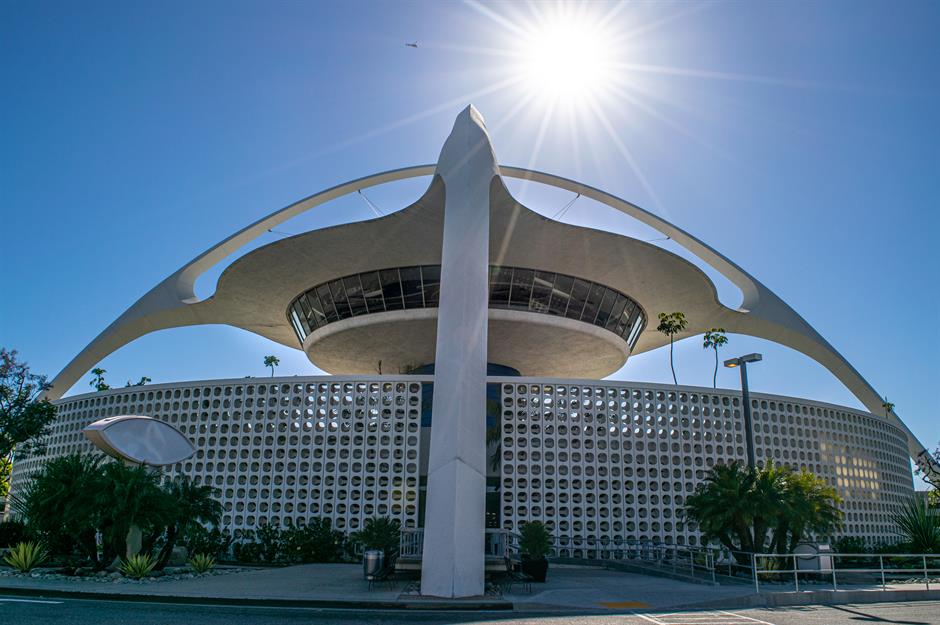
Such was its popularity that the Googie trend spread beyond diners and coffee shops. An example is the UFO-style Theme Building at Los Angeles International Airport (LAX). Built in 1961, it was part of a postwar expansion of the airport.
Standing 135 feet and measuring 340 feet across the base, the structure was designed to contain a restaurant and viewing deck. Unfortunately, while it still stands, the Theme Building is (currently) no longer open to the public.
Sponsored Content
Union 76 Service Station, California, USA
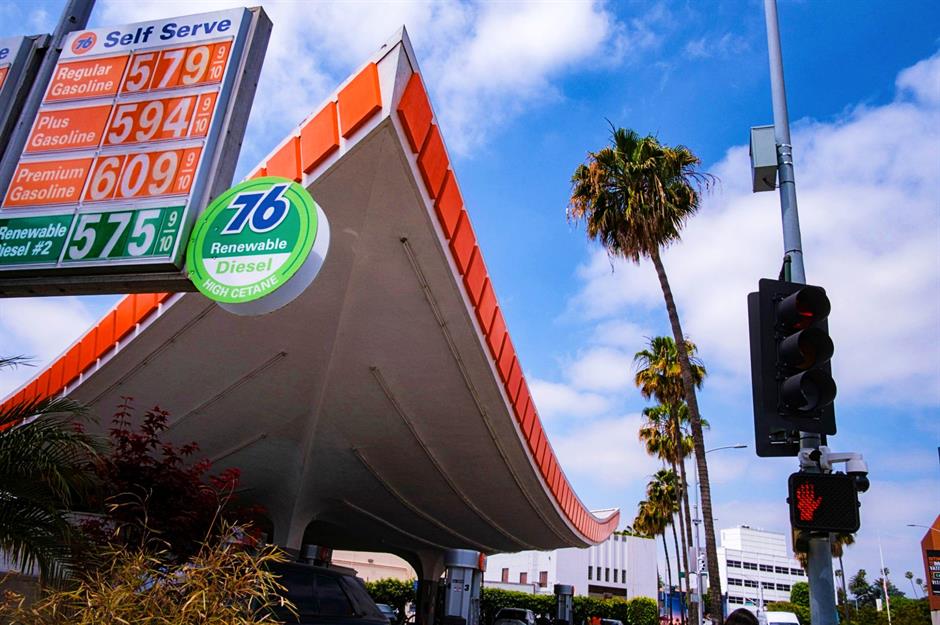
With its sweeping red and white canopy, this gas station is a striking example of Googie architecture in an unlikely setting. It was designed by architect Gin Wong to be part of LAX.
However, when Standard Oil opted not to adopt the design, it was constructed in Beverly Hills, close to Rodeo Drive. Completed in 1965 at the height of Googie’s popularity, the steel and neon structure – known as "Jack Colker’s 76 station," after the owner – remains a local landmark.
Capitol Records Building, California, USA

The Capitol Records Building in downtown Los Angeles proves that the Googie style was more than just about futuristic designs. Standing 13 stories, the circular office building was the world’s first of its kind.
Since opening in 1956, it has been a distinctive presence at the intersection of Hollywood and Vine. It features a "tower of vinyl records" design, topped with a 90-foot spire, which resembles a needle on a turntable. In 2006, the building was designated a historic-cultural monument.
Pann’s, California, USA
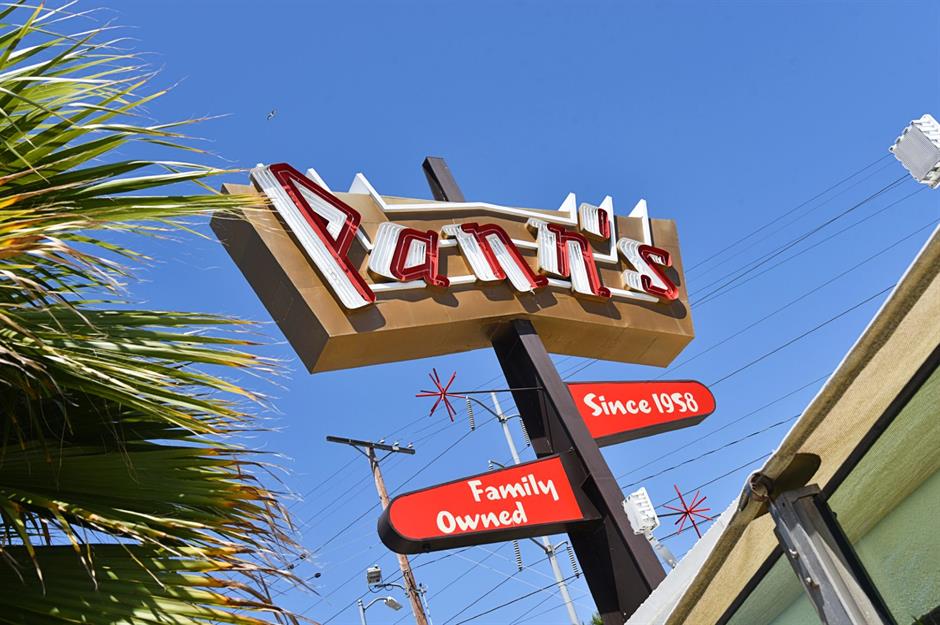
While Googie-style diners are no longer a common sight in Southern California, some notable examples remain – including Pann’s. Opened in 1958, the Los Angeles restaurant is operated today by the children of its founders, George and Rena Panagopoulos.
Pann’s bears all the features of the classic Googie design – with its striking neon sign, angled roof, and oversized windows. Inside, it has retro booths and serves traditional American diner fare, offering an authentic taste of the 1950s.
Sponsored Content
Ships, California, USA
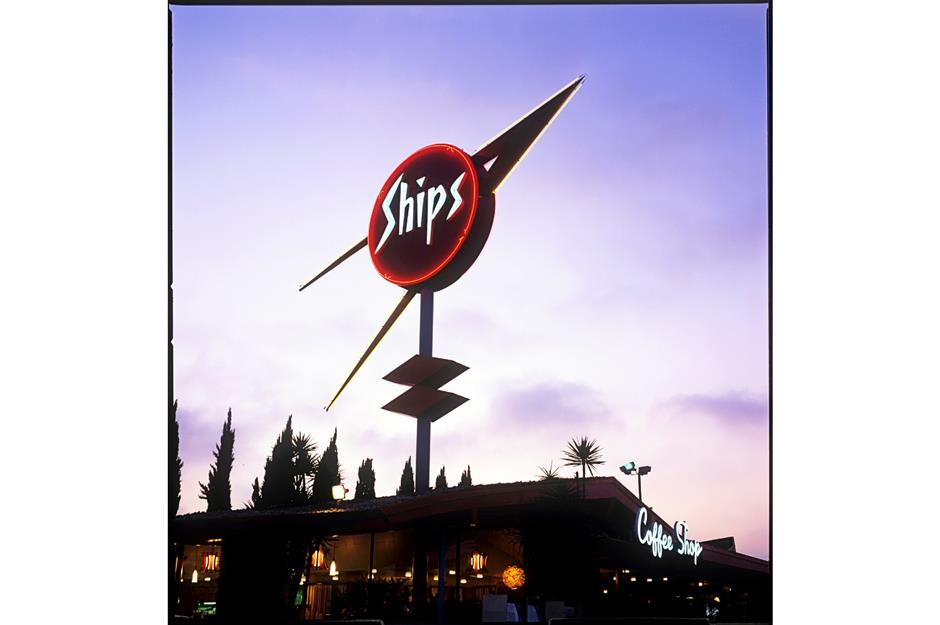
We mentioned that Googie architecture is fast disappearing, so before we leave California, it’s worth highlighting a couple of casualties. Opened in 1958, Ships was a popular coffee shop in Westwood.
Ships was open 24 hours a day, seven days a week – it even had toasters on the tables so diners could enjoy perfect hamburger buns. However, despite efforts to save it, the building – and its eye-catching neon sign – was razed in 1984 to make way for a tower block.
Arby’s, California, USA
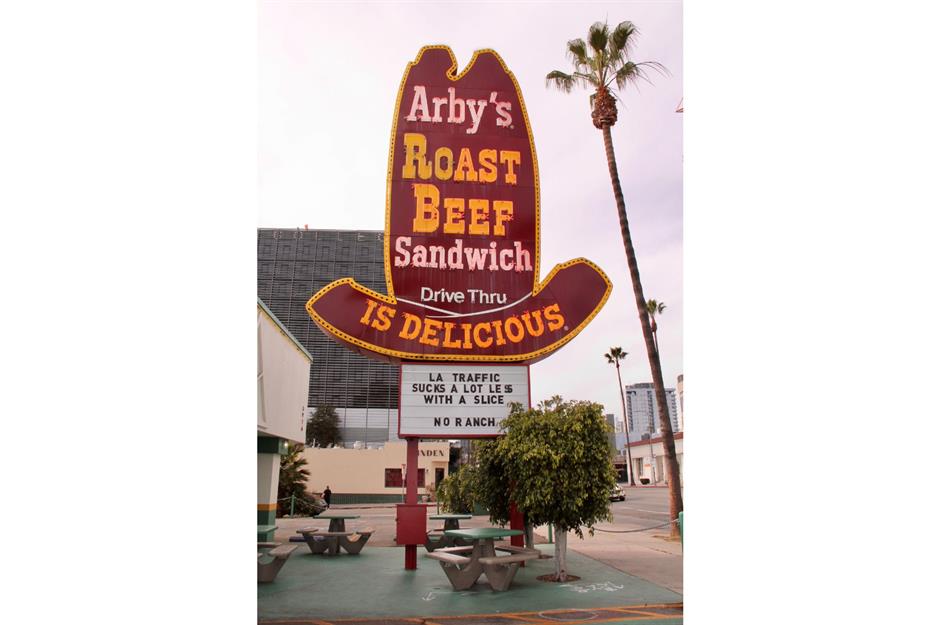
Our last LA example is Arby’s, whose quirky 10-gallon hat sign was a feature of Sunset Boulevard for 55 years – until it shut in 2024, due to rising costs. While the Arby’s chain is still thriving, the loss of this particular restaurant was met with an outpouring of emotion from locals.
Two features that define Googie architecture are fun and individualism. As public spaces become more uniform and unremarkable, the demise of places like this takes on more significance.
Welcome to Las Vegas sign, Nevada, USA
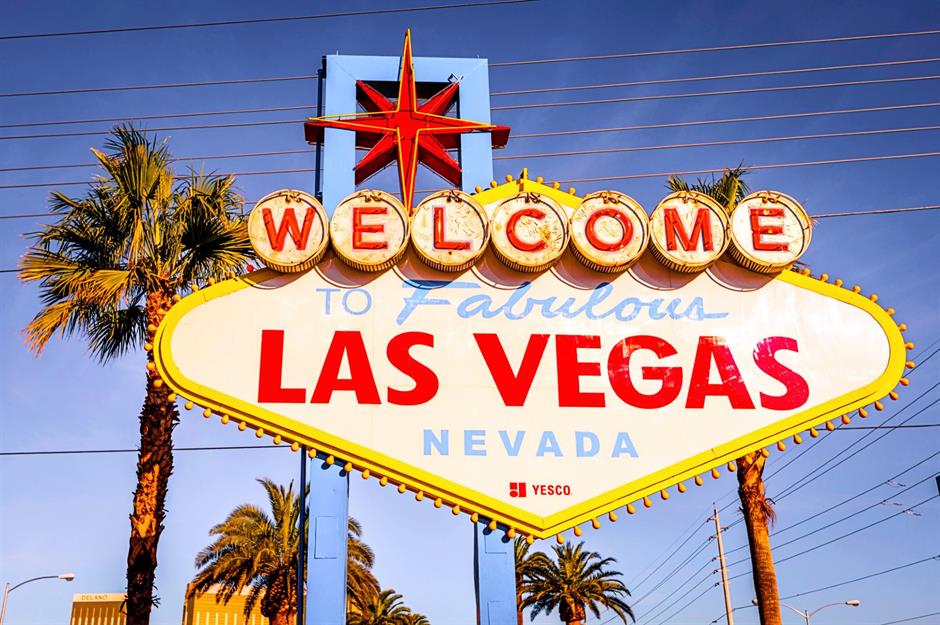
If there is a place that seems a natural home for the bold, garish, and neon-infused Googie style, it’s Las Vegas. While plenty of notable examples are no longer standing, its iconic sign remains in place on Las Vegas Boulevard South.
The 25-foot sign has been welcoming visitors to the Strip since 1959. Its awkward location in the center of the road made snapping a photo difficult, so in 2008, a parking lot was created to allow people to safely grab a selfie.
Sponsored Content
Stardust Resort and Casino, Nevada, USA
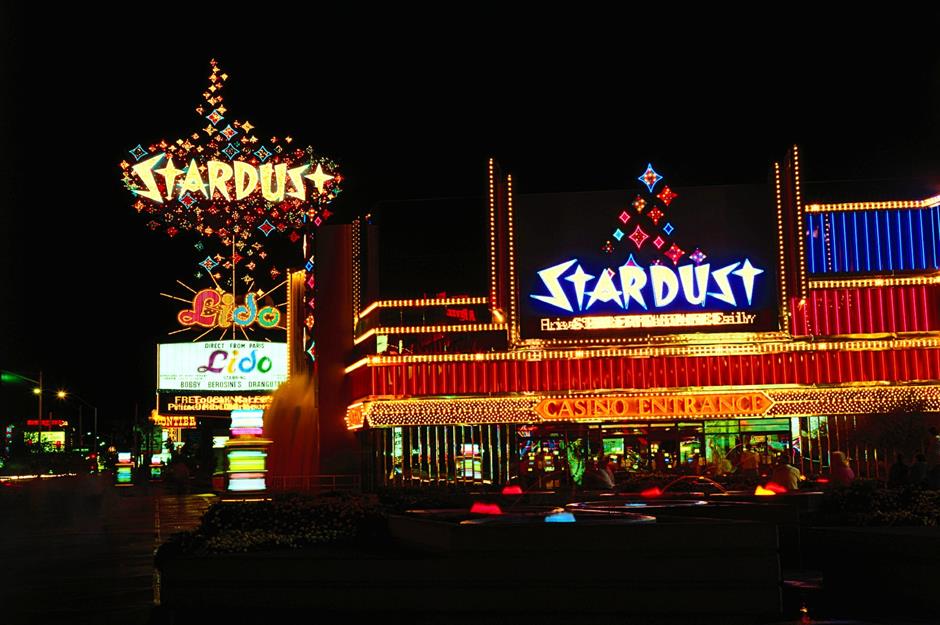
Opened in 1958, the Stardust was one of the first major Las Vegas hotel-casinos and the largest, with 1,000 rooms. Known for its Mob connections, the Stardust was also a great example of Googie architecture.
It features futuristic styling with a 188-foot by 90-foot space-age sign. The Stardust closed in 2006 and demolished the following year, with the site now home to a Resorts World hotel. However, the Stardust signage still has a home at the Neon Museum.
La Concha Motel lobby, Nevada, USA
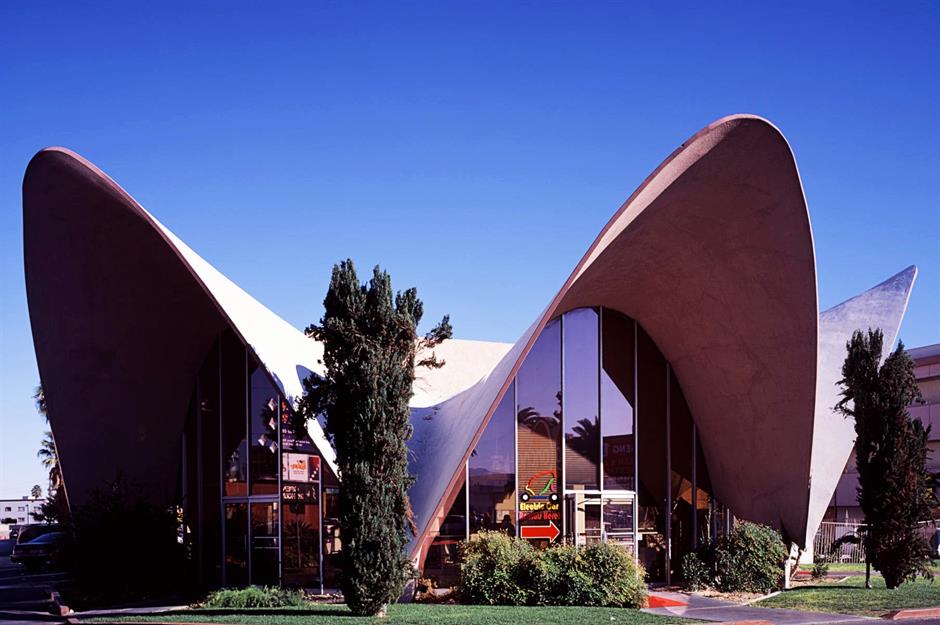
The Neon Museum is also the place to see this striking Googie example. Formerly the lobby of the La Concha Motel on Las Vegas Boulevard South, the structure now serves as the entrance to the museum.
While the focus on the Googie style is often the flashy neon signs, the lobby highlights another key feature – sweeping, bold rooflines. Designed by respected architect Paul R. Williams, the shell-shaped building was built in 1961 and saved from scheduled demolition in 2005.
Tucson Inn, Arizona, USA
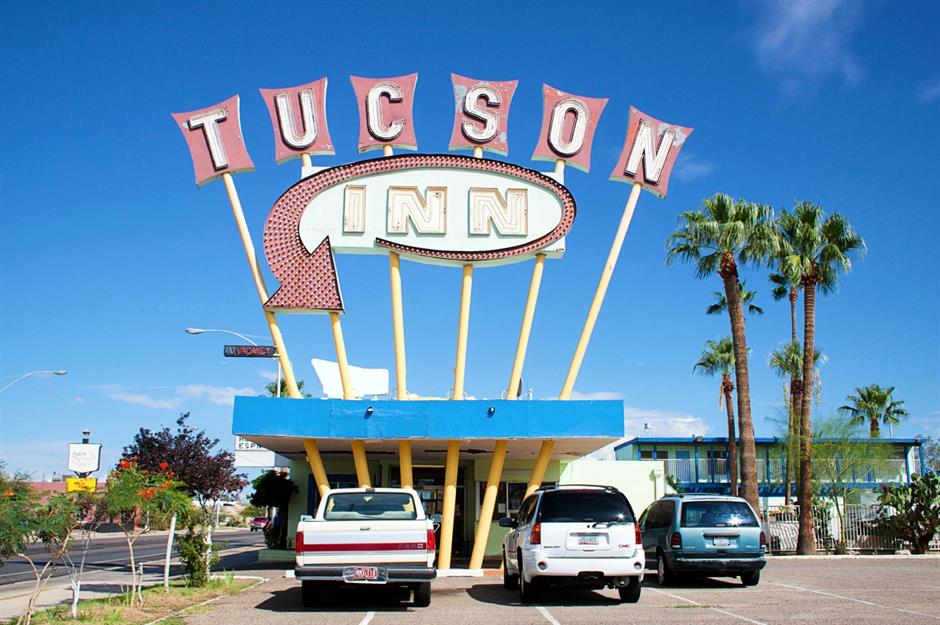
Opened in 1953, the Tucson Inn was a prime example of the decade’s highway motel architecture. The rise of American consumerism and car ownership brought strong competition between motels and lodges to attract passing motorists.
The Tucson Inn combined modernist and Googie styles, attracting guests with its vibrant and imposing sign. Over the years, Rita Hayworth and Ernest Hemingway were among its clients. The motel closed in 2017 and – despite efforts to save it – the building was demolished in 2025.
Sponsored Content
Holiday Inn chain, USA

We're all familiar with the Holiday Inn chain of worldwide hotels. Now owned by hospitality giant IHG, the brand was founded in 1952 amid the postwar boom, with the aim of offering clean and modestly priced motel accommodation.
For many years, Holiday Inns featured the Googie-inspired neon "Great Sign" – which became synonymous with the brand and the optimism of the era. However, the policy was ditched in 1982, when the brand adopted cheaper, plastic signs.
Caribbean Motel, New Jersey, USA
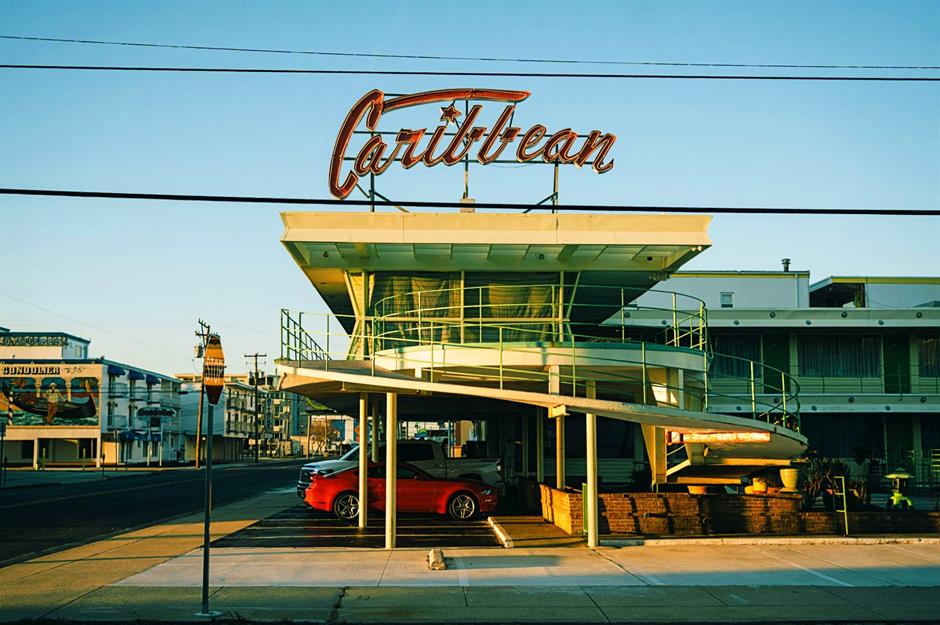
Away from the American West, other parts of the country adopted their own version of Googie design. On the East Coast, it was called "Doo-Wop" architecture. The similarities include the bold colors, neon signs, and futuristic elements.
Opened in 1957, the Caribbean Motel is a great example of the kitschy style. It’s located in the New Jersey resort town of Wildwoods, which was known as the Doo Wop capital of the world during the 1950s, when it was home to around 300 motels.
Space Needle, Washington, USA
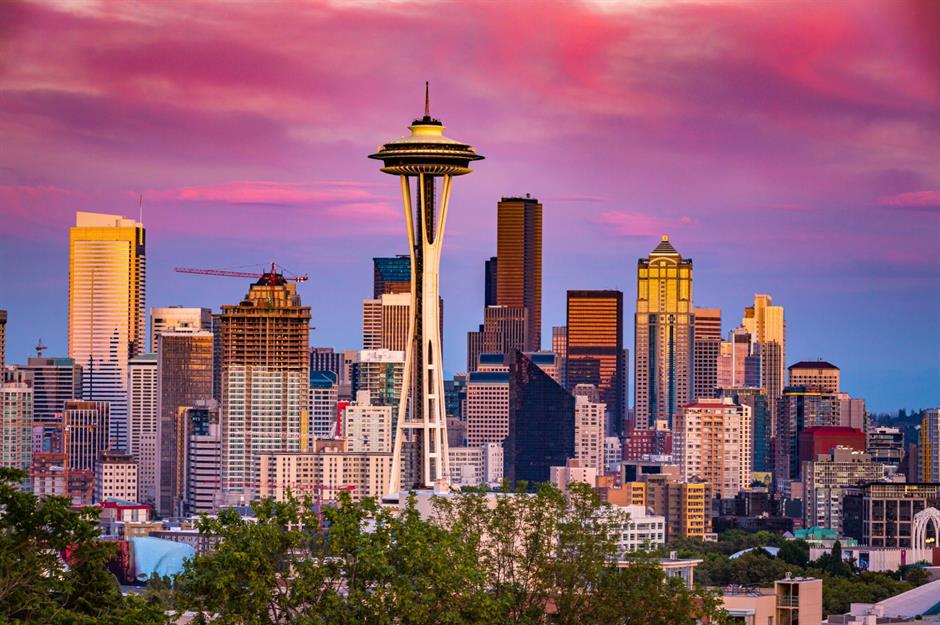
Maybe the most iconic example of Googie architecture, the Space Needle has been a feature of Seattle’s skyline since 1962. It was built for that year’s World’s Fair, the theme of which was The Age of Space – so it’s only fitting that the tower adopted the Googie style.
Standing 605 feet, its futuristic saucer-shaped design has an observation deck and boasts the world’s first and only rotating glass floor. Around one million people visit the tower each year.
Sponsored Content
Prayer Tower, Oral Roberts University, Oklahoma, USA
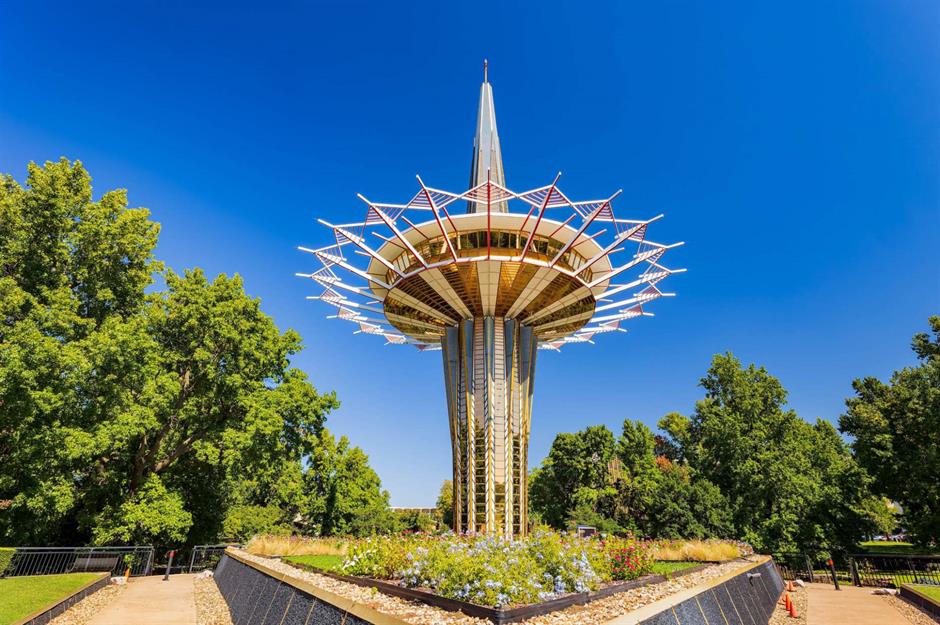
Less imposing than the Space Needle but no less striking, this Googie-influenced tower opened on the Tulsa campus of Oral Roberts University in 1967 – towards the end of the architectural style’s popularity.
The Prayer Tower stands 200 feet and – as the name suggests – it has religious significance, which makes the choice of a futuristic design somewhat curious. However, it’s undoubtedly an eye-catching centerpiece of the university and a landmark structure in the Googie style.
TWA Flight Center, JFK Airport, New York, USA
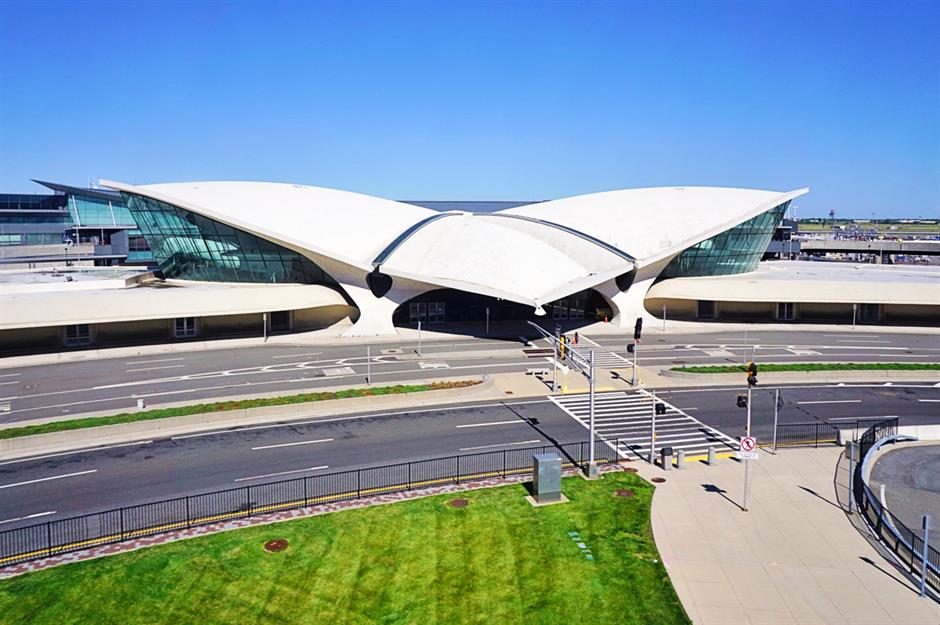
Opened in 1962, the Trans World Airlines (TWA) terminal at New York International Airport – then called Idlewild – symbolized the sophisticated image of air travel. The futuristic Googie design mirrored the exciting and glamorous aura of flying.
As aircraft design evolved away from propeller planes and passenger numbers grew, the TWA building became no longer fit for its intended purpose. After a period of neglect, the building was transformed into the luxury TWA Hotel – where guests can still celebrate the Swinging Sixties.
Roy’s, California, USA
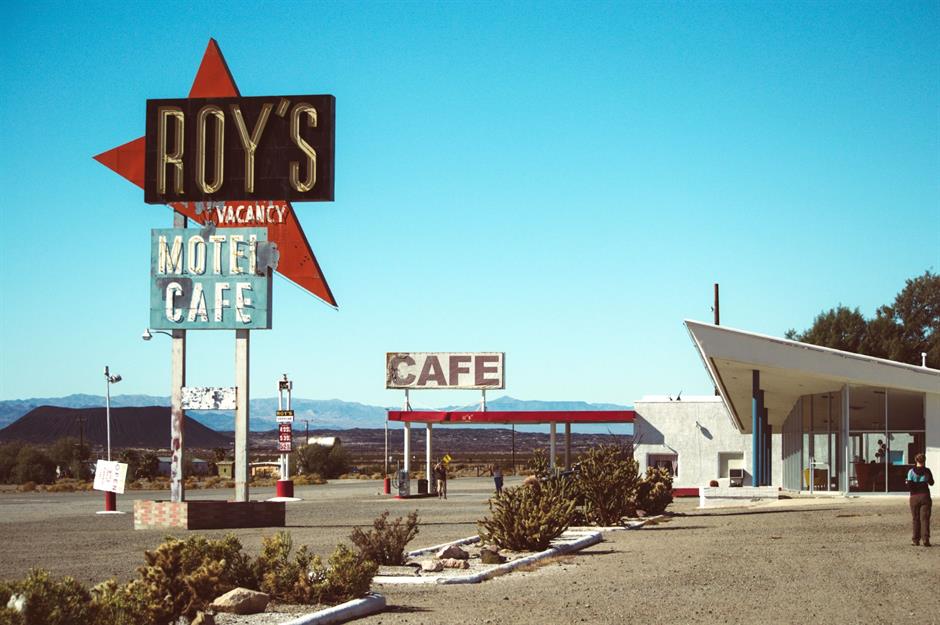
It’s only fitting to end our tour where it began – California. Located on historic Route 66, Roy’s, a roadside motel, gas station, and café in Amboy is one of the best examples of quirky, nostalgic Googie architecture.
Googie fell out of favor in the 1970s due to changing trends and cultural shifts. So, it’s crucial to preserve the remaining examples, like Roy’s, to ensure this futuristic architectural style is not consigned to the history books.