21 dramatic weather events caught on camera
Whatever the weather

From record-breaking cyclones and dramatic snowstorms to deadly wildfires and colossal icebergs, Mother Nature is as incredible as it is terrifying. With the help of book Weather by Robert J Ford, we've found some of the most intense natural events captured on camera.
Read on to see the world's weather at its most powerful...
Iceberg, Antarctica
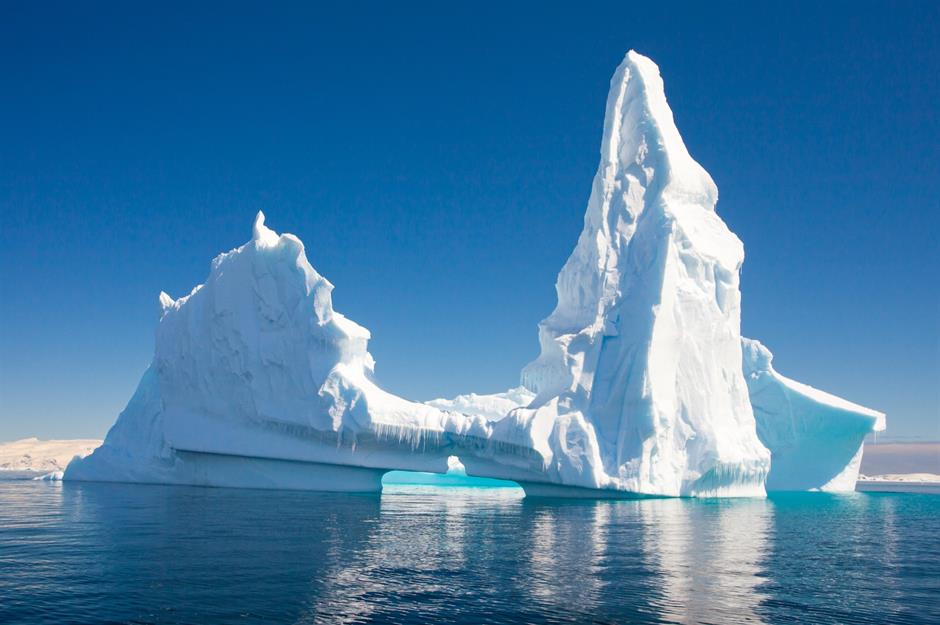
In Antarctica, numerous icebergs break off from ice shelves, glaciers or other icebergs each year, just like this one pictured. Icebergs refer to a floating chunk of ice larger than 16 feet across, while smaller disintegrating bits of ice are called ‘bergy bits’ or ‘growlers.’
After breaking off, icebergs usually travel with the ocean current, picking up iron and other nutrients from the bedrock which leaks into the waters around them. Studies have shown these nutrient-rich waters surrounding the icebergs can be teeming with plankton, fish, and other sea life.
Blizzard, Manhattan, New York, USA

This image captures people struggling in a harsh blizzard in Manhattan in New York City. Originating in North America, a blizzard is typically defined as a severe snowstorm with winds measuring over 35 miles per hour, combined with enough snow to limit visibility to around 0.25 miles or less.
Sponsored Content
Iceberg, Greenland
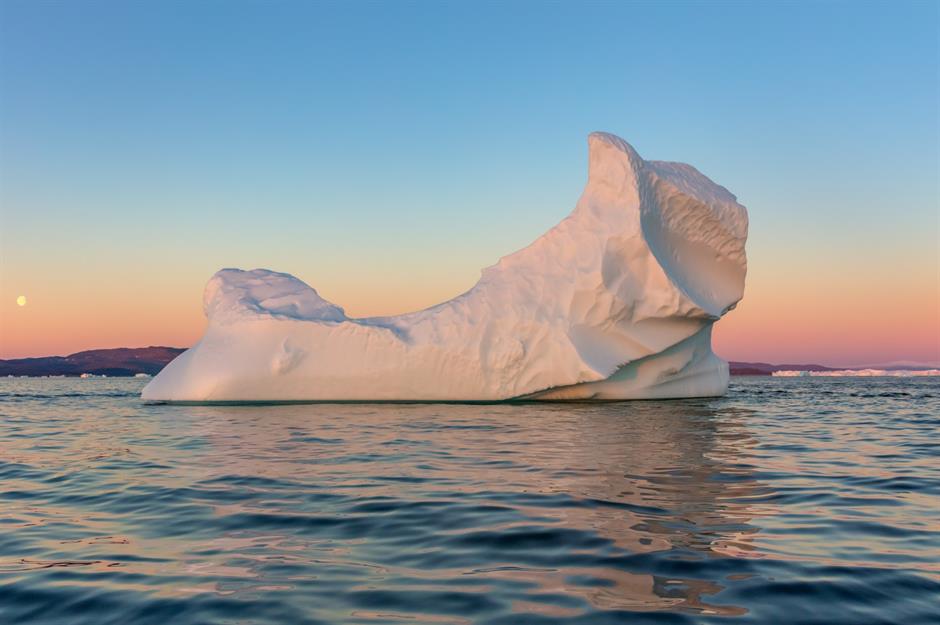
Pictured here is a massive iceberg in Greenland. Many of the world’s largest icebergs are calved out of the Antarctic ice sheet. These vast structures are usually ‘tabular icebergs,’ a flat-topped icy plateau that has broken off from an ice shelf.
One of the biggest icebergs ever recorded was the B-15 Iceberg, which broke away from Antarctica's Ross Ice Shelf in 2000. The colossal iceberg was initially around 185 miles in length, with an area larger than Jamaica.
Eerie fog over Pearl-Qatar island, Doha, Qatar

An eerie layer of fog looms over Doha's luxurious Pearl-Qatar island in Qatar. Fog typically occurs when relative humidity (amount of water vapor) is near 100% as the air is unable to hold any more moisture, releasing this moisture as a form of precipitation. In desert areas that experience little rainfall, fog can actually be used as a handy water source. In Lima, Peru harvesting water from the foggy air has been a successful practice.
Ice sledging on Lake Khövsgöl, Khatgal, Mongolia

Nicknamed the Blue Pearl of Mongolia, Lake Khövsgöl is one of the oldest and most beautiful lakes in the world. Sitting on the country’s northern edge, the ancient lake is estimated to be between two and five million years old. The vast lake contains nearly 70% of all the country’s freshwater. During winter, Lake Khövsgöl freezes over and is often used by sledgers and large trucks to transport supplies.
Sponsored Content
Mammatus clouds, Nebraska, USA

Bush fires, Australia

With its extremely dry climate and hot weather which continues to gradually increase due to climate change, Australia is a region prone to dramatic and often deadly wildfires. During Australian summers, a combination of searingly high temperatures, low humidity, and high winds create the environment for these fires to easily spread and grow.
The Indian monsoon, Varanasi, India

Sponsored Content
Thick fog over the Motherland Monument, Kyiv, Ukraine
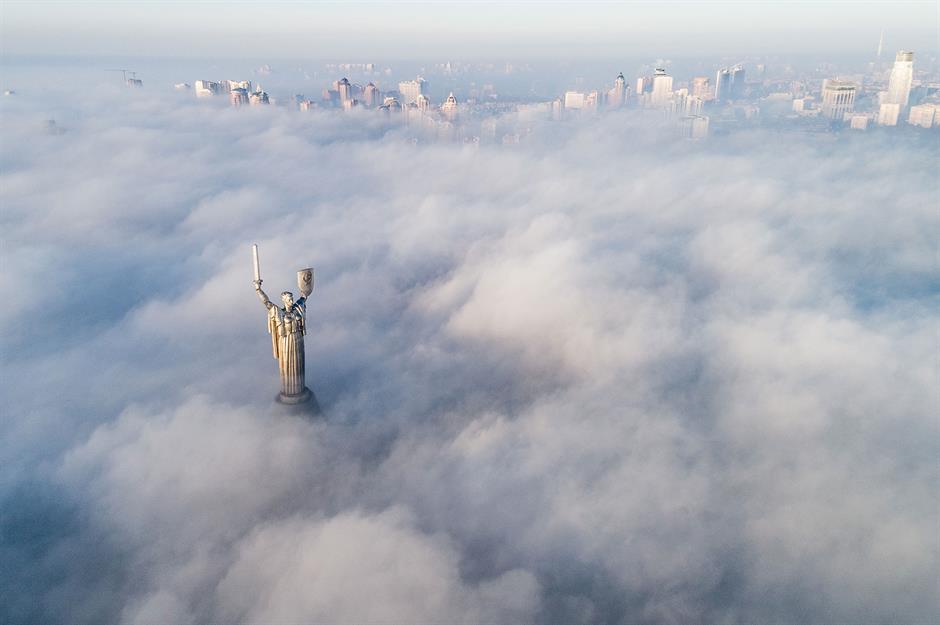
Heavy fog encompasses the Motherland Monument in this image captured in Ukraine’s capital Kyiv. The water vapor in the air that causes fog to form can be triggered by various processes, such as cool or dry air moving over warmer water, transpiration from plants and water evaporating from the surface of bodies of water including lakes or wet land during the heat of the day.
Liking this? Click on the Follow button above for more great stories from loveEXPLORING
Tornado, Wray, Colorado, USA

In this picture, a terrifying tornado twists over the city of Wray in northeastern Colorado. Known as one of the most dramatic weather phenomena on the planet, a tornado is a funnel-shaped vortex of air that reaches between the base of a storm cloud and the Earth’s surface. Low pressure in the vortex causes a rotating funnel cloud of air and dust to form, with wind speeds that typically range from 75 to 100 miles per hour.
Lenticular clouds, Eastern Pyrenees, Spain

Sponsored Content
Advection fog on Golden Gate Bridge, San Francisco, California, USA
This dreamy picture shows San Francisco’s iconic Golden Gate Bridge in northern California submerged in fog at sunset. Advection fog, which is often seen under the bridge, occurs when warm moist air passes over a colder surface then rapidly cools and condenses, creating a cloud of fog.
Pine-forest fire, Lake Toba, Sumatra, Indonesia

Drought, Zeeland, the Netherlands

Sponsored Content
Breaking the ice, the Russian Arctic Ocean

An icebreaker ship is shown here creating an ice canal as it passes through the icy waters of the Russian Arctic Ocean. Sea ice is ocean surface water that has frozen over, and it grows and shrinks depending on the season.
According to the National Show and Ice Data Center’s Ice Index, over the past 40 years, the area of the ocean covered by ice has reduced by just over 13% per decade on average. This shrinking causes climate problems as the ice helps reduce the warming of the seas and atmosphere.
Hurricane Dorian, Freeport, Grand Bahama Island, the Bahamas

Between August and September 2019, Hurricane Dorian was a Category 5 hurricane that surged across the Bahamas and was the worst natural disaster in the country’s history. The devastating hurricane triggered deadly winds of up to 185 miles per hour and is thought to have killed at least 74 people. Dorian’s rapid winds tie it with Hurricane Irma for the highest wind speeds of an Atlantic hurricane ever recorded at landfall.
Rain shower, Grand Canyon, Arizona, USA

Possibly the most famous natural wonder in the US, here, a rain shower has settled over the Grand Canyon in Arizona. During the state’s monsoon season from mid-June through mid-September, as moist air passes over the region, it rises over the highlands and arrives just south of the Grand Canyon, cooled and condensed.
Air that has been heated by the sun then rises from the inner canyon, colliding with the cool air from above. This air creates short-lived thunderstorms that can trigger torrential downpours and flash flooding.
Sponsored Content
Dune 45, Sossusvlei, Namib-Naukluft National Park, Namibia

The crown jewel of Namibia’s Namib-Naukluft National Park, Dune 45 rises an impressive 278 feet high above the desert landscape. Known as a ‘star’ dune, its sands date back five million years and are carried from different areas including the Atlantic coast, the Orange River and the Kalahari desert, forming its distinct shape.
The impressive sand formation is part of the Namib Desert, which, at an estimated 55 million years old, is one of the oldest deserts in the world.
Sandstorm, Swakopmund, Namibia

St Joseph North Pier Lighthouse, Lake Michigan, USA

Spray from the waves of Lake Michigan has been frozen almost instantly due to cold weather as it hits the St Joseph North Pier Lighthouse, creating this eerily beautiful image.
Sponsored Content
Drying forest, Villavieja, Huila, Tatacoa Desert, Colombia

Find out more

All images were taken with permission from the book Weather by Robert J Ford published by Amber Books Ltd, and available to buy on Amazon.
Liked this? Click on the Follow button above for more great stories from loveEXPLORING
Now discover the most shocking weather event in every state and DC