Amazing historic photos that expose the rise of organised crime in America
Life and crimes
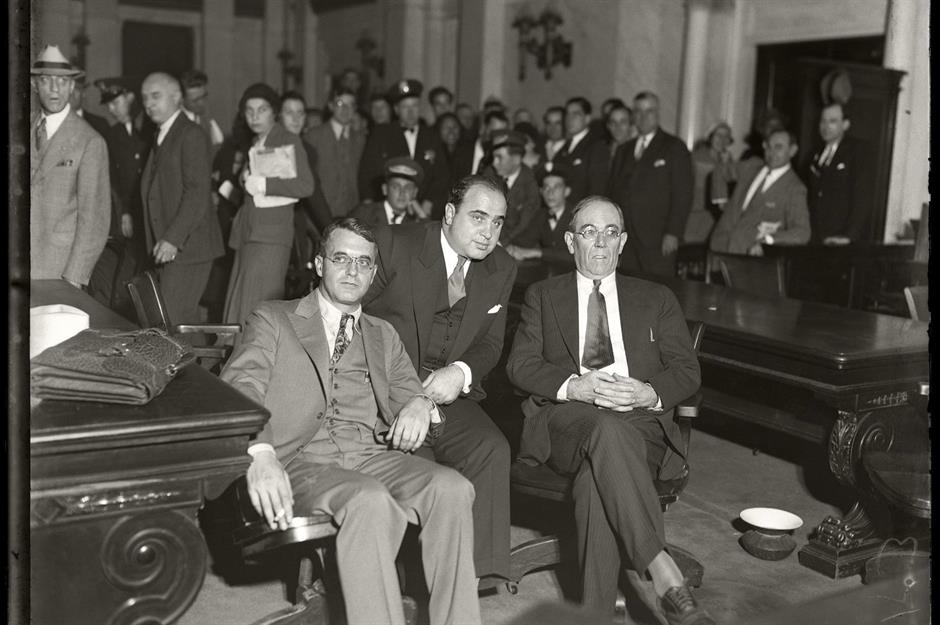
Organized crime in America has had a vice-like grip on the popular imagination for a very long time. From struggling to survive in rundown corners of major cities to rubbing shoulders with the country’s elite, from profiteering during Prohibition to being locked away in isolated prisons, the individuals involved lived extraordinary lives – whatever you think of their morals. It’s why Hollywood can't stay away.
Click through this gallery to explore historic photos that chart the rise, fall, and rise of American organized crime...
c.1900: The Five Points Gang of New York City
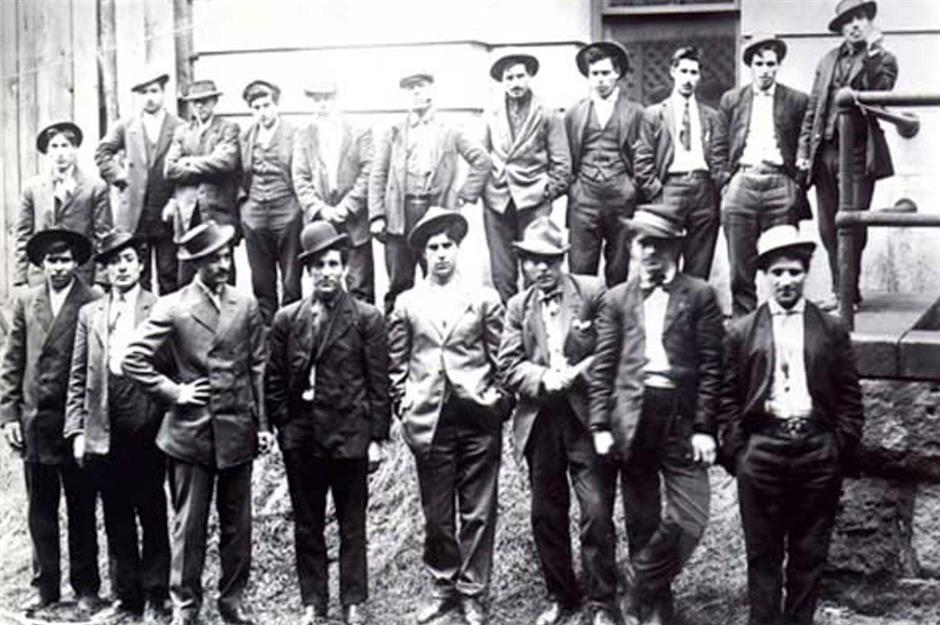
Made famous in modern times by Martin Scorsese’s 2002 historical epic Gangs of New York, the Five Points of Lower Manhattan was notorious for its poverty, violence, brothels, and corruption in the late 19th and early 20th century.
It was here in this cheap slum, a melting pot where the poorest and least fortunate scraped along side-by-side, that the foundations for organized crime in America were set. Pictured here around 1900 we see some of the Five Points Gang, an army of criminals led by Italian-American Paul Kelly.
c.1900: Bowery Boys stand guard
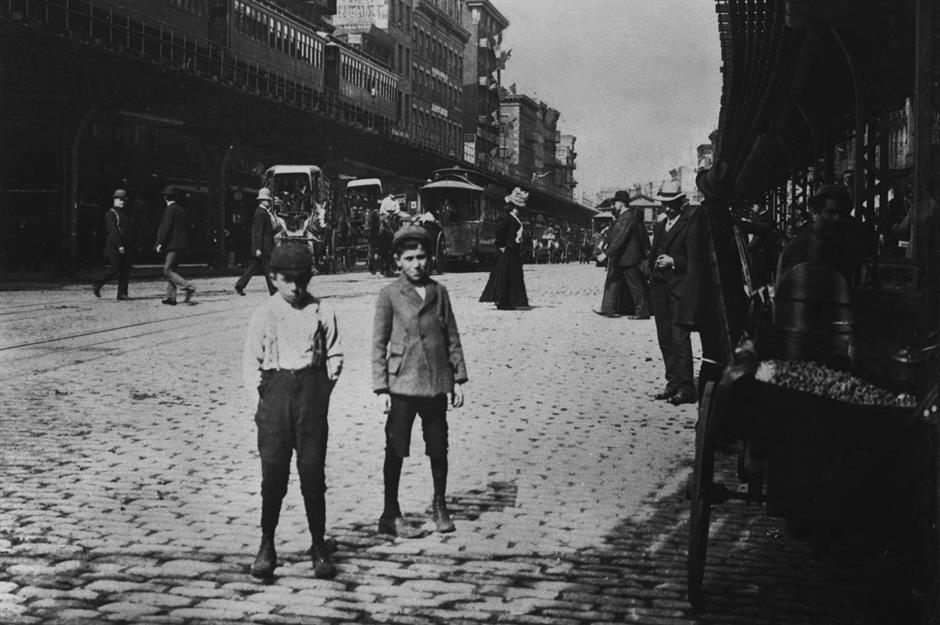
With a lack of structure in their lives and not much in the way of prospects, many young people in Lower Manhattan were pulled into criminal enterprises. The Five Points Mission, which had been operating from the middle of the 19th century, was an orphanage that had its hands full dealing with all the parentless children running amok in the area.
Here we see two young boys staring down the photographer, while standing beneath an elevated rail line in the Bowery neighborhood of New York. The Bowery Boys gang once ruled the area, and got caught up in everything from saloon murders to destructive riots.
Sponsored Content
1906: Factions go to war in Chinatown
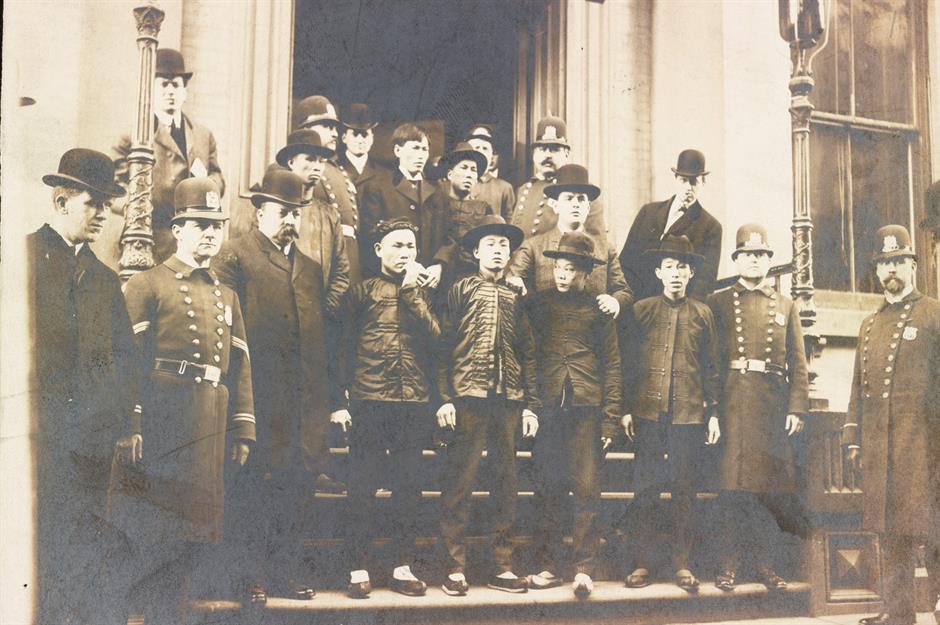
In the early 20th century, the Chinatowns of major American cities were battlegrounds for so-called Tong Wars. Centered particularly in San Francisco, these violent disputes saw rival gangs fight and kill over everything from territory to prostitution, gambling, and drugs.
One major factor in ending the Tong Wars, which had run on unchecked partly due to political corruption, was the Great San Francisco Earthquake and Fire of 1906. Destroying most of Chinatown, the power of the gangs who’d fought over its streets was never the same again. This photo of arrested men was taken after a factional shooting in New York’s Chinatown.
1914: Camorra Gang pose for a photo at Coney Island
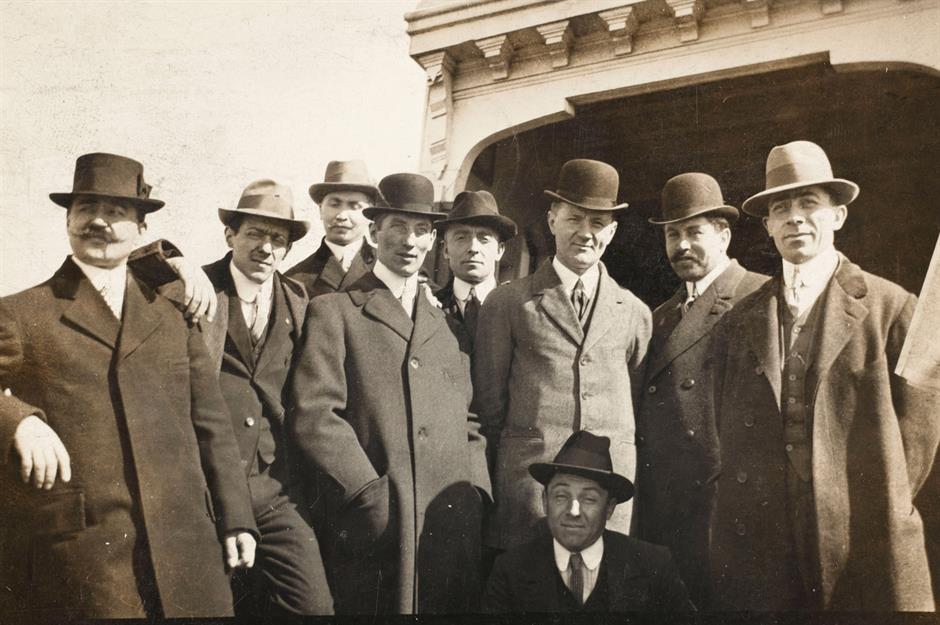
A loose combination of two Neapolitan groups based in Navy Street and Coney Island’s Santa Lucia Restaurant, the New York Camorra acted independently from the Mafia and sometimes clashed violently with the Sicilian Morello gang because of it. Here we see members of the group posing at Coney Island in 1914.
The Camorra took over downtown Morello rackets in 1916, but never saw the expected riches. A lack of cohesion between factions, as well as reprisals, police investigations, and a detailed confession from Navy Street gunman Ralph Daniello, which led to arrests in 23 homicide cases, was to be their undoing.
1920: Prohibition makes alcohol illegal
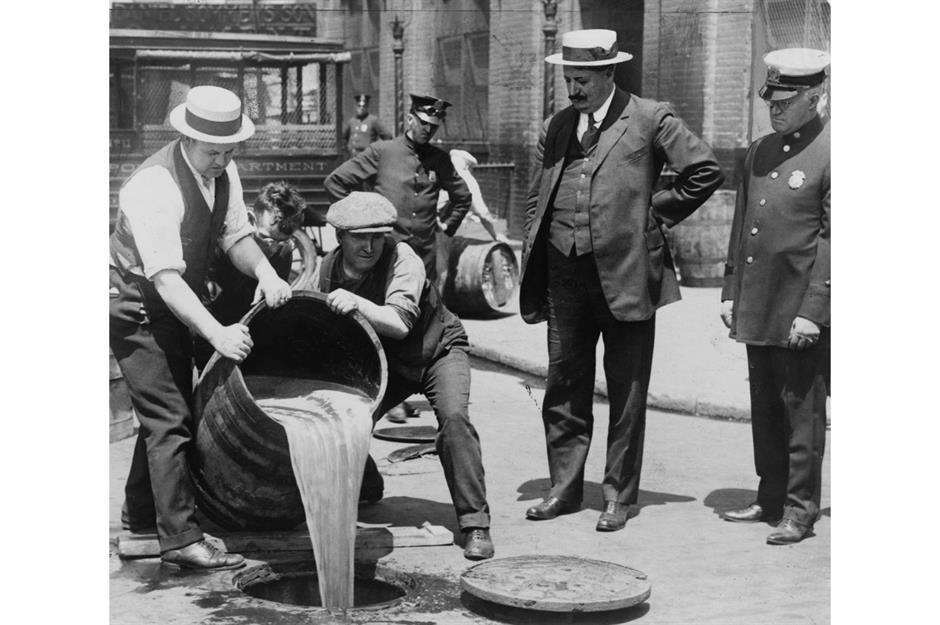
When Prohibition came into effect in January 1920, and made the production, transportation, and sale of alcoholic drinks a criminal offense, it sparked a rise in bootlegging (the illegal production and sale of liquor) and speakeasies (underground drinking establishments). Politicians underestimated how many millions of Americans were willing to avoid the law, and the extent to which organized crime would benefit from that.
Here we see confiscated beer being poured down a drain in 1920. This type of crackdown led to gangs fighting for control of an extremely lucrative black market.
Sponsored Content
1921: Speakeasy culture takes off

During Prohibition, speakeasy drinking establishments really took off. Customers were asked to speak softly to avoid detection, hence the name, and the illegal hangouts were often connected to gangsters, who either owned the bars or sold them bootlegged alcohol.
Corruption was huge during Prohibition, and many speakeasy owners bribed police and government officials to avoid raids. This photo, taken in 1921, shows people outside the Krazy Kat speakeasy in Washington, D.C. Notice the comical sign above the door.
1927: Searching a truck during Prohibition
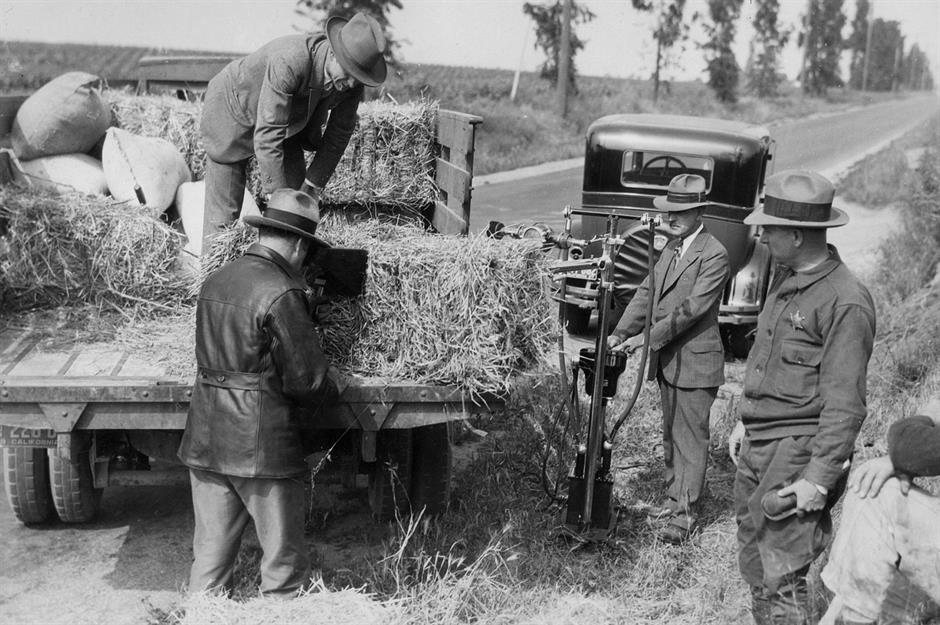
Despite rampant corruption during the 1920s, illegal alcohol was still hunted down by those law enforcement officers who hadn’t been paid off or scared away by the mob. This game of cat and mouse forced the criminals to adapt their approach to stay one step ahead.
Take this searching of a truck in 1927. George Contreras, of the Prohibition authority of Los Angeles, and RH Mulligan, a specialist in X-ray technology, are using a portable X-ray machine to examine hay bales. They found 25 cases of whiskey during the raid.
1929: The Saint Valentine's Day Massacre makes headlines
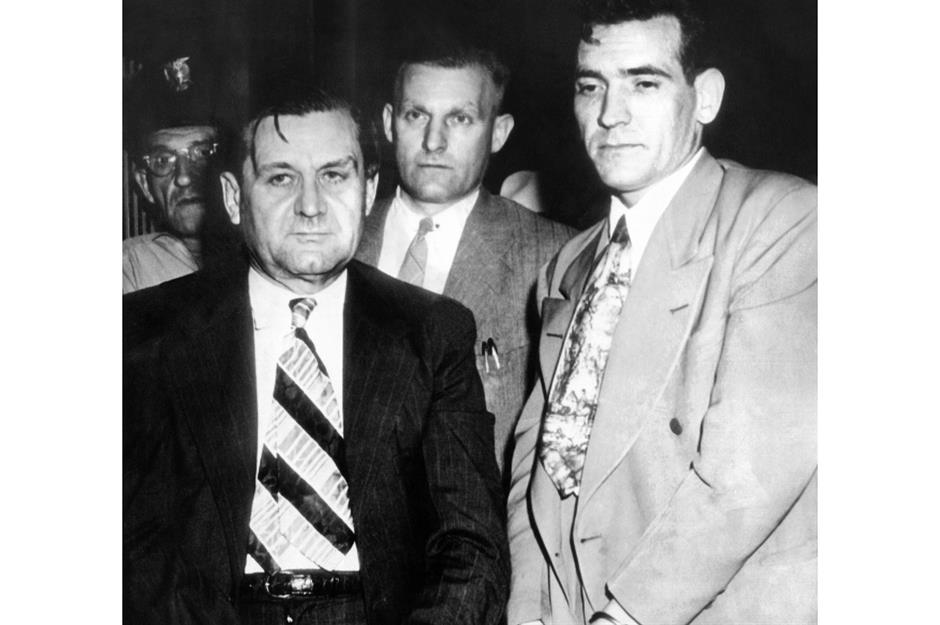
It's difficult to discuss this period of American history without addressing the frequent eruptions of bloody violence. And so we come to the Saint Valentine’s Day Massacre, which remains notorious today.
On February 14, 1929, seven members and associates of George "Bugs" Moran’s bootlegging gang (Moran is pictured here, left) were lined up and shot dead inside a garage on Chicago’s north side. Al Capone was widely suspected of ordering the hit, but no one was ever prosecuted. Three hundred bricks from the crime scene’s bullet-holed wall are now on display at The Mob Museum in Las Vegas.
Sponsored Content
1930: Al Capone enjoys a spot of fishing
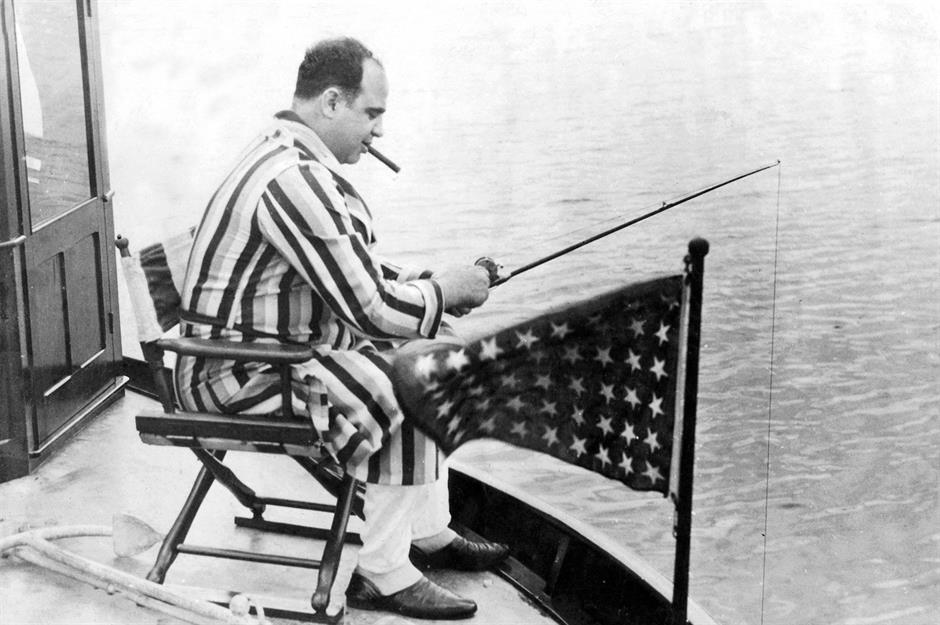
One man casts a particularly long shadow over American organized crime. Born in Brooklyn, New York, Al Capone ruled a criminal empire in Chicago that dealt in everything from gambling and prostitution to bootlegging, bribery, narcotics, robbery, protection rackets, and murder.
In the 1920s, law enforcement could barely lay a glove on him. This was because of widespread corruption, public support for bootlegging, and strategic intimidation. Here we see Capone fishing on his yacht in 1930, an idyllic scene that contrasts with the violent acts he was often responsible for.
1931: Unemployed men queue outside Al Capone's soup kitchen
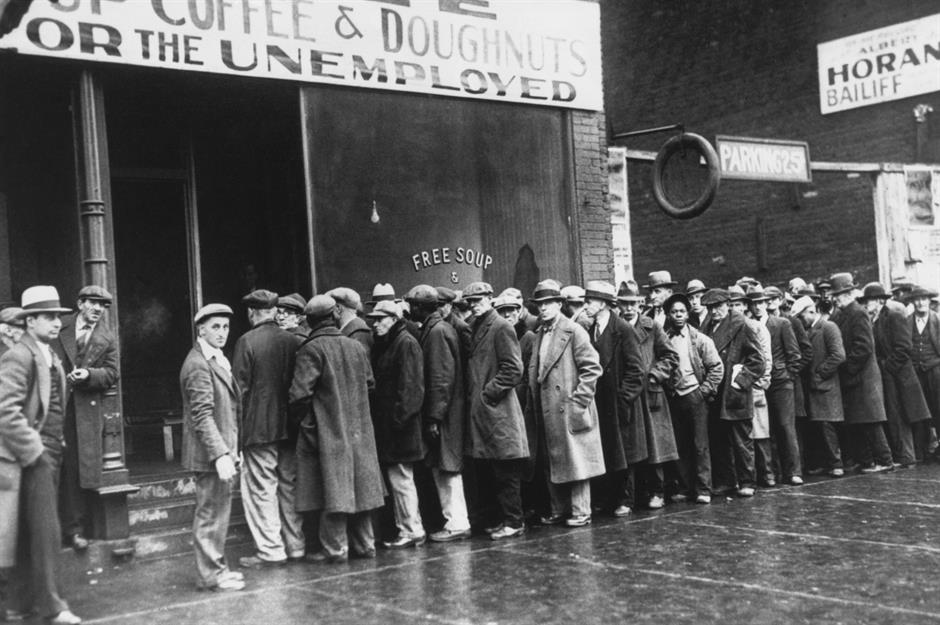
This photo shows jobless men lining up at a Chicago soup kitchen during the horrors of the Great Depression. Opened by Capone, it offered free soup, coffee, and doughnuts to the city’s many unemployed, helping the gangster win hearts and minds.
Before the Social Security Act of 1935, places such as this were primary sources of food for those who had fallen on hard times. As a result of this public relations effort, Capone claimed a reputation as a Robin Hood-esque figure among Windy City residents. Seen to be doing more for the local poor than the US government, his generosity was heralded on the streets and in newspapers.
1931: Al Capone takes his son to the baseball

Al Capone’s rise as a public figure, one seen to be doing good in the community, gained him access to high-profile people and made appearances like this one at a charity baseball game in 1931 fairly common. Here we see Chicago Cubs player Gabby Hartnett autographing a ball for Al Capone’s son, Sonny.
The gangsters in Capone's entourage and the scar visible on his left cheek, gained during a knife fight which earned him the nickname "Scarface," are reminders of a life lived on the wrong side of the law. Not long after this photo was taken, Capone would begin an 11-year prison sentence for tax evasion.
Sponsored Content
1931: Al Capone on trial for tax evasion
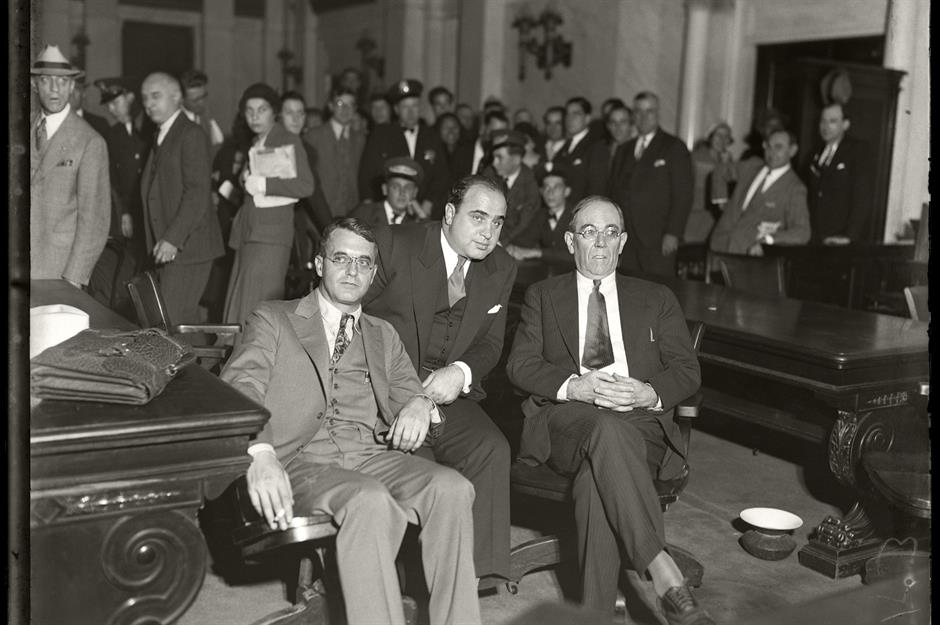
If history has taught us anything, it's that all empires eventually fall. On October 7, 1931, Al Capone (pictured here between his attorneys) sat in federal court during his tax evasion trial.
Capone was convicted on October 18, 1931, before ultimately being sentenced on November 24 to 11 years in federal prison. He was also fined $50,000, charged $7,692 for court costs, and had to pay back $215,000 plus any interest due on back taxes. And while he didn't end up serving all of his sentence, Capone's power and influence was never the same again.
1934: Al Capone checks into Alcatraz
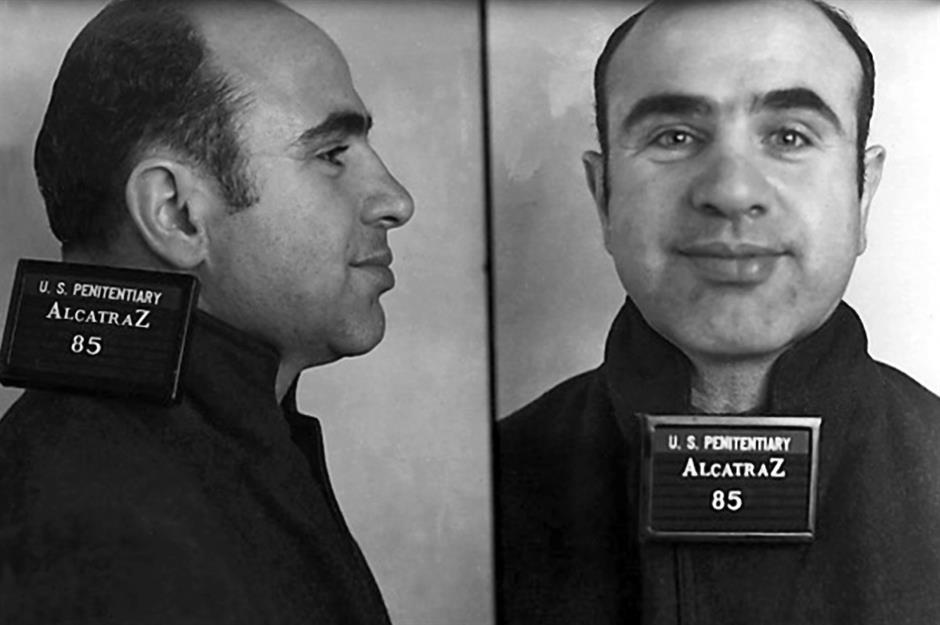
The most iconic correctional facility in the USA, and quite possibly the world, Alcatraz has hosted some of history's most infamous criminals, including George "Machine Gun" Kelly and convicted murderer Robert "The Birdman" Stroud. In 1934, Al Capone, registered as inmate 85, checked into the prison known as "The Rock" and "America’s Devil Island."
Still serving his sentence for tax evasion, it’s thought Capone was transferred to Alcatraz as part of a public relations move to show the prison was, as writer Jonathan Eig puts it, "the toughest slammer in the land." Capone did not enjoy any special amenities during his stay, but was apparently a "model prisoner."
1941: Al Capone attends his son's wedding in Miami
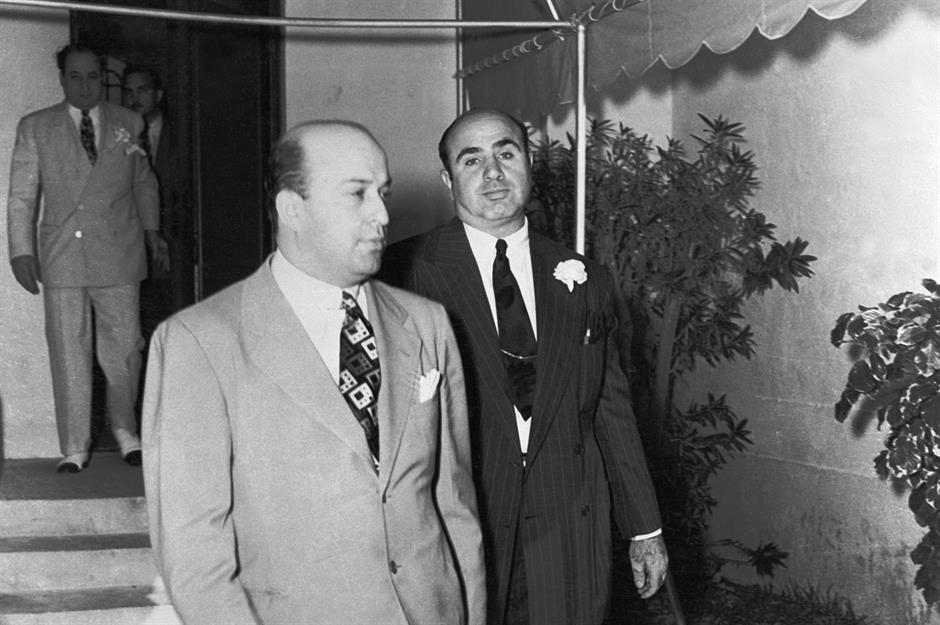
Four years into his Alcatraz stay, Capone was released on the grounds of poor health and had to seek treatment at various hospitals. In March 1940, he returned to his Florida home with his family to see out the rest of his days.
With his power greatly diminished, Capone lived a mostly reclusive life until his death in 1947. He’s seen here in 1941, looking less than pleased to be photographed, after attending the wedding of his son Albert Francis Capone. The man next to him is thought to be his bodyguard.
Sponsored Content
1972: Marlon Brando stars in The Godfather

It’s testament to Marlon Brando's acting in The Godfather that his portrayal of the fictional Don Vito Corleone is now practically synonymous with the Mafia. Directed by Francis Ford Coppola, the film received critical acclaim and picked up three Oscars.
Accused of glamorizing violence at the time, but now considered a masterpiece, Coppola showed how an intricate web of influence and manipulation underpinned the world of organized crime – and the United States more broadly. Brando (pictured here) famously stuffed his cheeks with cotton balls prior to auditioning for the part.
1974: Francis Ford Coppola talks to Al Pacino on the set of The Godfather Part II
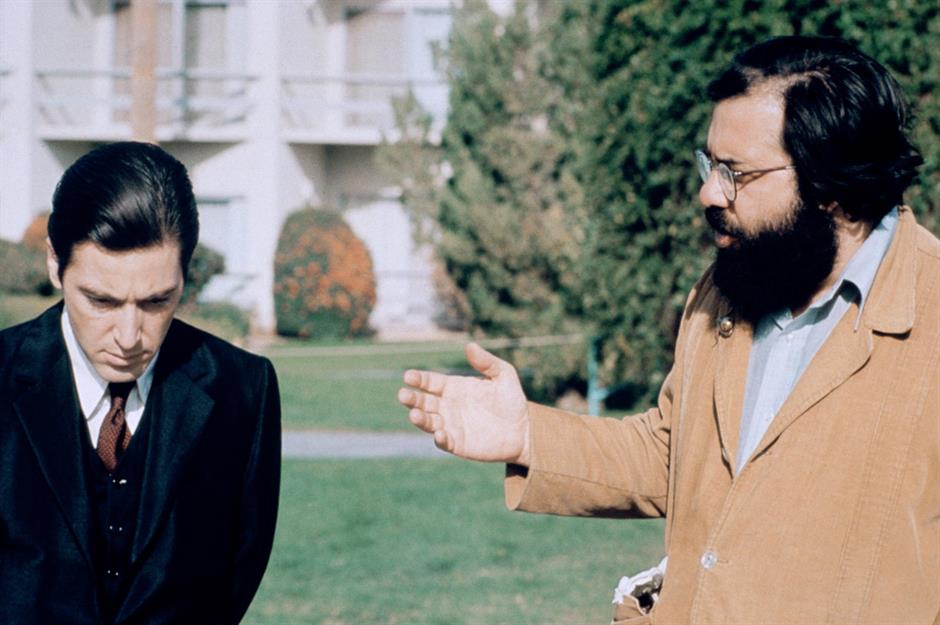
Not only is The Godfather Part II widely considered the greatest sequel of all time, it is also thought of as one of the best films ever made. Winner of six Academy Awards, Francis Ford Coppola’s follow-up to his 1972 masterpiece may even have improved on the original, wowing critics and cinemagoers alike on release.
This behind-the-scenes glimpse into the movie’s production shows Coppola discussing a scene with lead actor Al Pacino. Although another sequel followed, it was the first two films that refueled demand for Mafia tales in popular culture.
1975: Jimmy Hoffa goes missing
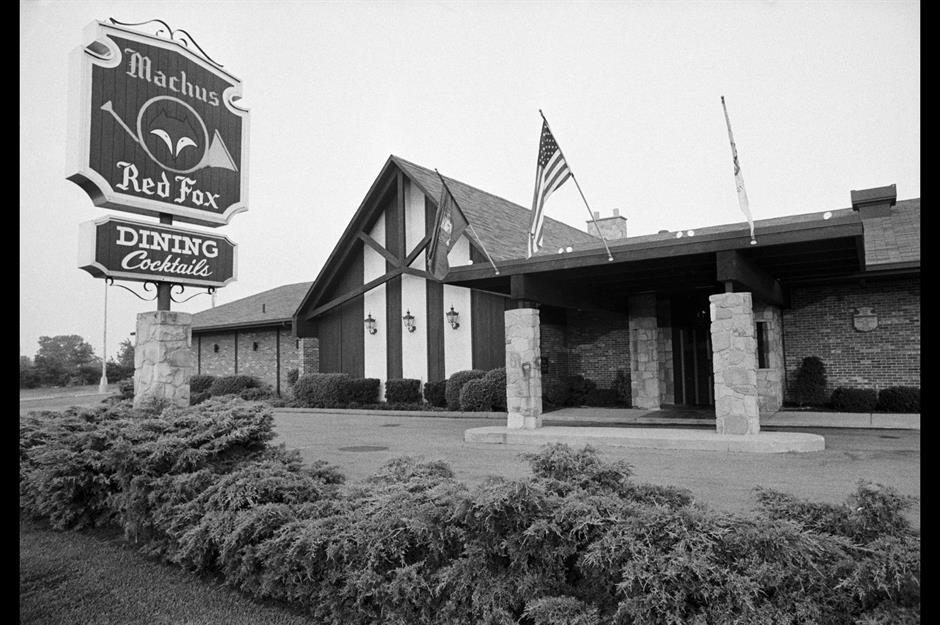
The disappearance of powerful US union leader Jimmy Hoffa in July 1975 remains one of the best-known unsolved cases in the United States. Last seen in the parking lot of the Machus Red Fox (pictured), in the suburbs of Detroit, he was said to have had an appointment with Anthony Provenzano, a union official and ex-Mafia figure, and Anthony Giacalone, a Detroit mobster. Both would deny that the encounter took place.
The most commonly held theory is that the Mafia murdered Hoffa for trying to regain the presidency of the Teamsters union – and control of what the FBI described as "the most abused, misused pension fund in America."
Sponsored Content
1985: Rudy Giuliani goes after organized crime in New York
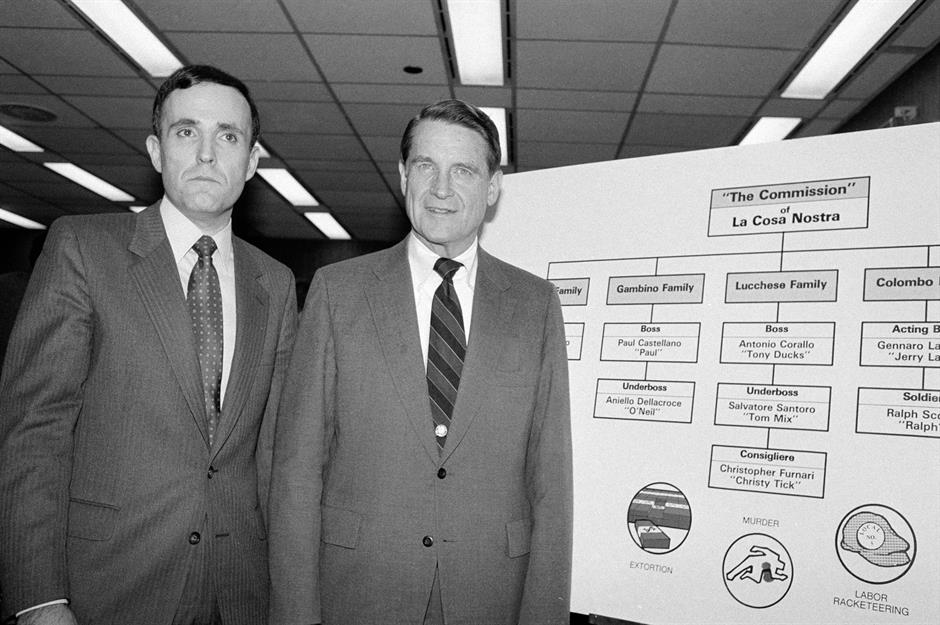
Back in the 1980s, US attorney and federal prosecutor Rudy Giuliani made headlines for aggressively going after New York’s organized crime families. He is pictured here alongside FBI director William Webster during a press conference in which the reputed leaders of the Mafia’s most powerful families were indicted as overlords of "The Commission."
Using the Rico Act, which was passed in 1970 in a bid to help prosecutors join the dots between the orders of criminal bosses and the underlings who carried them out, and evidence from hundreds of hours of taped conversations, Giuliani’s efforts led to the convictions of eight senior members of the mob. In 2023, Giuliani was himself charged under this same act.
1987: Robert De Niro plays Al Capone in The Untouchables
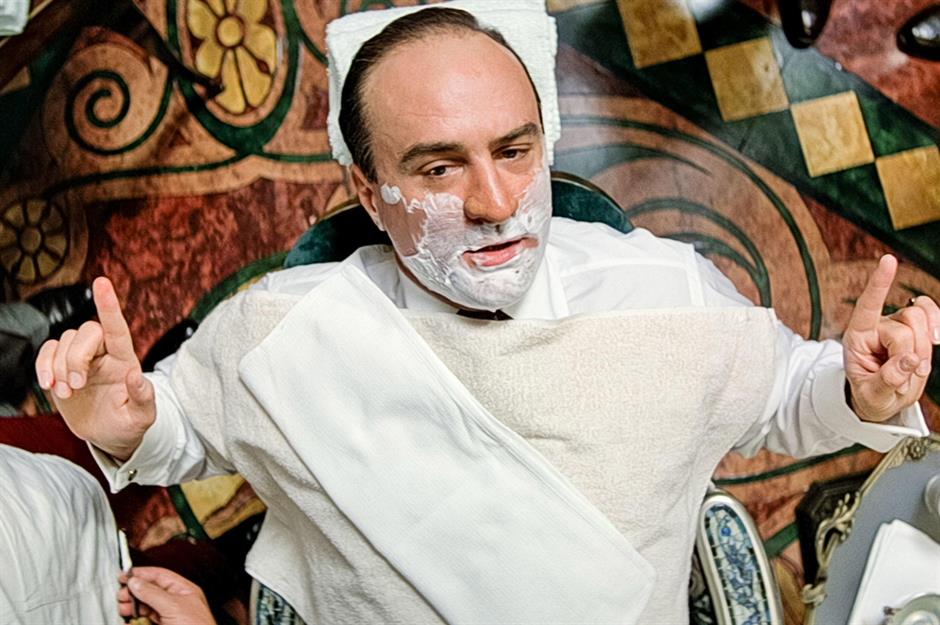
Despite a sprinkling of factual inaccuracies, there’s no denying that Brian De Palma’s classic 1987 film The Untouchables does a good job of capturing the feel of Chicago during Prohibition. The movie centers on real-life lawman Eliot Ness, played by Kevin Costner, and a small group of other agents impervious to bribes as they attempt to navigate police corruption and bring down ruthless gangster Al Capone.
Focusing on people who actually existed, it showed how cinema can keep the wheel of history turning by shaping how events are remembered in the popular imagination. See Robert De Niro’s portrayal of Al Capone, pictured here.
1999: The Sopranos transforms television
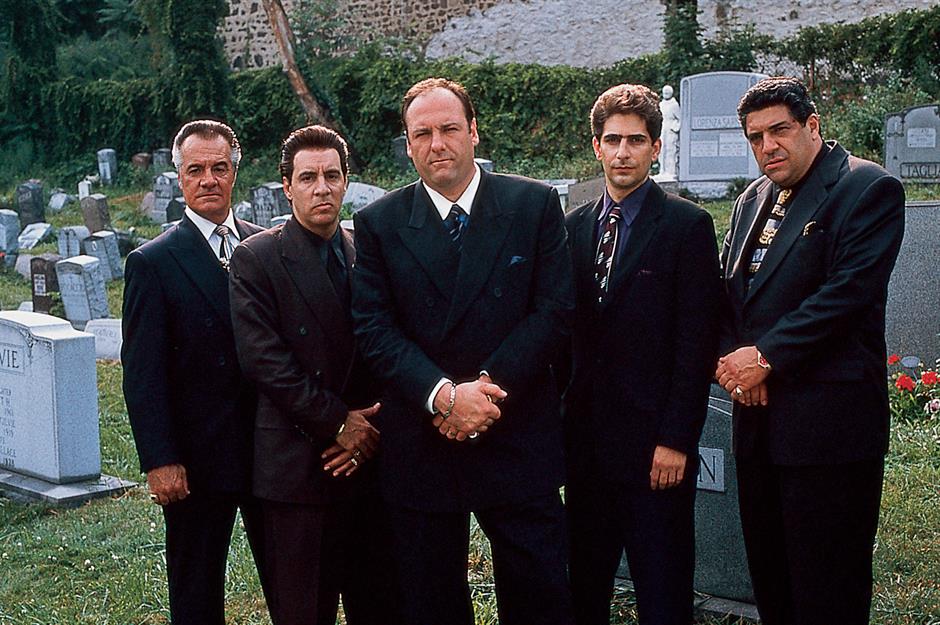
Kickstarting a golden age of television, The Sopranos is considered one of the greatest TV shows of all time. Telling the story of fictional mob boss Tony Soprano (played by James Gandolfini), as he tries to balance family life with his criminal enterprise, The Guardian called it "a cultural big bang that still reverberates on our screens."
Picked up by HBO after many other networks had rejected it, the fifth episode of the show went against widespread wisdom in the industry by having its protagonist strangle a fugitive informant in cold blood. It ultimately ran for six seasons, won every award under the sun, and turned organized crime in America into a water cooler talking point.
Sponsored Content
2012: The Mob Museum opens its doors

Perhaps no tourist attraction in the world underlines our ongoing fascination with organized crime more than The Mob Museum in downtown Las Vegas. Opened in a former courthouse on February 14, 2012, the $42 million museum shines a light on how criminal enterprises have impacted society in the United States.
Exhibits here include the wall from the Saint Valentine’s Day Massacre, a crime lab, and a speakeasy. There’s also the chance to wander a century-spanning "hall of shame" and learn about successful efforts made to bring down the Mafia with wiretaps and bugs.