Small-town America in the 1950s – in photos
Nostalgia vs reality
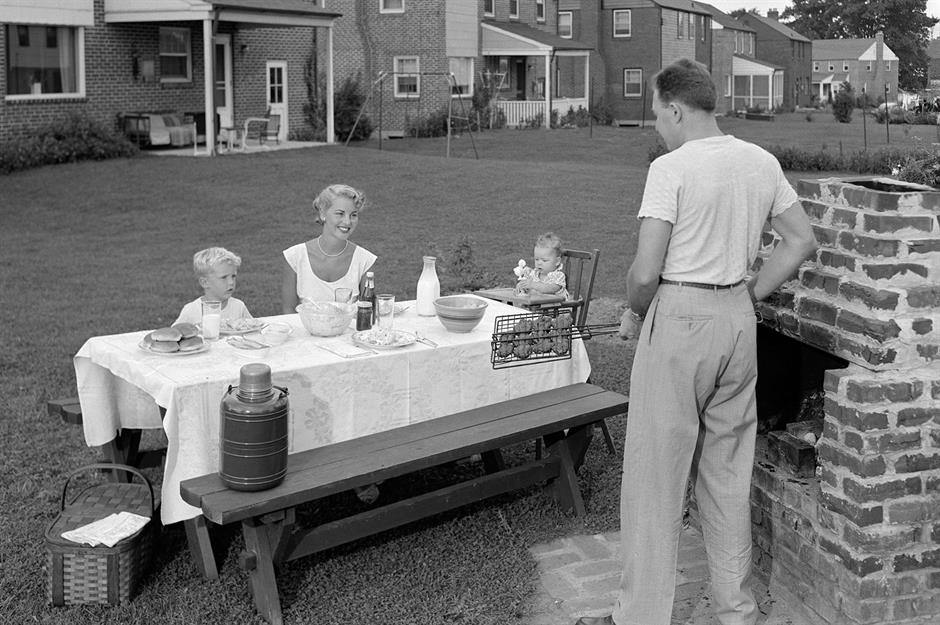
The 1950s are often seen through a nostalgic lens – shiny cars, diner culture, and close-knit neighborhoods. But small-town life was more complex. As televisions arrived, supermarkets spread, and the Civil Rights Movement gathered pace, tradition and change sat side by side.
Click through this gallery to see what life really looked like in 1950s small-town America...
Crossroads of community
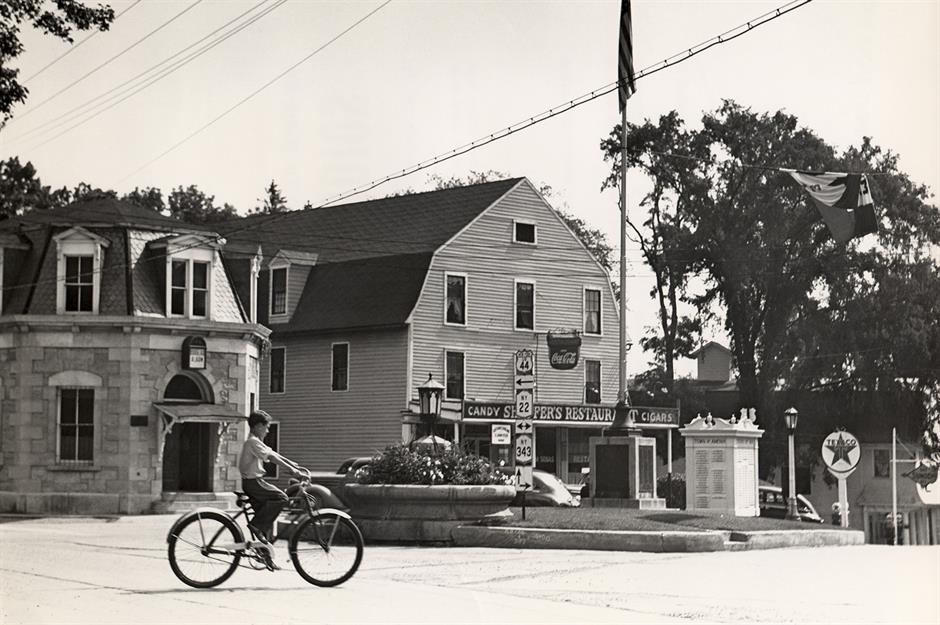
This quiet intersection, complete with candy store, gas pump, and war memorial, encapsulates the American small town’s beating heart. Places like this were where errands turned into conversations, where kids rode bikes freely, and where people gathered as a community.
A thriving main street
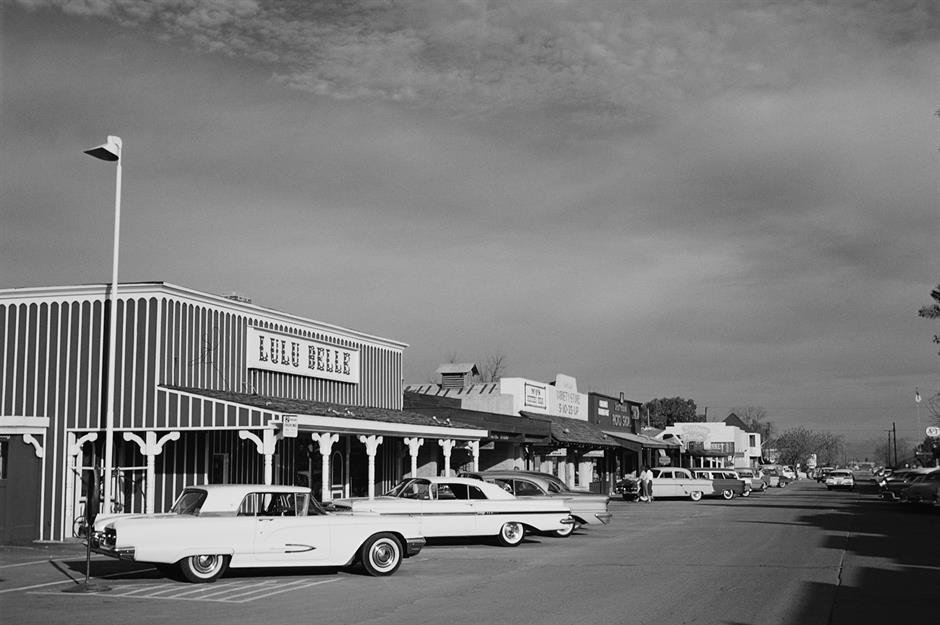
This scene from Scottsdale, Arizona provides a snapshot into the economic optimism of post-war small-town America. The mid-1950s saw the rise of consumer culture, car ownership, and local pride in towns that were rapidly growing but still rooted in local tradition.
Sponsored Content
The reality of desegregation
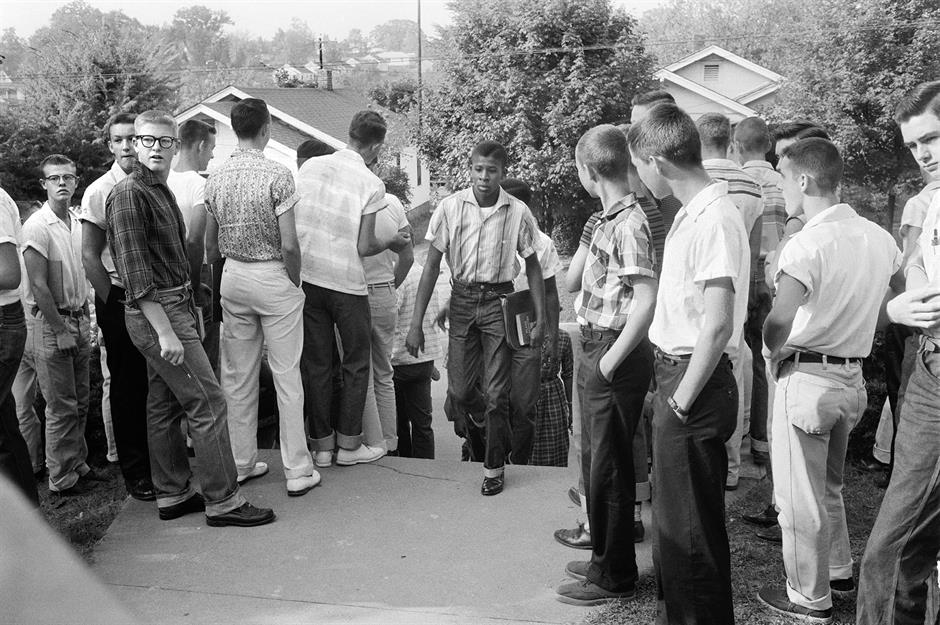
This 1956 image captures a lone Black student walking through a crowd of hostile white peers in Clinton, Tennessee, in the aftermath of the federally-mandated desegregation of the local high school. Twelve Black students had become the first to integrate into a public high school anywhere in the state, sparking weeks of unrest. Similar battles in small towns nationwide highlighted the deep racial tensions bubbling beneath the surface.
Parades and patriotism

In 1950s America, parades were more than entertainment – they were community on display. This image of a 1955 parade, with its cheerleaders and local school spirit, sets a feeling of joyous celebration against a backdrop of Cold War patriotism and cultural conformity.
Concerts in the park
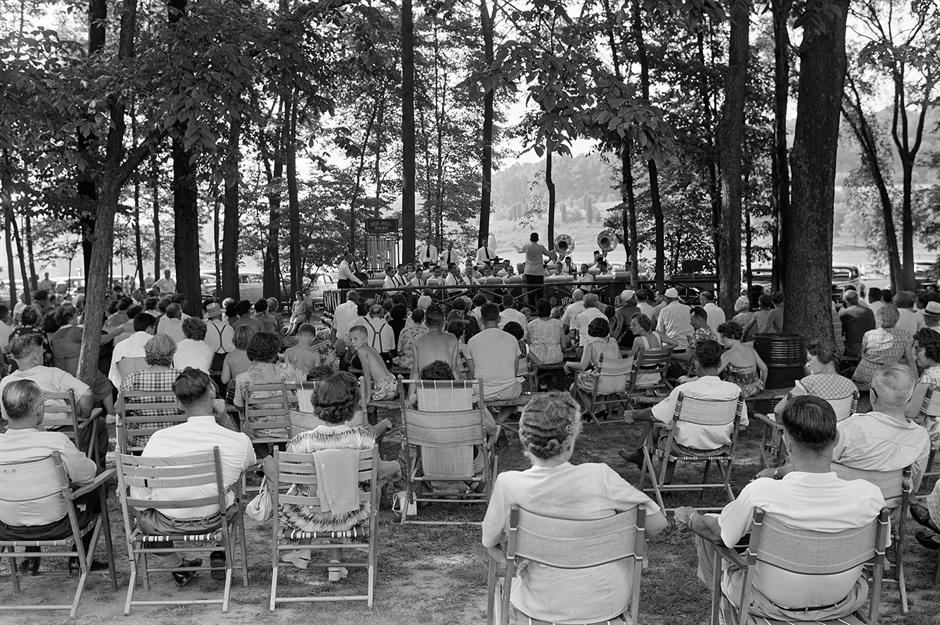
In the early 1950s, community band concerts like this were a common form of public entertainment in small-town America. These events brought residents together for free, family-friendly leisure at a time when television was still gaining traction and other entertainment options were limited.
Sponsored Content
Suburbia
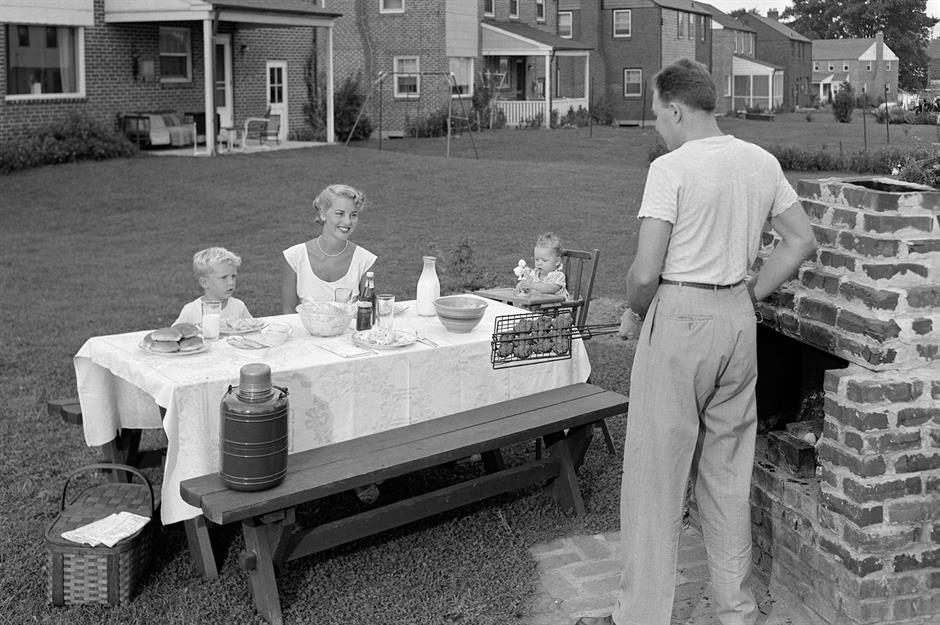
In the 1950s, America’s rapidly growing suburbs offered a polished, middle-class imitation of traditional small-town life. Families lived in similar houses on quiet streets, children walked to local schools, and neighborhoods were dotted with shops, churches, and community centers.
Residents knew their neighbors and joined local events, echoing the community spirit of old small towns – but with a crucial difference. Suburbia was strikingly uniform: home to mostly young, white families. Black families, even if they could afford it, were often excluded by discriminatory housing practices.
Order in the classroom
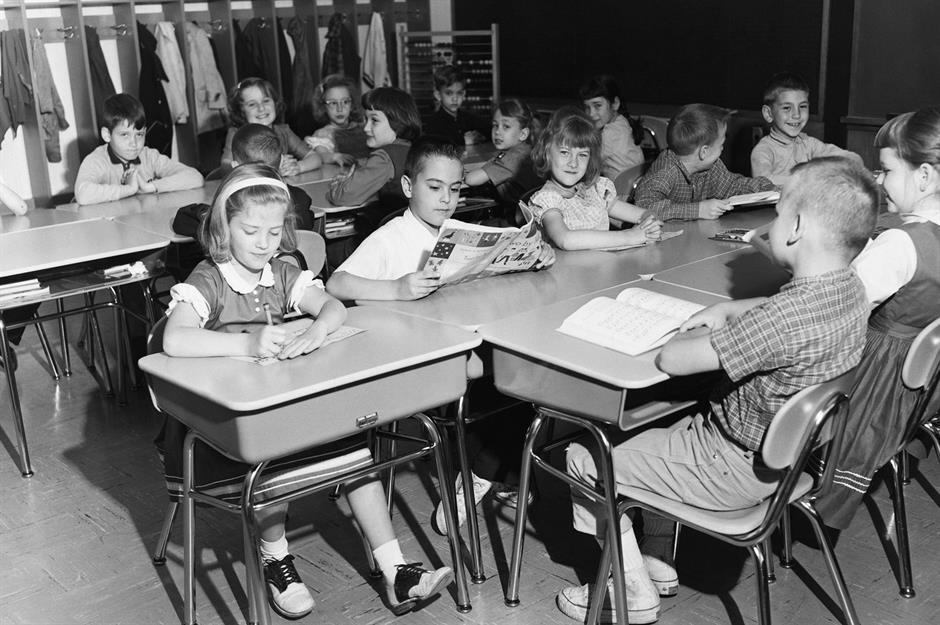
This 1950s classroom full of American schoolchildren looks serene as can be, but Cold War pressures were already reshaping education. After the Soviet launch of Sputnik in 1957, the National Defense Education Act was passed, pushing schools – even in small towns – to expand science, math, and language programs. Classrooms like this became part of an effort to prepare students for America’s global competition.
TV time: the new family hearth
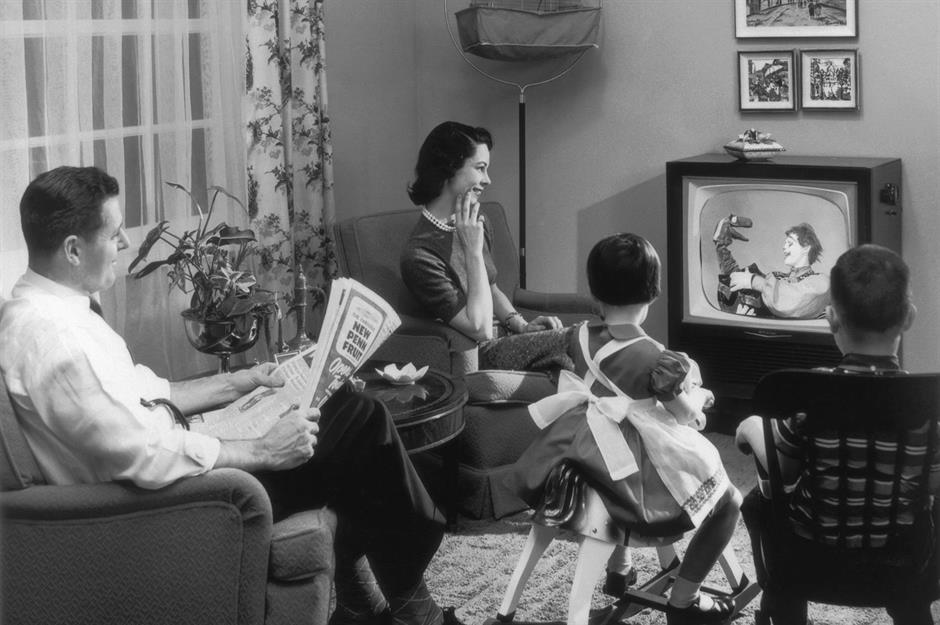
The television became the hearth of the American home in the 1950s. In 1950 only 9% of American households had televisions, but by 1959 that figure had soared to 85.9%.
Most homes had access to just three or four channels – usually local affiliates of the major networks, NBC, CBS, and ABC. Despite the limited selection, TV quickly became a central fixture in American life, delivering news, entertainment, and advertising directly into living rooms.
Sponsored Content
A slice of Americana
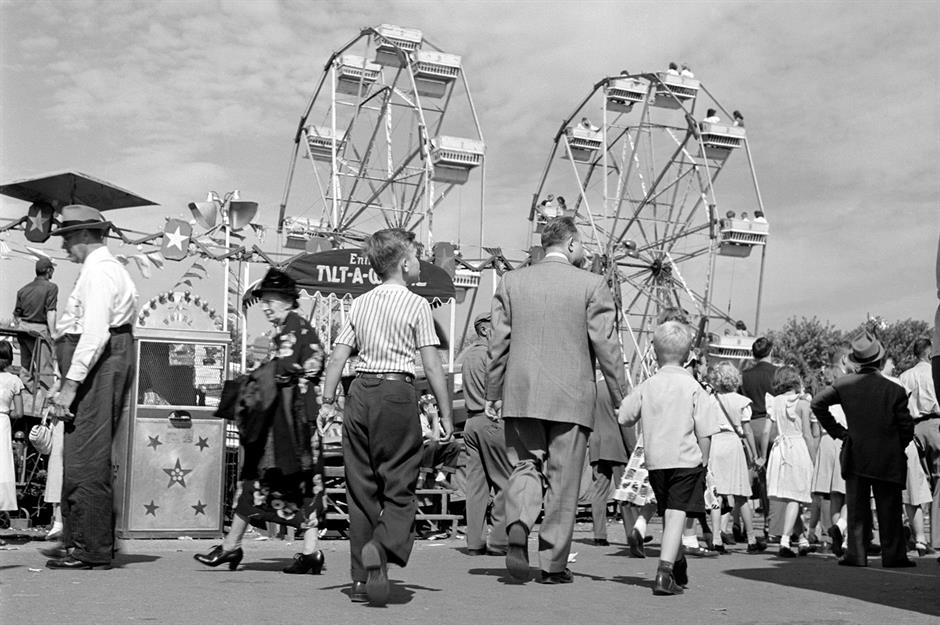
The county fair has long been one of the highlights of the small town summer calendar – a whirl of cotton candy, Tilt-A-Whirls, pie contests, and marching bands. It was where neighbors caught up, kids ran wild with sticky fingers, and families made memories under strings of colored lights.
The birth of one-stop shopping

By the mid-1950s, booming car ownership and surging consumerism gave rise to shopping centers like the one seen here – supermarkets, drugstores, and department stores surrounded by sprawling parking lots. These car-friendly hubs pulled shoppers away from traditional small town downtowns and became a defining feature of post-war life.
The supermarket takes over
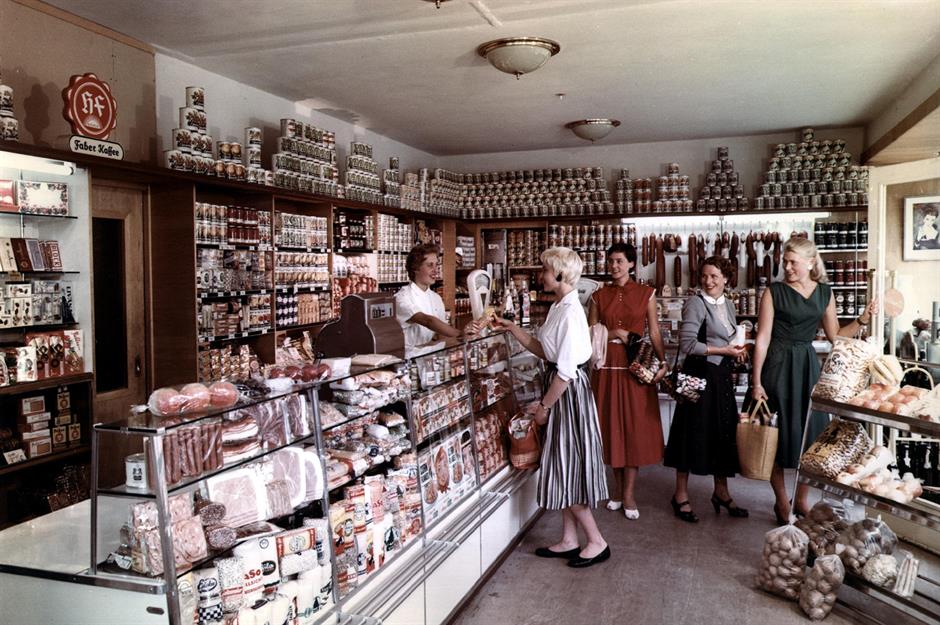
By the 1950s, supermarkets were replacing traditional mom-and-pop stores, like the one pictured, in small-town America. The self-service model and wider product selection appealed to post-war families seeking convenience and value.
Regional chains like A&P and IGA expanded into rural areas, reshaping local shopping habits. At the same time, advertising and cultural norms positioned women – especially housewives – as the primary household consumers.
Sponsored Content
The after-school scene
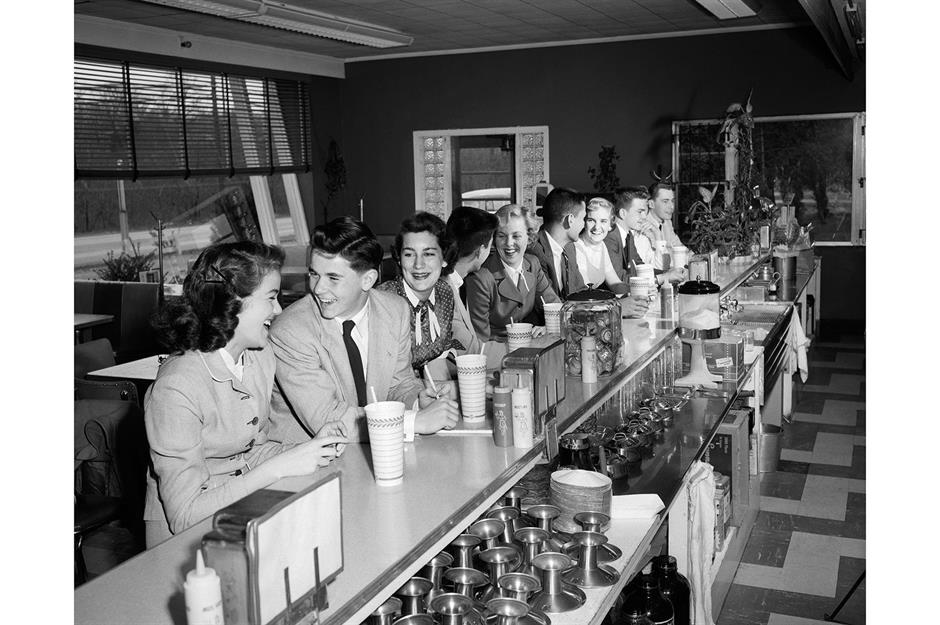
In post-war America, the diner became a defining feature of small-town life – affordable, accessible, and open late. With rising car ownership and more spending money, teenagers flocked to these chrome-countered spots for burgers, milkshakes, and socializing. The 1950s marked the peak of diner culture, shaped by a booming middle class and the growing influence of young people as a distinct consumer group.
Business in the backyard

Long before Etsy or bake sales, kids set up backyard stands like this – part play, part business. With hand-drawn signs, these pint-sized shops captured 1950s childhood charm and a budding spirit of entrepreneurship. Lemonade stands had been around since the mid-1800s, and they flourished in post-war suburbia.
Sunday best and sacred routines
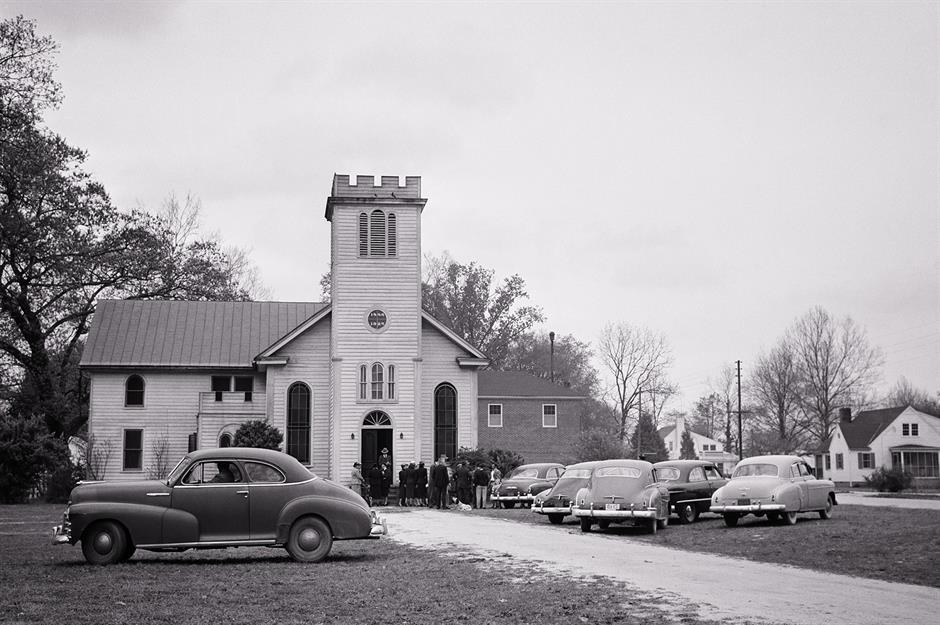
Dressed in their finest and arriving in polished cars, these churchgoers reflect the central role of religion in small-town mid-century American life. The local church wasn't just a place of worship – it was a hub for community identity, moral guidance, and weekly routine.
Sponsored Content
Friday night cheers

On the sidelines of a high school football game, cheerleaders fling their pom-poms into the air as players huddle behind them. Sports culture in the 1950s was often a ritual that bonded towns, instilled loyalty, and gave teenagers a starring role in community life.
Behind the parade
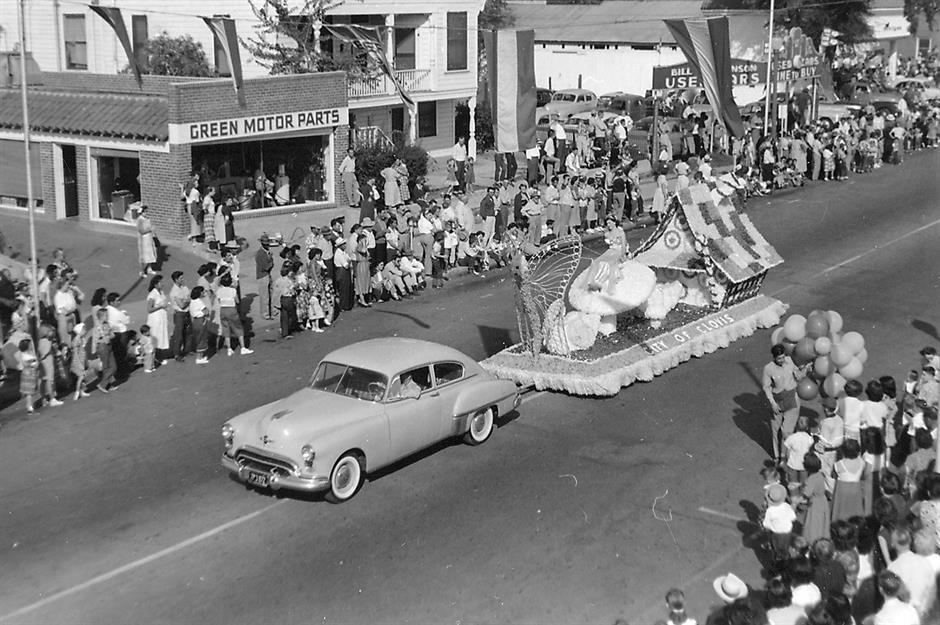
In 1950, the town of Delano, California, lined its streets for the annual harvest parade – a celebration of local pride complete with floats, marching bands, and families in their Sunday best. These events were fixtures of small-town life across America, yet, beneath the bunting, towns like Delano depended on the hard labor of migrant farmworkers whose contributions rarely made it into the spotlight.
Marching toward change
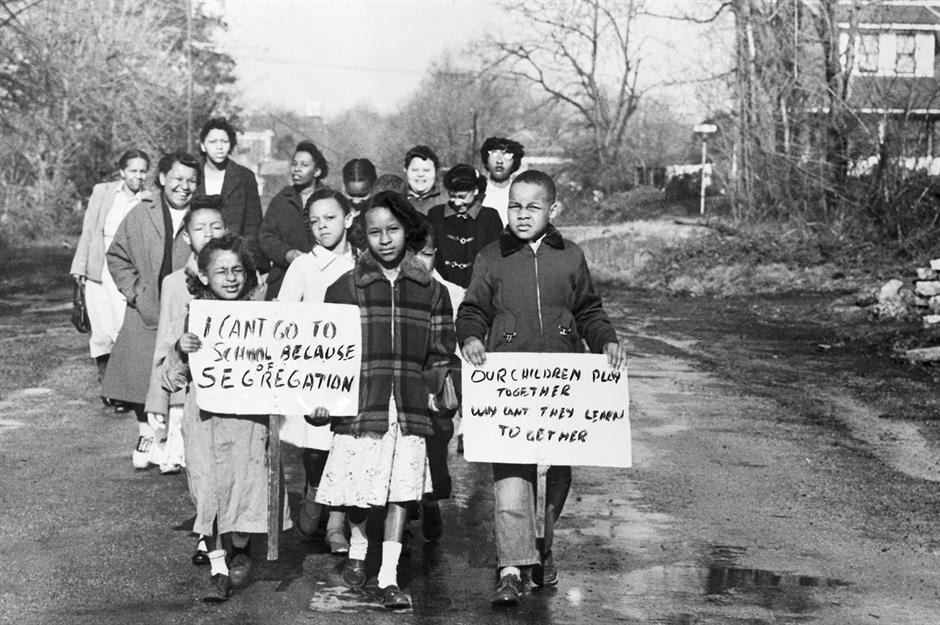
Black children and their mothers walk to Webster School in Hillsboro, Ohio, in 1956, carrying hand-painted signs bearing messages like "I can't go to school because of segregation." The protest was a powerful reminder that even the most ordinary communities were part of the civil rights struggle. In an era often remembered for stability, Black families were still fighting for the most basic rights.
Sponsored Content
Preparing for the worst
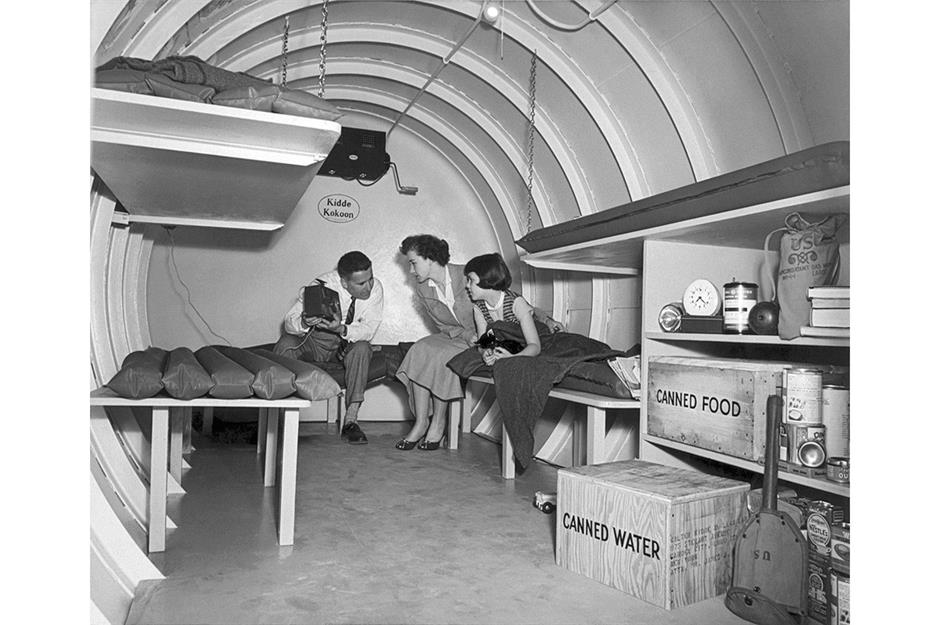
A family sits inside their shiny new backyard fallout shelter in 1955, surrounded by canned water, powdered milk, and civil defense manuals. The shelter, with its tidy bunk beds and polished floor, highlights the uneasy balance between Cold War paranoia and suburban order, both of which were on the rise.
Counter culture
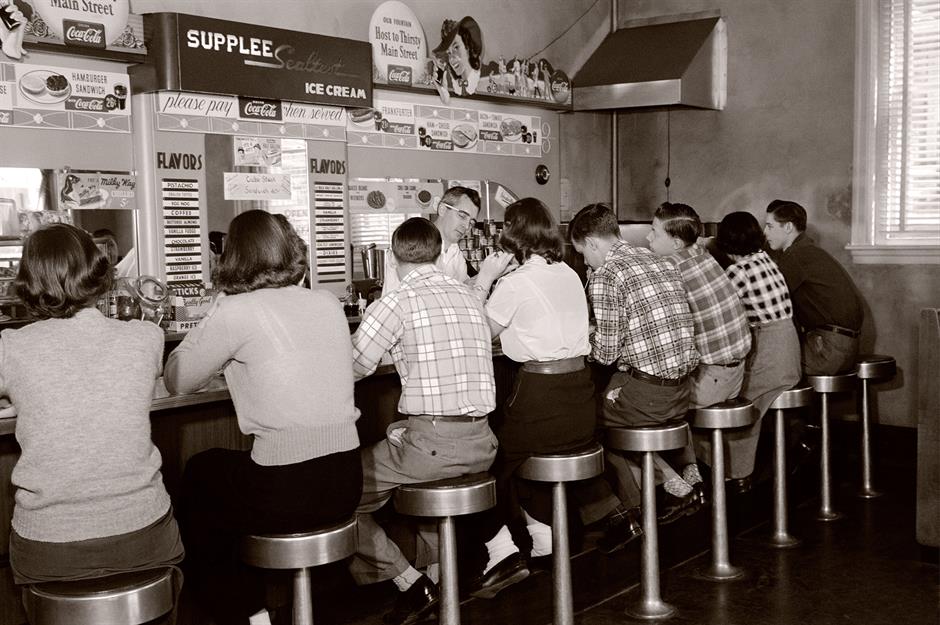
Teenagers crowd a soda fountain, sipping milkshakes and swapping gossip – an iconic slice of mid-century youth culture. These malt shops were social epicenters, and in many small towns they were as influential as any civic institution.
Enduring values
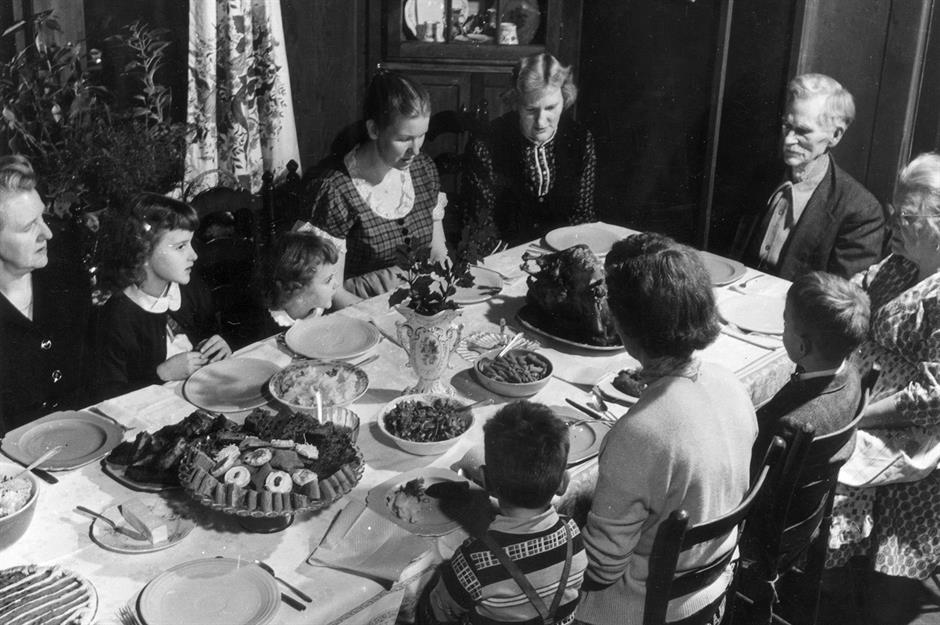
While modern appliances were transforming American homes, many small towns in the South retained a more traditional way of life. In this 1955 image from Kentucky, a family bows their heads to say grace before a holiday meal. Even as the country raced into a new era of television and Tupperware, rural communities often held onto older ideals about gender, hospitality, and generational respect.
Now uncover the most important historical event in every US state