Historic photos of the sporting moments that shook the world
History makers
More often than not, only people with a vested interest tend to care about the outcome of sporting events. Whether that's because the team we support are playing or our favourite athletes are competing, they will often appeal to us personally without ever breaking through into the wider conversation. Sometimes, however, what happens on the planet's various playing surfaces can send shockwaves around the world and make an impact far beyond anything anyone expected.
Scroll on to explore historic moments in sport that made everyone sit up and take notice...
1936: Jesse Owens sends a message to Hitler, Berlin, Germany
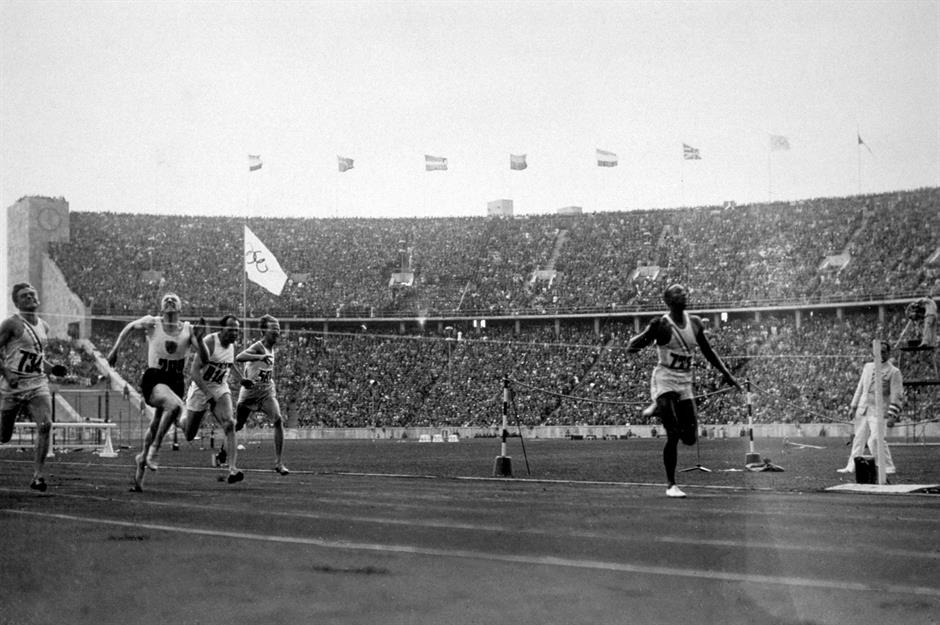
The Berlin Olympics of 1936 was seen by Adolf Hitler, and his fellow Nazis, as the ideal stage to showcase Aryan racial supremacy. What they hadn't counted on, however, was Jesse Owens ripping up their fascist propaganda with his sporting prowess.
Under the watchful eyes of the National Socialist high command, Owens, the grandson of a slave, became the first American track and field athlete to bag four gold medals in a single Olympiad. Pictured here, before a packed stadium in Germany's capital, he crosses the finish line to win the 100 metres. Stories of a humiliated Hitler snubbing Owens began circulating soon afterwards.
1947: Jackie Robinson breaks down barriers, New York City, New York, USA
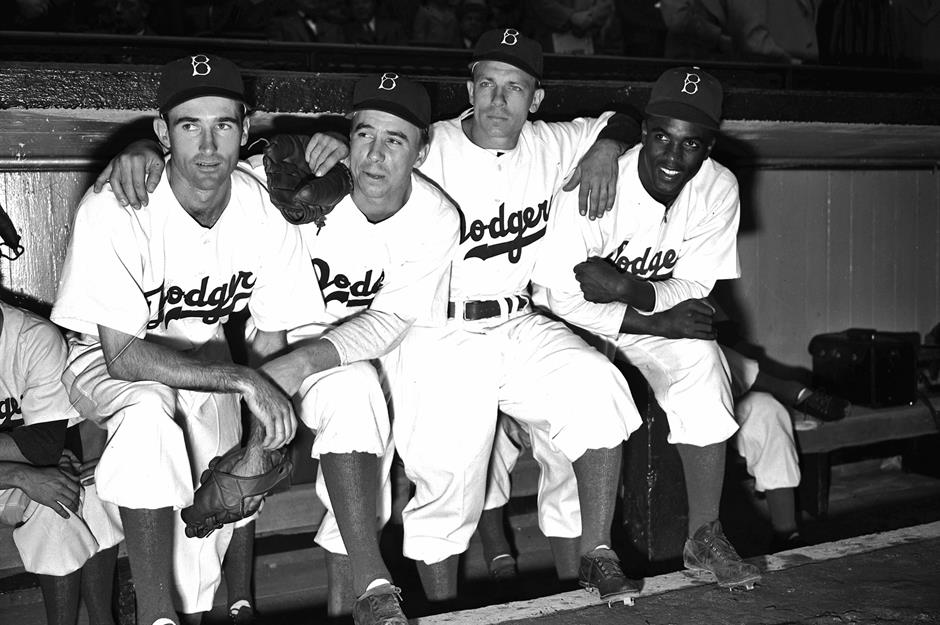
On 15 April 1947, Jackie Robinson became the first African American to play Major League Baseball in the modern era. Taking to the field for the Brooklyn Dodgers in a game against the Boston Braves, he broke a decades-old 'colour line' in the sport and marked a pivotal moment in the Civil Rights Movement. To this day, his legacy continues to inspire.
With African Americans actively participating in World War II, the issue of segregation in US sport came to a head in the 1940s. During the global conflict, protest signs outside New York's Yankee Stadium read, 'If we are able to stop bullets, why not balls?'
Sponsored Content
1954: The fabled four-minute mile, Oxford, England, UK
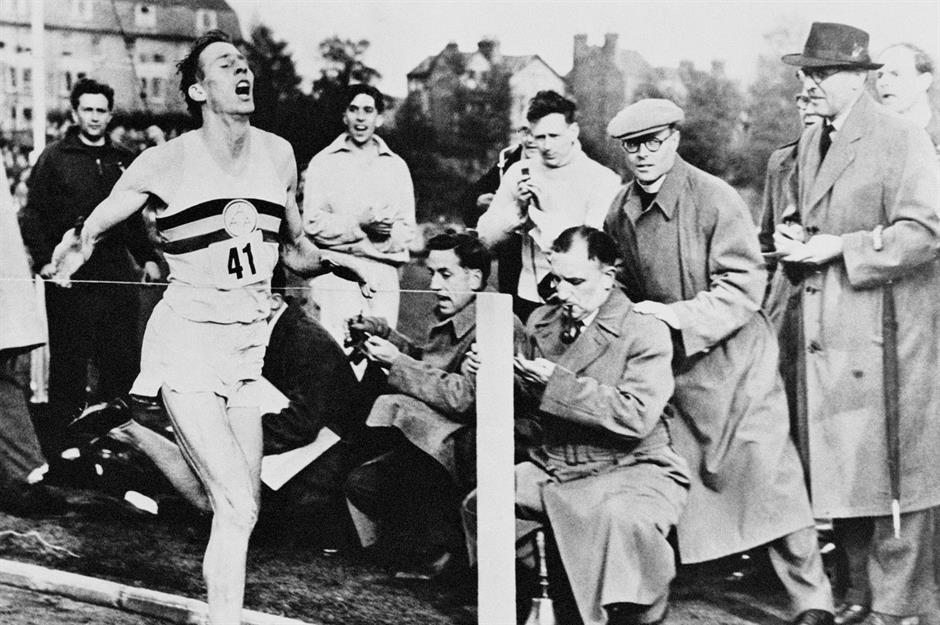
Before running the sub-four-minute mile on the morning of 6 May 1954, Roger Bannister had been told that not only was it impossible, but that trying it was a danger to his health. At the time, The Daily Telegraph described the challenge as "sport's greatest goal" and something "as elusive and unattainable as Everest" (another apparently impossible feat that had, a year earlier, been achieved by Sir Edmund Hillary and Tenzing Norgay).
Pictured here, an exhausted Bannister, who was a 25-year-old medical student at the time, is seen crossing the line in three minutes and 59.4 seconds. The Englishman who broke the barrier was knighted for services to sport in 1975.
1966: Football finally comes home, London, England, UK
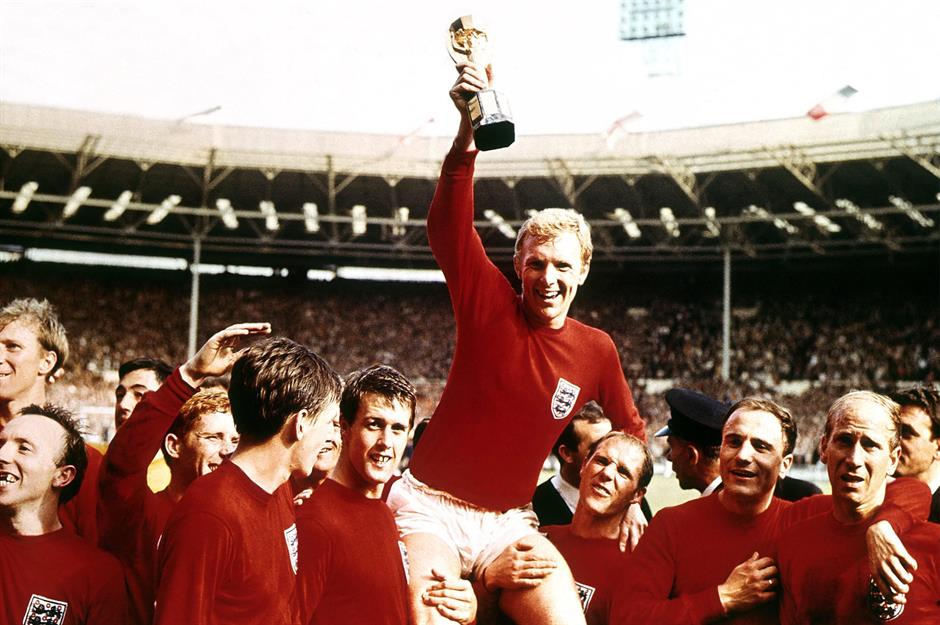
The first FIFA World Cup took place in 1930, but it took until 1966 for England – the country responsible for the codifying of football in the 19th century – to finally get their hands on the trophy. In front of 96,924 people at Wembley Stadium, and a record-breaking British television audience of 32.3 million viewers, the English beat West Germany 4-2 after extra time.
This iconic photograph shows captain Bobby Moore being held aloft on the shoulders of hat-trick hero Geoff Hurst and Ray Wilson. A debate over whether the Three Lions' controversial third goal crossed the line rages to this day.
1968: The Black Power salute, Mexico City, Mexico
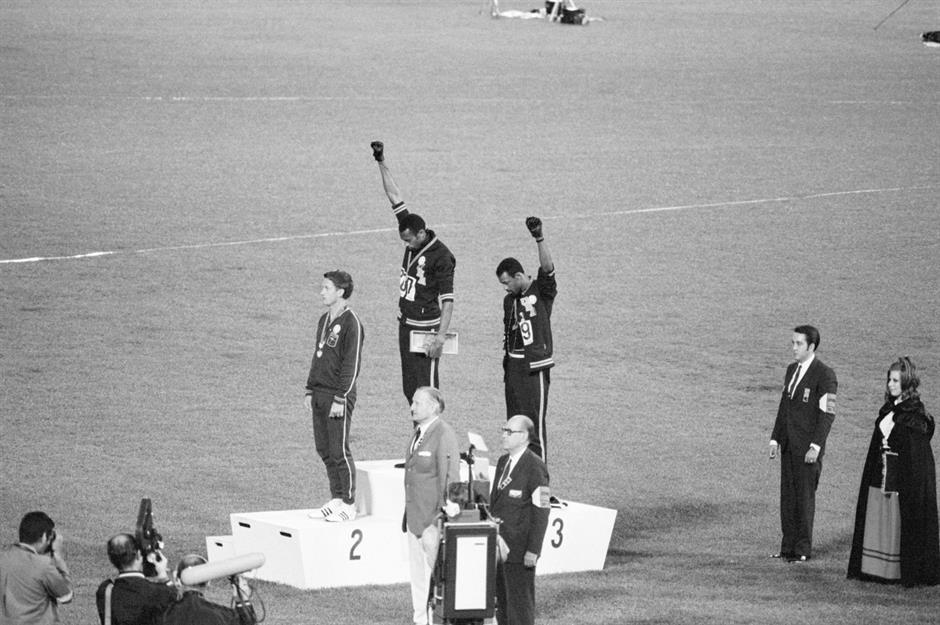
One of the most iconic moments in the history of sport occurred when American sprinters Tommie Smith and John Carlos took to the podium at the 1968 Olympics Games. Winners of gold and bronze in the 200 metres, respectively, they stunned the world by refusing to recognise their nation's flag while raising gloved fists in a Black Power salute.
The act was a protest against the unfair treatment of Black Americans in the United States. As you'll see later in the gallery, it's the type of gesture that athletes are still making 50 years later.
Sponsored Content
1974: The Rumble in the Jungle, Kinshasa, Zaire (now DR of Congo)
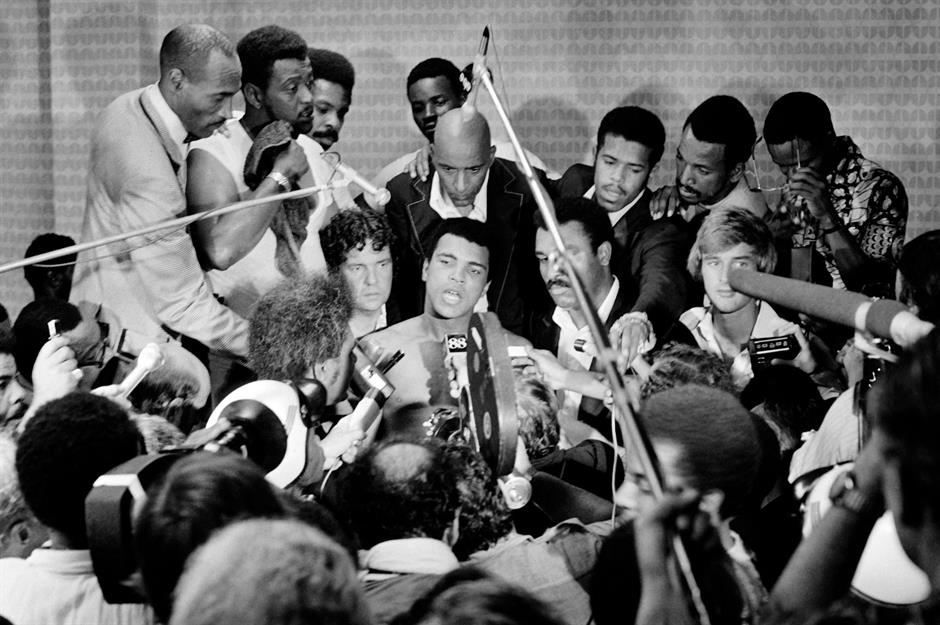
Anyone with an interest in boxing will fondly tell you about the time Muhammad Ali fought George Foreman in a soccer stadium in Zaire (now the Democratic Republic of Congo). The Rumble in the Jungle, as it was billed, is so iconic that it went on to be the subject of an Oscar-winning documentary called When We Were Kings (released in 1996).
Brainchild of President Mobutu Sese Seko and boxing promoter Don King, the brutal bout saw Foreman suffer a come-from-behind knockout and lose his heavyweight crown. This photo shows Ali during his post-victory press conference.
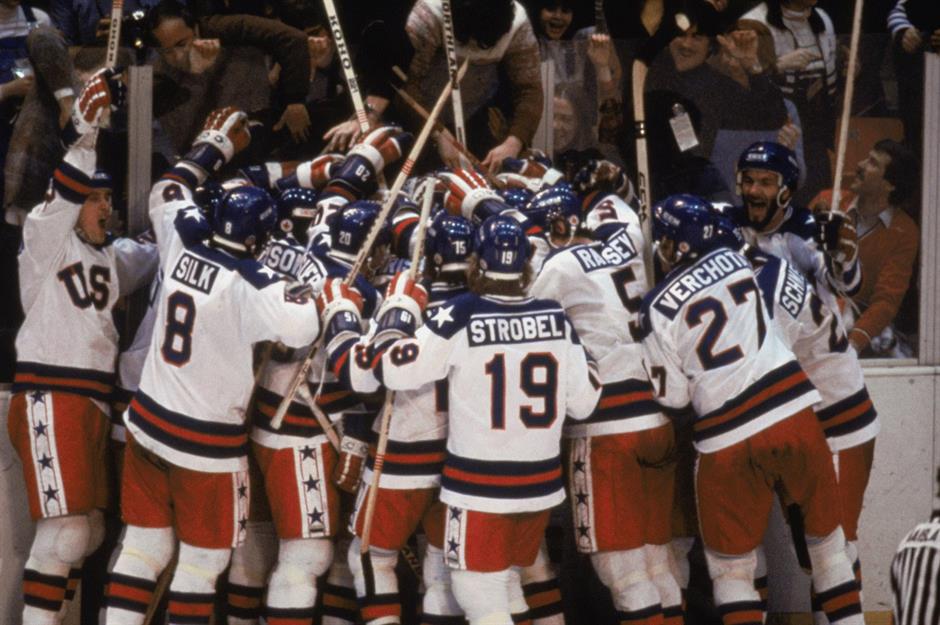
1980: 'The Miracle on Ice', Lake Placid, New York, USA
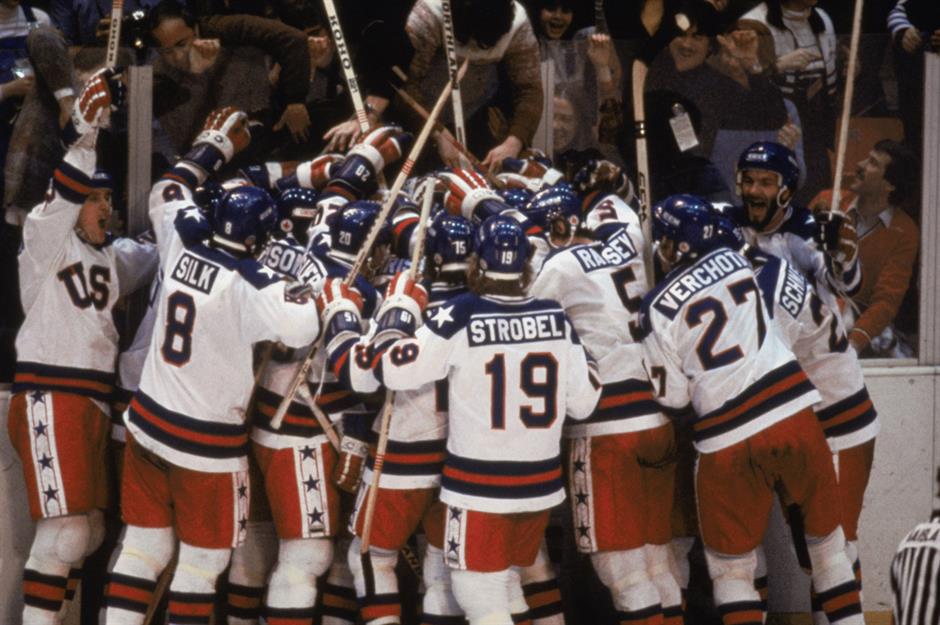
What happened on 22 February 1980 in Lake Placid has been labelled everything from 'a defining moment in American culture' and 'the greatest sports event of the 20th century' to, quite simply, 'the miracle on ice'. However you describe it, a team of amateur college boys, mostly drawn from Minnesota, defeating a formidable Soviet Union side that had dominated ice hockey for decades, remains an underdog story for the ages.
Taking place against a backdrop of economic meltdown and Cold War tension, Team USA's stunning 4-3 win in the semi-finals of the Winter Olympics, before going on to claim gold against Finland, inspired generations of players. The Soviet Union had beaten the US 10-3 just a fortnight earlier.
1986: Diego Maradona's 'Hand of God', Mexico City, Mexico
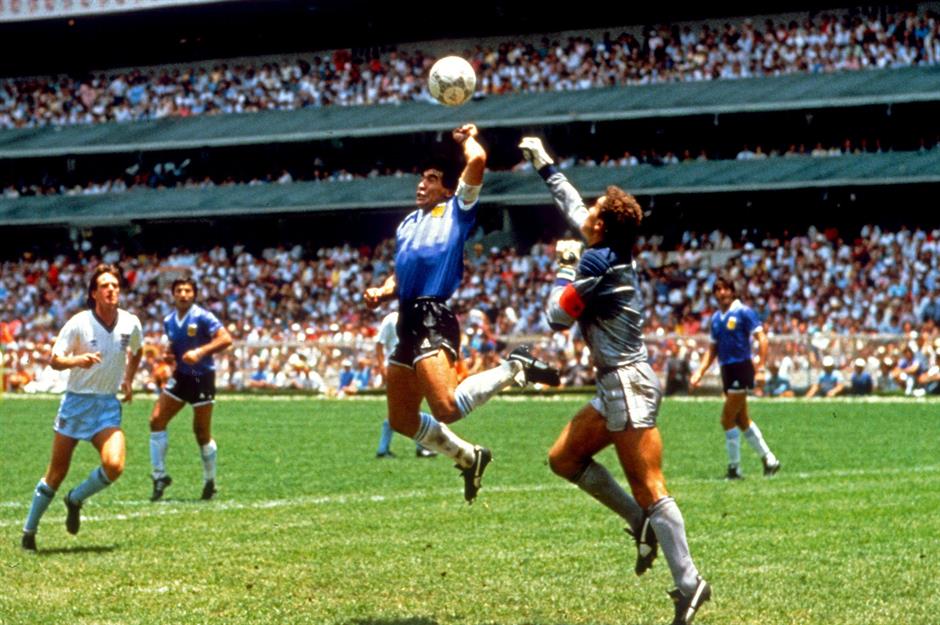
In Argentina, all-time great Diego Maradona is revered like a saint and talked about with religious devotion. For many in England, however, he'll be forever tarnished by an infamous FIFA World Cup quarter-final at the Estadio Azteca.
The match, played out beneath the blazing heat of the Mexican sun, showed the best and worst of the magician from Buenos Aires. His first goal saw him sneakily punch the ball past England goalkeeper Peter Shilton, and became known as the 'Hand of God', while his second was dubbed 'Goal of the Century'. Argentina won the tie 2-1, with certain media claiming it as a form of revenge for the Falklands War.
Sponsored Content
1993: The 'Ball of the Century', Manchester, England, UK
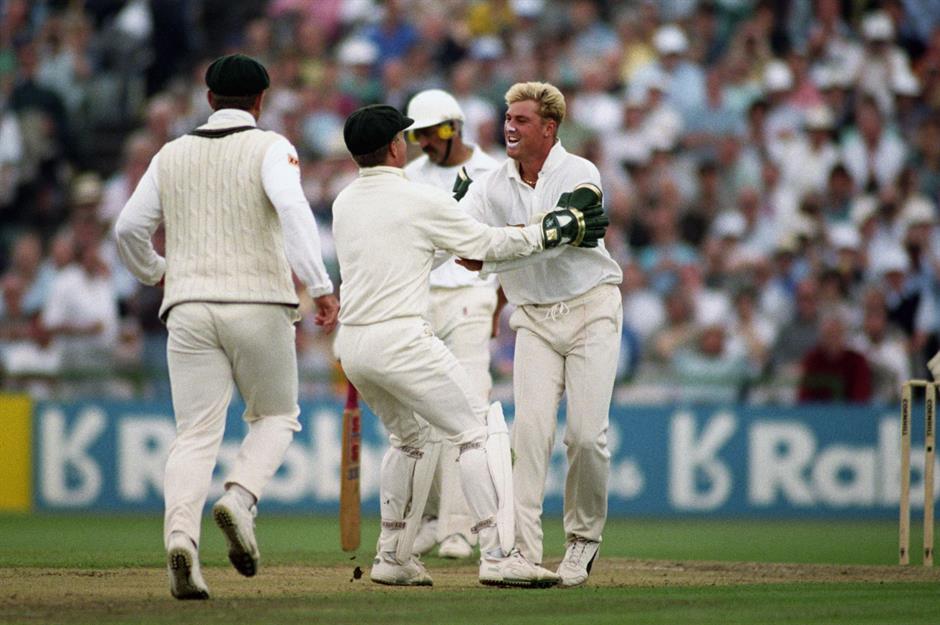
When an unknown 23-year-old from Australia, sporting the bleached blonde hair of a surfer dude, stepped up to bowl his first ball in Ashes cricket, nobody could have guessed what was to follow. Least of all Shane Warne's unsuspecting victim, Mike Gatting. Known as the 'Ball of the Century', Warne's fizzing delivery pitched outside leg before ripping back sharply to clip off stump.
In an instant, Warne, who would go on to become an all-time great, was a household name.
1995: South Africa unites in victory, Johannesburg, South Africa
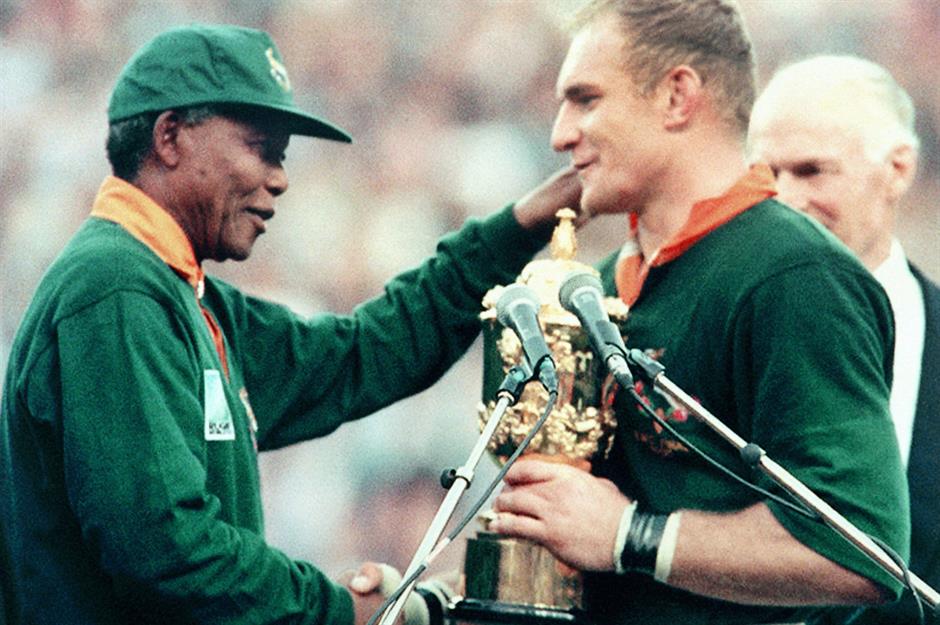
In 1995, South Africa hosted its first major sporting event since the end of apartheid: the Rugby World Cup. The country's national team had, for many years, been a symbol of white supremacy. But thanks to the intervention of President Nelson Mandela, who had spent almost three decades behind bars as a political prisoner, all South Africans were able to unite behind the Springboks.
For the final, dramatised as part of the 2009 film Invictus, Mandela famously wore the side's jersey in a show of unity. Played at Ellis Park, around 5,910 feet (1,800m) above sea level, South Africa edged out the feared New Zealanders 15-12 to bring a nation together.
1998: Bulls win (again), Salt Lake City, Utah, USA
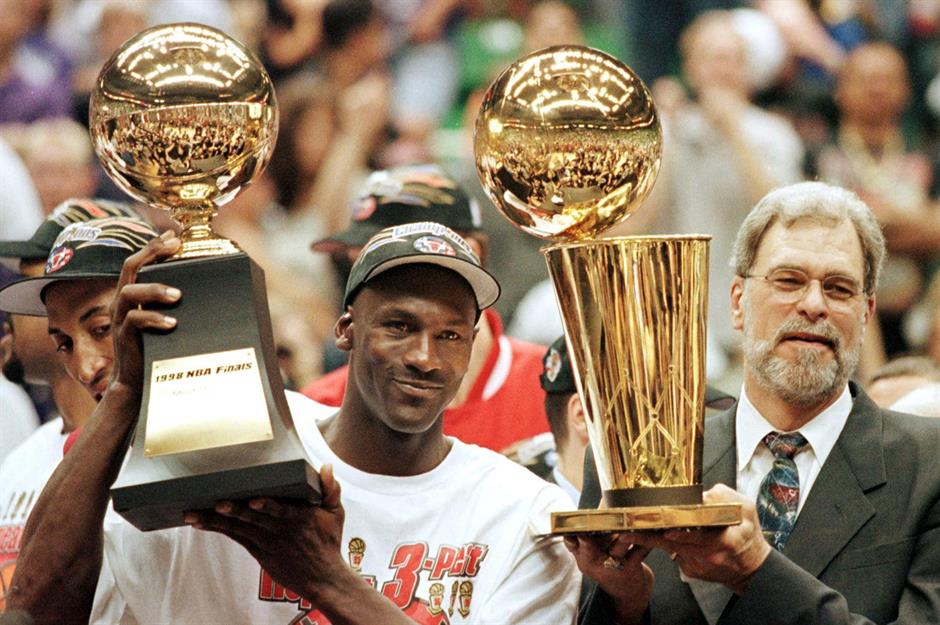
While basketball star Michael Jordan is used to winning championships for the Chicago Bulls, the 1998 season felt special. Popularised recently in Netflix series The Last Dance, it centred on whether Jordan – the world's most famous sportsperson at that point – could win an era-defining sixth title (and a third in a row for the second time). Spoiler alert: he could.
Pictured here, we see Jordan (left) and Bulls' head coach Phil Jackson (right) after winning game six of the NBA Finals against Utah Jazz in Salt Lake City. Behind Jordan's right hand, we can also make out his pivotal teammate Scottie Pippen.
Sponsored Content
1998: Les Bleus win the World Cup, Paris, France
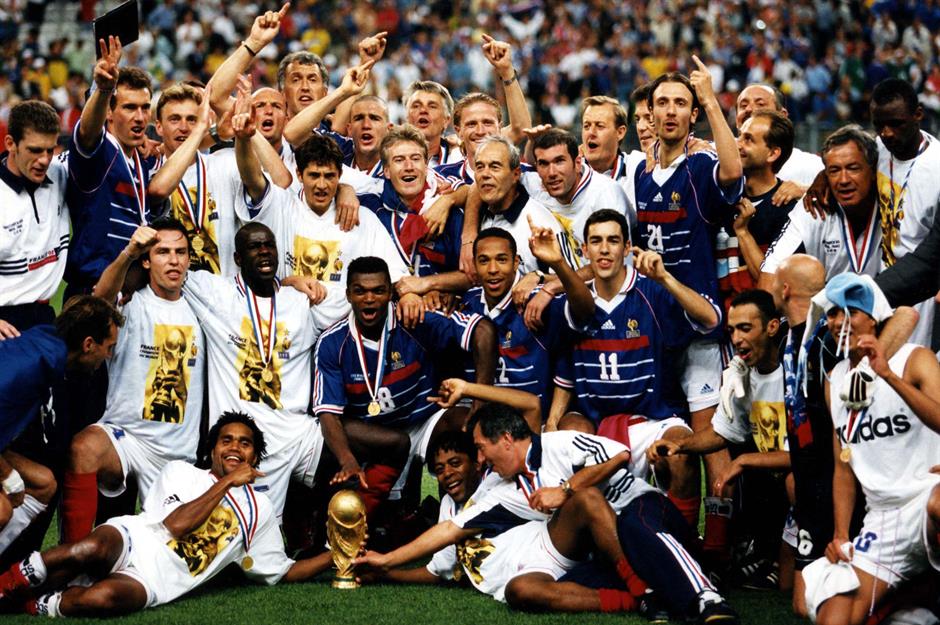
After failing to qualify for the two previous FIFA World Cups, nobody really thought France, despite being hosts of the 1998 tournament, could go all the way. But inspired by the instrumental Zinedine Zidane, a Frenchman of Algerian descent, Les Bleus finally got their hands on a trophy they had never won.
What made the outcome more special was that Aimé Jacquet's multi-racial side did so in the face of verbal attacks from Jean-Marie Le Pen, leader of the country's far-right National Front party. This joy-filled photo of the team that united a country was taken after they had beaten tournament favourites Brazil 3-0 in the final.
2004: Lara's 400 not out, St. John's, Antigua and Barbuda
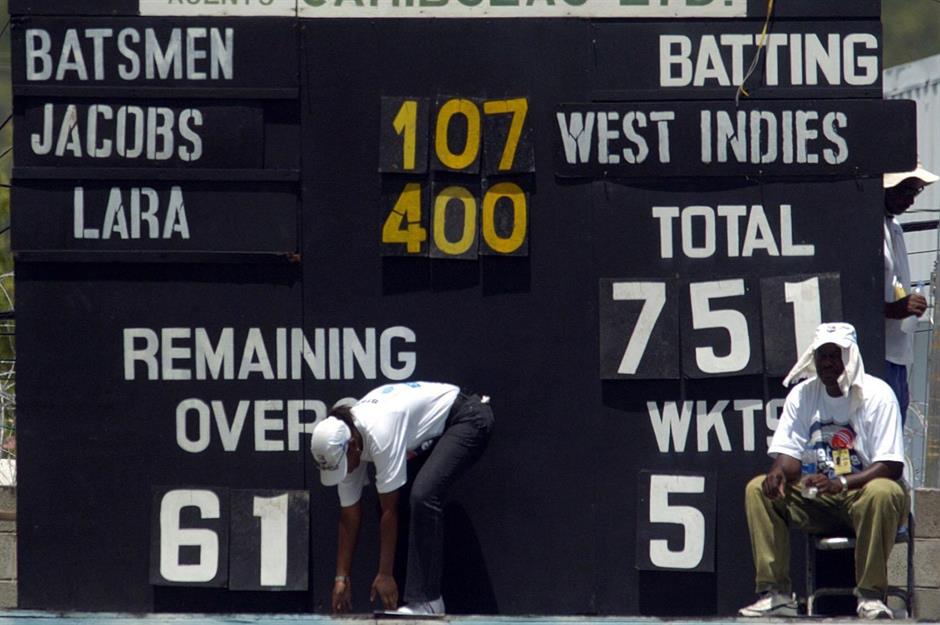
Even within the deep and storied world of cricket, Brian Lara stands tall as one of the best batsmen of all time. Over 131 Test matches for the West Indies, the Trinidadian amassed an astonishing 11,953 runs at an average of 52.88.
In 2004, at the Antigua Recreation Ground, Lara broke the record for the highest number of runs scored in a single Test innings with a 400 not out against England. Reclaiming a record he'd set on the same ground 10 years previously, and which had been snatched from him by the Australian Matthew Hayden six months earlier, Lara's feat of skill and endurance cemented his status as an all-time great.
2004: Greek heroes, Lisbon, Portugal
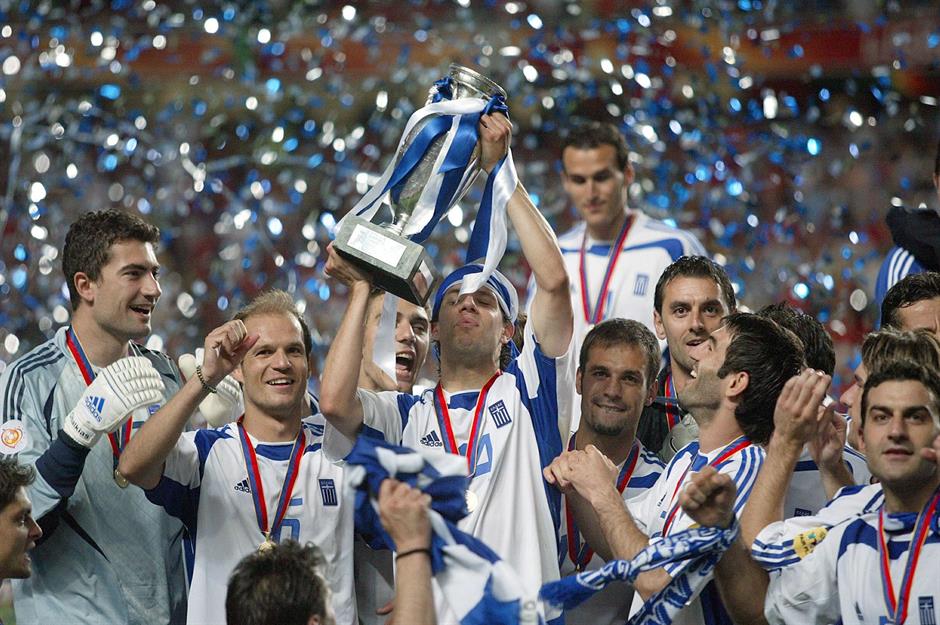
The European Championship is usually shared between football powerhouses such as France, Germany, the Netherlands, Spain and Italy. Denmark caused a stir when they lifted the trophy in 1992, but the reaction to that was nothing compared to what followed with Greece upsetting the odds in 2004. The Greeks had gone into the Euros, being hosted in Portugal, as 150-1 outsiders.
Even after they beat the Portuguese 2-1 in the first match, it was dismissed as a one-off. Drawing against Spain, before losing to Russia, they then stunned holders France 1-0 in the quarters, edged past the Czech Republic 1-0 in the semis, before overcoming Portugal 1-0 in the final.
Sponsored Content
2004: The 'Curse of the Bambino' ends, St. Louis, Missouri, USA
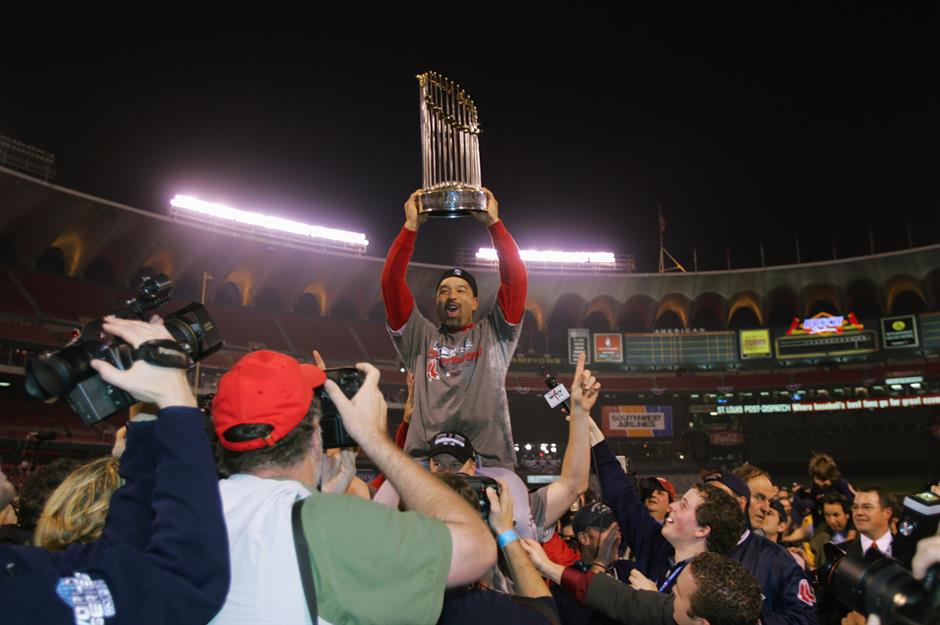
On 26 December 1919, baseball team the Boston Red Sox made a controversial decision to sell Babe Ruth to the New York Yankees. The so-called 'Bambino' was one of the great sporting heroes of American culture, so it came as something of a shock to fans. Prior to his departure, the Red Sox had won five of the first 15 World Series titles in Major League history.
At the Yankees, Ruth would go on to win four World Series and cement his status as an all-time great. Whereas the cursed Red Sox would, despite coming close on four occasions, end up waiting an astonishing 86 years to win the sport's biggest title again. Here, Dave Roberts of the Red Sox celebrates with the trophy at the home of the St. Louis Cardinals.
2008: Nadal vs. Federer, London, England, UK
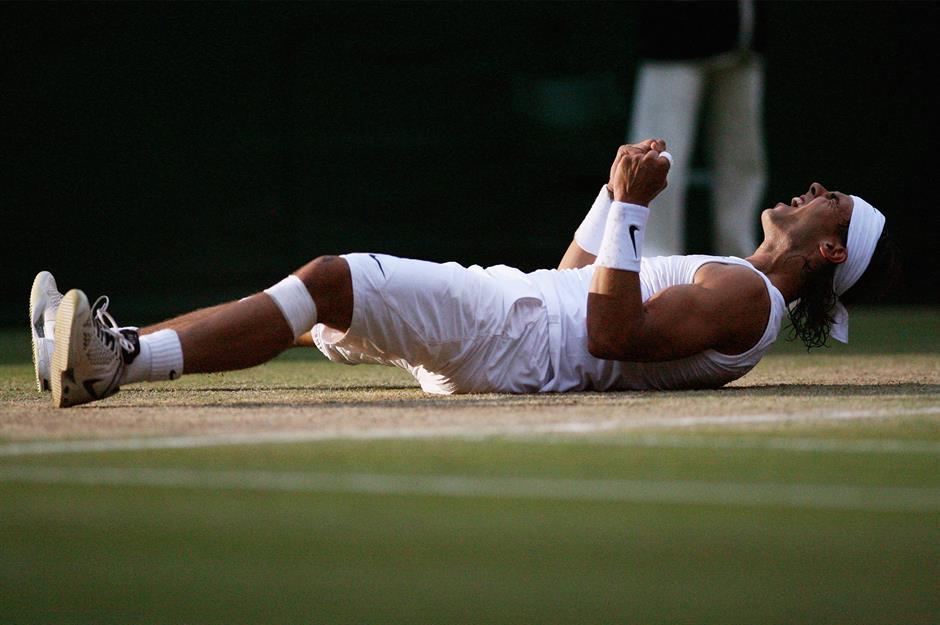
Over the years, the crowd at Wimbledon have seen some incredible grass court tennis. No match in Wimbledon history, though, has packed in as much drama as the 2008 men's singles final between Roger Federer and Rafael Nadal (pictured). The pair's third successive meeting in a final here, Federer had triumphed in the previous two.
Nadal, who had never won this coveted championship, claimed the first two sets before 'King of Grass' Federer came roaring back to level things up. With darkness descending, Nadal eventually clinched the fifth set in front of an enraptured Centre Court. Tennis legend John McEnroe described the nearly five-hour clash as "the greatest match ever played."
2009: Usain Bolt redefines speed, Berlin, Germany
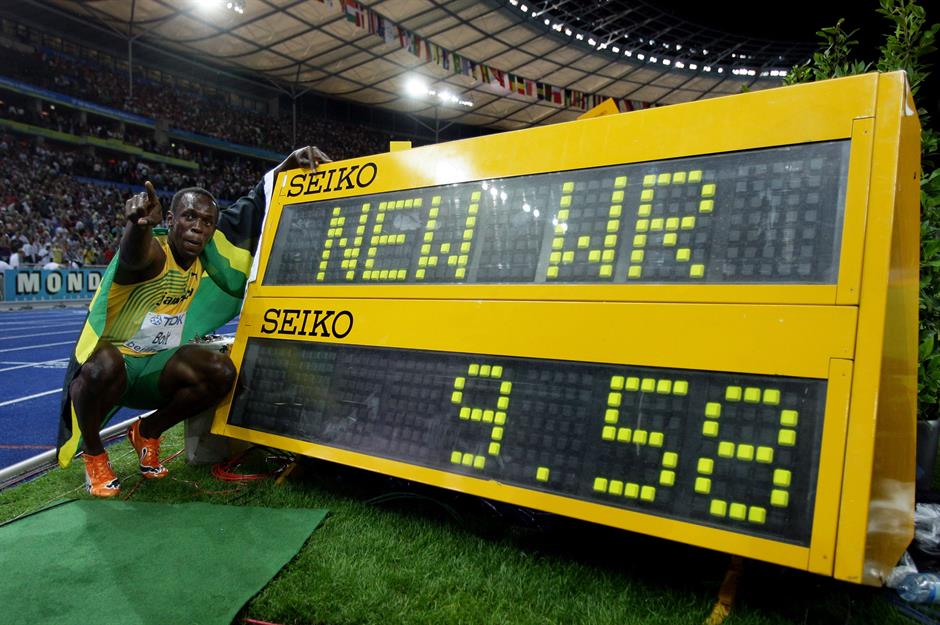
Before Usain Bolt came along, the mark of an elite 100-metre sprinter had always been their ability to dip below 10 seconds. Such was the ease with which Bolt routinely smashed this barrier, however, that perceptions around speed were permanently shifted.
In August 2009, Bolt did something that, even by his standards, felt ludicrous. At the IAAF World Championships, inside Berlin's Olympic Stadium, the lightning-quick Jamaican obliterated the 100m world record with a time of 9.58 seconds. Smashing his own previous world record of 9.69, run in Beijing a year earlier, Bolt set a bar that nobody has come close to since.
Sponsored Content
2012: Miracle at Medinah, Medinah, Illinois, USA
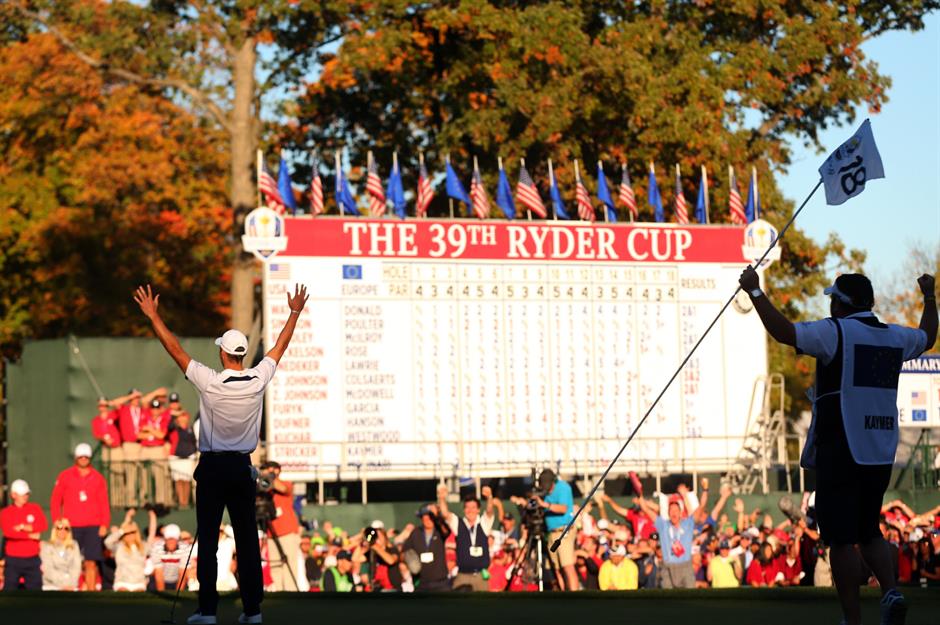
Comebacks don't come much more special than what happened at the end of September 2012 at Medinah Country Club in Illinois. Trailing 10-4 on the second day of the Ryder Cup, an event which sees the best golfers in the US and Europe square off against each other in a series of tense matches, Team Europe produced a barely believable turnaround on the final day to win 14.5 to 13.5.
The remarkable victory owed as much to Europe's rising levels of belief as it did to Team USA's escalating anxiety. Europe's captain José María Olazábal dedicated the triumph to his recently departed friend and much loved golfer Seve Ballesteros.
2014: World Cup humiliation, Belo Horizonte, Brazil
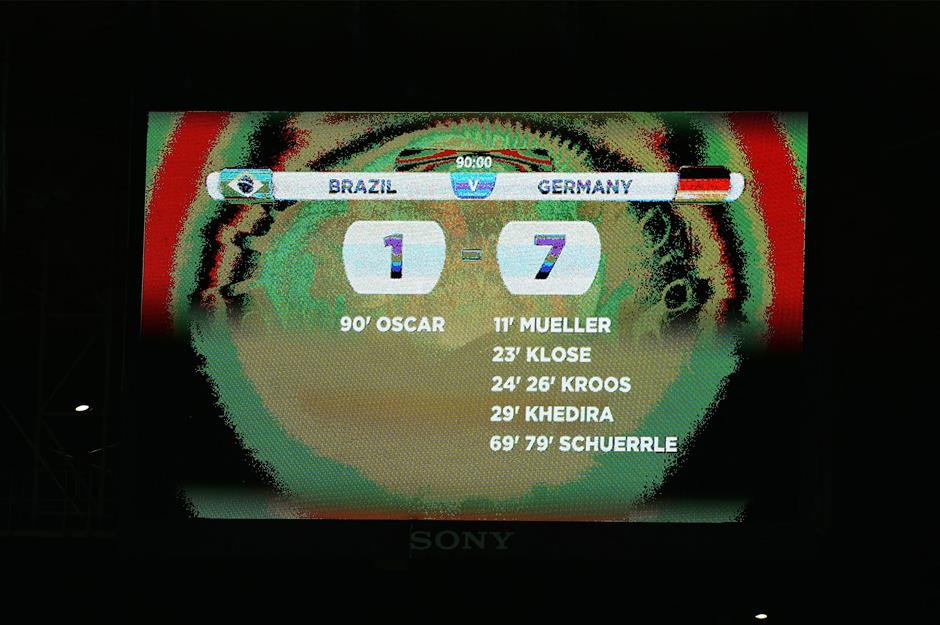
In 2014, there was a chance for Brazil, the planet's most successful international football team, to finally win a World Cup trophy in their own backyard. Winner of the fabled FIFA tournament five times in their history, the land responsible for the magic of Pelé, Romario, Ronaldo and countless others, went into the event believing this was their time to make history at home.
They hadn't, however, counted on a ruthless Germany team, led by Joachim Löw, spoiling the party in brutal fashion. The host's 7-1 semi-final defeat (shown here on the stadium's scoreboard), in which they were 5-0 down at half-time, didn't just rip up the script; it set fire to it. Although Brazil were without key men Neymar and Thiago Silva, the nature of this result was still a shock.
2016: Colin Kaepernick takes a knee, San Diego, California, USA
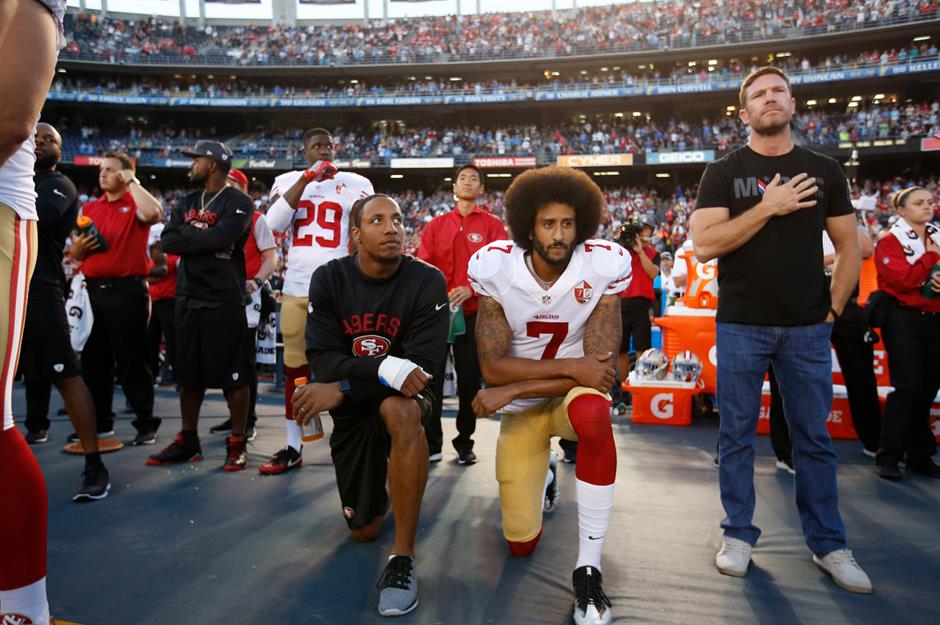
When Colin Kaepernick knelt during the American national anthem, prior to a pre-season game between the San Francisco 49ers and the San Diego Chargers, he did so to protest racial injustice and police brutality. "I am not going to stand up to show pride in a flag for a country that oppresses Black people and people of colour. To me, this is bigger than football," he said.
Kaepernick sparked a wider movement with other NFL players, as well as athletes in other sports, emulating his actions. Unsurprisingly, in a country as deeply patriotic as the US, the headline-making protests elicited strong reactions from both sides of the political fence.
Sponsored Content
2019: Champagne super over, London, England, UK
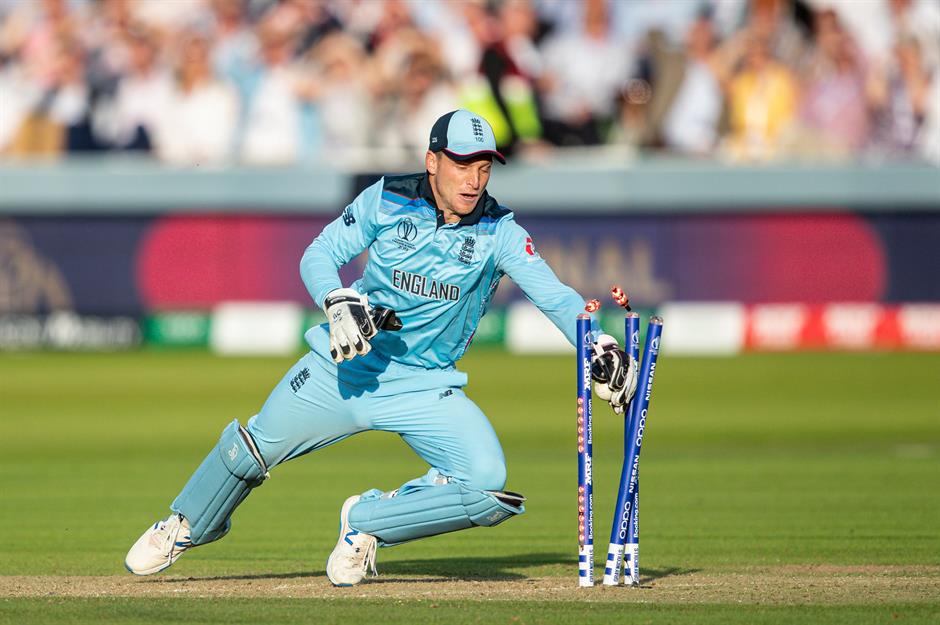
Arguably the most dramatic game of cricket ever played took place on 14 July 2019. It involved England and New Zealand going toe-to-toe at Lord's, the spiritual 'Home of Cricket', in the final of the men's 50-over World Cup. Across a nerve-jangling day, the New Zealanders made 241/8 before England made the exact same score (241 all out).
It meant a gripping Super Over (cricket's equivalent of a penalty shoot-out) was required to settle matters. Remarkably, the two sides couldn't be separated by this either and so the English ended up claiming their first ever ODI World Cup on the controversial boundary countback rule. This photo, featuring England's Jos Buttler, captures the winning moment.
2021: Seventh heaven for Tom Brady, Tampa, Florida
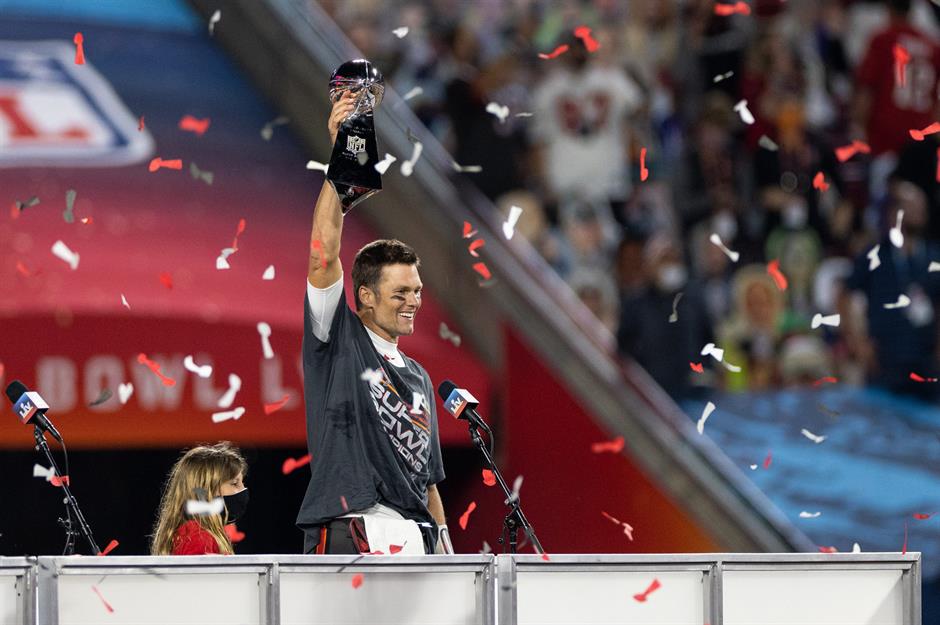
When it comes to discussing Tom Brady, the greatest NFL quarterback of all time, sports writers the world over have been known to shed tears on account of there being no more superlatives left to use.
In February 2021, at the age of 43, Brady steered the Tampa Bay Buccaneers to a comfy 31-9 Super Bowl victory over the Kansas City Chiefs. The seventh Super Bowl title of Brady's career, after he'd already bagged six of them with the New England Patriots, it underlined his status as the most successful player in the history of the sport.
Now see how we've ranked 50 things people love about the United States of America