Vintage photos of America’s beloved novelty landmarks
These roadside landmarks are sure to stir nostalgia
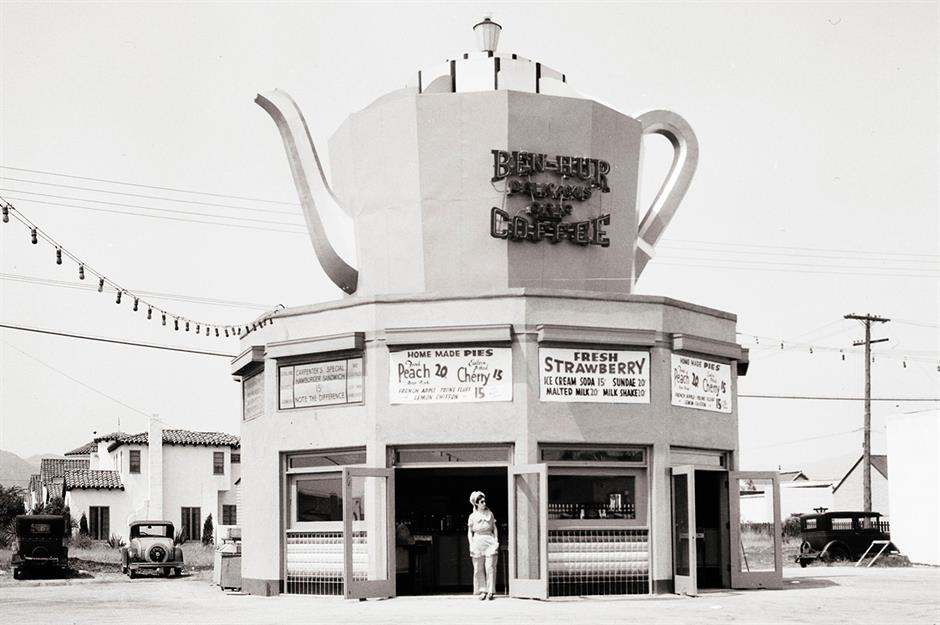
Buildings that mimic giant objects – known as mimetic or programmatic architecture – have roots in 18th-century Europe. However, they really took off in 1920s America.
Relatively cheap and quick to build, these whimsical structures were designed to catch the attention of passing motorists during the automobile boom of the early century, with their shapes usually indicating what they were selling. They ended up springing up everywhere across America, from New York to California, and from Texas to Minnesota.
Click or scroll on to explore vintage photos of these quirky roadside creations, some of which you can still see today...
*All dates in captions refer to the year the photo was taken.
c. 1895: Lucy the Elephant, Margate City, New Jersey
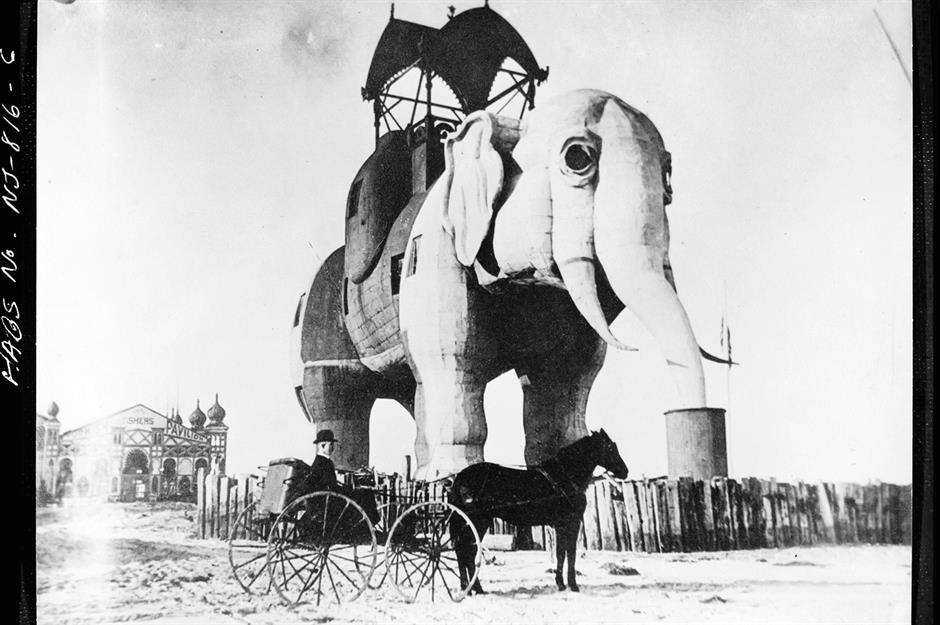
Built in 1881, Lucy the Elephant began as a whimsical attraction promoting local real estate. Towering at 65 feet, she cost $38,000 to build – around $1.3 million today. The howdah on her back offered panoramic views that drew high-profile visitors, including Woodrow Wilson and Henry Ford.
Over the years, Lucy served as a tavern and even a summer home.
After falling into disrepair, she was rescued from demolition in the 1970s and underwent restoration, reopening to the public in 1974. Today, she welcomes visitors for guided tours.
1925: Zeppelin Tourist Camp, Jennerstown, Pennsylvania
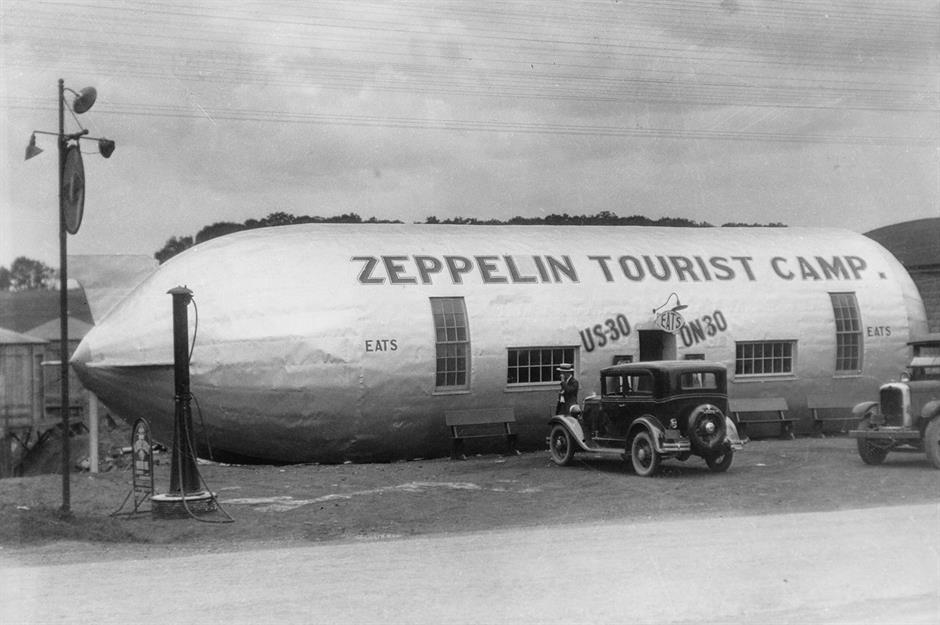
This zeppelin-shaped diner once stood on the historic Lincoln Highway in Jennerstown, near Pittsburgh. Although zeppelins were used for surveillance during the First World War, airships became a luxurious way to travel in the 1920s and 30s – making this diner fashionable as well as unusual.
It was relocated to Edinburg, Ohio in the 1950s, where it served as a diner, motel office, and a storage building, before it was eventually scrapped.
Sponsored Content
1927: The Freezer ice cream parlor, Los Angeles, California
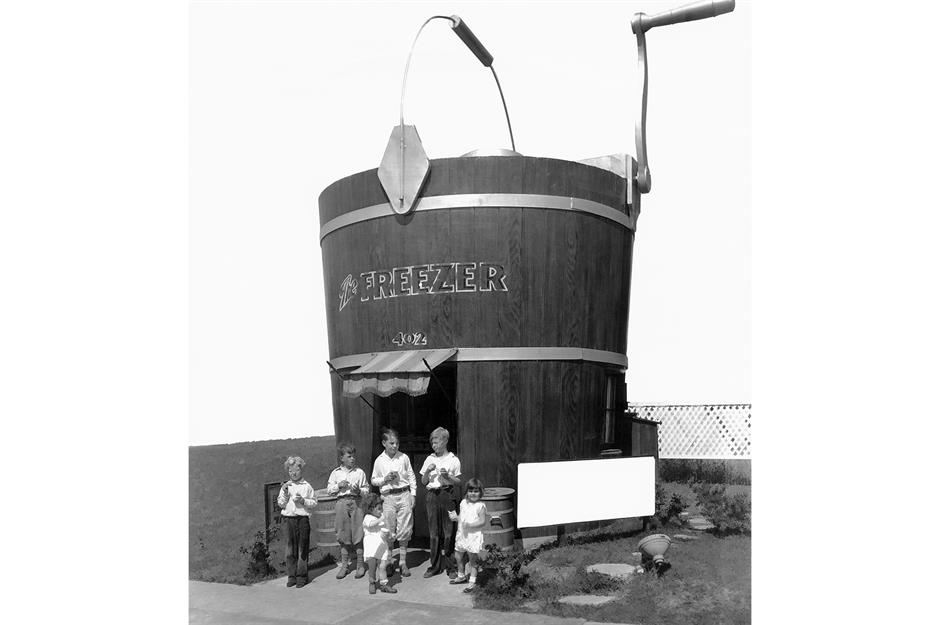
Buying an ice cream from a store in the shape of an old-fashioned churn must have been a real treat for kids back in the 1920s. The Freezer was a mini chain of parlors that dotted LA, each built in the shape of a churn with a hand crank sticking out of the top.
This one stood at 402 South Western Avenue in a spot that today houses one of the city's many nearly identical concrete strip malls.
1928: Ice cream parlors, Los Angeles, California
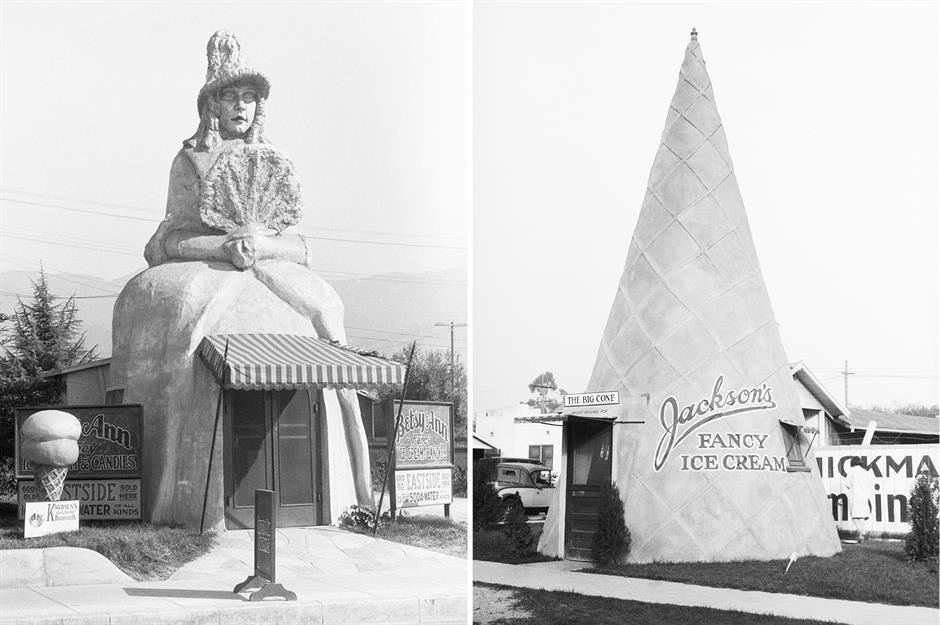
The Freezer wasn't the only ice cream parlor in LA to set up shop in an unusual structure. Betsy Ann Ice Cream & Candies stores (left) were fashioned after silent-movie actress Betsy Ann Hisle, a family friend of the owner, Arthur Hartman. This one stood at San Fernando Road in Burbank.
Champman's Big Cone ice cream parlors could be found throughout LA and Orange County – the company was named after the location of its original big cone, which stood on the corner of Chapman Avenue and North Main in Santa Ana.
c. 1930: Delicious Goody Goody Sandwiches, Phoenix, Arizona
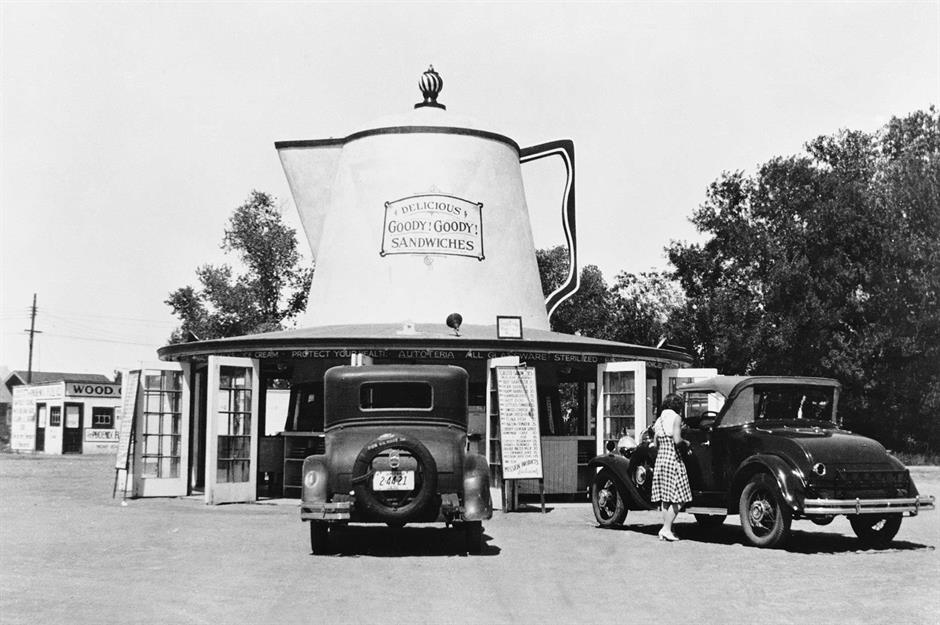
Back in the 1930s, the Delicious Goody Goody Sandwiches diner stood at Seventh Street and McDowell Road in Phoenix, Arizona. It was a quirky roadside attraction shaped like a giant coffee pot. A beloved landmark and sandwich shop, it attracted travelers with its playful design.
Though demolished after years of disrepair, its memory lives on. Today, a McDonald’s, Chase bank, Walgreens, and strip mall occupy the site, but the diner remains a nostalgic symbol of Phoenix’s eccentric past.
Sponsored Content
c. 1930: Hoot Hoot I Scream ice cream parlor, Los Angeles, California
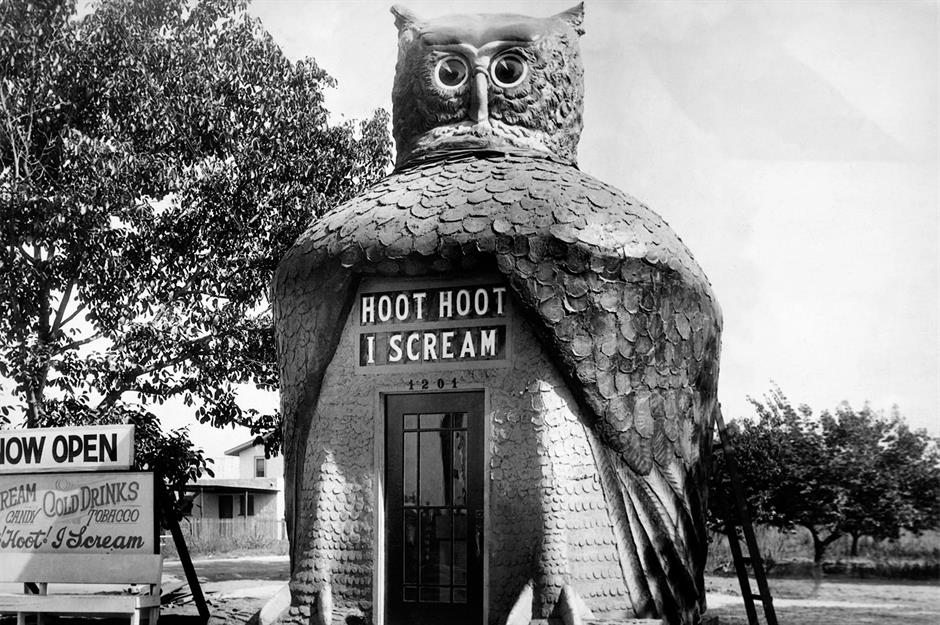
Hoot Hoot I Scream was an ice cream parlor built in 1926-27 by Roy Hattrup, whose wife Tilly ran the stand. Designed in the shape of a giant owl, the building had a rotating head and glowing eyes made from Buick headlamps.
It originally stood on East Valley Boulevard, then moved to 8711 Long Beach Boulevard, before eventually closing in the 1950s. It was demolished in 1979.
1931: Wilshire Coffee Pot Café, Beverly Hills, California
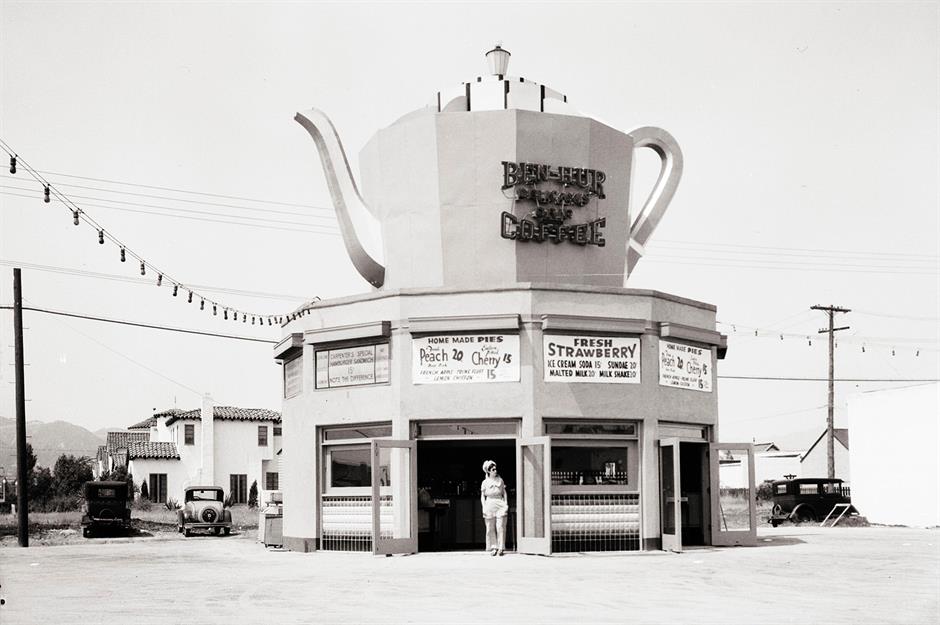
Located on Wilshire Boulevard, the Wilshire Coffee Pot Café was an eye-catching roadside attraction. It served as both a café and a drive-in during the 1920s and 30s, offering affordable treats like "hamburger sandwiches" and cherry pie for 15 cents – that's about $3 today.
The sign on its unusual roof boasted that they served Ben Hur Delicious Drip Coffee, named after a fictional character from an 1880 novel and subsequent movies. Today, it's the site of a high-rise apartment building.
1933: Kramer's gas station, Browning, Montana
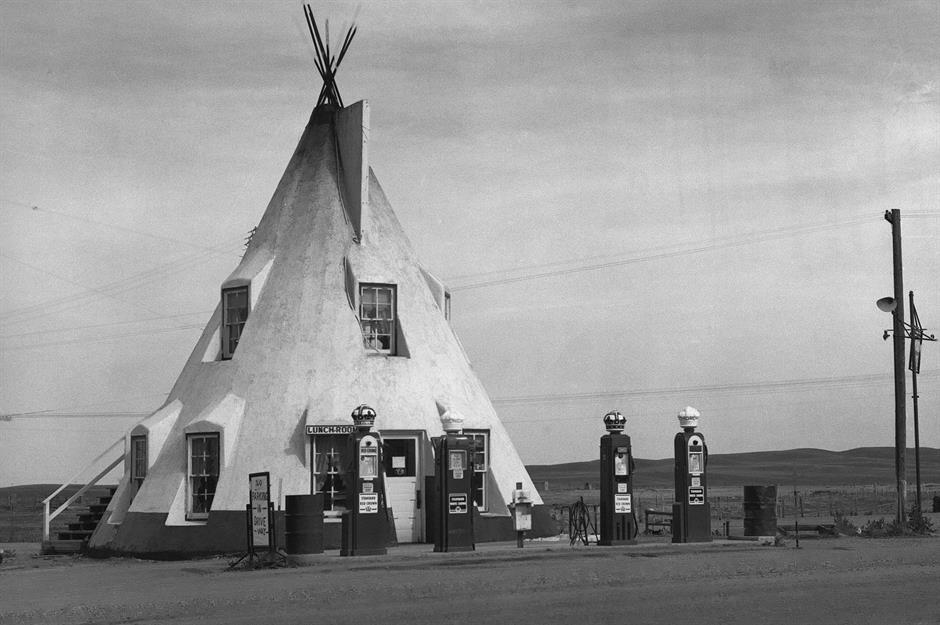
Kramer’s Wigwam, built between 1930 and 1933 in Browning, Montana, was a gas station shaped like a giant concrete tipi.
Originally a Conoco station, it later became the Wigwam Café, operating until the 1960s. Over the decades, it's served as a coffee shop, gift shop, art gallery, and – in 1998 – it became an espresso stand. It eventually moved to its current location on US 2 in Montana, where it remained open until around 2015.
Sponsored Content
1934: Pig stand, Hollywood, California
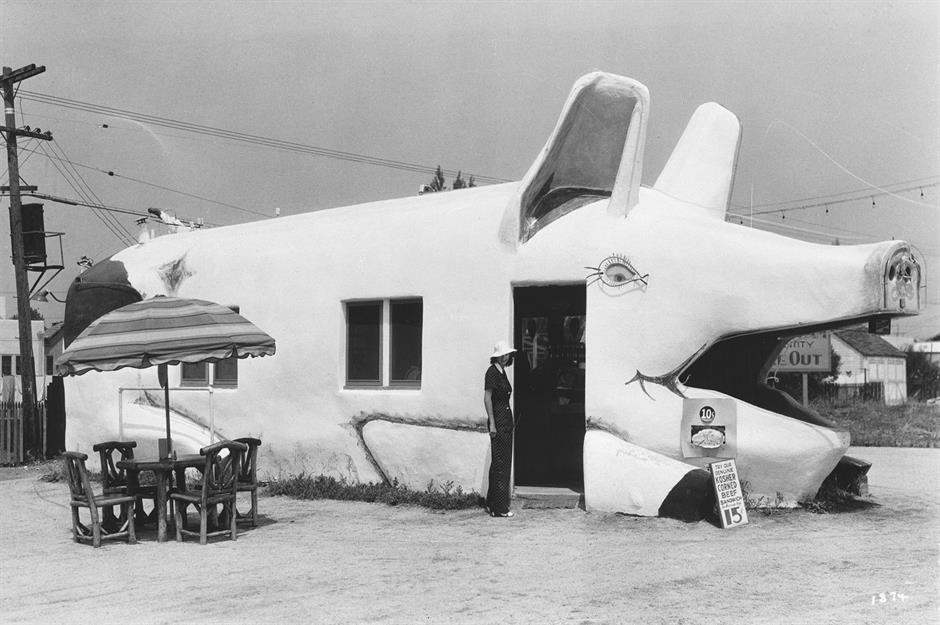
Although Los Angeles was studded with unusually-shaped eateries during the 1930s, this pig stand must have stood out from the crowd. While pig stands usually sold hot dogs and barbecued pork, this one sold kosher corned beef sandwiches on rye for 15 cents and slices of pie for just 10 cents.
Here, English actress Elizabeth Allan is seen stopping by for lunch. She was signed to MGM and appeared in Mark of the Vampire alongside Bela Lugosi the following year.
1935: Seafood restaurant, Hollywood, California
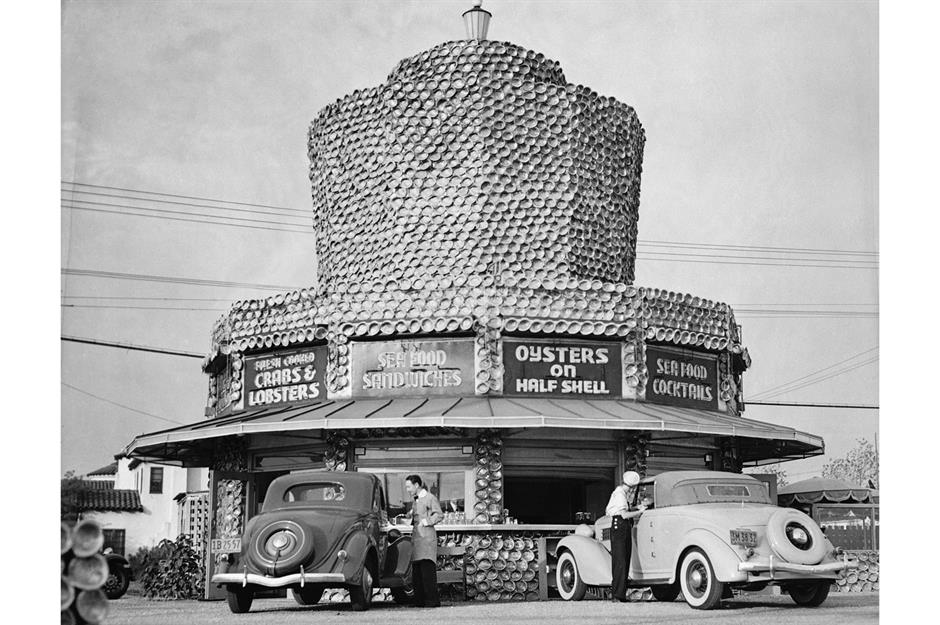
This drive-in was originally a coffee shop in the shape of – you guessed it – a giant coffee pot, before it was transformed into a seafood restaurant and covered in 50,000 abalone shells. The shells reportedly took several months to collect, but just 30 days to stick onto the striking building.
These drive-ins operated slightly differently from the ones we're used to today. Waiters would walk to the customer's car window to take orders and deliver food, which in this case would have included crab, lobster, seafood sandwiches, and oysters on the half shell.
1935: The Big Duck, Riverhead, New York
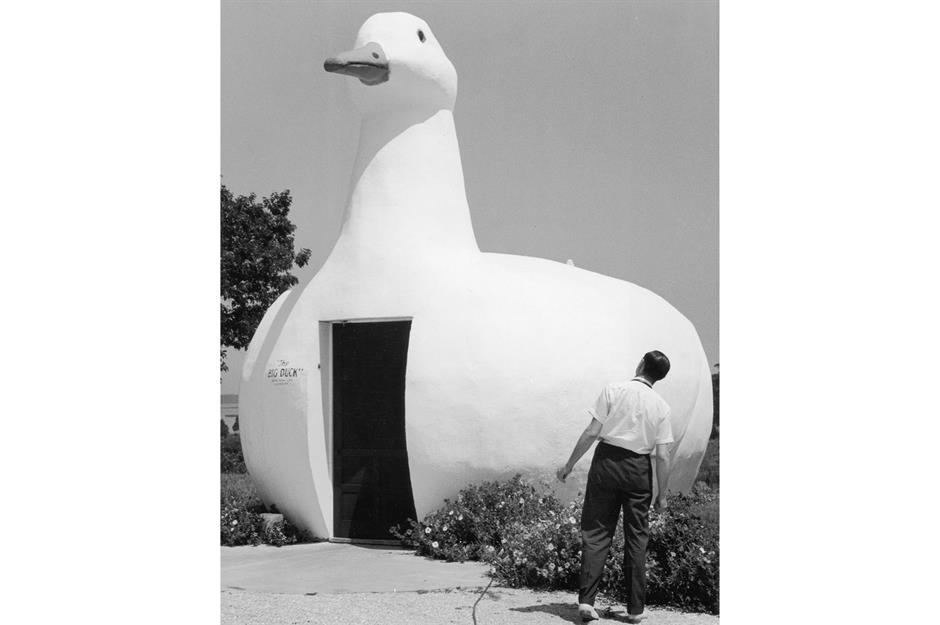
Built in 1931 in Riverhead, New York, the Big Duck was designed by duck farmer Martin Maurer. Originally used to sell duck eggs and poultry, its eyes are made from Ford Model T taillights, with the entrance located under the tail.
The beloved duck was saved from demolition in 1987 and was eventually moved to Flanders, where it still stands today. Listed on the National Register of Historic Places in 1997, it's now a museum and gift shop.
Sponsored Content
1935: Orange juice kiosk, El Monte, California
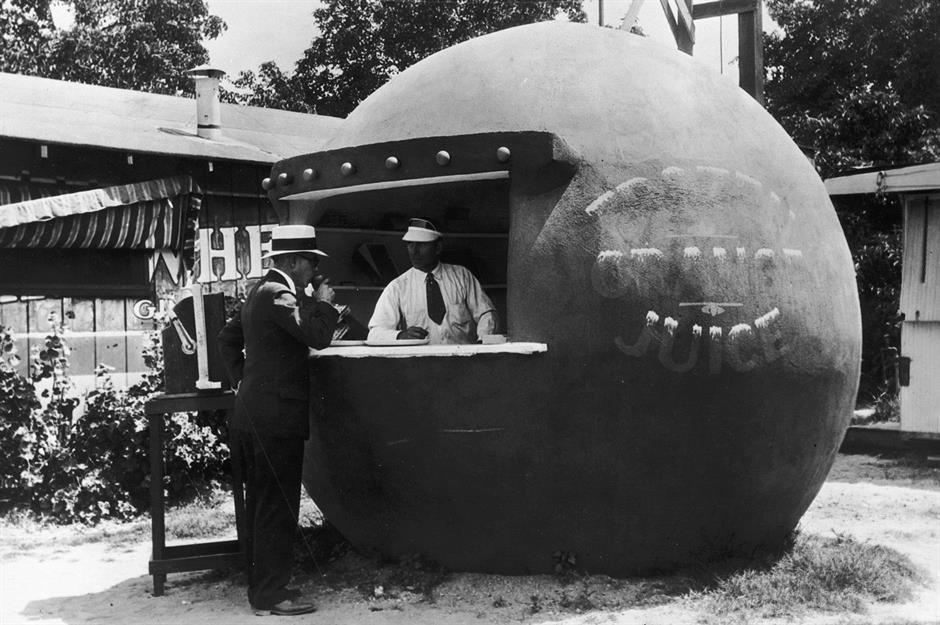
As the car became king in the 1920s and 30s, it became clear that motorists needed places to eat, drink, rest, and tend to their cars on the go. As a result, fresh-squeezed orange juice stands began to open up along busy highways – particularly in California, which had a booming citrus industry.
Likely made from wood and plaster, this giant orange stood in El Monte, California, and would have been kitted out with a hand juicer and perhaps also a hot dog steamer.
1939: Refreshment stand, Willamette Valley, Oregon
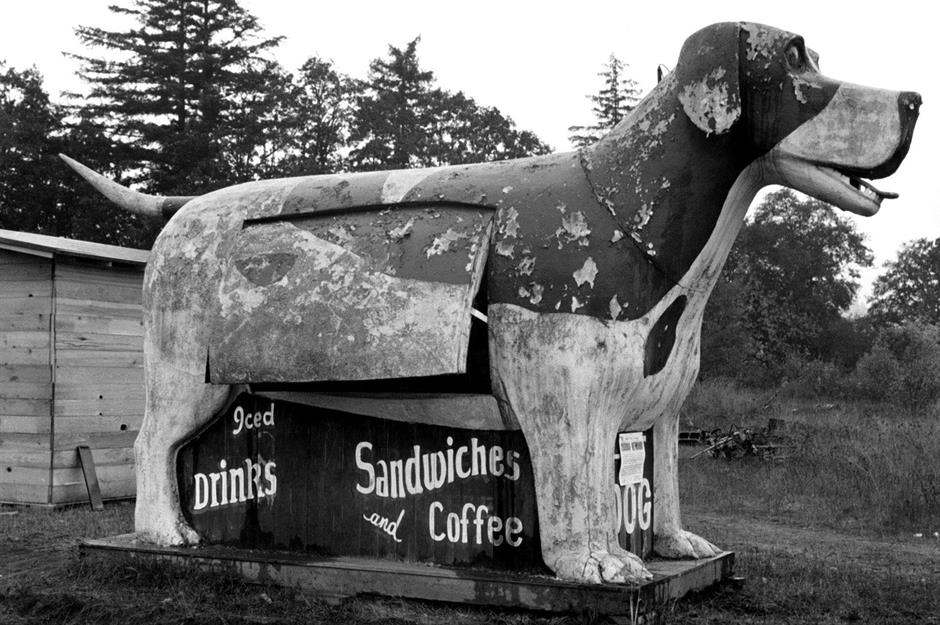
Built in 1930, this hot dog kiosk was snapped by renowned Depression-era photographer Dorothea Lange for the Farm Security Administration in 1939.
Standing 11 feet high and 18 feet long, the pooch weighed around two tons and was equipped with an electric stove and refrigerator. The booth occupied a spot on Highway 99 just south of Cottage Grove in Lane County, Willamette Valley.
c. 1940: Toed Inn Café, Los Angeles, California
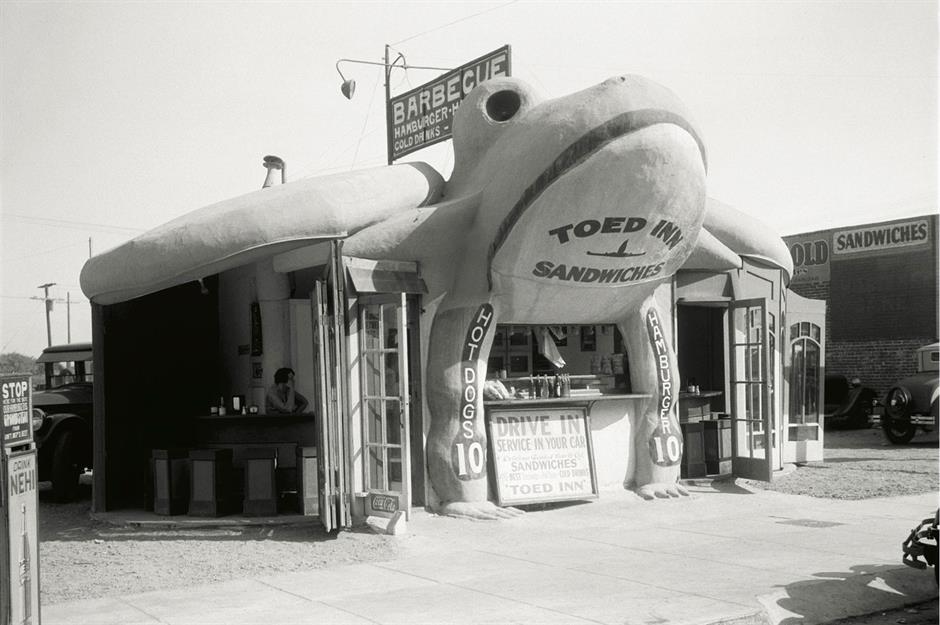
This charming eatery opened in Santa Monica Canyon in 1929, attracting beachgoers as well as passing motorists. Named the Toed Inn Café, thanks to the frog's long toes, it was made from chicken wire and plaster, and insulated with newspaper.
The curious building was damaged by catastrophic flooding in 1938 and relocated to 12008 Wilshire Boulevard in West LA, where it continued to thrive throughout the 1940s – even serving frog legs. It closed in 1953.
Sponsored Content
1960: The Brown Derby, Los Angeles, California
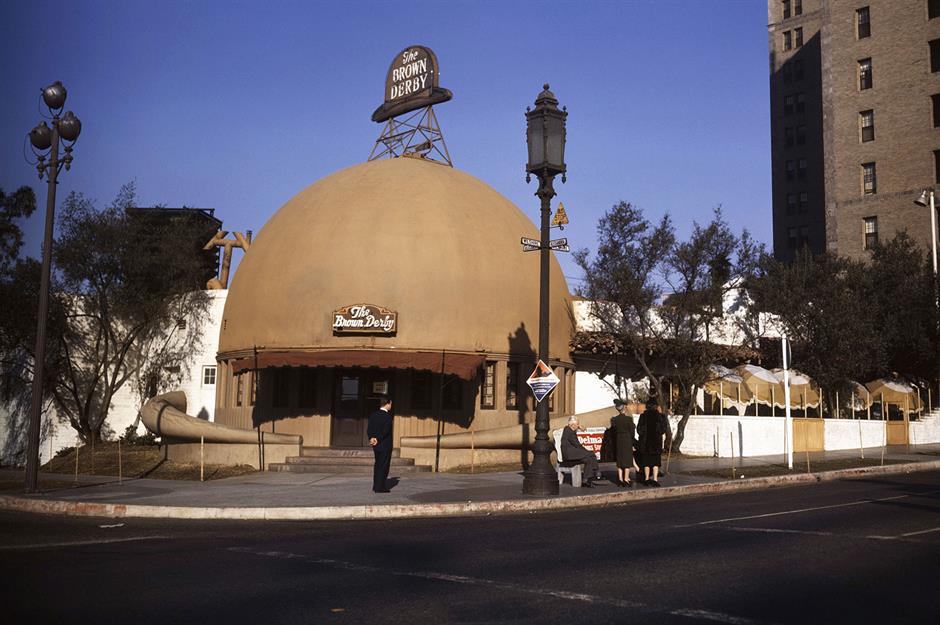
The Brown Derby was a legendary restaurant in Los Angeles, famous for its distinctive hat-shaped building and its role in Hollywood’s golden age.
The original restaurant (pictured) was built on Wiltshire Boulevard in 1926 and became a hotspot for celebrities, hosting stars like Cary Grant, Ava Gardner, Charlie Chaplin, and Ronald Regan. Clark Gable and Carole Lombard even got engaged there in 1939. According to Hollywood legend, the Cobb salad was invented at the Brown Derby in 1937.
1976: Big Do-Nut Drive-in, California
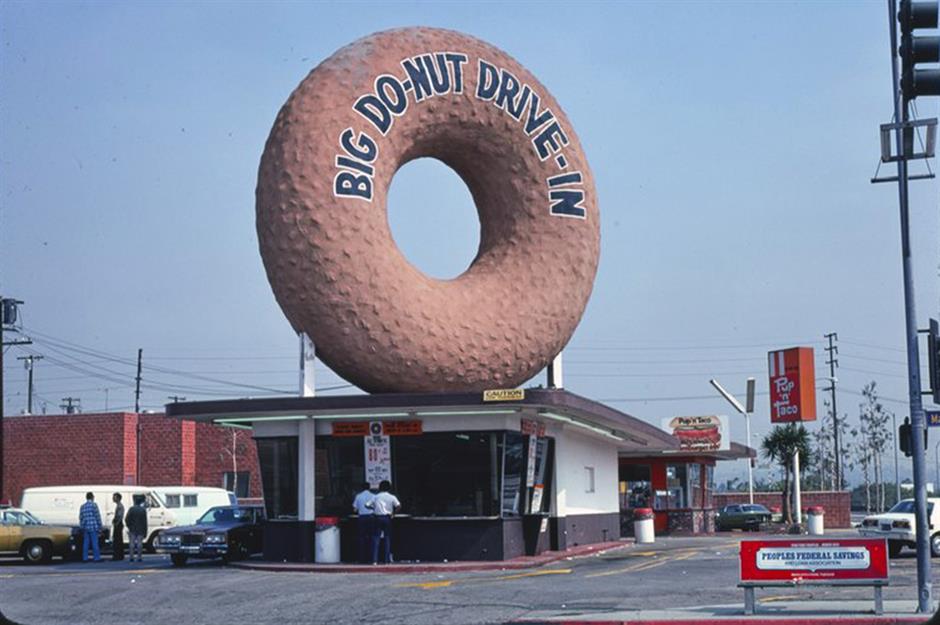
The Big Do-Nut Drive-In was a 1940s Los Angeles doughnut chain known for its giant rooftop doughnuts, each around 22 feet wide. Once boasting 10 locations across the city, only a few of these mid-century roadside icons remain today.
The most famous of these is Randy’s Donuts in Inglewood. Built in 1953, it has appeared in movies including Iron Man 2 and Mars Attacks! and serves as a welcome landmark for travelers on their way to and from LAX airport.
1977: OJ stand, Turlock, California
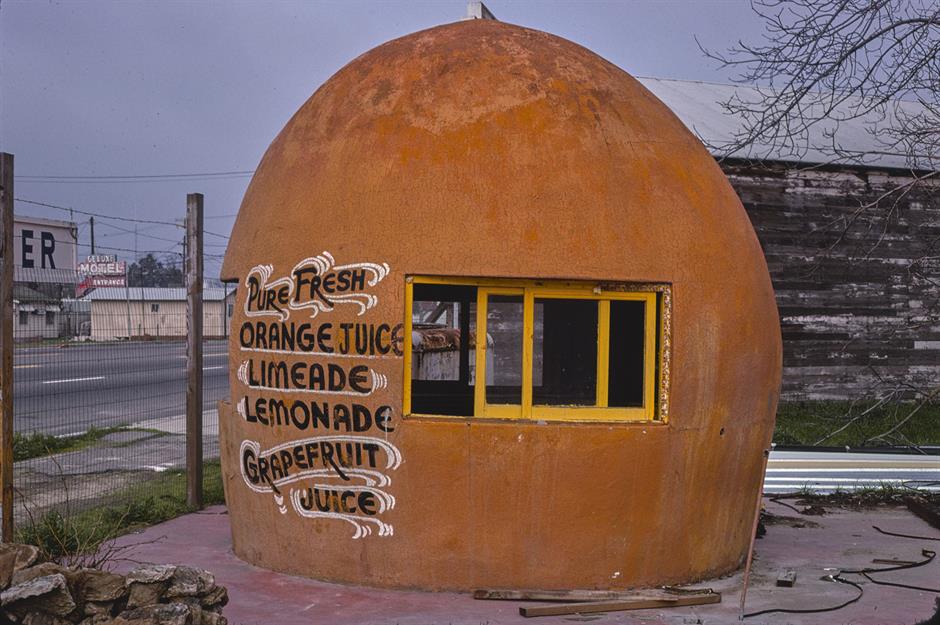
This dilapidated orange juice stand stood in Turlock, 100 miles of San Jose, in the 1970s. A relic of the early-to-mid-20th century roadside kiosk boom, it captures Central Valley life during that era and reflects the region's agricultural roots.
This one was photographed by John Margolies, who spent almost 40 years snapping more than 11,000 color photos of America's beloved roadside buildings and attractions between 1969 and 2008.
Sponsored Content
Late 1970s: Roadside dinosaurs, Cabazon, California
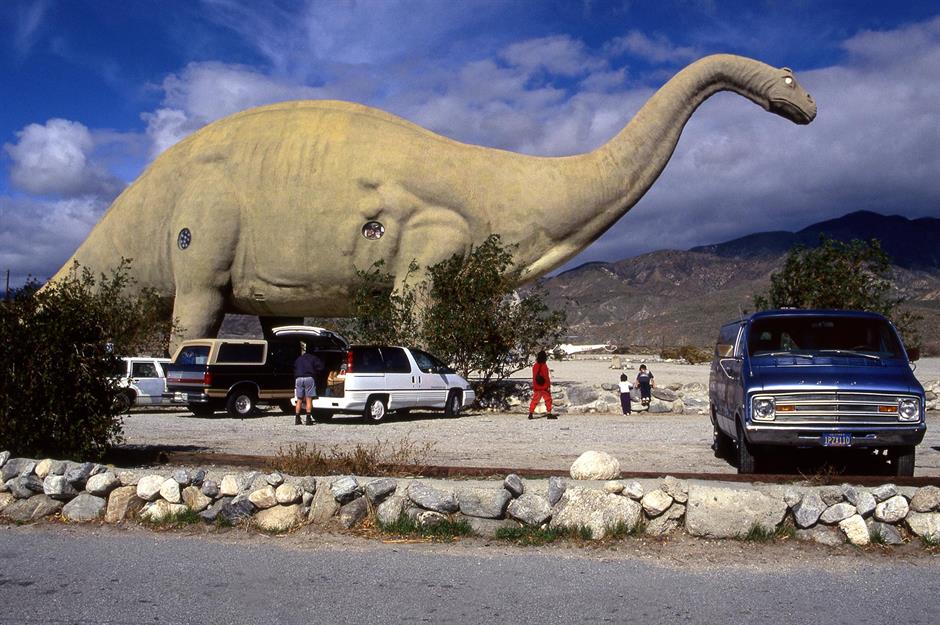
Dinney the Dinosaur is a 150-foot long concrete and steel Apatosaurus built between 1964 and 1975 to attract visitors to the nearby Wheel Inn Restaurant. Dinney once housed a viewing area in his belly and a slide in his tail, as well as electricity, plumbing, and air conditioning.
Built at a cost of around $200,000 – about $1.2 million today – Dinney remains part of the Cabazon Dinosaurs attraction off Interstate 10. A large T. rex was added in 1981 and both appeared in the 1985 movie Pee-wee’s Big Adventure.
1980: Coney Island Dairyland, Aspen Park, Colorado
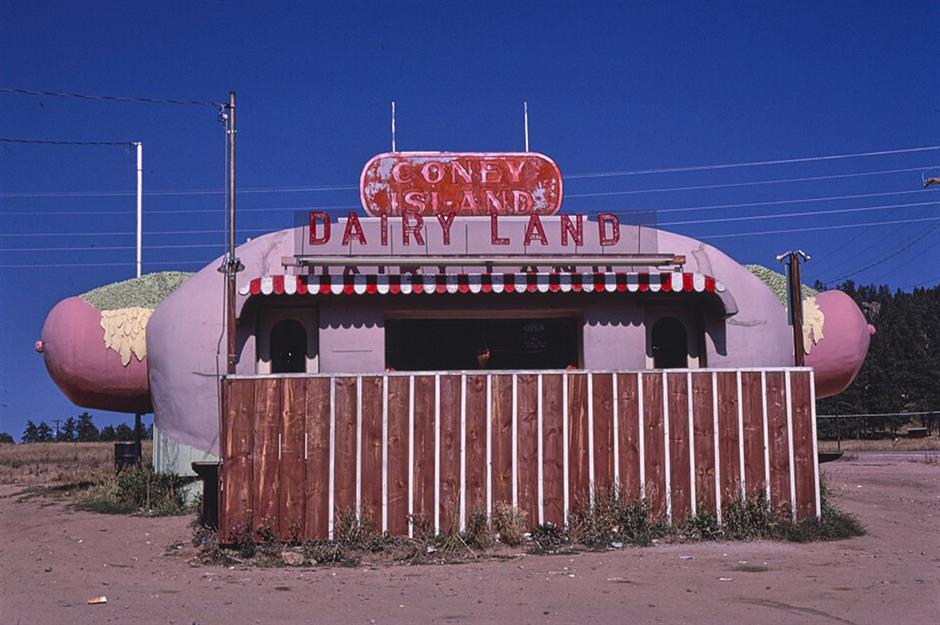
Coney Island Dairyland was a hot dog-shaped diner built in 1966 in Denver, Colorado, before moving to Aspen Park in the Rocky Mountains in 1970. In 1999, local opposition saved it from demolition. The structure was preserved and later sold for around $150,000 – that's about $289,000 these days.
On its final day in Aspen Park in 2006, crowds lined up for miles to grab one last hot dog before the diner was relocated to Bailey, where it still operates today as a beloved roadside attraction.
1980: Big Muskie Drive-In, Bena, Minnesota
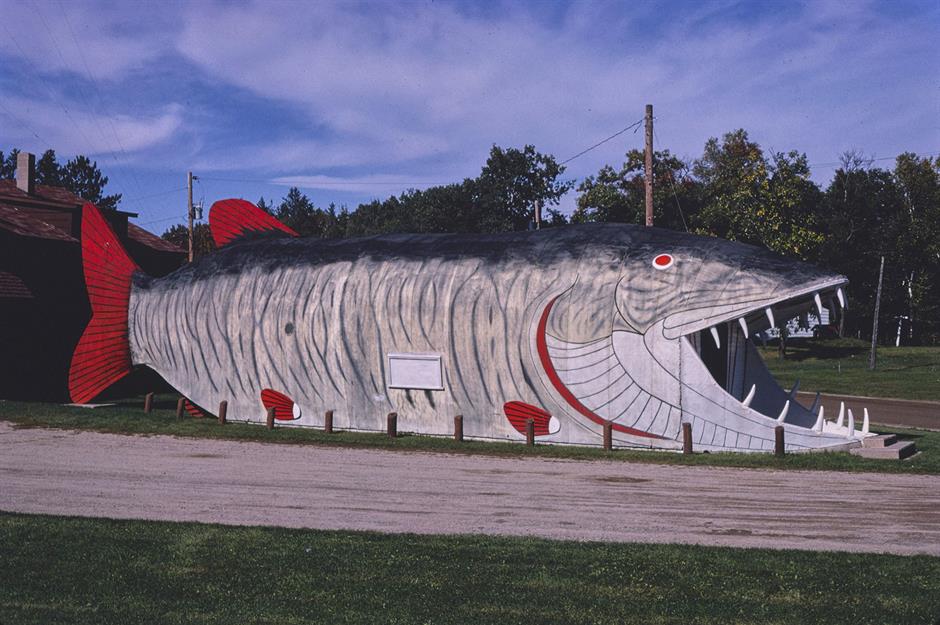
This 65-foot long muskie-shaped drive-in was built in 1958. It served burgers and ice cream from a walk-up window and inside its belly, but later ended up as a storage shed for The Big Fish Supper Club, which opened next door in 1972.
Made from a wooden skeleton covered with tar paper and Coca-Cola signs for eyes, it was restored in 2009 after being placed on a list of local endangered historic places.
A postcard of the famous fish appeared in the 1983 film National Lampoon’s Vacation.
Sponsored Content
1982: Pig Stand, San Antonio, Texas
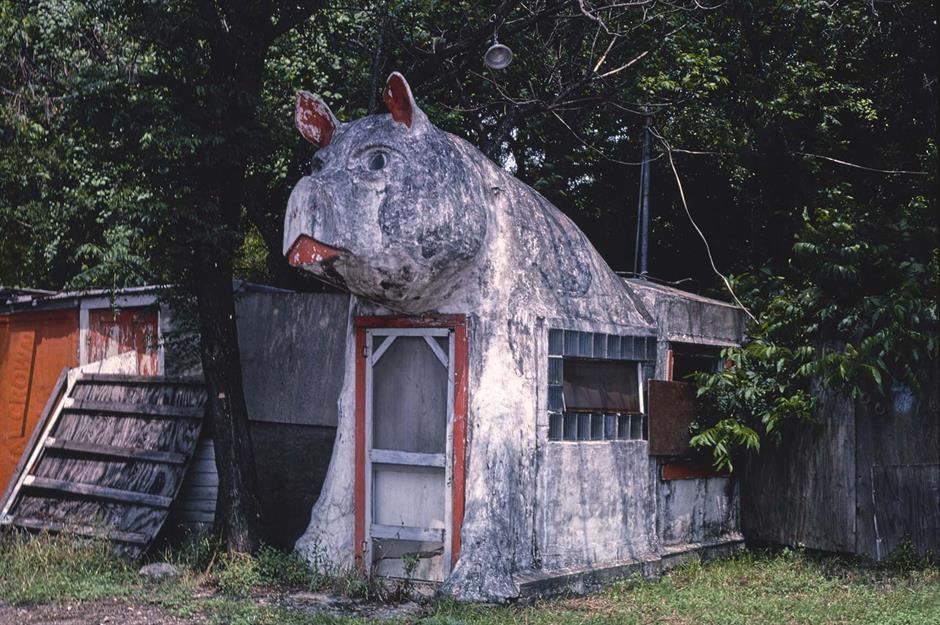
The Pig Stand chain of roadside restaurants was founded in 1921 in Dallas. It thrived over the following decade, serving Tennessee-style barbecued-pork sandwiches at more than 100 locations – including this one, which was derelict by the time it was photographed here in 1982.
In 2010, the quirky building was restored and reopened as Frank's Hog Stand, a biker joint billed as the "world's first ride-in restaurant". Although the hog stand closed, the iconic pink pig still stands in San Antonio and serves as a popular selfie backdrop.
1987: Teapot Dome gas station, Zillah, Washington
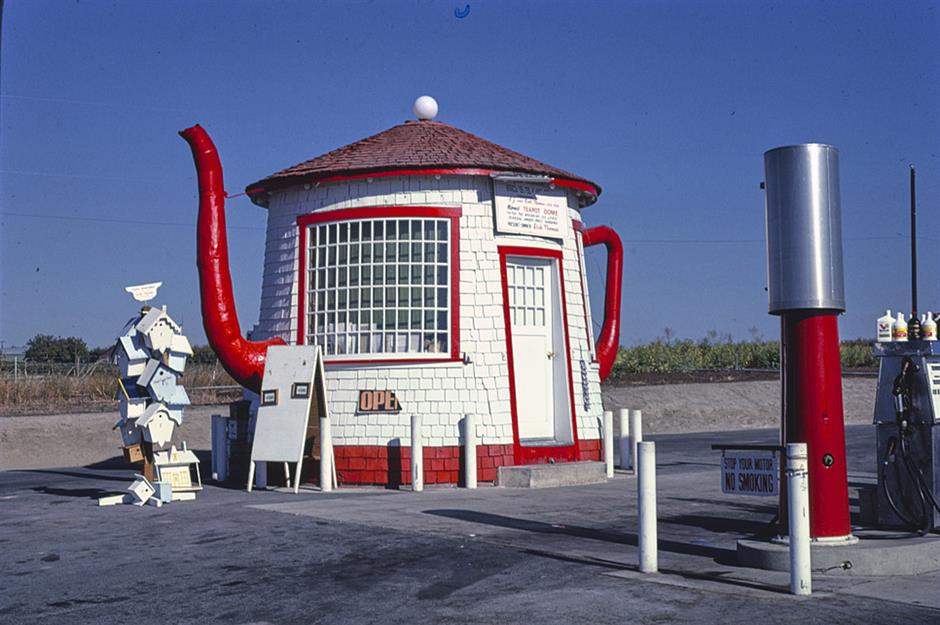
In the early 1920s, Senator Albert Fall illegally leased petroleum reserves from Wyoming's Teapot Dome oil field to private companies. Fall went to prison and the scandal rocked America. However, it also inspired this charming teapot-shaped gas station.
Built in 1922, the 14-foot wide oddity stood on State Route 410 before it was relocated to the Yakima Valley Highway, where it operated as a service station until 2006. Now a visitor's center, it's been beautifully restored and stands on 117 1st Avenue.
1987: Miner’s Hat Realty, Kellogg, Idaho
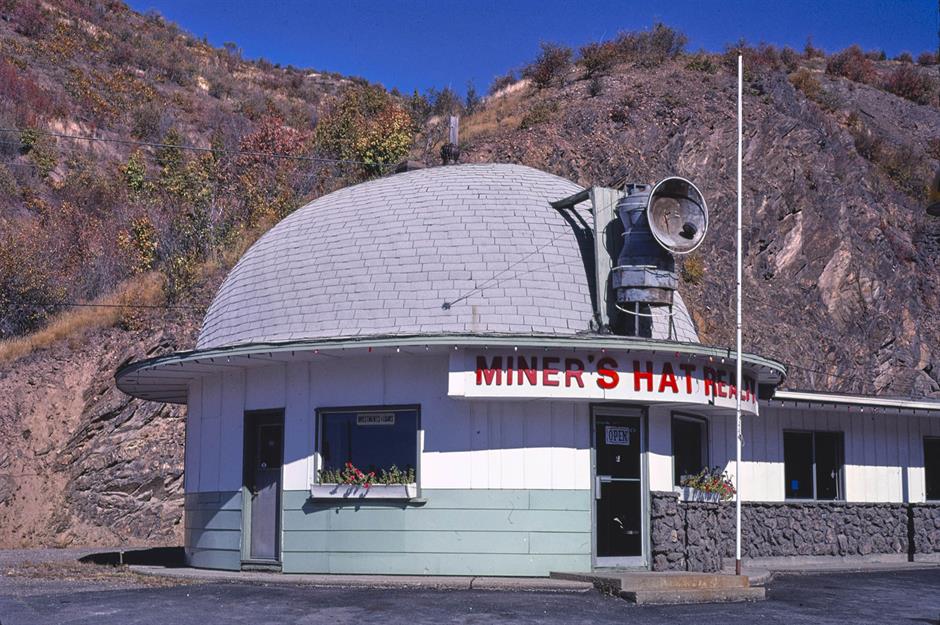
The Miner's Hat began life as a diner in 1940. It was built by Marietta Page, who served up beer and hot dogs to workers on their way to and from the local lead and silver mines. Its lamp was fitted with a neon bulb, which guided hungry miners to the "best food in town."
It closed in 1963 and remodeled in 1967, opening shortly afterwards as a realtor's office, which it remains today. At 36 feet long, 20 feet wide, and 20 feet high, it's reportedly the world's largest miner's hat.
Sponsored Content
1992: Mesquite Smoked Bar BQ, unknown state
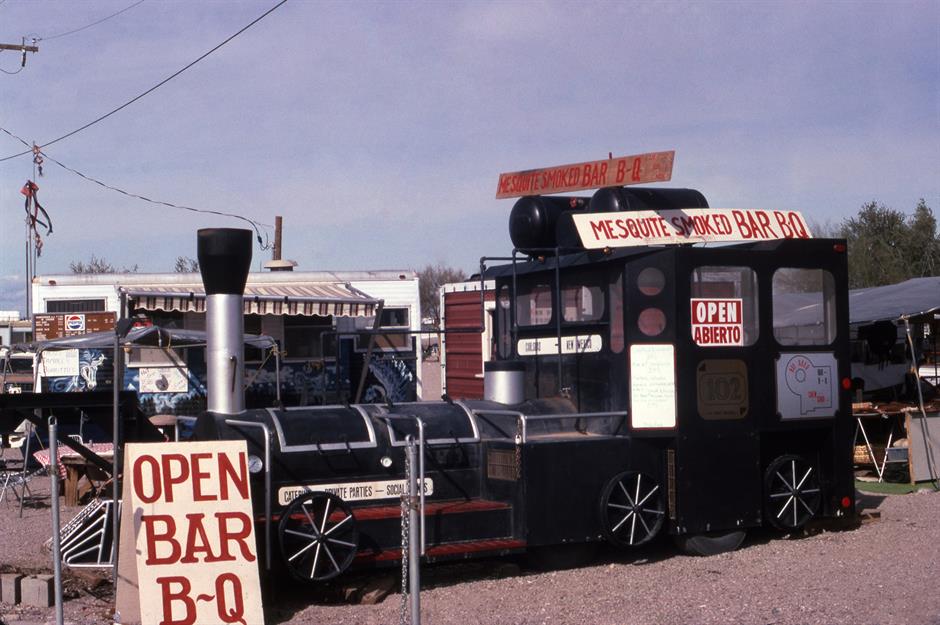
This photo from 1992 shows a novelty food stand shaped like a train engine, which served mesquite-smoked barbecue.
The long, low layout of a train is similar to the shape of a traditional smoker, so the locomotive-themed stand isn't as strange as it first appears. Plus, trains are a symbol of local heritage in Texas and the Southwest, where mesquite wood is often used for barbecue.
2001: Shell Service Station, Winston-Salem, North Carolina
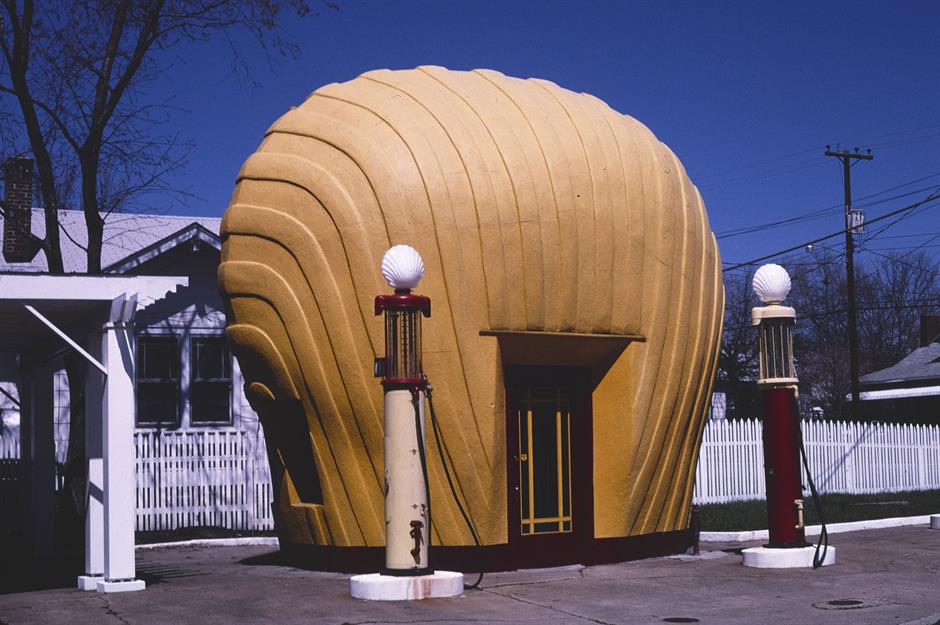
The Shell service station in Winston-Salem, North Carolina, was one of eight shell-shaped buildings constructed by Quality Oil Company to promote the Shell brand.
Built in 1930, it's the last of the clam-like structures remaining. Located at Sprague and Peachtree Streets, it was restored in the late 1970s by Preservation North Carolina at a cost of around $50,000, which would be around $247,000 today. It's now a small museum and preserved as a historic landmark.