19 iconic New York hotels gone forever
No longer in New York
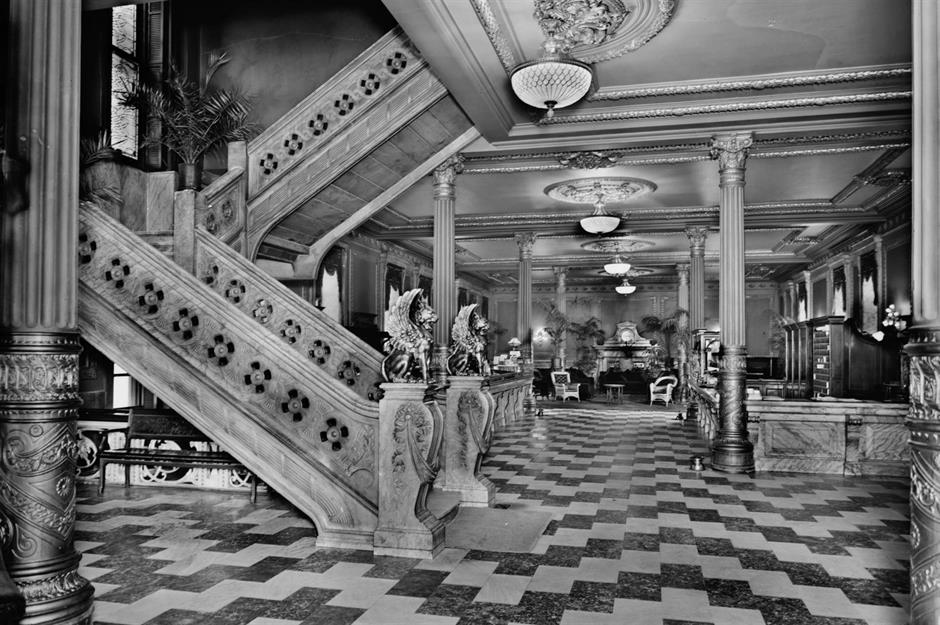
Just like restaurants, clubs, and bars – hotels in New York go in and out of style, and can receive a hasty date with the wrecking ball. Here, we take a look at some of the historic and iconic hotels that used to pull in the crowds, but are now just a distant memory.
Click through the gallery to discover the legendary New York hotels that have vanished from the skyline...
Fifth Avenue Hotel
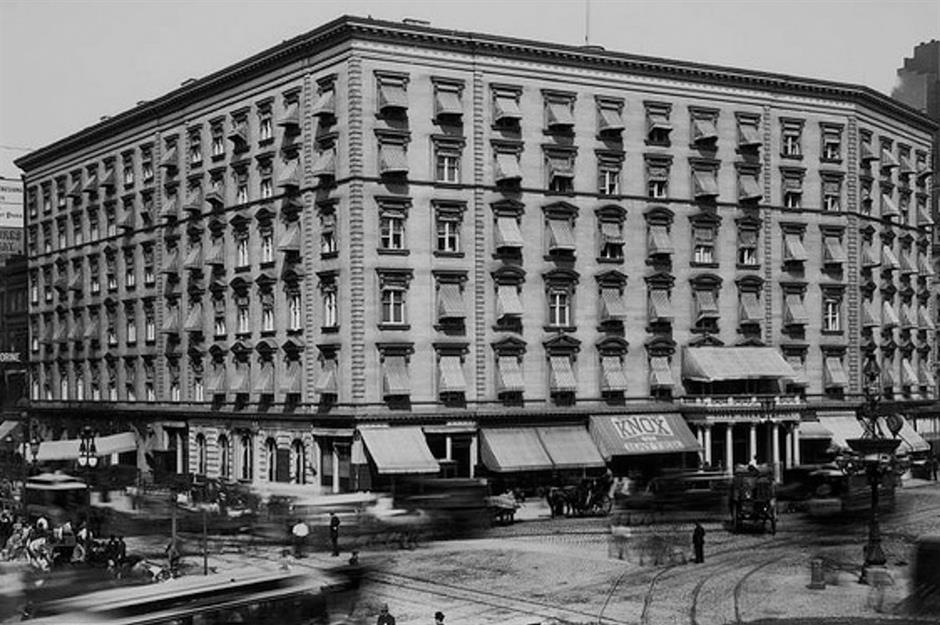
Following its opening in 1859, the Fifth Avenue Hotel became a social, cultural, and political hub in New York. President Ulysses S Grant's 1868 presidential campaign began at a dinner party in the hotel and the United States Tennis Association was founded there.
The hotel closed on April 4, 1908, with patrons spending $7,000 on drinks in the bar on its final night. The site is now occupied by the Toy Center Building, while the old hotel’s name is used by the Emery Roth-designed Fifth Avenue Hotel.
Astor House
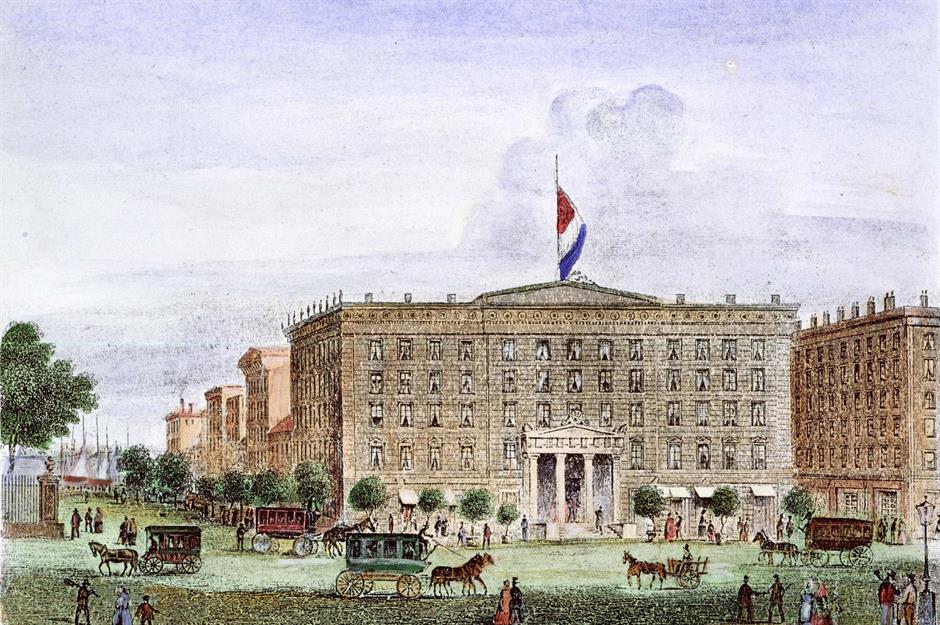
For decades, Astor House was the most prestigious hotel in America. Located on the corner of Broadway and Vesey Street, and designed by Isaiah Rogers, it had 309 rooms over five stories. Astor House would not allow unaccompanied women to enter, in an effort to prevent call girls from plying their trade there.
After opening in 1836 as the Park Hotel, part of it was demolished in 1913 and the remainder came down in 1926, with the site then rebuilt as the Transportation Building.
Sponsored Content
Waldorf-Astoria
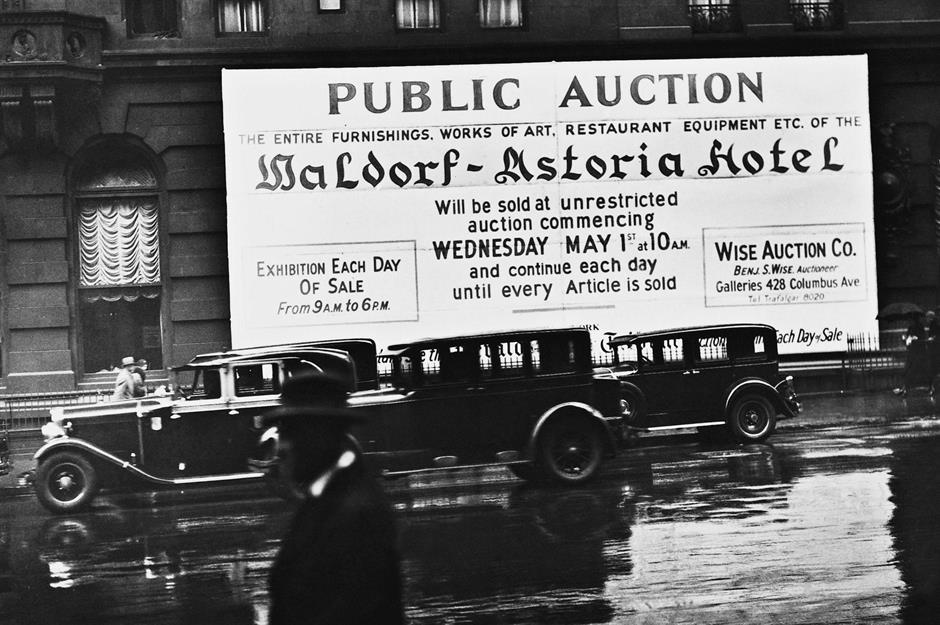
The Waldorf-Astoria originated as two hotels, built side by side by feuding relatives on Fifth Avenue. They were connected by a 980-foot-long corridor, known as "Peacock Alley," after the merger in 1897. From its inception, the Waldorf was a must-stay hotel for foreign dignitaries and renowned for its fundraising dinners and balls.
Both hotels were razed in 1929 to make way for construction of the Empire State Building, and their successor, the current Waldorf Astoria New York, was built on Park Avenue in 1931.
Ritz-Carlton Hotel
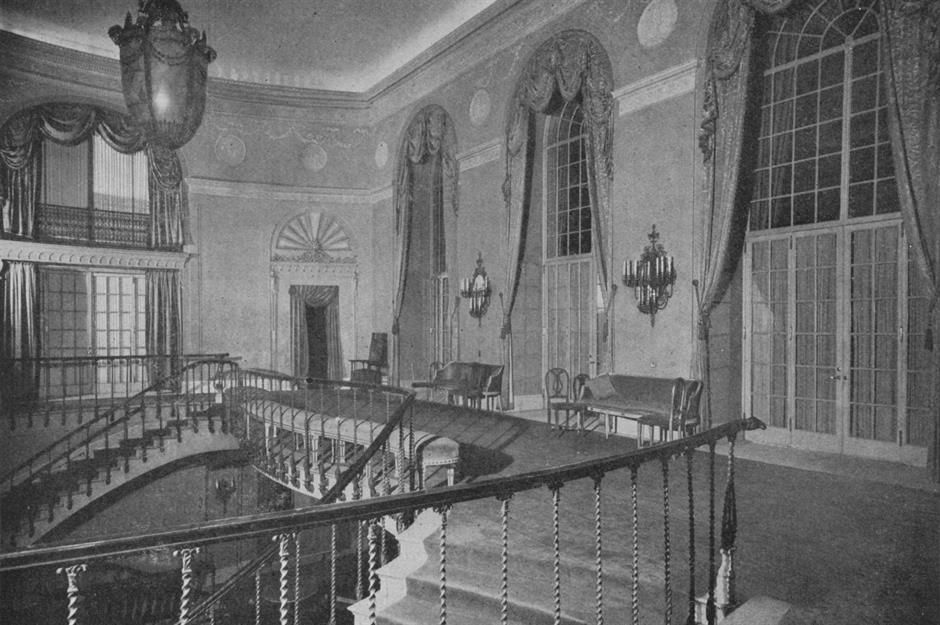
New York’s original Ritz-Carlton Hotel, at 46th Street and Madison Avenue in Midtown Manhattan, operated for 40 years until it was demolished in 1951 to make way for an office building. Constructed as a replica of the Carlton Hotel in London, it was built in the Renaissance Revival style and epitomized Gilded Age America.
Among its notable guests were Eleanor Roosevelt’s cousin Barbara Hutton, who was one of the wealthiest women in the world, and Russian prince and renowned sculptor Paul Troubetzkoy.
Howard Hotel
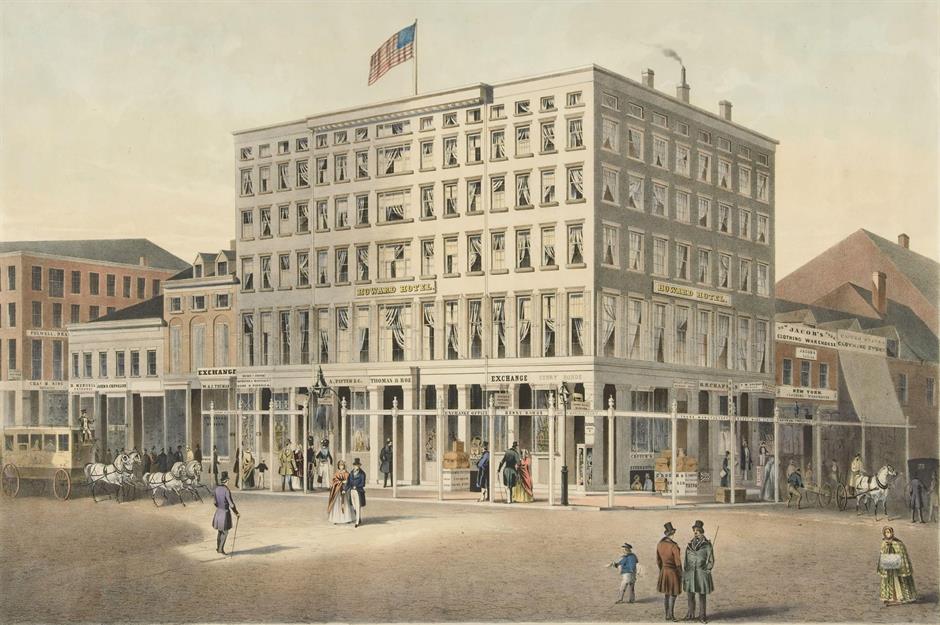
Two years after the Howard Hotel opened in March 1840, President John Tyler stayed there on the day before his marriage to Julia Gardiner Tyler, with the owners locking up the servants to prevent press leaks.
The Confederate Army of Manhattan attempted to burn down Howard Hotel, also known as Howard's Hotel or the Howard House, in 1864, and the building was converted into offices in 1868. The location of the hotel is now occupied by the Cushman Building.
Sponsored Content
Windsor Hotel
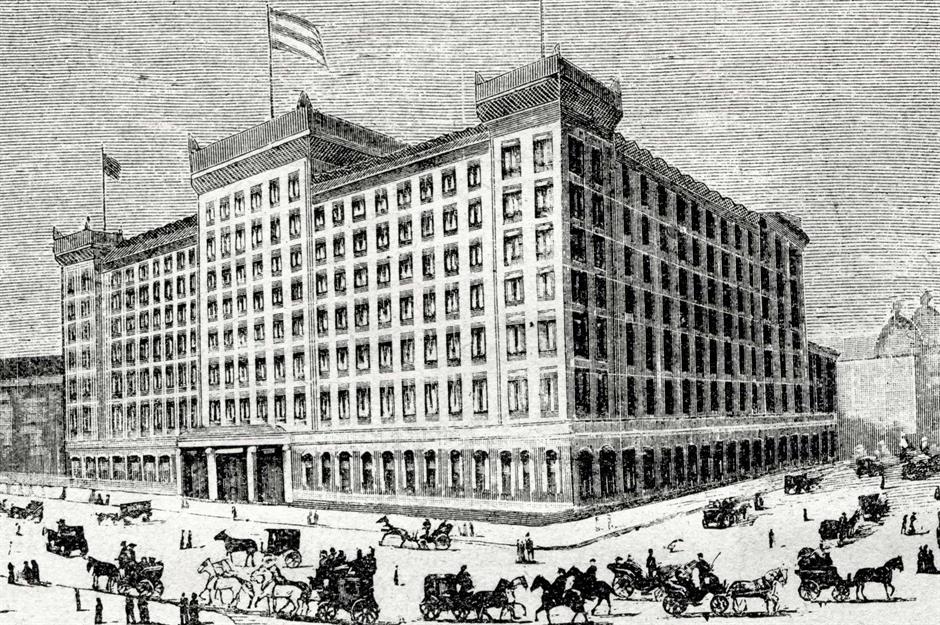
When it opened in 1873, the Windsor Hotel was advertised as "the most comfortable and homelike hotel in New York." Unfortunately, it went up in flames on St Patrick's Day in 1899, resulting in a significant loss of life and the end of the iconic hotel.
For a few months after the fire, the landowner, Elbridge Gerry, rented the site for billboards, and in 1901, he built the Windsor Arcade of luxury shops. That was torn down and replaced in the 1910s, with two high-rises now occupying the site.
Hotel Victoria
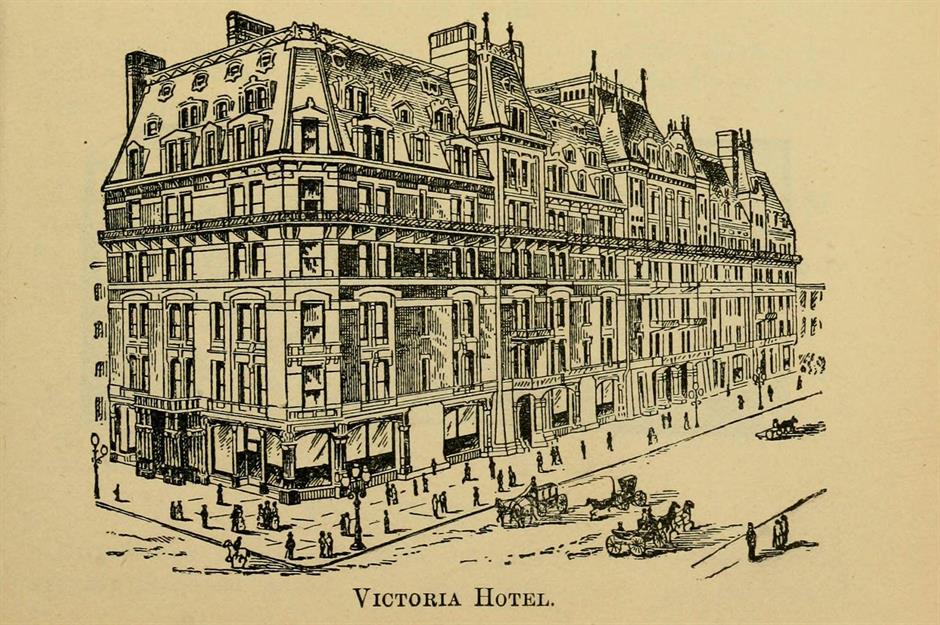
Hotel Victoria was the only hotel in the city with entrances on both the Broadway and Fifth Avenue thoroughfares. This illustration comes from the guidebook Illustrated New York City and Surroundings: A descriptive guide to places of interest by Charles W Hobb, published in 1889.
The hotel was built by Paran Stevens in 1877. It was owned by the American Hotel Victoria Company and, in 1911, was redecorated, renovated, and refurnished for $250,000 ($8.5m in today's money). However, the hotel closed its doors three years later and the expensive furnishings were sold at auction the same day. Its demolition made way for an office and loft building.
Albemarle Hotel
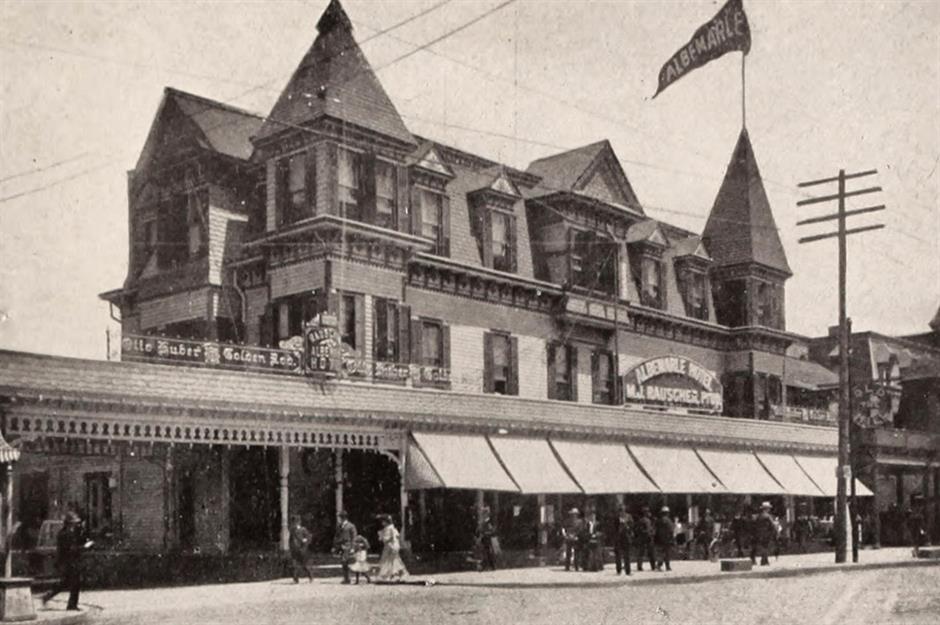
Built in 1860 and overlooking Madison Square, Albemarle Hotel was one of the largest hotels on Broadway and its location was perfect for those looking to frequent the Big Apple’s theaters, churches, halls, clubs, and stores.
During its heyday, the culinary department was run by a French chef and its world-famous cuisine included many rare ingredients not available in other hotels. The hotel closed in 1915 and, along with the adjacent Hoffman House, was replaced with a new 16-story building.
Sponsored Content
Hotel New Netherland

Built in 1892-93 for William Waldorf Astor, Hotel New Netherland was 232 feet high, making it the tallest hotel structure in the world at the time. No expense was spared in its construction, with elevators, plumbing, electricity, and a fire alarm providing its permanent residential guests with the latest conveniences.
Renamed the Hotel Netherland in 1908, the neo-Romanesque structure was razed in 1927 and replaced by the iconic Sherry-Netherland Hotel, which still stands.
San Remo Hotel
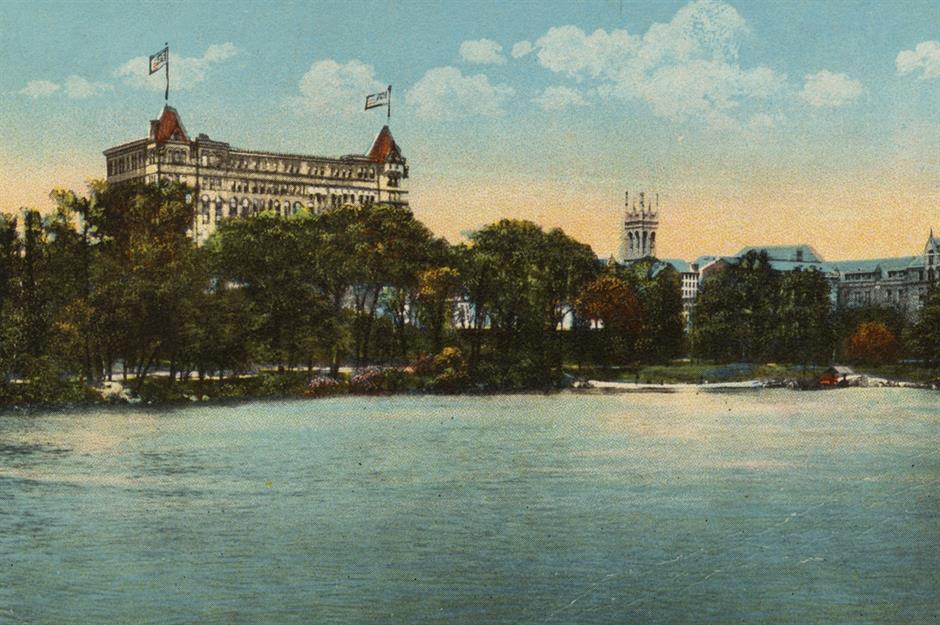
When the San Remo opened in 1891, an advertisement said: "The Hotel is conducted solely for families who wish to avoid the annoyances and inconveniences of housekeeping." But enjoying the luxurious amenities didn’t come cheap, with the most expensive room costing a whopping $5,800 per month in today's money.
As the 1920s drew to an end, the Victorian apartment hotel could no longer compete with the sleek Art Deco buildings on Central Park West, and the San Remo was replaced by its Emery Roth-designed namesake apartment building, which is still standing.
Belmont Hotel
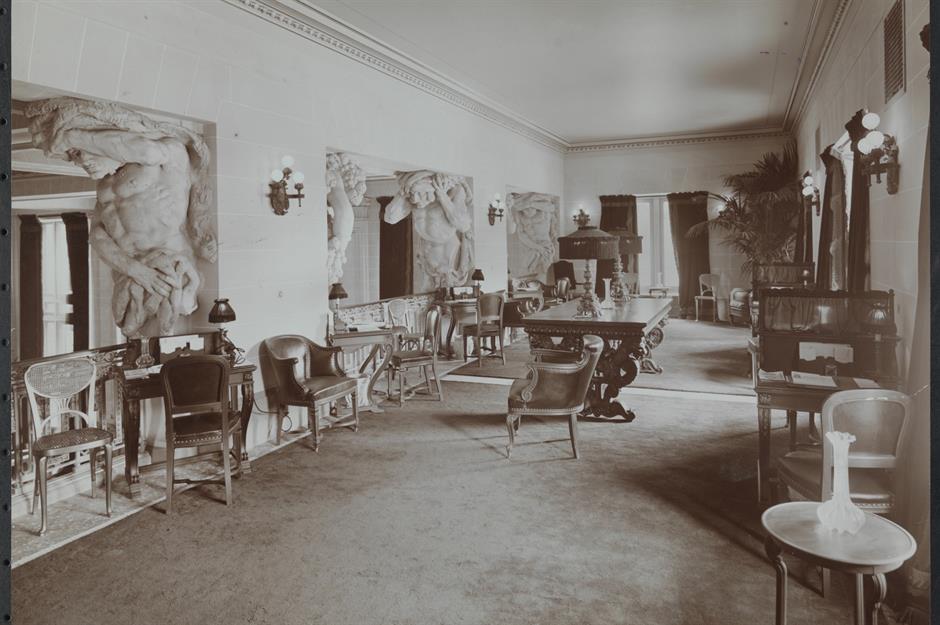
This early 20th-century skyscraper-like hotel at Park Avenue and 42nd Street in Midtown Manhattan was built between 1904 and 1908. Standing over 300 feet high and made up of 23 stories, it was the tallest hotel in the world when it was built.
Belmont Hotel was demolished in 1939, with the 42nd Street Airlines Terminal built in its place. That particular Art Deco masterpiece survived until 1977 to make way for the Philip Morris Building in 1982.
Sponsored Content
Hotel Claridge
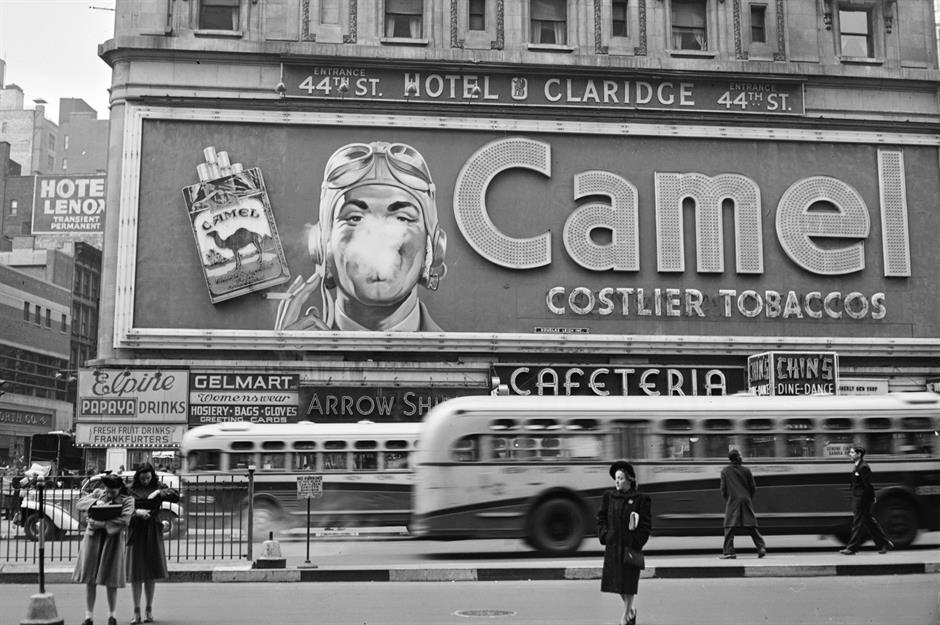
Hotel Claridge, originally Hotel Rector, operated for 59 years on Times Square until it was demolished in 1970 and replaced with the 33-story office tower 1500 Broadway.
One of the most enduring images of Hotel Claridge is the "Camel Man," who blew cigarette smoke rings from a large billboard mounted on the Broadway side of the hotel. The pool scenes in 1961 film The Hustler were shot on the hotel’s second floor, and in Midnight Cowboy (1969), Joe Buck (Jon Voight) lodges at the Claridge.
Murray Hill Hotel
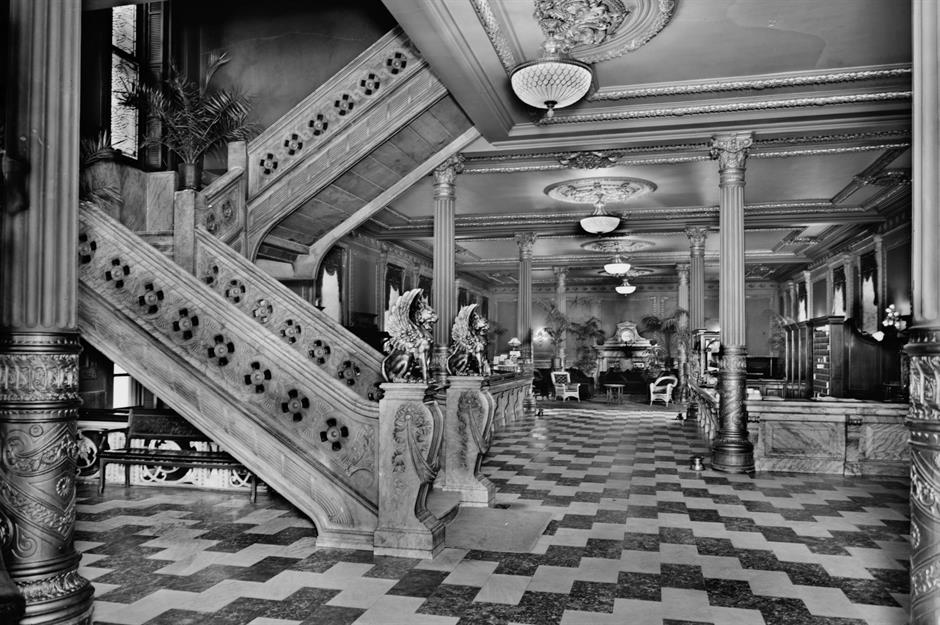
Located one block from the Grand Central Depot and two blocks from the Grand Central elevated station, Murray Hill Hotel was built in 1884 and was part of the Bowman-Biltmore Hotels chain before being demolished in 1947. During its years of operation, the hotel suffered a devastating explosion and a few fires, but it remained popular.
In 1905, delegates from 58 colleges and universities gathered at the Murray Hill Hotel to reform college football. The meeting would change the sport forever.
Savoy-Plaza Hotel
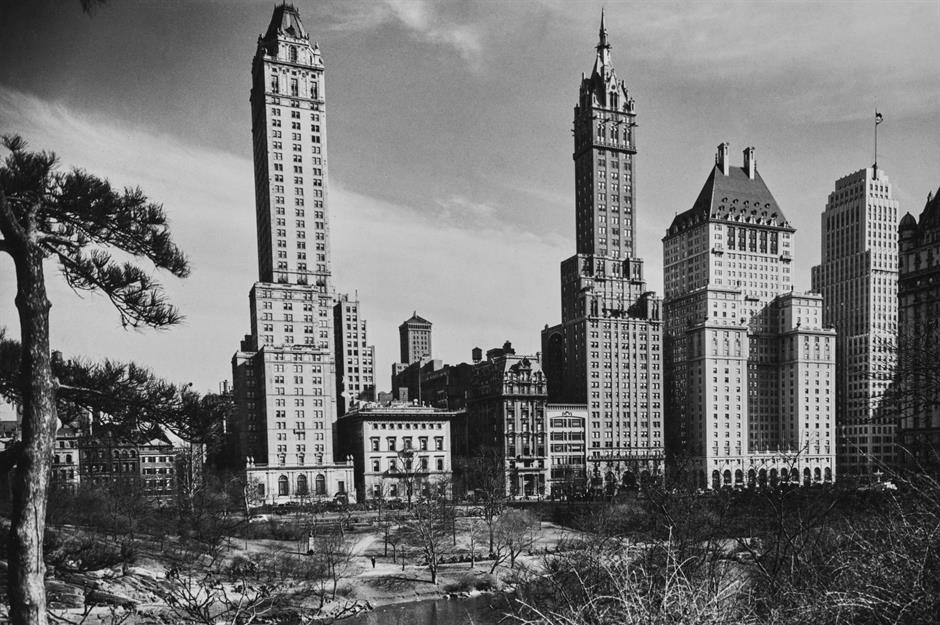
This image shows the Sherry-Netherland Hotel, the Savoy-Plaza Hotel, and the Squibb Building on Fifth Avenue, as seen from Central Park in 1950. The 33-story Savoy-Plaza was designed by McKim, Mead, & White and opened in 1927 before being demolished in 1965, despite significant public outcry and protests.
The Beaux-Arts skyscraper was replaced by the 48-story General Motors Building, which is now in its place. During its heyday, the Savoy-Plaza Hotel served as a social center and hosted society’s elite.
Sponsored Content
Hotel Astor
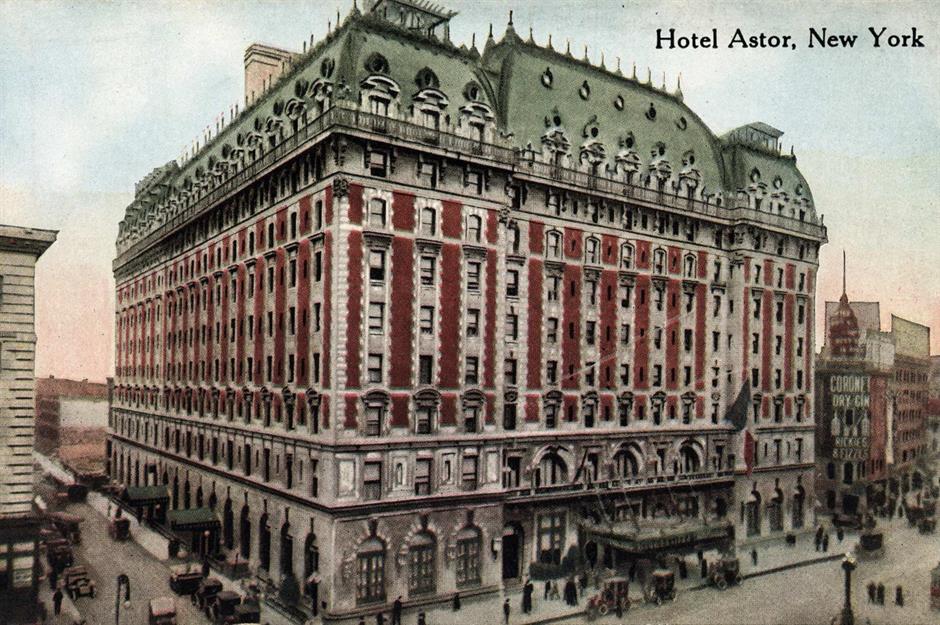
Located on Times Square, Hotel Astor contained 1,000 guest rooms, elaborately themed ballrooms, and exotic restaurants, as well as two levels underground for backstage functions. It was built in 1905 before being expanded for the Astor family and developed as a successor to the Waldorf-Astoria.
It became a popular meeting place, and from 1940 to 1942, Frank Sinatra made early New York appearances alongside Tommy Dorsey’s band. The building was razed in 1967 to make way for the 50-story skyscraper One Astor Plaza.
Hotel Margaret
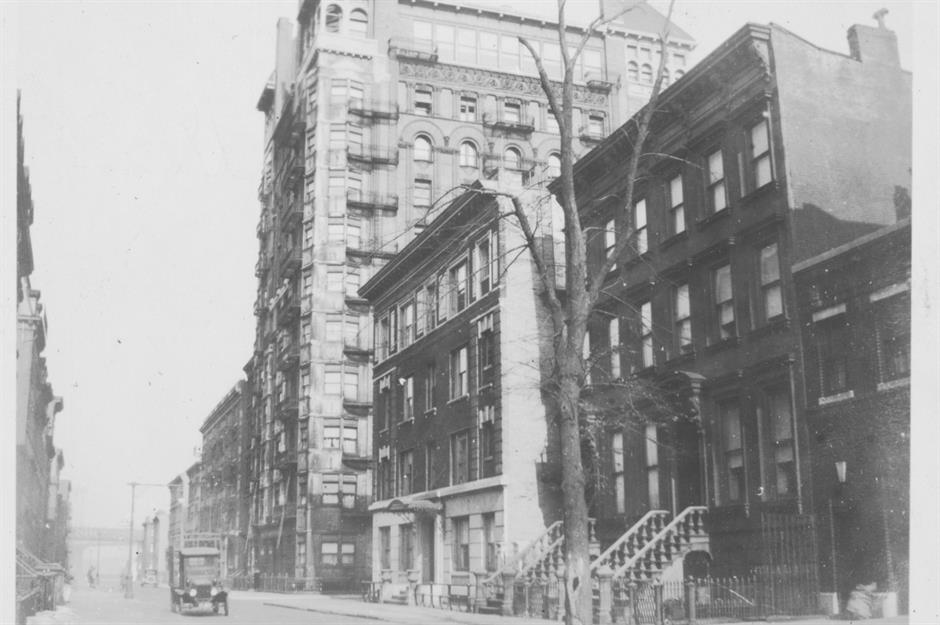
Designed by Frank Freeman and completed in 1889, Hotel Margaret was Brooklyn Heights’ first skyscraper and for many years it remained the area’s tallest building. The building was remodeled in 1958, and in 1980, work began on converting it into condominiums.
However, it was destroyed by a fire that started when a worker forgot to turn off a heater during the renovations. The land was then purchased by the Jehovah’s Witnesses and a new condominium building now stands in its place.
Half Moon Hotel
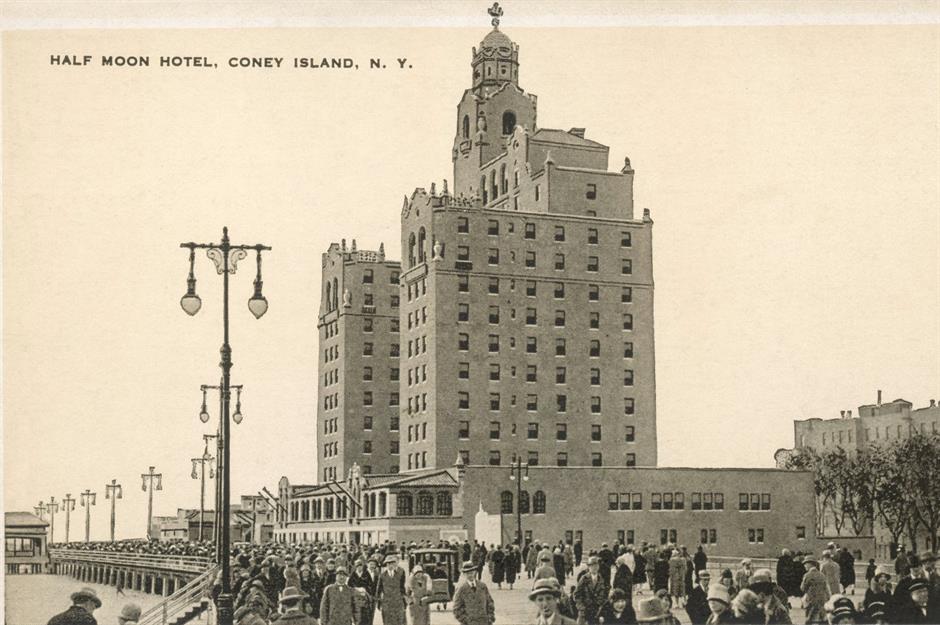
The 220-foot-tall Half Moon Hotel opened on the Riegelmann Boardwalk at West 29th Street in May 1927. It was initially hoped that the new property would help Coney Island compete with Atlantic City in New Jersey.
However, the hotel became best known for being where FBI informant Abe Reles either jumped, fell, or was pushed to his death in 1941. In the 1950s, it became the Metropolitan Jewish Geriatric Center before it was demolished in 1995. Today, the Seagate Rehabilitation and Nursing Center is on the site.
Sponsored Content
Drake Hotel
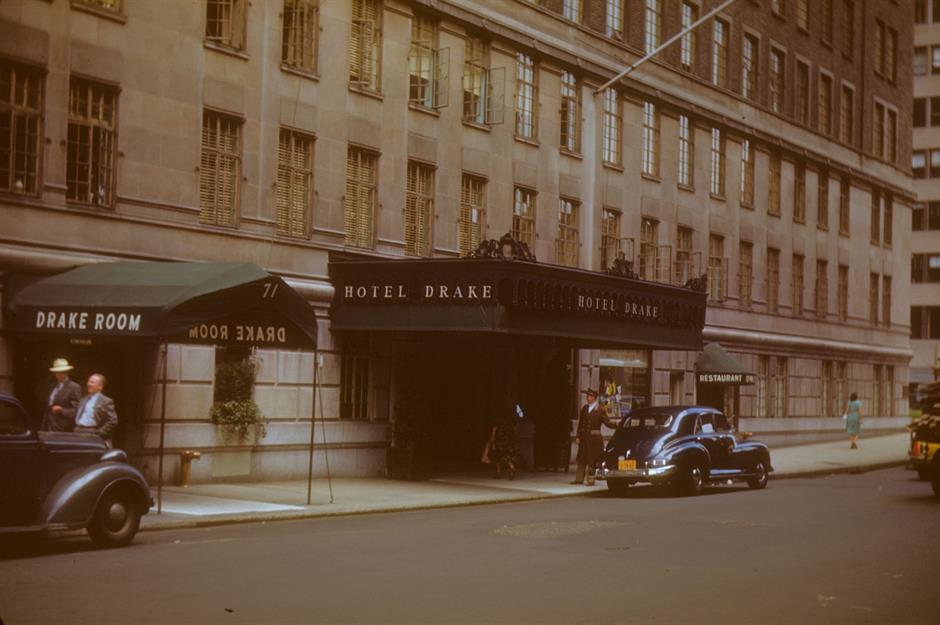
With innovations such as automatic refrigeration as well as spacious, luxurious rooms and suites, the Drake Hotel was built in 1926 and became home to silent film star Lillian Gish from 1946 to 1949, with other notable guests including Frank Sinatra, Muhammad Ali, Led Zeppelin, and Jimi Hendrix.
Although it was subjected to a $52 million room-by-room renovation in the early 1980s, it was demolished in 2007 and replaced by a residential skyscraper, 432 Park Avenue.
Marriott World Trade Center
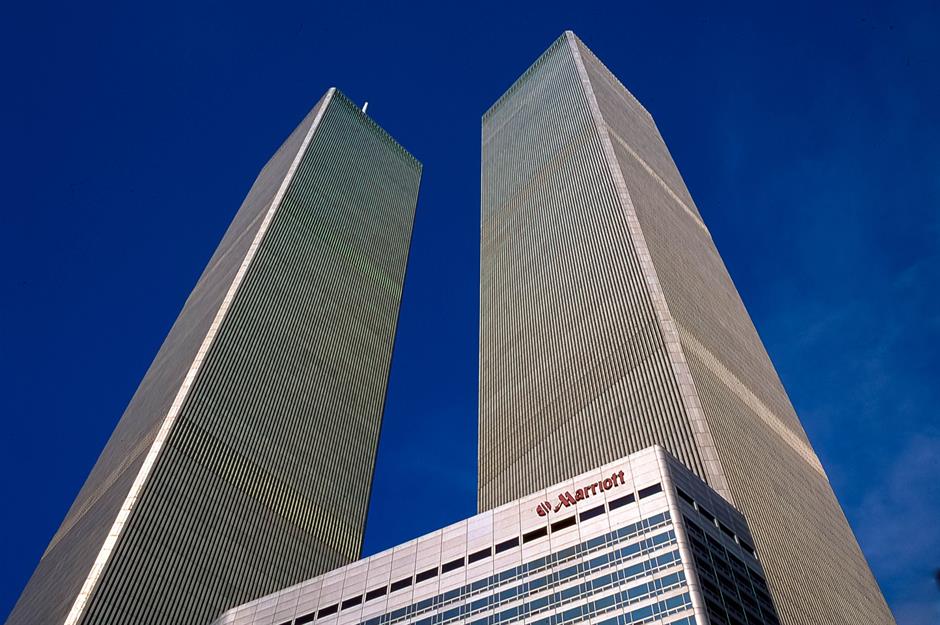
The Marriott World Trade Center opened in April 1981 as the Vista International Hotel. It was damaged by a terrorist bombing in 1993, and although the Port Authority of New York and New Jersey considered demolishing the building, they decided to repair it.
However, the September 11 attacks on the Twin Towers destroyed most of the hotel. It was decided that the hotel would not be rebuilt as part of the post-2001 plans and the land was given over to the National September 11 Memorial & Museum.