Royal residences: 15 stunning palaces you can stay at
Rooms fit for royalty
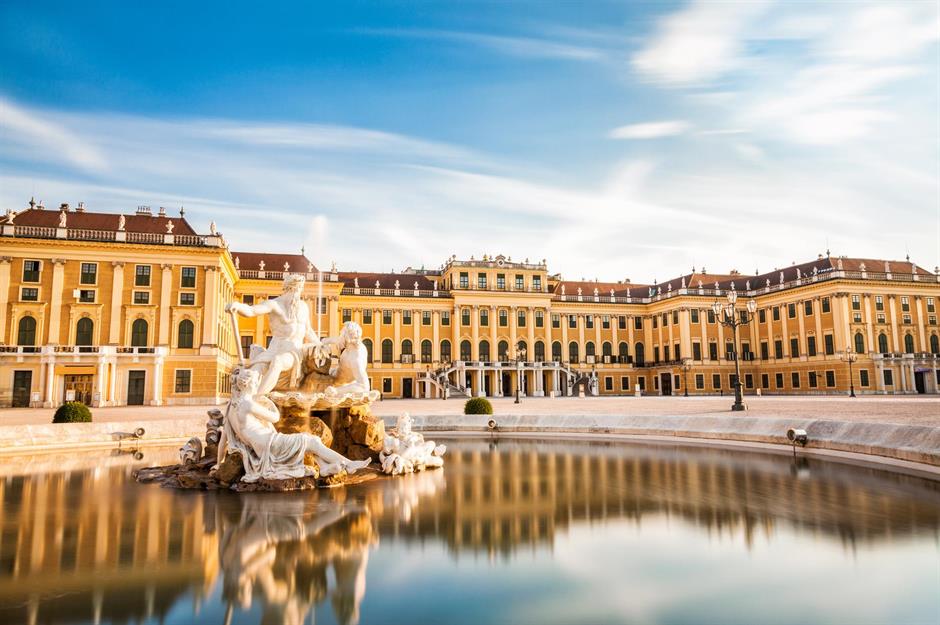
There are hotels and resorts where guests are treated like royalty. Then there are those that have actually hosted kings and queens – and princes, princesses, emperors and empresses, for that matter. These royal residences, including jaw-dropping quarters in the Palace of Versailles and Gritti Palace in Venice, are now luxury hotels paying homage to their illustrious history.
Click or scroll to see our pick of the most beautiful palatial places to stay from around the world...
*Prices correct at time of publishing
Palace of Versailles, Versailles, France

Le Grand Contrôle is the first-ever hotel within the grounds of the historic Palace of Versailles. Housed in a building dating from 1681 that served as the equivalent of today's Ministry of Finance, the hotel is a truly luxurious affair. The meticulously restored and decorated interior is the work of architect and interior designer Christophe Tollemer.
Palace of Versailles, Versailles, France

The rooms have all been named after prominent historical figures who were associated with the palace, with decor evoking the 18th century. There are 11 rooms and two suites to choose from, including a 1,290-square-foot (120sqm) signature suite. Prices for a room start from £1,720 ($2.2k) per night and £3,612 ($4.5) per night for a suite. Prices exclude taxes and fees.
Sponsored Content
Palace of Versailles, Versailles, France

Guests will also be treated to intimate tours of the palace and previously unseen living areas as well as an exceptional culinary offering. The dinner comes courtesy of Michelin-starred Alain Ducasse and is intended to be a theatrical event, evoking the spirit of the royal banquets once held here.
Ca’ Sagredo Hotel, Venice, Italy

The 15th-century palace that now houses Ca’ Sagredo Hotel stands prettily in pink on the edge of the Grand Canal, with some rooms offering incredible views over the water with its iconic bridges and gondolas gliding by. It’s been through some eminent hands since it was first built by the Morosini family, prominent Venetian nobility.
Ca’ Sagredo Hotel, Venice, Italy

The private palazzo was bought in the 17th century by the Sagredo family, a prestigious noble family, before opening as a luxury hotel in 2007. And it hasn’t lost its palatial lustre. Rooms and suites dazzle with gilded details, intricate carvings and chandeliers, while beds are suitably plush with velvet headboards and luxurious textures. The hotel is currently closed for renovations. Prices for a double room begin at £213 ( $271) per night.
Sponsored Content
Ca’ Sagredo Hotel, Venice, Italy

The rest of the Gothic-Byzantine hotel feels like a living museum that pays testament to its esteemed former residents. The array of artworks includes a grand marble staircase flanked by cherubs and a dreamy, early 18th-century fresco that adorns the ballroom ceiling. It's no wonder that this building is classed as a National Monument.
Hampton Court Palace, Richmond, England, UK

Although Hampton Court Palace itself is no longer a residence and people can’t stay within its opulent baroque walls, a house that was once the palace’s kitchens is available as a holiday let. The Georgian House, rented by the Landmark Trust, was built in 1719 to hold the palace’s kitchens when George, Prince of Wales resided here. The palace itself was built in 1515 for Cardinal Wolsey and hugely expanded by its most famous resident, Henry VIII.
Hampton Court Palace, Richmond, England, UK

While the Georgian House isn’t quite so lavish as the rooms once occupied by hedonistic kings, it is grand in its own right. Located within the palace grounds and with its own walled garden, it has five bedrooms and lots of living space spread over three floors. Original details such as the old cooking hearth, now blocked off but a focal point in the kitchen, add to its charms.
Sponsored Content
Hampton Court Palace, Richmond, England, UK

The interior has been impeccably renovated to create a suitably regal living space, with leather, mahogany and velvet adding sumptuousness to modern decor. Those staying here can view the elegant palace from the attic rooms and are also allowed to roam the rest of the grounds and their labyrinthine gardens, including the Rose Gardens and Henry VIII’s Real Tennis Court.
Liking this? Click the Like button above. And click the Follow button above for more great stories from loveEXPLORING
Ciragan Palace Kempinski, Istanbul, Turkey

Ciragan translates as ‘lighting’ or ‘festival’, thought to be a reference to fireworks that were often displayed at banquets and celebrations held at this Ottoman imperial palace. It was built in the 18th century by grand vizier (sultan's deputy) Ibrahim Pasha for his wife, the daughter of a sultan, on the site of the previous Ciragan Palace.
Ciragan Palace Kempinski, Istanbul, Turkey

It’s easy to see why this was considered a spot fit for royalty: it sits right by the shores of the broad, blue-grey Bosphorus strait. Now managed by Kempinski, Europe’s oldest luxury hotel group, the decor is timeless, with lattice-clad covered columns, domed ceilings, chandeliers and a marble fountain in the entryway.
Sponsored Content
Ciragan Palace Kempinski, Istanbul, Turkey

Blue-blooded or not, guests at Ciragan Palace Kempinski can choose to arrive by car, yacht or helicopter, and the property – from the restaurants to the infinity pool – has such open views it can feel like the hotel is floating on the water. The most lavish accommodation of its 317 rooms are the six palace suites, especially The Sultan with its sweeping views over the Bosphorus.
Taj Lake Palace, Udaipur, India

Seemingly floating in the middle of Lake Pichola like a palatial cruise ship, this hotel was originally more of a pleasure palace than an official royal residence. The white marble structure was created in the 18th century for the young prince Maharana Jagat Singh II after his father, Maharana Sangram Singh II, allegedly told him that if he wanted to stay in a pleasure palace he’d have to build it himself.
Taj Lake Palace, Udaipur, India

The intricately carved arches and minarets are built on top of an island in the centre of the lake, and it featured as the titular character’s secluded lair in Bond film Octopussy in 1983. The surroundings are almost as spectacular as the building, with views of the lake, mountains and even other palaces from the hotel’s restaurants, pretty pool area and luxurious rooms.
Sponsored Content
Taj Lake Palace, Udaipur, India

Suites have luxe touches like Indian silk, teak furniture, intricate lattice work and gilded decor. At the spa, treatments are inspired by ancient wellness traditions and rituals favoured by Indian royalty. It’s still a favourite among luminaries, from Hollywood royalty like Brad Pitt and Angelina Jolie to actual royalty – Queen Elizabeth II once stayed on board the floating palace.
Pousada Palacio Estoi, Faro, Portugal

There’s no need for rose-tinted specs when viewing this beauty: the exterior of Pousada Palacio Estoi is as perfectly, prettily pink as it’s possible to be. The picturesque palace, which is just outside Faro’s city centre in the Algarve, wasn’t always so gorgeous. Neglected for some years, it fell into a poor state of repair and was closed to the public in 1987.
Pousada Palacio Estoi, Faro, Portugal

The stately home, built in the 18th century and originally owned by the Viscount of Estoi, was meticulously renovated to reopen as a 'pousada' in 2008, a term derived from the Portuguese word for 'rest' and now synonymous with luxury accommodation in restored historical buildings in Portugal. The huge grounds encompass tea pavilions and Versailles-inspired gardens with statues, lakes and fountains, while the inside is a blend of styles reflecting different periods, including Neoclassical and Art Nouveau.
Sponsored Content
Pousada Palacio Estoi, Faro, Portugal

The fabulous foyer is a hint of what’s to come, with ornate plasterwork that was commissioned by the viscount. Grand staircases separate the three levels, while rooms are a regal riot of gilded furniture, chandeliers, original niches, ornate rococo ceilings and frescoes. There are 63 rooms to stay in, all with luxurious decor and many offering private balconies so you can soak up the view.
Hotel Vestibul Palace, Split, Croatia

Technically the entire old town of Split is a palace. Roman Emperor Diocletian believed he was the reincarnation of Jupiter, and the lavishness of his ‘retirement home’ – the 4th-century Diocletian’s Palace – reflects this. The limestone walls contain a labyrinth of underground passages, squares, chapels, a cathedral and flights of smooth stone steps. Today it’s basically a living, breathing museum.
Hotel Vestibul Palace, Split, Croatia

Hotel Vestibul Palace is in the heart of the old town, tucked in a vestibule of the palace (hence the name). The three buildings that make up the hotel were once the site of the emperor’s chambers. Modern, minimalist decor allows features like the exposed stone walls of Diocletian’s Palace to really stand out.
Sponsored Content
Hotel Vestibul Palace, Split, Croatia

There are just seven stylish rooms, each with its very own palace walls as well as more recent additions like locally made furniture. There’s also a restaurant focused on Croatian produce, from cold cuts to seafood, with outdoor tables spilling out into the palace complex. The hotel speedboat is available for private trips around the Dalmatian islands (complete with a skipper) and the concierge can arrange excursions to the waterfalls of Krka National Park near Sibenik.
Hotel Palacio de Villapanes, Seville, Spain

Hotel Palacio de Villapanes is right in the heart of sultry Seville but really doesn’t feel like it. The elegant hotel is blissfully serene, from its shaded, colonnaded courtyards, dotted with orange trees and centred by trickling fountains, to the huge suites with soaring ceilings and floaty fabrics.
Hotel Palacio de Villapanes, Seville, Spain

The baroque palace was built in the 18th century for the Marques de Torre Blanca del Aljarafe, a member of the Spanish nobility. Its royal credentials are clear from the elegant entrance, in pale stone and topped by a heraldic crest, while the opulence continues into the lobby with red marble floor, intricate iron gates and archways.
Sponsored Content
Hotel Palacio de Villapanes, Seville, Spain

Each of the hotel's 50 rooms is decorated with a blend of period detail and offers modern luxuries like posh toiletries and high-tech features – the six suites even come with Apple laptops for guests to use while staying. The most majestic of all is the Suite El Torreon, with vaulted ceilings, a 19th-century marble bath and tall windows leading out to a private terrace. The rooftop is a right royal treat too, with views over the city’s spires.
The Xara Palace, Mdina, Malta

The Xara Palace is the only hotel within the walls of the fascinating fortified medieval city of Mdina, known as ‘The Silent City’ because it was once abandoned and uninhabited. It was originally built in the 17th century as a residence for the noble Moscati Parisio family, and the grand building incorporates some of the city’s original bastions.
The Xara Palace, Mdina, Malta

There are 17 luxurious rooms and suites available and Mdina’s hilltop perch means many offer glorious views over the surrounding Maltese countryside. The best rooms have private terraces to soak up those vistas, though all are as characterful and romantic as might be expected from a hotel in a former palace, with soft pastel shades and luxurious fabrics. Some of the suites even boast their own outdoor Jacuzzi, set atop the bastion fortifications – guaranteeing unsurpassed views while you relax.
Sponsored Content
The Xara Palace, Mdina, Malta
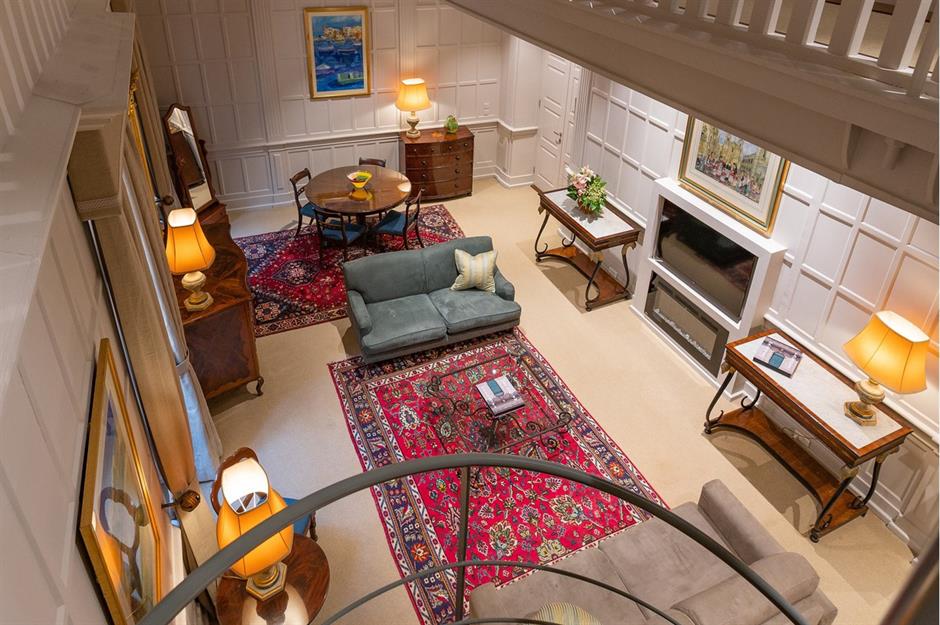
Dining options at The Xara Palace include the choice of award-winning, fine dining The de Mondion, perched on Mdina’s bastions, or you can enjoy local cuisine in a more relaxed setting at the al fresco Trattoria AD 1530 in the palace’s courtyard. Of course, you can also choose to dine in your room if you can't bear to leave it.
Aman Summer Palace, Beijing, China

The Summer Palace is one of Beijing’s most popular attractions – and one that a lucky few guests can stay in. The UNESCO World Heritage Site is a gloriously colourful and intricate residence containing gardens and various palaces built in 1750 as a peaceful retreat and place to entertain guests. Those guests actually stayed in the pavilions that now make up the attached resort.
Aman Summer Palace, Beijing, China

It’s right next to the palace’s east gate and just as beautiful as the main buildings, surrounded by verdant grounds planted with native trees and dotted with pavilions, pagodas and reflective ponds. The Cultural Pavilion usually hosts regular classes in traditional arts and crafts, including calligraphy and tea ceremonies. Guests also get out-of-hours access to the main palace and its grounds.
Sponsored Content
Aman Summer Palace, Beijing, China

Guests today won’t be granted an audience with an emperor and empress but do get to sleep in regal luxury. The elegant rooms and suites are designed in the traditional courtyard style of the palace, with touches such as bamboo blinds, wooden screens and lanterns adding to the enchantment.
The Pucic Palace, Dubrovnik, Croatia

Set on Gundulic Square in Dubrovnik’s charming old town, this grand 17th-century mansion was once the home of the local aristocratic Pucic family, known also as Pozze or Poce, whose members left their mark on the city. Pucic Palace has stood throughout history, affected by the great earthquake of 1667 – which split the original palace into two parts – two world wars and a civil war in the 90s.
The Pucic Palace, Dubrovnik, Croatia

Today it's one of the seaside city’s grandest hotels, tucked in an enviable location amid Dubrovnik’s medieval walls and wide marble streets. Guests can enjoy private access to Banje Beach as The Pucic Palace has a reserved portion of this beauty spot, with some of the best views of Old City Dubrovnik and nearby Lokrum Island from the comfortable sun-loungers.
Sponsored Content
The Pucic Palace, Dubrovnik, Croatia

The baroque building now houses 19 luxury hotel rooms, some of which have views across the old town and its honey-hued stone buildings. Named after the famous citizens of Dubrovnik, all have kept original period features such as olive-wood parquet floors, exposed beams and stone walls, while a chapel within the hotel opens up to a terrace restaurant.
Umaid Bhawan Palace, Jodhpur, India

Rajasthan's Umaid Bhawan Palace is the sixth-largest private residence in the world. Also known as Chittar Palace, the magnificent building was built between 1928 and 1943 by renowned Edwardian architect Henry Lanchester and was home to Jodhpur’s royal family. It was constructed with the same palm court marble as the iconic Taj Mahal in Agra and feels almost as grand.
Umaid Bhawan Palace, Jodhpur, India

Perched on Chittar Hill, the highest point in the desert capital of Jodhpur, Umaid Bhawan Palace continues as the home of the royal family while also housing a 64-room 5-star hotel owned by luxury hotel group Taj Hotels. It’s still fit for a maharaja, exuding extravagance from every column and intricate carving. There’s even a squash court made out of marble and tropical gardens where peacocks roam.
Sponsored Content
Umaid Bhawan Palace, Jodhpur, India

Guests are treated like royalty too, with private butlers and regal views of the Blue City, as Jodhpur is known due to the colour of its buildings, plus sand dunes rolling beyond. The rooms' Art Deco-style interiors are a surprising contrast to the palatial exterior but somehow work beautifully.
Pestana Palace Hotel, Lisbon, Portugal

The extravagant Palacio Vale Flor was commissioned by the Marquis de Valle Flor in the late 19th century. The Marquis died in 1932 and the building was neglected for decades, falling into a state of disrepair until it was taken over by the Pestana group in 1992. Today the photogenic pastel-green building, which is now classified as a National Monument in Portugal, has been meticulously restored to its former splendour as a unique luxury hotel.
Pestana Palace Hotel, Lisbon, Portugal

It took around 10 years to restore its former lustre – and today it’s gloriously ornate. The lush gardens that surround it make it feel like a royal hideaway, despite being in the centre of the Portuguese capital. The interior is equally exquisite, packed with frescoed ceilings, intricately engraved mirrors, rare paintings and a lavish amount of marble.
Sponsored Content
Pestana Palace Hotel, Lisbon, Portugal
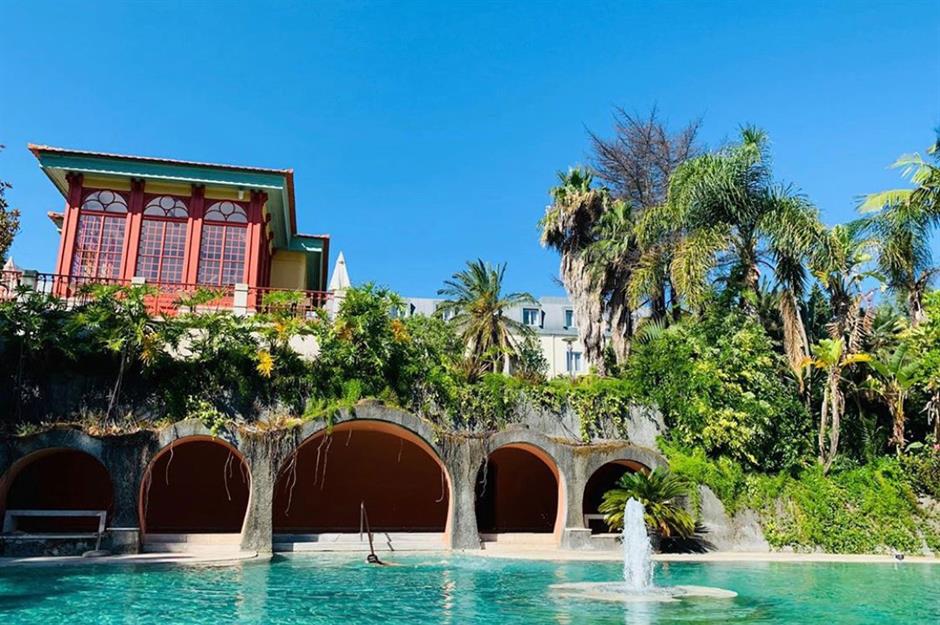
The hotel boasts excellent facilities too. There's an outdoor and indoor swimming pool, plus a sauna within the onsite Wellness Center where you can unwind. If you're looking to head out, the hotel is happy to arrange tours of the nearby Jeronimos Monastery and Palace of Ajuda, among other destinations.
The Gritti Palace, Venice, Italy

The Gritti Palace has a rich and illustrious history, even by Venice standards. It was commissioned in 1475 by Andrea Gritti, the doge or elected lord of Venice, as his official family residence. It’s tough to imagine a more eminent address: the palace is right on the edge of the Grand Canal with views of the Santa Maria della Salute church, the island of San Giorgio Maggiore and Punta della Dogana, an old customs building that’s now an art museum.
The Gritti Palace, Venice, Italy

Its glamorous days continued after its conversion into a hotel in 1895, with stellar guests including Elizabeth Taylor and Richard Burton, British author Somerset Maugham and Peggy Guggenheim, who also has an illustrious museum in the city: the Peggy Guggenheim Collection. The artist also celebrated her 80th birthday at The Gritti Palace.
Sponsored Content
The Gritti Palace, Venice, Italy

Ernest Hemingway made The Gritti Palace his home in the late 1940s and early 1950s, writing two novels here and once staging a midnight baseball game in the lobby. He is one of several past guests to now have suites named in their honour. All the rooms are imbued with glamour though, with dressing tables adorned with original mirrors, 18th-century wall lamps and rich textures and colours throughout.
Schonbrunn Palace, Vienna, Austria

The Schonbrunn Palace is a big, bold beast of a building, boasting an impressive 1,441 rooms. Emperor Leopold I had this baroque beauty built in the 17th century, replacing the less grand chateau de plaisance that formerly occupied the site. It was originally designed as an imperial hunting lodge for his son but today it's one of Austria’s most famous attractions and a UNESCO World Heritage Site.
Schonbrunn Palace, Vienna, Austria

Though it's not technically a hotel, it is possible to spend a night in the palace by booking the Grand Suite. Guests can live like emperors and empresses with a series of gloriously gilded rooms including a salon, two bedrooms, drawing room and two bathrooms. There's also a private chef, butler and limousine service as part of the deal – and to maintain the royal treatment.
Liked this? Click the Like button above. And click the Follow button above for more great stories from loveEXPLORING
Now learn the secrets of the world’s most beautiful mountains