Famous landmarks as you’ve never seen them before
A new perspective
.jpg)
We’re used to seeing the world’s most iconic landmarks from the same familiar perspectives – but there’s far more to them than their postcard-perfect fronts. Whether viewed from above, behind or below, these images reveal a different side to places you thought you knew, offering fresh angles on some of the most photographed sites on Earth.
Click through this gallery to see famous landmarks as you've never seen them before...
Behind Lincoln’s shoulders at the Lincoln Memorial, Washington DC, USA
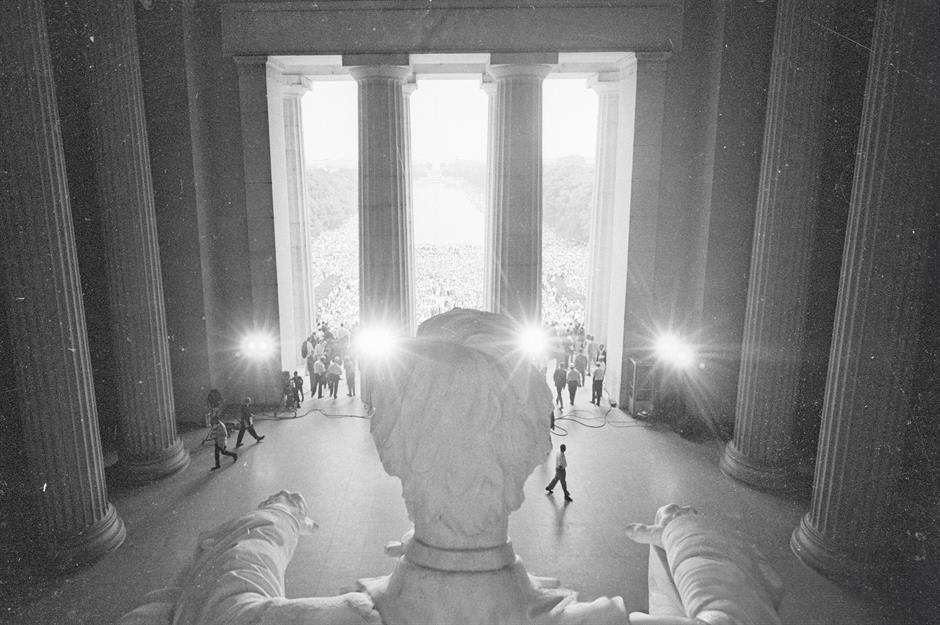
A powerful photograph captures Abraham Lincoln’s view at the Lincoln Memorial on 28 August 1963 – the day Martin Luther King Jr. delivered his iconic 'I Have a Dream' speech.
Taken from behind Lincoln’s towering statue, the image frames the crowd assembled on the National Mall, drawing a poignant comparison between the president who abolished slavery and the civil rights leader fighting to fulfil that promise a century later.
The Great Pyramids of Giza from above, Egypt
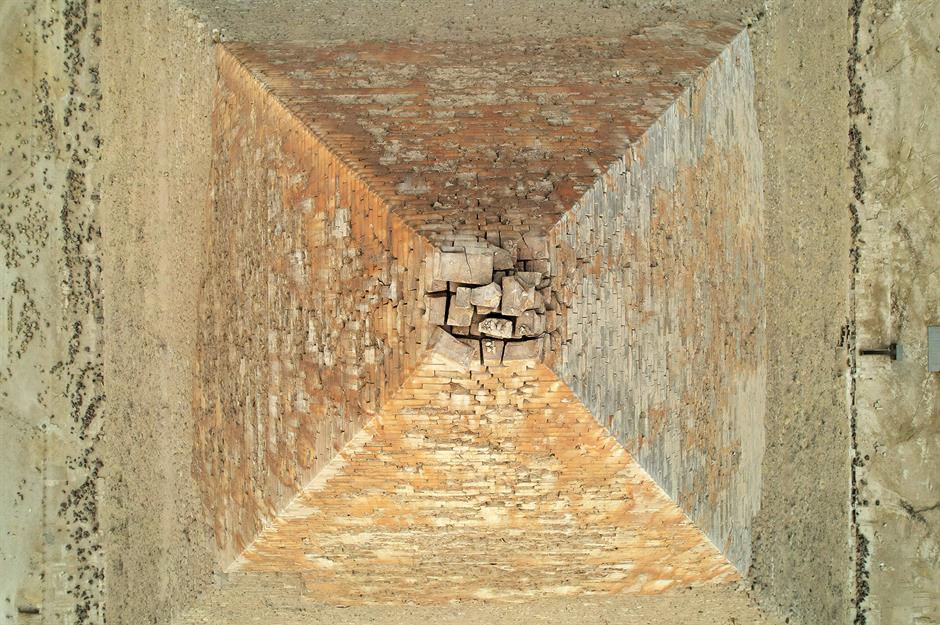
One of the world’s most iconic attractions, Egypt’s Great Pyramids have fascinated people for centuries. Constructed between 2589 and 2504 BC, they are more than 4,500 years old and remain immensely popular, drawing 14.7 million visitors in 2023 alone.
However, tourists don’t usually see this view – captured by drone – showing one of the pyramids from directly above. It offers a strikingly different perspective of the ancient site.
Sponsored Content
Eiffel Tower from below, Paris, France
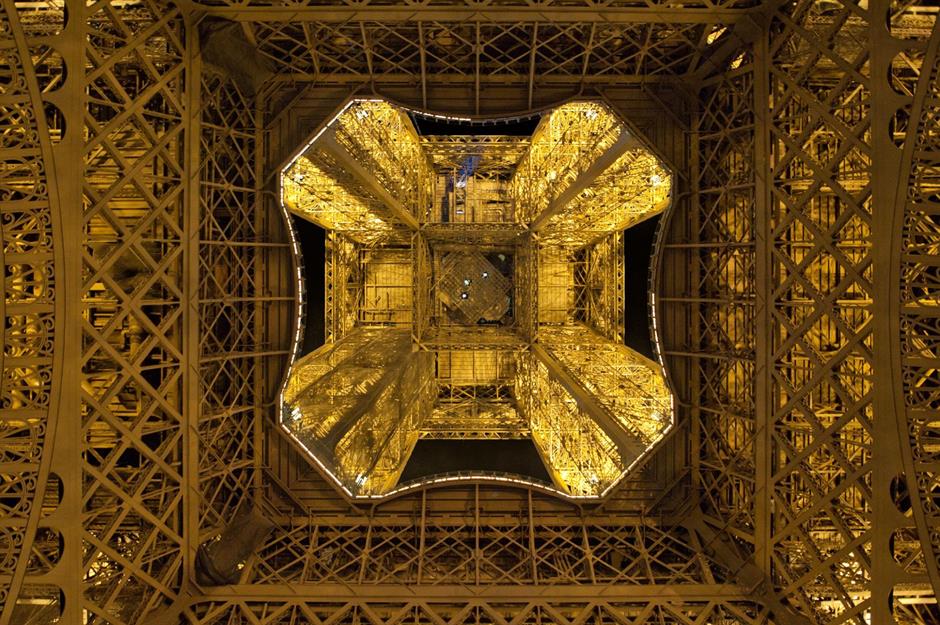
Whether basking in daylight or glittering against the night sky, Paris’s famous landmark never fails to impress. Of the seven million people who visit the Eiffel Tower each year, most see it head-on – from the Champ de Mars or the Trocadéro. But viewed from beneath, the tower reveals a different kind of beauty: the extraordinary symmetry and precision of its ironwork.
The Parthenon covered in snow, Athens, Greece
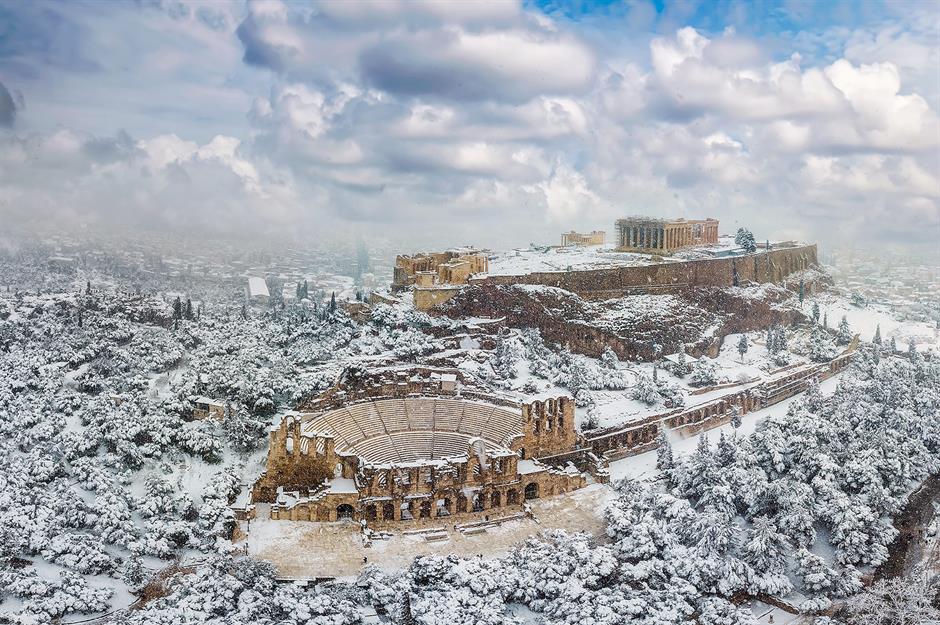
Perched high on the Acropolis, the Parthenon is the most famous ancient Greek monument of them all. Dating back to the mid-5th century BC, it’s rarely seen like this – blanketed in snow during a rare Athens snowfall in January 2022. Seen from a distance, its size and position over the city are even easier to appreciate against the snowy backdrop.
Love this? Follow our Facebook page for more travel inspiration
The end of the Great Wall of China, Shanhaiguan, China
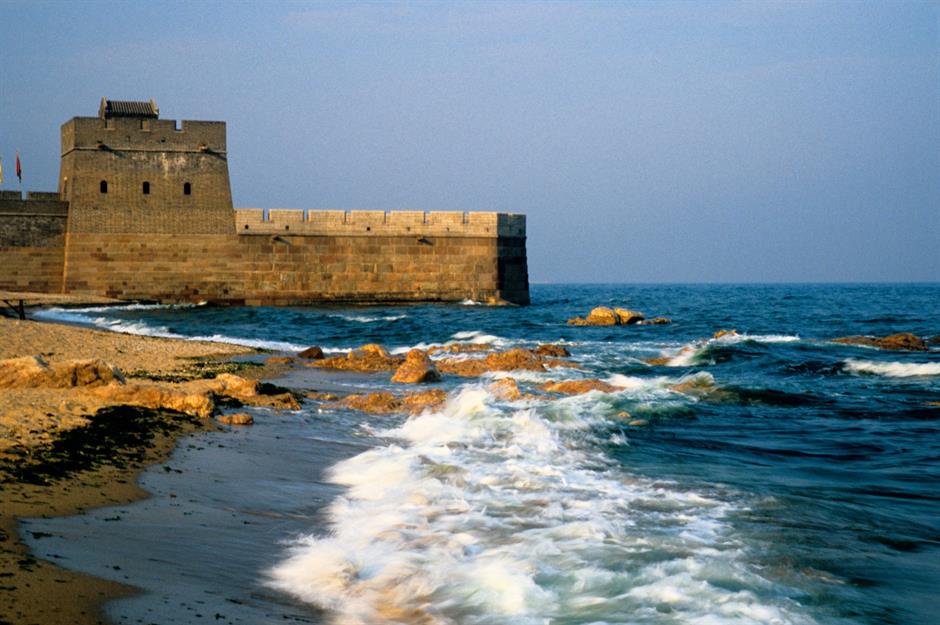
The point where the 13,170 mile (21,196km) Great Wall of China meets the ocean in Shanhaiguan is a lesser seen, but no less impressive, sight. As the longest man-made structure ever built, this part of the wall is known as 'Old Dragon's Head', due to its resemblance to the mythical beast when viewed side-on.
Sponsored Content
Underneath the Golden Gate Bridge, California, USA
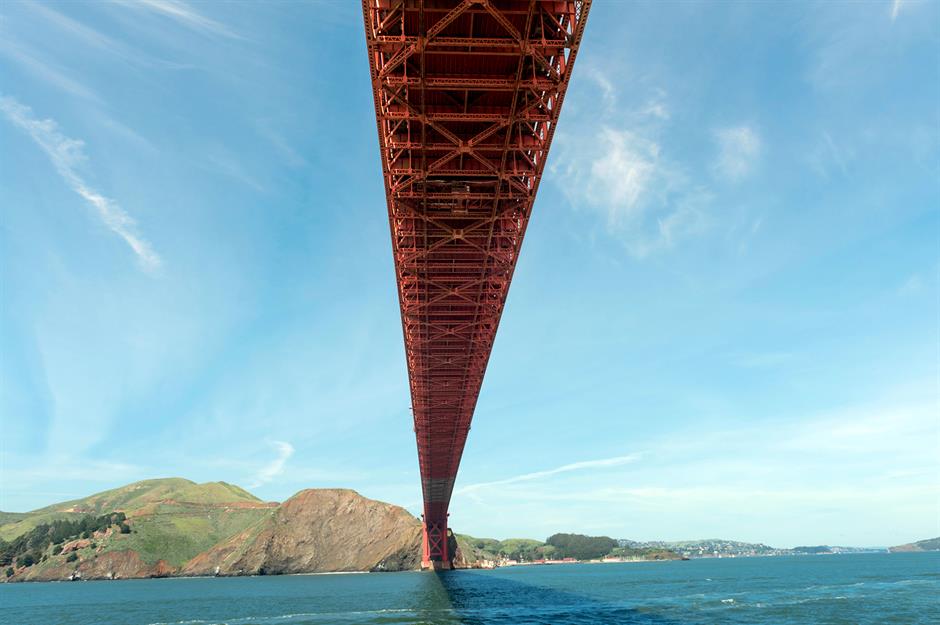
This rarely seen view from directly beneath the Golden Gate Bridge reveals the intricate web of steel that supports San Francisco’s infamous landmark. Stretching across the Golden Gate Strait, the bridge was completed in 1937 and remains a marvel of engineering.
From this angle, the rust-red underbelly seems to slice the sky in two, while the hills of Marin County and the San Francisco Bay unfold on either side. It's a perspective usually reserved for passing boats, offering a dramatic reminder of the bridge’s scale.
The Colosseum from above, Rome, Italy
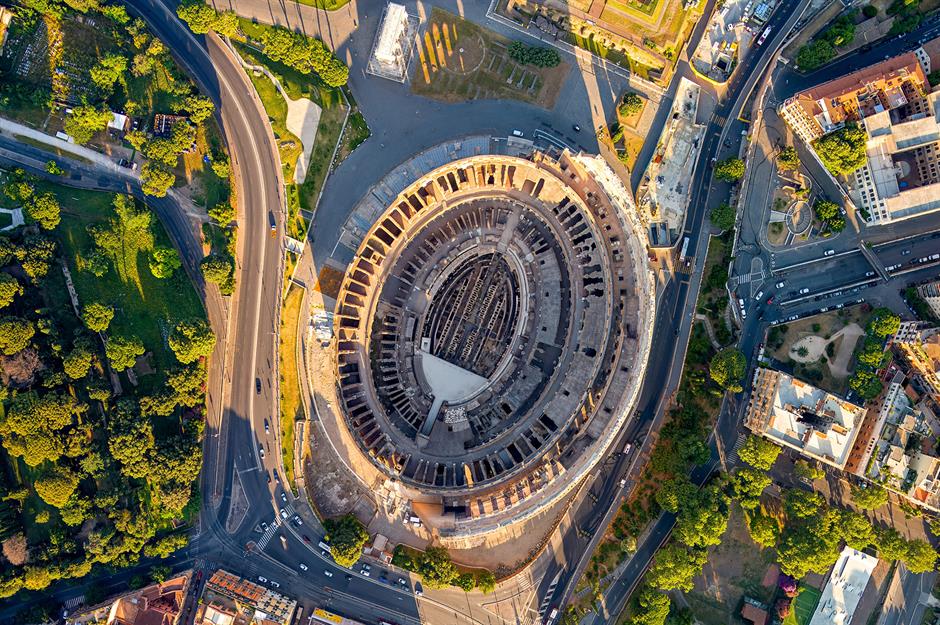
Seen from ground level, the scale of Rome’s Colosseum is impressive – but from above, its position at the heart of modern Rome becomes strikingly clear.
The tiered seating, exposed arena floor and underground hypogeum – once used to house gladiators, animals and stage machinery – are all visible in remarkable detail, framed by the streets and buildings of the contemporary city that has grown around it.
The back of the Las Vegas sign, Nevada, USA

While the front of the 'Welcome to Fabulous Las Vegas' sign is one of the most photographed landmarks in the city, the lesser-seen back has its own quirky charm. It reads, 'Drive Carefully, Come Back Soon' – a friendly farewell to visitors leaving the Strip.
Designed in 1959 by Betty Willis, the sign was intentionally crafted to be both welcoming and nostalgic, and the reverse side reflects that sentiment.
Sponsored Content
View from the Statue of Liberty's crown, New York, USA
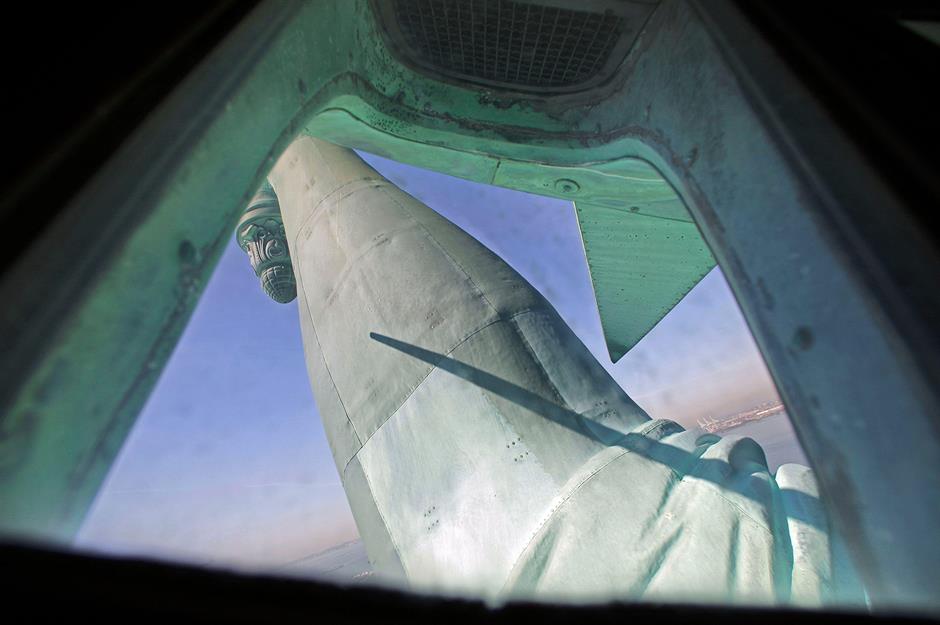
A global symbol of freedom and democracy, the Statue of Liberty was gifted to the United States by France in 1886. Few tourists ever see what she sees, but this photo from inside the crown captures a rare perspective over her raised arm and torch.
Crown access is limited, with advance booking essential. Closed after 9/11 and reopened in 2009, the narrow 162-step climb rewards the brave with a surreal view through the small windows of one of the world’s most iconic landmarks.
Christ the Redeemer from above, Rio de Janeiro, Brazil
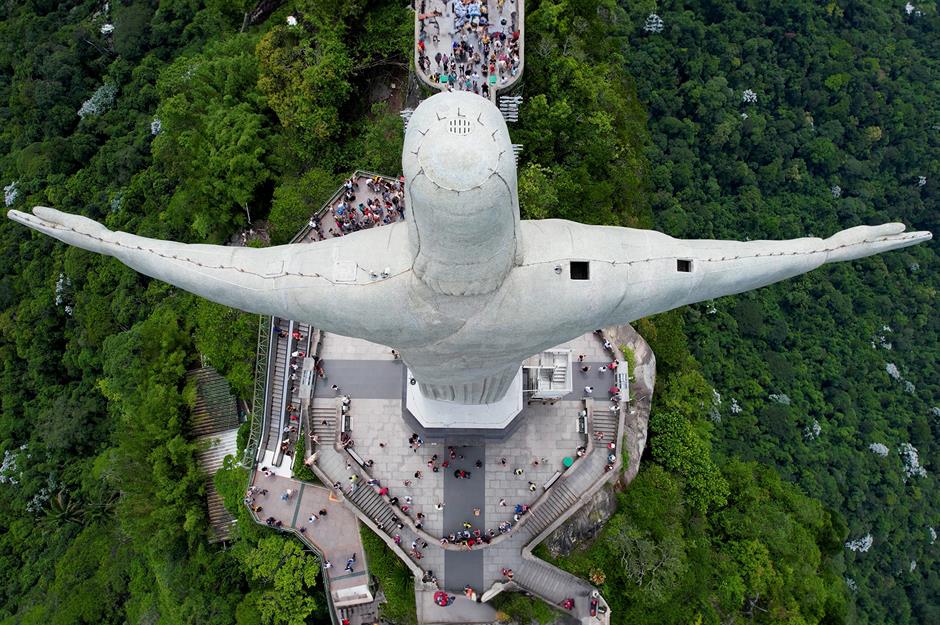
This aerial perspective of Christ the Redeemer offers a striking view not from the front – where the statue’s serene expression and open arms are typically seen – but from directly above its outstretched form.
From this vantage point, the scale of the monument becomes even more apparent as it towers over the viewing platforms and lush Tijuca Forest below.
The Kaaba from above, Mecca, Saudi Arabia
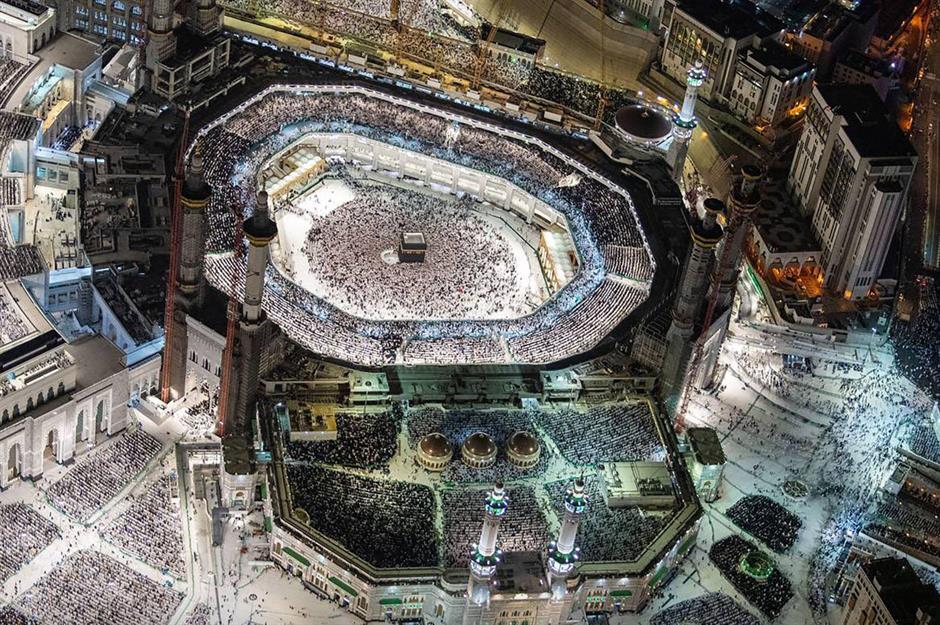
The Kaaba, Islam’s most sacred site, is the focal point of the hajj pilgrimage in Mecca. Every person who makes the hajj must walk around the Kaaba seven times, anti-clockwise, and millions do so each year. From an aerial view, the sheer number of pilgrims in an enclosed space is mesmerising to see.
Sponsored Content
Mount Rushmore from above, South Dakota, USA
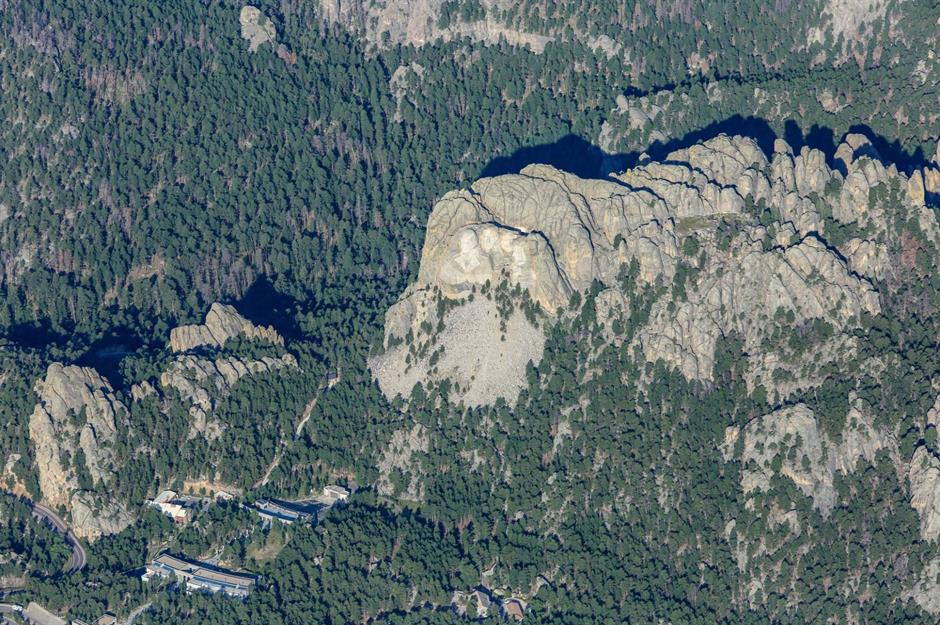
Up close, Mount Rushmore is an impressive feat of engineering, with the faces of four US presidents – George Washington, Thomas Jefferson, Theodore Roosevelt and Abraham Lincoln – carved into the granite.
But from above, it becomes clear that the sculptures occupy just a small section of the cliffside, dwarfed by the vast expanse of the surrounding Black Hills.
Stonehenge from above, England, UK
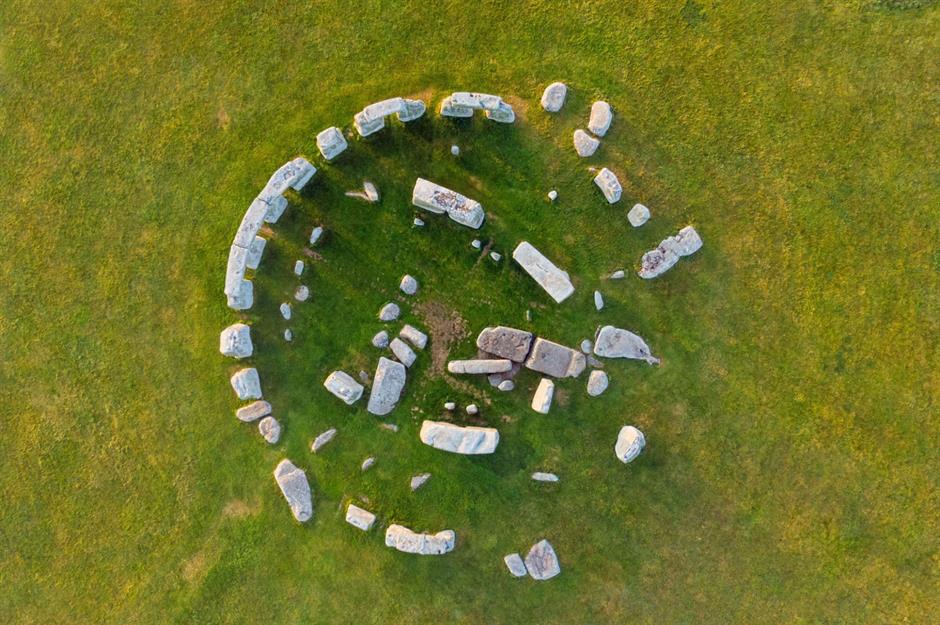
This prehistoric stone circle is an unmissable stop on any UK vacation. Built between 3000 and 1520 BC, Stonehenge’s iconic rock formations have transfixed tourists for centuries.
And unless you’re travelling by helicopter, you won’t see Stonehenge like this – from an aerial view, this UNESCO World Heritage Site looks completely different, but no less impressive.
Mont Saint Michel at low tide, Normandy, France
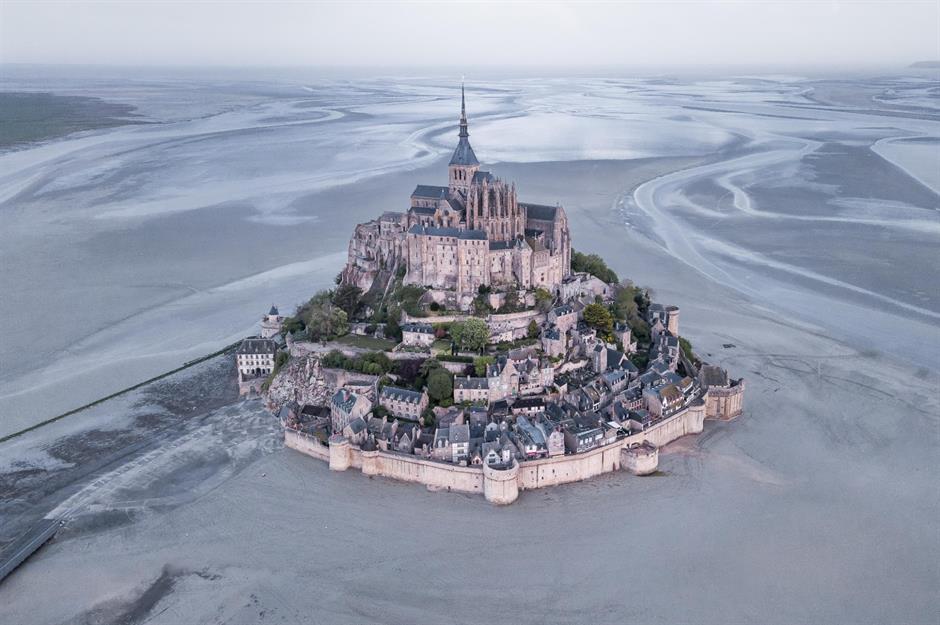
One of France’s most beautiful – and most visited – landmarks, the medieval island of Mont Saint-Michel experiences the highest tidal variations in continental Europe, with differences of up to 49 feet (15m) between low and high tide.
A UNESCO World Heritage Site, Mont Saint-Michel is stunning at any time of day, but especially at low tide, when the surrounding water recedes and the full scale of the island and its abbey becomes visible.
Sponsored Content
Sydney Opera House from above, Sydney, New South Wales, Australia
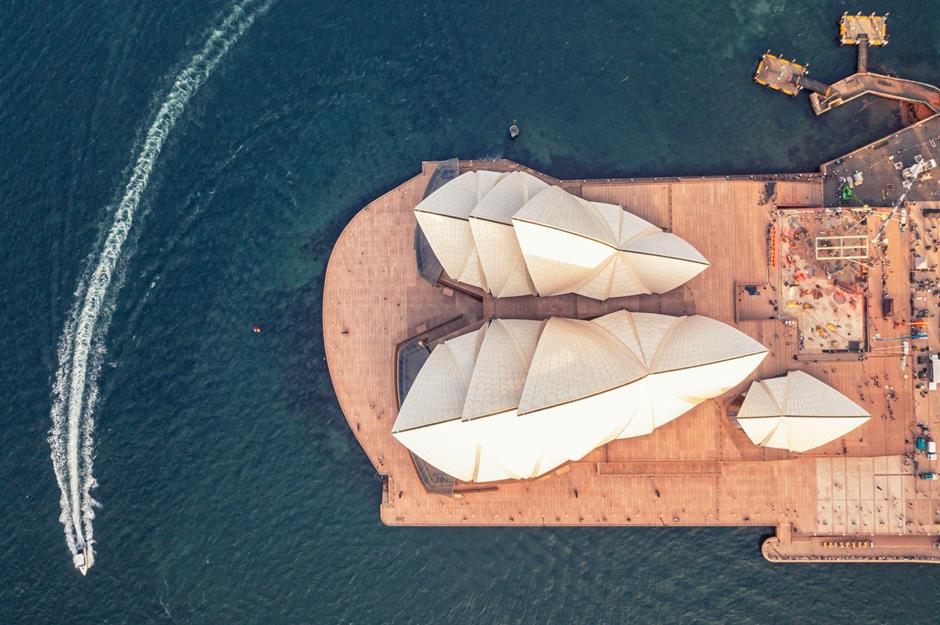
One of the world’s great architectural marvels, Sydney’s Opera House is one of Australia’s most-visited attractions. Most tourists will see the landmark face-on, perhaps while cruising through Sydney Harbour; but an aerial view provides an entirely different perspective. From above, the Opera House’s ‘sails’ appear abstract and geometric – more like a work of art than a functional building.
The Little Mermaid statue, Copenhagen, Denmark

It’s arguably Denmark’s most famous attraction, but Copenhagen’s Little Mermaid Statue is surprisingly tiny in real life. While it often looks imposing in photographs, visitors are often shocked by the bronze statue’s diminutive size and location in the quiet Langelinie Pier – and the site regularly becomes overrun by tourists.
Angkor Wat, Siem Reap, Cambodia
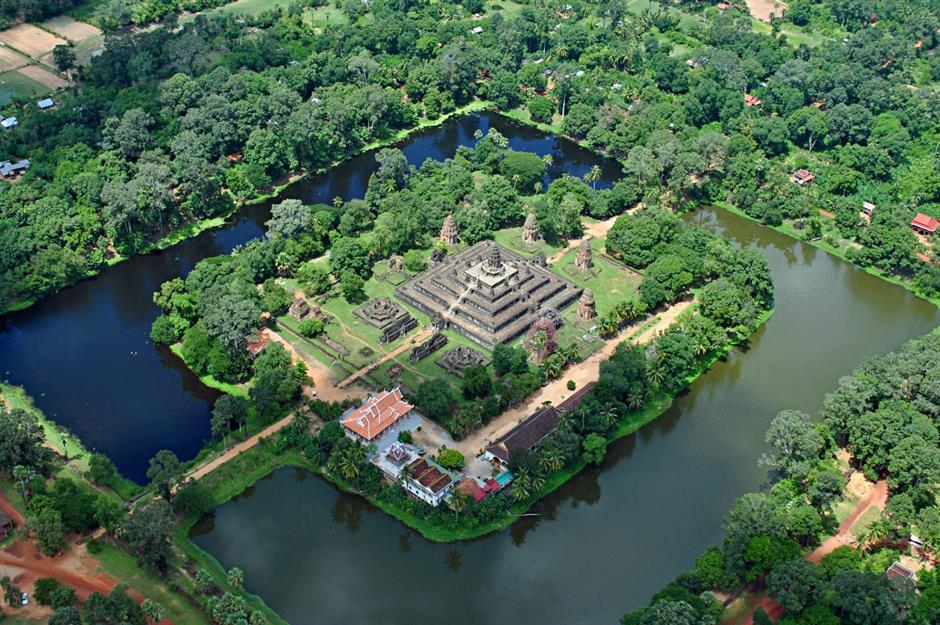
Perhaps the most famous Buddhist temple on Earth, the stunning Angkor Wat is a UNESCO World Heritage Site and the largest religious monument in the world, originally built in the early 12th century as a Hindu temple before gradually becoming Buddhist.
This ancient moated megacity is surrounded by verdant forests that, when viewed from above, stretch as far as the eye can see. From an aerial view, this incredibly vast temple appears to be swallowed up by nature.
Sponsored Content
Niagara Falls from space, Canada/USA
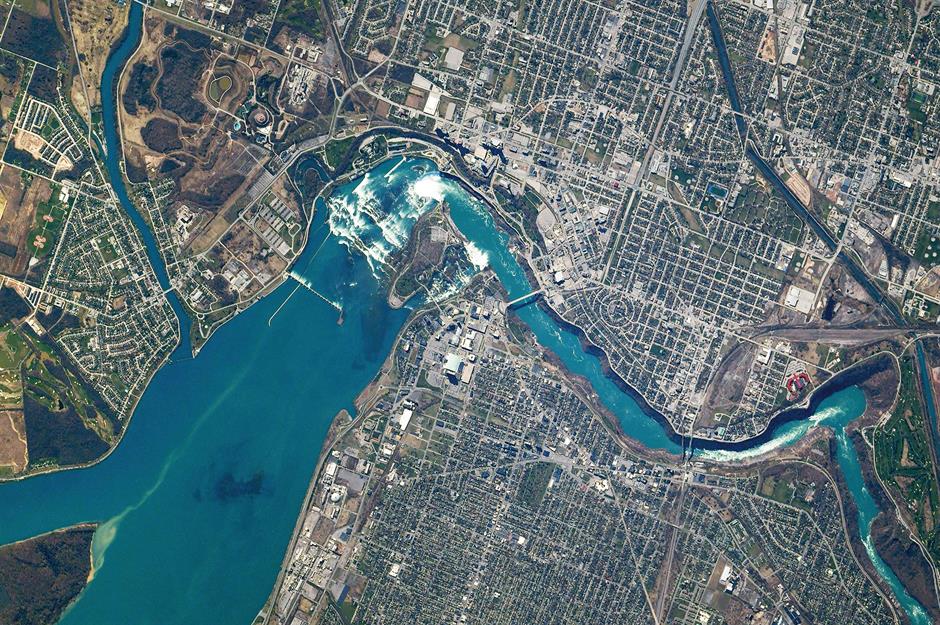
Seen from space, Niagara Falls reveals its full scale and force as water cascades through the gorge between New York and Ontario. Goat Island and Luna Island split the Niagara River into three distinct waterfalls – Horseshoe, American and Bridal Veil. From this height, the sweeping power of nature and the contrast between land and water are unmistakably clear.
Sagrada Família from a distance, Barcelona, Spain
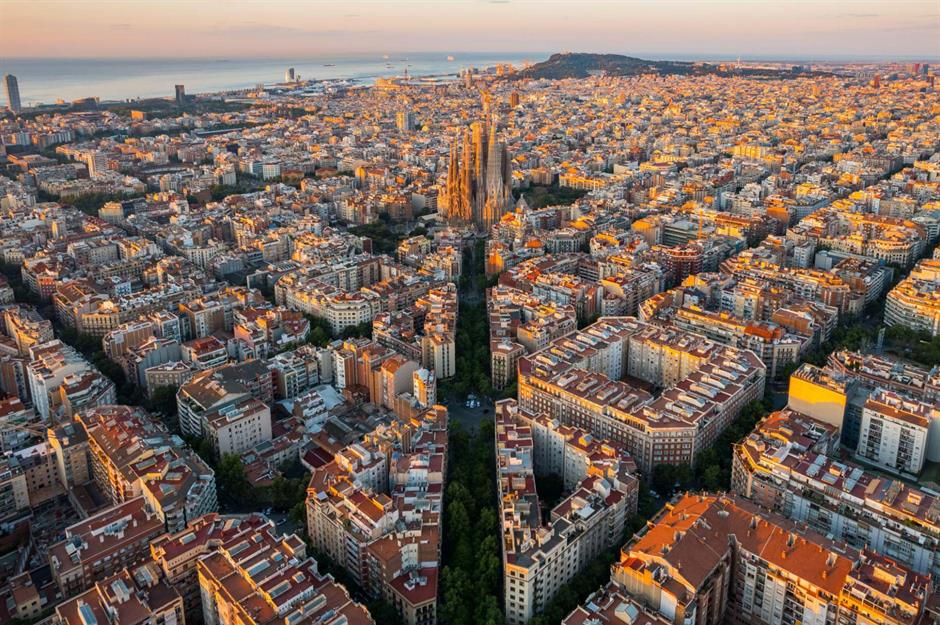
Antoni Gaudí’s great unfinished masterpiece, the Sagrada Família, draws millions of visitors each year to admire its intricate façades and soaring neo-Gothic and Art Nouveau design.
While stunning from ground level, its aerial view is especially impressive – its towering spires rising dramatically above the perfectly gridded blocks of Barcelona’s Eixample district.
Now take a look at what the marvels of the ancient world would look like today