Incredible black-and-white images of America's most iconic landmarks under construction
Making America
America is packed with instantly recognizable landmarks – and all of them had to start somewhere. From towering high-rises to record-breaking industrial undertakings, many of America's greatest monuments are impressive precisely because they were hard to create – with years and sometimes decades of development and thousands of laborers working around the clock.
Click through this gallery to see astonishing black-and-white photos of what America's most iconic landmarks looked like before they were finished...
Empire State Building, New York City, New York
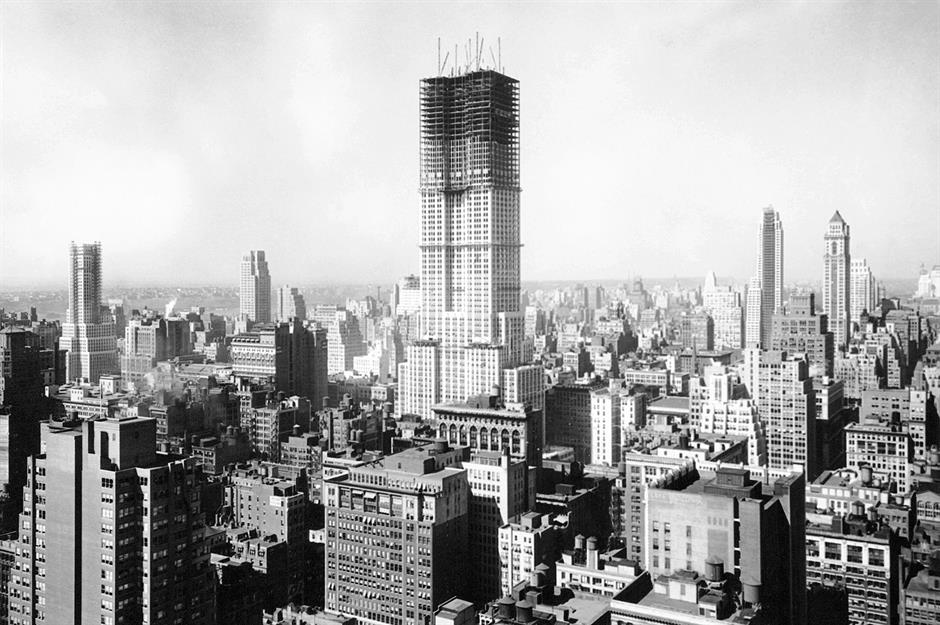
The construction of the Empire State Building is both famous and infamous. Today it's only the eighth tallest building in New York, but on completion in 1931 it was the tallest structure in New York, America, and the world – a title it would defend for four decades. It was built in just 13 months during the darkest days of the Great Depression – an astonishing testament to American ambition, ingenuity, and inequality.
Five people died during construction – low by the standards of the day – but photos of unharnessed workers teetering atop steel beams far above the city are now symbolic of changing times. In this 1930 photo, the skyscraper is nearly finished, though it lacks its iconic spike.
Gateway Arch, St Louis, Missouri
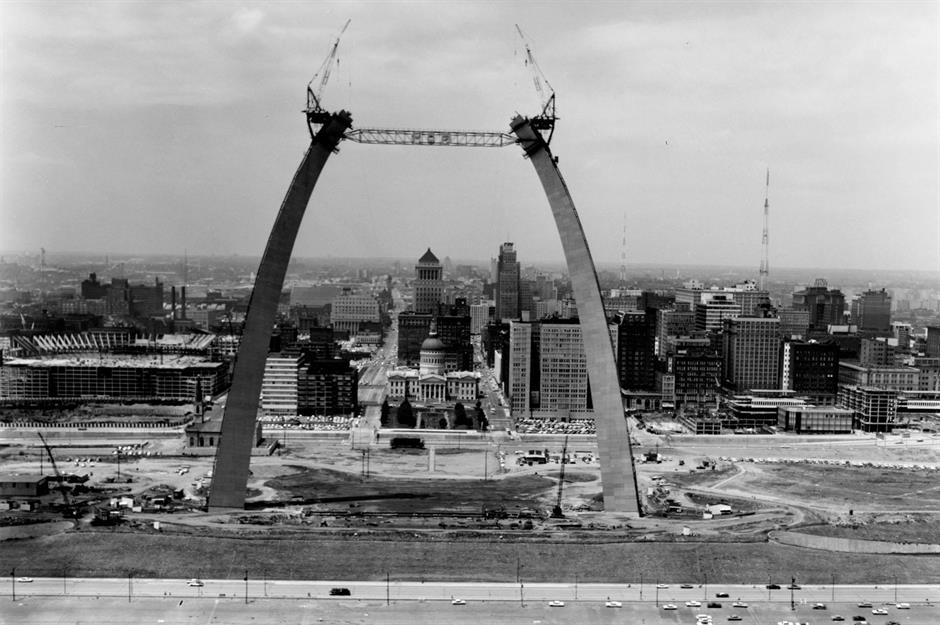
Originally dedicated to 'the American people,' the Gateway Arch in St Louis is beautiful in its simplicity. The 630-foot-high stainless steel curve commemorates America's westward expansion, acting as a literal and metaphorical gateway to the city and the Great Plains beyond. Built over three years to withstand earthquakes and gales, its legs extend 60 feet into the ground, while a giant hydraulic jack (pictured here in 1965) was used to keep the two sides apart while the arch's 10-ton keystone was installed.
Sponsored Content
Pentagon, Arlington, Virginia
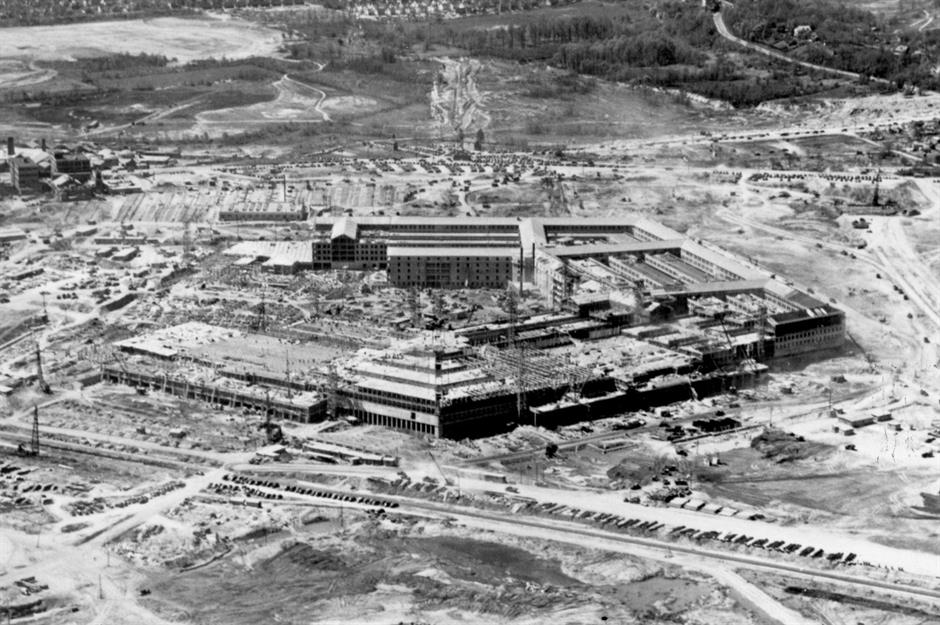
The world's second-largest office building, the Pentagon's status as Department of Defense HQ makes it an unnatural visitor attraction. But it remains a marvel of mid-century engineering, constructed at speed during World War II by 14,000 tradesmen working round-the-clock shifts.
The building's height was strictly limited to 77 feet so as not to impede views from the Arlington National Cemetery, while the site was bordered by five roadways, so the design was a natural consequence. In this 1942 photo, four of the five sides had been built, and thousands of military officials had already moved into the building despite its missing fifth.
Mount Rushmore, Keystone, South Dakota
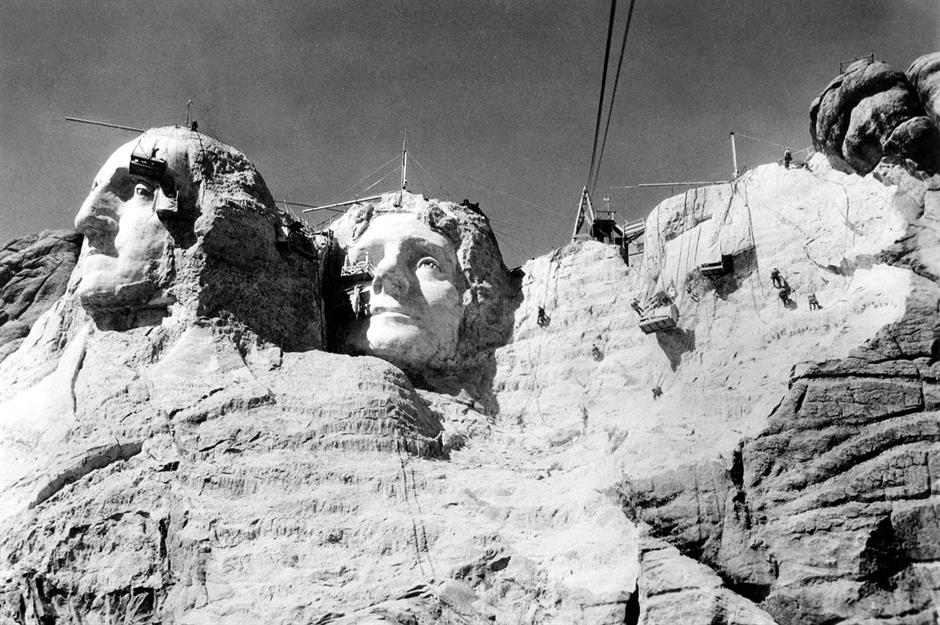
Sculpted illegally on sacred Native American land by a man with ties to the Ku Klux Klan, Mount Rushmore's origin story has not aged well. But the 60-foot-tall heads of presidents Washington, Jefferson, Roosevelt, and Lincoln earned immediate acclaim on completion in 1941.
Intended to draw tourism to South Dakota's isolated Black Hills – a job it performs admirably to this day – Mount Rushmore was mostly blasted into shape with dynamite, before teams of workers descended onto the rock face to etch noses, eyes, and chins. In this 1937 image, Washington is receiving his final touches, while Jefferson is finished save for his right eye.
Capitol Building, Washington DC
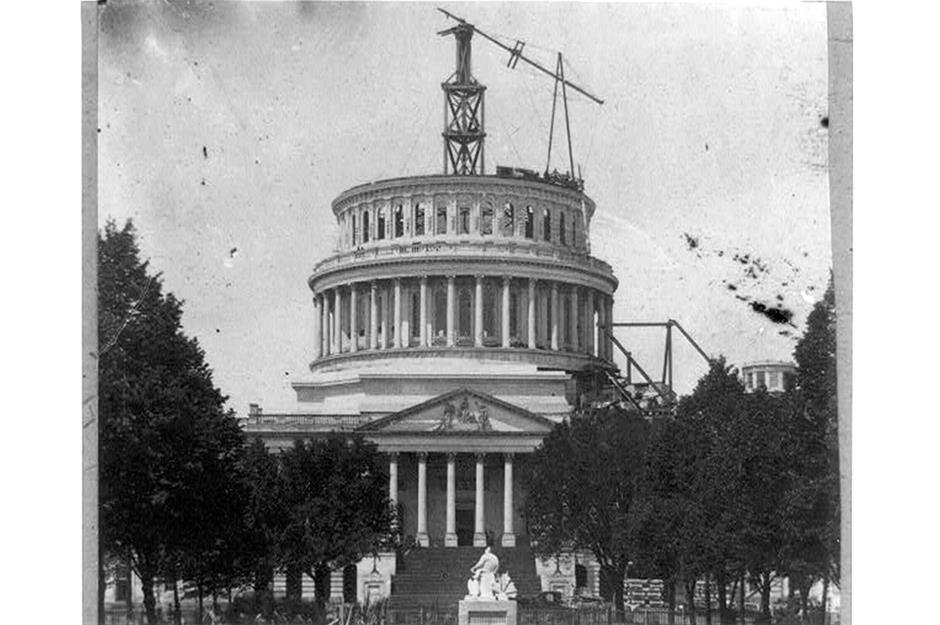
Burned down by the British in 1814 while still incomplete, the main body of the US Capitol was finally finished in 1826 – around the same time that Joseph Niépce was taking what is generally considered the world's first photograph in France. So this photo does not show the Capitol's construction, but its re-construction in the 1860s, during which it gained the famous dome that still pierces the DC skyline.
The Capitol's first dome was a shallow, wooden affair that the building quickly outgrew, so plans were drawn up to replace it with over 4,000 tons of cast-iron. In this image the peristyle is already in place, and a crane waits patiently to begin erecting the dome itself.
Sponsored Content
Golden Gate Bridge, San Francisco, California
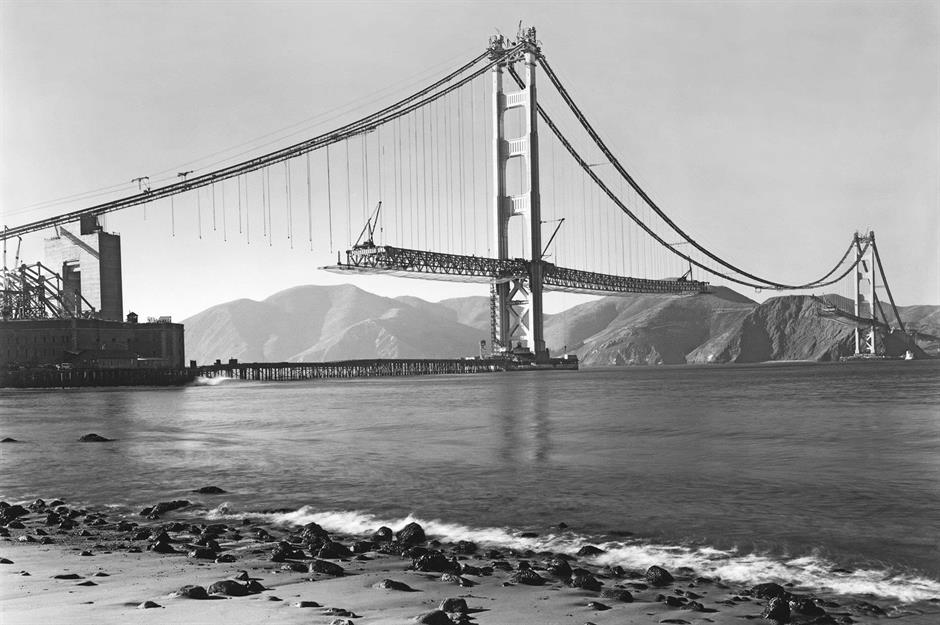
Nicknamed 'the bridge that couldn't be built,' the Golden Gate Bridge remains an astonishing testament to American engineering. The bay's high winds, notorious fog, and mile of turbulent ocean led naysayers to declare the bridge impossible – even as construction began.
Eleven laborers died building the bridge – but that number could have been much higher. It was the first major site in the US to insist on hard hats for workers, while an innovative safety net strung out beneath the bridge saved 19 people – fortunate souls who became known as the 'Halfway to Hell Club.' This photo dates from 1937 – the fourth and final year of construction.
Lincoln Memorial, Washington DC
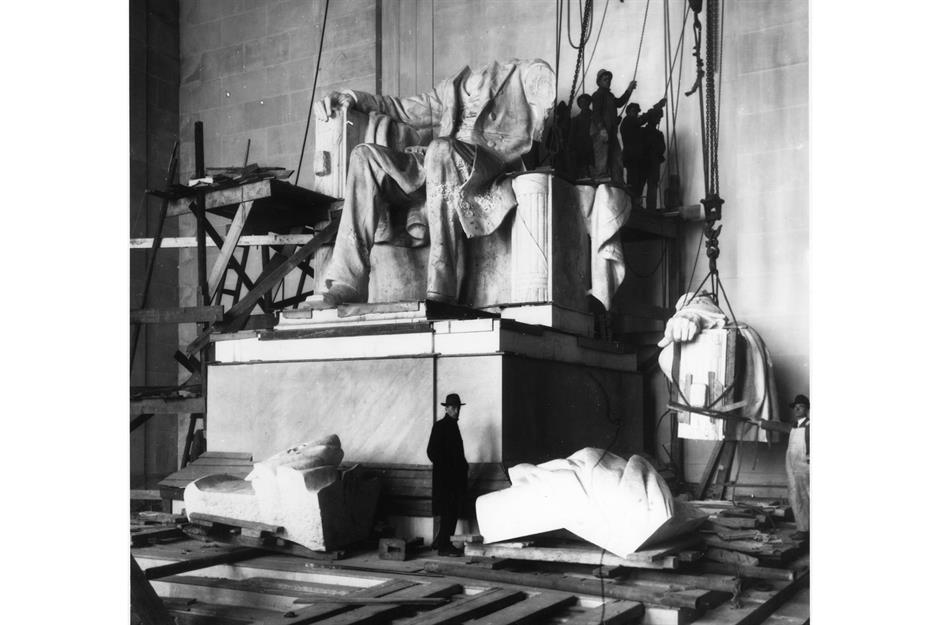
The subject of an intense design competition between rival architects, the Lincoln Memorial (opened 1922) could have been a stepped ziggurat or an Egyptian-style pyramid if John Russell Pope had got his way. Instead, city authorities settled on the grand-but-slightly-bland Neoclassical columns that sit on the National Mall today – the brainchild of the more conventional Henry Bacon. In this 1920 image of Lincoln's famous seated statue, the 16th President is just about to receive his left arm.
Love this? Follow us on Facebook for travel inspiration and more
Hoover Dam, Nevada and Arizona
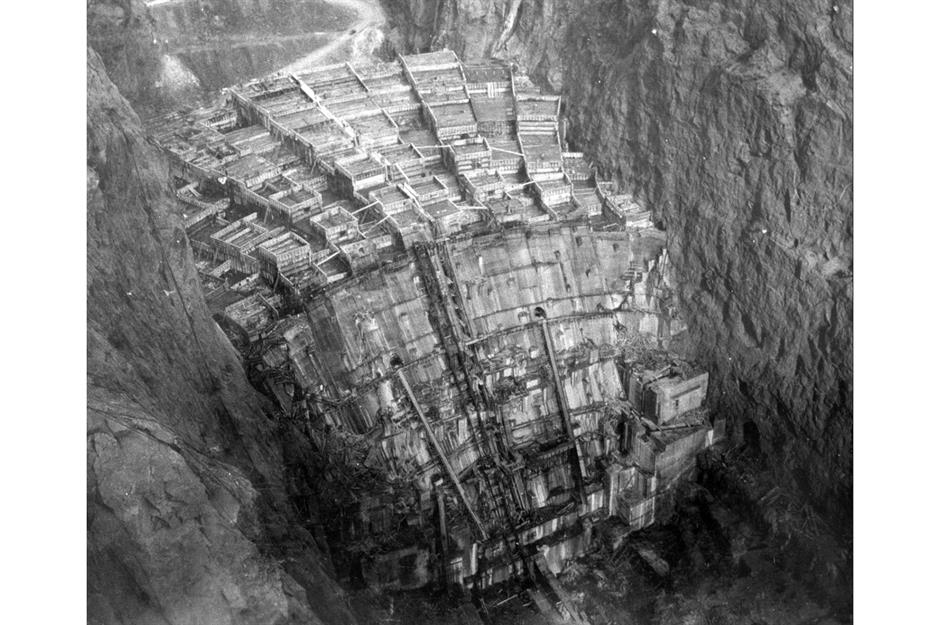
Five years, 21,000 workers, at least 96 on-site fatalities, roughly a billion dollars (adjusted for inflation), and enough concrete to build a four-foot-wide footpath around the entire world: the Hoover Dam was built on a mind-blowing scale. 726 feet tall and 660 feet thick at its base (that's longer than two soccer fields end-to-end), it created what was for decades the largest artificial lake in the world.
Built between 1931 and 1936 during the Great Depression, the dam still provides power to 1.3 million people. This remarkable photo shows an upstream view of construction in 1934, as concrete is poured into the giant blocks that make up the body of the structure.
Sponsored Content
Disneyland, Anaheim, California
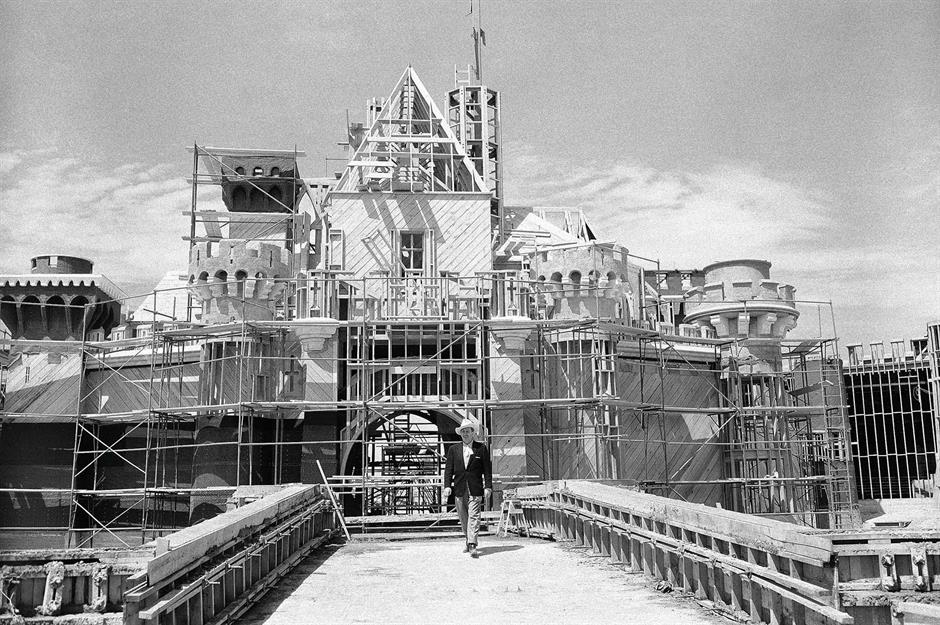
"Disneyland will never be completed," said Walt Disney at the opening of his first park in Anaheim, California, "it will continue to grow as long as there is imagination in the world." The Disneyland brand has since spread across the continents, but the Anaheim park was completed in July, 1955 after a year of construction. This photo shows Disney himself, standing before a still-scaffolded Sleeping Beauty Castle.
Opening day was a disaster – counterfeit tickets saw uninvited guests swarm into the park, asphalt melted in the hot sun, water fountains ran dry, and a gas leak forced three areas to close. But the park rebounded rapidly, and quickly turned vast profits.
Brooklyn Bridge, New York City, New York
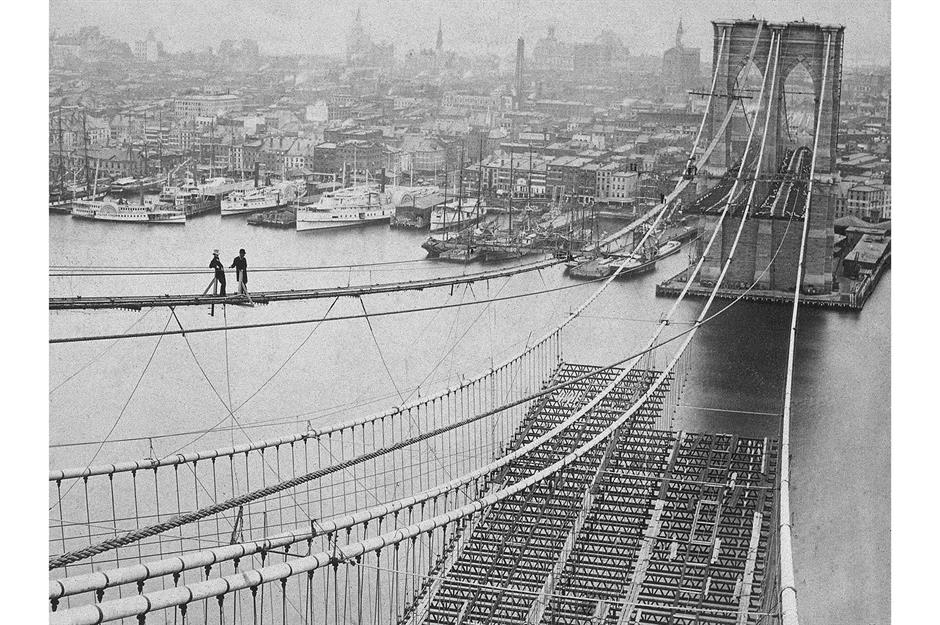
Started in 1869, 64 years before the Golden Gate Bridge, the Brooklyn Bridge showcases how difficult big-ticket engineering could be in the 19th century. Within a year there'd been a terrible fire, and in 1878 a huge steel cable detached from its anchorage and crashed into the river.
Accidents were common and decompression sickness terrorized underwater workers, leaving chief engineer Washington Roebling with lifelong health problems. The bridge opened in 1883 but the chaos continued, with 12 people killed in a stampede just one week later. Nevertheless, the bridge was a technical masterpiece – and briefly the longest suspension bridge in the world.
Statue of Liberty, New York City, New York
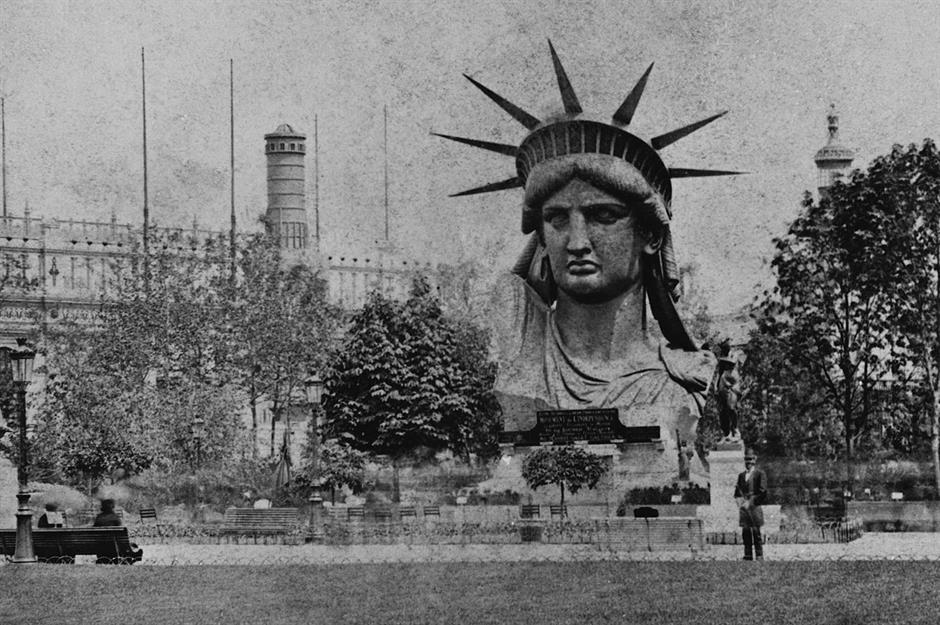
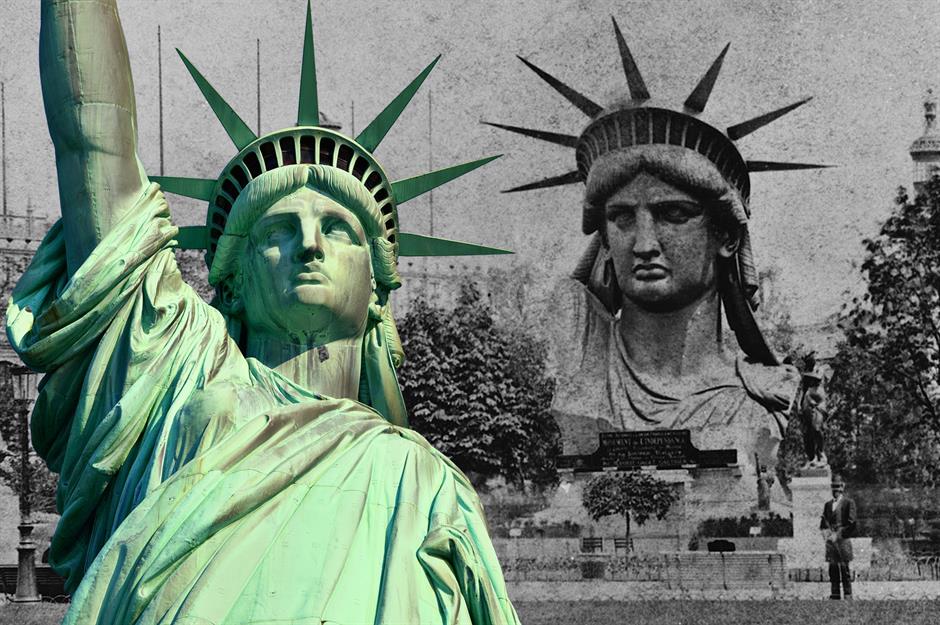
Today the Statue of Liberty is an icon of New York City and of America, but this photo was not taken in New York City – nor even in America. Snapped in 1878, the sculpture's armless, torsoless head stands on a plinth in the Champs-de-Mars in Paris, where it sat in various stages of completion for several years before ever seeing US shores. The statue was built in France as a symbol of French-American friendship, shipped piece by piece across the Atlantic, and finally assembled on Liberty Island in 1886, where it has stood ever since.
Sponsored Content
Space Needle, Seattle, Washington
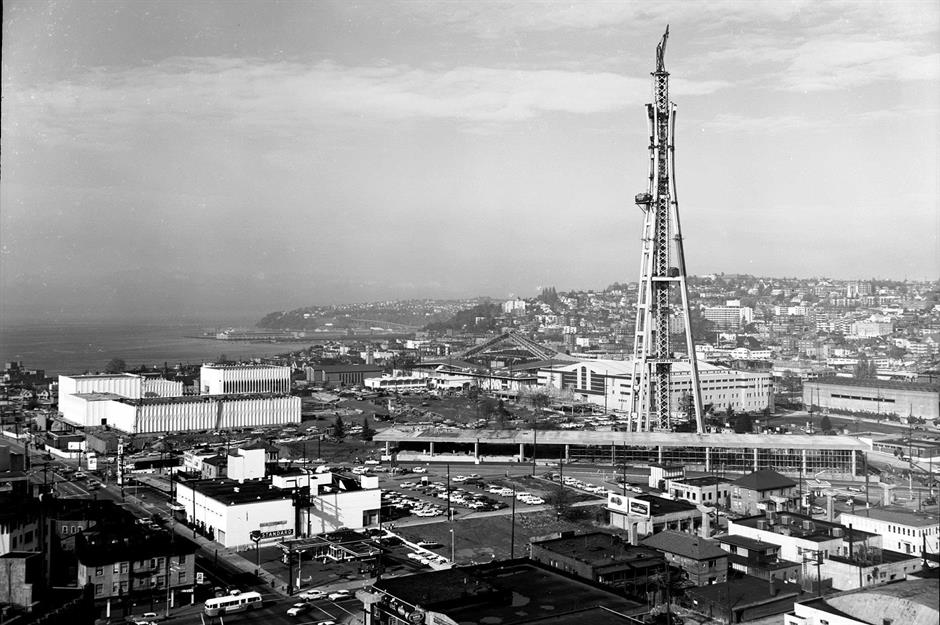
Resembling a section of an extremely steep roller coaster, the unfinished Space Needle already towers far above Seattle in this 1961 shot. Yuri Gagarin became the first man in space that same year, and the tower's futuristic design matched the spaceships and astronauts that were increasingly common on people's TV sets. The skyscraper officially opened on the first day of the Seattle World's Fair in 1962, and during the expo welcomed Elvis Presley, Walt Disney, the Shah of Iran, and Neil Armstrong, seven years before he landed on the Moon.
Washington Monument, Washington DC
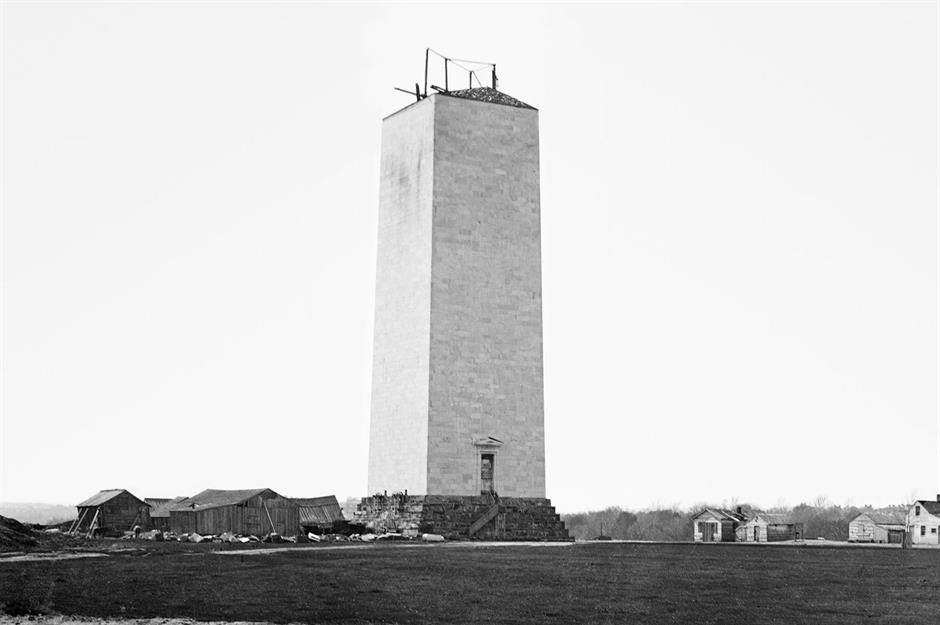
The Washington Monument – a 555-foot obelisk at the base of the National Mall – is not the most architecturally complex entry on this list. But it nevertheless took a very long time to build, with its cornerstone laid in 1848 and its capstone in 1884.
The building's 36,000 stones were assembled across two phases as funding ran out in 1854, leaving it resembling, in the words of Mark Twain, "a hollow, oversized chimney." The government picked up the project 25 years later with marble from a different quarry, and you can still see the change in color part-way up. During the Civil War (pictured), the unfinished monument found work as a slaughterhouse.
Guggenheim Museum, New York City, New York

Frank Lloyd Wright's Guggenheim Museum was a challenge for New Yorkers – both to their tastes and their building codes. Surrounded by square apartment blocks, the controversial building was compared to "an inverted cupcake, a washtub without handles, a giant Jello-mold, and the last outpost of the Maginot Line," and relied on Wright's contacts in the city planning office to get built at all.
Pictured here in 1952 and opened in 1959 (the year of Wright's death), the museum now enjoys widespread acclaim. It's painted light-gray rather than pure-white which Wright felt occurs only rarely in nature. Snow is one example, but Wright associated snow with death.
Sponsored Content
Grand Central Terminal, New York City, New York
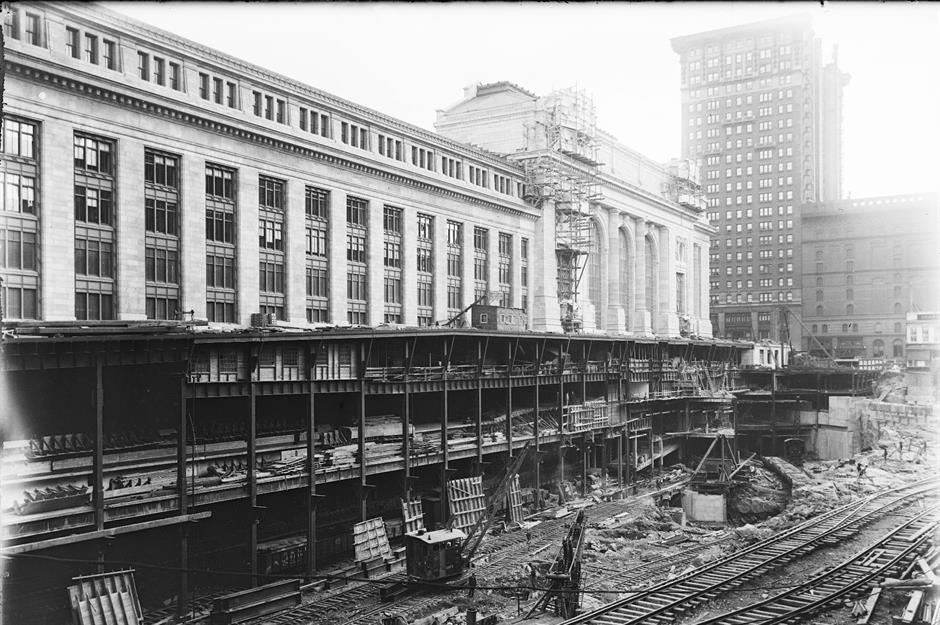
In the early 20th century, train stations were far more than mere commuter hubs. Before mass car ownership they acted as gateways to major cities, and were built as showcases of architectural excellence and prestige. In 1913, 150,000 people attended the opening of the new Grand Central Terminal building, which earned its name with soaring Beaux-Arts columns, high-vaulted marble ceilings, and a cavernous atrium.
In 1899, The New York Times had called the previous Grand Central "a cruel disgrace," but by 1913 it had become "not only the greatest station in the United States, but the greatest station, of any type, in the world." It's pictured here in 1912, shortly before opening.
Flatiron Building, New York City, New York
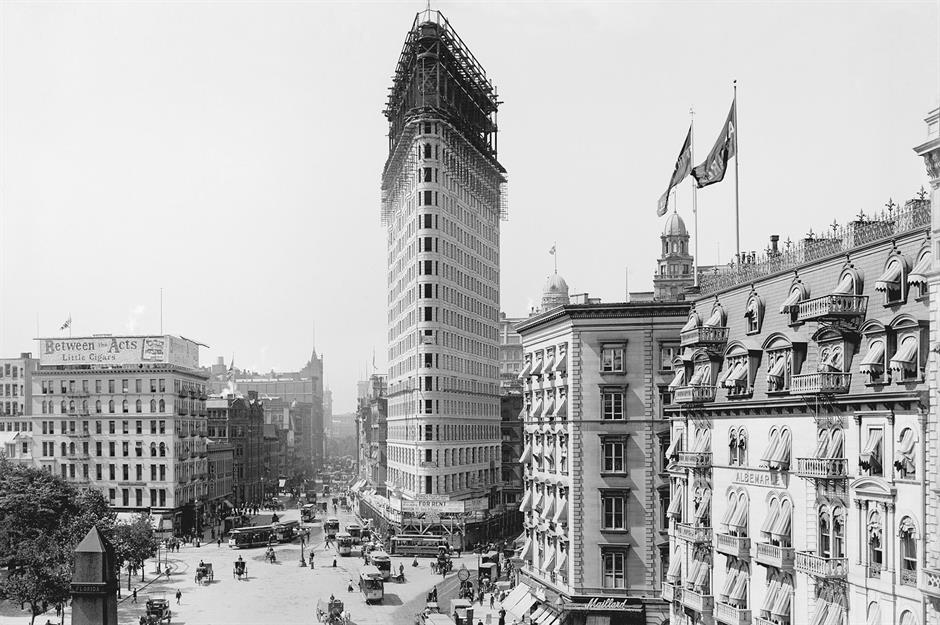
Completed three decades before the Empire State Building reshaped America's skies, the Flatiron Building topped out at a time when horses and carts were still roaming the streets of NYC. One of the city's oldest surviving skyscrapers and a key example of the Beaux-Arts Classicist style, the strange-looking structure was built in three tiers like an ancient Greek column, and is just six and a half feet wide at its narrowest point. Completed in 1902 and pictured here a year earlier, the building remains an icon of New York.
Salt Lake Temple, Salt Lake City, Utah
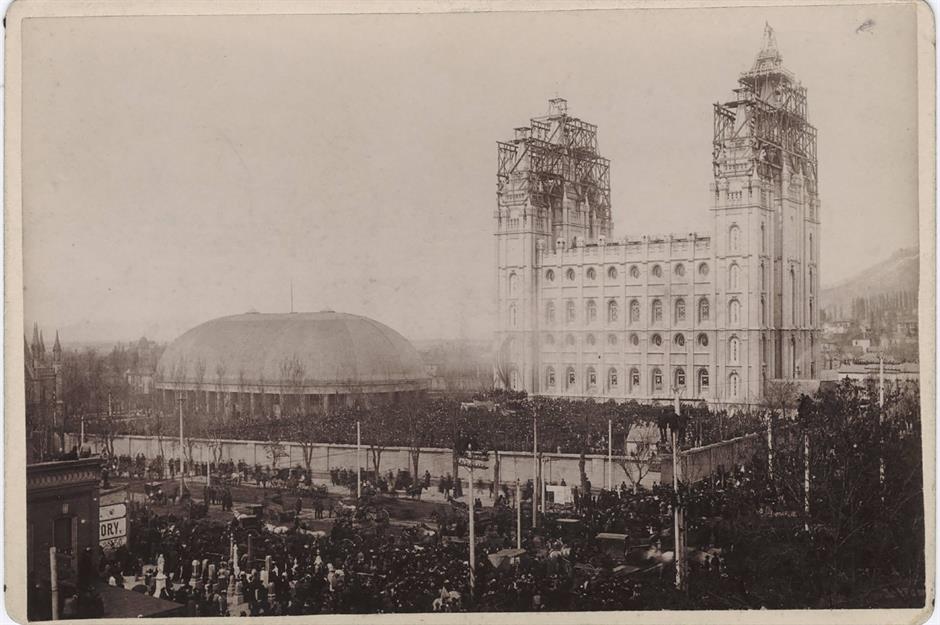
The most important temple in the Mormon religion, the Salt Lake Temple was announced by second president of the Mormon church Brigham Young six years before its ground-breaking ceremony in 1853. Young sent architect Truman Angell to Europe to study the great cathedrals of the Renaissance, and on his return he conjured up a Neo-Gothic, six-spire masterpiece. Built block-by-block from solid granite, the temple took four arduous decades to complete, and is pictured here at the ceremonial placing of its capstone in 1892.
Sponsored Content
Thomas Jefferson Memorial, Washington DC
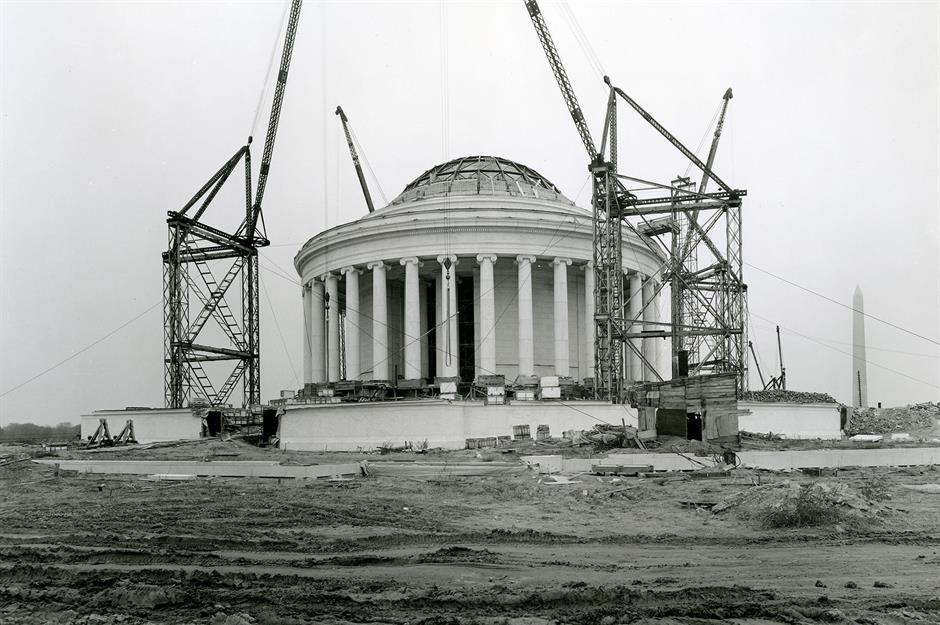
With the Washington Monument finished in 1888 and the Lincoln Memorial completed in 1922, in the 1930s it was Thomas Jefferson's turn to take his place by the National Mall. Started in 1938 and completed in 1943, this 1940 photo captures the Jefferson Memorial roughly half done – the Ionic columns are in place but the dome is still skeletal, and the portico is yet to appear. Jefferson himself loved grand Neoclassical architecture, and the 3rd President would surely have approved.
Griffith Observatory, Los Angeles, California
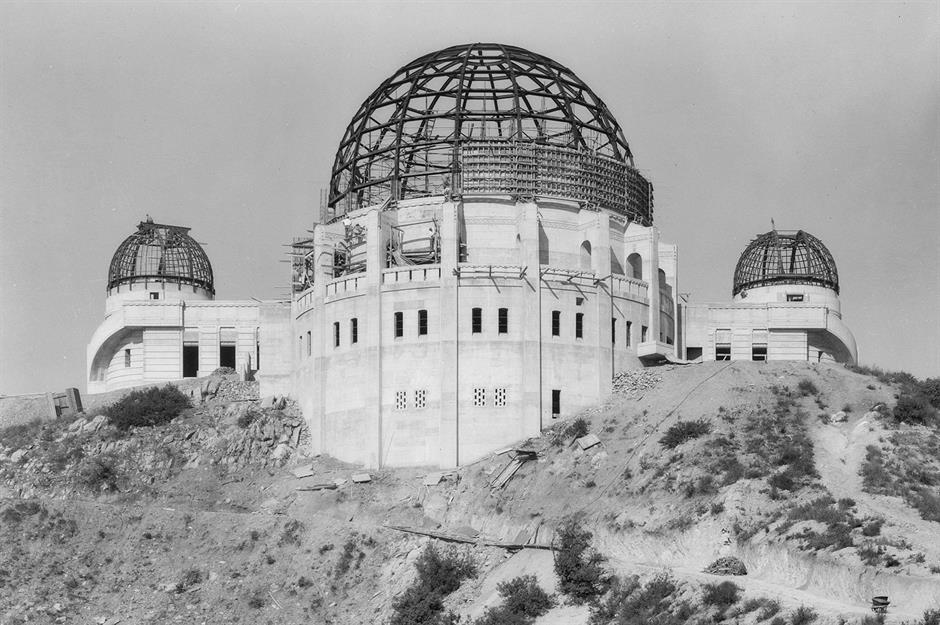
The most visited public observatory in the world, the Griffith Observatory grants glorious views across LA below and the night sky above from its perch in Griffith Park. Tourists and locals alike have flocked here since opening day in 1935 (it's pictured here one year earlier), to peer at planetarium shows and snap pictures of the Hollywood Sign. Two decades later the building found further fame with its star turn in the 1955 James Dean movie Rebel Without A Cause.
Now marvel at these incredible historic photos that show America in the 19th century