15 Amazing Ancient Cities That You Can Still Visit
Ancient urban enigmas
While big sprawling cities are certainly a modern phenomenon, urban centers have existed across the globe for at least 6,000 years. Whether as a result of human conflict or natural disasters many metropolises have faced tough times and yet their ruins stand today, offering a window into a vanished world.
Click through these beautiful images to see the most celebrated ancient cities on Earth.
Machu Picchu, Peru

Machu Picchu, Peru

Sponsored Content
Butrint, Albania

Butrint, Albania

Yaxchilán, Mexico

Sponsored Content
Yaxchilán, Mexico

Timgad, Algeria

Timgad, Algeria

The city’s enormous 3,500-seat amphitheater is largely intact. The library, which dates from the 3rd or 4th century AD, is thought to have once been stocked with around 3,000 papyrus rolls. In the 5th century, the city was sacked by the Vandals and went into decline and abandonment. The Scottish explorer James Bruce then came upon the ruins in late 1765, buried in the desert.
Sponsored Content
Ephesus, Turkey

Set on the western Turkish coast, Ephesus is the Mediterranean’s most complete Greco-Roman city. Founded in the 10th century BC, the city attracted merchants, sailors and pilgrims from the world over. In 133 BC, it became a Roman province and under Augustus Caesar became the first city of Roman Asia. Local legend says it was the last home of the Virgin Mary.
Liking this? Click on the Follow button above for more great stories from loveEXPLORING
Ephesus, Turkey

Ephesus is the site of the Temple of Artemis, one of the Seven Wonders of the Ancient World, and although not much is visible today, the façade of the Library of Celsus, which dates from the time of Emperor Hadrian in the first half of the 2nd century AD, is still beautifully preserved. It was believed to have once contained 12,000 scrolls. The library was destroyed in AD 262 in an earthquake but the façade was rebuilt by archaeologists in the 1970s.
Leptis Magna, Libya

Sponsored Content
Leptis Magna, Libya

Tikal, Guatemala

Tikal, Guatemala

Sponsored Content
Herculaneum, Italy

Like its better-known neighbor Pompeii, Herculaneum on the south-west Italian coast, was also destroyed when Mount Vesuvius erupted in AD 79. However, although Pompeii is architecturally more impressive, it's thought the volcano’s flow of dust and ash helped preserve Herculaneum’s buildings to a higher degree. The regular streets, houses, shops and brothels provide a fascinating snapshot of everyday Roman life.
Herculaneum, Italy

The city’s wealthy elite lived in fine villas embellished with beautiful mosaics and multicolored marble. Life began as normal on that day in late summer AD 79 and ended with this urban center, along with most of its population, being tragically wiped out. So much of the city, including the remains of some inhabitants, are perfectly preserved in this haunting time capsule.
Sigiriya, Sri Lanka

Sponsored Content
Sigiriya, Sri Lanka

Sigiriya, Sri Lanka

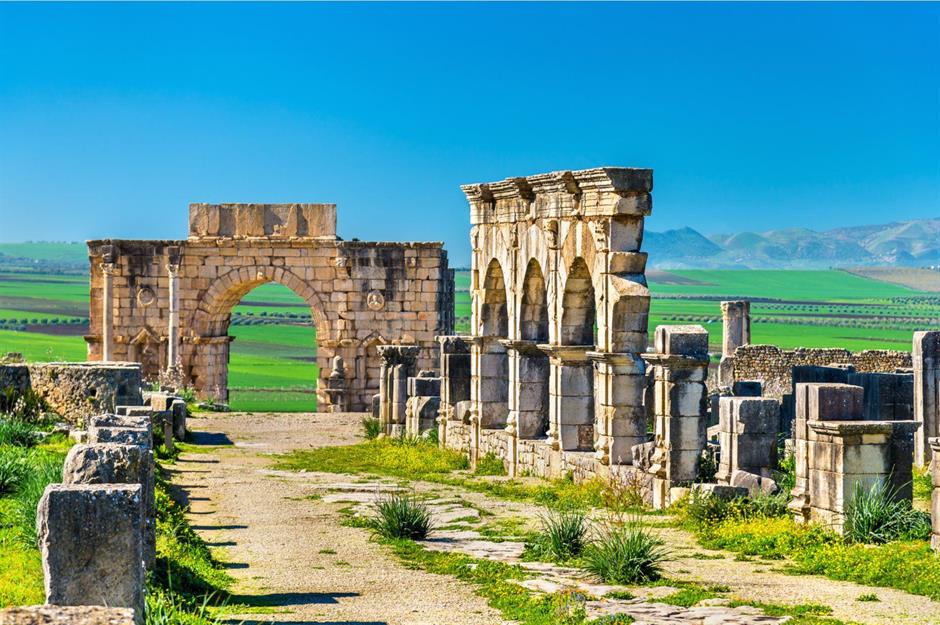
Volubilis, Morocco

Sponsored Content
Volubilis, Morocco

Ostia Antica, Italy

Ostia Antica, Italy

Ostia Antica grew to 50,000 inhabitants in the 2nd century and 100,000 in the 3rd century. The city had a lighthouse, theater and baths and the earliest synagogue ever found plus residential buildings, taverns and communal toilets. The city was mentioned by St Augustine in the late 4th century but it was already going into decline as the port silted up. Repeated invasions by Arab pirates further weakened commerce and by the 9th century it had been completely abandoned.
Sponsored Content
Hampi, India

Hampi, India

Dating from the 14th to 16th centuries, Hampi was the capital of the powerful Vijayanagar empire. The intricately carved decorations, ornate palaces and sophisticated water irrigation system that directed water around the city attest to its former glory. These magnificent Elephant Stables consist of 11 domed chambers and are a wonderful example of Indo-Islamic architecture.
Ayutthaya, Thailand

Sponsored Content
Ayutthaya, Thailand

Petra, Jordan

Petra, Jordan

The huge 1st-century AD theater was carved out of solid rock and has three horizontal sections of seats separated by passageways and seven stairways. The Romans took control of the city in AD 106 and annexed the whole area. They ruled until the 4th century when an earthquake destroyed many buildings. The Byzantines then took over but the city was abandoned in the 8th century.
Liked this? Click on the Follow button above for more great stories from loveEXPLORING