The Top 30 New UNESCO Locations You'll Want To Visit
Heritage heroes
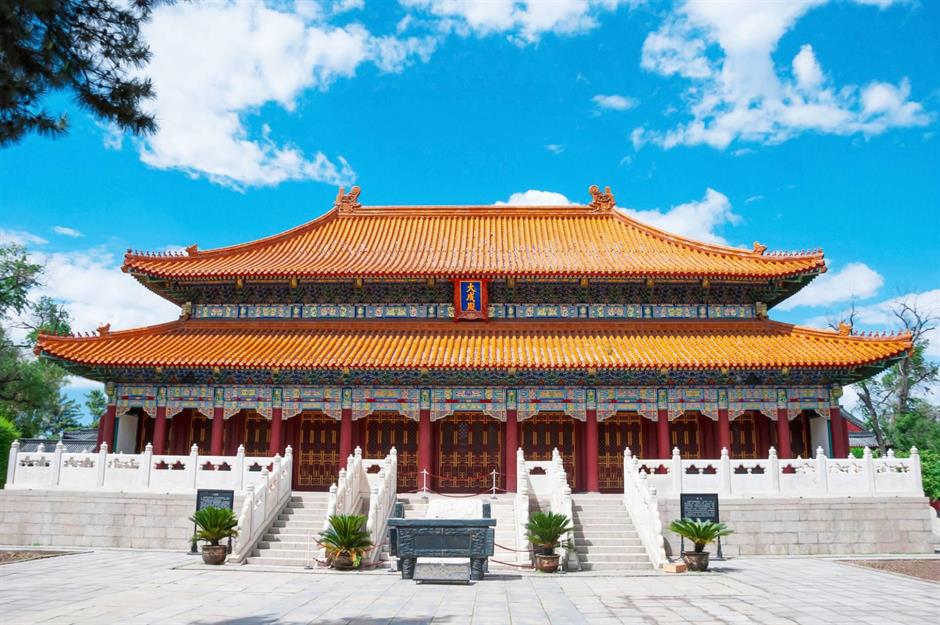
Almost every year since 1978, UNESCO has added new natural and cultural marvels to its World Heritage List. In order to preserve these attractions and destinations, this accolade is intended to provide protection against climate change and human development, as well as educating people about why these places are so special. As we await news of 2024’s inscriptions, take a look at the most stunning World Heritage Sites to be designated in recent years, from Viking-era fortresses to lava-carved landscapes and sobering memorials.
Click through this gallery to see our ranking of the best new UNESCO World Heritage Sites inscribed since 2021...
30. Cold Winter Deserts of Turan, various

Comprising 14 composite parts across the arid plains of Kazakhstan, Uzbekistan and Turkmenistan, this UNESCO property is a land of extremes. Here, in the temperate zone of Central Asia between the Caspian Sea and the Turanian high mountains, winters can be unfathomably cold while summers are surprisingly hot. Despite this hostile climate, life has found a way to survive here, with the diverse desert ecosystems supporting a wide range of hardy animals and plants.
29. The Persian Caravanserai, Iran

Comprising more than 50 different caravanserais, this UNESCO property honors the traditional roadside inns that lie along the ancient highways of Iran. Built to provide shelter and sustenance to traders, travelers and pilgrims traversing routes like the fabled Silk Road, these caravanserais became melting pots and meeting places for cultures, crafts and ideas. The individual examples chosen by UNESCO for World Heritage Site status vary wildly in time and place, built over several centuries and spread across thousands of kilometers
Sponsored Content
28. Hopewell Ceremonial Earthworks, Ohio, USA

Built between 2,000 and 1,600 years ago along the tributaries of the Ohio River, the Hopewell Ceremonial Earthworks are the Buckeye State’s only UNESCO World Heritage Site. Comprising eight earthen enclosures constructed by the Indigenous Hopewell culture, the square, circular and octagonal earthworks are remarkably geometrically precise. Perfectly aligned with the solar and lunar cycles, this ancient monument would have been used as a gathering place for worship and social occasions.
27. Frontiers of the Roman Empire – The Lower German Limes, Germany and the Netherlands

Between the first and fifth centuries AD, this military site marked the border between Germany and the Netherlands. Extending for around 249 miles along the left bank of the Lower Rhine River, the site has 102 components remaining from the former frontiers, including military bases, forts, canals, harbors and towns. Almost all of these remains are buried underground – pictured is a recreation of the known remains of a stone fort.
26. Modernist Kaunas: Architecture of Optimism, 1919-1939, Lithuania

Kaunas, a European Capital of Culture in 2022, had been a UNESCO City of Design for eight years before being added to the World Heritage Site register in 2023. While its medieval old town often gets all the glory, the part of Kaunas designated by UNESCO celebrates the modernist architecture of its Naujamiestis (New Town) and Zaliakalnis (Green Hill) neighborhoods. It showcases how Kaunas, which served as Lithuania’s provisional capital between the First and Second World Wars, quickly and creatively urbanized.
Sponsored Content
25. Settlement and Artificial Mummification of the Chinchorro Culture in the Arica and Parinacota Region, Chile

There are three aspects to this UNESCO site. There’s the Faldeo Norte del Morro de Arica and Colon 10, which are both in the city of Arica on the northern coast. Then there’s Desembocadura de Camarones, located in a rural area some 62 miles south. They have been recognized for preserving the hunter-gatherer lifestyles of people living in the area between 5450 and 890 BC. The archaeological sites show evidence of the earliest known mummification techniques.
24. The Slate Landscape of Northwest Wales, UK

A region encompassing the valleys of Snowdonia in the county of Gwynedd, northwest Wales, became the UK’s 33rd UNESCO World Heritage Site in 2021. During the Industrial Revolution (1780-1914), it became a hub for slate mining and was even said to have 'roofed the world' during the 19th century, given just how many buildings were decked out with slate from here. It also acted as a blueprint for slate quarries all over the world.
23. The Great Spa Towns of Europe, various

Considered the innovators of modern spa breaks, 11 'spa towns' across Europe were recognized by UNESCO in 2021. These include: Karlovy Vary in Czechia (pictured), Bath in the UK, Montecatini Terme in Italy and others in Belgium, Austria, Germany and France. Becoming popular in the 18th and 19th centuries, these towns pioneered a new type of holiday based on health, leisure and luxury.
Sponsored Content
22. ESMA Museum and Site of Memory, Argentina

Housed within the old officers’ quarters of the Former Navy School of Mechanics in Buenos Aires, this UNESCO property was the Argentine Navy’s main secret detention center during the so-called ‘Dirty War’ of 1976-83, which saw the country’s civil-military dictatorship violently target its left-wing critics. Those that opposed the regime were often held captive, interrogated, tortured and murdered in the bowels of the ESMA (Escuela Superior de Mecanica de la Armada), which is open to the public today.
Liking this? Click on the Follow button above for more great stories from loveEXPLORING
21. Amami-Oshima Island, Tokunoshima Island, Northern part of Okinawa Island and Iriomote Island, Japan

This remote chain of uninhabited islands, situated southwest of Japan, was selected by UNESCO in 2021 for its high level of biodiversity. Comprising 42,698 hectares of subtropical rainforest, the region is spread across four isles: Amami-Oshima, Tokunoshima, Iriomote and the northern section of Okinawa. Amid mangrove forests, mountains and rock pools you’ll find species that exist nowhere else on Earth, from the endangered amami rabbit to the ryukyu long-haired rat.
20. Cordouan Lighthouse, France

Dubbed 'the king of lighthouses', the Cordouan Lighthouse was built at the end of the 16th century and at the time was seen as 'a masterpiece of maritime signaling,' according to the UNESCO committee. The beacon, which is found on a shallow, rocky plinth at the mouth of the Gironde estuary, is covered in detailed gargoyles and engravings.
Sponsored Content
19. National Archaeological Park Tak'alik Ab'aj, Guatemala

While Tikal might be the most famous pre-Columbian archaeological site in Guatemala, it is far from the only one. Recognized by UNESCO in 2023 for its cross-cultural heritage, Tak'alik Ab'aj witnessed the transition from the Olmec civilization to the early Maya over the course of 1,700 years. Scattered across nine natural terraces, the ruins include temple mounds, ball courts, stone steps and an array of sculptures depicting gods with animal features. Now a national park, Tak'alik Ab'aj remains a sacred space for Indigenous groups today.
18. Viking-Age Ring Fortresses, Denmark

Five distinct sites fall under the banner of this collective UNESCO property. The doughnut-shaped fortresses at Aggersborg, Fyrkat, Nonnebakken, Trelleborg (pictured) and Borgring are believed to have been built around AD 970, each at a strategic point close to important land or sea routes. Conceived during the reign of King Harald 'Bluetooth' Gormsson, the forts represent the formidable might of the Jelling Viking dynasty, whose territory stretched from present-day Germany through Denmark into Sweden and Norway at its height.
17. Gaya Tumuli, South Korea

Dating back to the days of the Gaya Confederacy, a polity that formed in the southern corner of the Korean Peninsula between the 1st and 6th centuries AD, this new World Heritage Site recognizes seven separate archaeological cemeteries filled with burial mounds (tumuli.) Each cemetery corresponds to a different territory within the confederacy and contains the tombs of its most important figures. This image shows the Okjeon Tumuli in Hapcheon-gun.
Sponsored Content
16. Volcanoes and Forests of Mount Pelee and the Pitons of Northern Martinique, France

Martinique, a Caribbean island and overseas department of France, has a nuanced relationship with nature. In 1902, Mount Pelee catastrophically erupted, wiping out around 15% of the island’s population and decimating the port of Saint-Pierre. It is thought to be the deadliest volcanic event of the 20th century. But, as is the great paradox of volcanoes, Martinique’s fiery mountains also give and support life – their fertile slopes are lush with emerald forests and mesmerizing plants endemic to the Lesser Antilles.
15. Tr'ondek-Klondike, Yukon and Northwest Territories, Canada

Located in the remote subarctic reaches of northwest Canada, Tr'ondek-Klondike falls within the homeland of the Tr'ondek Hwech'in First Nation people. Eight component sites – Fort Reliance; Forty Mile; Denezhu Graveyard; Fort Cudahy and Fort Constantine; Tr'ochek; Dawson City (pictured); Black City and Moosehide Village – were chosen by UNESCO for the property. These sites reflect how the Klondike Gold Rush of the late 19th century (and the colonizing period that followed) precipitated immense change for the land’s Indigenous residents.
14. Memorial sites of the Genocide, Rwanda

According to UNESCO, the Rwandan genocide of 1994 claimed the lives of an estimated one million people, mostly of the Tutsi minority group. Now, four memorial sites dedicated to its victims – at Nyamata, Murambi, Gisozi and Bisesero (pictured) – have collectively been made a World Heritage Site. Two of the memorials, Nyamata and Murambi, commemorate massacres committed on the hills on which they stand, while more than 250,000 victims lie entombed at Gisozi in Rwanda’s capital Kigali.
Sponsored Content
13. Deer Stone Monuments and Related Bronze Age Sites, Mongolia

Found on the slopes of the Khangai Ridge in central Mongolia, deer stones tell the fascinating stories of late-Bronze Age Eurasian nomadic peoples. The monuments, thought to have been erected between 1200 and 600 BC, have been attributed to ceremonial and funerary practices thanks to the presence of mass burial mounds (khirgisuurs) and sacrificial altars nearby. Engraved with abstract images of stags, these stones are the most significant surviving structures from a long-disappeared culture.
12. Getbol, Korean Tidal Flats, South Korea

Looking stunningly vibrant in this photograph, the tidal flats of the Getbol in southwestern South Korea were chosen for their rich biodiversity. Spanning five regions – Seocheon Getbol, Gochang Getbol, Sinan Getbol and Boseong-Suncheon Getbol – the natural landscapes provide an essential habitat for migratory birds, including many threatened species.
11. Quanzhou: Emporium of the World in Song-Yuan China, China

The ancient city of Quanzhou in eastern China was once one of the world’s busiest ports. Serving as a vital hub for exchange in the Song (AD 960-1279) and Yuan (AD 1271-1368) dynasties, the coastal city is home to 22 historic sites and monuments which have been recognized within this UNESCO World Heritage Site. They include temples, statues, former mosques, pagodas and port ruins.
Sponsored Content
10. Ivindo National Park, Gabon

Named after the network of blackwater rivers which traverses it, the 300,000-hectare Ivindo National Park is one of the most beautiful and biodiverse landscapes in Gabon. It’s home to a vast range of endangered and threatened species, including the critically-endangered slender-snouted crocodile and forest elephant. The Chutes de Kongou, a set of stunning waterfalls with a total drop of more than 164 feet, are one of its highlights.
9. As-Salt, Jordan

The ancient city of As-Salt in west-central Jordan has preserved many of its stunning limestone buildings from the Ottoman period. They are renowned for their unique mix of architectural styles: think European Neocolonial and Art Nouveau buildings alongside houses built using traditional, local techniques. The city is also notable for its non-segregated design, showing the culture of tolerance between Muslims and Christians that has developed here.
8. Sacred Ensembles of the Hoysalas, India

Encompassing perhaps the three finest examples of 12th and 13th-century Hoysala-style temples in southern India, this serial property demonstrates unparalleled architectural design. The Hoysala dynasty ruled a vast sweep of India from around AD 1006 to 1346, and their temple style took inspiration from both historic and contemporary Hindu buildings, favoring true-to-life sculptures and intricate carvings. The Keshava Temple at Somanathapura, pictured here, is one of those now under UNESCO protection.
Sponsored Content
7. Mathildenhohe Darmstadt, Germany

Known as the Darmstadt Artists’ Colony in English, the Mathildenhohe Darmstadt was founded in 1899. Located near Frankfurt in southwest Germany, the colony was started to showcase local artworks and 23 artists belonged to it during its heyday. Today, the buildings that survive include the Ernst Ludwig House, designed as a central building to house its first exhibition; and the Sculptor’s Studios, which provided a workspace for creatives.
6. Dholavira: a Harappan City, India

Discovered in 1968 by the archaeologist Jagat Pati Joshi, the ancient city of Dholavira is a window into the ancient Harappan Civilisation. It was inhabited between 3,000 and 1,500 BC, during which time a fortified city and cemetery were built, as well as streets and houses which were stratified to reflect the social order. Excavated between 1990 and 2005, the site has been recognized as one of the best-preserved cities from the period in Southeast Asia.
5. Kaeng Krachan Forest Complex, Thailand

Thailand gained its sixth UNESCO World Heritage Site in 2021 when the Kaeng Krachan Forest Complex was added to the list. The biologically rich forest covers 1,125 square miles of the Phetchaburi and Prachuap Khiri Khan provinces and supports an abundance of wildlife and plants. To name a few, there’s the critically endangered Siamese crocodile, the endangered tiger cat and the vulnerable clouded leopard.
Sponsored Content
4. Bale Mountains National Park, Ethiopia

Covering a swathe of central Ethiopia’s highlands, the Bale Mountains region officially became a national park in 2014. This was followed by UNESCO World Heritage Site status in 2023 – a testament to the park’s stunning natural beauty and biodiversity. Shaped by ancient lava flows, glaciation and the geological majesty of the Great Rift Valley, Bale Mountains National Park is cut by gaping gorges, waterfalls, volcanic peaks, verdant valleys, black lakes and misty forests – truly breathtaking to behold.
3. The Porticoes of Bologna, Italy

In the historic northern Italian town of Bologna, an ensemble of porticoes dating back as far as the 12th century were designated a cultural site in 2021. These column-supported sections of buildings, described as "an expression and element of Bologna’s urban identity" by UNESCO, stretch throughout the city. In fact, the Portico di San Luca is the longest in the world at a whopping 2.4 miles.
2. Trans-Iranian Railway, Iran

Traveling through gorgeous landscapes which include the mountainous Khuzestan region, the Trans-Iranian Railway was considered a masterpiece of engineering when it was completed in 1938. Some 190 tunnels had to be excavated and passes of more than 6,562 feet had to be overcome during the creation of the 865-mile railroad.
Sponsored Content
1. Koh Ker, Cambodia

Located in the north of Cambodia, the archaeological site of Koh Ker comprises several temples and sanctuaries constructed across 23 years in the 10th century AD. Now partially consumed and concealed by the forest that surrounds it, it was once one of two rival Khmer Empire capitals (the other being Angkor), and was the sole capital from AD 928 to 944. According to UNESCO, the sacred complex was probably mapped out in accordance with ancient Indian understandings of the universe.
Now discover the earliest photos of the world's national parks
Liked this? Click on the Follow button above for more great stories from loveEXPLORING