Incredible early images of the UK's biggest cities
A trip down memory lane
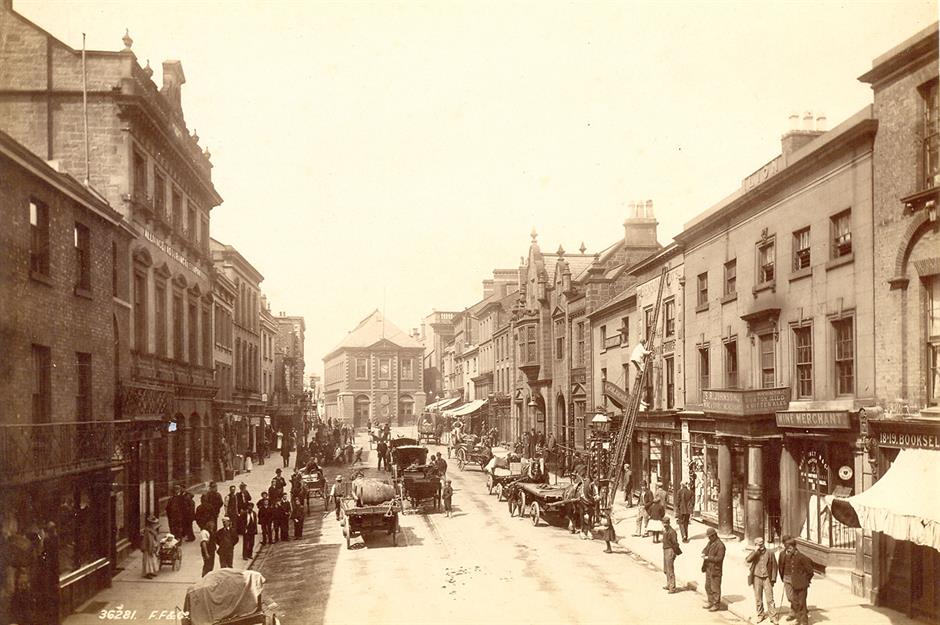
The UK and its amazing past has fascinated us for ages. There's nothing quite like a trip down memory lane to see what decorates and litters the hallways of history, and what lurks down the alleyways of time. We've raked the archives and uncovered some black-and-white photos from yesteryear to help stoke the fires of our imagination, and see what life used to look like in some of England, Scotland, Wales and Northern Ireland's biggest cities.
Read on to see some incredible early photos that capture the UK more than a century ago...
1860: London, England
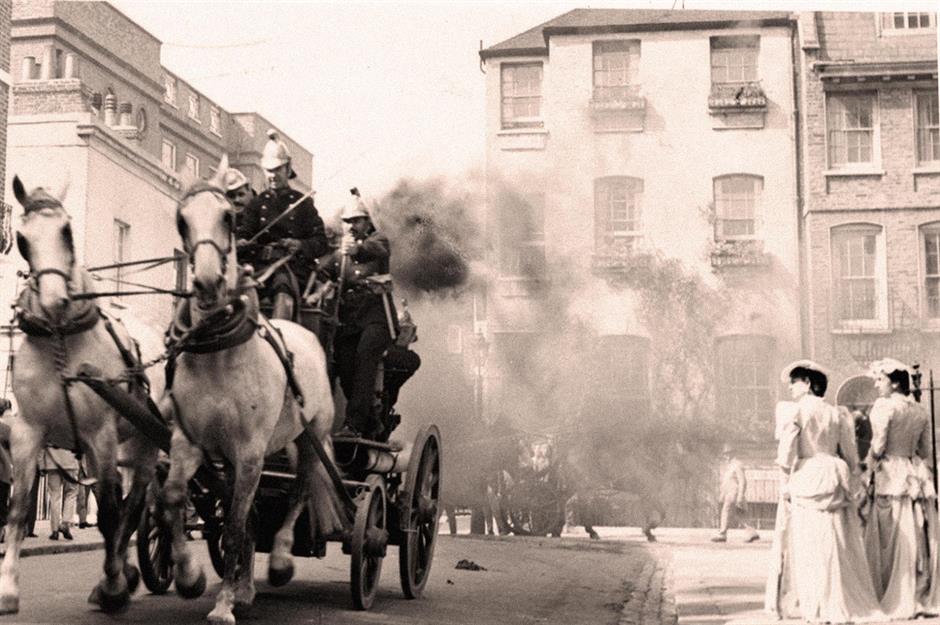
There are millions of photos of London. One of the world's most photographed cities, England's capital is packed with history, royal heritage and tourist sites. Everyone has probably already seen familiar sights such as Buckingham Palace, Big Ben and Piccadilly Circus in old photos, so this image from 1860 shows something quite different.
While it looks like some sort of royal gun salute (and we're not sure it isn't), this is a team of firemen on horse-driven carts. These carriages carried firemen and their equipment until 1921, despite motorised vehicles being introduced a little earlier.
1866: Leeds, England
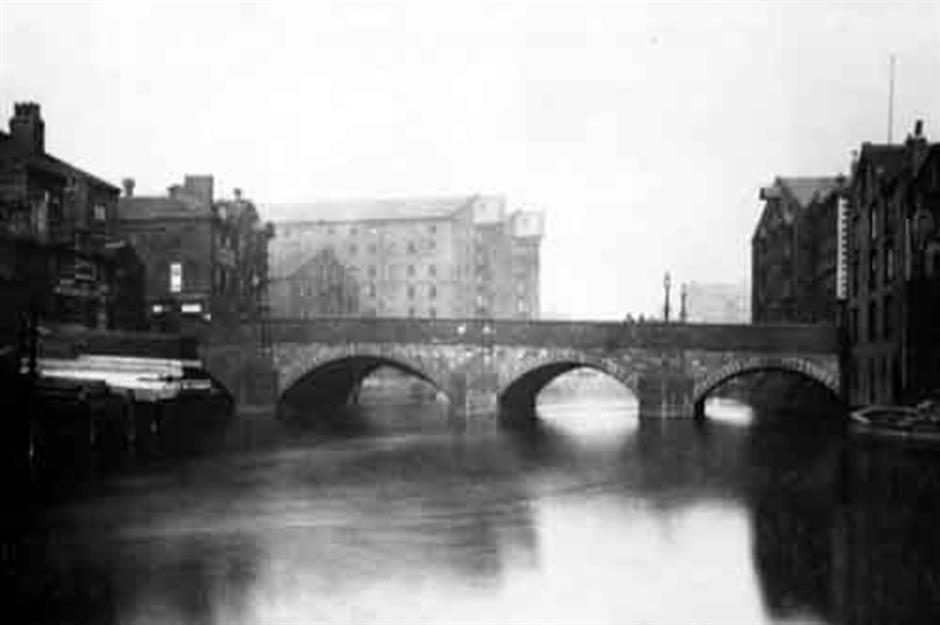
Still one of the most recognisable sights in Leeds' history is its namesake bridge. This photo was taken in 1866, four years before the bridge was rebuilt. Originally constructed in 1730 to replace an existing structure, it is sometimes reported that Louis Le Prince shot the world's very first movie here, on a 16 lens camera in 1888.
Subsequently becoming a northern powerhouse in the Industrial Revolution, these days Leeds is one of the most vibrant and bustling cities in the UK.
Sponsored Content
1868: Glasgow, Scotland
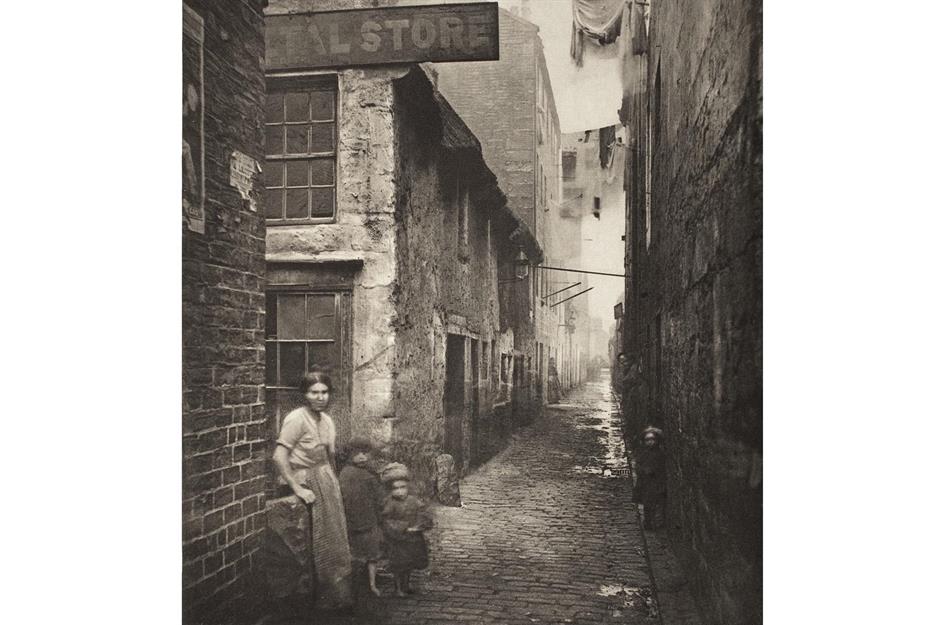
Between 1800 and 1870, Glasgow's population almost quadrupled in size, due mainly to immigrants from the Highlands and Ireland. This inevitably caused the city's streets to burst at the seams. The working class were pushed to the narrow streets of the suburbs and slums, and obvious problems ensued.
This photo of Old Vennel off the High Street in 1868, captures the essence of the appalling conditions. One back stairwell per block was common, and very few of these occupants had water. Many had to rely on a single pump in the street. Pretty similar to York's Shambles, residents could literally reach out to their neighbours on the other side.
c.1880: Derry/Londonderry, Northern Ireland
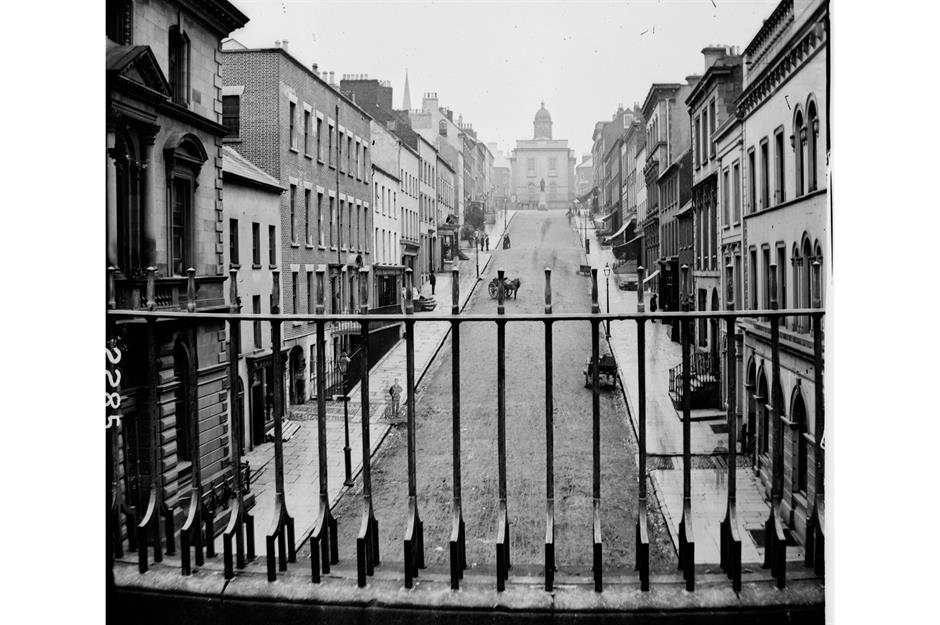
Derry/Londonderry is the only remaining completely intact walled city in Ireland. And Shipquay Street, pictured here around 1880, is considered one of the steepest shopping streets in Europe.
The city began its major growth in the mid-19th century when linen shirt making became the prime industry, and it continues even to this day. The global recognition continued when Amelia Earhart – the first female to fly solo over the Atlantic – landed her plane near here.
1880: Inverness, Scotland
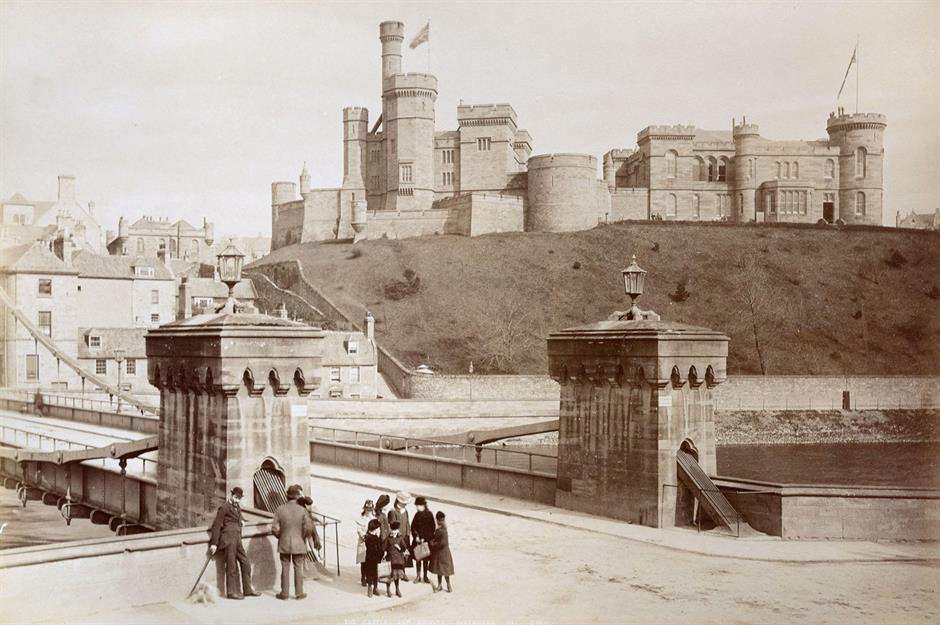
Inverness, the most northern city in the United Kingdom and the gateway to the Scottish Highlands, was only granted city status in the year 2000. These days the population is around 60,000. The castle is, of course, one of Inverness' most iconic landmarks, and the view pictured here in 1880 is from the courtyard, overlooking the River Ness.
The population was around 18,000 at this point in time, and the town-come-city has experienced significant changes. The picturesque location and subsequent opportunities contribute to its development as one of the most thriving cities in Scotland.
Sponsored Content
c.1885: St Davids, Wales
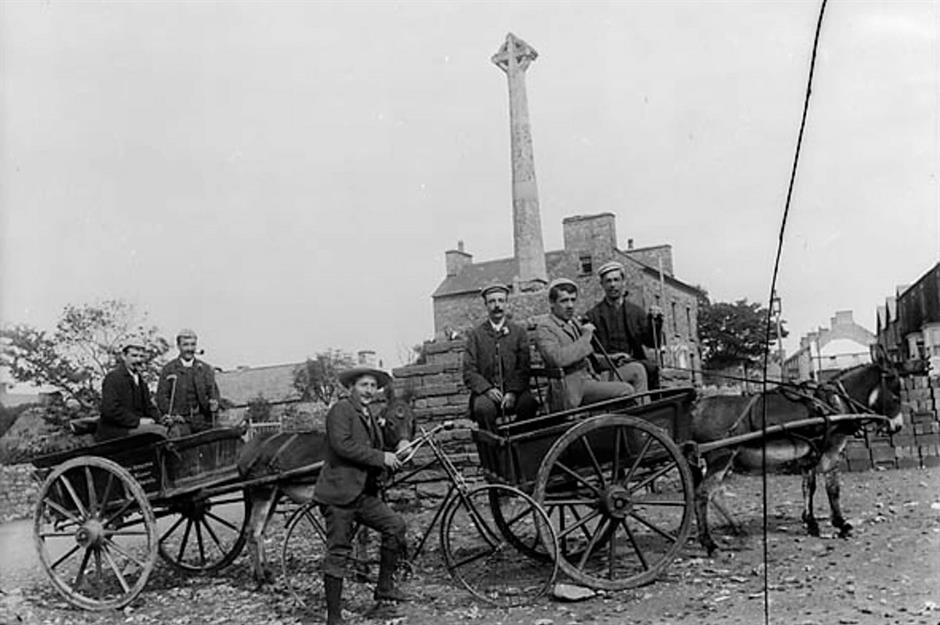
We're sure that everyone has wondered what Britain's smallest city is. Well wonder no more, as this mini metropolis on the west Welsh coast holds this particular honour. Named after the patron saint of Wales, St David, the city boasts his final resting place in its cathedral, which has long been an important site for pilgrims.
This image, captured in around 1885, shows five men on donkey-drawn carts, as well as a man on a bicycle, with the well-known medieval city cross in the background.
c.1885: Edinburgh, Scotland
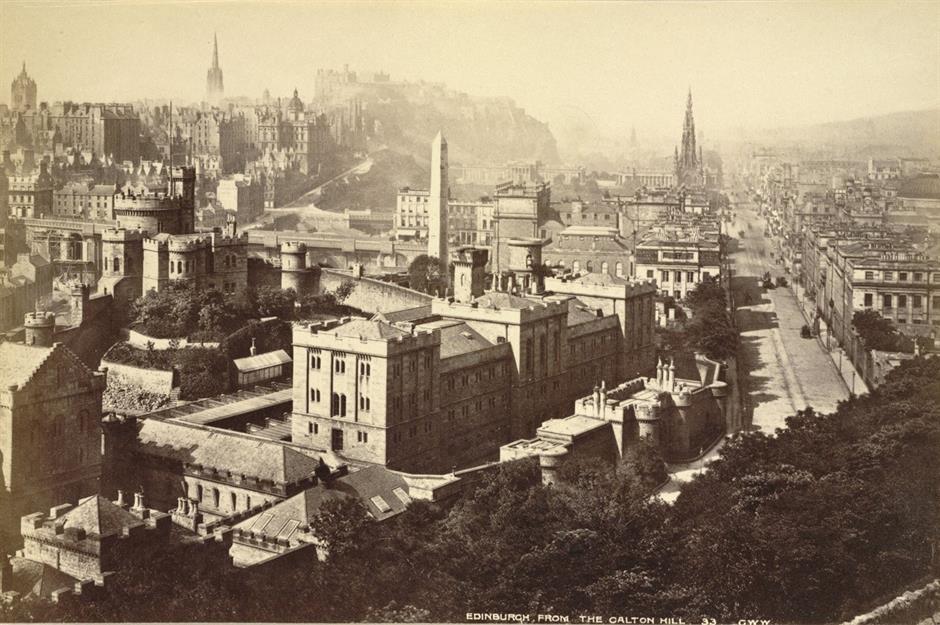
Edinburgh has been Scotland's capital city since the 15th century, and is famous for its iconic castle, the Royal Mile and many other attractions that draw visitors from all around the world. Steeped in history, this is Edinburgh city centre around 1885. Some of these landmarks are still familiar to us today.
In the centre of this photo, you can see Carlton Jail, which has long been demolished. It was the most notorious jail in Scotland, where the buried bodies of hanged murderers still remain.
1890: Dundee, Scotland
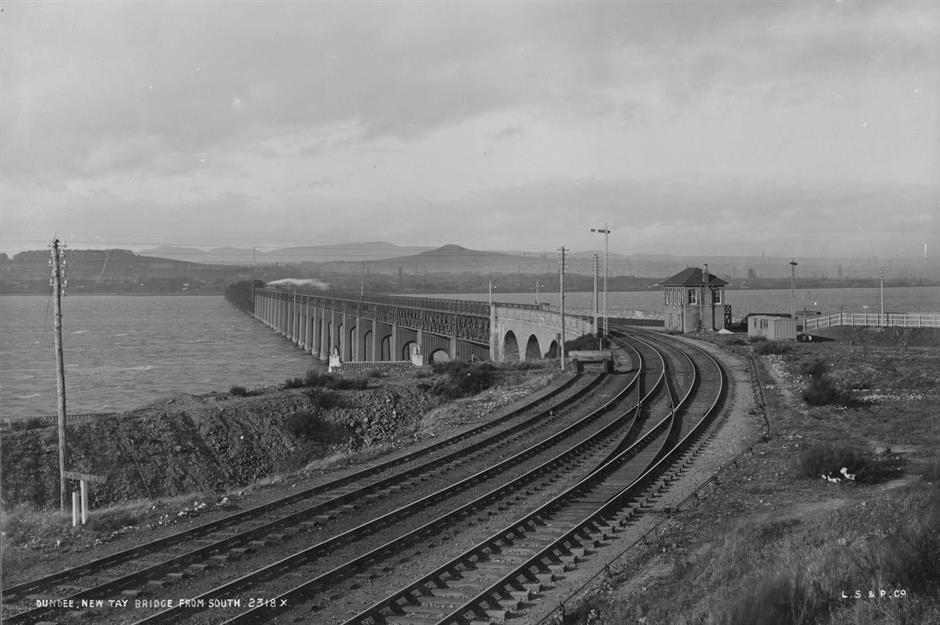
The oldest city in Scotland, Dundee was elevated to city status in 1889. It was known as the city of 'jute, jam and journalism' towards the end of the Victorian era, due to its links to the jute trade, a local woman's discovery of marmalade and being the home of famous children's comic, The Beano.
Dundee also boasted the longest bridge in the world at the time, stretching more than two miles (3.2km) over the Firth of Tay. In December 1878 (the same year it opened), however, tragedy struck and the Tay Rail Bridge collapsed, killing 75 people. A new bridge was constructed in 1887 and can be seen here in the late 19th century.
Sponsored Content
1890: Aberdeen, Scotland
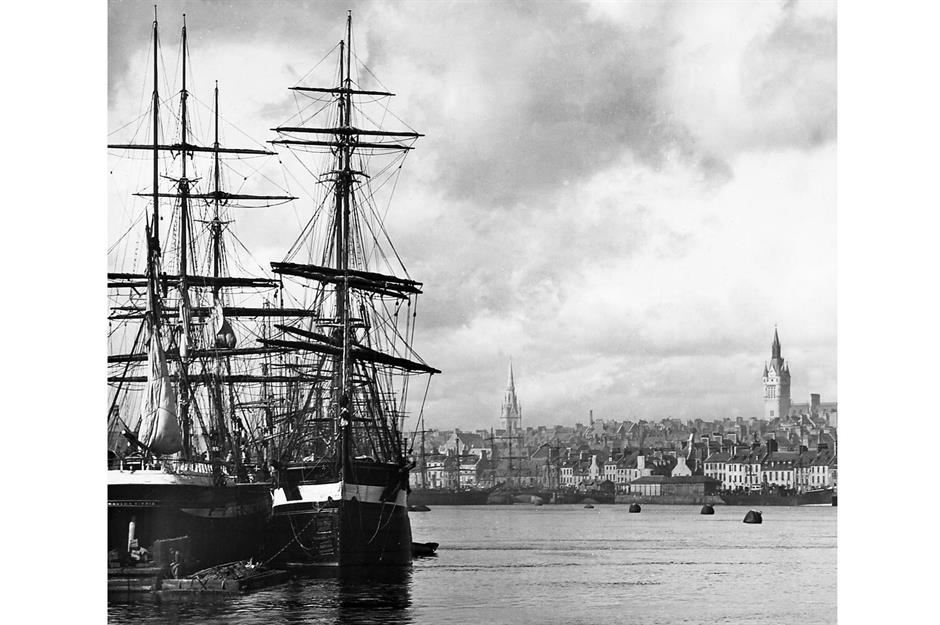
Nicknamed 'the Granite City', Aberdeen is now Scotland's third largest city after Glasgow and Edinburgh. A long-standing connection to the North Sea has seen Aberdeen develop into a city with a thriving fishing industry and offshore oil sector.
Due to the increased shipping demand, especially the advent of steam trawling in the late 19th century, there was a need for extra capacity. The harbour, shown here in 1890, underwent vast developments to accommodate the necessary expansions.
1890: Belfast, Northern Ireland
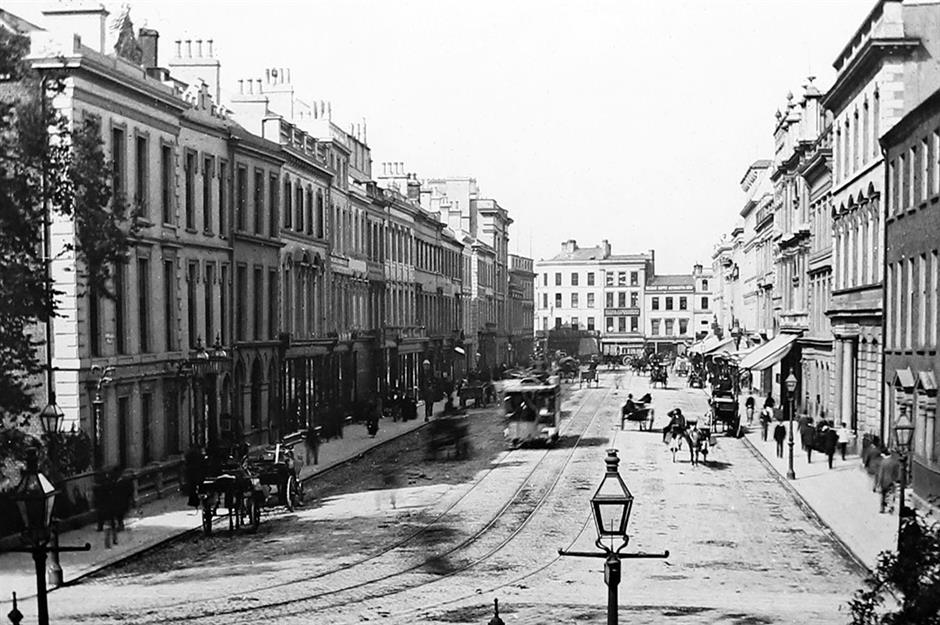
Northern Ireland's capital is over 400 years old, and has developed from a small landing place into a world-renowned harbour. The Harland and Wolff drawing office in the shipyards was where the world's most famous ship, RMS Titanic, was designed, built and launched, before its fateful maiden voyage.
This photograph, from 1890, shows nearby Donegall Place. One of the city's focal points which, at the time, was mainly residential and a popular, fashionable place to live.
1890: Dunfermline, Scotland
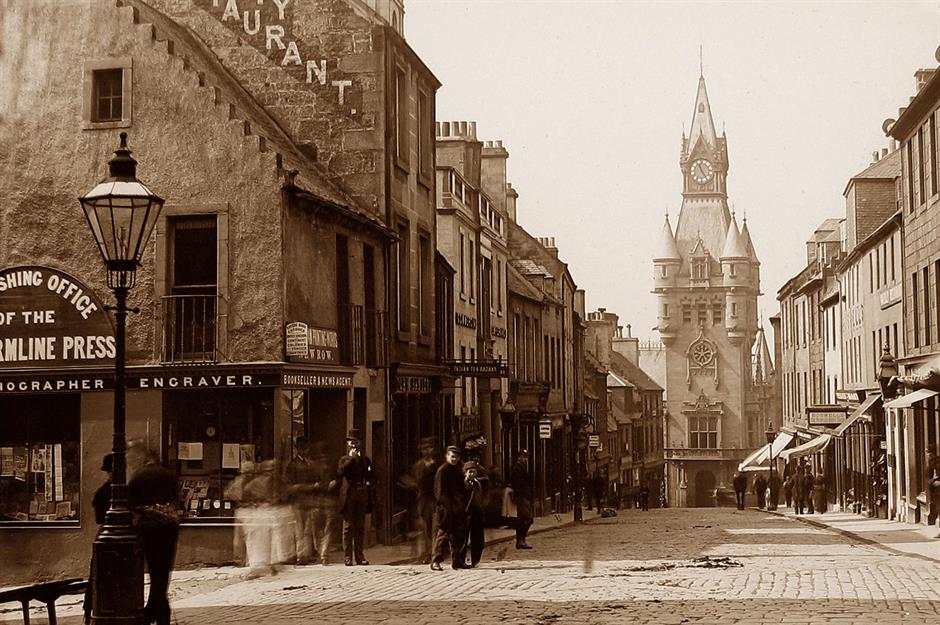
This ancient settlement, on the bends of the River Forth, has an illustrious history at its core. It's the burial place of many monarchs, including Robert the Bruce and Queen Margaret. Once the ancient capital of Scotland, Dunfermline was only granted city status in 2022, as part of Queen Elizabeth II's Platinum Jubilee civic honours.
As well as its royal connections, Dunfermline is perhaps most famous as the birthplace of Andrew Carnegie, who became one of the world's richest men after founding a steel empire. Carnegie set up the first of his 2,500+ libraries worldwide here in Dunfermline. This image shows a typical day on the High Street in 1890.
Sponsored Content
1890: Norwich, England
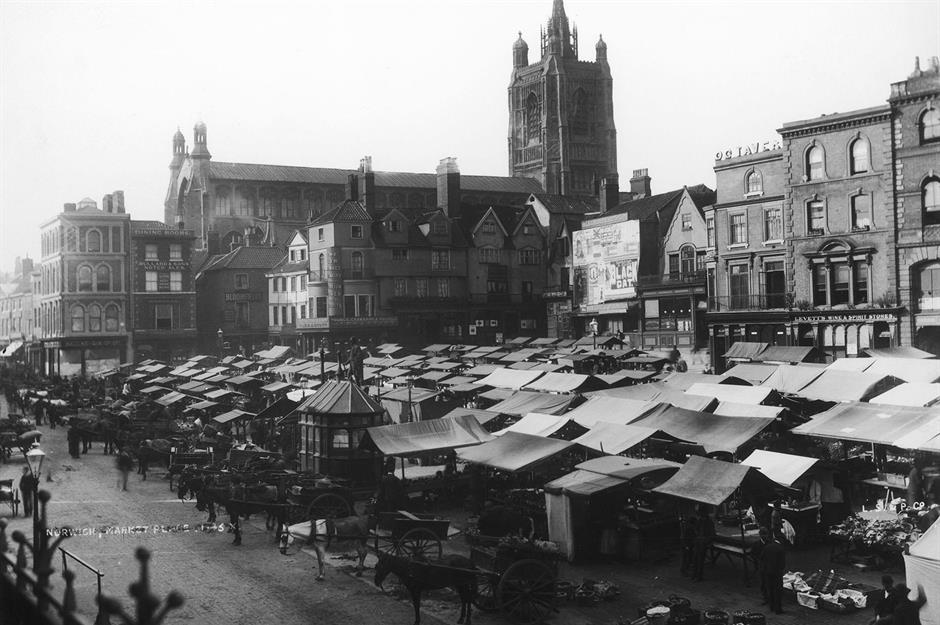
Norwich is an ancient city and probably the most 'complete' medieval city in all of Britain. In fact, Norwich was once second only to London in terms of growth and prosperity. As well as Colman's English Mustard, encircling walls and yellow canaries, Norwich is probably most famous for its award-winning market – the largest outdoor market in Britain.
Pictured here in 1890, at over 900 years old, it is also one of the oldest in the UK. These days, it boasts almost 200 stalls, drawing visitors every day of the week.
c.1890: Newcastle, England
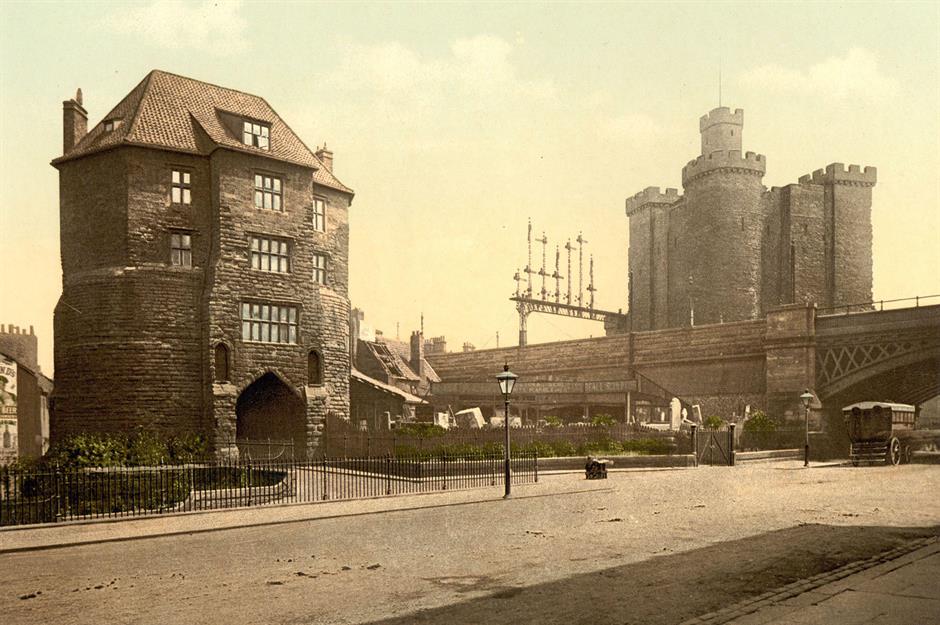
Newcastle is a city with a history dating back to the Roman Empire, and one that's immensely proud of its culture and heritage. The Geordie accent, brown ale, the River Tyne, the football team – it's as vibrant and passionate a place as you can get. How did the name come about? William the Conqueror's eldest son built a castle here to defend against the Scots – back in the 11th century, of course.
By the 16th century Newcastle was the home of coal and, being located on the Tyne, the city literally helped fire the Industrial Revolution into the 1700s and beyond. This photo, dating from around 1890, shows the New Castle, the Black Gate and the Keep.
c.1890: Bangor, Wales
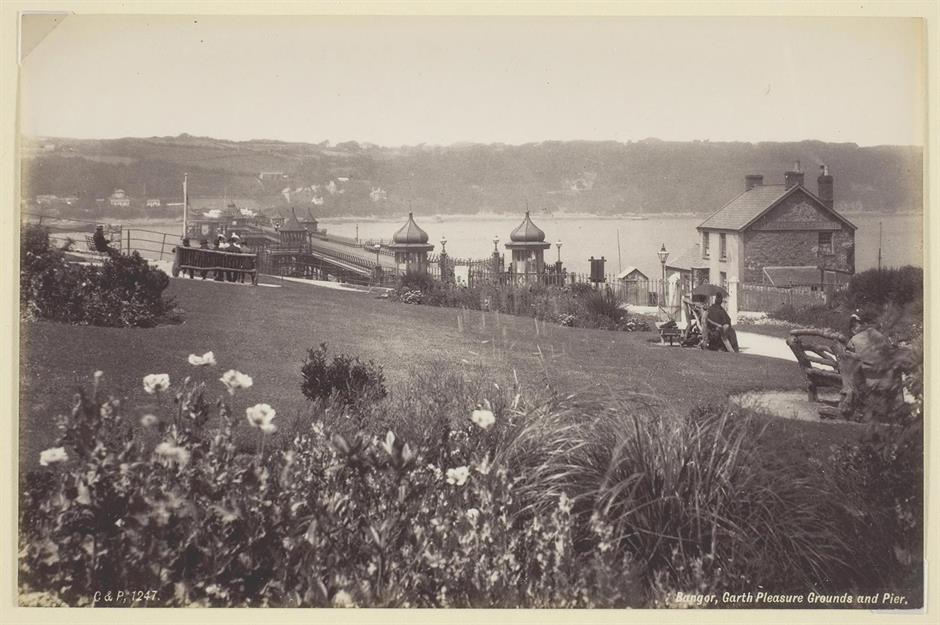
The oldest city in Wales, Bangor in Gwynedd is also one of the UK's smallest. Over half of Bangor's 20,000 population these days is made up of university students, which contributes to the history-meets-modern-day buzz.
The cathedral here dates back to the 6th century, and together with the 19th-century castle and surrounding scenery, it makes the town a pretty special place. Locals will tell you that the Victorian Garth Pier, pictured here in all its late Victorian splendour, is one of the finest in Wales.
Sponsored Content
c.1890: Manchester, England
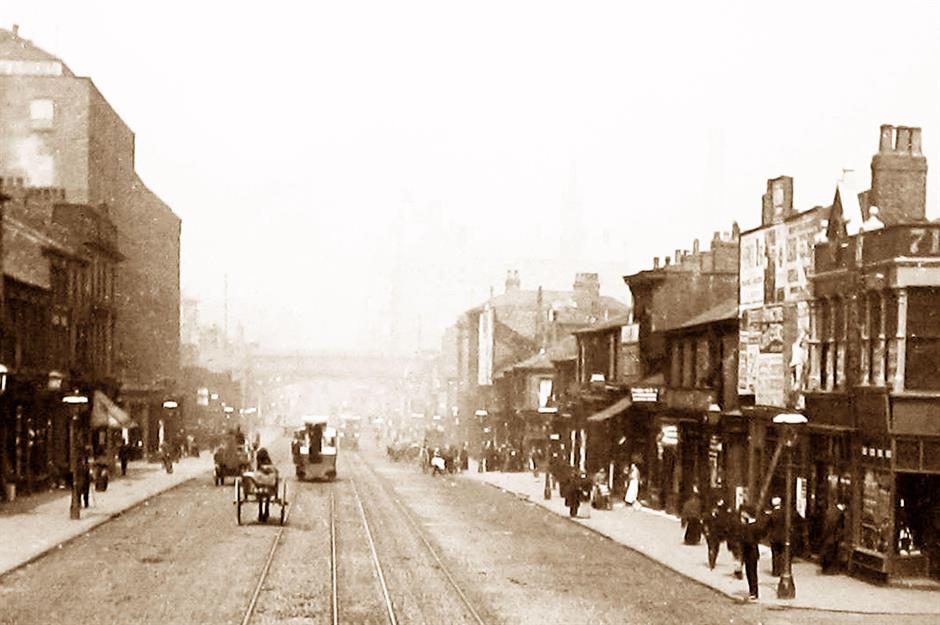
Manchester, in England's northwest, is often dubbed 'the Mecca of the North'. This tag has followed the iconic British city for decades, and its famous Oxford Road (photographed here in around 1890) and surrounding areas are steeped in history. Two of the UK's biggest universities were established here, the atom was split here and the origins of what became the 'Madchester' scene of the Nineties sprung up here.
The famous Halle Orchestra was also formed in this area in 1858, as well as the Manchester School of Art.
c.1890: Cardiff, Wales
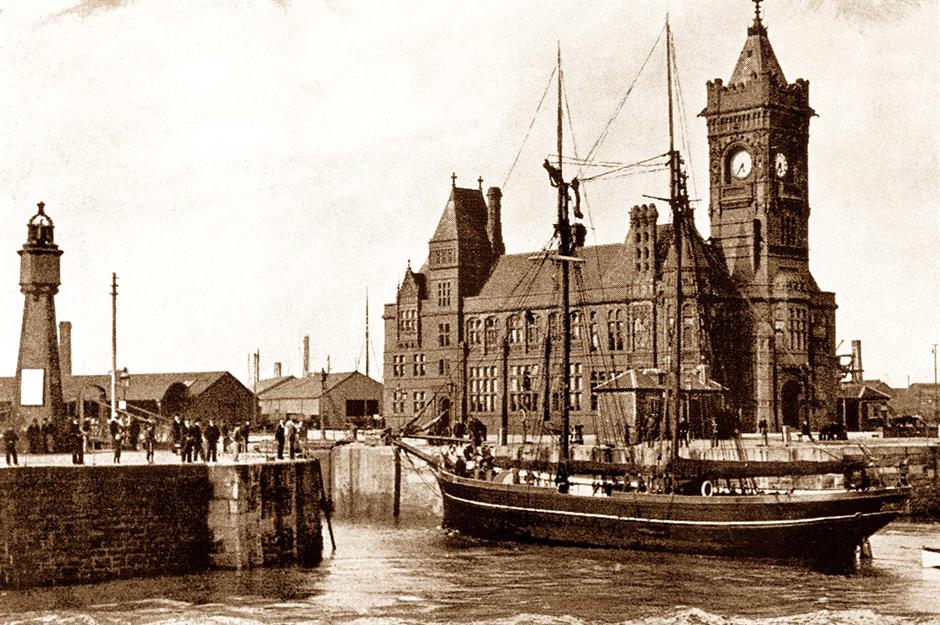
The Welsh capital has a long history. Butetown, where Cardiff Dock was built, used to be nothing but barren moorland. The 2nd Marquis of Bute decided to build the first dock in Cardiff but unfortunately died before it was completed, leaving his son to take over.
Photographed here in the late 19th century, the docks were significant in the lead up to the D-Day landings as most American supplies came through here. The docks have long been renovated and have provided over 20,000 jobs over the years. Other notable places in the city include the Norwegian Church, where children's author Roald Dahl was christened.
c.1890: Liverpool, England
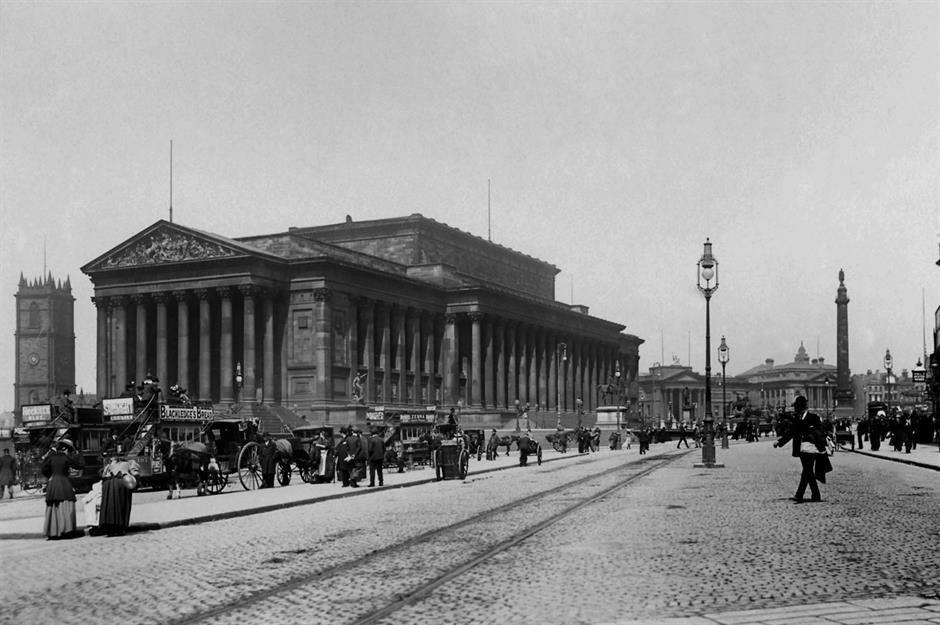
Often described as one of England's 'cities of culture', and long a football and music hotbed, Liverpool needs little introduction. We all know about the cathedral and the Cavern Club, but how about one of its other famous landmarks? Plans to unveil a building in conjunction with Queen Victoria's coronation – to symbolise law and order, host lavish parties and put on concerts – eventually yielded St George's Hall.
Designed by an up-and-coming architect who won a competition, construction started in 1841, and these days the Neoclassical structure is one of the finest in the world. It's pictured here in around 1890.
Sponsored Content
1895: Southampton, England
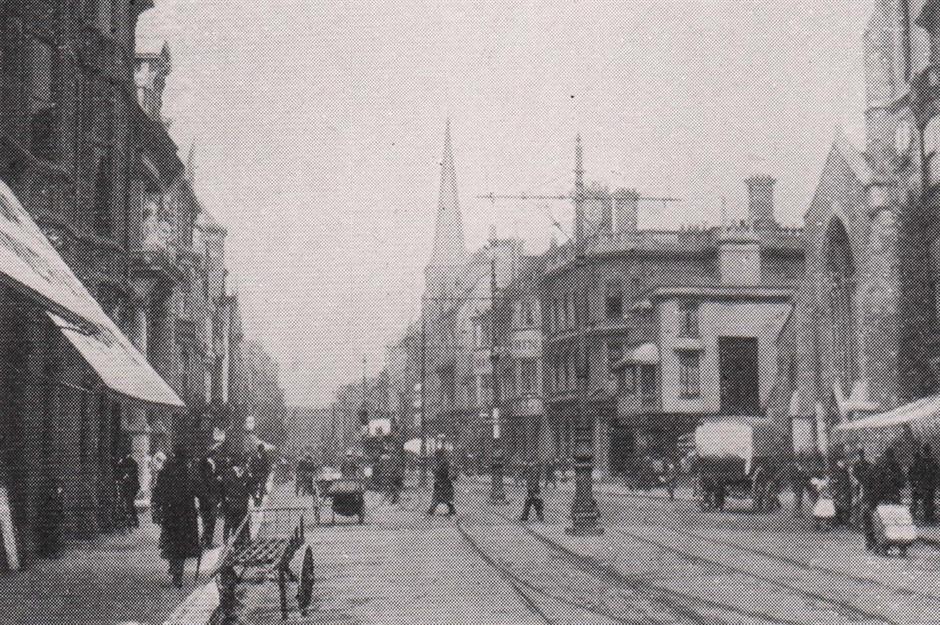
This photo of Southampton's High Street, dating back to 1895, shows a significant part of the city's history. In medieval times, it was known as English Street, due to being a link between the three English-speaking sections of the city. As you might guess, French Street linked the French-speaking sections.
During the 1500s, this was called the cleanest and most beautiful street in Britain. Although parts were bombed during World War II, some bank buildings survived, and the National Westminster Bank, Midland and Barclays still stand to this day.
1895: Wrexham, Wales
Only recently granted city status in 2022, this former market town has a rich and interesting history. As well as being a key player in the Industrial Revolution with coal mining at its heart, Wrexham has a couple of other historical accolades. Wrexham football club is said to be the third oldest on the planet, while its home stadium, the Racecourse Ground, is the world's oldest international football stadium still in use.
The Wrexham Lager Brewery is the oldest in the UK, founded in 1882. The photo here shows Wrexham High Street in 1895, the retail hub of the town. However, the removal of buses (perhaps depicted here) meant the retail thoroughfare prospered.
1896: Swansea, Wales
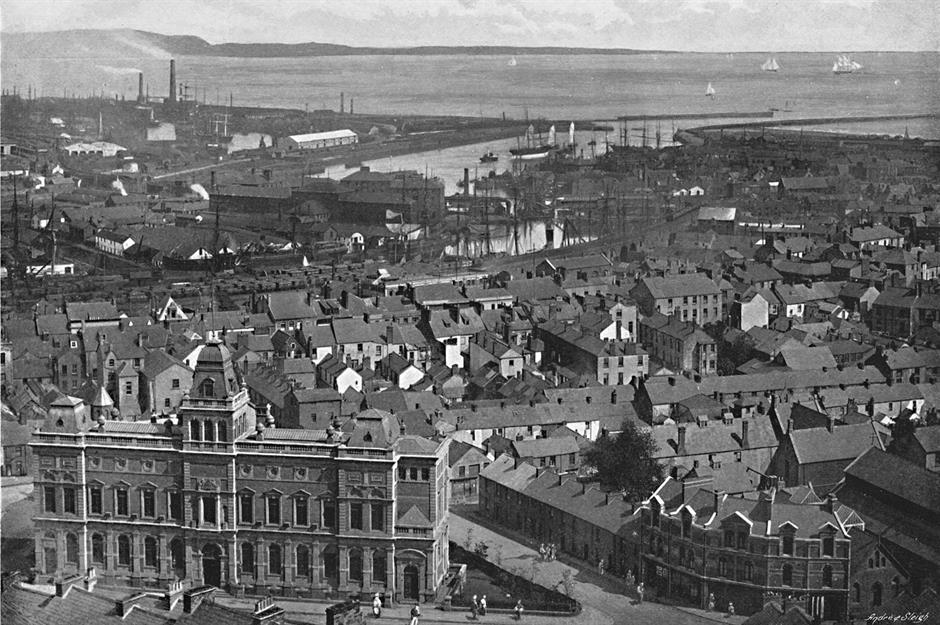
Now Wales' second largest city, Swansea was founded in the 12th century. Built on industries such as wool, leather, coal mining and shipping, Swansea grew through medieval times as a busy little port and market town. During the 19th century, Swansea expanded rapidly and the population increased from around 6,000 in 1800 to over 100,000 by the end of the century.
Like a lot of towns however, Swansea was dirty, overcrowded and unsanitary. Nevertheless, improvements were made during this time, with access to medicine being improved and a hospital and a library being built. Here we can see the library in the foreground, in 1896.
Sponsored Content
1900: Sheffield, England
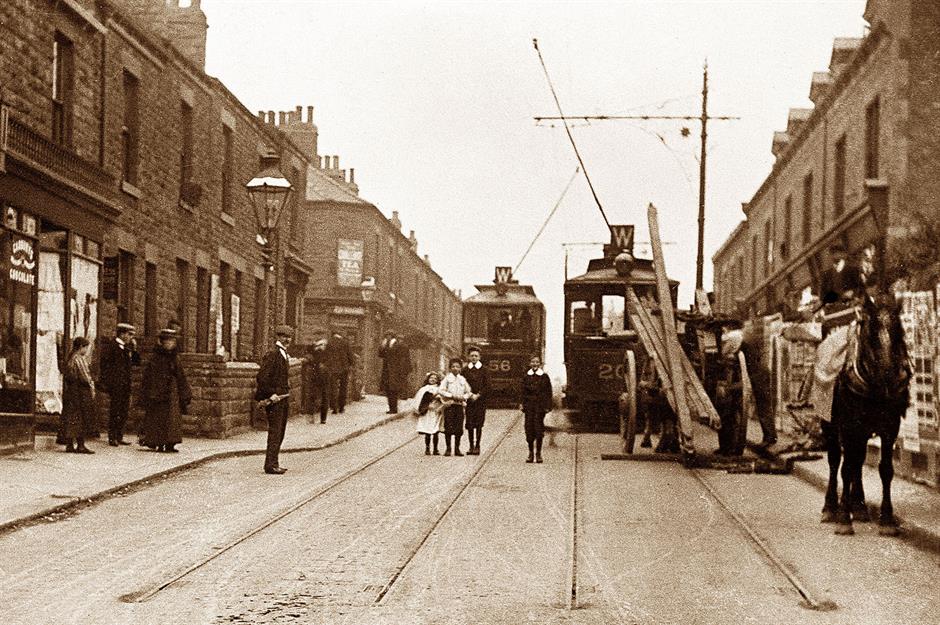
Sheffield, the southwest Yorkshire city in the foothills of the Pennines, was one of the biggest manufacturers of steel in the world during the Victorian period. However, the industry had its share of problems. Extreme heat and cramped conditions made working life tough. During the 1860s, it was common to be retired from work at 35 and dead at 40, due to various illnesses caused by work-related diseases, mainly silicosis.
Another incident also shaped the Steel City; one night in 1864, a newly manufactured dam burst, causing flooding in the area. People drowned and as a result, streets were widened and transport was extended into the suburbs. Horse-drawn trams were replaced by electric versions to make life more convenient, as seen in this photo from 1900.
c.1900: Birmingham
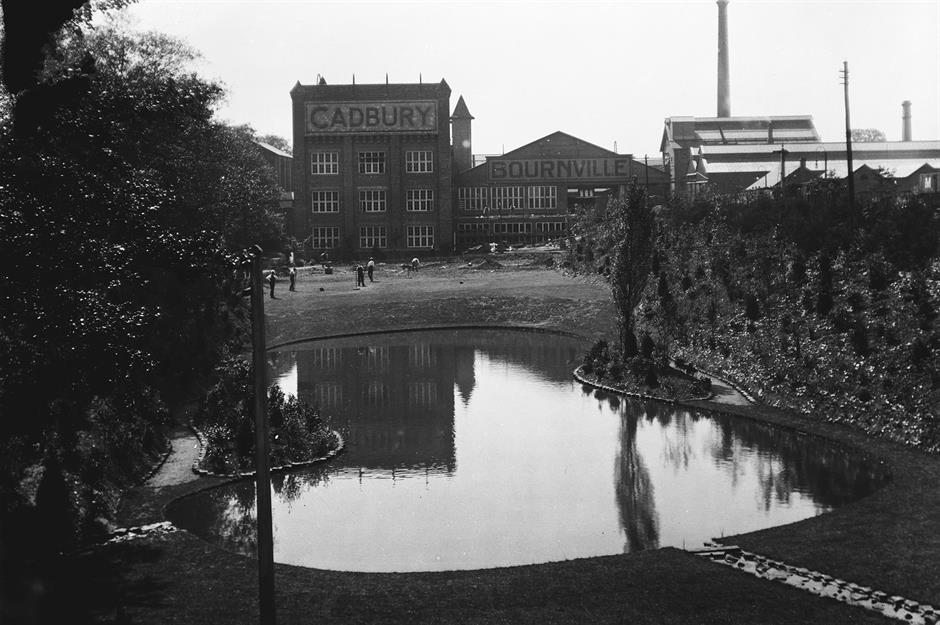
Located smack bang in the middle of England, Birmingham has long been one of the centres of industry, and not just because of its superb accessibility. The birthplace of the Industrial Revolution, it could be said that the modern world started here.
One famous brand to come out of England's second city is Cadbury's Bournville. The chocolate factory, pictured here in around 1900, was part of Bournville village, a community created by brothers George and Richard Cadbury for their employees, around five miles (8km) south of the city centre.
c.1900: Perth, Scotland
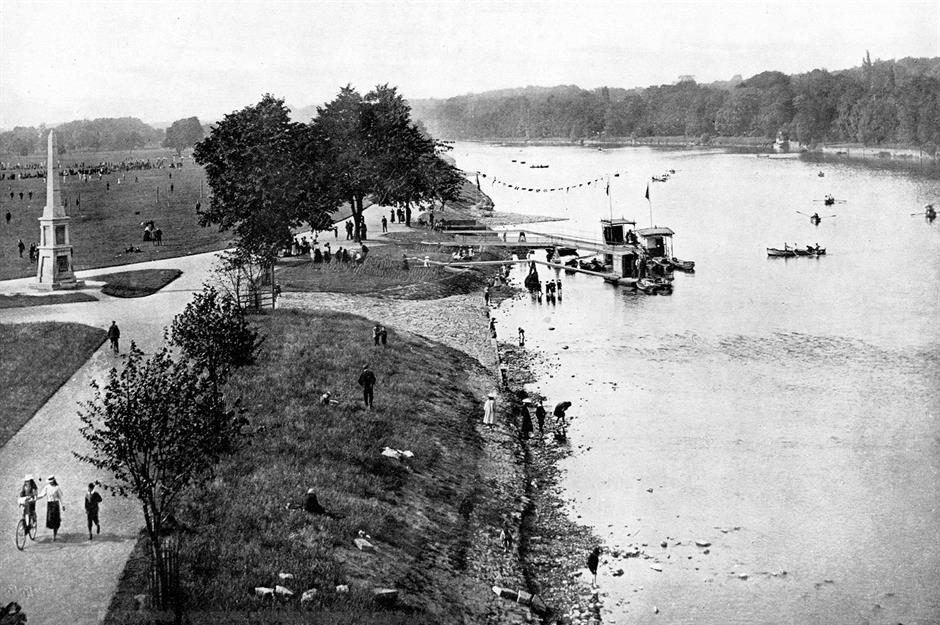
This small city in Scotland marks the beginning of the Highlands, and it was even the Scottish capital from the 9th to 15th centuries. Its history goes back thousands of years, and control of the city was wrestled between the English and Scots during the Wars of Independence.
Perth was also the primary location for the coronation of Scottish monarchs for many years. The North Inch, pictured here in early 1900, is one of the city's most popular areas for recreation and relaxation. These days, the park includes a popular golf course.
Sponsored Content
c.1900: Carlisle, England
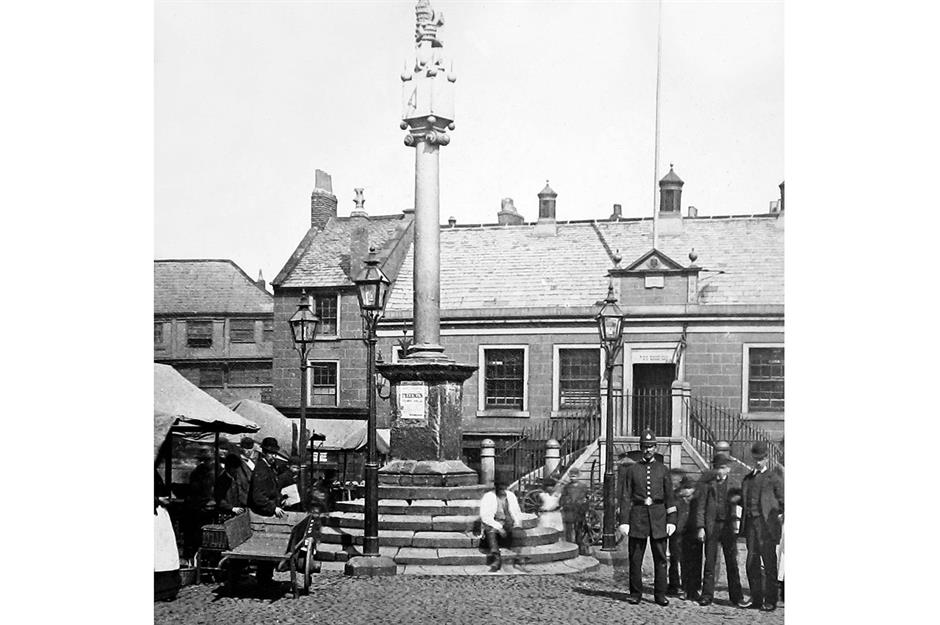
The present-day Market Place in Carlisle city centre doesn't look too dissimilar to yesteryear. The distinctive Guildhall and Town Hall in the background and the hustle and bustle of Victorian Cumbria show what life was like in this focal point of the northern city.
Photography was already around 60 years old when this photo was taken, but much of Carlisle's past was recorded by illustrations instead. This image is dated around the late 19th century, when photography really started to take off.
1910: Stirling, Scotland
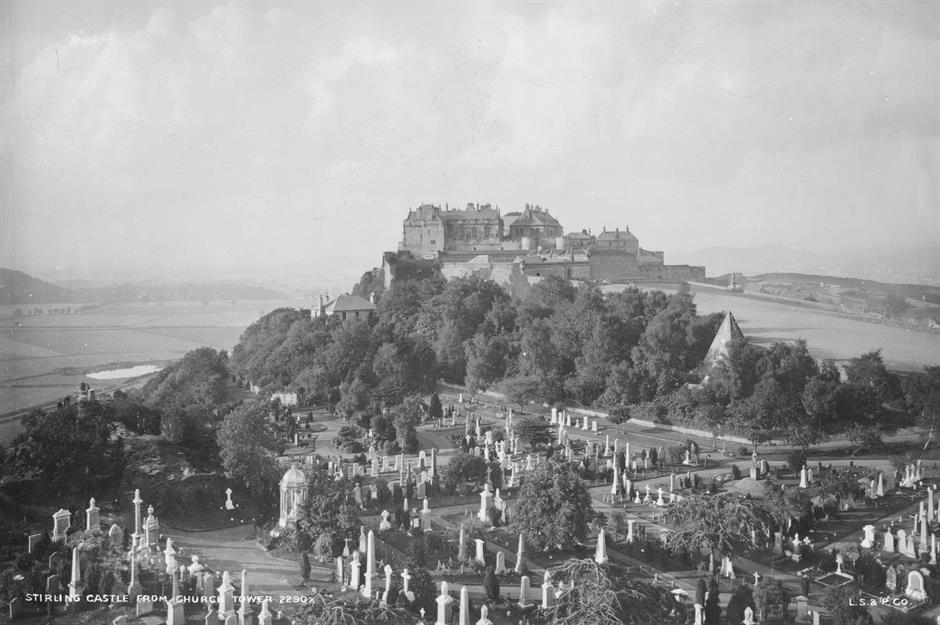
Stirling is another Scottish city with a royal history dating back through the ages, not to mention the bloody battles that were staged here. By the 19th century, Stirling, like many towns in this period, was dirty and unsanitary, and after the great cholera outbreak of 1832, sewers were dug under the city. The town grew and prospered as a market town for the rest of the century.
This photo from 1910 shows Stirling Castle, one of Scotland's most historically important sites and a favourite residence of the Stewart kings and queens.
Now check out some of the oldest ever photos of the world's capital cities