Incredible images from the Wildlife Photographer of the Year awards
2025's finest photos
Wildlife Photographer of the Year, developed and produced by the Natural History Museum, London, awards the best visual storytelling inspired by the natural world and issues around its conservation. The competition celebrates Earth’s exquisite beauty, wonder and vulnerability through captivating images. Take a look at this year’s stunning category winners, selected from a record-breaking 60,636 entries received from 113 countries and territories.
Click through this gallery to admire the incredible winning images from 2025’s Wildlife Photographer of the Year awards…
The Weaver’s Lair
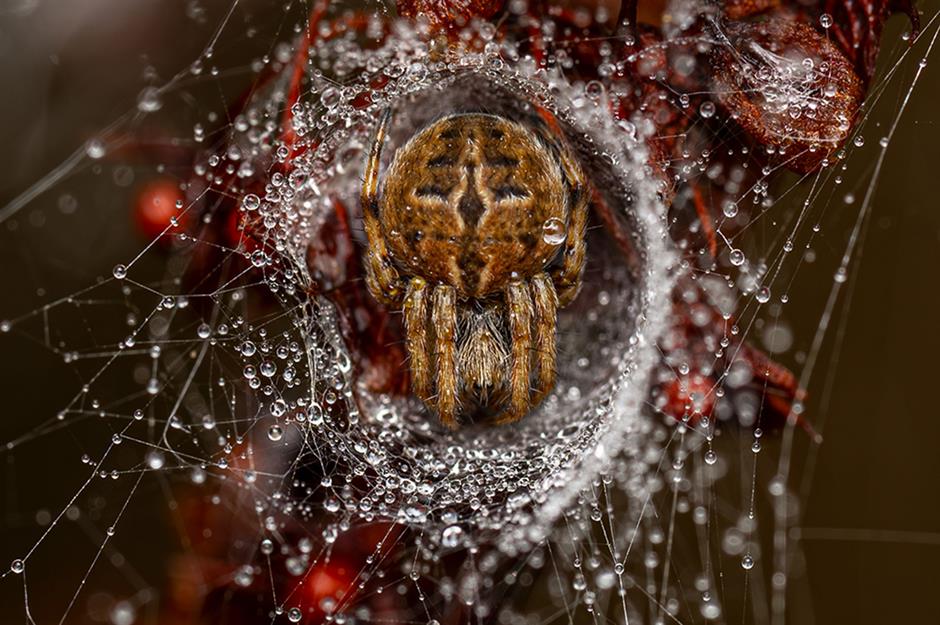
Young British photographer Jamie Smart spotted an orb weaver spider inside its silken web on a cold September morning in Wales and called upon patience and steadiness beyond her years to keep the spider perfectly lit and symmetrically framed.
Jamie’s attention was caught by the dew-laden web and didn’t realise its maker was still sitting there. Her evocative image, capturing the intricate scaffold of radial threads, won her the 10 Years and Younger category.
Alpine Dawn
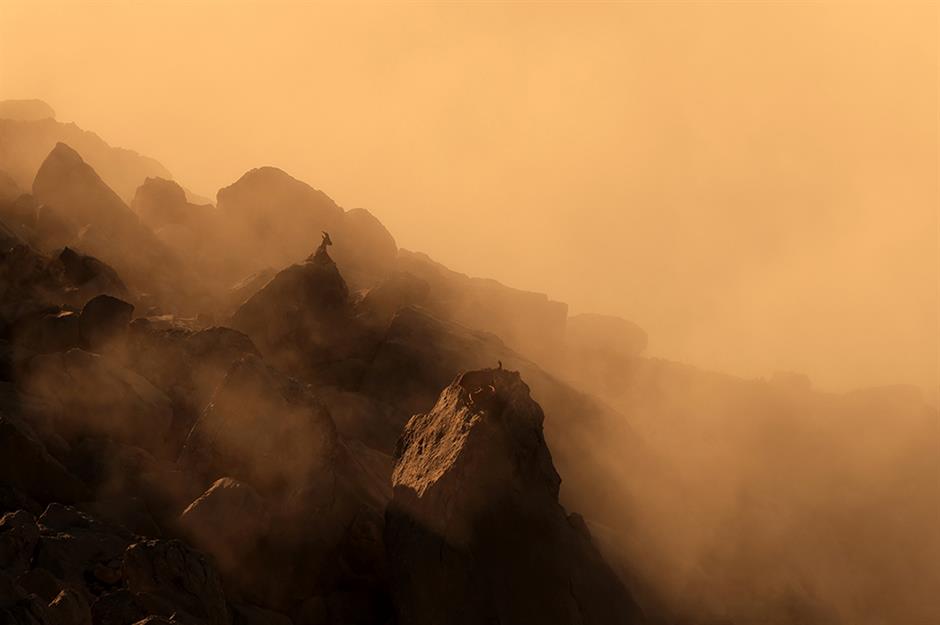
Young French photographer Lubin Godin won the 11-14 Years category with this beautiful image of an Alpine ibex in the mist-shrouded peaks of the Alps. He had spotted it resting above a sea of clouds during an early morning ascent and retraced his steps to capture this ethereal moment before fog thickened and the light faded.
Native to Europe, the species was hunted close to extinction in the early 1800s. But now, thanks to protection and reintroduction efforts, ibexes now roam large areas of the Alps.
Sponsored Content
Like an Eel out of Water
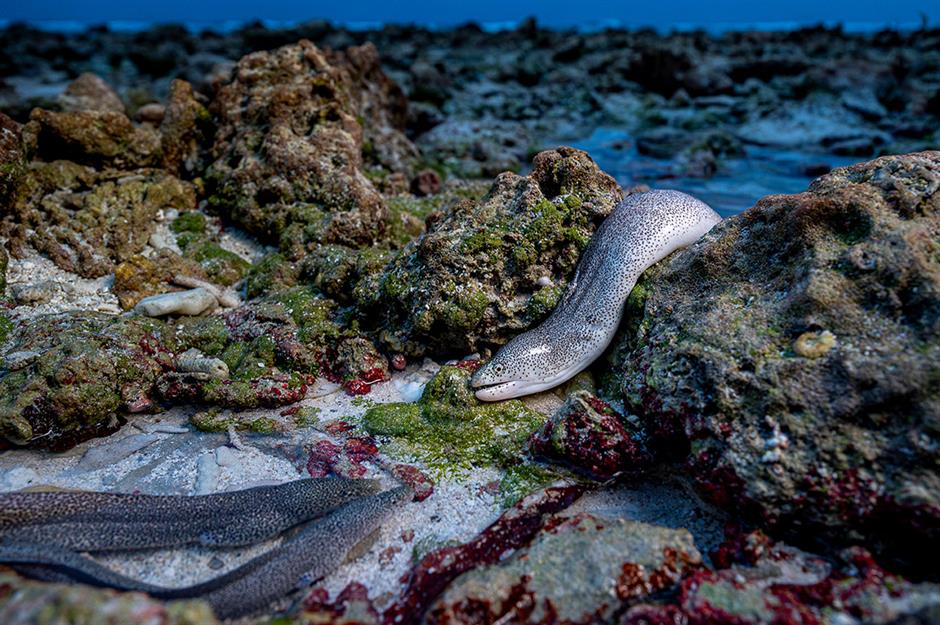
Peppered moray eels are the most adept scavengers of the intertidal zone, hunting both above and below the water’s surface using their keen senses of smell and sight. They can spend up to 30 seconds out of the water, but this behaviour has very rarely been photographed.
Canadian photographer Shane Gross spent several weeks attempting to capture an eel out of water, with little success. Finally, he was rewarded not with just one peppered moray eel, but three, winning the prestigious Animals in their Environment category in the process.
Shadow Hunter
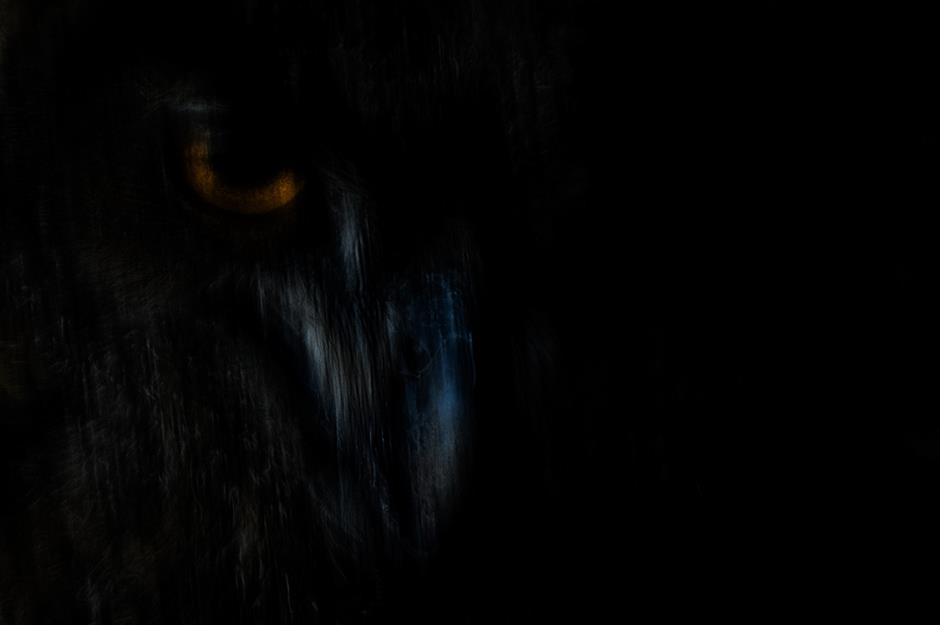
Eagle owls weigh twice as much as buzzards are among the fiercest of nocturnal predators. It’s a fierceness captured in this eerie portrait – in the orange glint of an eagle owl’s eyes and the evening light falling on its feathers – taken by Philipp Eggers high in South Tyrol in Italy.
Eggers first spotted the owl’s nest when climbing and spent four years observing its behaviour, capturing this image with a telephoto lens and winning the Animal Portrait category.
Synchronised fishing
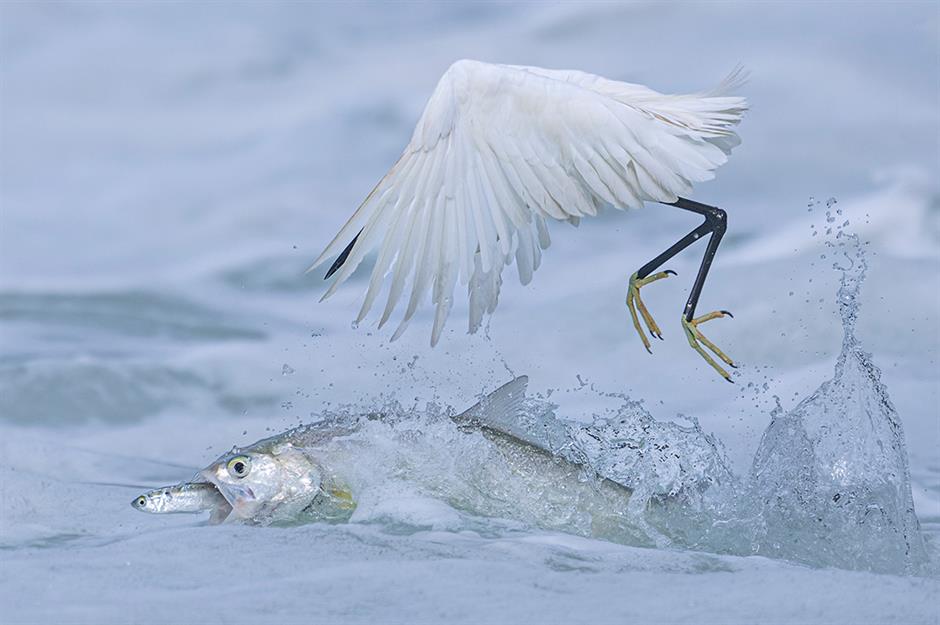
Once a natural marine harbour, Yundang Lake in China was sealed off from the sea during 1970s development. When it was later reconnected to the sea, marine and birdlife returned, and so too did Chinese photographer Qingrong Yang, who delighted in snapping pictures of the feeding frenzies.
During one such frenzy, Qingrong captured this once-in-a-lifetime image of a ladyfish snatching its prey from right under this little egret’s beak. The image won him the Behaviour: Birds category.
Sponsored Content
Frolicking frogs
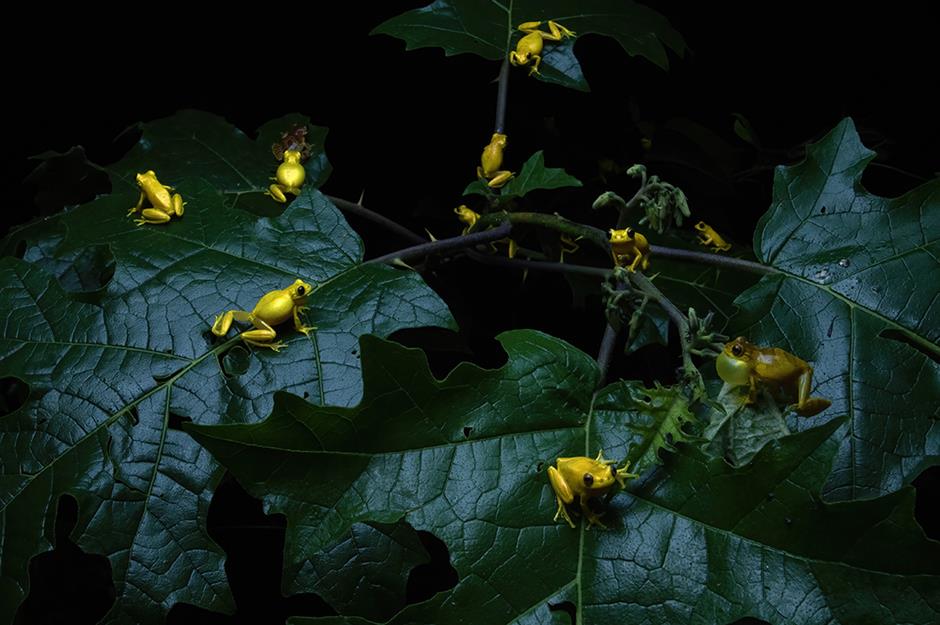
After a heavy rainstorm in the Kaw Mountains in French Guiana, photographer Quentin Martinez followed a flooded path to a temporary pool in a forest clearing, following the shrill calls of lesser tree frogs and stumbling upon a frantic breeding event.
Martinez framed the scene with a wide-angle lens and used a diffused flash so as not to disturb the frogs but still capture their metallic sheen. Such events only last a matter of hours – long enough to capture the winning shot in the Behaviour: Amphibians and Reptiles category, however.
Caught in the headlights
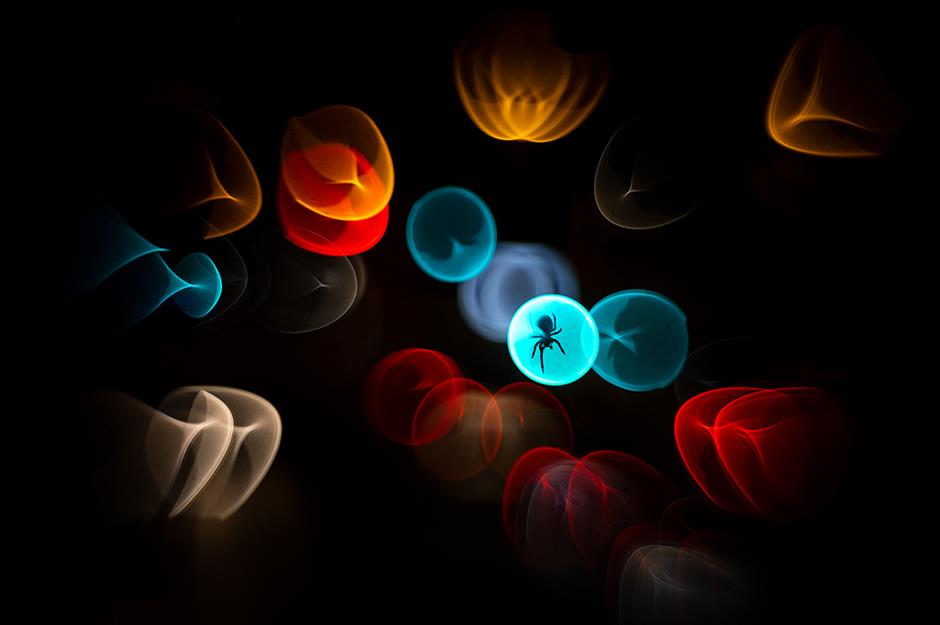
German photographer Simone Baumeister won the Natural Artistry category with this gorgeous photo of an orb weaver spider sitting in its web located on a pedestrian bridge in Ibbenbürren in Germany, silhouetted by the lights of cars below.
To achieve the kaleidoscopic effect, Simone reversed one of the six glass elements in her analogue lens, distorting the image and magnifying the orb weaver spider’s penchant for artificial lighting and the prey it attracts.
After the destruction
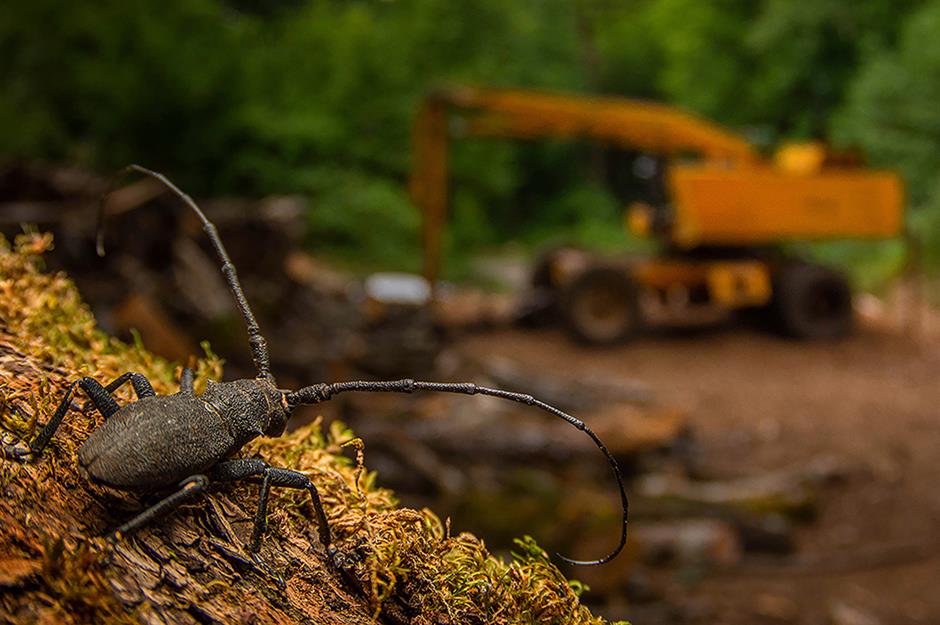
Nature is nothing if not adaptive, as shown by this stunning image of a longhorn beetle moving in after loggers cut down old beech trees in the Lepini Mountains of central Italy.
Young Italian photographer, Andrea Dominizi, used a wide-angle lens and off-camera flash to juxtapose the insect with the heavy machinery to tell a story of habitat loss, but also of resilience. It bagged him both the 15-17 Years category and Young Wildlife Photographer of the Year.
Sponsored Content
Ghost Town Visitor
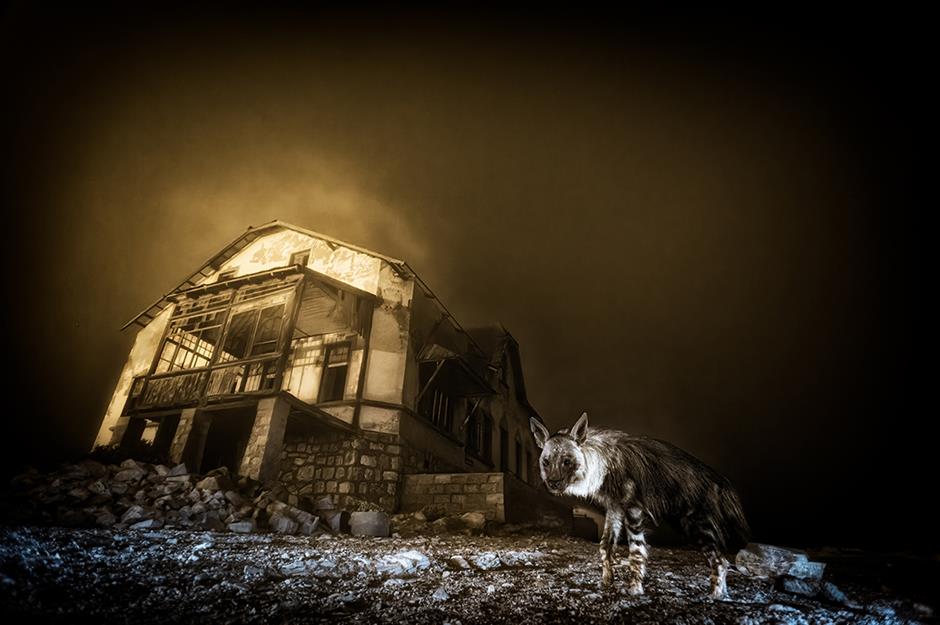
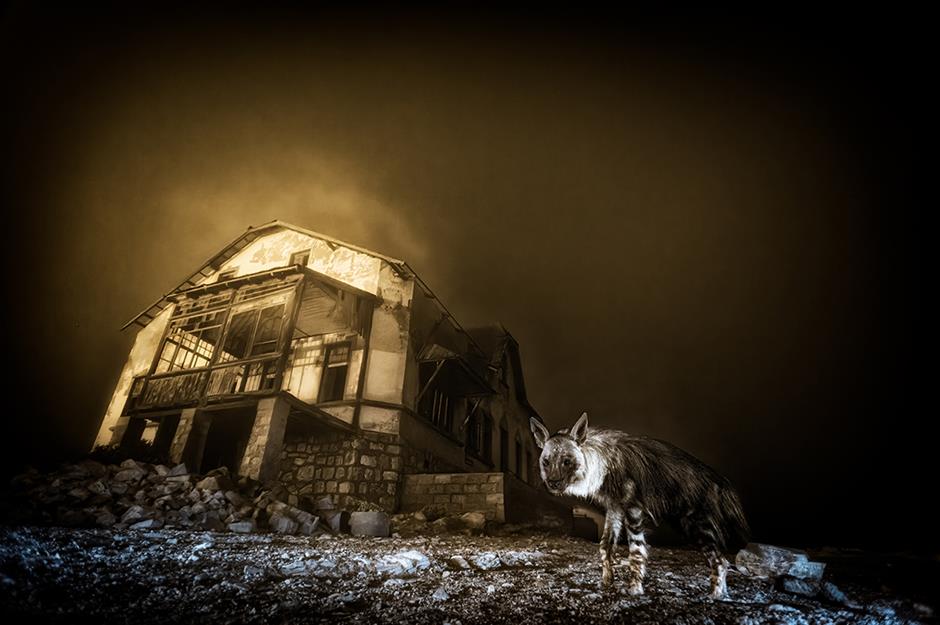
This haunting photograph of a brown hyena prowling the abandoned town of Kolmanskop in Namibia took Wim van den Heever 10 years to capture. Unlike their more common siblings the striped and spotted hyenas, brown hyenas are rare and elusive – even more so when snapped among the imposing half-destroyed house towers of this former mining town.
The judges recognised Wim’s “curiosity, patience and talent” and rewarded him with not just the Urban Wildlife category, but the overall Wildlife Photo of the Year award.
See the winning photos or submit your work
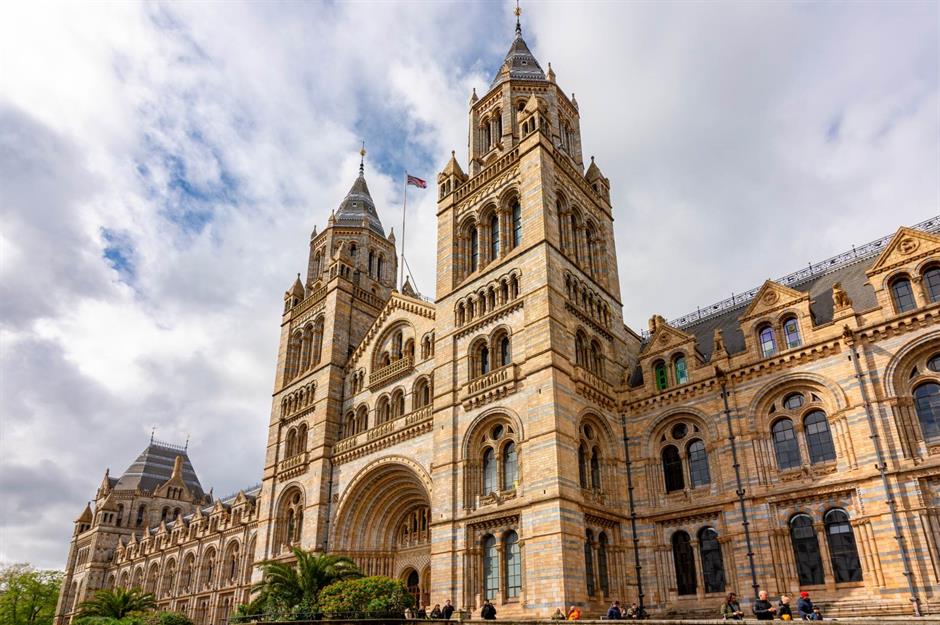
The 2025 Wildlife Photographer of the Year exhibition – featuring all 100 awarded images – runs at London’s Natural History Museum (pictured) until Sunday 12 July 2026. Tickets can be booked here. Entry to the 2026 competition will open soon.
Now read on to see the stunning winners from the 2024 Wildlife Photographer of the Year competition…
Under the Waterline
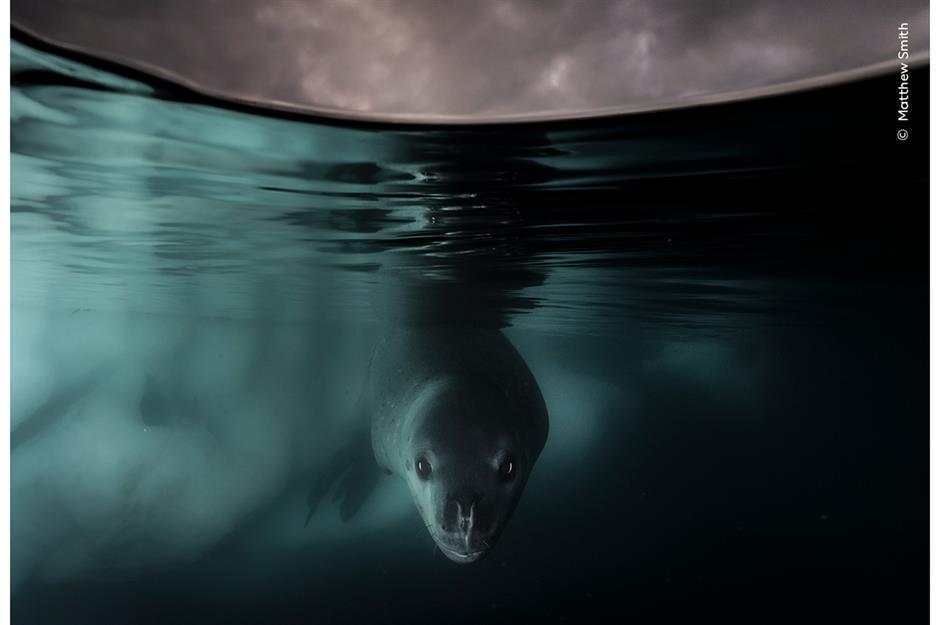
Using a specially-made extension he designed for the front of his camera, photographer Matthew Smith carefully captured this curious leopard seal beneath Antarctic ice. The encounter with the playful youngster was Smith's first with a leopard seal.
Though leopard seals are widespread and abundant, overfishing, retreating sea ice and warming waters mean that krill and penguins – their main food sources – are both in decline, spelling potential trouble for the species. This image won in the Underwater category this year.
Sponsored Content
Tiger in Town
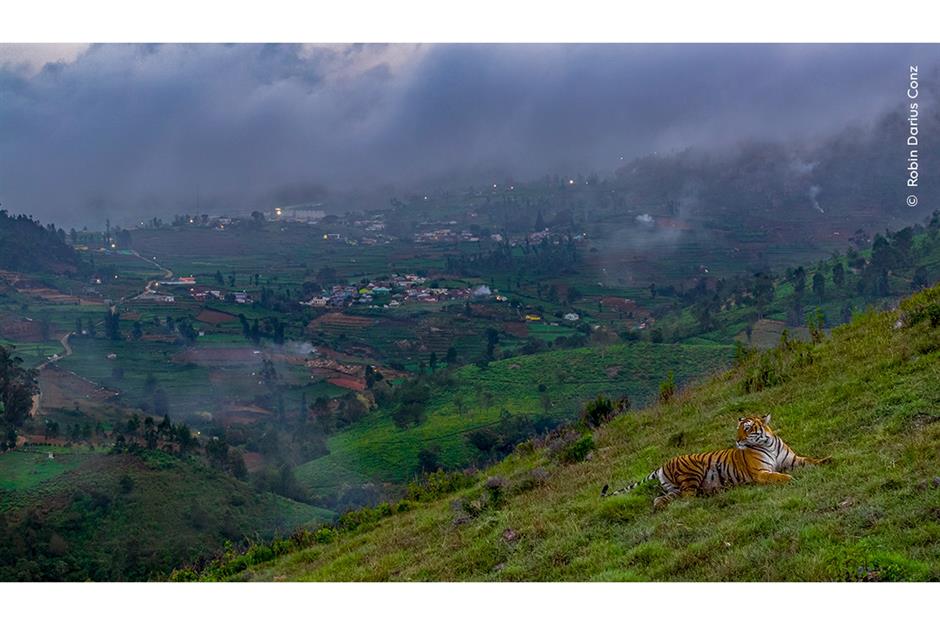
German drone photographer Robin Darius Conz was following this tiger as part of a documentary team filming the wildlife of the Western Ghats. Some of the most biodiverse landscapes in India, the protected parts of the Western Ghats have a stable population of tigers that is closely monitored.
Sadly, outside these areas – where development has brought conflict between humans and animals – tiger occupancy has declined. The image of this lone tiger, lounging on a hillside where forests once grew, won Conz the Urban Wildlife category.
The Serengeti of the Sea
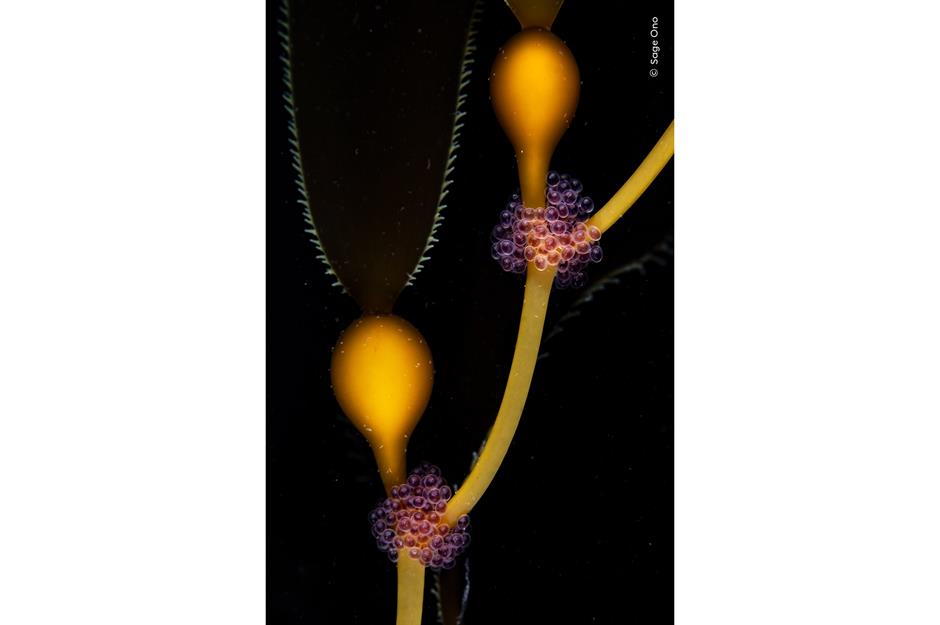
Recipient of the Rising Star Portfolio Award, Sage Ono was inspired to take up underwater photography by his grandfather, a retired marine biologist. Upon relocating to the Californian coast near the Monterey Bay National Marine Sanctuary after university, Ono became fascinated by the submerged world of the bay’s giant kelp forests.
The biggest of all seaweeds, giant kelp supports a huge diversity of life, including the gemstone-like tube-snout fish eggs captured in this winning image. They fade in colour as the embryos develop, but this photo preserves them in all their ruby glory.
Frontier of the Lynx
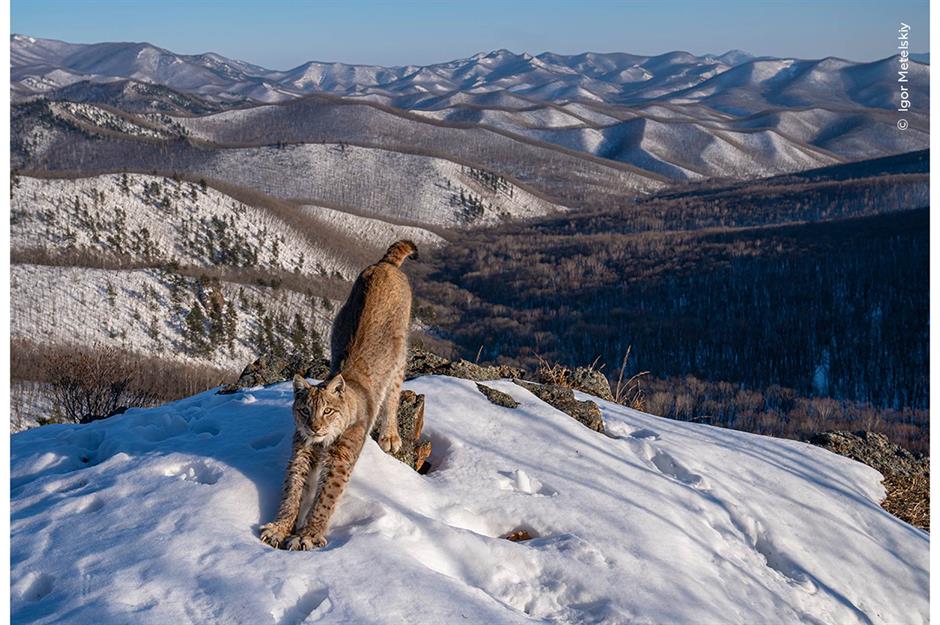
Here, photographer Igor Metelskiy shows a lynx stretching in the early evening sun, its body mirroring the undulating wilderness of Primorsky Krai in Russia. The remote location and changing weather conditions made access to this spot – and transporting equipment there – a challenge. But, after waiting more than six months, and positioning his camera trap near the footprints of potential prey, Metelskiy finally achieved this relaxed image of the elusive lynx.
A survey carried out in 2013 estimated the entire Russian lynx population to be around 22,500 individuals. This image beat out the competition in the Animals in their Environment category.
Sponsored Content
Dolphins of the Forest
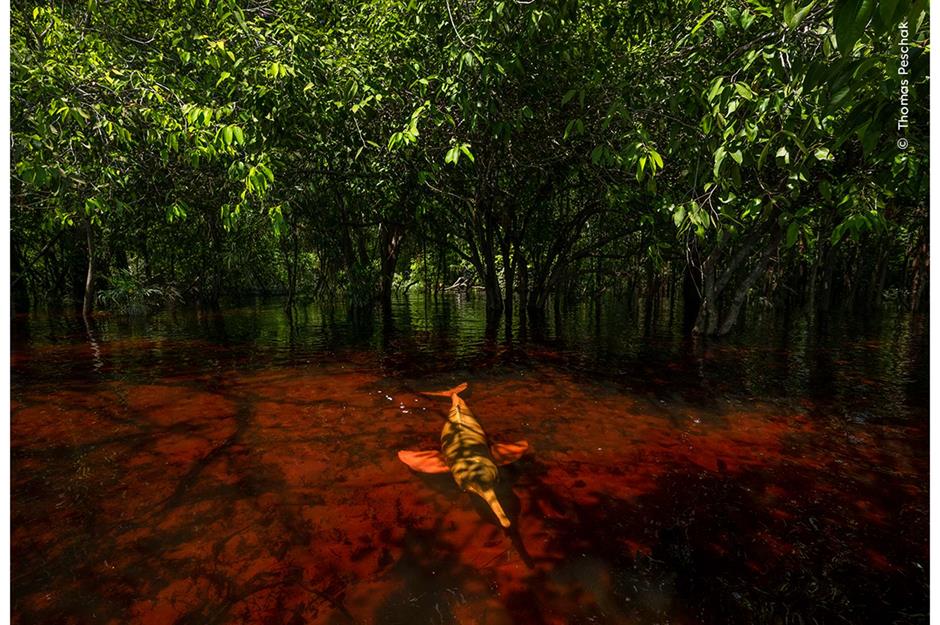
Also known as the boto or pink river dolphin, the Amazon river dolphin’s relationship with humans is complex. Both revered and feared in traditional Amazonian cultures, some people also see them as thieves who steal fish from nets and should be killed.
Winner of the Photojournalist Story Award Thomas Peschak took this picture in an area where local communities are creating opportunities for tourists to encounter the dolphins. This brings another set of problems, as it encourages the creatures to rely on being fed by humans.
Dusting for New Evidence
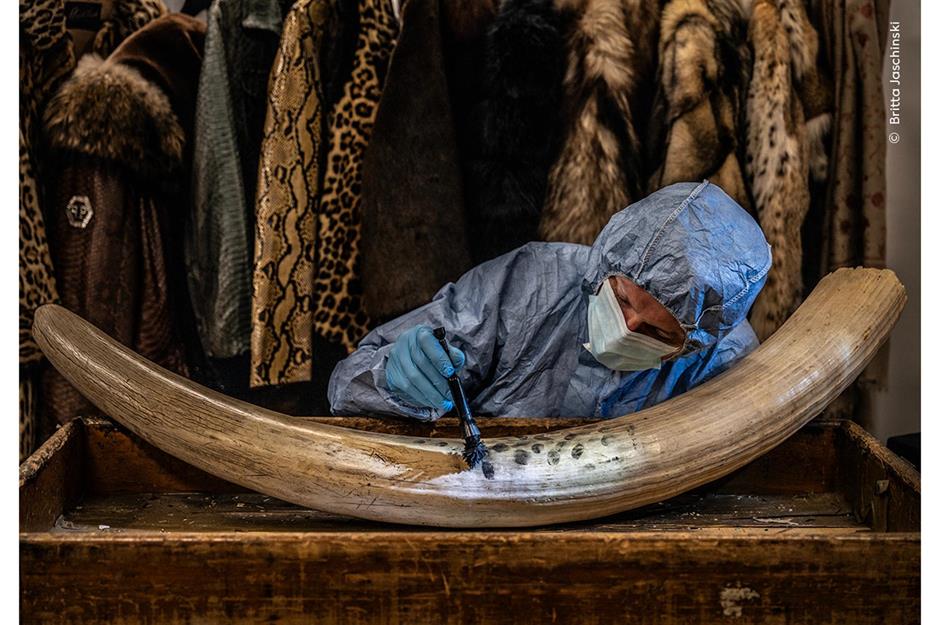
Taken at London's Heathrow Airport, this powerful image by Britta Jaschinski won the Photojournalism category in this year's competition. Jaschinski spent time at the CITES Border Force department where confiscated animal products are tested, and here she observes a police investigator dusting for fingerprints on a seized elephant tusk using newly developed magnetic powder.
The substance allows experts to obtain prints from ivory up to 28 days after it was touched, increasing the chances of identifying those involved in its illegal trade.
Old Man of the Glen
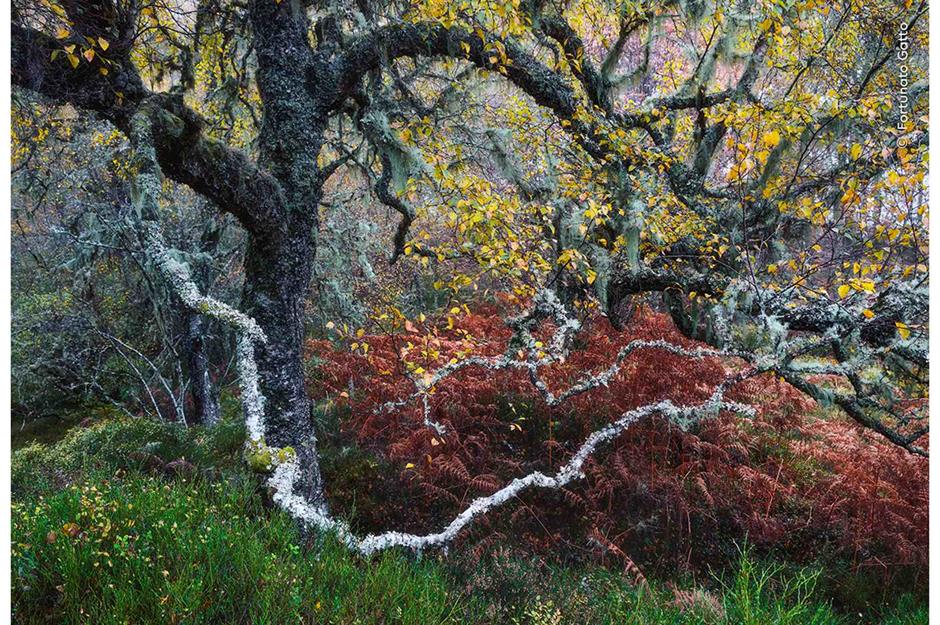
Home to one of the UK's highest concentrations of native trees, Glen Affric in the Scottish Highlands is a vital ecosystem. Analysis of pollen preserved in the layered sediments here dates the ancient forest back at least 8,300 years.
Italian photographer – and Plants and Fungi category winner – Fortunato Gatto came across this gnarled old birch tree, adorned with pale 'old man’s beard' lichens, on a solo walk through the glen. The presence of this particular lichen indicates an area of minimal air pollution.
Sponsored Content
A Tranquil Moment
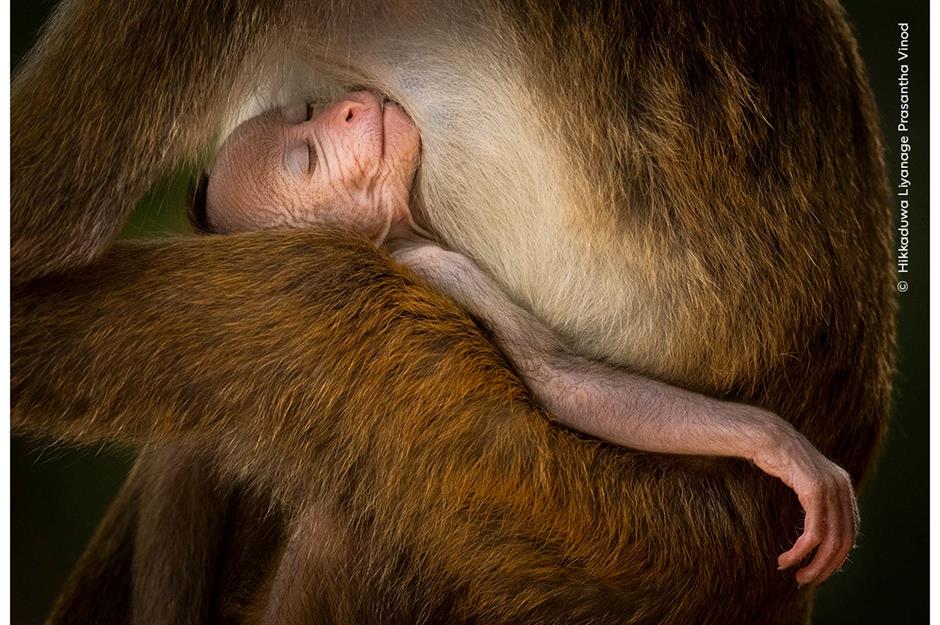
This serene scene of a young toque macaque dozing between feeds was captured by Hikkaduwa Liyanage Prasantha Vinod in Sri Lanka's Wilpattu National Park. The Behaviour: Mammals category winner was resting in a quiet place after a morning of photographing birds and leopards before realising he wasn’t alone – a troop of toque macaques was moving through the trees above.
Toque macaques easily adapt to human foods, and the encroachment of plantations into their habitat has seen a tragic increase in incidents of shooting, snaring and poisoning by farmers trying to preserve their crops.
The Demolition Squad
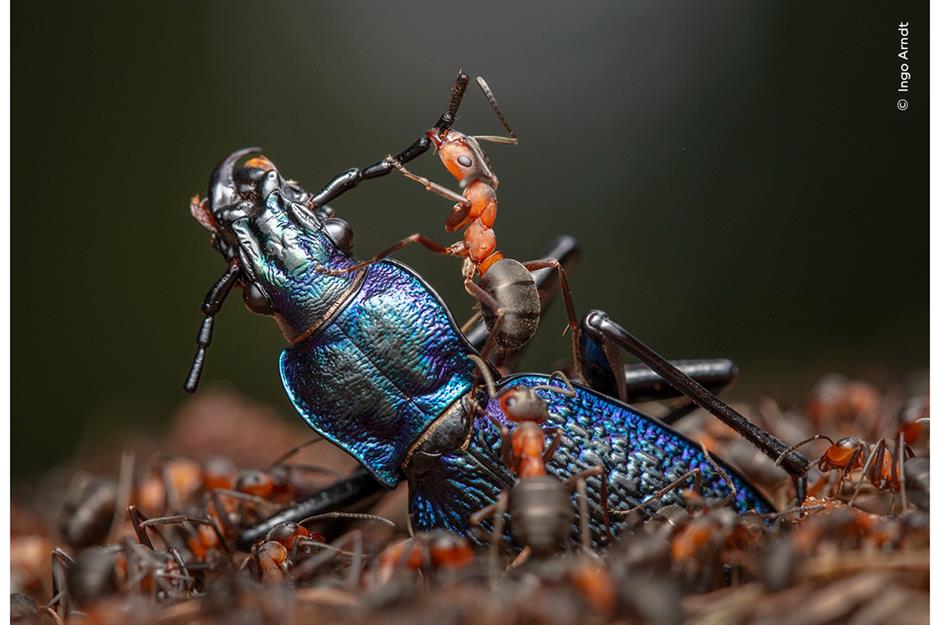
Winner of the Behaviour: Invertebrates category, German photographer Ingo Arndt documents the efficient dismemberment of a blue ground beetle by red wood ants. Mercifully, the beetle was already dead when the ant army began carving its body into pieces small enough to fit through the entrance to their nest.
While red wood ants get much of their nourishment from honeydew secreted by aphids, they also need protein to thrive. Through sheer strength of numbers, they can easily dispatch insects and other invertebrates several times their size.
A Diet of Deadly Plastic
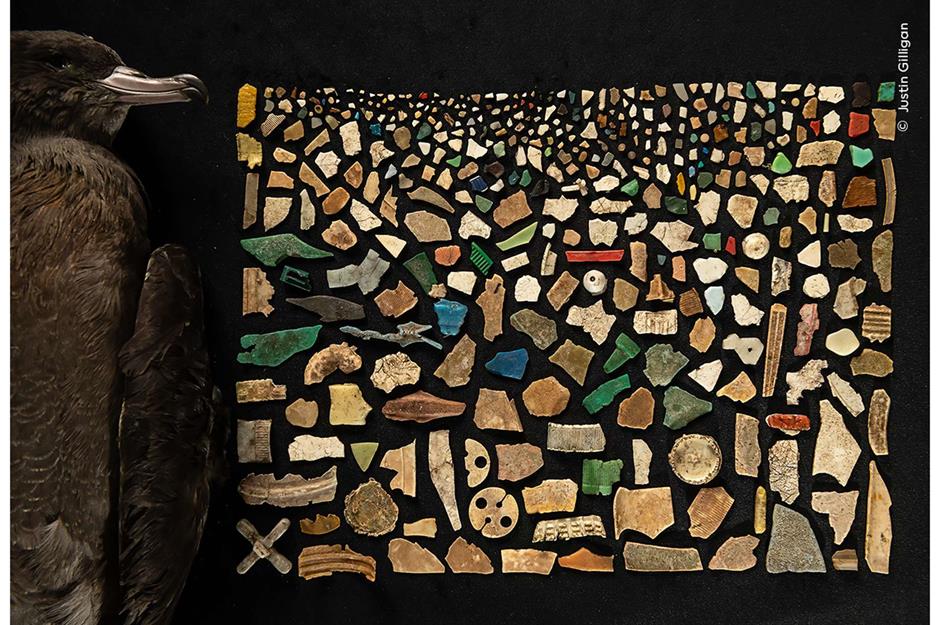
Here, Australian photographer Justin Gilligan creates a sobering mosaic from the 403 pieces of plastic found inside the belly of a deceased flesh-footed shearwater on Lord Howe Island. The seabird was discovered by scientists at the Adrift Lab, which studies the impact of plastic pollution on marine ecosystems.
Gilligan, the winner of the Oceans: The Bigger Picture category, has documented the team's work for several years. In 2023, they classified a new disease caused by plastic ingestion in birds. Named plasticosis, it involves the creation of excessive scar tissue in the digestive tract.
Sponsored Content
Practice Makes Perfect
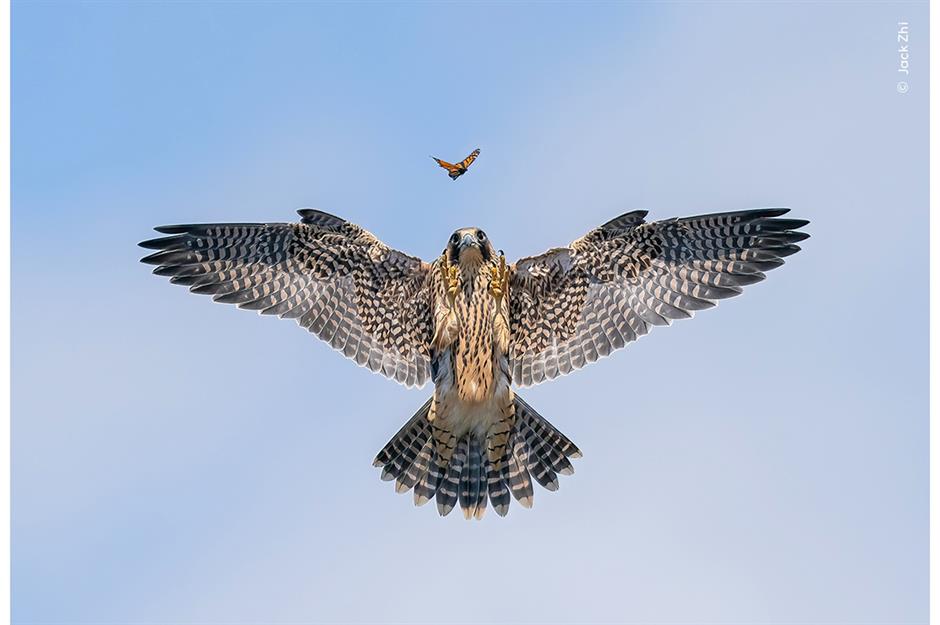
American photographer Jack Zhi has been visiting the same strip of Los Angeles coastline for the past eight years, observing the presence of peregrine falcons and their growing chicks. On the day this photo was taken, the young birds were flying so fast that it was a challenge to track the action.
Should this majestic infant – seen here practising its hunting skills on a butterfly – make it to adulthood, tests have shown that it will be capable of swooping at speeds of more than 200 miles per hour (320km/h). Zhi won the Behaviour: Birds category with this shot.
The Artful Crow
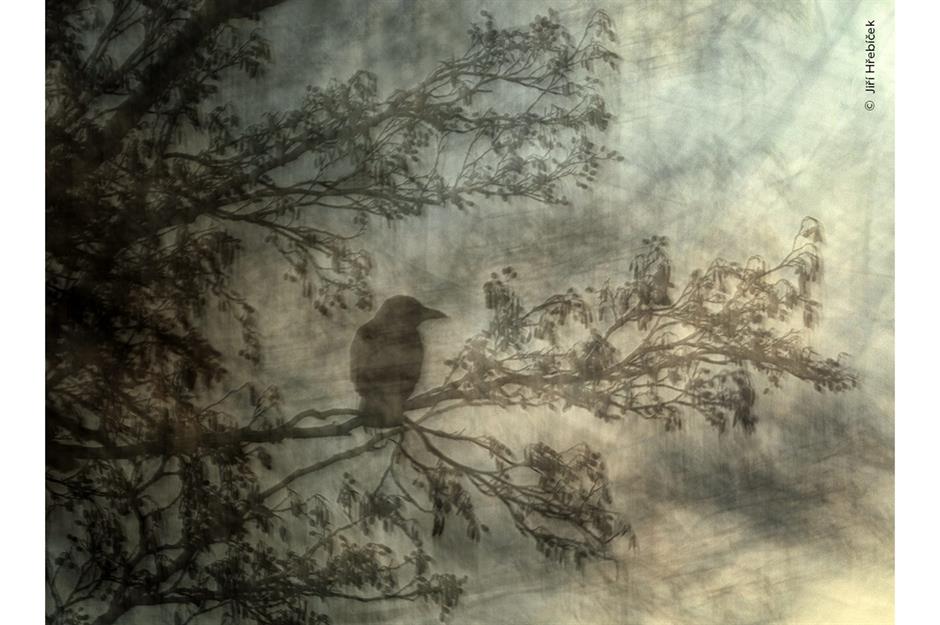
This impressionistic vision of a sitting carrion crow is the work of Czech photographer Jiří Hřebíček, who came out on top in the Natural Artistry category this year. Now living in Basel, Hřebíček often visits his local park as it’s an ideal place to experiment with camera techniques. To create this painting-esque effect, he deliberately moved his camera in different directions while using a long shutter speed.
Carrion crows are intelligent birds that have successfully adapted to living alongside humans, with gardens and parks providing a regular food supply. In Switzerland, some of the highest concentrations are found around Basel.
Wetland Wrestle
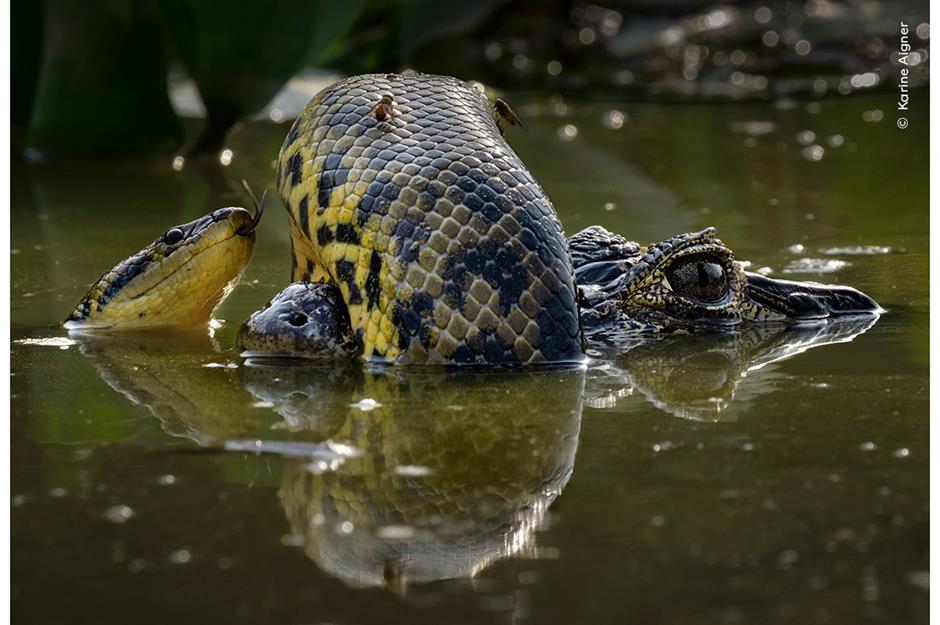
The tour group Karine Aigner was leading in the Pantanal had stopped to photograph some marsh deer when she noticed an odd shape in the water. Through binoculars, Aigner quickly recognised the sinuous form of a yellow anaconda as it coiled itself around the snout of a yacaré caiman.
Watching as the reptiles struggled with each other, Aigner took this photograph, which won the Behaviour: Amphibians and Reptiles category. Caimans will eat snakes but, as anacondas get larger, they will include reptiles in their diet too, so it’s hard to determine who is the aggressor here.
Sponsored Content
Free as a Bird
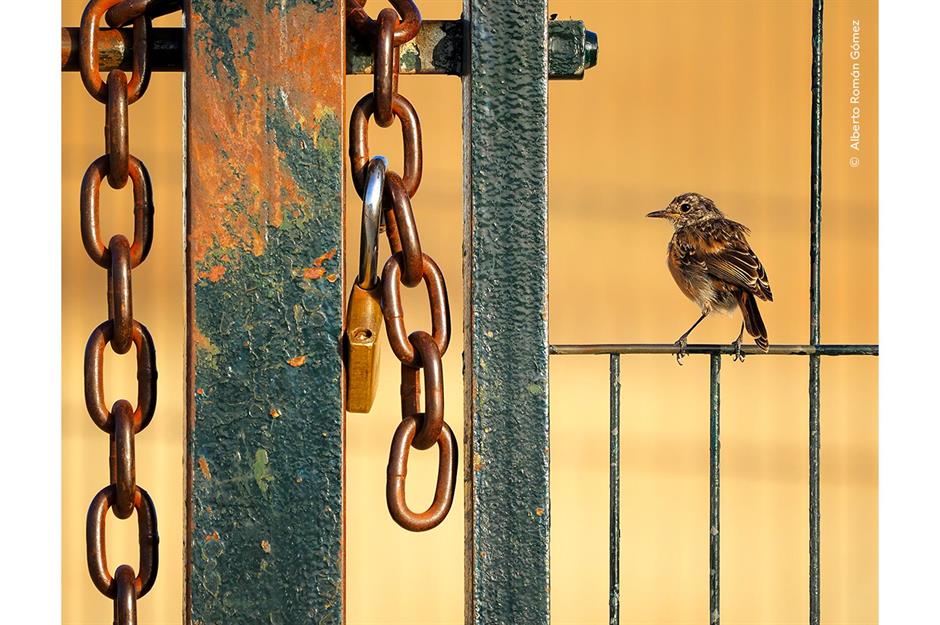
Here, Spanish junior shutterbug Alberto Román Gómez contrasts a delicate stonechat bird with a hefty chain. Winner of the 10 Years and Under category, he watched from the window of his father’s car at the edge of the Sierra de Grazalema Natural Park to get the shot, while the young bird flitted back and forth.
Though this juvenile stonechat would not yet have developed its adult call (which sounds like two stones tapping together), Gómez felt it displayed a sense of ownership and guardianship beyond its years. Stonechats tend to prefer open habitats and typically perch on fences.
On Watch
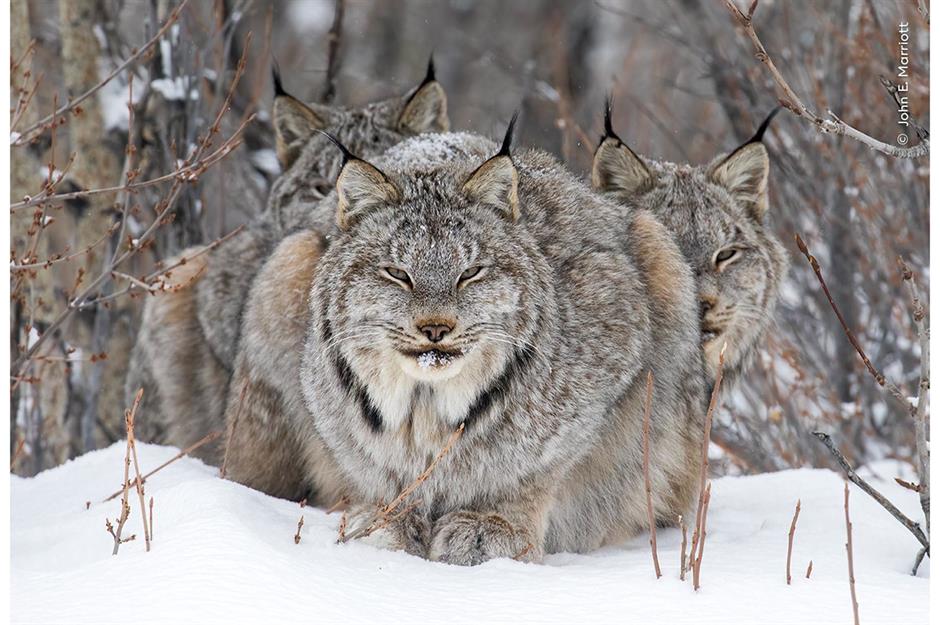
Winner of the Animal Portraits category John E Marriott had been tracking this lynx's family for almost a week, wearing snowshoes and carrying light camera gear to make his way through the freezing forests of Canada's Yukon. When fresh tracks led him to the group, he kept his distance to make sure he didn’t disturb them, silently capturing this beautiful image.
Lynx numbers usually reflect the natural population fluctuations of their main prey species, the snowshoe hare. With climate change reducing snow coverage, giving other predators more opportunities to hunt the hares, both hare and lynx populations may decline.
Recording by Hand
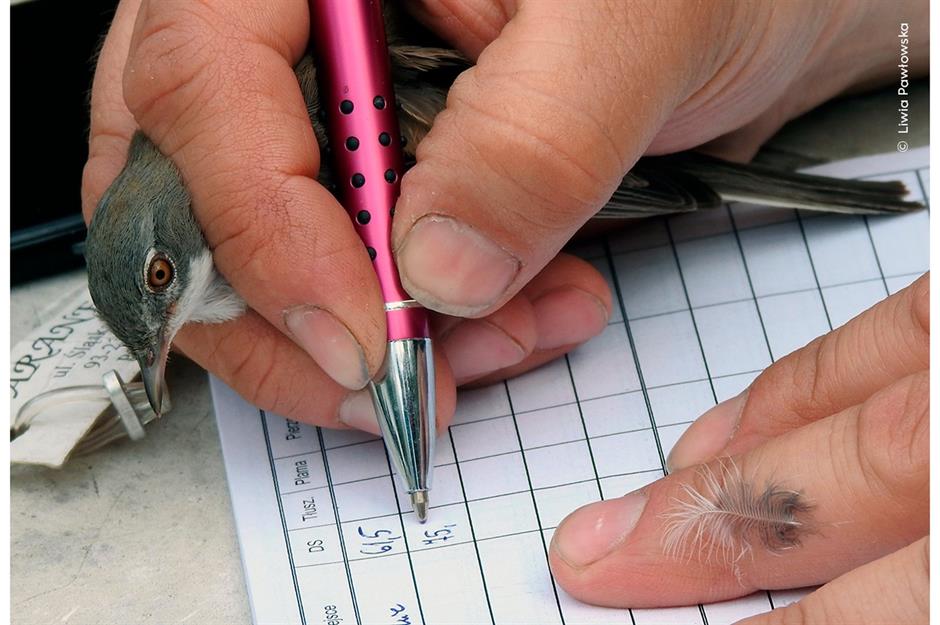
To celebrate the 60th anniversary of Wildlife Photographer of the Year, and in line with the Natural History Museum’s vision of a future where both people and planet thrive, the competition introduced the Impact Award for both the Adult and Young Photographer categories in 2024.
The Young Impact Award was given to Liwia Pawłowska of Poland for this photograph, spotlighting a process known as bird ringing. Here, a common whitethroat has its length, sex, condition and age recorded to help scientists monitor the species' population and track migratory patterns. Pawłowska has been photographing bird ringing sessions since she was just nine years old.
Sponsored Content
Hope for the Ninu
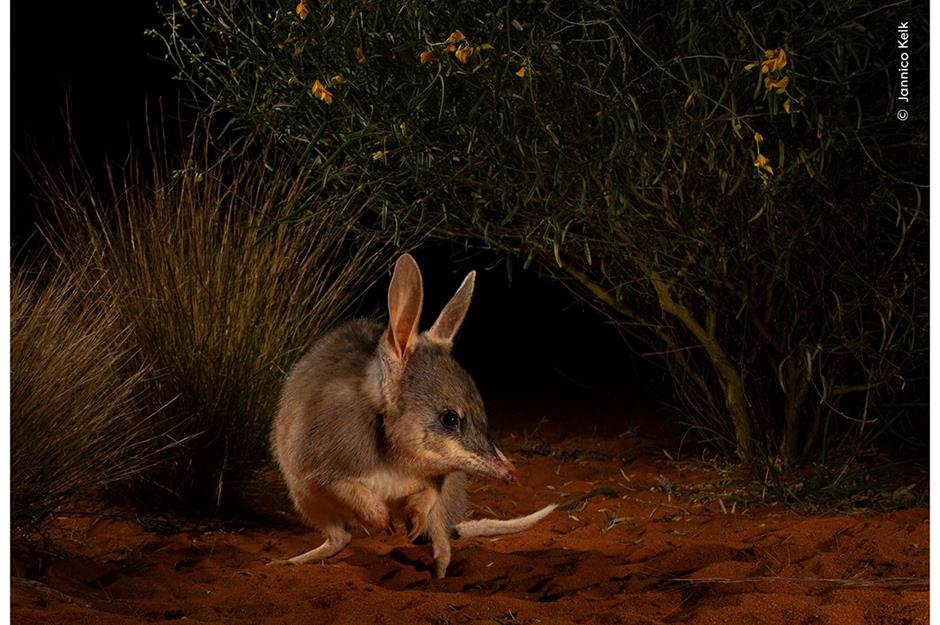
The Adult Impact Award, which recognises a conservation success, a story of hope and/or positive change, went to Jannico Kelk of Australia. He photographed the greater bilby, a small marsupial also referred to as the ninu by Aboriginal Australians, which was brought to near-extinction through predation by introduced foxes and cats.
Kelk’s image shows a ninu among red sand dunes in a fenced reserve, which has protected the species from predators and helped it thrive.
Life Under Dead Wood
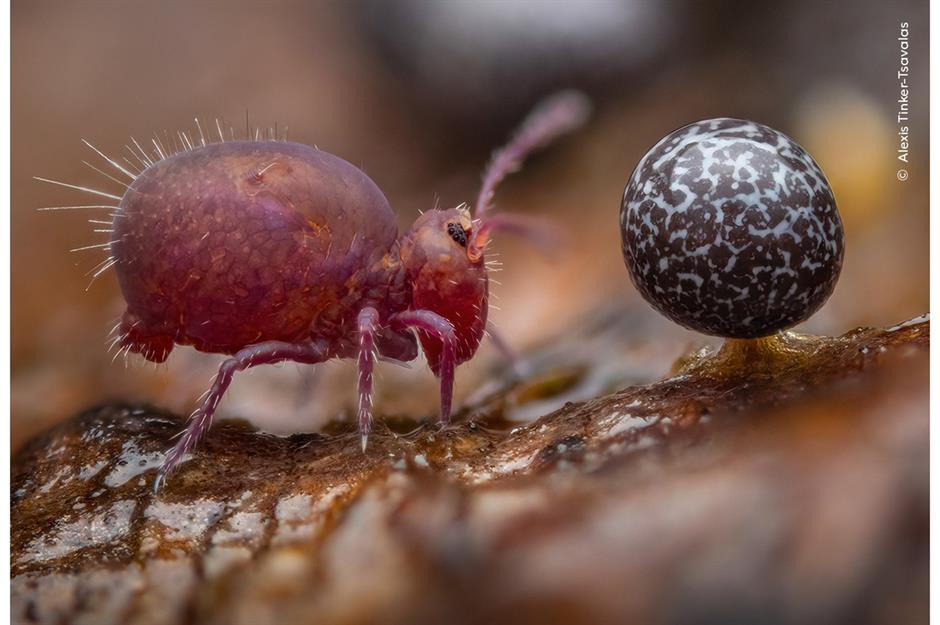
The award for Young Wildlife Photographer of the Year 2024 went to German photographer Alexis Tinker-Tsavalas, who also won the 15-17 category. Tinker-Tsavalas quickly rolled over a log to take this intriguing image of a raspberry-coloured springtail next to a ballooning slime mould, moving fast as tiny springtails can jump many times their body length in a split second.
He used a technique called focus stacking, where 36 images – each with a different area in focus – were combined. Macroscopic springtails are found in almost every corner of the globe and are vital for improving soil health, munching on microorganisms such as bacteria and fungi.
The Swarm of Life
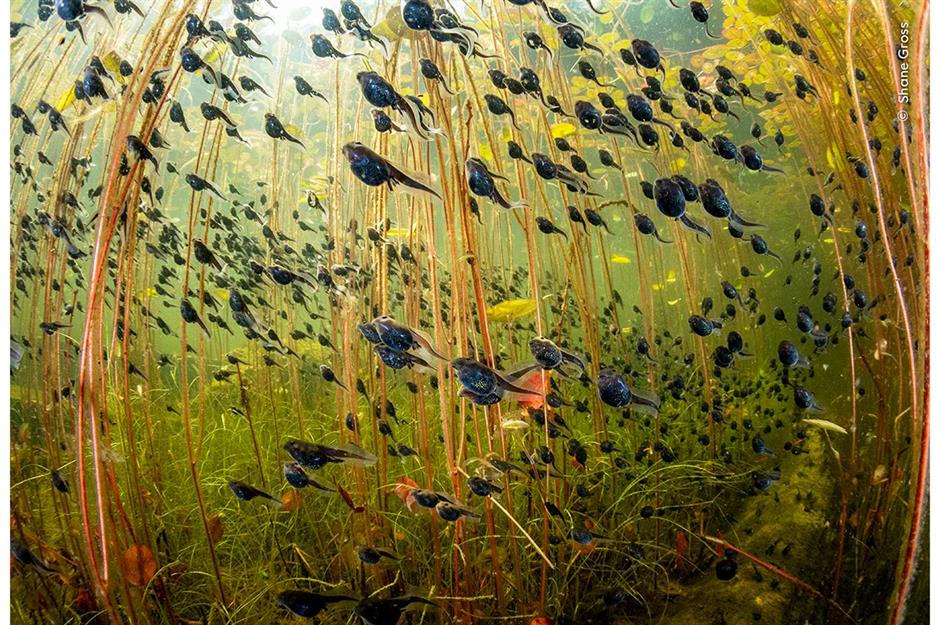
Taking home the grand prize of Wildlife Photographer of the Year 2024, Canadian marine conservation photojournalist Shane Gross also topped the Wetlands: The Bigger Picture category. Gross snorkelled Cedar Lake in British Columbia for several hours to make this photo, gliding through fields of lily pads.
Taking care not to disturb the silt and algae on the lake floor (thus maintaining visibility), he finally caught this glittering school of inky-black and gold western toad tadpoles on camera. Western toads are native to western North America, and their tadpoles have to swim up to the shallows from the safer depths of the lake to feed. An estimated 99% do not survive to adulthood.
Now check out the incredible extinct animals that once roamed our planet