The earliest photos of New York City skyscrapers
Reach for the sky
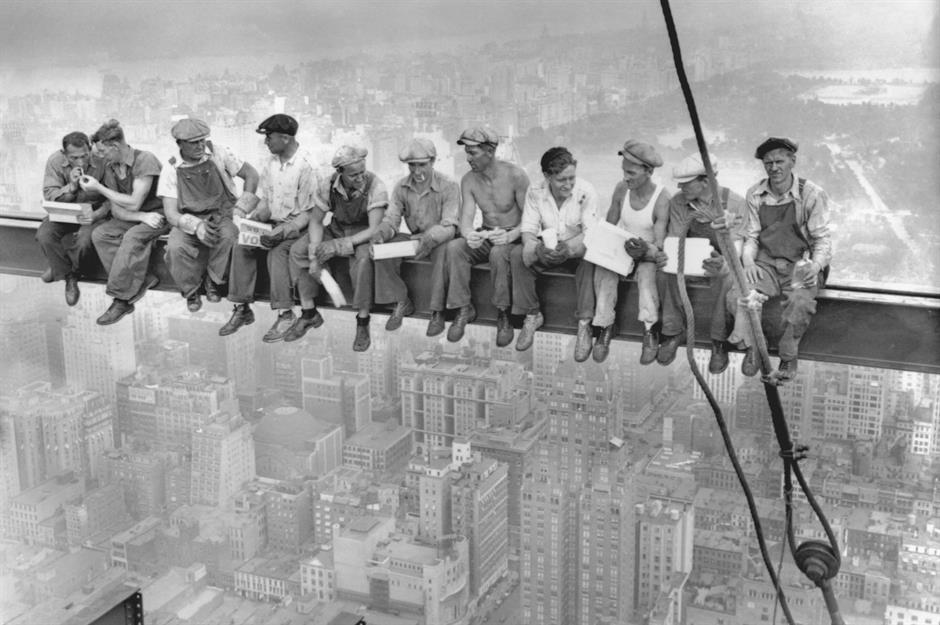
Before the age of the skyscraper, the spires of churches were the tallest buildings in America. Given the physical limitations of building in stone, few people thought it was possible to go any higher. But in the 1880s, steel-framed buildings enabled architects to dream of building into the clouds – and no city embraced the skyscraper more than land-strapped New York, where real estate developers raced to go higher than ever before and squeeze more dollars from their land.
Click through this gallery to see our collection of stunning images capturing the early days of New York’s skyscraper boom…
New York World Building
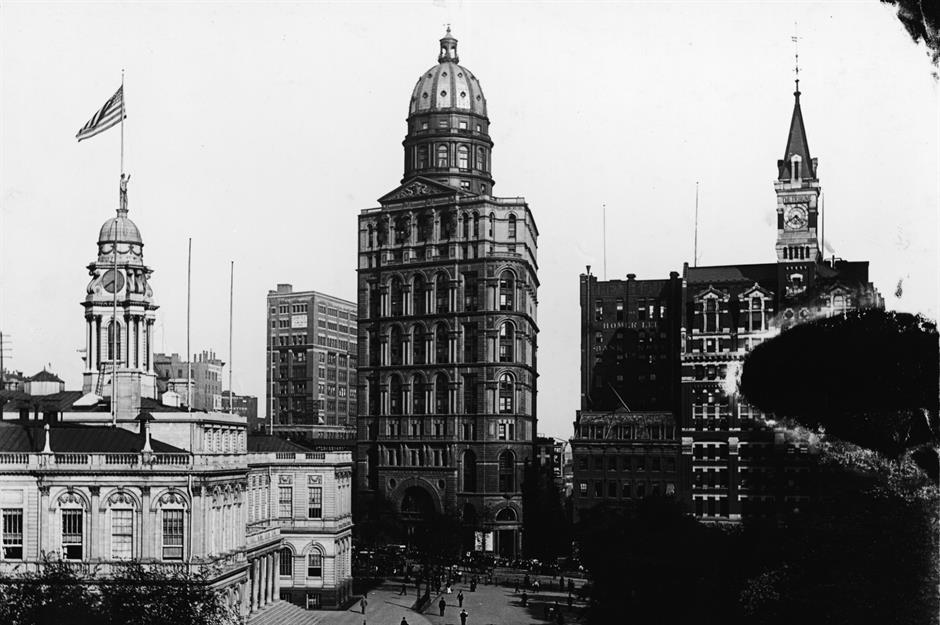
New York’s newspaper barons were early adopters of skyscrapers, Joseph Pulitzer included. He commissioned a new headquarters for the New York World in 1889, and when it was completed a year later, the New York World Building reached 309 feet (94m) – with Pulitzer’s office in its distinctive copper dome. Though the building was the first in New York to rise above 300 feet (91m), Pulitzer couldn’t resist a little journalistic exaggeration: he claimed it had 26 floors, though it actually had 18.
Flatiron Building
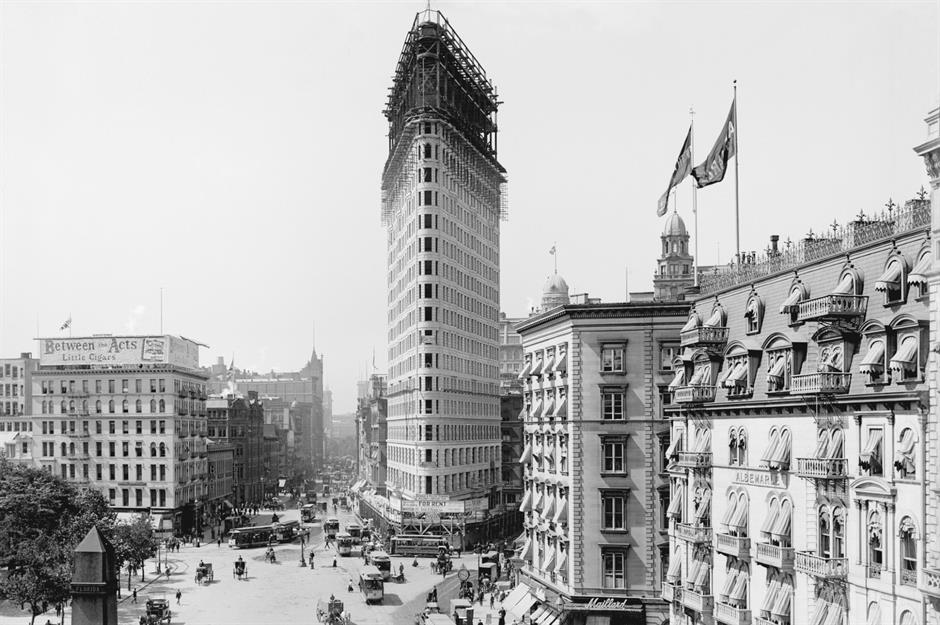
In 1892, New York building regulations were amended to allow steel skeletons that supported curtain walls. It was a technique that enabled buildings to rise far higher than before, and kickstarted a race to the sky. One of the first buildings to make use of the new method was constructed on a triangular slice of land at the junction of Broadway and Fifth Avenue. Named the Flatiron for its distinctive shape, the new building rose 282 feet (86m) in height.
Sponsored Content
Flatiron Building
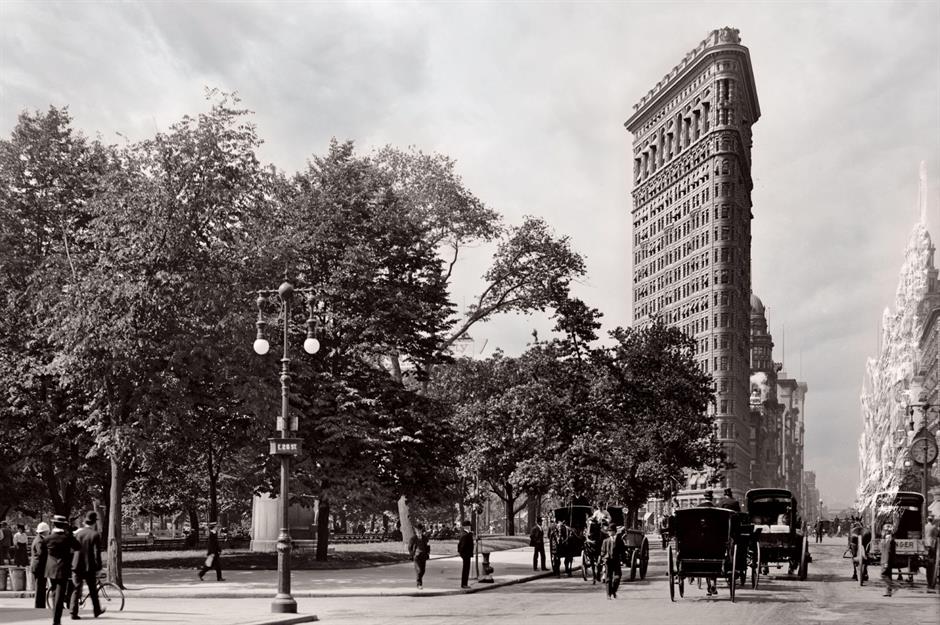
Many people lacked confidence in the new steel-skeleton buildings. They expected the Flatiron to topple over in high wind, and the press mocked it as ‘Burnham’s Folly’ after architect Daniel Burnham. But the Flatiron proved to be strong after it was opened in 1902, and it still stands today. It became an instantly recognisable part of the landscape, and for a few years was as much a symbol of NYC as the Statue of Liberty.
Singer Building
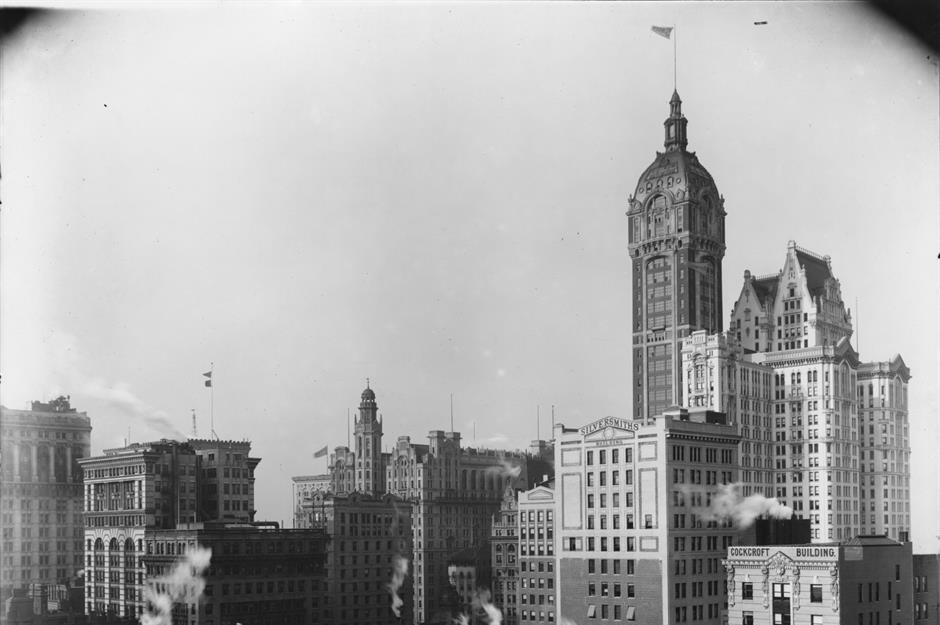
For one year, the head office of sewing manufacturer Singer was the tallest building in the world. It earned that honour in 1908 when a giant tower was added to the existing building and the roof reached 614 feet (187m) above Manhattan. You won’t see any trace of the Singer Building today though – it was dismantled in 1967 to make way for One Liberty Plaza, and it was the tallest building ever demolished until the 9/11 terror attacks struck New York.
Metropolitan Life Tower
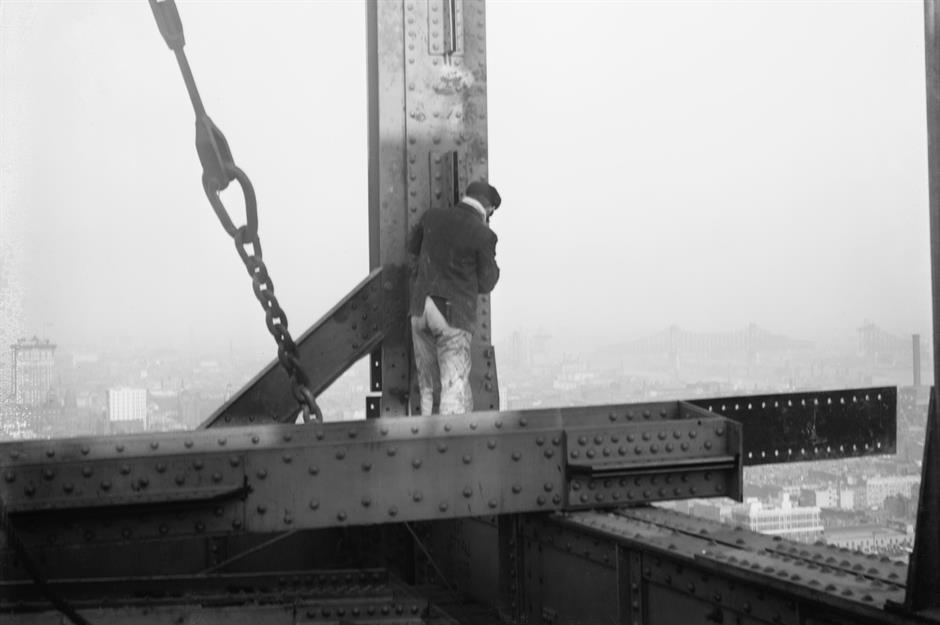
Metropolitan Life Insurance took on the mantle of owning the world’s tallest building from 1909 to 1913, when it added a tower to its headquarters. The Met Life Tower rose to 699 feet (213m) and was based on the belltower of St Mark’s Basilica in Venice. The steel skeleton was encased in a bright marble exterior with a high-pitch roof that contained a lantern glowing from within. Metropolitan Life even incorporated it into its adverts under the slogan 'the light that never fails'.
Sponsored Content
Metropolitan Life Tower
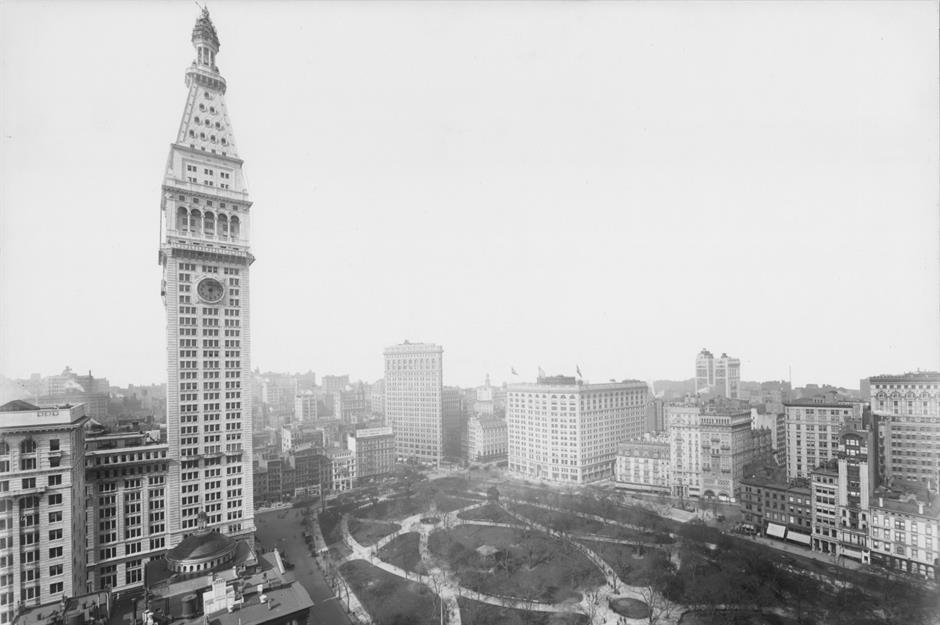
Positioned at 1 Madison Avenue, the Met Life Tower overlooks Madison Square Park – although the view has changed since this photograph was taken. The tower underwent significant renovation in 1960. The original marble cladding was replaced with limestone, classical detailing was ripped off and the cornice was removed. The clock faces on each side were left in place however, and the lantern at the top of its spire was maintained.
Bankers Trust Building
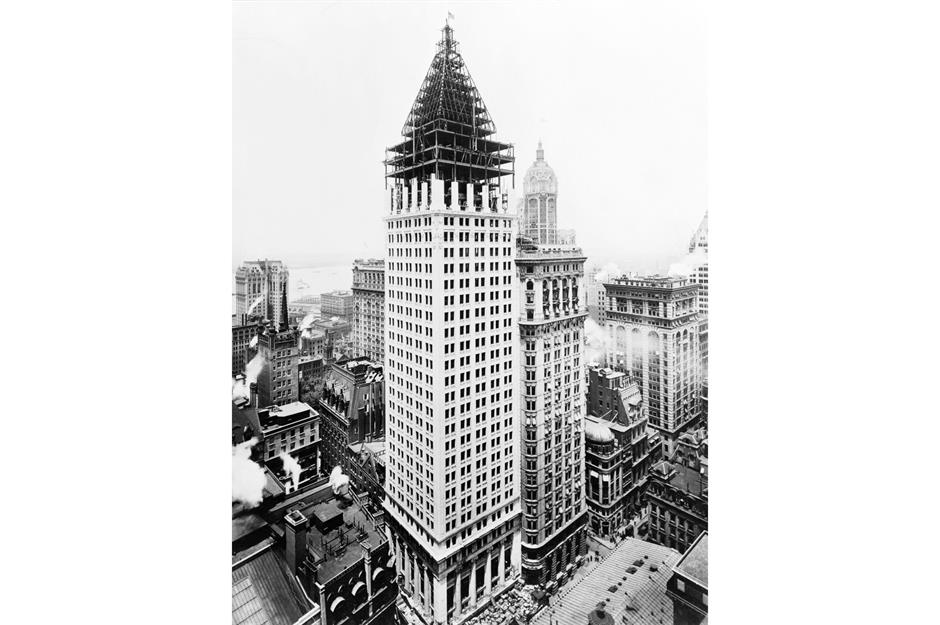
Since it was built for a financial company with links to JP Morgan, it’s fitting that the land used for the Bankers Trust Building was the most expensive per square foot when it was purchased. The building was finished in 1912 and only the bottom three floors were used by the Bankers Trust. The rest included 27 floors of residential apartments and a pyramid-shaped roof used for document storage.
Woolworth Building
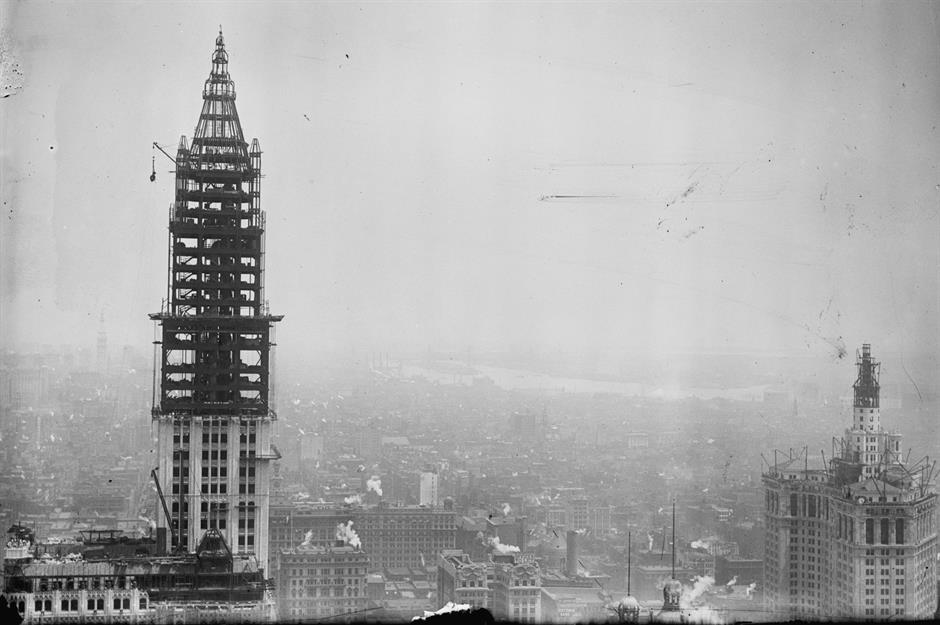
Frank Woolworth, the king of American five-and-dime stores, didn’t set out to build the world’s tallest building. He initially wanted a store that was part of a building just 20 floors high, but he changed his plans after he acquired a bigger parcel of land in downtown Manhattan. Woolworth hired architect Cass Gilbert to design a 748-foot (228m) building that would surpass the Metropolitan Life Tower, and by the time the final plans were in, the Woolworth Building had stretched to 790 feet (241m).
Sponsored Content
Woolworth Building
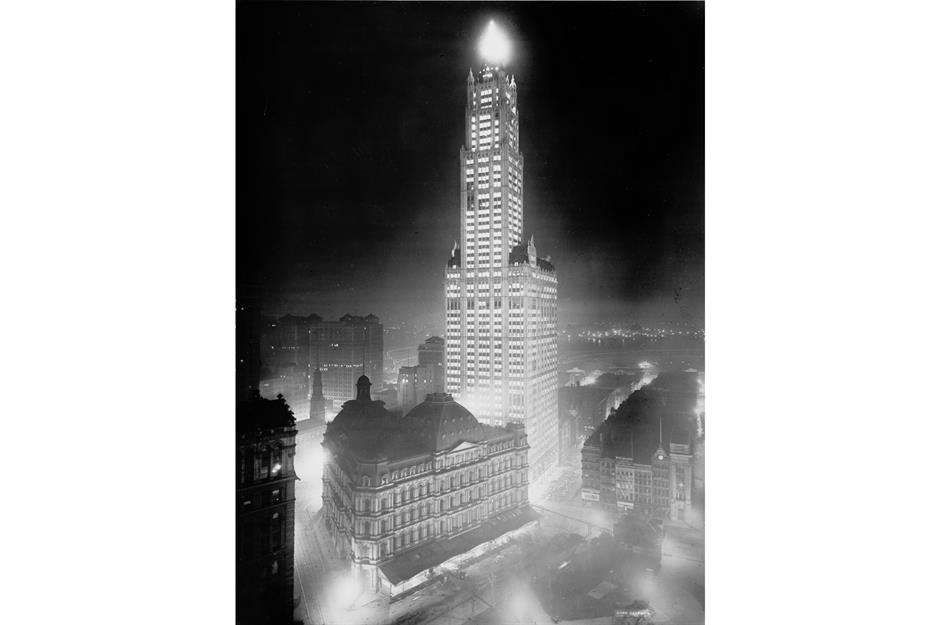
Woolworth’s record-breaking building was opened with a grand nighttime ceremony, pictured here, on 24 April 1913. President Woodrow Wilson pressed a button in the White House that switched on every light in the Woolworth Building, and the brilliant white beacon on the roof comprised of 20 1,000-watt bulbs. Although the electricity bill rocketed, Frank Woolworth deemed the PR to be worth every cent.
Woolworth Building
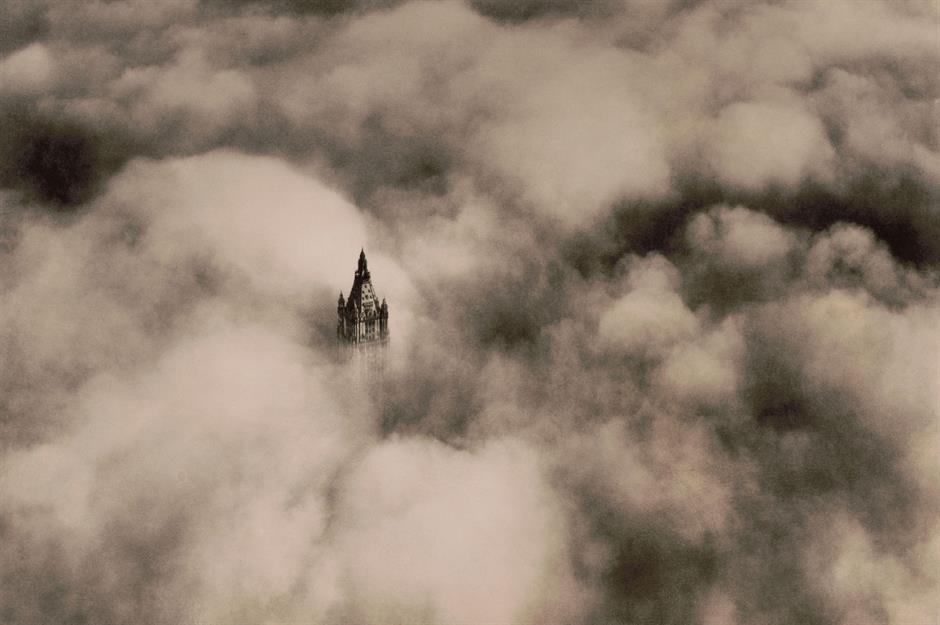
Although the Woolworth Building was known as the Cathedral of Commerce, the Woolworth store only took up a floor and a half. The rest was rented out as office or retail space, and tenants included a shopping arcade, health club, barber shop, restaurant and social club. Users enjoyed unrivalled bird’s-eye views across the Big Apple, although there were many days when the upper floors were blanketed in cloud and fog. That problem didn’t usually affect Frank Woolworth himself. His personal office was lower down on the 24th floor, and he had a private pool in the basement.
New York Life Building
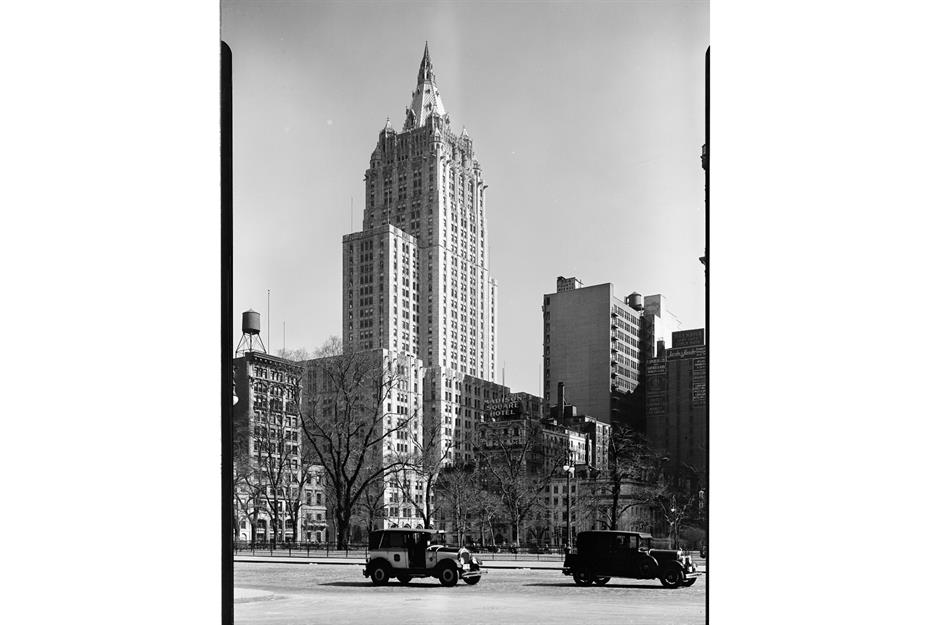
Cass Gilbert, the architect of the Woolworth Building, returned to New York when he designed the slightly shorter, 613-foot (187m) New York Life Building. The original Madison Square Garden indoor arena was demolished to make way for the new skyscraper, which took two years to build and was completed in 1928. Its crowning feature was an octagonal pyramid coated in gold leaf that dazzled in the sun.
Sponsored Content
Bank of Manhattan Trust Building

With a frontage on 40 Wall Street in the heart of New York’s famed financial district, this 928-foot (283m) tower was constructed at the same time as the Chrysler Building. Time was of the essence. Working 24 hours a day, construction crews erected the steel skeleton higher and higher. Here, intrepid photographer Jack Reilly hangs from the partly constructed building to record progress, and the Woolworth Building can be seen in the background.
Bank of Manhattan Trust Building
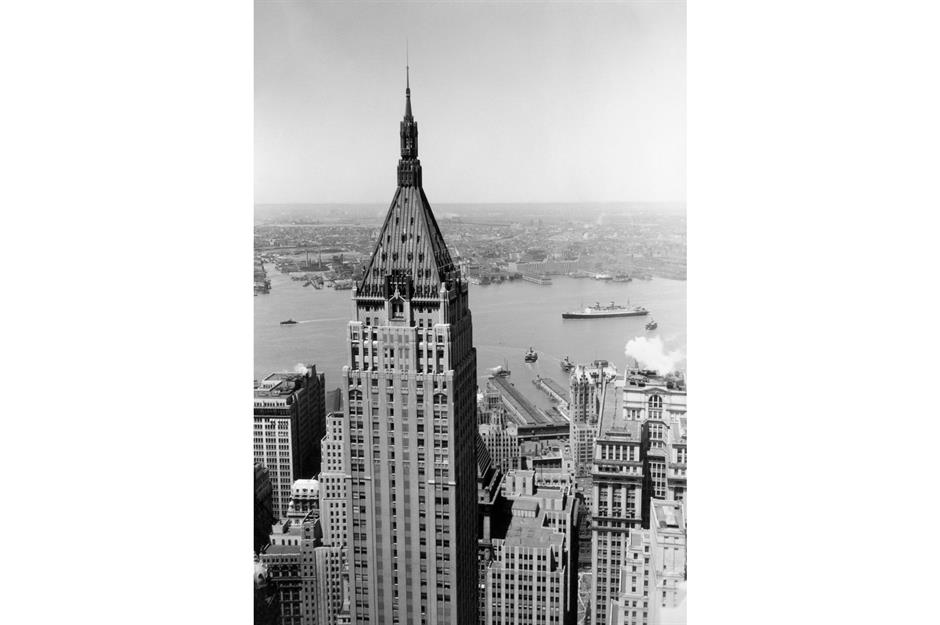
Opened in May 1930, less than a year after the Wall Street Crash, America’s tumbling economy had an impact on this building’s fortunes. Prospective tenants reneged on their leases and office space wasn’t fully rented until 1944, nearly 15 years after its construction. Two years later, an army transport plane crashed into the 58th floor, killing all five people on board. Real estate magnate and future president Donald Trump bought it for just £6 million ($8m) in 1995.
Chrysler Building

Architect William Van Alen began work on a skyscraper in Manhattan’s East Side in 1927 on behalf of former senator William Reynolds, but the project shuddered to a halt a year later when Reynolds ran out of cash. Thankfully, car manufacturer Walter Chrysler bought the plot and retained Van Alen’s services. The Chrysler Building went up at the same time as the Bank of Manhattan Trust Building and reporters excitedly predicted which skyscraper would end up being the tallest, but Van Alen had a trick up his sleeve.
Sponsored Content
Chrysler Building
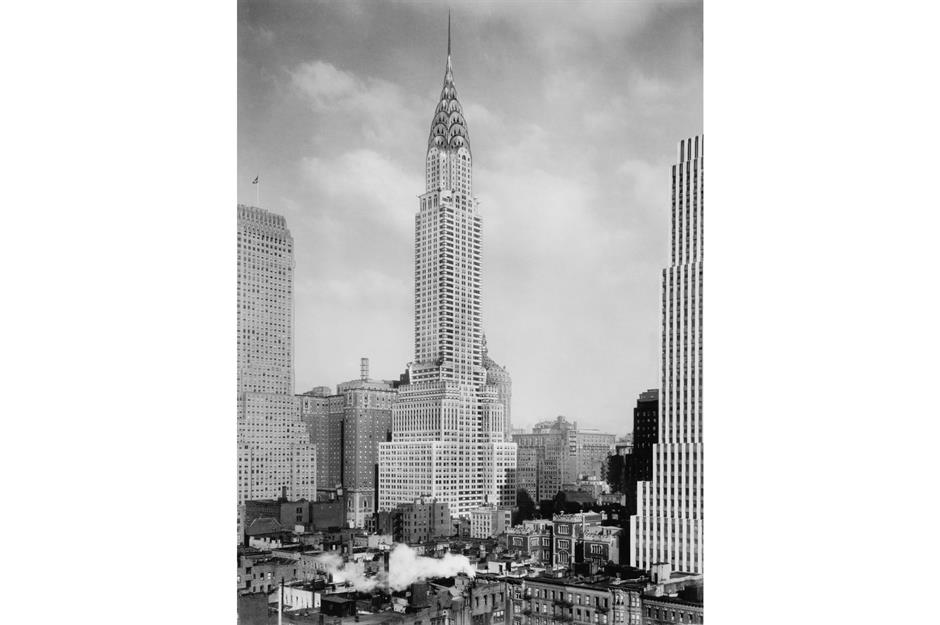
William Van Alen’s clever idea was to have a 125-foot (38m) spire delivered to the Chrysler Building in five sections and secretly constructed inside the frame. On 23 October 1929, the spire was raised through the dome roof and bolted into place. The operation took just 90 minutes and meant that the Chrysler Building reached 1,046 feet (319m), making it the first skyscraper to go higher than the Eiffel Tower.
Chrysler Building
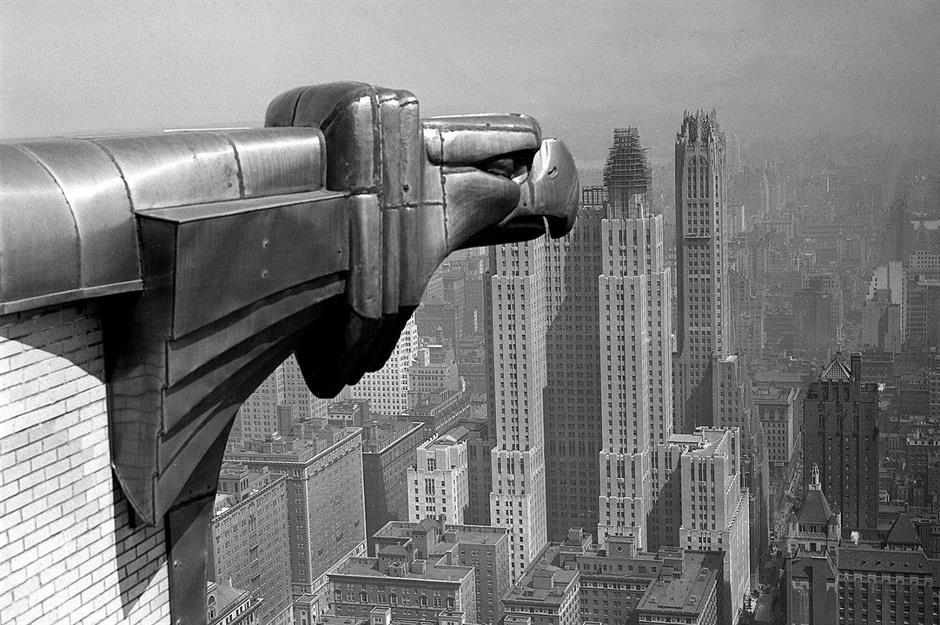
Not everybody was a fan of the Chrysler Building’s decorative, non-functional top, and many derided the sneaky way that William Van Alen won the crown for world’s tallest building. Even so, the Chrysler Building soon won over New Yorkers after it was officially opened in May 1930. The 71st-floor observation deck drew hundreds of thousands of visitors before it was closed in 1945, and the stunning geometric Art Deco decoration means that the Chrysler Building is now one of the city’s most-loved landmarks.
City Bank–Farmers Trust Building
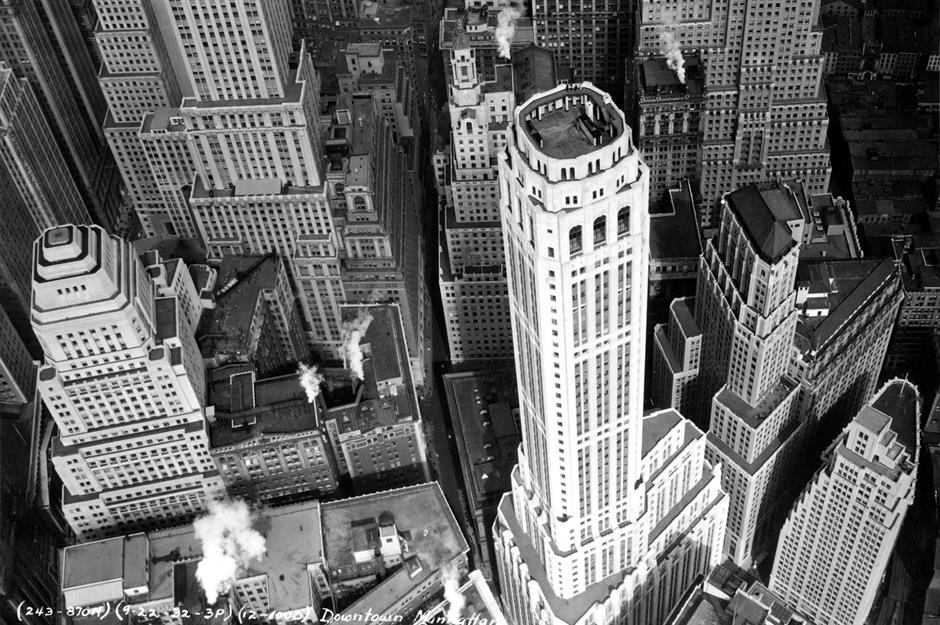
When National City Bank and the Farmers Trust and Loan Company joined forces in 1929, they planned to announce their merger with a big stunt – they’d build the tallest tower in the world. The Wall Street Crash meant that they had to downsize their expectations a little, but the result was still a 741-foot (226m) giant, although the new blueprints didn’t include an illuminated globe on top as originally planned.
Sponsored Content
Empire State Building

In September 1929, real estate developers acquired the Waldorf-Astoria Hotel and announced plans to replace it with the Empire State Building – a skyscraper the likes of which had never been seen before. Architectural firm Shreeve, Lamb and Harmon submitted the blueprints and construction began in March 1930. Just seven months later, the steel frame reached its highest extent – and as this photograph shows, it was considerably higher even than the Chrysler Building.
Empire State Building
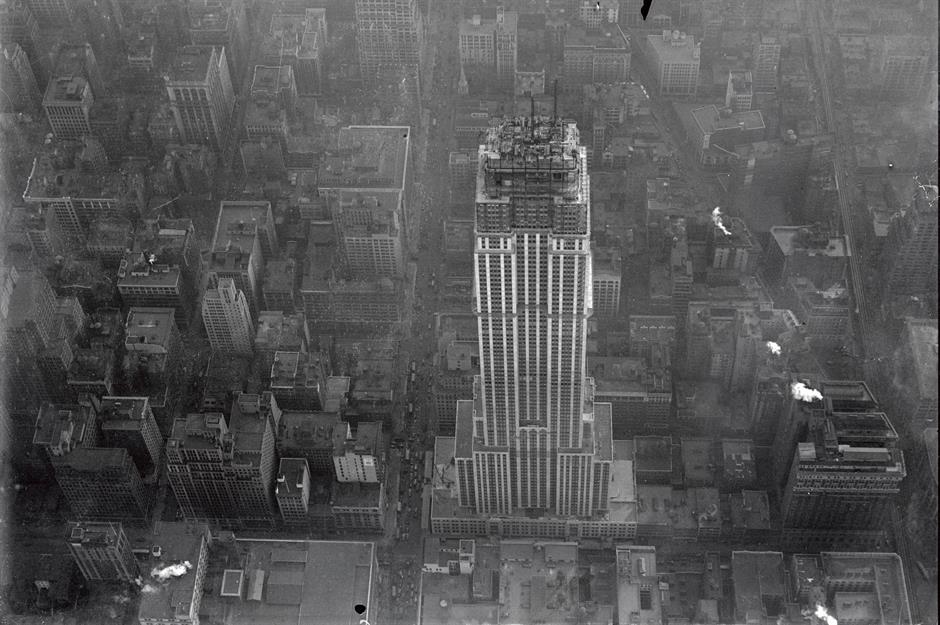
At the peak of construction, 3,500 workers were employed on the Empire State. The 57,000-tonne (62,831-ton) steel structure was encased with 10 million bricks and 1,553,000 cubic feet (44,000 cubic metres) of concrete. Easy access to the roof was possible after 67 separate elevators were installed. Over the next few weeks, glazers put in 6,400 windows and plumbers laid 51 miles of pipe to service 2,500 toilets. Most amazingly, it was all done in just 11 months.
Empire State Building
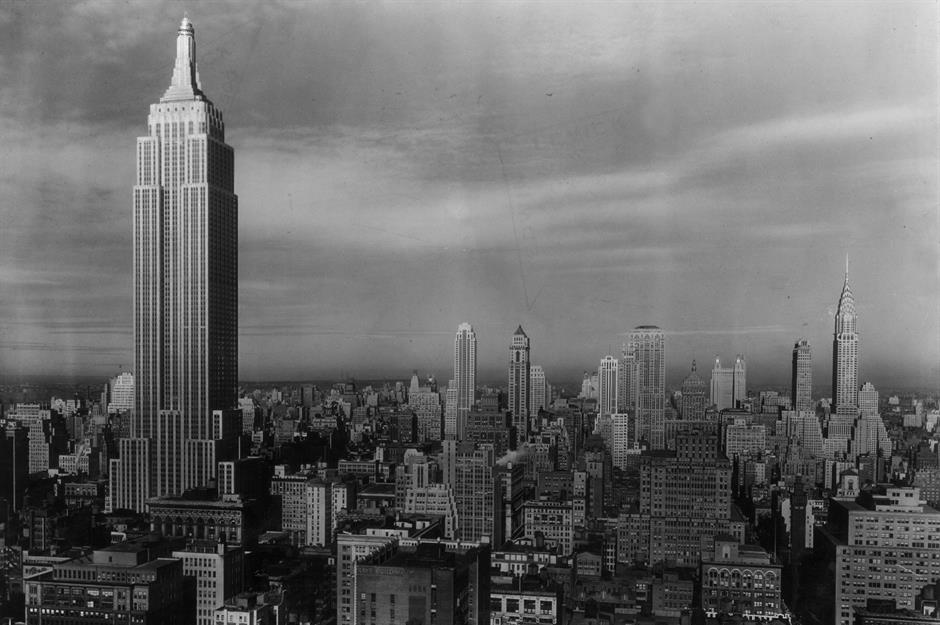
When it was finally opened on 1 May 1931, the Empire State Building was the tallest building in the world. At 1,250 feet (381m), it topped the Chrysler Building by 200 feet (61m). The Empire State remained the world’s tallest building until the first tower of the World Trade Center was completed in 1970 – and after the 9/11 attacks, it became New York’s tallest building once more.
Sponsored Content
Empire State Building
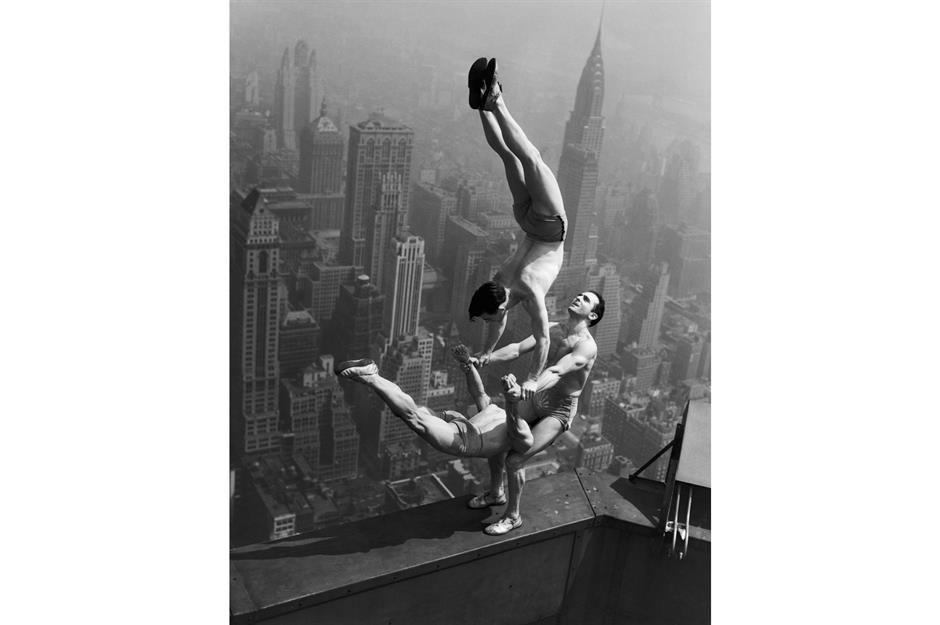
The Empire State Building soon became the venue of choice for PR stunts. In 1932, movie star Mary Pickford released hundreds of balloons from the roof. Lucky New Yorkers who found a balloon after it had fallen back to earth could swap it for two tickets to Barnum and Bailey’s Circus. Two years later in 1934, an acrobat troupe known as the Three Jacksons sought free publicity for their show by performing a balancing act on the observation deck. A cameraman made sure to capture the stunt for the following day’s papers.
Empire State Building
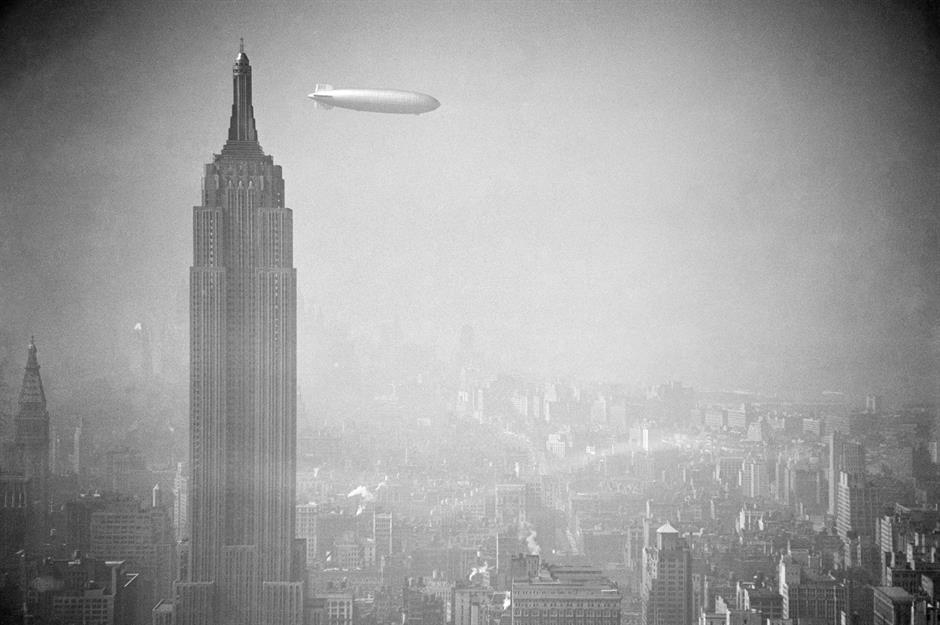
Although the Empire State’s roof topped out at 1,250 feet (380m), the antenna stretched up to 1,453 feet (443m) – and it wasn’t just for show. The building’s owners hoped to make it into a mooring post for airships, allowing passengers to disembark onto the roof. Unfortunately, it was an utterly impractical plan. Only one airship ever tied up to the mooring post, in September 1931. It took the captain 30 minutes to manoeuvre into position, and he had to cast off after just three minutes as 40 miles per hour (64km/h) winds whistled over New York.
500 Fifth Avenue
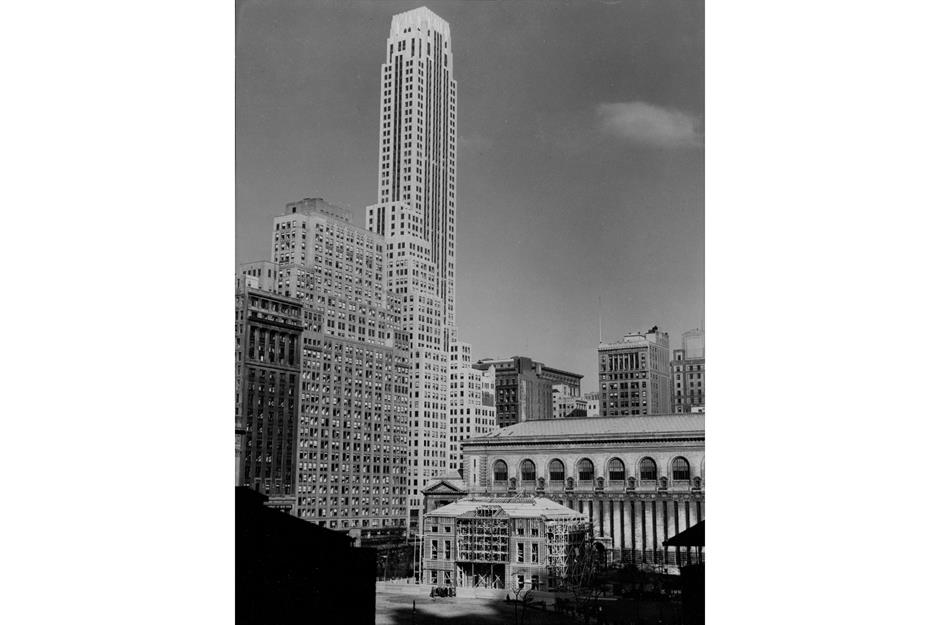
Nine blocks away from the Empire State Building, another skyscraper was constructed at the same time – but it went under the radar compared to its taller cousin. 500 Fifth Avenue was the second-most valuable undeveloped parcel of real estate after 1 Wall Street, and businessman Walter J. Salmon wanted to unlock its potential. His 695-foot (212m) tower's tenants included the Austrian and Japanese consulates – both countries would be at war with the USA within a decade.
Sponsored Content
Cities Service Building
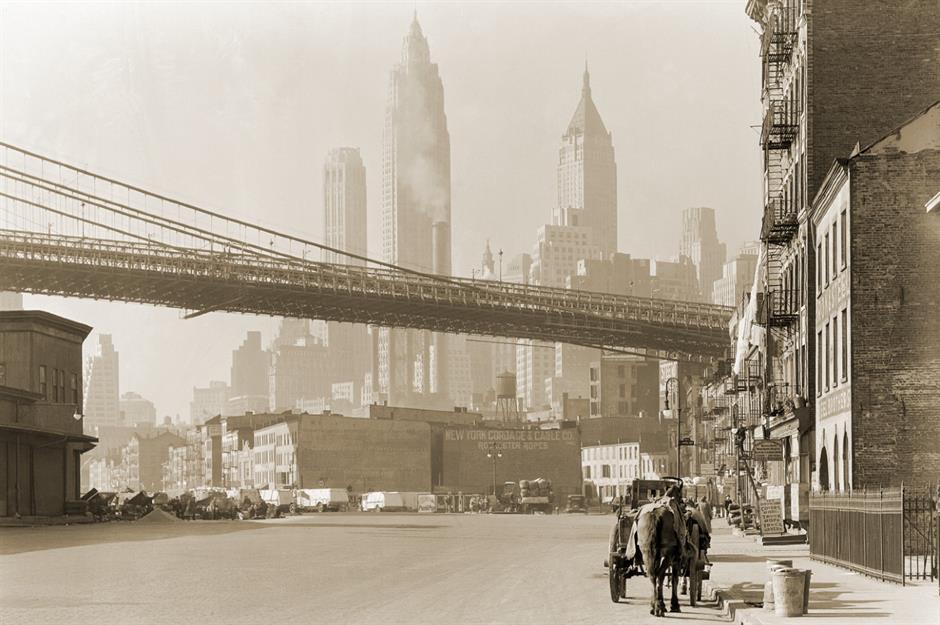
At 951 feet (290m), the Cities Service Building was the third-tallest building in New York and the world when it opened in 1932. Pictured here flanked by the City Bank–Farmers Trust Building and the Bank of Manhattan Trust Building, the Cities Service Building was squeezed onto a small site at 70 Pine Street. Architects had to think laterally to make full use of the space. They included double-decker elevators to help keep workers moving while minimising the space they used.
Cities Service Building
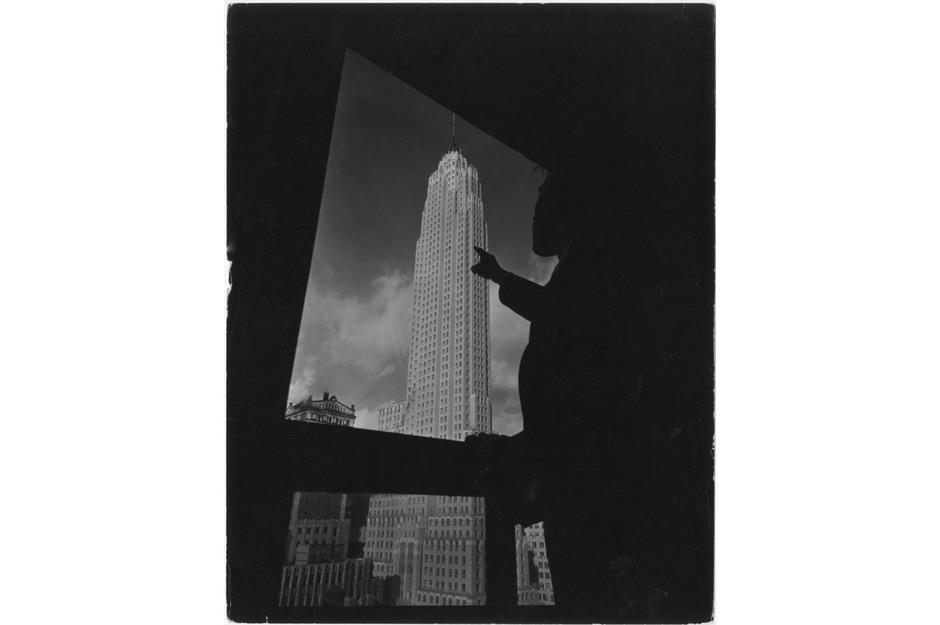
The Cities Service Building gradually narrowed as it rose thanks to a series of setbacks. Its Art Deco styling included the triangular logo and solar motif of the building’s owner, the energy conglomerate Cities Service Company. Interior decoration included a colourful geometric, ornate design which incorporated motifs from the classical world, and the exterior was one of the first to feature aluminium ornamentation.
Irving Trust Company Building
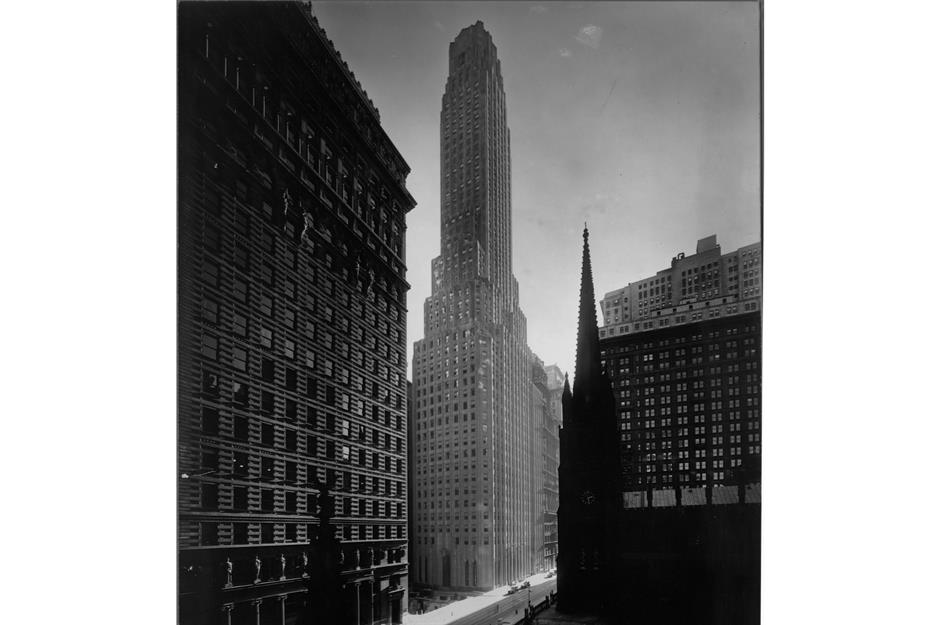
Although the Irving Trust Company Building fronts onto 1 Wall Street, architect Ralph Walker took inspiration from the other street on the intersection: Broadway. He designed a tower with a limestone wall that ripples like a curtain descending on a theatre stage. Walker’s blueprints didn’t make full use of its full building lot and New York law stated that unoccupied land reverted to public ownership, so the Irving Trust Company embedded metal plaques in the unused land to ensure that they kept hold of it.
Sponsored Content
RCA Building
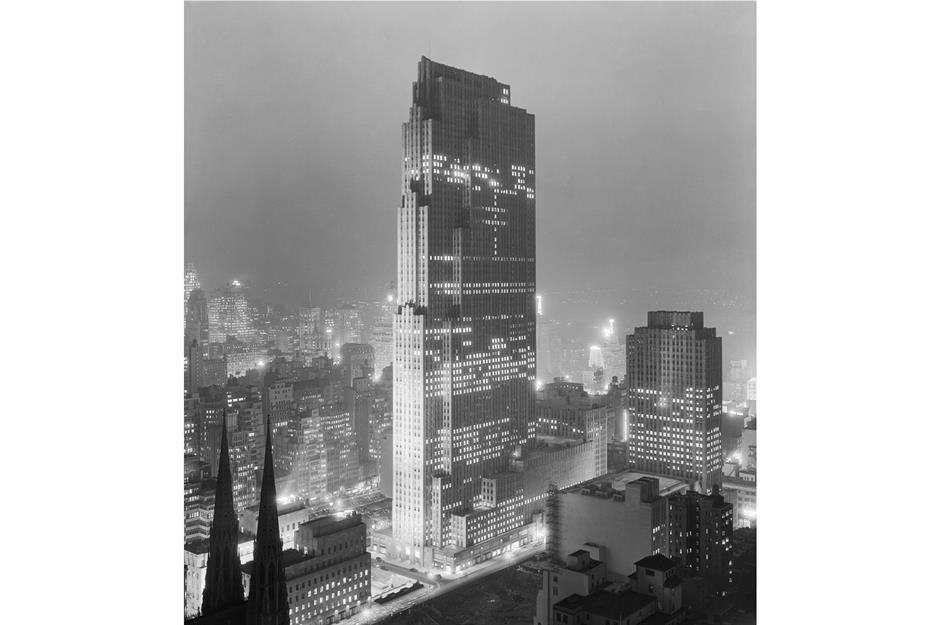
The Rockefeller Center in Midtown Manhattan was unprecedented in its ambition. Three full blocks of low-rise, low-rent offices were pulled down and a high-rise business park went up in its place. The skyscraper that caught everybody’s attention was the 850-foot (260m) tower built for the Radio Corporation of America at 30 Rockefeller Plaza, seen here under construction. Nowadays, Comcast is the primary tenant, although most know the building as 30 Rockefeller Plaza, or 30 Rock.
RCA Building

One of the most iconic photographs in American history was taken during construction of the Rockefeller Center. It captures 11 ironworkers casually eating while balanced on a steel beam near the RCA Building’s summit. Nobody knows for certain who took the shot nor who the workers are, but experts are sure that it was taken during a staged photoshoot to promote the new skyscraper – although that doesn’t mean that the danger these men faced on a day-to-day basis was any less real.
RCA Building
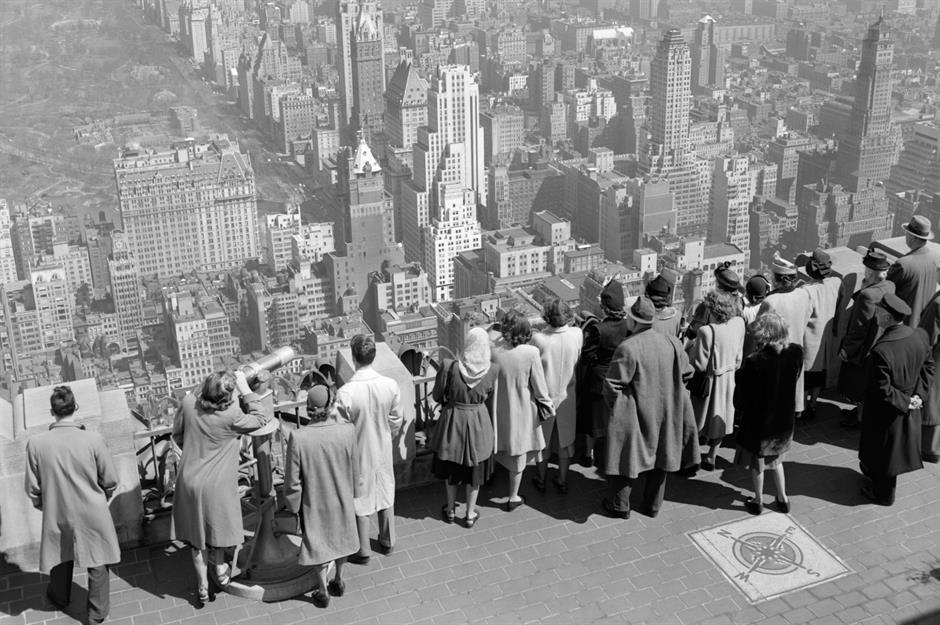
Unlike most skyscrapers that narrowed towards the top and had spires and decorative cornices for extra height, the RCA Building was a mostly non-tapering tower with a flat roof. That allowed for a rooftop garden and open-air observation platform that gave an unrivalled view of Central Park (shown here on the upper left).
Sponsored Content
RCA Building
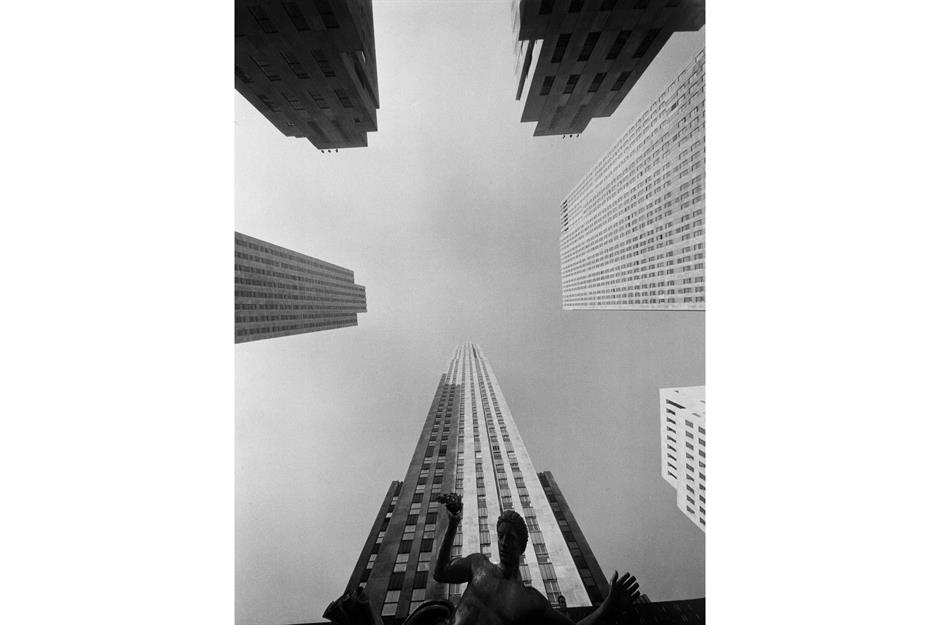
The RCA building marked the end of New York’s skyscraper mania. The impact of the Great Depression meant that no new skyscrapers were begun in Manhattan until the 1950s, and the Empire State Building wouldn’t be topped as the world’s tallest building until 1970.
Now explore these stunning New York City photos that are all over 100 years old