See How Climate Change Uncovered 11 Underwater Ruins
Out of the depths
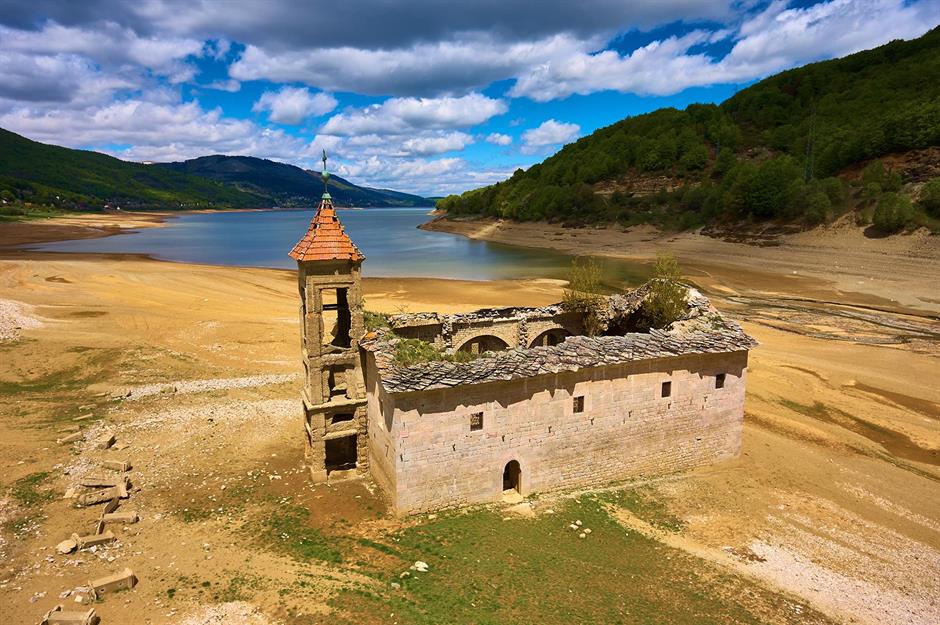
We're used to reports that climate change will soon plunge the world's beloved landmarks underwater. But some places have an opposite story: once engulfed by water, they are now reemerging due to extremely low rainfall. Read on to discover the fascinating tales and amazing photos of places once hidden underwater.
Aceredo, Galicia, Spain

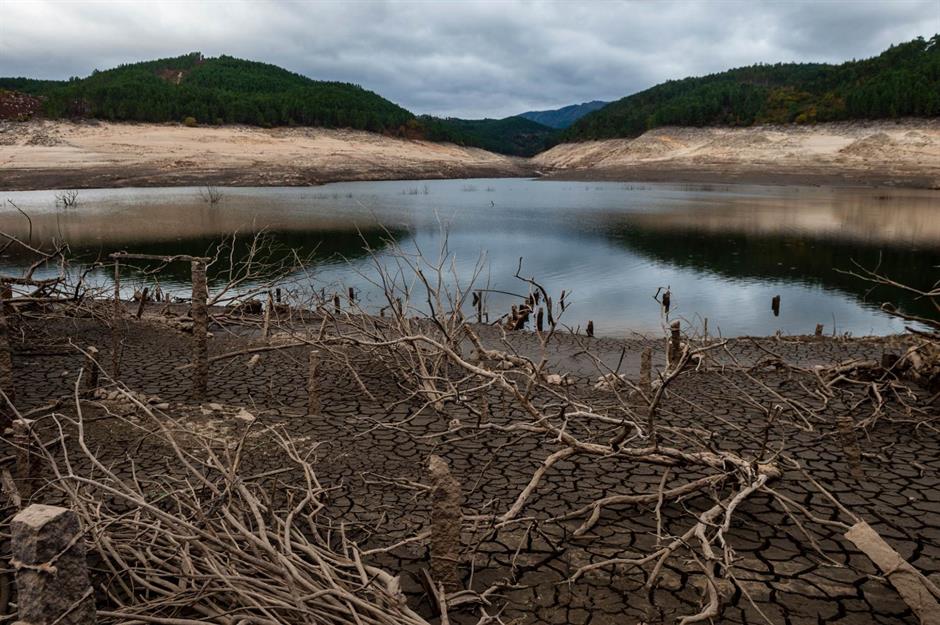
In 1992, the village of Aceredo in northwestern Spain was submerged when a Portuguese hydroelectric plant closed its floodgates, creating the Lindoso Reservoir. Some of its 250 residents were given financial compensation to leave their homes, but others refused.
Aceredo, Galicia, Spain

Sponsored Content
Aceredo, Galicia, Spain

Aceredo, Galicia, Spain

Sponsored Content
Aceredo, Galicia, Spain

Aceredo, Galicia, Spain

Meanwhile, parts of the village remain strikingly well-preserved: roads, pathways and farmland are still visible and there’s even a water fountain.
Aceredo, Galicia, Spain

Sponsored Content
Aceredo, Galicia, Spain

Aceredo, Galicia, Spain

Aceredo, Galicia, Spain

Sponsored Content
Aceredo, Galicia, Spain
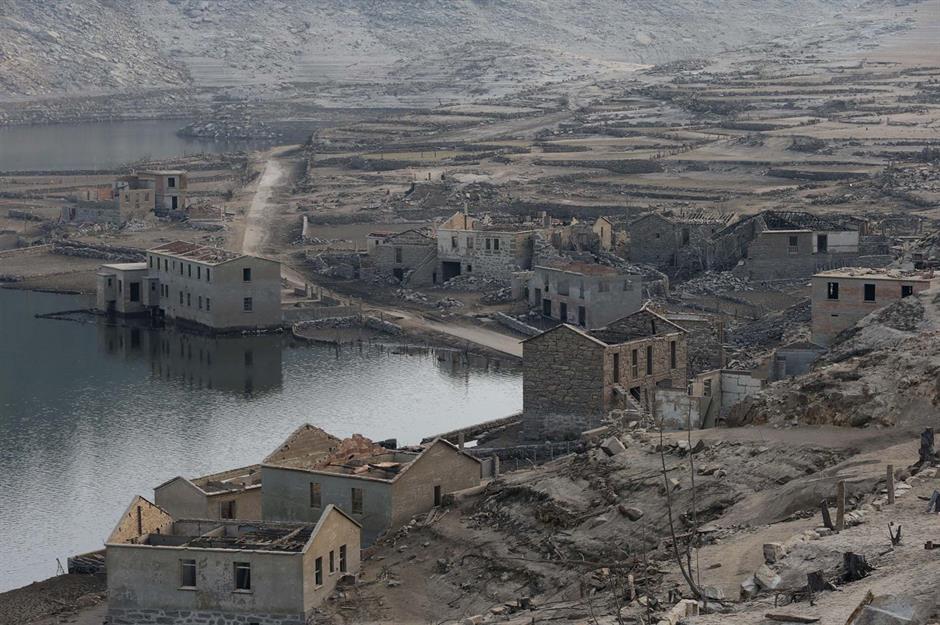
"It's as if I'm watching a movie. I have a feeling of sadness," said 65-year-old pensioner Maximino Perez Romero when speaking to Reuters. "My feeling is that this is what will happen over the years due to drought and all that, with climate change."
Aceredo, Galicia, Spain
Villa Epecuén, Buenos Aires, Argentina

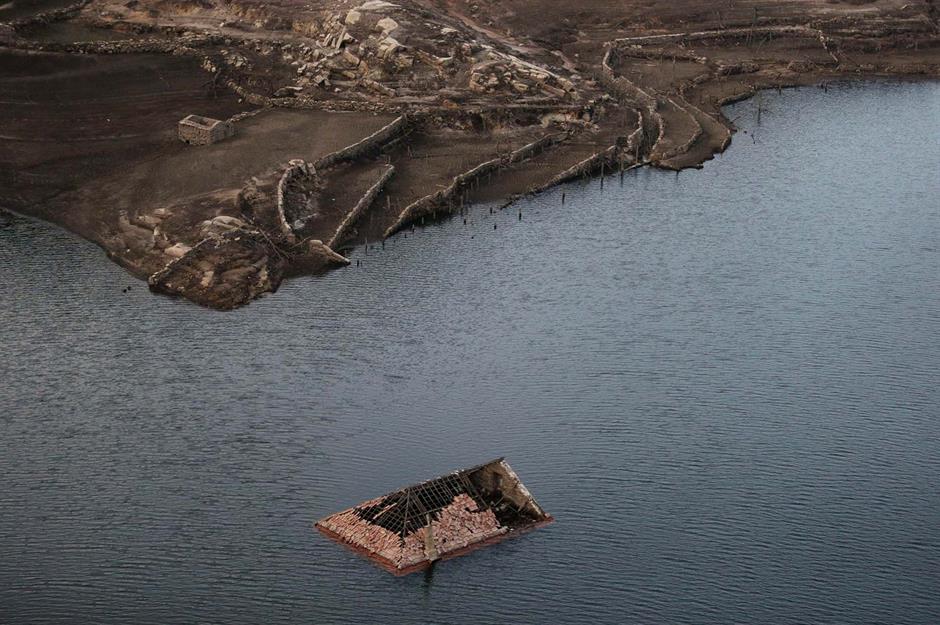
Villa Epecuén, hugging a salt lake in the province of Buenos Aires, was once one of Argentina's most sought-after spa resorts. But tragedy struck in the 1980s when unprecedented amounts of rain caused Lago Epecuén to swell. The tourist town was guzzled up by some 33 feet (10m) of saltwater and – so it seemed – lost forever.
Sponsored Content
Villa Epecuén, Buenos Aires, Argentina

Villa Epecuén, Buenos Aires, Argentina

Dolmen of Guadalperal, Extremadura, Spain

The Dolmen of Guadalperal – dubbed "the Spanish Stonehenge" for obvious reasons – is a megalithic monument with a 7,000-year history. The 150-strong stone circle is a quick jaunt from the western Spanish town of Peraleda de la Mata, and it has spent upwards of 50 years underwater.
Sponsored Content
Dolmen of Guadalperal, Extremadura, Spain

Dolmen of Guadalperal, Extremadura, Spain

As temperatures soared, a drought-ravaged Spain and the Tagus River peeled back from its banks. The dolmen – possibly used as a gravesite or temple – revealed itself once more, though some of its stones were damaged and toppled. And when the rain came again, the landmark was submerged once more. Still, though, the monument's brief outing sparked demands that it be protected as an Asset of Cultural Interest.
Ancient port city, Mahabalipuram, India

When the devastating 2004 Indian Ocean tsunami hit, people on Mahabalipuram's shores were convinced they spotted a curious site: a series of boulders that revealed themselves just as the tide drew back. When the waters rushed forwards again, the structures were swallowed once more, and more than a decade would pass before the eyewitness accounts were investigated.
Sponsored Content
Ancient port city, Mahabalipuram, India

When archaeologists eventually excavated the site, they indeed discovered a complex of walls and boulders, while dives revealed a flight of stairs and a series of stone blocks. It's thought that the ruins are either the traces of an ancient port city, or perhaps the vestiges of a centuries-old temple.
Potosi, Táchira, Venezuela

Potosi, a town in north-western Venezuela, once had a population of around 1,200 people – but when a hydroelectric power plant was built, and the Uribante Reservoir created, the original settlement was flooded and its inhabitants moved elsewhere. Captured in 2005, this eerie image shows what remained of the once-buzzy town: a rusting steeple rising from gray, mountain-fringed waters.
Potosi, Táchira, Venezuela

Sponsored Content
Potosi, Táchira, Venezuela

Eventually, the waters receded enough to reveal the entire church – an empty husk with only its façade left standing. Other foundations of the ruined village have shown themselves too, along with a handful of haunting gravesites. Now tourists and cattle wander between the structures, imagining what life in the drowned village might once have looked like.
Muang Badan, Kanchanaburi province, Thailand

Muang Badan is another historic city that was submerged when a dam was built: the Vajiralongkorn Dam, to be exact, which dates to the 1980s and which formed the Khao Laem Reservoir. A remarkable trio of temples were gulped up by the reservoir, parts of which can still be seen peeping above the surface. This photo shows boat-trippers drinking in the view of an intricate bell tower rising from the lake.
Muang Badan, Kanchanaburi province, Thailand

Sponsored Content
Muang Badan, Kanchanaburi province, Thailand

Pavlopetri, Peloponnese, Greece

Though they could easily be mistaken for craggy rocks, these formations off the coast of mainland Greece are actually the edge of a sunken settlement, gradually revealed by lapping waves. It's thought that the ancient city of Pavlopetri dates back around 5,000 years and that it was submerged by an earthquake around 1,000 BC. Investigations have revealed a maze of streets, a temple and a big central plaza.
Bronze Age palace, Kurdistan Region, Iraq

Sponsored Content
Bronze Age palace, Kurdistan Region, Iraq

They discovered what they now believe to be a Bronze Age palace, most likely dating to the era of the Mittani Empire (powerful from the 15th to the 14th century BC). The impressive structure is comprised of mud-brick walls, some as thick and tall as six feet (2m) in places.
Bronze Age palace, Kurdistan Region, Iraq

Mansilla de la Sierra, La Rioja, Spain

The Spanish town of Mansilla de la Sierra is a chilling sight. It was once home to around 600 people but – in a familiar story – a dam built in the 1960s forced inhabitants out and left Mansilla de la Sierra moldering underwater. However, during dry spells, the ghost town rears its head once more.
Sponsored Content
Mansilla de la Sierra, Spain

Fabbriche di Careggine, Tuscany, Italy

Lake Vagli, in the Tuscan countryside is more than just a reservoir – it conceals an entire medieval village in its waters. Fabbriche di Careggine was submerged in 1946 after a dam was built further up the lake plunging the village under 1.2 billion cubic feet (34 million cubic meters) of water. The then residents were relocated further south to another village, Vagli di Sotto.
Fabbriche di Careggine, Tuscany, Italy

Sponsored Content
Fabbriche di Careggine, Tuscany, Italy

In 2020 there were rumors the lake would be drained. But there’s still no official word from Enel, who own the site, about exactly when the dam will be closed and the phantom-like village will surface once more.
St Nicholas Church, Mavrovo, North Macedonia

St Nicholas Church, Mavrovo, North Macedonia

The church was never completely lost, though – its striking belfry has always sliced through the water's surface. But, come summer, you can see even more of this haunting sacred site. The waters recede in the warmer months and the church's battered shell is left out to dry. Tourists come to peer at the ruin, which rises up before a backdrop of tree-covered peaks.
Liked this? Click on the Follow button above for more great stories from loveEXPLORING
Now read on to discover the incredible places that could be underwater by 2050