40 magical towns in Germany that tourists haven't discovered yet
German gems
There's far more to Germany than just hip and culture-packed big cities. From sleepy seaside resorts to quaint mountain villages and pretty wine-growing towns, much of the country's allure lies in its lesser-known spots. Here are 40 charmers that should be firmly on your travel wish list.
Wismar, Mecklenburg-Western Pomerania

Sat on Germany's Baltic Sea coastline, Wismar is a weekender's delight. With its colourful and characterful buildings (evidence of Swedish rule during the 16th and 17th century), Gothic architecture and old harbour, the once powerful trading port is a UNESCO World Heritage Site. Wismar’s picture-perfect looks have long lured filmmakers too: its harbour famously featured in the 1922 Dracula movie Nosferatu.
Goslar, Lower Saxony

Steeped in tales of miners, witches and emperors, Goslar in the Harz mountains is a bewitching place. The beautiful UNESCO World Heritage town was founded after silver was discovered in the mountains in AD 968. You can go into Europe’s oldest subterranean mine chamber, the 13th-century Feuergezähe, at the Rammelsberg Mining Museum. The sprawling Imperial Palace of Goslar and the medieval old town's pretty marketplace are other highlights. Along with other Harz towns, Goslar celebrates all things witchcraft on Walpurgis Night each spring.
Sponsored Content
Görlitz, Saxony

Sitting on the Polish border, Görlitz is Germany's easternmost town. Connected to sister town Zgorzelec by two bridges over the Neisse river, it's awash with historic pastel-coloured buildings and ancient churches, such as St Peter and Paul (pictured). The pretty town survived the Second World War intact and remains well preserved. It's no surprise then that Görlitz has been the backdrop for several movies set during or before the war, such as Valkyrie and The Grand Budapest Hotel.
Trendelburg, Hesse

Set on the river Diemel, little Trendelburg enchants with its old-world charm but it's the fairy-tale tower in the town's 13th-century castle, thought to have inspired the tale of Rapunzel, that usually lures most visitors. A popular stop on Germany's Fairy Tale Route, which runs from Hanau in central Germany to Bremen in the north, the long-haired princess makes regular appearances in the window of the tower, which is now a hotel. There are also canoe trips along the river and its network of forest trails are perfect to pedal around.
Bacharach, Rhineland-Palatinate

Overlooked by hilltop Stahleck Castle, the beautiful riverside hamlet is a popular stop for river cruisers. It’s a spectacular spot to drink in the views over the Upper Middle Rhine Valley and linger in lush vineyards of the bucolic wine-growing region. And of course, you have to sample the local riesling too. A stroll through the medieval gateway allows visitors to discover the charming village, as well as its 14th-century ramparts, while the higgledy-piggledy houses that centre around the Postenturm (pictured) are begging to be admired.
Sponsored Content
Tauberbischofsheim, Baden-Württemberg

Naumburg, Saxony-Anhalt

Lüneburg, Lower Saxony

At 1,050-years-old Lüneburg is one of the oldest and best-looking towns in northern Germany. Located between the Elbe river and the colourful heathland of Lower Saxony, the Hanseatic trade town – famous for its salt production – has an abundance of medieval treasures, not to mention gabled red-brick houses and pretty old churches. But as a university town too, Lüneburg is lively with plenty of places to enjoy food and drinks. The Stint market at the old harbour (pictured) is a lovely spot to try the local beer.
Sponsored Content
Bamberg, Bavaria

Built in the middle of the Regnitz river between two arched bridges, Bamberg’s 14th-century town hall is just one of many reasons why this German gem is a UNESCO World Heritage Site. Like Italy's capital, Bamberg was built over seven hills, earning it the title of 'Franconian Rome'. Stroll down the hilly city’s cobbled lanes, lined with half-timbered façades, and stop for a mass (a litre of beer) in one of the many breweries. After all, you are in Bavaria. The old fishermen's district in Bamberg's Island City – known as Little Venice – is also worth a wander.
Friedrichstadt, Schleswig-Holstein

Chug along the canals of Friedrichstadt in Schleswig-Holstein and you’ll be forgiven for thinking you’re in the Netherlands next door. With its Dutch-style red-brick houses, stone arch bridges and canals, Friedrichstadt is unsurprisingly known as Little Amsterdam. The town was founded by Dutch settlers in 1621 – discover its history at the museum Alte Münze, which has fascinating exhibitions, and is a beautiful example of Dutch Renaissance architecture. True to form, cycling is also big here – tackle part of the Viking Friesian Cycle Path that stretches across Schleswig-Holstein from coast to coast.
Brandenburg an der Havel, Brandenburg

Sponsored Content
Marburg, Hesse

The small university town of Marburg is a labyrinth of higgledy streets with its well-preserved half-timbered houses rising up the hill on the west bank of the river Lahn. Its Elisabethkirche is Germany's oldest pure Gothic cathedral. Perched on the highest point, the imposing 13th-century castle Landgrafenschloss looms over the pretty town. A hike up to the Spiegelslustturm offers more wonderful views, while a pedal boat trip is a chance to soak up the river scenery.
Mettlach, Saarland

Eisenach, Thuringia

On the edge of the Thuringian Forest, the Wartburg (pictured) is an awe-inspiring castle first founded in 1067. It sits on a high bluff and overlooks the lovely town of Eisenach. Once the hiding place for protestant priest Martin Luther, who translated the Bible into German, today the fortress is a UNESCO World Heritage Site. Eisenach is a cultural hot spot and popular with classical music lovers, as the birth town of Johann Sebastian Bach – the Bachhaus Eisenach museum usually attracts plenty.
Sponsored Content
Oberammergau, Bavaria

Wernigerode, Saxony-Anhalt

Located at the northern edge of the Harz mountains, Wernigerode is a wonderful place for a break with its cobbled streets and half-timbered houses. Among its most notable buildings is the unique Gothic town hall, which has a timber façade from 1498 and twin turrets (pictured), and the fairy-tale-like 12th-century castle that looms high above the old town. Winter is usually a magical time to visit Wernigerode when snow dusts its rooftops and Christmas decorations twinkle.
Blaubeuren, Baden-Württemberg

Famed for the bright blue waters of 'Blautopf', Blaubeuren has attracted visitors for centuries and its spring has inspired many myths and fairy tales. The town has lashings of medieval charm with sights including a Benedictine monastery. Its history runs far deeper, however, with nearby caves, such as Hohle Fels, the sight of many important archaeological finds dating to the Upper Paleolithic period. The town's Museum of Prehistory will unearth plenty.
Sponsored Content
Alsfeld, Hesse

Step straight into the stories of the Brothers Grimm in the old town of Alsfeld. With its ancient half-timbered houses and striking twin-turreted town hall, it has lashings of fairy-tale charm. When it's running, a Grimm-themed tour allows visitors to discover the brothers’ tales inside the Fairy Tale House, a half-timbered building dating from 1628. Little Red Riding Hood is thought to have been inspired by the Schwalm region's local traditional costume of a red cap.
Celle, Lower Saxony

Another of northern Germany’s medieval gems, Celle’s history dates back 700 years. Once the home of European nobility, it is rich in historic buildings including having one of Europe's largest collections of listed half-timbered houses (Hoppener Haus is especially beautiful) with just under 500 and a charming castle that dates from 1292. Notable features include its 16th-century chapel with a Renaissance interior and 17th-century theatre, the oldest existing example of a Baroque theatre in Germany. Celle sits scenically on the banks of the Aller river and is well located for hikes into Lower Saxony’s bucolic heathlands.
Ahrenshoop, Mecklenburg-Western Pomerania

Sponsored Content
Meersburg, Baden-Württemberg

A picture-perfect town located between vineyards and orchards and overlooking vast Lake Constance, tiny Meersburg in Baden-Württemberg has much to offer. Visitors and locals alike usually soak in the views across the pretty lake to the Swiss Alps from medieval Meersburg Castle (pictured) in the historic Oberstadt (Upper Town) and enjoy a walk along the seafront promenade in its bustling Unterstadt (Lower Town).
Lehde, Brandenburg

Built along narrow green-banked canals, little Lehde is one of the oldest and most charming villages of Brandenburg's Spreewald area. It's best discovered by boat – specifically on one of the region's traditional Spreewald boats. Some hire a kayak to make their own way along the wooden farmhouse-lined waterways, stopping to buy some of the area's famed pickles from farm shops. Glimpse what life was like in this rural community during the 19th century at the village’s captivating open-air museum.
Sieseby, Schleswig-Holstein

Sponsored Content
Zittau, Saxony

Another of Saxony’s well-preserved old towns, Zittau lies in the state’s far southeastern corner. It was once a flourishing trading town, thanks to its location on the crossroads of trade routes between Germany, Poland and Czech Republic. It's most famous for its rare medieval Lenten veils, on display in the Museum Kirche zum Heiligen Kreuz. Nearby is the Zittau Mountains Nature Park boasting pretty peaks, rivers and meadows.
Altena, North Rhine-Westphalia

Dominated by majestic hill castle Burg Altena and edging along the Lenne river, this town in North Rhine-Westphalia is spellbinding. Its history is fascinating too: the town once filled its coffers by making the wire used for chainmail-shirts for medieval knights. Now, the area celebrates its heritage with a Middle Ages Festival each August (although last year's was cancelled due to the coronavirus pandemic).
Lindau, Bavaria

Lapped by the turquoise waters of Lake Constance with views of the snow-capped Alps, Lindau is one good-looking town. Its old quarter sits on an island and has an almost Mediterranean feel with its waterside setting, winding alleys and charming squares. Ferries from the mainland take passengers to the charming old centre through its striking harbour entrance, which is set between a lion statue and Bavaria's only lighthouse.
Sponsored Content
Neuharlingersiel, Lower Saxony

Bobbing on the harbour waters of the pretty port of Neuharlingersiel are brightly coloured boats, known as cutters – one of many charming sights in this fishing town in Lower Saxony. From here you can hop on a ferry to the nearby East Frisian Islands, a chain of isles in the UNESCO-listed Wadden Sea and a popular holiday destination with their sandy shores and rich traditions.
St Goarshausen, Rhineland-Palatinate

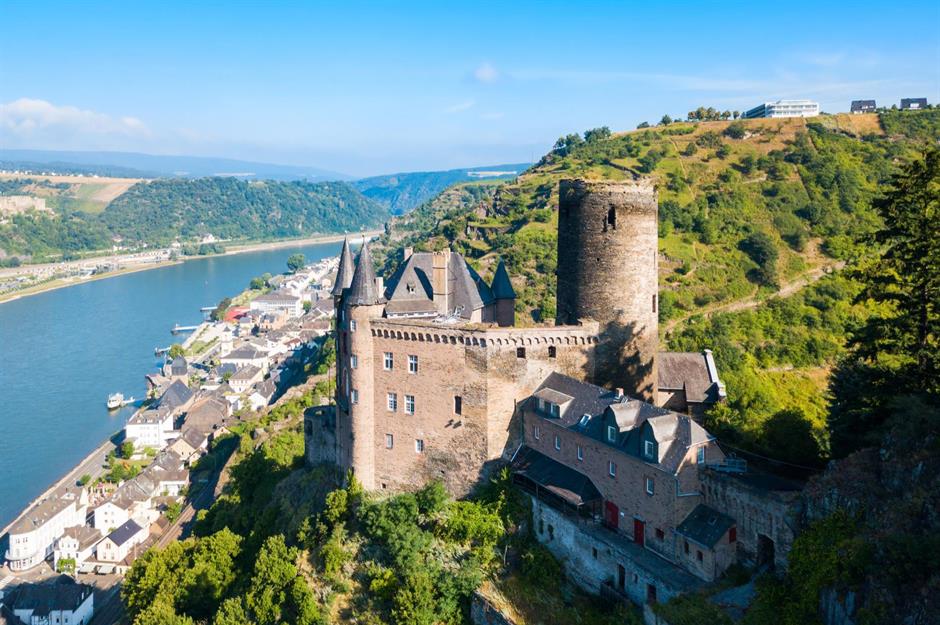
With vineyards, pastures and gentle mountains, peppered with medieval villages and castles, the Rhine region astounds at every stretch. St Goarshausen in the Upper-Middle Rhine Valley is one of the prettiest, boasting no less than two castles, Burg Maus and Burg Katz (pictured). The ancient fortifications and a striking steep slate rock, known as Lorelei or Loreley, forms the backdrop for the annual fireworks event 'Rhein in Flammen' (Rhine in flames) in September, that lights up the village and its neighbour across the water, St Goar.
Rheinsberg, Brandenburg

Less than two hours from Berlin, the pretty town of Rheinsberg lies in Brandenburg’s Ruppiner Seenland – characterised by its lakes and waterways. With a history that dates back to the 14th century, the town's chief attraction is its grand palace which sits on Lake Grienerick surrounded by landscaped parklands. It was home to Frederick the Great as a young crown prince between 1736 and 1740. The historic centre is a lovely place to wander too with its cobblestones and cafés.
Sponsored Content
Quedlinburg, Saxony-Anhalt

Dominated by a palace and abbey complex perched high on a sandstone bluff, Quedlinburg in the Hartz mountains is a treasure trove of medieval riches. As capital of the East Franconian German Empire from 919 to 1024 and a prosperous trading town, it’s now UNESCO-listed and has more than 1,300 timber-framed buildings lining the sloped streets of its old town and Münzenberg hill. It has exquisite Romanesque churches and monastic buildings too, along with a beautifully preserved Marktplatz and stunning Gothic town hall.
Hattingen, North Rhine-Westphalia

With three castles, a medieval centre and scenic surrounds, Hattingen is one of the Ruhr region's highlights. Stroll down the snaking cobbled lanes of the former Hanseatic town and admire its well-preserved half-timbered houses. Learn about the town’s past inside the historic Bügeleisenhaus. The quaint buildings of the old town make a beautiful backdrop for Hattingen’s annual festive fair too.
Bad Blankenburg, Thuringia

Surrounded by the thick tangle of Thuringia forest, the little spa town of Bad Blankenburg woos visitors with its grand feudal castle Greifenstein, home to the Counts of Schwarzburg-Blankenburg in the 13th and 14th century. The town, also known as Lavender City in reference to a former lavender farm in the area, is famous for being the birthplace of kindergarten. That's right, education pioneer Friedrich Froebel opened the very first kindergarten here in 1840 and now his namesake museum is housed in the very same spot.
Sponsored Content
St Peter-Ording, Schleswig-Holstein

The stilt houses of St Peter-Ording are a unique sight along the wind-buffed North Sea coastline. The towering wooden structures were built along the wide sands of this scenic seaside resort more than 100 years ago for beachgoers. Today they still replenish visitors with their cafés and soaring views. Set within the Schleswig-Holstein Wadden Sea National Park, St Peter-Ording is still a popular health resort and home to many wellness centres. It’s also revered by kite-surfers and surfers.
Rothenburg ob der Tauber, Bavaria

Translating as "red fortress above the Tauber river", the ancient red-roofed village of Rothenburg ob der Tauber leaves a lasting impression. Set along southern Germany’s Romantic Road, it is one of many medieval storybook settlements with its defensive towers, narrow timber-clad houses and cobbled streets. There is lots to entertain in this picturesque place with its many museums, gardens, enticing shops and buzzy cafés.
Weimar, Thuringia

Once home to the writer Goethe and the poet and playwright Schiller, Weimar is a beacon of Germany's high culture and a fascinating place to visit. As well as numerous museums, there are tranquil parks and lush gardens for quiet contemplation. You can usually take in a play at the National Theater (Deutsches Nationaltheater, pictured here with its landmark Goethe-Schiller monument) while a culinary walk around Weimar's handsome streets reveals the best places to tuck into Thuringia's traditional cuisine and wines.
Sponsored Content
Binz, Mecklenburg-Western Pomerania

A pretty seaside resort on Germany's northeastern island of Rügen, Binz has sandy beaches, fancy hotels and coastal walks – most famously to its white chalk cliffs. Its pine-backed beaches are lined with ornate white villas that date from the 19th century when it became a popular place to bathe. You can't miss the resort's traditional canopied chairs, made from wicker and canvas and known as strandkörbe (beach baskets), that stretch all along the waterfront.
Cochem, Rhineland-Palatinate

Crouched on the left bank of the Moselle Valley, waterside Cochem can't fail to charm with its pastel-hued houses, medieval gateways and the fairy-tale form of Reichsburg Castle, which presides over the town on a craggy rock. Visitors usually meander around its atmospheric old town and taste the local wines, before heading for the hills. The hiking trails in this wine-growing region are out of this world.
Schiltach, Baden-Württemberg

Take a tumble back in time to tiny Schiltach, a medieval gem in the Upper Kinzig Valley in the Black Forest. The pretty town’s history dates back to the 11th century – something you soon sense on a stroll down its river promenade, which is lined with quaint half-timbered houses, or when you explore its market square. While the town's intriguing museums – the pharmacy museum and craft tannery, the last in the Black Forest – showcase the area’s rich traditions and crafts.
Sponsored Content
Bremm, Rhineland-Palatinate

The Moselle Valley is well known for its wines but it’s been keeping its quaint little villages quiet. Surrounded by stunning scenery and home to less than 1,000 people, Bremm is a beauty of a place. Its whitewashed houses and slate-roofed churches sit snug at the foot of Europe’s steepest vineyard, the Calmont. A hike up the mountain trails offers mesmerising views over the town, as vines and the Moselle River bend beneath.
Monschau, North Rhine-Westphalia

Time seems to have stood still for more than three centuries in this small riverside town in the lovely Eifel region. It’s easy to see why Monschau is dubbed the "Pearl of the Eifel" with its romantic cobblestoned lanes and traditional half-timbered houses which line the Ruhr river. Learn how the town's famous mustard is made (and taste it) at the historic Mustard Mill, while a pedal through the old town and out along the riverbanks makes for a delightful day out.