The fascinating history of Chicago
Urban development
Chicago is one of the greatest US urban hubs. But how much do you know about the key events which shaped the Windy City? Here, we explore how Chicago developed, from its origins to its role in both World Wars. You’ll learn about the world’s first skyscraper, Chicago’s place as a hotbed of comedy and jazz talent, and enjoy a taste of the city’s famous deep-dish pizza.
Click through the gallery, as we reveal the fascinating history of Chicago…
The traditional homelands of many Indigenous peoples
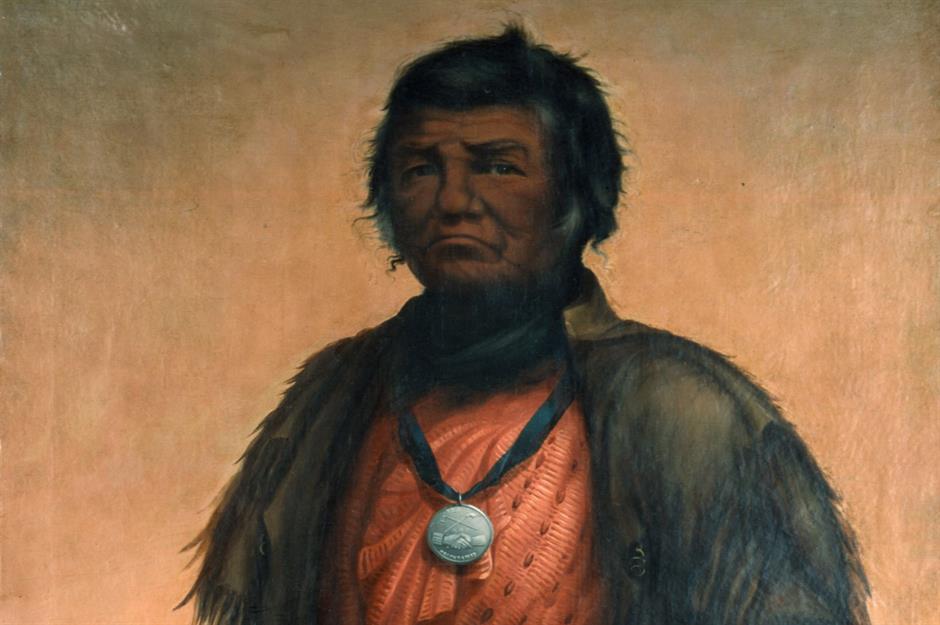
Long before Euro-American settlers arrived on the land that now encompasses Chicago, Indigenous people had called the region home for time immemorial. A network of waterways proved a life source for Native tribes including what is now the Council of the Three Fires, an alliance of the Ojibwe, Odawa and Potawatomi Nations.
Pictured is a portrait from 1859 of Shabbona, a chief of the Potawatomi tribe.
The first non-Native resident arrives
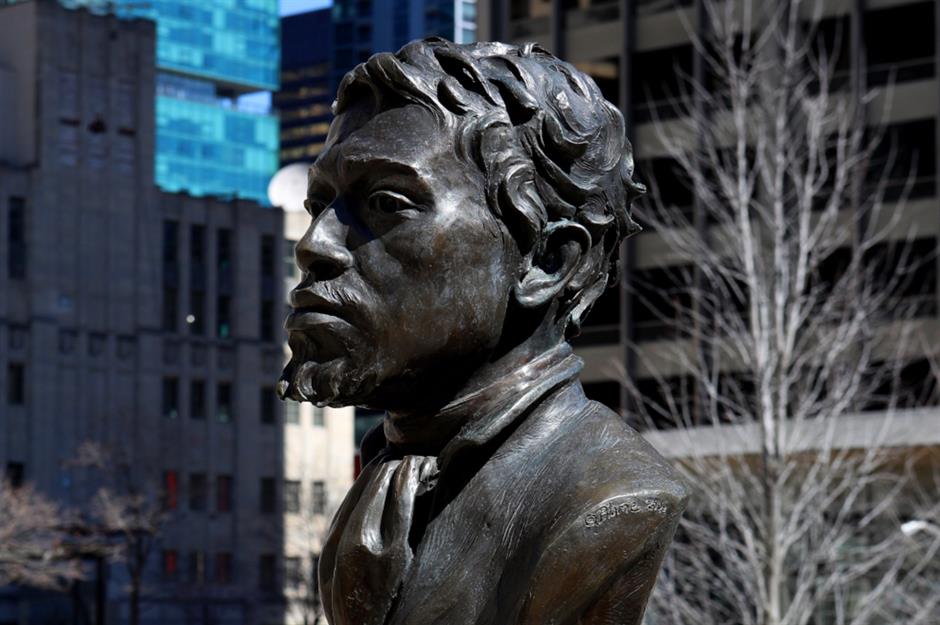
In the 1770s, the region’s first non-Native settler arrived in the region. His name was Jean Baptiste Point du Sable – he was a free Black man originally from Haiti, who had migrated north from New Orleans.
He was also an entrepreneur and a fur trader. He married a Potawatomi woman named Kitihawa. They had two children and established an estate that included a home, a bakehouse and stables.
Sponsored Content
Fort Dearborn is built
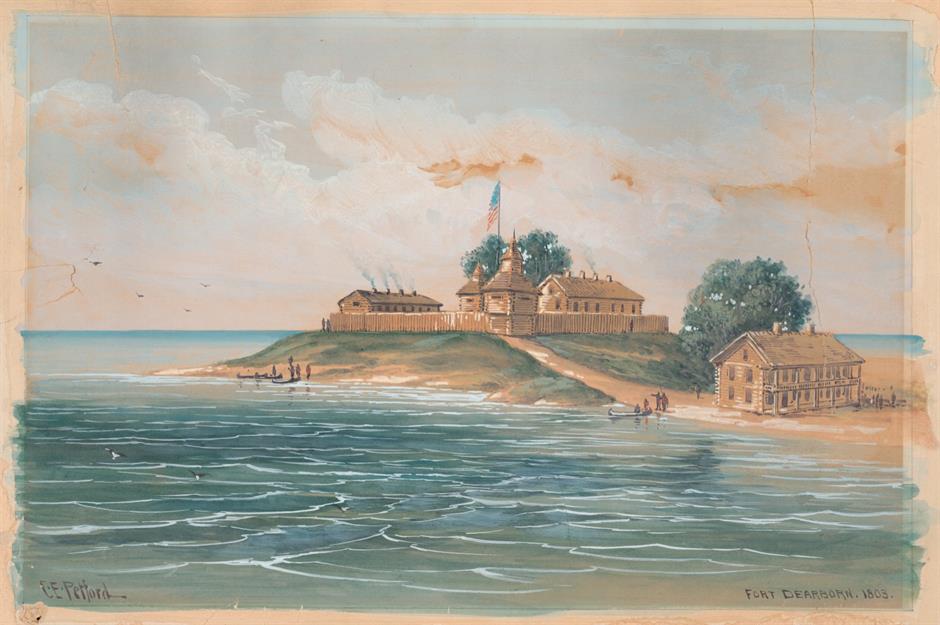
After settlers colonised the Great Lakes region, tensions increased between the new inhabitants – who brought with them diseases that were deadly to the Natives – and the original inhabitants of the land.
In 1803, Fort Dearborn was constructed on a bend on the Chicago River. It was intended as a defensive site.
Love this? Follow our Facebook page for more travel facts and destination inspiration
The Battle of Dearborn is fought in 1812
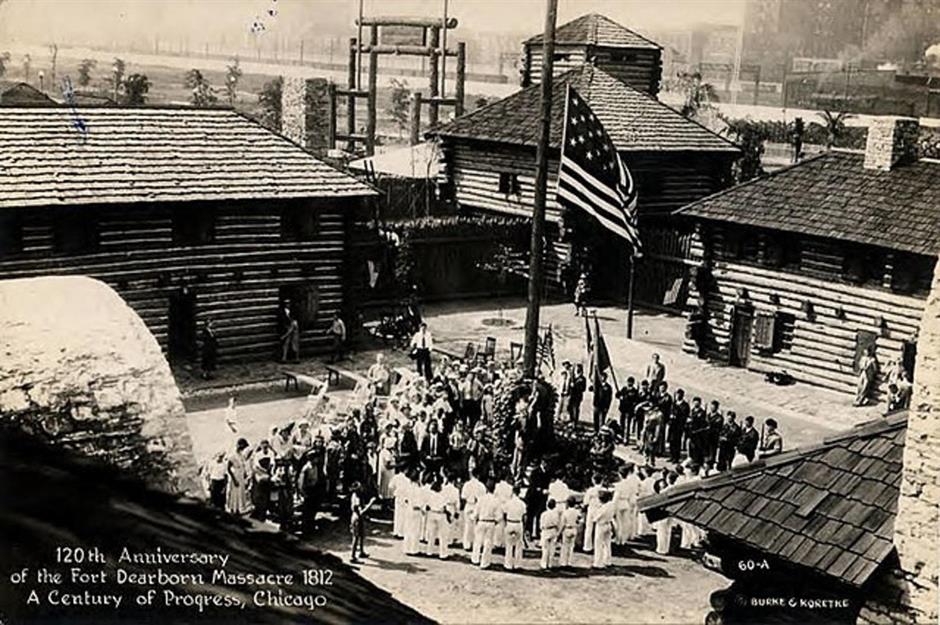
Fast forward to 1812 and tensions were coming to a head. The decade-old Fort Dearborn had become unliveable, and the garrison was ordered to evacuate by a US Army commander.
However, they were met with a 500-strong army of Indigenous peoples. The Native peoples were victorious in the battle, with the US side suffering a high number of casualties.
The Indian Removal Act is signed
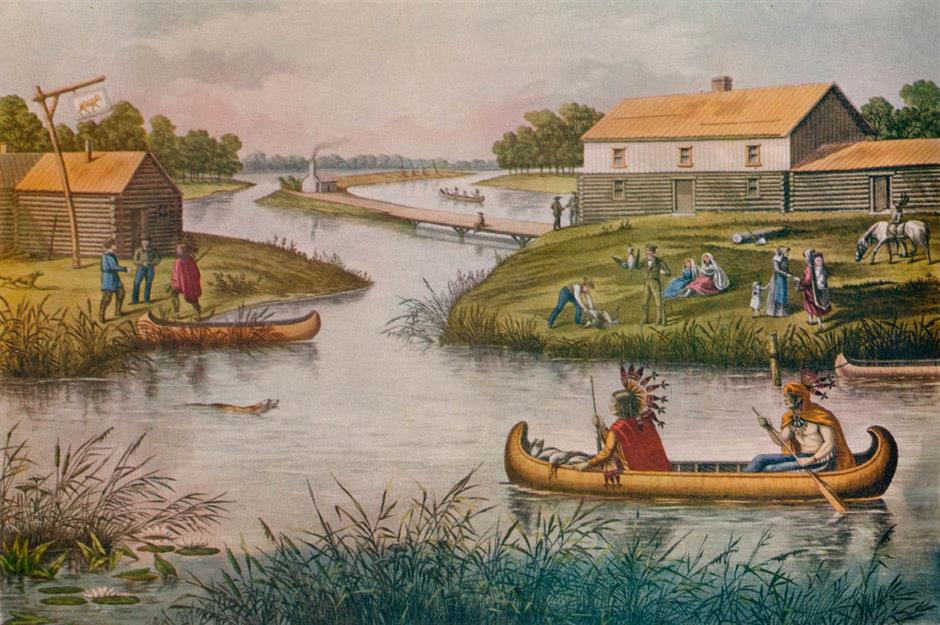
New settlers continued to pour into the Chicago area and the Great Lakes region, further weakening the hold that Indigenous peoples had on their ancestral homelands. In 1830, President Andrew Jackson signed the Indian Removal Act – the tribes were forced west.
This image is of Raoul Varin’s painting from circa 1930 entitled, Chicago in 1833.
Sponsored Content
Chicago is incorporated in 1837
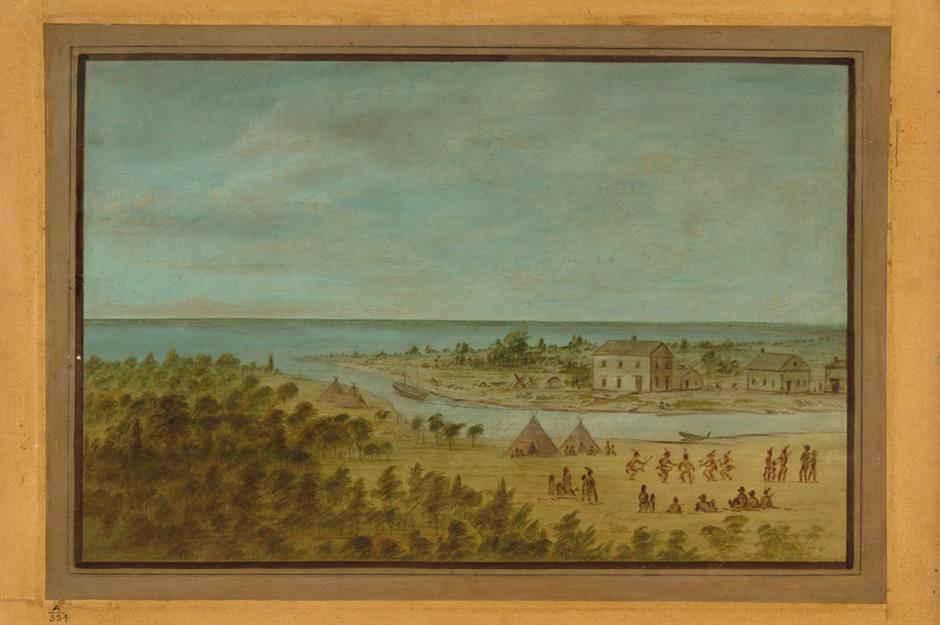
After continued growth through the 1830s, Chicago was finally incorporated as a city in 1837. By this point, the population had reached around 4,000 people. Its location – serving as a gateway to the west and to many important waterways – made it an ideal trading hub.
The image is of George Catlin’s 1861-1869 painting entitled, View of Chicago in 1837.
The Illinois and Michigan Canal is built
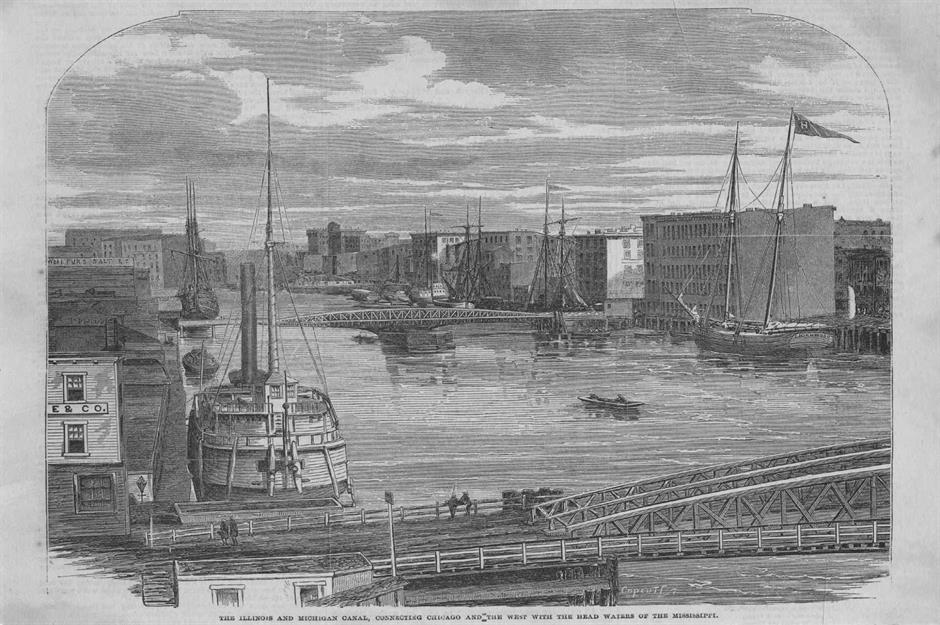
Further development came with the building of the Illinois and Michigan Canal in 1848 – depicted in this engraving. The new waterway joined up the city with the headwaters of the mighty Mississippi River, further enhancing Chicago’s role as centre of trade.
Chicago’s railroads are expanded
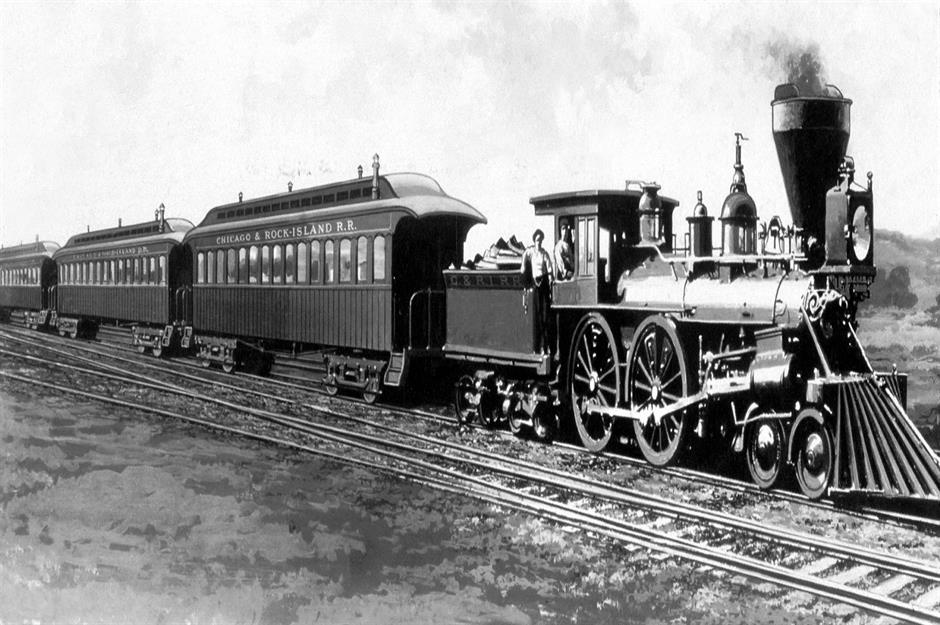
However, the need for the canal diminished with the building of the Chicago, Rock Island and Pacific Railroad in 1852. In 1854, it became the first Chicago railway to cross over the Mississippi River.
Sponsored Content
The Great Fire of Chicago ravages the city
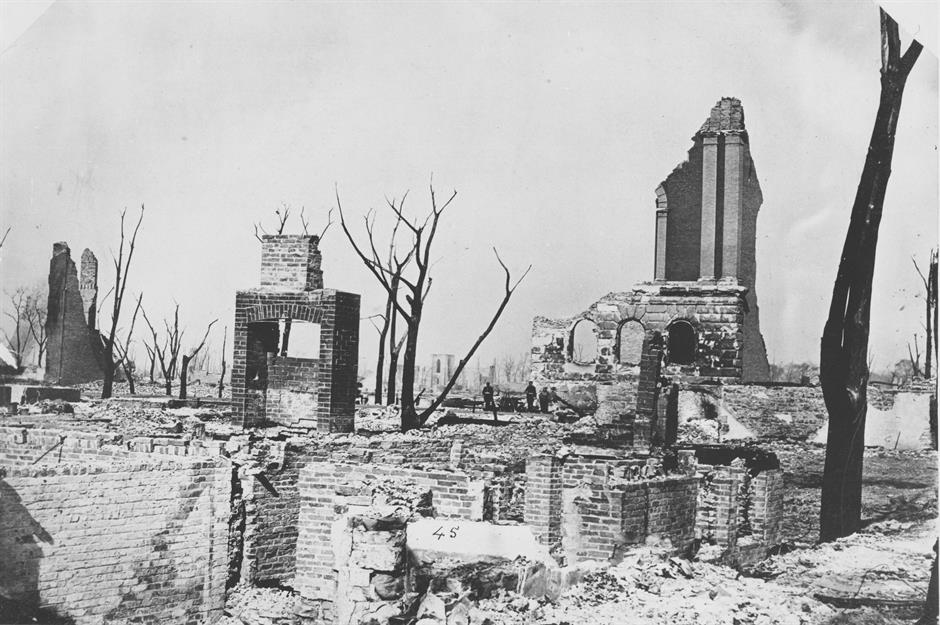
The year 1871 will always be a blight on Chicago’s history. Given the city’s rapid growth and congestion, fires were becoming more frequent, but none matched the total devastation of the October 1871 blaze.
It began in a street barn on the West Side, tearing through the city’s wooden buildings – a summer with barely any rain had left Chicago parched.
Chicago builds back
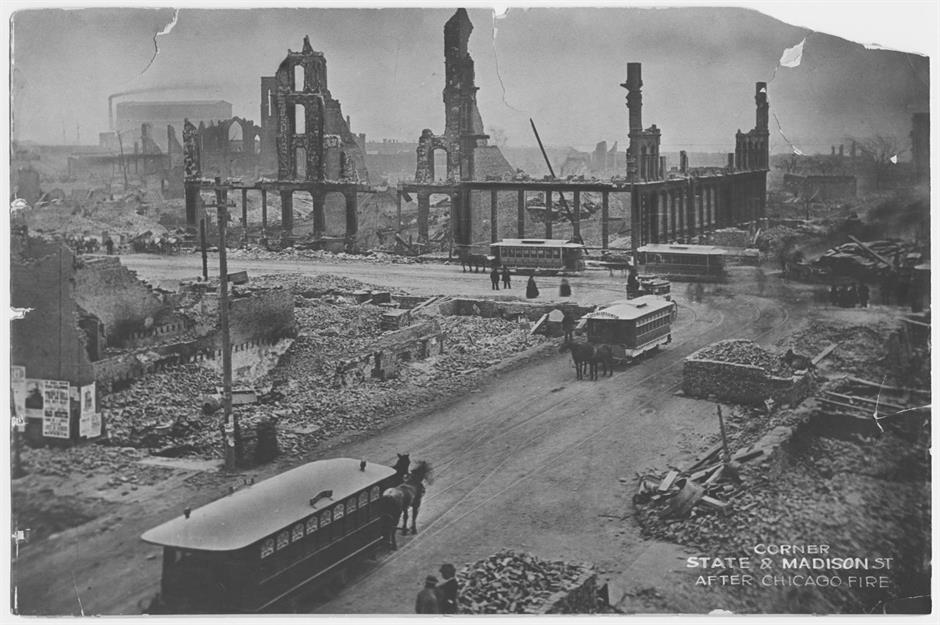
Some 300 people were killed in the blaze and many hundreds more were left homeless. The Business District was destroyed, though the stockyards remained mostly intact.
The effort to restore the city was termed the ‘Great Rebuilding’, with new structures made in stone, brick and marble.
Chicago hosts the World Columbian Exposition of 1893
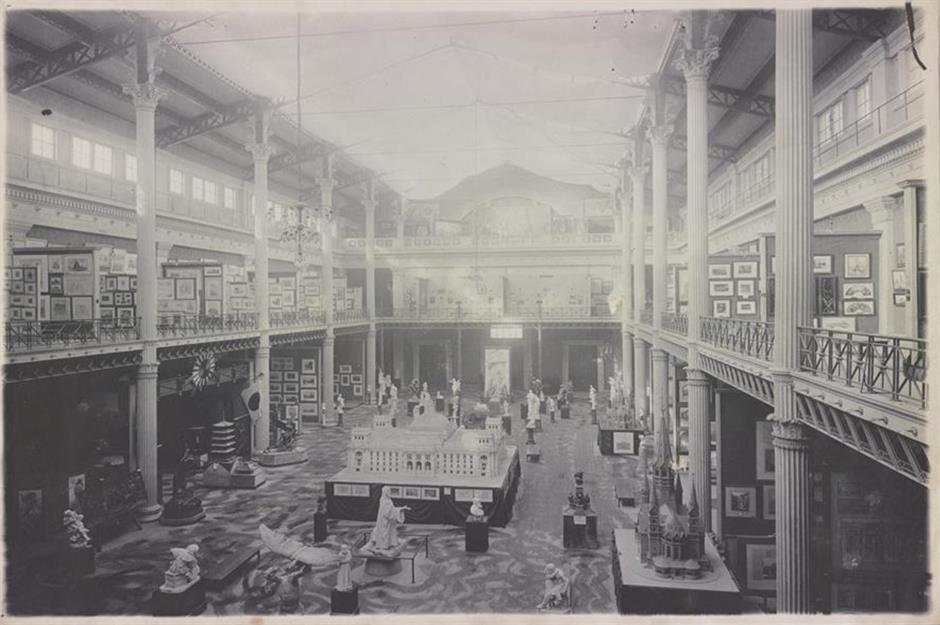
Just over two decades later, Chicago was fighting fit once more. In 1893, the city was the host of the World’s Columbian Exposition, which was intended to commemorate the 400-year anniversary of Christopher Columbus’s voyage to America.
Sponsored Content
Chicago gets the world’s first skyscraper
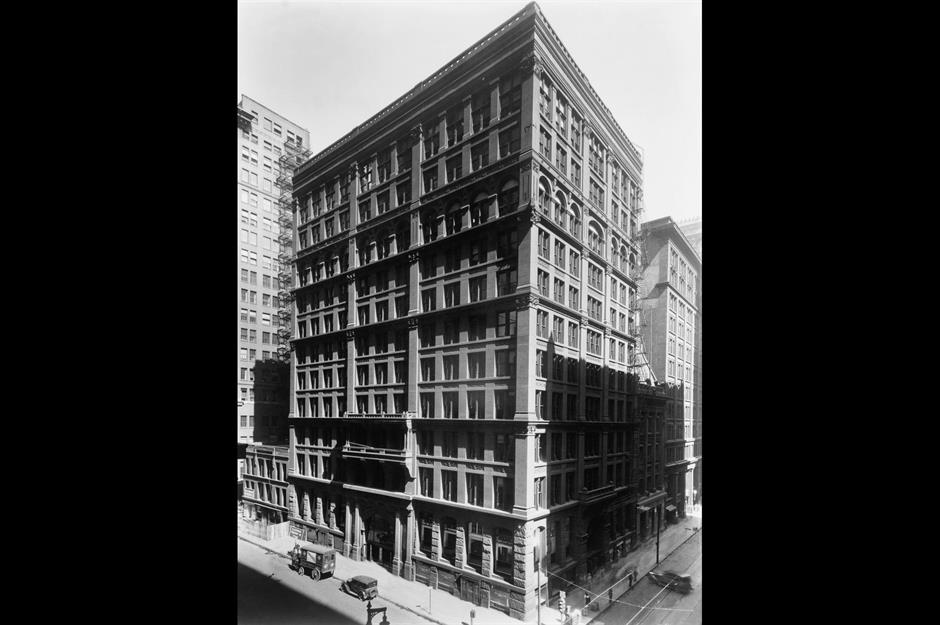
Chicago is often named as the home of the world’s first skyscraper. The Home Insurance Building was finished in 1885, soaring to a then-towering 138 feet (42m) and 10 storeys.
The building’s pioneering architect was Major William LeBaron Jenney, who has become known as the ‘Father of the American skyscraper’. Sadly, the building was demolished in 1931.
The Chicago Cubs were born in 1903
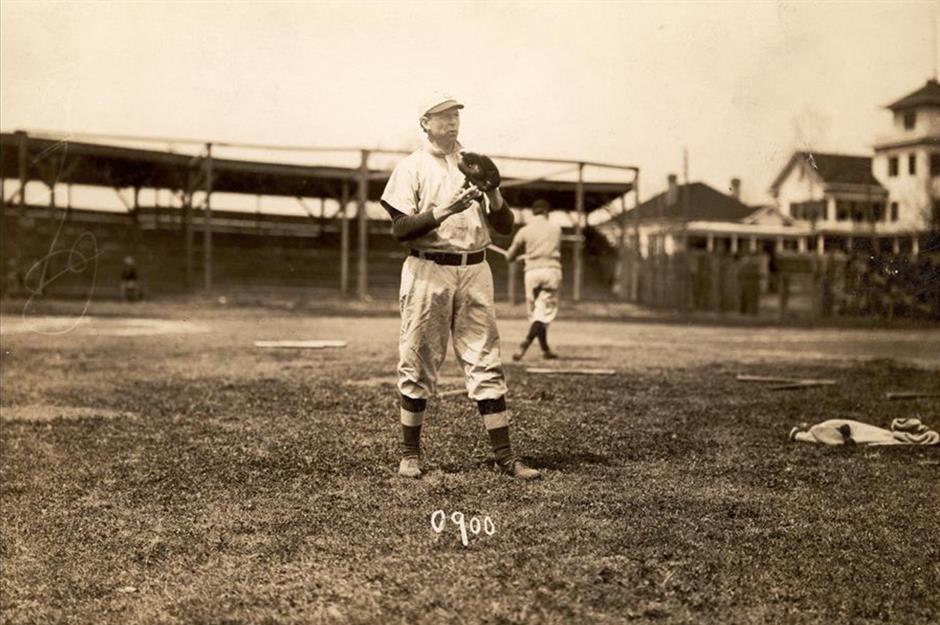
A founding team of the National League back in 1876, the Chicago Cubs were originally known as the White Stockings. They became the Cubs in 1903.
Since 1916, they’ve played their home games at Wrigley Field, the second-oldest ballpark in the league (after Boston’s Fenway Park). The city’s other team, the Chicago White Sox, plays in the American League.
Chicago is thriving at the turn of the century
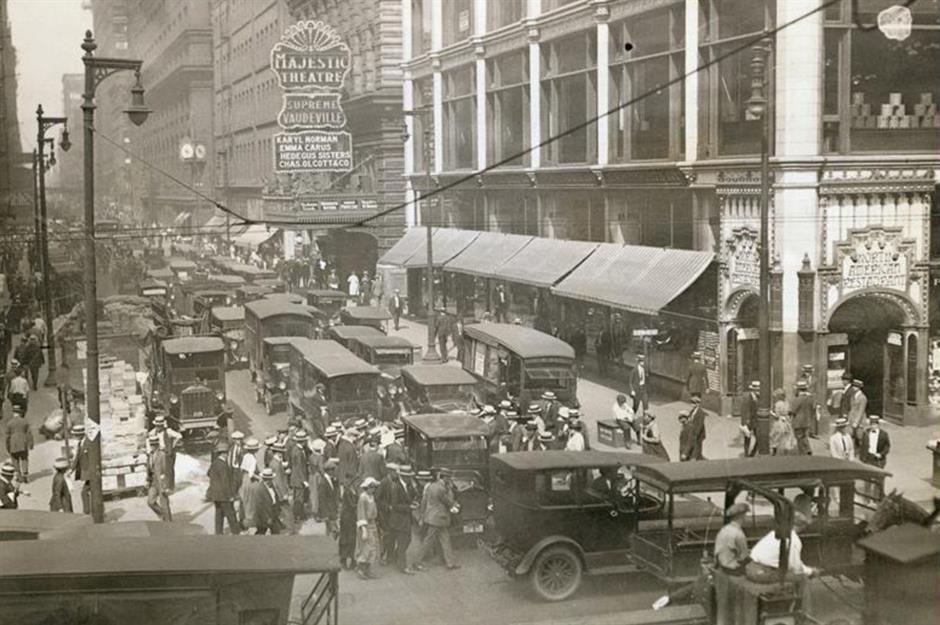
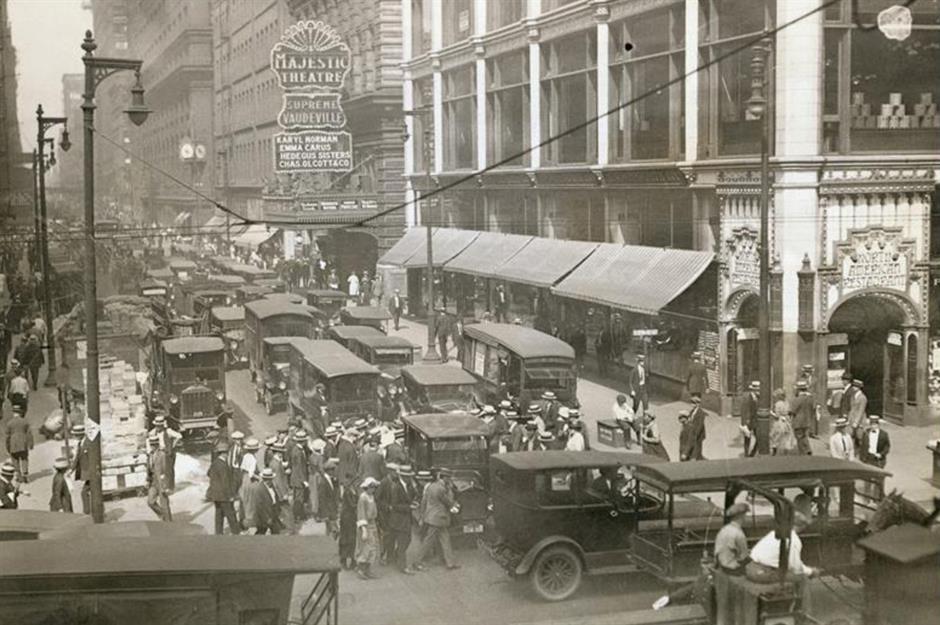
Chicago was buzzing at the turn of the century. The population was exploding as immigration from Europe and the American South continued, and the streets were filled with carts and early automobiles.
Notice the glittering Majestic Theater in this photo – it opened in 1906 and is now the CIBC Theater.
Sponsored Content
The Great Migration
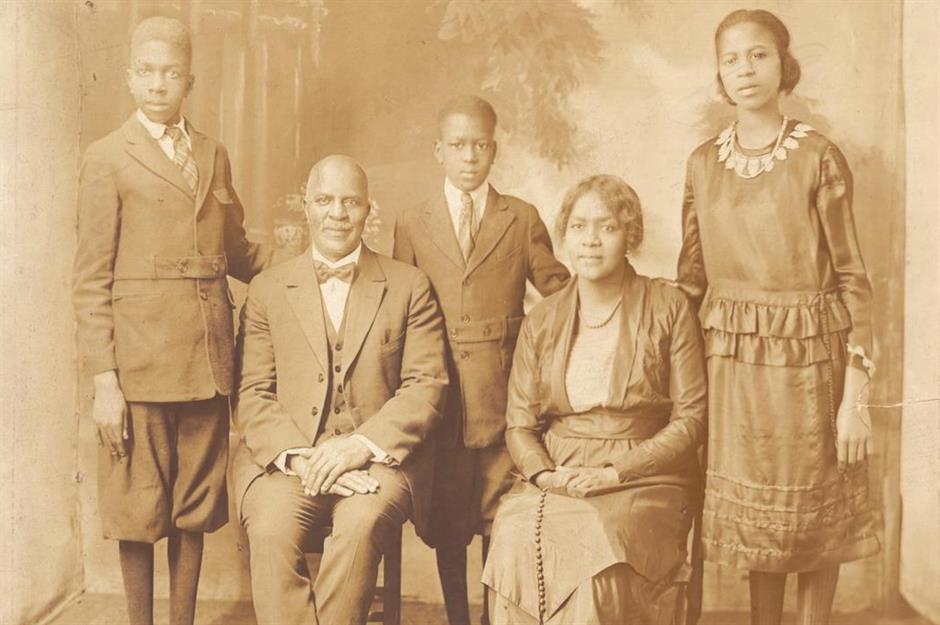
The Great Migration refers to the movement of African Americans from the American South to cities in the north. Some 500,000 African Americans settled in the Windy City from around 1916 to the 1970s.
Pictured here in 1915 is the Morris family, one of the many African American families who made the journey.
Chicago is rocked by World War I
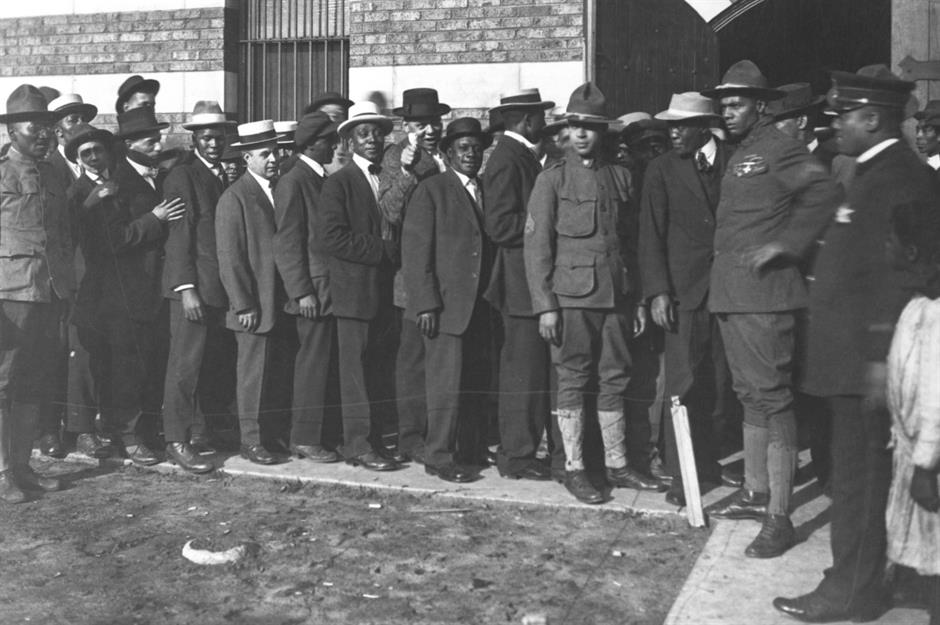
World War I affected the US in its entirety and the Windy City played its part. Now a beloved tourist attraction, Navy Pier served as a military training base, while the city used its industrial might to produce everything from aircraft to rations.
The image shows African Americans lining up to enlist for service in the 8th Regional Infantry.
Prohibition takes hold in the city
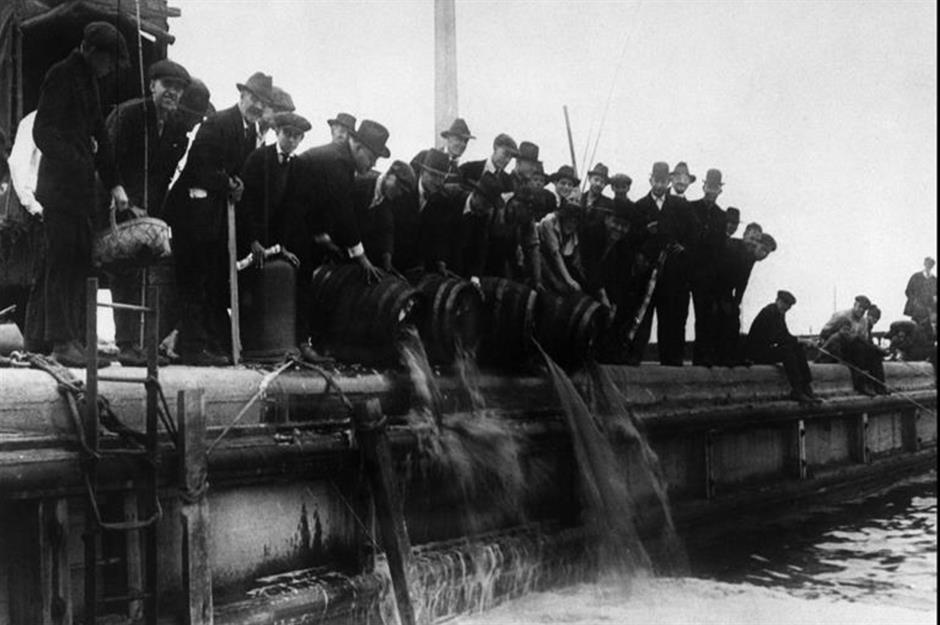
In the early 1900s, the city of Chicago made a tidy part of its revenue from brewing beer, but Prohibition stopped the industry in its tracks. Temperance was enforced from 1919.
This photo shows beer being dumped into Lake Michigan.
Sponsored Content
Gangsters take advantage of Prohibition
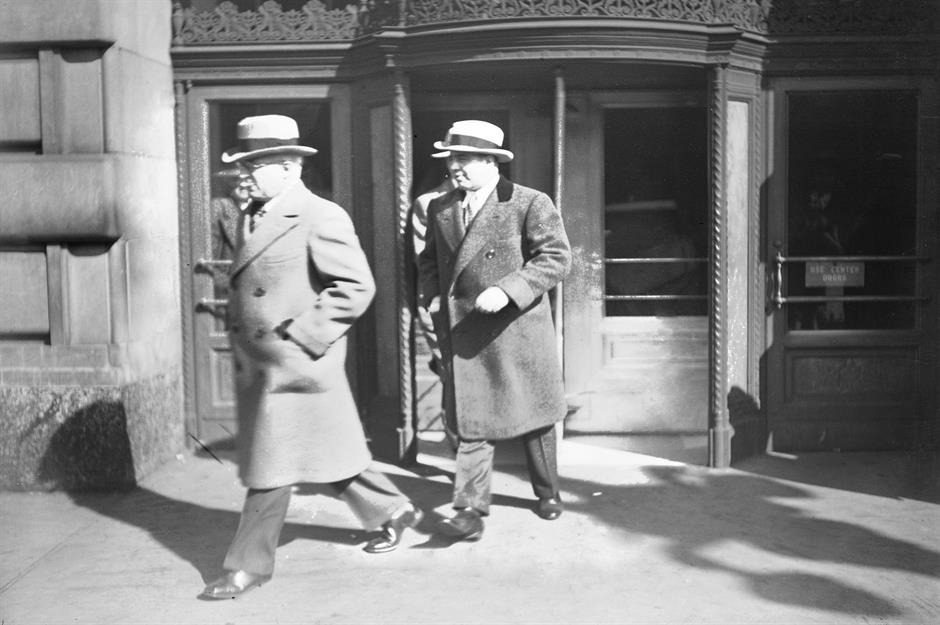
As Prohibition took hold, Chicago became a hotbed for gangster culture and the city’s illegal underworld thrived. There was no mobster more notorious than Al Capone, who ran gambling and bootlegging rings across the city.
Capone is pictured here exiting a hotel sometime in the 1920s.
Deadly gangster rivalries
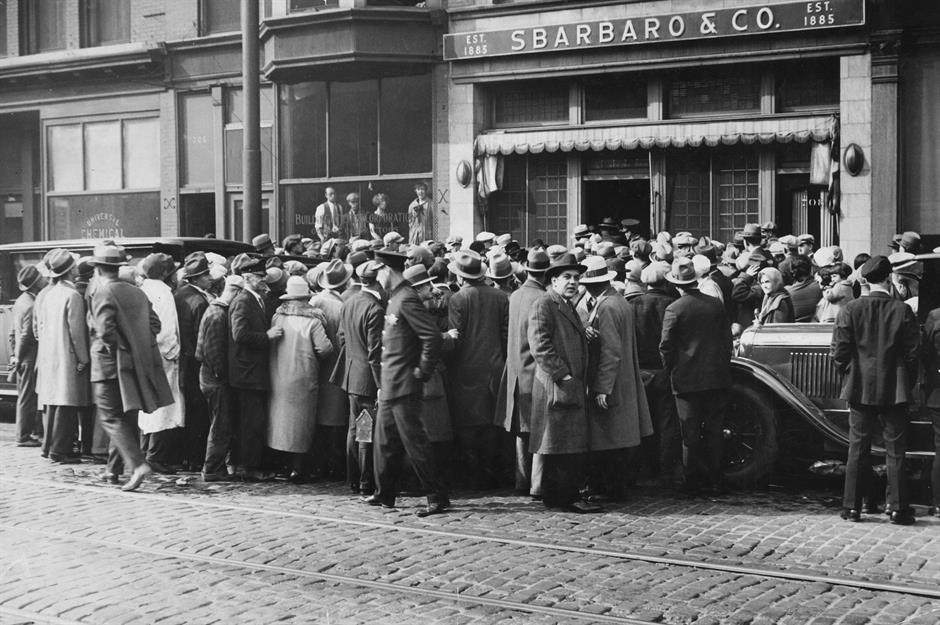
Chicago gangsters shared fierce rivalries through the 1920s and 1930s and perhaps no conflict was stronger than that between Capone and Earl ‘Hymie’ Weiss, leader of the North Side gang.
In this photograph, crowds gather at the site where Weiss was murdered by Capone’s mob.
Al Capone helps out during the Depression
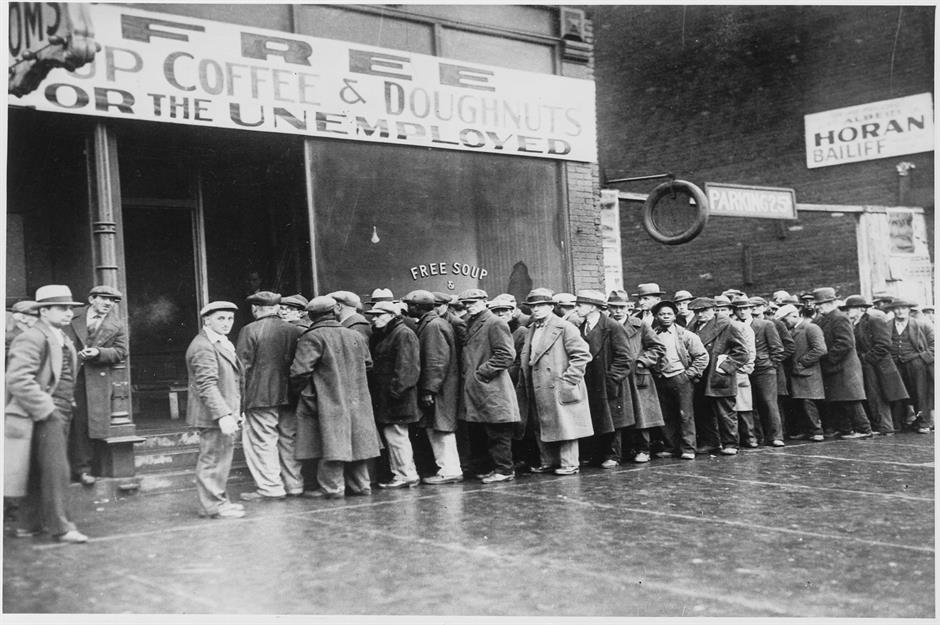
For all the bloodshed, Capone apparently had a benevolent side. The Great Depression had cities across the US including Chicago in its grip throughout the 1930s and many families suffered poverty.
This photograph shows a soup kitchen organised by Capone. It was taken shortly before he was jailed for tax evasion in the early 1930s.
Sponsored Content
The Mother Road is built
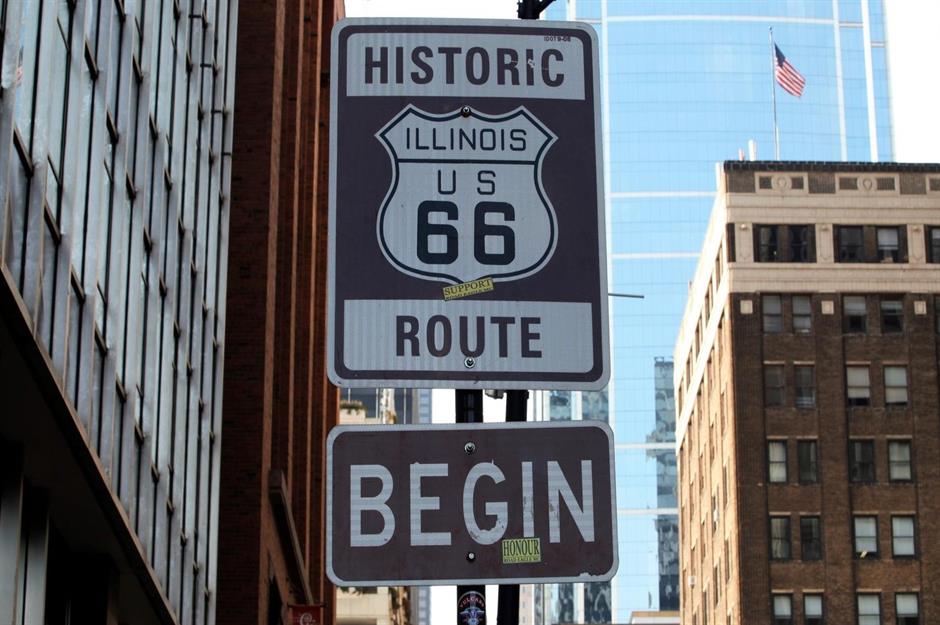
Chicago is famously the start of Route 66, which was built in 1926. The roadway joined up many existing state and national routes.
It wended its way 2,400 miles (3,863km) towards Santa Monica, California. Much of the historic route is still drivable today – you can start your journey at this historic sign located at 122 S. Michigan Avenue.
Chicago holds another World’s Fair
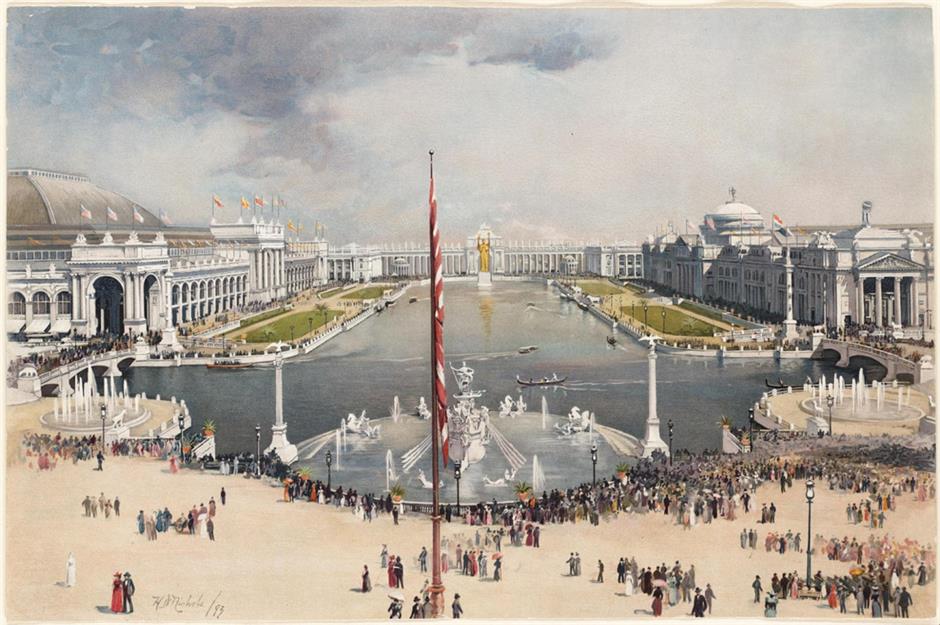
Chicago’s second World’s Fair was intended to celebrate a ‘century of progress’. The event showcased everything from Art Deco buildings to new-fangled motor cars.
Opening in 1933, the event ran into 1934 due to its popularity. At the time, the US was still in the midst of the Great Depression, with the World’s Fair offering optimism and an important financial boost to the city.
Chicago becomes a hub for jazz and blues
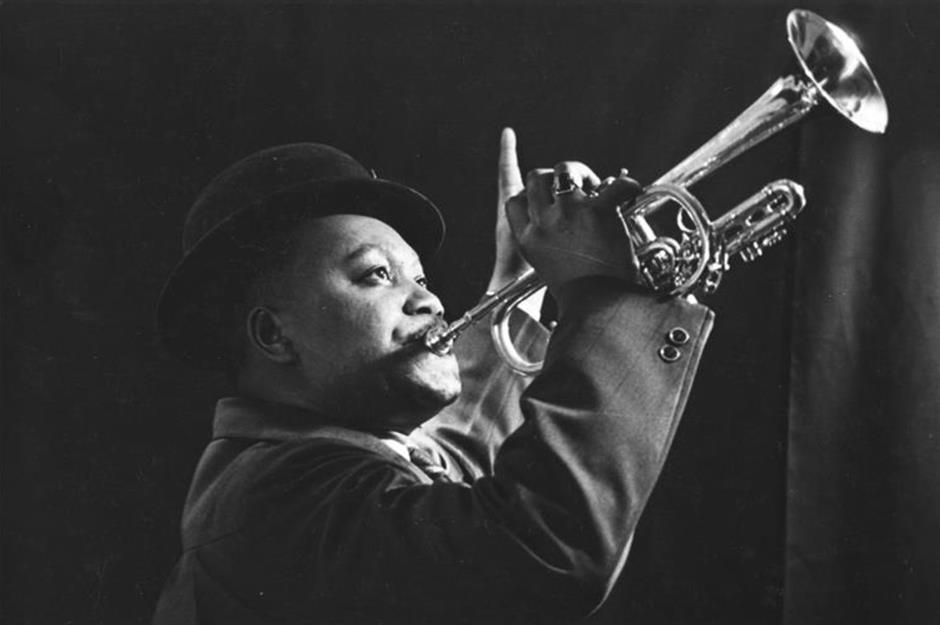
As the Great Migration continued through the middle of the century, Chicago acquired a reputation for being a hotbed of jazz and blues. Snug jazz and blues joints sprung up across the city, while Chicago-based record labels gained national recognition.
The image shows unidentified jazz musician (possibly Jonah Jones), circa 1950.
Sponsored Content
The US enters World War II
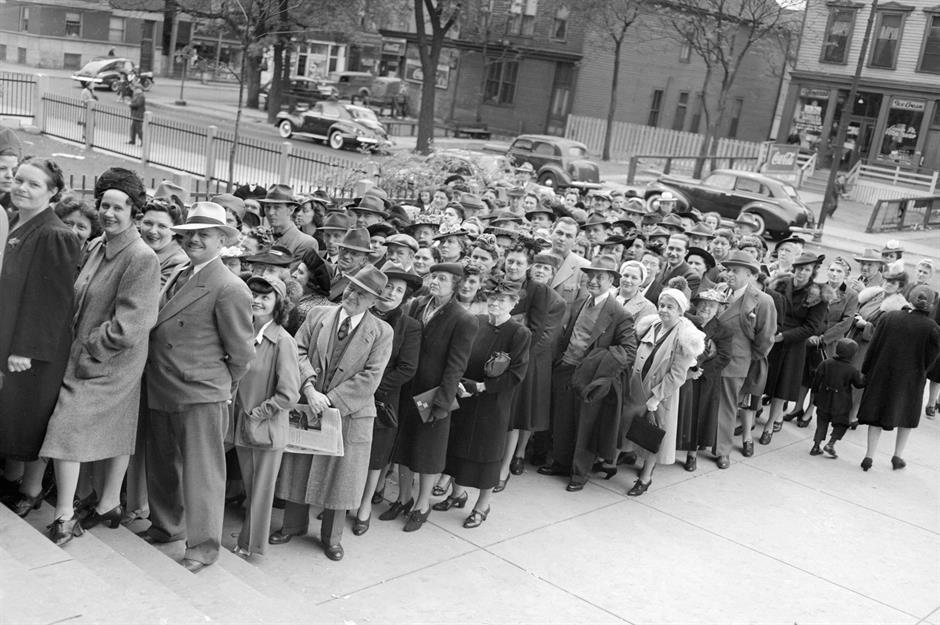
The US entered World War II in 1941, after a surprise attack by Japan on Hawaii’s Pearl Harbor. Chicago once again aided the war effort.
The Great Lakes Naval Training Station, immediately north of Chicago, was extremely important, while Chicagoan factory workers turned out vital goods including military electronics. Here, citizens line up on Chicago’s streets to receive their rations.
Deep-dish pizza is invented
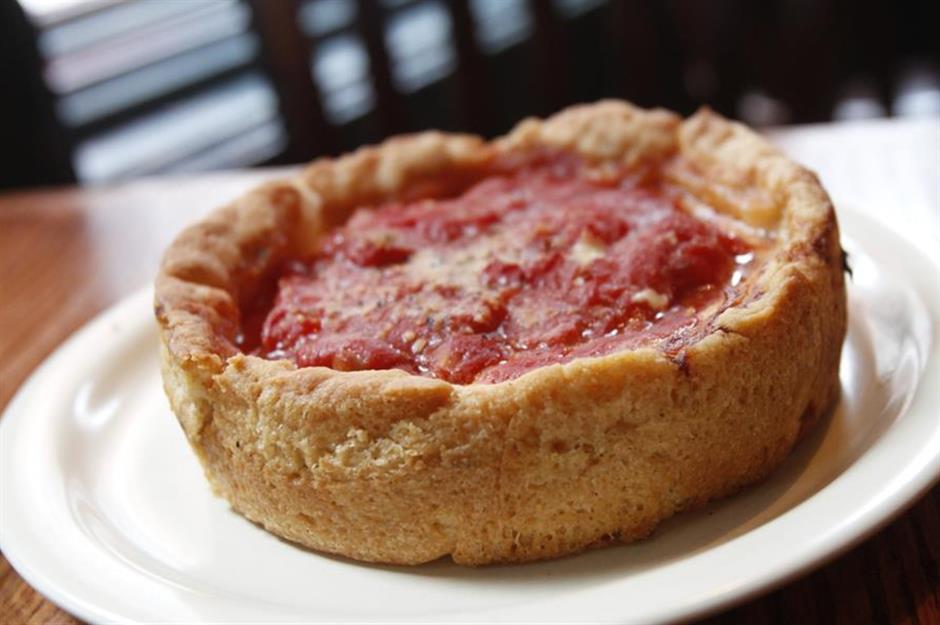
No trip to the Windy City is complete without sitting down to a traditional deep-dish pizza. Designed to be an Americanised version of thin-base Italian pizza, the Chicago version features a thick crust filled with cheese and topped with tomato sauce.
It was apparently pioneered by entrepreneurs Ike Sewell and Ric Riccardo, who opened the Near North Side’s Pizzeria Uno in 1943.
Second City comedy troupe is born
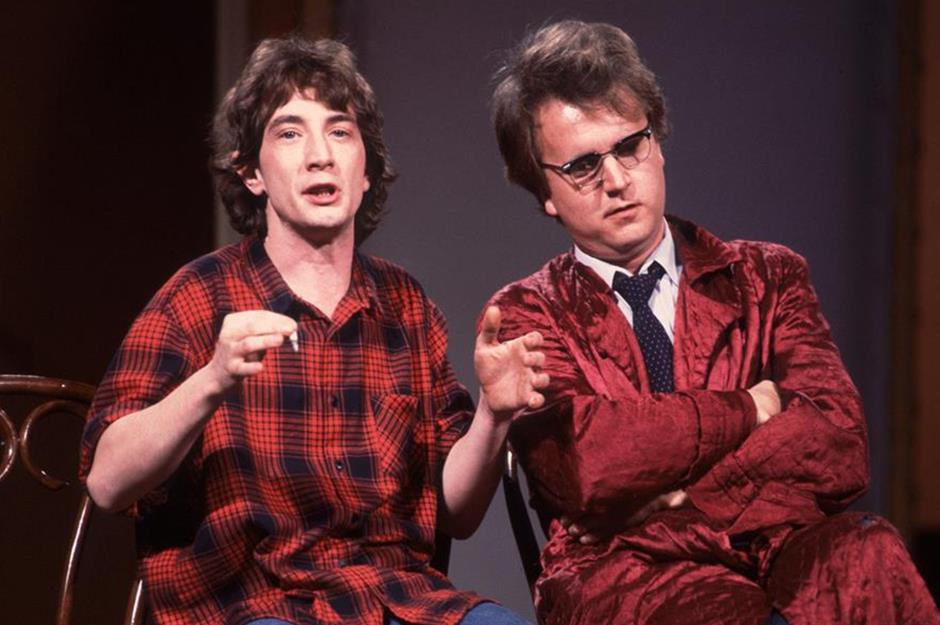
Chicago is well known for its improv comedy scene and much of this is down to the success of the Second City troupe. Established in 1959, it is considered the place where it all began – and it’s still going strong.
Comedy heavyweights such as Tina Fey, Martin Short (pictured with Dave Thomas) and Amy Poehler all have ties to Second City.
Sponsored Content
Willis Tower opens
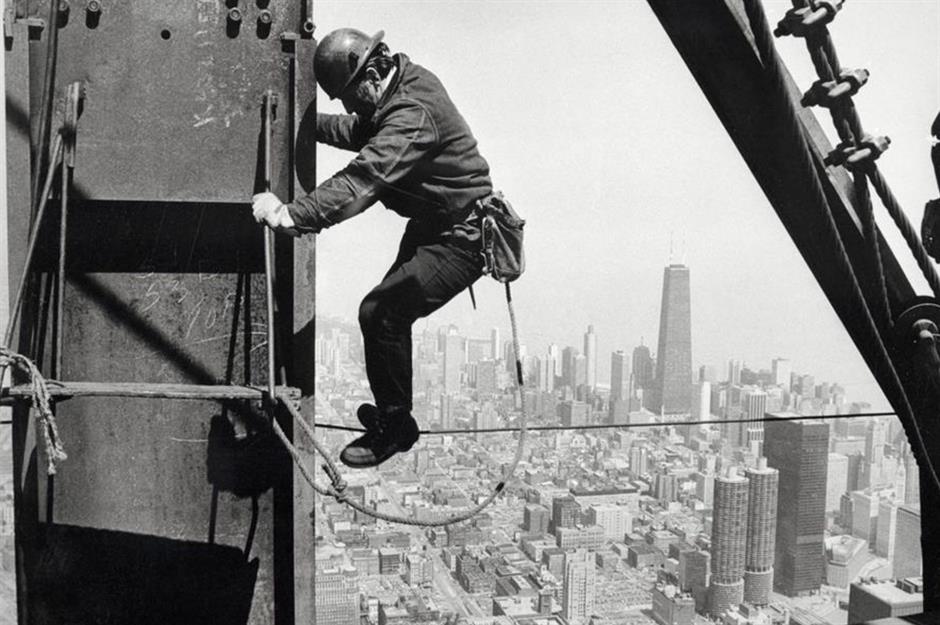
Like all of America’s major cities, Chicago’s skyline is ever changing and that was also true back in the 20th century. One of the most iconic additions was the Willis Tower (formerly Sears Tower), which opened back in 1973.
Pictured in the background of the image, the tower stands 1,451 feet (442m) tall and extends over 108 floors. For 24 years, it was the tallest building in the world – it still ranks in the top 30.
The city is ravaged by the Chicago Blizzard of 1979
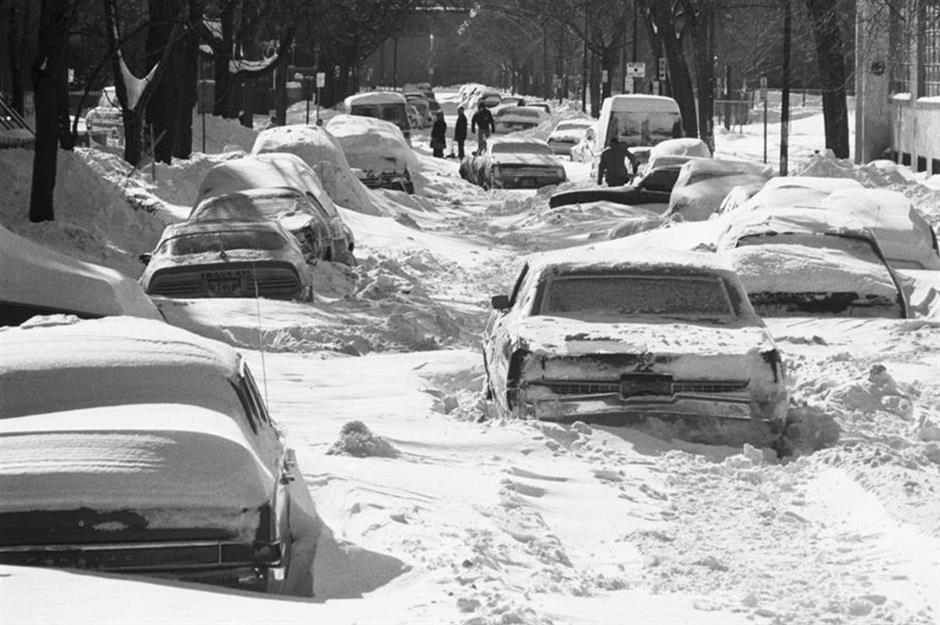
Chicago is no stranger to bracing weather and freezing winters, often including major snowfall. However, the Chicago Blizzard of 1979 has gone down in history.
More than 21 inches (53.3cm) of snow fell over two days, with large swathes of northern Illinois grinding to a halt. Public transit largely shut down and this photo shows abandoned cars in a city street.
Millennium Park opens in 2004
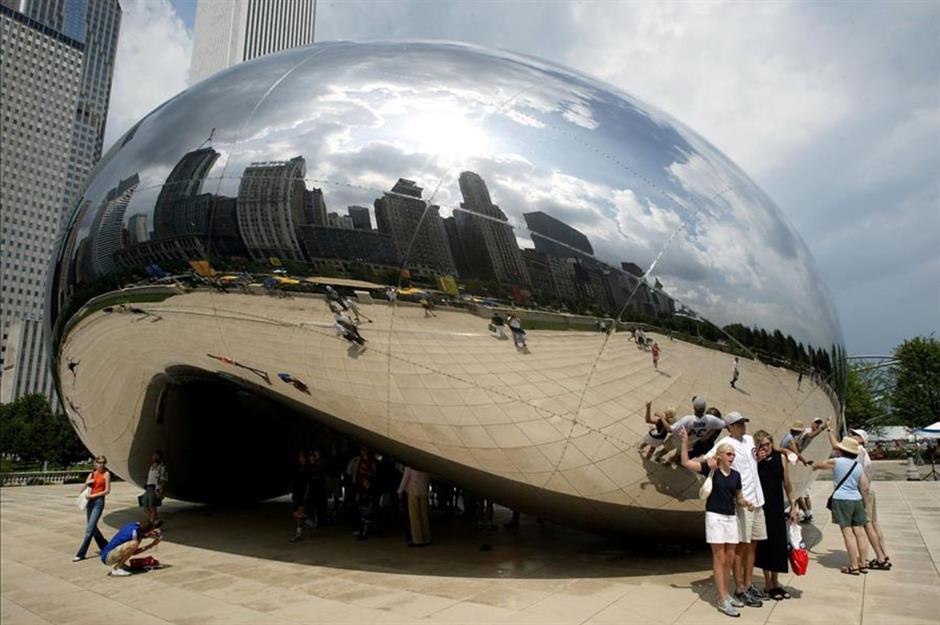
Millennium Park is one of Chicago’s major draws, pulling in around 25 million visitors every year. Ground was broken in the 1990s, with the park opening in 2004.
Designed by Anish Kapoor, the famous stainless-steel sculpture, Cloud Gate, better known as simply 'The Bean’ (pictured) was finished in 2006.
Sponsored Content
The Windy City today
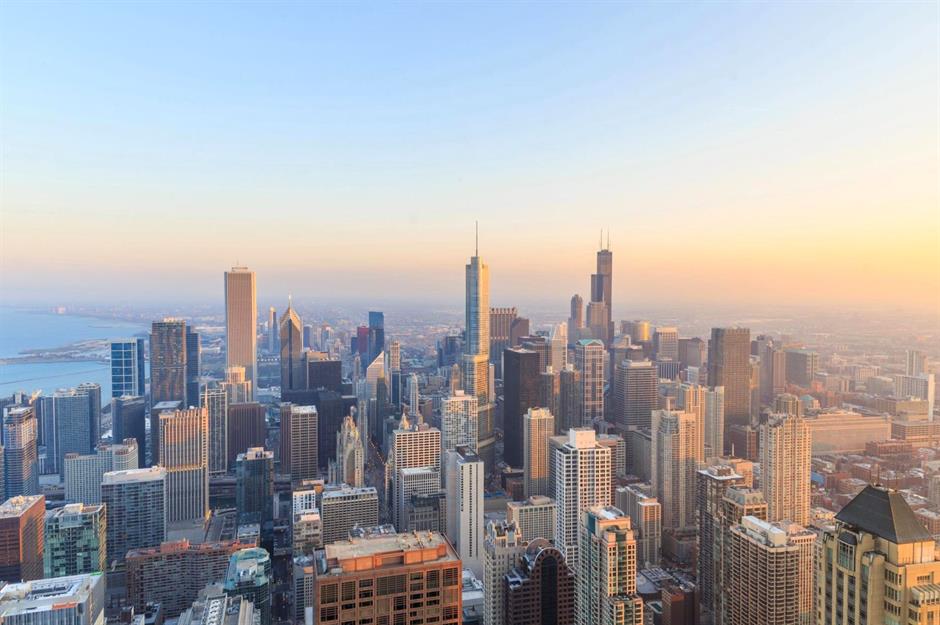
Some 2.7 million residents now call Chicago home and it’s the third largest city by population in the US (behind New York City and Los Angeles). In addition, the city welcomed nearly 52 million visitors in 2023.
People from around the world flock to the city to see attractions such as Millennium Park and the Willis Tower, as well as to enjoy the vibrant music and theatre scenes, urban beaches and world food across the city’s diverse neighbourhoods.