This Unopened Roman Tomb Thrilled Archaeologists – Even Before They Looked Inside
One of a kind
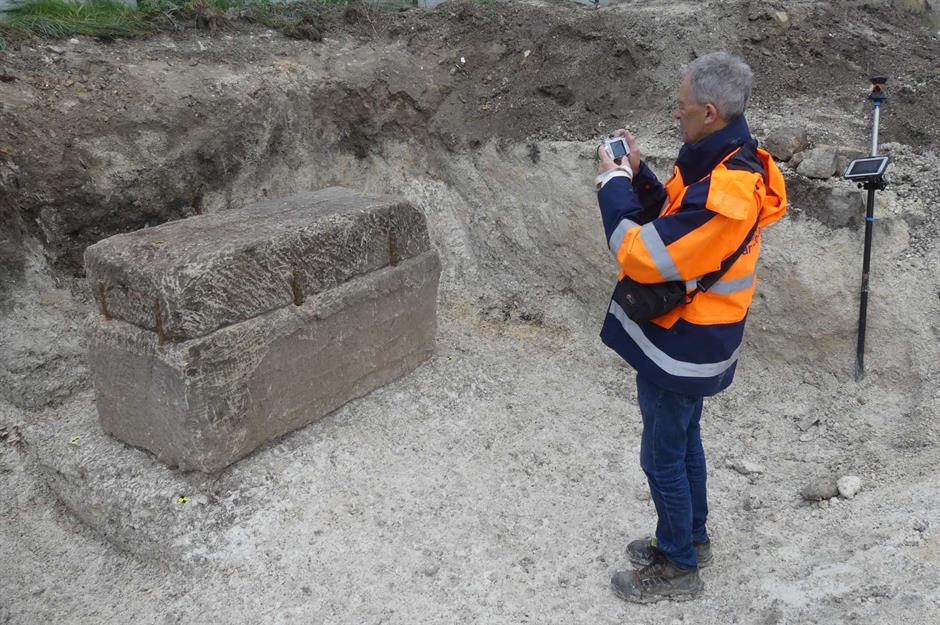
Recent excavations at an ancient necropolis in northeastern France have revealed something never seen before in this former Gallo-Roman region – an entirely preserved sarcophagus which, upon discovery, was still sealed shut. Buried in the second century AD just outside the historic city of Reims, the large limestone tomb had to be lifted from the ground by an industrial crane; its lid alone weighed 1,700 pounds (770kg). "It's quite exceptional, it's the first time we've found a tomb that is intact and has not been looted," Agnes Balmelle, assistant scientific and technical director at the French National Institute of Preventive Archaeological Research (Inrap), told Le Parisien. But who exactly does the sarcophagus belong to? There was only one way to find out...
One of a kind
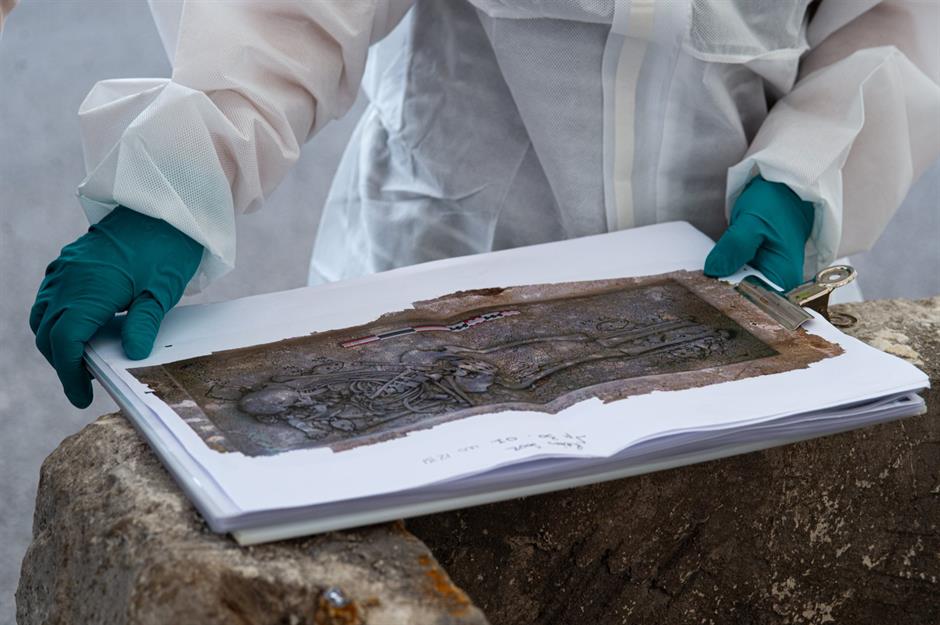
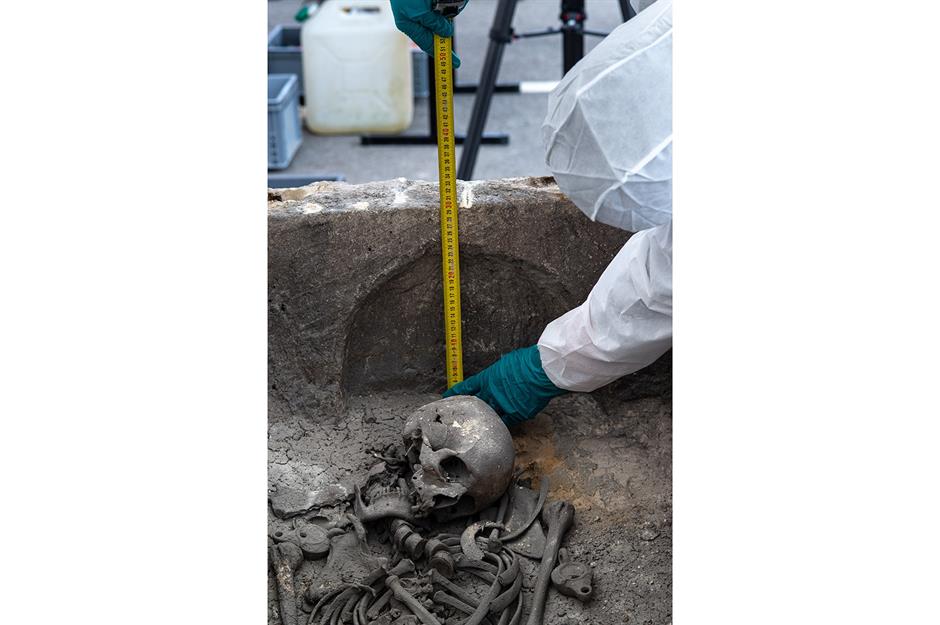
Before prizing open the eight iron clasps that had kept the burial chamber secured for almost 2,000 years, archaeologists deployed an X-ray and an endoscopic camera to form an idea of what they would find inside. If the unique discovery of the undamaged sarcophagus wasn’t remarkable enough on its own, closer examination of its contents yielded even more surprises. Surrounded by a monumental hoard of funerary goods, including a mirror, four oil lamps, a comb and an amber ring, were the remains of what is most likely a woman of “special status”. Estimated to have been around 40 years old when she died, the woman’s skeleton will now undergo DNA analysis to determine whether she was a member of the local elite or if she hailed from further afield.
One of a kind
At the time of the woman’s death, Reims was known as Durocortorum – one of the largest cities under ancient Rome’s rule and the capital of Belgic Gaul (comprising parts of modern-day France, Belgium, Germany, Luxembourg and the Netherlands). At its peak, the Roman Empire covered nearly two million square miles (more than five million sq km); large swathes of western Europe, as well as parts of Africa and Asia, fell to its conquests. While the volcano-ravaged ruins of Pompeii and the famed architectural gems of Italy’s imperial city are internationally renowned sites, there are so many more Roman relics that you may not have heard of.
Read on to discover the most incredible little-known Roman ruins around the world, from a Georgian fortress to a Tunisian amphitheater.
Sponsored Content
Aphrodisias, Turkey

Butrint, Albania

Less than 12 miles (19km) from the coastal resort town of Sarandë, this ancient Roman city sits in its own national park and was salvaged from its state of disrepair by funding from the lords Rothschild and Sainsbury in the late 1990s. While it is also home to Greek and Byzantine ruins, the Roman influence at Butrint is unquestionable, with a bathhouse on site as well as an aqueduct. There's a fascinating museum, which details the area's historical significance, and Butrint is a leafy, tranquil escape from the Mediterranean sun.
Walls of Lugo, Spain

Sponsored Content
Jerash, Jordan

Jerash is Jordan's second most popular archaeological site and is often dwarfed by the country's mesmerizing ancient world wonder of Petra. North of the capital Amman and once known as Gerasa, the site remains remarkably intact considering the numerous earthquakes it has survived.
Love this? Follow our Facebook page for more travel inspiration
Caesarea, Israel

Midway between Tel Aviv and Haifa, Caesarea is one of the few places where the Roman Empire met the sea. Its namesake national park protects many of the archaeological treasures created by King Herod in the 1st century BC. The park is home to the world’s only underwater museum where you can dive among ancient ruins.
Take a look at more of the world's most jaw-dropping underwater attractions
Hadrian’s Wall, England

Once snaking its way across the north of England from Wallsend near Newcastle to Bowness-on-Solway in Cumbria, Hadrian’s Wall was built by the conquering Romans in around AD 122 to mark the edge of their empire and protect against northern barbarian tribes. Today, only segments of the wall remain. Some of the best-preserved forts and settlements are Housesteads, Chesters and Vindolanda near Hexham, and Birdoswald in Carlisle, and in 2022 there are events to mark the 1,900th anniversary of the building of the wall.
Sponsored Content
Vindolanda, England

A fort found along Hadrian’s Wall, Vindolanda is one of the most significant archaeological sites in England. It's here that the Vindolanda tablets were found – the oldest handwritten documents in Britain. The site is located near the village of Bardon Mill in Northumberland and you can see history unfold with live excavations which take place every year.
Paphos, Cyprus

Located in southwest Cyprus, this large site has been inhabited since Neolithic times and, according to legend, is the birthplace of Aphrodite. The mosaics here are among the finest in the world, while the houses of Dionysus, Orpheus, Aion and Theseus are beautiful examples of elaborate Roman villas.
See more fabulous photos of fascinating Roman ruins around the world
Timgad, Algeria

Roman-Berber Timgad, founded around AD 100, is on the northern slopes of the Aurès Mountains, southeast of the city of Batna. Often referred to as the ‘Pompeii of Africa’, Timgad was an ex-military colony and today you can still see remnants of the impressive 14 baths, as well as the ruins of grand houses with mosaic floors. Currently however, according to UK and US foreign office advice, tourists in Algeria should exercise increased caution and consider taking extra security measures when visiting the country.
Sponsored Content
Porta Nigra, Germany

Latin for ‘black gate’, the Porta Nigra is the largest remaining Roman city gate north of the Alps and dates back to around AD 170–180. It was one of four that protected the boundaries of the city the Romans called Augusta Treverorum and is today called Trier. Take a guided tour around the beautifully preserved interior before walking to the Kaiserthermen (Imperial Baths) nearby.
Imperial Baths of Trier, Germany

Cartagena Roman Theater, Spain

With a deep, natural port and the nearby silver mines to the east, this city in southeast Spain was of huge strategic importance to the Romans, who took it from the Carthaginians in 209 BC. While there’s not much left here, its Roman theater has been well preserved and is the second largest in the country.
Sponsored Content
Leptis Magna, Libya

For over 900 years, Leptis Magna was a jewel in the crown of the Roman Empire. Found on the Mediterranean coast of Libya just 62 miles (100km) southeast of Tripoli, Leptis was the birthplace of emperor Septimius Severus and benefited enormously from his patronage. It was discovered by archaeologists in the 1920s and is one of the best-preserved Roman cities in the world. Sadly, currently both the British and US governments advise against all travel to Libya due to continuing unrest.
Perge, Turkey

Many of the ruins here date back to the Roman occupation which began around 188 BC. Located to the east of modern-day Antalya in the Aksu area, Perge is home to a bathhouse, stadium (the biggest in Asia Minor) and theater.
Dougga, Tunisia

Sponsored Content
Empúries, Spain

In the northeast of Spain, in modern day Catalunya, sit the Roman-Greco ruins of Empúries, an ancient city. Overlooking the Balearic Sea, this fascinating site is perfect for combining history with a beach break. Here you’ll find the remains of everyday life – streets, houses, mosaics, temples and drainage systems.
Beit She'an National Park, Israel

Thanks to its strategic location where the Jordan River Valley and the Jezreel Valley meet, this ancient Roman-Byzantine city was a big deal. Today, the national park is home to the ruins of a 2nd-century AD Roman theater and the reconstructed main street as well as bathhouses, bridges, fountains and gateways. Beit She'an (sometimes spelled Bet She'an) is currently considered safe to visit, but some areas in Israel have increased risk and you should keep up to date with UK and US travel advisories.
Fishbourne Roman Palace, England

The largest Roman home ever found in Britain, Fishbourne is located in Chichester, West Sussex, on England’s south coast. It is believed to date back to around 75 AD – 30 years after the Roman conquest. Home to the oldest gardens in the country, this vast, lavish residence also boasts fine mosaics including the impressive 'Cupid on a Dolphin' (pictured).
Sponsored Content
Wroxeter, England

Not all that much remains of what was once Viriconium, the fourth largest city in Roman Britain. The ruins – now owned by English Heritage – are near Shrewsbury in Shropshire and are a great family-friendly place to gain an understanding of what daily life was like for Wroxeter's 5,000 inhabitants. The free standing wall (pictured) is from the basilica, which connected to the bathhouse.
Capua Amphitheater, Italy

Second in size only to Rome’s magnificent Colosseum, this impressive theater is found to the north of Naples and once sat in the heart of ancient Capua. Building of the colosseum was started by Emperor Nerva and continued by Trajan and Hadrian, who completed it in 138 AD. While little remains of this once 60,000-seat amphitheater, having been systemically sacked and ravaged by the Visigoths, Vandals and Saracens, it is still worth a visit.
Volubilis, Morocco

Sponsored Content
Olympos, Turkey

Tipaza, Algeria

Located on the beautiful Mediterranean coast to the west of Algiers, Tipaza (formerly Tipasa) was a small trading post during its life under the Roman Empire and a key strategic base for the conquest of Mauritania. There are three key sites to explore here – the two archaeological parks and the Royal Mausoleum of Mauretania. The UK and US foreign offices suggest tourists in Tipaza should be vigilant at all times.
Roman Theater of Orange, France

Sponsored Content
Herculaneum, Italy

Often upstaged by neighboring Pompeii, this ancient Roman town in Campania was also destroyed by the eruption of Mount Vesuvius in AD 79. Unlike its sister site, it was a pyroclastic surge (fast moving gas and volcanic matter) that buried the town in mud and rubble and killed most of its inhabitants. This meant that even paper and wood was preserved, making it very different to other archaeological sites.
Baelo Claudia, Spain

Temple of Hadrian, Ephesus, Turkey

Sponsored Content
Pula, Croatia

Hierapolis, Turkey

One of the highlights of this ancient ruin is its proximity to Pamukkale, the famous hot springs. A Hellenistic spa town – until it was ceded to the Romans in 133 BC – the Greco-Roman ruins found here include baths, temples, a monumental arch, necropolis and a theater.
Heraclea Lyncestis, North Macedonia

Sponsored Content
Kourion, Cyprus

Baalbek, Lebanon

Temple of Hercules, Jordan

Sponsored Content
Ostia Antica, Italy

Close to Ostia, a modern-day suburb of Rome, Ostia Antica was once a great Roman harbor city. Here, ancient mosaics and frescoes found among the ruins portray the everyday life of citizens and their beliefs. The site is easily reached from the center of Rome, with commuter trains running several times an hour throughout the day.
Djémila, Algeria

Djémila offers a fascinating insight into Roman town planning and their clever adaptation to life in the mountains. The village's layout can still be clearly seen, complete with a theater, arches, basilica, forum, streets and temples. The easiest way to visit is to drive – the site is just over an hour northeast of Sétif, a city in northern Algeria. You'll likely be completely alone in this ancient ghost town. Currently however, according to UK and US foreign office advice, tourists in Algeria should exercise increased caution and consider taking extra security measures when visiting the country.
Sabratha, Libya

Sponsored Content
Amphitheatre of El Jem, Tunisia

Diocletian’s Palace, Split, Croatia

Built for the Emperor Diocletian at the turn of the 4th century AD, the name 'palace' can seem a bit misleading when referring to this beautifully preserved labyrinth-like structure. Covering almost half of Split, no expense was spared. Diocletian had marble imported from Italy and Greece as well as elaborate sphinxes from Egypt. The palace recently shot to fame when it was used as a filming location for Game of Thrones.
Roman Temple of Évora, Portugal

Sponsored Content
Caerleon Roman Fortress, Wales

Caerleon was one of the furthest outposts of the Roman Empire. Here, a rare permanent fortress was built in around AD 75 and garrisoned for over 200 years. It's the only place in Europe where remains of Roman legionary barracks are found. The site is also home to the most intact amphitheater in Britain, as well as baths and an open-air swimming pool.
Odeon of Herodes Atticus, Athens, Greece

Plovdiv, Bulgaria

Bulgaria might not be the first place you think of when planning a trip to see ancient Roman ruins, but the city of Plovdiv has a number of impressive sites. Highlights include the Roman theater of Philippopolis, which is believed to date back to the 2nd century AD. In 2020, Plovdiv was a European Capital of Culture.
Sponsored Content
Nîmes Arena, France

Magdala synagogue, Israel

The modern municipality of Migdal is close to where the ancient fishing settlement of Magdala has been unearthed. Magdala – in today's northern Israel – sits on the shore of the Sea of Galilee and is considered by many to be the hometown of Mary Magdalene. In 2009, an archaeological dig revealed a Roman-era synagogue that dates back to the 1st century BC and in 2021, a second Roman-era synagogue was discovered. The Romans destroyed the site in AD 67.
See these 50 photos of worldwide wonders we've only just discovered
Roman Theater of Merida, Spain

Buried for over 1,000 years, this impressive theater in the city of Merida in western Spain, is one of the most important archaeological sites in the country. Its construction started in 15 BC and today it's still used for performances. The nearby Roman amphitheater is also worth a look.
Sponsored Content
Gonio Fortress, Georgia

Close to the Black Sea coast in southwestern Georgia, Gonio Fortress was built by the Romans during the 1st century AD. Recovered artifacts from the site included Roman coins, a mosaic and remains of bathhouses. In 2022, archaeologists uncovered a well-preserved wine press close to the fort. Thought to date from the 2nd or 3rd century AD, the winery was once part of a vineyard that produced wine for the Roman soldiers garrisoned nearby some 1,800 years ago.
Now discover these incredible ancient ruins in America you might not know about