These Good News Stories From Nature Will Bring You Hope
Good news from the natural world

South Korea’s impressive reforestation project

While alarming rates of deforestation make headlines in most parts of the world, South Korea is a rare success story: it’s managed to increase its tree cover significantly over the past 50 years. But it hasn’t happened by accident. At the end of the Korean War in 1953, the country had lost almost all of its forests due to logging and other industrial activities during the country’s Japanese occupation. In 1967, the Korea Forest Service was established by the government and strict policies on illegal logging were introduced.
South Korea’s impressive reforestation project

An extensive reforestation program was kickstarted in 1973, which included encouraging ordinary people to plant trees in an annual “growing period” each spring. Several successive reforestation initiatives have allowed South Korea to become greener and greener by the decade. The numbers speak for themselves: forest cover has almost doubled since the mid-1950s and today, 64% of the land is forest. The increase in trees has also improved food security and benefitted South Korea’s economy, making the country the poster child for reforestation.
Sponsored Content
Palila birds’ habitats have been restored in Hawaii

Hawaii is one of the most ecologically diverse parts of the US – despite making up less than 1% of the nation’s land area, it accounts for more than 30% of all species listed as threatened or endangered by the Endangered Species Act (ESA). One of those species is the palila, a yellow-crowned songbird that lives on the slopes of the Mauna Kea volcano on Hawaii’s Big Island. Yet ever since human settlers first arrived in Hawaii some 1,600 years ago, palila numbers have been diminishing. In the 1800s, the arrival of European colonists brought in new diseases, transmitted through mosquitoes, which worsened the birds’ fate.
Palila birds’ habitats have been restored in Hawaii

The palila began to be protected under the ESA in 1966. However, there wasn’t much in the way of real action taken to safeguard them until 1978, when a lawsuit from the Sierra Club Legal Defense Fund led the ESA to set aside $14.6 million for palila restoration projects. These included increasing the cover of māmane trees – palila exclusively eat seeds, flowers and insects found on them – as well as breeding the birds in captivity and relocating them. Although progress has been gradual, the program has been successful in preventing extinction and further reforestation is set to help safeguard their future.
Impressive woodland restoration at Carrifran, Scotland, UK

Rewilding is a hot topic in the UK, where native woodlands cover just 6% of the land, having been cleared over the centuries for agriculture and industry. Carrifran Wildwood, a 1,600-acre valley in Dumfries and Galloway, Scotland, has emerged as a conservation success story recently. The plot was bought by the Borders Forest Trust in 2000, who initiated the Carrifran Wildwood Project to restore the forest’s biodiversity.
Sponsored Content
Impressive woodland restoration at Carrifran, Scotland, UK

Pangolin protection in China

Native to Africa and Asia, pangolins are the only mammals in the world covered in scales. Pangolins’ meat is considered a delicacy and their scales are used in ancient Chinese medicine. As a result the species is under threat. In recognition of this in June 2020 pangolins’ protection was upgraded to the highest level by the Chinese government and they were removed from an official list of species that can be used for medicinal treatment.
Love this? Follow our Facebook page for more travel inspiration
Pangolin protection in China

Conservation groups have welcomed the move. Pangolins are thought to be one of the most trafficked mammals on the planet, and with trafficking linked to the spread of diseases between animals and humans, it’s a good time to clamp down. Moreover, there’s no concrete evidence for pangolin scales’ efficacy in medicine, with World Animal Protection stating that they can be replaced by synthetic products. It’s hoped that increased protection will take pangolins back from the brink of extinction and prevent pictures like this, featuring seized pangolin scales piled high by customs authorities in Hong Kong.
Sponsored Content
Reforestation in Tanzania

Throughout the 20th century, forests in sub-Saharan Africa had been disappearing at an alarming rate, which was largely linked to the use of wood for cooking fuel. In the Kwimba region, located in northern Tanzania, a coalition was formed between government and international organizations to attempt to reforest the area. Beginning in 1990, the Kwimba Reforestation Project focused on creating community plant nurseries, making cooking equipment more efficient so that less wood would be needed, and giving people responsibility for saplings through tree ownership certificates.
Reforestation in Tanzania

Red Sea coral reefs are surprisingly resilient

Sponsored Content
Red Sea coral reefs are surprisingly resilient

Researchers have begun to study the corals to figure out just how resilient they are. It turns out, very: while most regular corals would be bleached after just a 1.8-3.6°F increase on summer ocean temperatures, these ones were found to be able to withstand up to 7.2-9°F temperature increase. In fact, in some cases, they actually thrived in warmer water. Marine biologists are beginning to view the Red Sea as one of the few coral reefs that will be able to survive climate change. They’re calling for it to be named a UNESCO World Heritage Site so that it can be protected for research and conservation.
The Danube delta is being rewilded
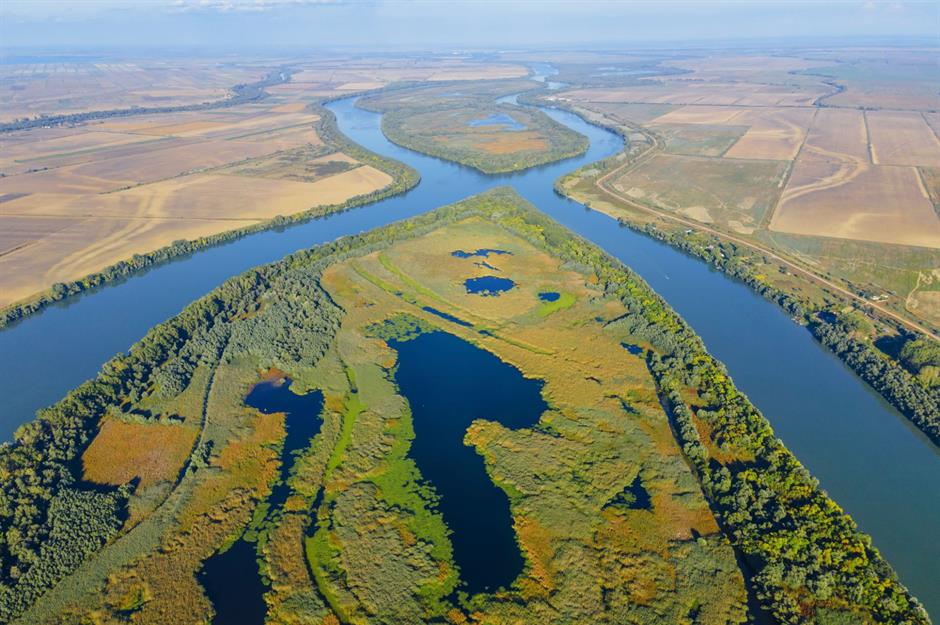
Wetlands are an important and biodiverse ecosystem but, since 1900, about 64% have vanished globally. In the delta of the Danube river, a 580,000-hectare area covering Ukraine, Romania and Moldova, an extensive rewilding project is helping to save this diverse wetland habitat. During the 1970s, 11 dams were built across the Cogâlnic and Sarata rivers which feed into the Danube, which ravaged the ecosystem as soils were degraded and plants and animals killed off.
The Danube delta is being rewilded
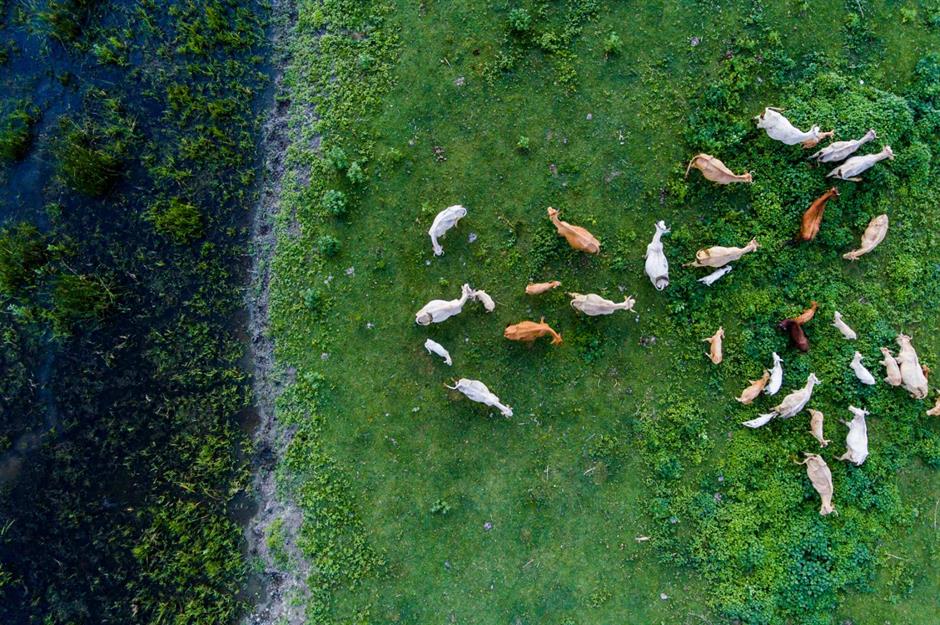
The scheme, run by Rewilding Europe, has involved removing defunct dams and reintroducing native species such as water buffalo, as well as reflooding and reconnecting wetlands to the river. The ecosystem has bounced back quickly. According to researchers, shoals of fish could be seen returning mere weeks after the dams had been removed, while wild donkeys and horses have made a comeback.
Incredible photos of the world's most beautiful sea creatures
Sponsored Content
An enormous ocean plastic purge

It’s safe to say that the world has woken up to the massive problem of plastic in our oceans in recent years. Yet it’s a bigger issue than many people realize. In the middle of the Pacific Ocean, about halfway between Hawaii and California, lies the Great Pacific Garbage Patch which is thought to be around 617,763 square miles (1.6 million sq km) in area – three times the size of France. In an effort to get rid of this plastic island, a non-profit called the Ocean Cleanup has created an innovative cleaning device.
An enormous ocean plastic purge

Blue whales return to South Georgia for the first time in 50 years

Sponsored Content
Blue whales return to South Georgia for the first time in 50 years

The survey reported 58 whale sightings as well as numerous underwater sound recordings. This came after only one blue whale was spotted in the region in the entire period between 1998 and 2018. It’s unclear why they took so long to return, although Dr. Jenifer Jackson, the whale ecologist who led the expedition, described it as “an exciting discovery and a really positive step forward for conservation of the Antarctic blue whale”.
Increasing forest cover in Mixteca, Mexico

Increasing forest cover in Mixteca, Mexico

Having fled civil war, the refugees settled in Mixteca and were alarmed by the desertification they discovered there. So local farmer Jesús León Santos founded the Center for Integral Small Farmer Development in the Mixteca (CEDICAM), which created a community-led operation to reforest the area. The group took on techniques recommended by the Guatemalan settlers, including reintroducing native tree species, planting crops in rows for higher yields and using ditches to prevent the erosion of hillsides. More than 2,471 acres (1,000 hectares) of land have been reforested with more than one million trees, earning Santos and the CEDICAM the Goldman Environmental Prize for their work in 2008.
Sponsored Content
Restoring forests in former coal mining land, eastern US

Restoring forests in former coal mining land, eastern US

Established in 2004, the Appalachian Regional Reforestation Initiative (ARRI) began to restore forests in the region. Among its main goals were planting more native hardwood trees, improving trees’ survival rates and quickly creating a new forest habitat. In 2015, the US Department of Agriculture reported that around 95 million trees had been replanted on 140,000 acres (56,655 hectares) of former mining land.
Beavers return to British waters after 400 years

Sponsored Content
Beavers return to British waters after 400 years

Corals have been protected in Belize’s MesoAmerican Reef

Corals have been protected in Belize’s MesoAmerican Reef

The moratorium has arguably been the most significant move. In 2012, environmental activists created a people’s referendum to find out whether locals were in favor of offshore drilling. The answer was a resounding no: out of 29,235 total participants, roughly 96% were against oil exploitation. The following year, many of the country’s oil contracts were declared invalid by the Belize Supreme Court and a few years later the country’s oil moratorium came into force, which put an end to all offshore oil drilling in its waters. In 2018, the reef was removed from UNESCO’s danger list.
Sponsored Content
Pakistan plans to plant 10 billion trees
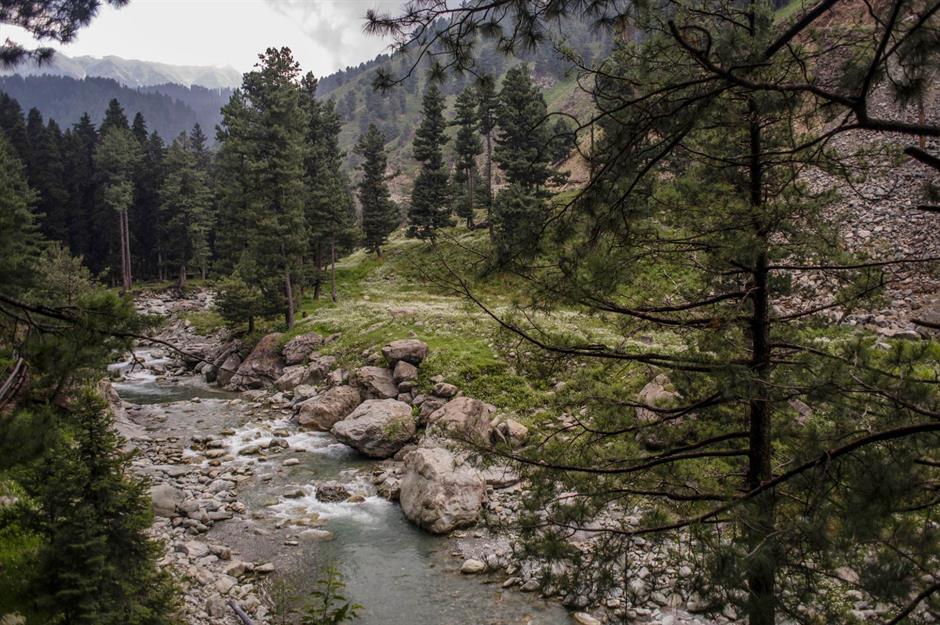
Pakistan has an extremely low rate of forest cover at less than 6%, which is well below the 12% recommended by the United Nations. Yet that’s all beginning to change, thanks to an ambitious scheme. In 2014, the Billion Tree Tsunami was started by politician Imran Khan, who became prime minister in 2018, with the aim of planting – you guessed it – one billion trees across the country. In August 2017, the planting project hit its target months ahead of schedule.
Pakistan plans to plant 10 billion trees
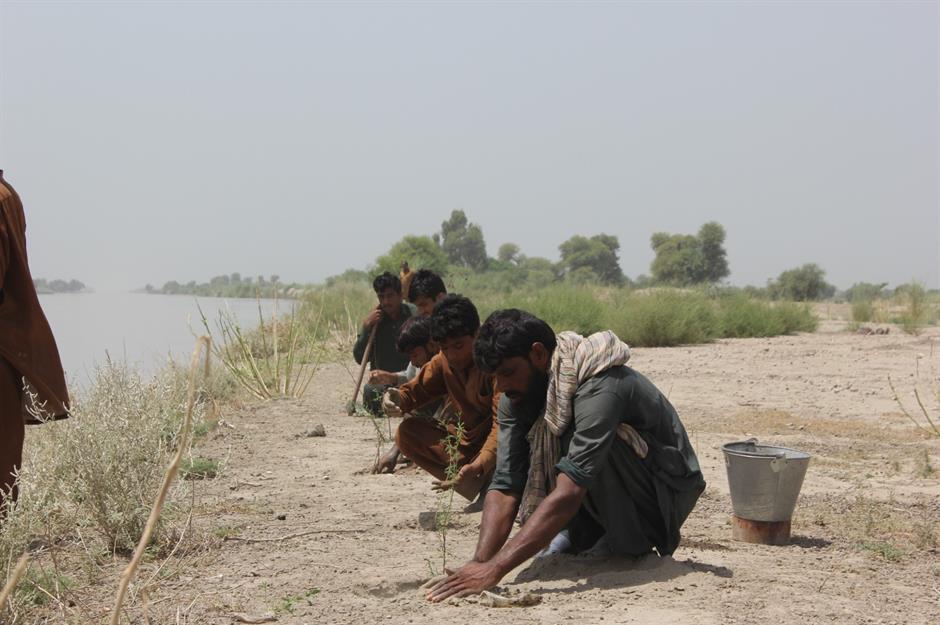
As a result of this success Pakistan has upped the ante and set a goal of 10 billion, which it aims to reach by the end of 2023. By planting species that don’t need much water, such as the neem tree, the forests should withstand the country’s arid climate and rising global temperatures.
Hawaiian sea turtle conservation

In the 1970s, Hawaiian green sea turtles were coveted for all the wrong reasons – their skin was turned into fashion accessories, their bones used for ornaments and their flesh considered a culinary delicacy. So in the 1970s, when marine biologist George Balazs carried out an inventory around the Hawaiian islands, there were just 67 nesting female turtles. Fearing that turtles wouldn’t survive at the rate they were being hunted, in 1978, the US Fish and Wildlife Service (FWS) classified the species as threatened, and made killing them a crime.
Sponsored Content
Hawaiian sea turtle conservation

The conservation program has been a resounding success. According to estimates by Balazs, there are now more than 400 nesting female turtles each year, which is an increase of more than 600% since the early 1970s. In the US, all sea turtle species are currently listed as endangered, which forbids any kind of human contact with them.
Habitats have been restored at Maya Bay, Thailand

Large crowds of people and speedboats had become an all-too-common sight at Thailand’s Maya Bay, in Mu Ko Phi Phi National Park, up until its closure in 2018. Some days there were as many as 6,000 people on the narrow, 250m (0.16-mile) long beach. But it wasn’t just the sheer number of visitors that was a problem. As much as half of the bay’s corals had been damaged by boats’ anchors and the coastline had become severely littered.
Habitats have been restored at Maya Bay, Thailand

Sponsored Content
Tropical forests can regrow in just 20 years without interference

Exciting findings from a recent study suggest that forests can grow back faster than we thought. According to the research, conducted by a group of international scientists and published in the journal Science, tropical forests can almost completely regenerate in two decades without human interference. This is thanks to a biological process known as secondary succession, whereby old plants help new ones to grow.
Tropical forests can regrow in just 20 years without interference

The study could have wide-reaching implications for deforested areas, although researchers have cautioned that regrowth rates vary significantly across different parts of the world. They have suggested that in some regions, additional forest management techniques such as weeding and controlling invasive species will be needed to ensure forests can grow back.
Fish “singing” on Indonesian reef show it’s returning to health

You’ve heard of whale noises, but did you know fish can also sing? At a coral reef in South Sulawesi, Indonesia, fish have been recorded making a series of grunts, whoops, purrs and growls – which scientists say is a sign that reef restoration is working. The reef here has been badly damaged by blast fishing, which relies on the use of explosives to kill or stun everything in an area, but in the past decade it’s undergone significant regrowth.
Sponsored Content
Fish “singing” on Indonesian reef show it’s returning to health

The restoration initiative, known as the Mars Coral Reef Restoration Project, involved attaching live pieces of coral to metal structures and putting them in the damaged area. According to researchers, the series of sounds recorded in this four-hectare patch more closely resembled those of undamaged reefs, suggesting that the ecosystem is returning to health.
Wild bison return to Kent, UK, to create woodland

In 2022, three wild bison were released from wildlife parks into Wilder Bean, a commercial pine forest near Canterbury, Kent. The complete herd now has a bull and a calf, and it’s hoped their natural behavior will transform the dense space into a natural woodland, with their taste for bark opening up trails and more open ground.
Wild bison return to Kent, UK, to create woodland

The project, managed by Kent Wildlife Trust, means that new plants, lizards, birds, bats and insects could thrive here too. It’s the first time wild bison have roamed in Britain for thousands of years and more grazing animals are set to join them, including Exmoor ponies, iron age pigs and Longhorn cattle.
Sponsored Content
Nepal's tiger population more than doubles in a decade

Voted the world's favorite animal in 2004, tigers have commanded more time and money from conservationists than perhaps any other species and they're well overdue some good news. In July 2022 Nepalese officials announced that thanks to conservation efforts the local tiger population had more than doubled since 2009, reaching 355 individuals, and numbers are continuing to grow.
Nepal's tiger population more than doubles in a decade

Once common in jungles and grasslands throughout Asia, poaching and habitat loss saw tiger numbers plummet by 95% through the 20th century. Despite the increase in numbers of wild tigers, conservationists are warning not to over-celebrate this fragile success. Tigers are still marked as 'endangered' on the IUCN Red List and occupy only a small fraction of their former territory.
Once-extinct butterfly enjoys record summer

In 1979, the large blue butterfly was declared extinct in the UK, and would remain so for four years until scientists reintroduced the species with a handful of caterpillars from Sweden. In 2022, the butterfly notched its best summer in 150 years of record-keeping, thanks to targeted conservation work turning arable fields and downland into flower-rich meadows perfect for pollinating.
Sponsored Content
Once-extinct butterfly enjoys record summer

Still an endangered species across Europe, the large blue butterfly now flies in greater numbers in Somerset and Gloucestershire than anywhere else on Earth, with a third of its UK population found in 12 new sites carefully curated for its wellbeing. It's not the only bug to benefit with rugged oil beetles, spotted bee flies and magnificent Duke of Burgundy butterflies all finding solace in the new habitats.
British bees bounce back

The sad decline of Britain's bees has been marked far and wide (it even had a plotline in Doctor Who), but now a locally funded conservation project in the South Downs is showing that, given the right support, the insects can still survive and thrive. Sussex residents raised $89,000 to help fledgling charity Bee Lines plant a network of 'wildflower corridors' across the South Downs national park, with a 72% increase in pollinator species as a result.
British bees bounce back

The numbers speak for themselves, but there is still work to be done. Recent research shows that hotter, wetter conditions can stunt wing development in young bees, so tackling climate change remains essential to long-term recovery. An irreplaceable cog in many rural ecosystems, a lot of plant species rely on insect pollinators like bees to reproduce, and a more severe decline could cast an extremely long shadow over the British countryside.
Sponsored Content
Major breakthrough for Caribbean corals

Scientists at the Florida Aquarium in 2022 scored a crucial victory in the race to revitalize the Caribbean's ailing coral reefs. A team of marine biologists successfully reproduced elkhorn coral in a laboratory environment for the first time, sparking hopes of a brighter future for one of the area's most important – and most threatened – coral species. Elkhorn is an anchor for Caribbean reef systems, as thickets of the coral provide habitats for other corals and fish, but a 97% population loss since the 1980s left only 300 or so individuals in the wild.
Major breakthrough for Caribbean corals

The species was the 14th coral to be successfully spawned in the aquarium's Apollo Beach Lab, but it is by far the most significant. Named for its resemblance to a pair of antlers, the corals thrive in shallow water at the tops of reefs, sheltering the ecosystem below and helping break up big waves and storm surges above. Threatened by warming seas and decimated by disease, the fragile population could have gained up to 100 healthy adults from this spawning alone.
Indonesia's incredible coral reef restoration

With its strikingly blue waters and tiny islands, this patch of ocean is part of Indonesia's Raja Ampat, a four-million hectare protected area in the country's West Papau province. The remote region is known for having the highest level of marine biodiversity on the planet, with around 75% of the world's coral species to be found here. Though little-visited by tourists, conservationists sounded the alarm about its destruction around 20 years ago, due to destructive practices including shark finning, turtle poaching and unregulated fishing.
Sponsored Content
Indonesia's incredible coral reef restoration

Fortunately, the tides have turned for Raja Ampat. In 2004, it was added to the Bird's Head Seascape project, which took to the task of creating Marine Protected Areas and introducing stricter protections in the area, while ensuring local people could still fish in the waters sustainably. Since its inception, poaching by external fishing operations is down by 90%, many fish populations have rebounded, its beautiful corals are recovering and local peoples' food security has improved.
Now take a look at fascinating plant and animal species named after celebrities