Remarkable discoveries unearthed by recent droughts
Shocking drought discoveries
Severe drought has been a concern in recent years as extreme heat and low water levels have devastated nature, wildlife and businesses. As major rivers and waterways have dried up, various intriguing (and sometimes grisly) discoveries have resurfaced.
From 40 ancient tombs to a 19th-century passenger ferry uncovered at the bottom of the Mississippi River, we round up the remarkable discoveries unearthed by recent droughts.
Read on to see some shocking recent drought discoveries...
Lost underground structures, Hampshire, England, UK

The UK's scorching weather in summer 2025 left parchmarks on the lawns of two National Trust properties in England, offering a secret glimpse into the past.
Outlines of previously lost underground structures at the former Augustinian Priory of Mottisfont (pictured), near Romsey in Hampshire, have been revealed, leading archaeologists to identify the lost monastery buildings, including a cloister, that date between the 13th and 16th century. Similarly, at Fountains Abbey in North Yorkshire, the dry conditions revealed outlines of a large guest hall.
Ancient tombs, Duhok, Iraq
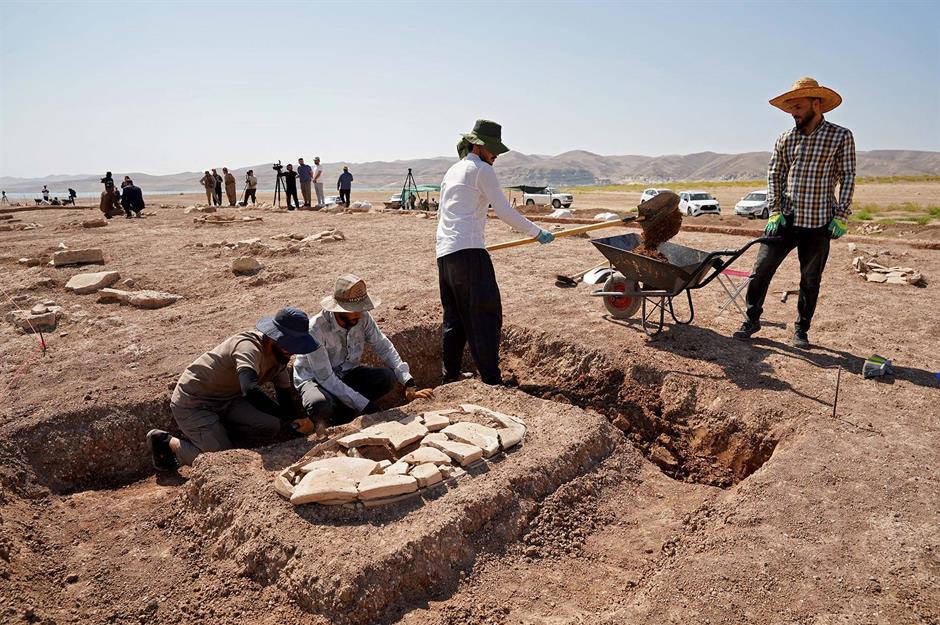
Forty ancient tombs have been unearthed in drought-hit Iraq's largest reservoir. Archaeologists found the tombs, believed to be more than 2,300 years old, in August 2025, on the edges of the Mosul Dam in the Khanke region of Duhok, northern Iraq.
Water levels in the country dropped to their lowest since 1933 as the nation continues its struggle against severe drought for the fifth consecutive year. The tombs are believed to date back to the Hellenistic or Hellenistic-Seleucid period. Experts have transferred them to Duhok Museum for further study.
Sponsored Content
Moai statue, Easter Island, Chile
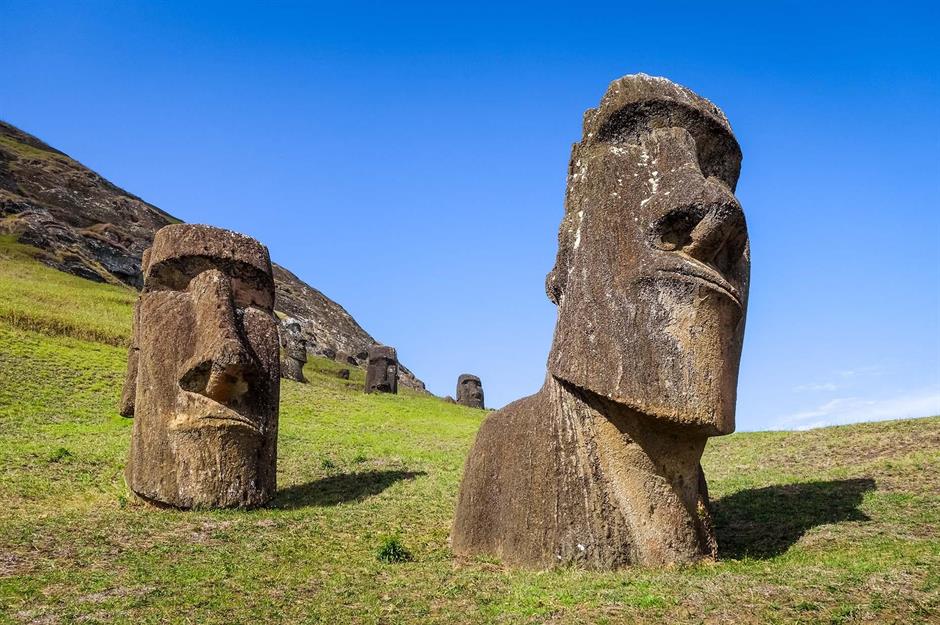
A brand-new moai statue emerged from a dried-up lake bed in a volcanic crater in March 2023, thrilling archaeologists. The lake started drying up in 2018 and was previously deep enough that the statue must have been there for at least two or three centuries. More than five feet (1.6m) tall, it was found lying on its side in the muddy marsh looking up at the sky.
The iconic UNESCO-listed moai stone figures were carved by the Indigenous Rapa Nui people of Easter Island between approximately 1200 and 1500 AD, and are thought to represent deified ancestors. The statues were made out of solidified volcanic ash often mined from the Rano Raraku crater – the same crater that yielded the new find.
World War II 'Ghost Boat', Lake Shasta, California, USA
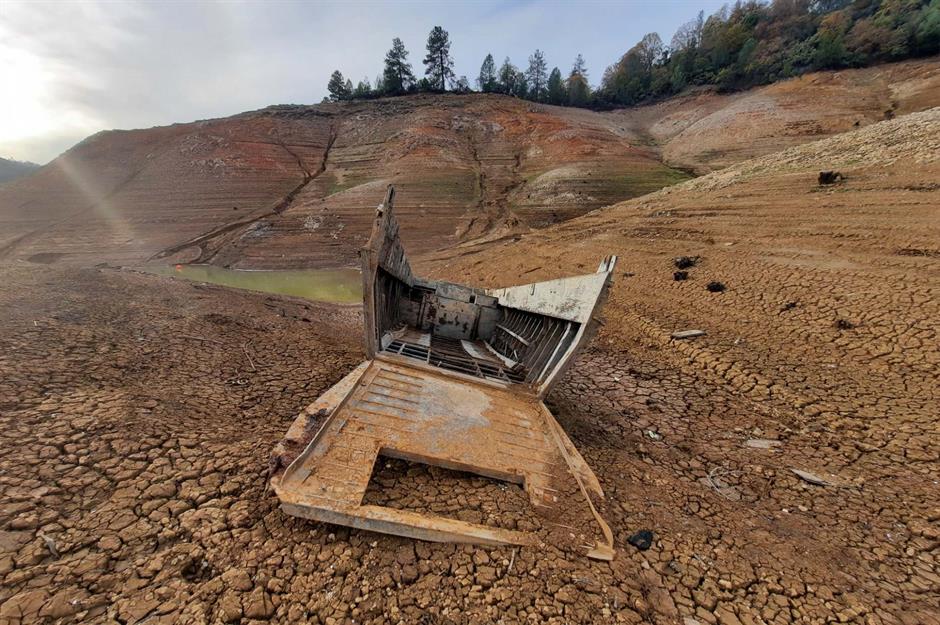
This rusty old boat was discovered by officials in October 2022 following intense drought hitting California's Lake Shasta. It's the remains of a Higgins ship which carried goods and passengers during World War II.
The 'Ghost Boat', so-called due to the mystery surrounding how it ended up in this lake, was used during D-Day invasions in the Pacific – but was previously thought to have sunk at the time. At the moment, no one is quite sure how it ended up in the bottom of Lake Shasta...
Hunger stones, Děčin, Czechia
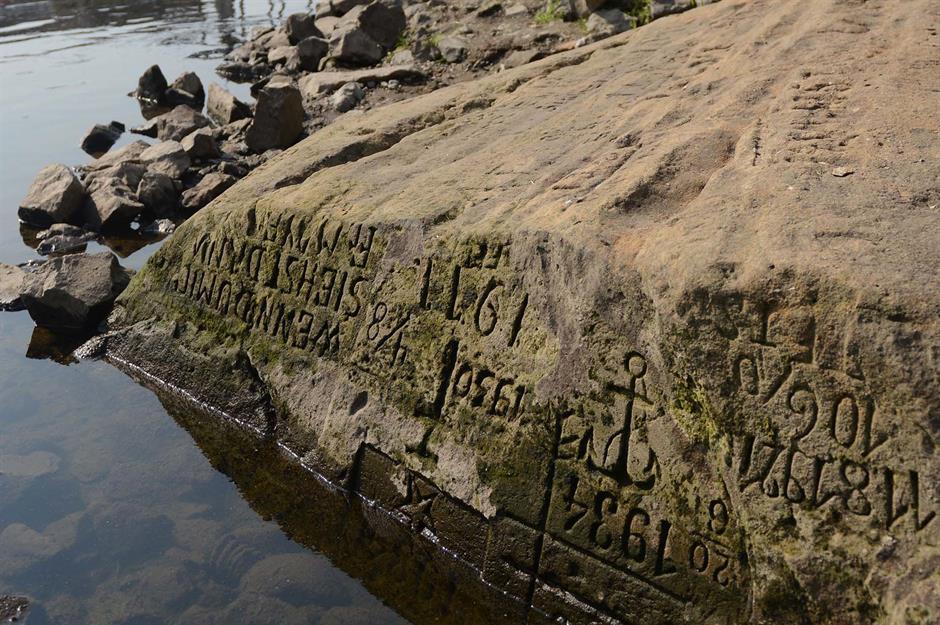
These so-called ‘hunger stones’ cropped up in several major European rivers as a result of the drought that affected Europe in 2022. Pictured here is a 15th-century instalment spotted in Děčin, Czechia, whose translated inscription reads: “If you see me, then weep”.
Sponsored Content
Roman Bridge of Nero, Rome, Italy
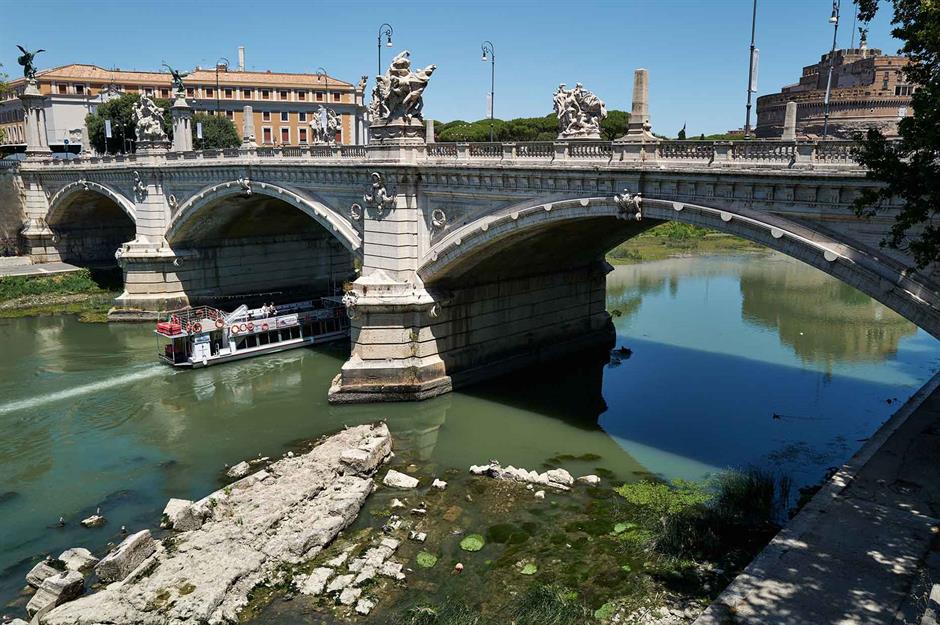
Italy suffered its worst drought in 70 years in 2022, and Rome's River Tiber water levels became dangerously low. In July that year, an ancient Roman bridge reappeared near the Vittorio Emanuele II Bridge in the capital.
Previously submerged by water for centuries, the bridge was constructed during the reign of Emperor Nero, famed for the notorious Great Fire of Rome.
World War II bomb, River Po, Italy
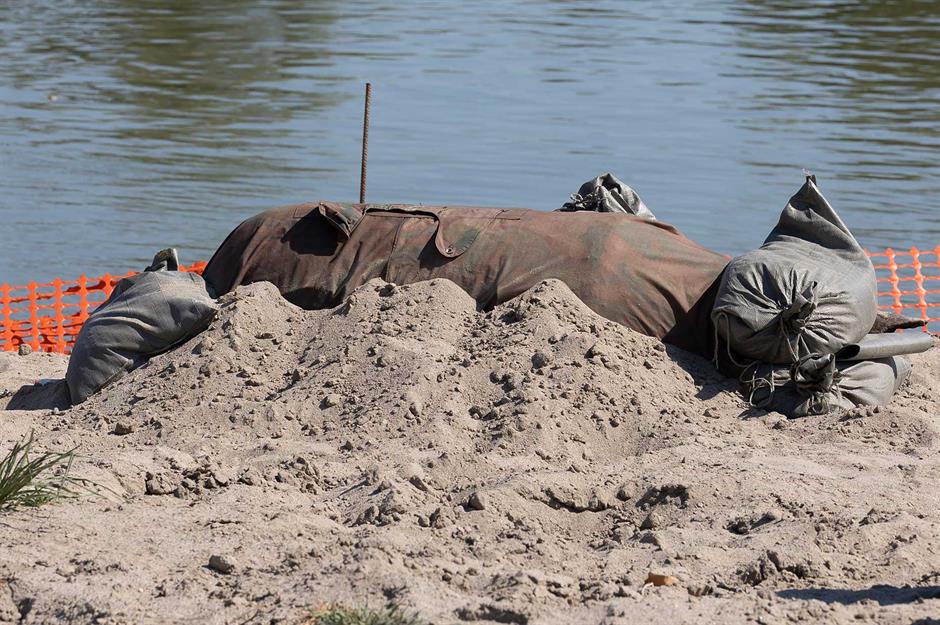
This World War II bomb was discovered in the dried-up River Po and has now, thankfully, been removed by the Italian army. It was found near the city of Mantua by local fishermen.
Foyeliang Island, Chongqing, China
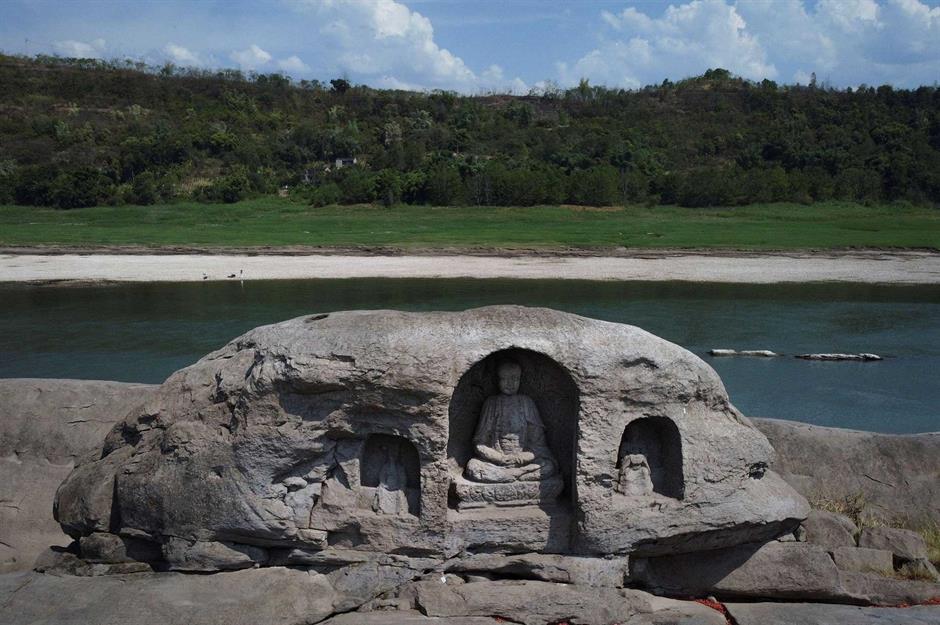
China was hit with record-high temperatures and record-low water levels in July 2022, with the Yangtze basin’s levels 45% lower than usual. In Chongqing, southwestern China, this 600-year-old rock carving re-emerged from the water, and had reappeared during 2020’s receding water levels too.
At over three feet (0.9m) tall, the carving, sitting atop Foyeliang Island, depicts a monk resting on a lotus pedestal.
Sponsored Content
Dinosaur footprints, Texas, USA
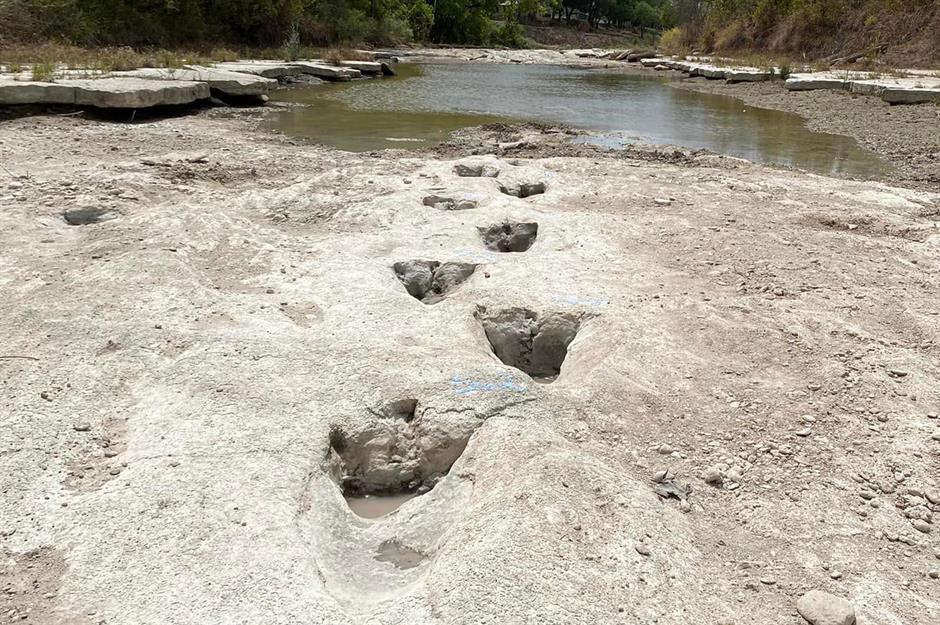
In August 2022, severe drought in Dinosaur Valley State Park – once situated on the edge of an ancient ocean – revealed these dinosaur footprints dating back 113 million years.
The footprints are thought to have been trodden by an Acrocanthosaurus, which stood at 15 feet (4.5m) tall and weighed nearly seven tonnes.
Dolmen of Guadalperal, Valdecañas reservoir, Spain
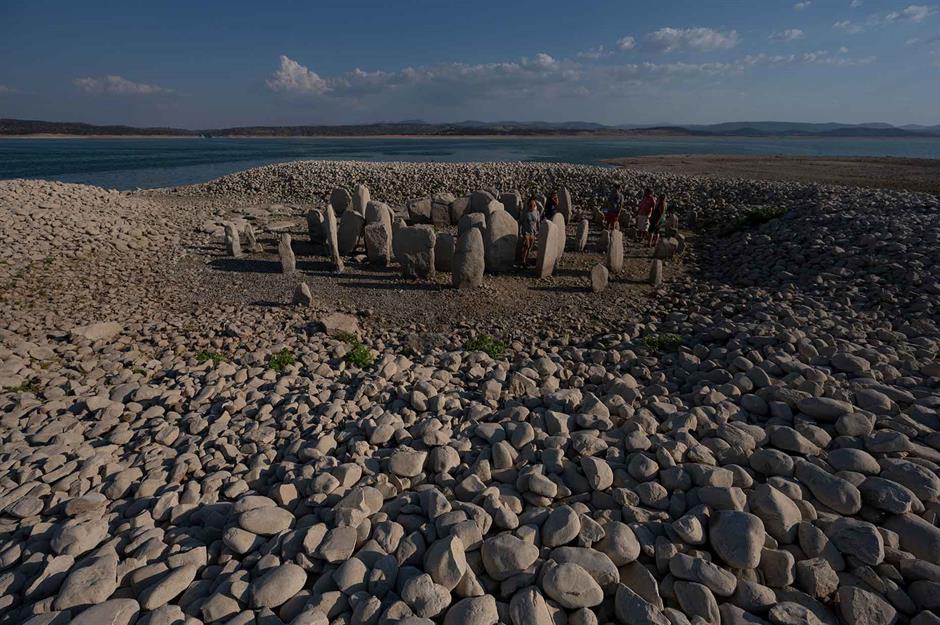
The Dolmen of Guadalperal, aka the 'Spanish Stonehenge', revealed the striking effect of Spain’s 2022 drought crisis. The megalithic site is thought to date back some 7,000 years but was flooded in 1963 for a development project.
However, that year's receding waters in the surrounding Valdecañas reservoir brought the prehistoric site to the surface again.
Aceredo, Ourense, Spain
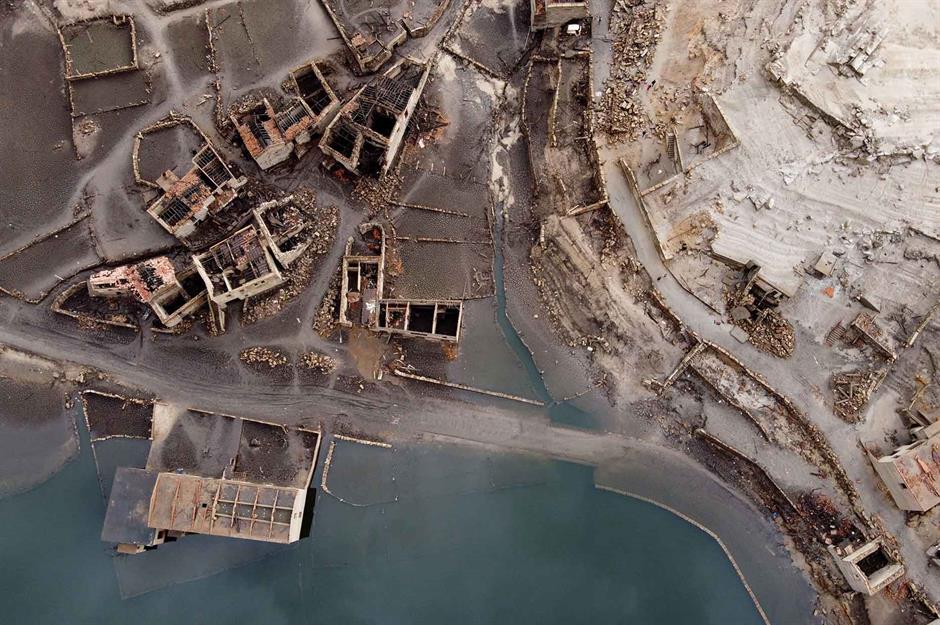
This former village was exposed for the first time in 30 years in November 2021. The village was purposely flooded in 1992 to make way for the Alto Lindoso reservoir, where it remained submerged for three decades.
Ghostly yet strikingly preserved buildings re-emerged in February 2022 after extreme drought, which worsened as the year went on.
Sponsored Content
West End village, Thruscross Reservoir, England, UK
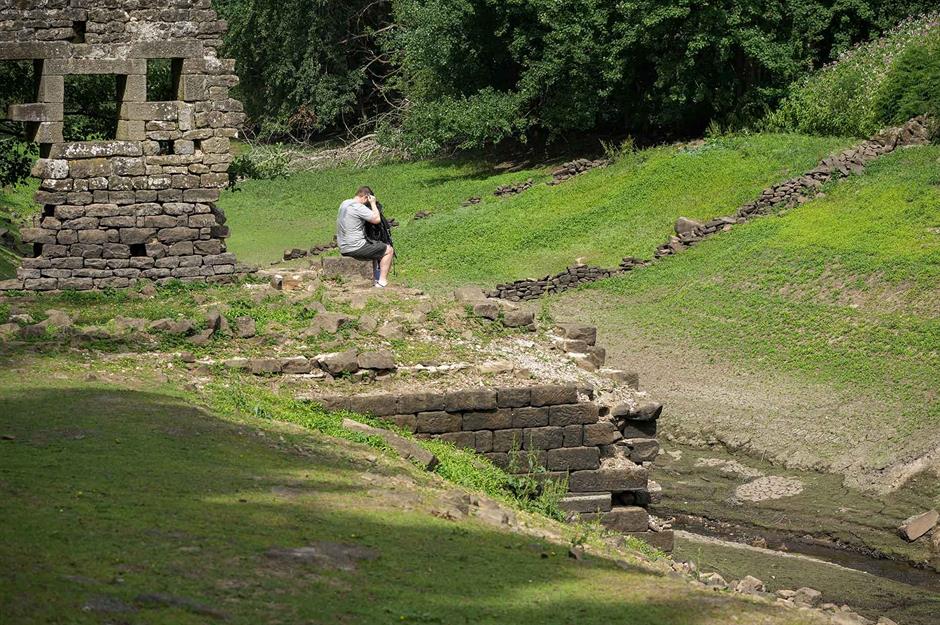
In Harrogate, North Yorkshire, the 17th-century village of West End reappeared again following a heatwave and below average rainfall. The Thruscross Reservoir flooded the old village in 1996 but, in 2022, the water levels receded enough to re-expose the remnants of buildings, walls and chopped-down trees.
Ancient bridge, Llwyn-on Reservoir, Wales, UK
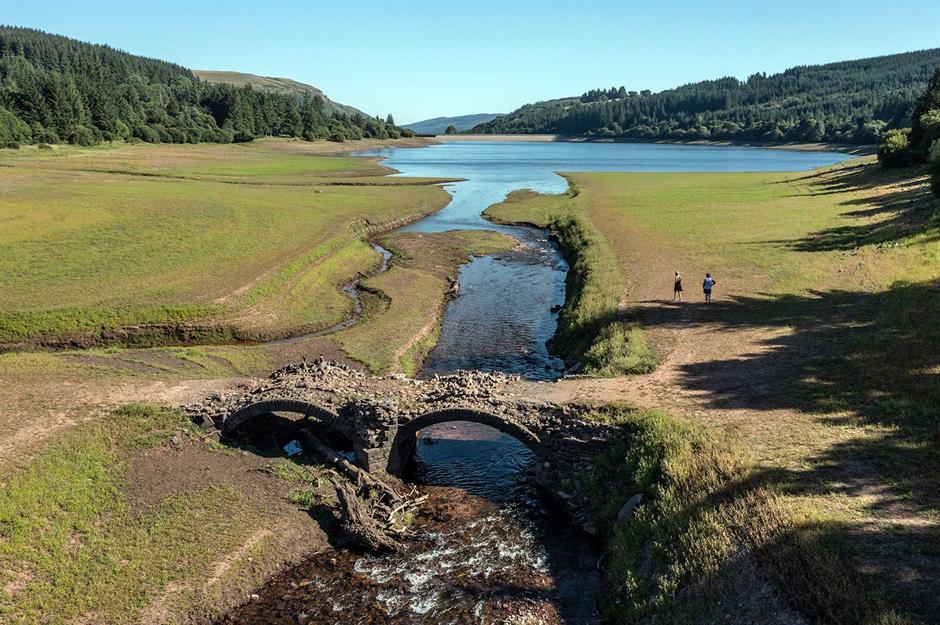
Wales saw parts of the country reach highs of 37°C (98°F) in August 2022, around 17°C (30.6°F) above average. This ancient bridge is usually submerged in water at the Llwyn-on Reservoir (the largest reservoir in the Taf Fawr valley), but the drought caused it to reappear.
Church, Sant Roma de Sau, Girona, Spain
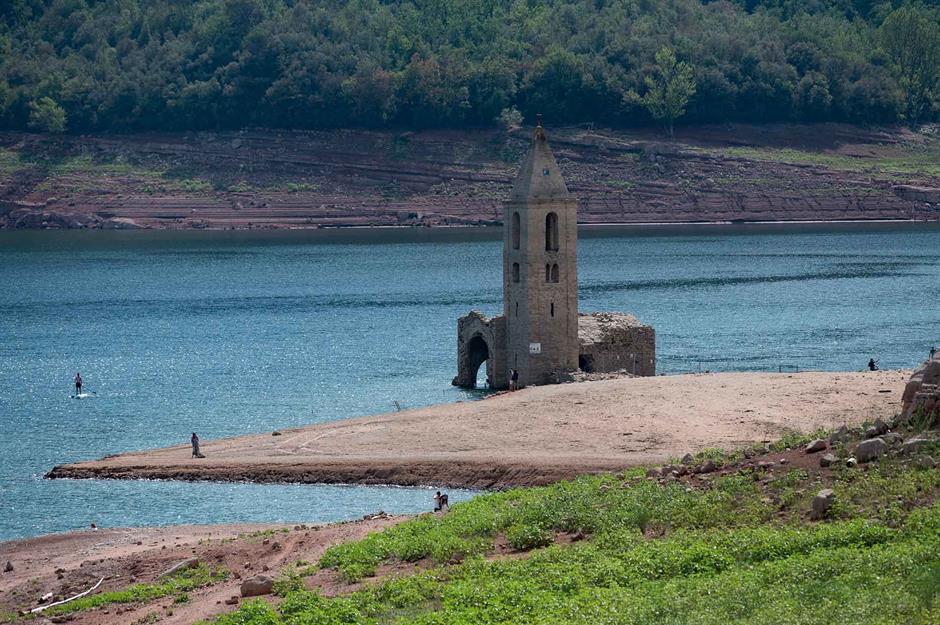
You can only usually see the bell tower of this 11th-century church but Sant Roma de Sau, in Girona, resurfaced fully in 2022, 2023 and again more recently in March 2025 due to Spain's drought crisis.
The northeastern village was flooded in the 1960s to make way for a dam, but droughts during the past few years have allowed visitors to see the quaint structure again, with canoeists even able to paddle through its arch.
Sponsored Content
Gary Qasruka, Dohuk, Iraq
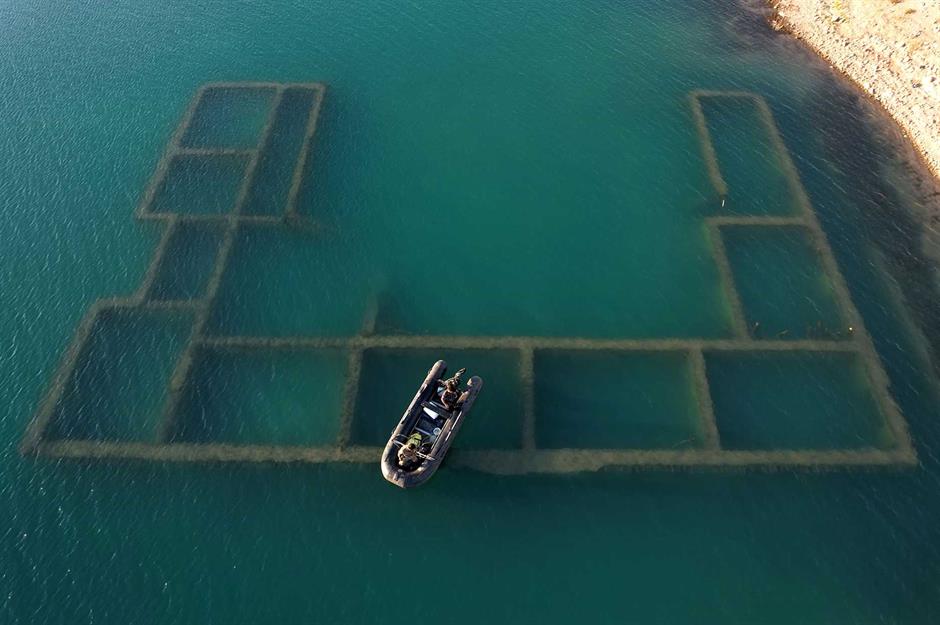
Gary Qasruka is an abandoned village in the northern Iraqi city of Dohuk. While it was abandoned in 1985, it resurfaced in August 2022 due to drought.
Once swallowed by water, the Dohuk dam's water level dropped by 23 feet (7m), which enabled visitors to gain rare access to the site, including a still-standing house.
Sunken warship, Prahovo, Serbia
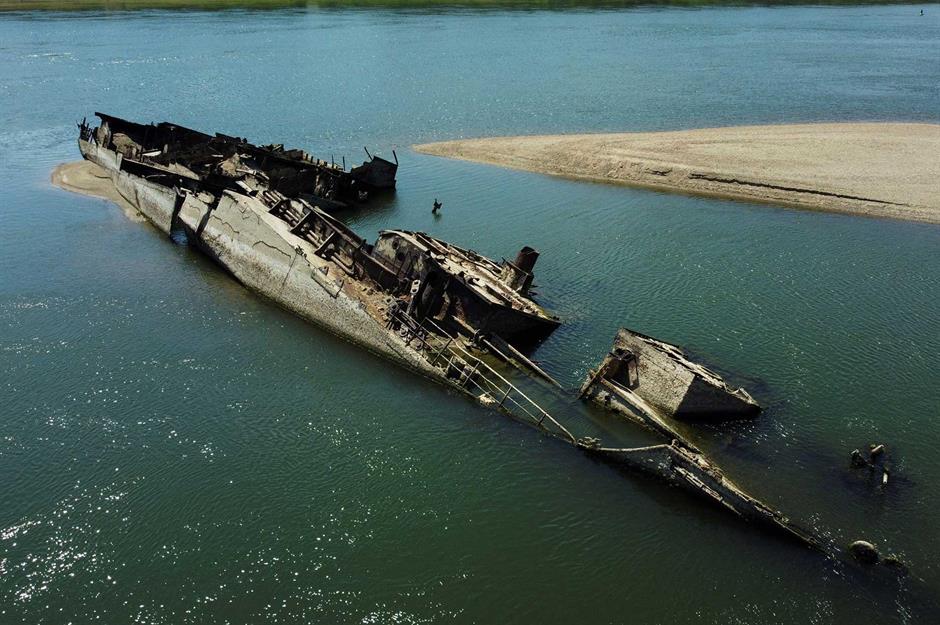
It’s not just Serbia’s current low water levels that are shocking, but the discoveries which come with them too. Pictured here is a German war vessel discovered near the port town of Prahovo.
The flotilla was deliberately sunk in 1944 to escape Soviet forces but re-emerged in 2022 during a severe drought in Serbia. Undetonated explosives and ammunition continue to be removed as their exposure poses a serious threat to nature, wildlife and river traffic. The salvage process began in 2024, and is ongoing.
Rusty barrel, Lake Mead, Nevada, USA
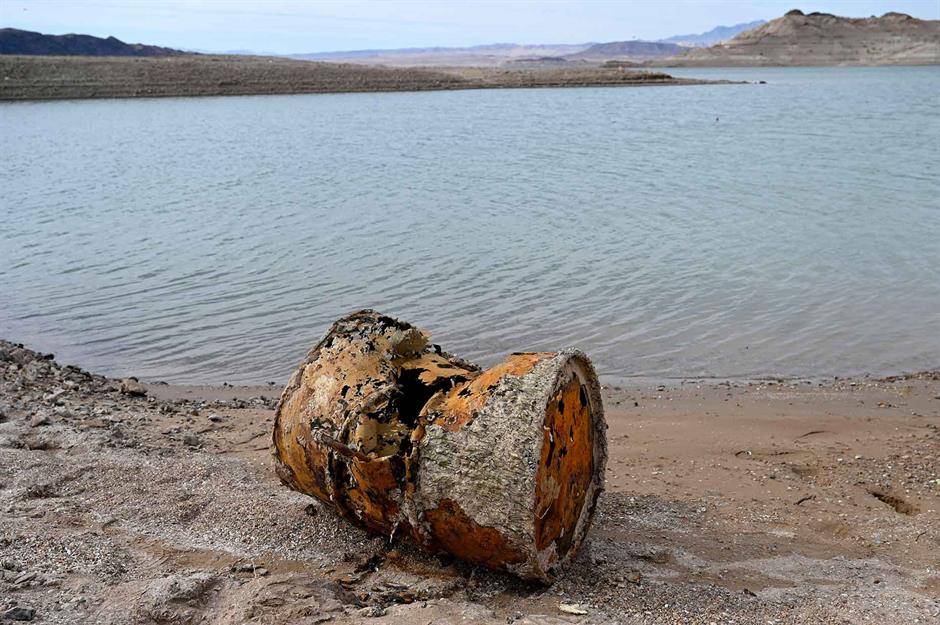
At first glance, this washed-up rusty barrel on the shores of Lake Mead doesn't seem too unusual – a result of North America's largest artificial reservoir shrinking by roughly 175 feet (53m) since 2000. But inside it, skeletal remains dating back to the 1970s were found.
In July 2022, the lake experienced its lowest levels since being filled in the 1930s, following the Hoover Dam’s construction. Among the more grisly discoveries are an increasing number of human remains, with a skull the most recent find. In 2025, the lake has seen some recovery, but levels are expected to fall again in the next two years.
Sponsored Content
Upturned boat, Lake Mead, Nevada, USA
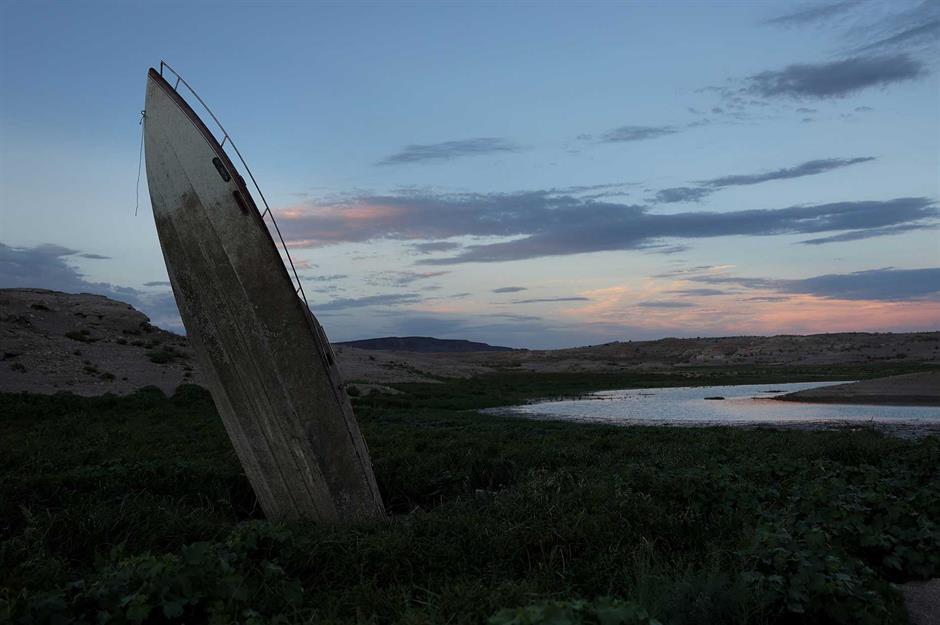
Also discovered in Lake Mead is this once-sunken boat, which stands vertical in a section of the lake that had previously been underwater. As drought continues to devastate the Lake Mead National Recreation Area and around Nevada, the federal government has announced plans to cut water allocations from the Colorado River Basin to Arizona and Nevada for the third consecutive year.
As low water levels persist, the discoveries continue.
19th century passenger ferry, Baton Rouge, Louisiana, USA
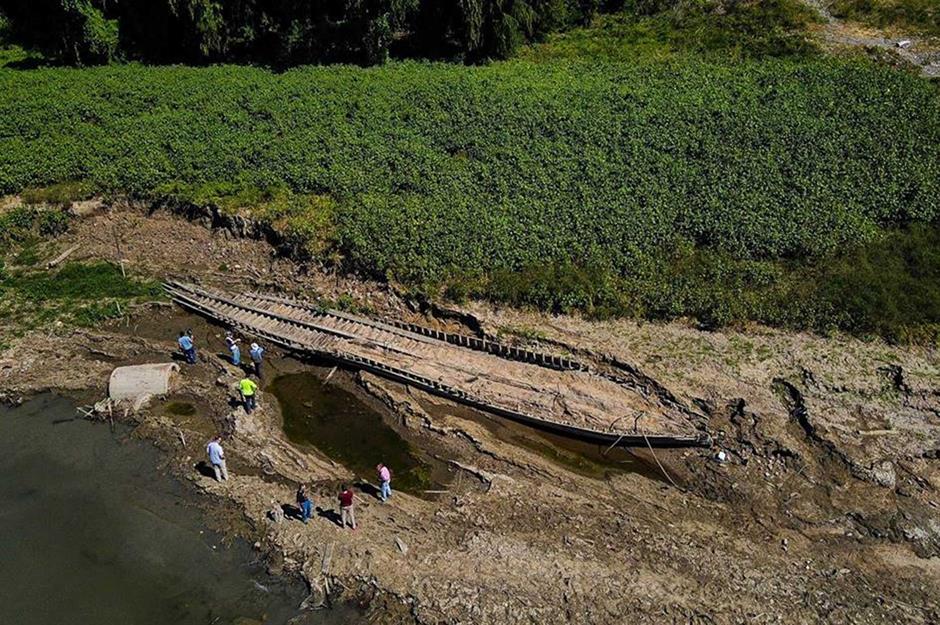
The American Midwest has experienced widespread drought since 2022. The Mississippi River registered record-low levels that year, exposing this previously submerged passenger ferry named the Brookhill.
Believed to date back to the 19th century, the boat sank following a major storm in 1915. While the site remains open for all to visit (until it's eventually submerged again), parts of the shipwreck have been stolen, leading to signs being installed reminding people not to take pieces of the ferry.
Now discover the amazing archaeological finds discovered by amateurs