Abandoned Australia: 100 spine-tingling places you won't want to visit
Derelict sites Down Under
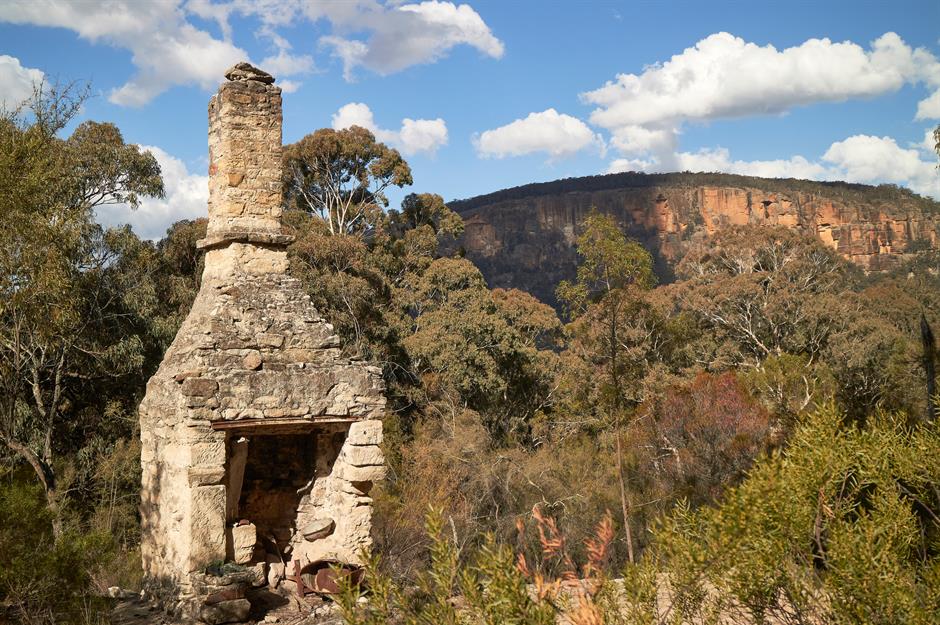
Beautiful broken wrecks, sun-scorched shells, defunct townships gone back to the bush and rusted-up industrial ruins – Australia is scattered with abandoned places that ooze atmosphere.
Read on to discover 100 derelict spots around the country, many steeped in stories that will make your spine tingle…
Tasman Island, Tasmania
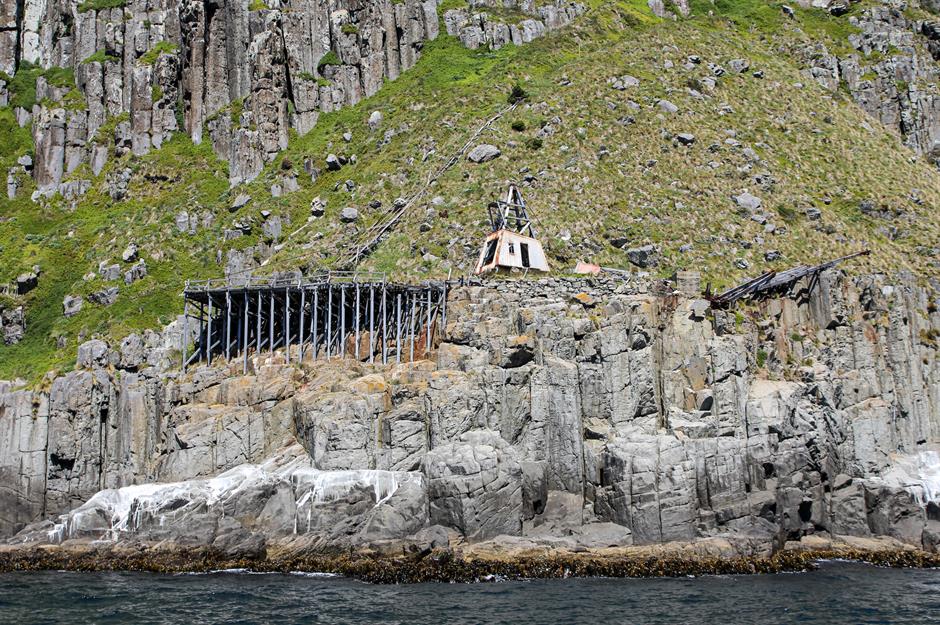
Huddled beneath the towering grey basalt column cliffs of Tasman Island are the remains of a haulage system and tramway. It was built to hoist goods up to the lonely lighthouse set high up on the rocky isle. The steel structure was the last of the manned lighthouses ever built in Tasmania, completed in 1906. It’s now solar powered while its keeper’s cottages also stand in ruins.
The remains on this wind-whipped isle just off the southeastern tip of the Tasman Peninsula can be seen by boat (weather willing) or helicopter.
South Gippsland Creamery and Butter Factory, Yarram, Victoria
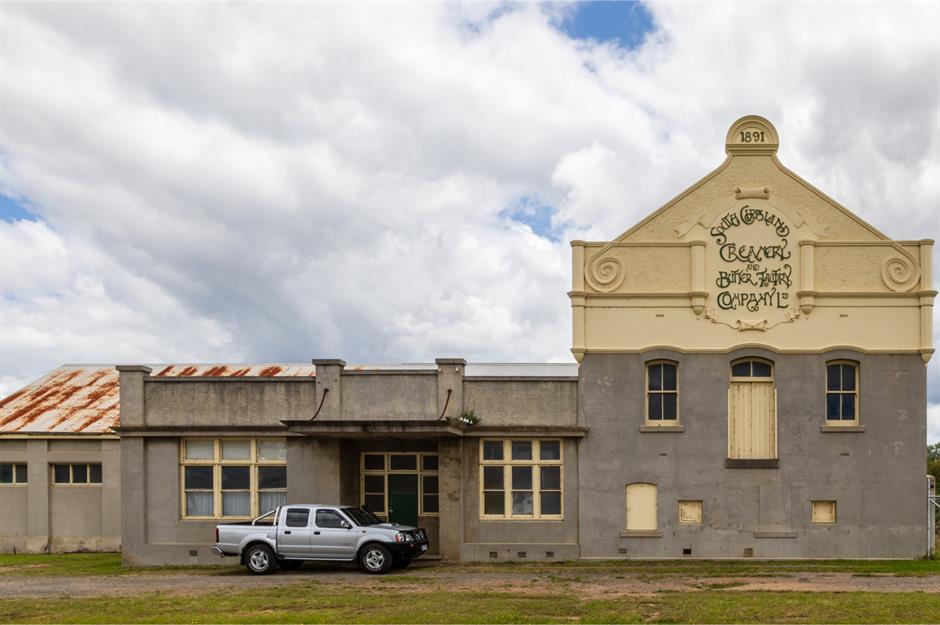
Standing at the entrance to agricultural township Yarram in Victoria, this former butter factory was opened in 1891 and closed in 1987. It had a good innings, but now the handsome heritage-listed building is shuttered up and empty.
After a good snoop around from the outside, head to the Historical Society's Museum next door (open Wednesdays only) to learn about the town's history.
Sponsored Content
SS Maheno, Fraser Island, Queensland
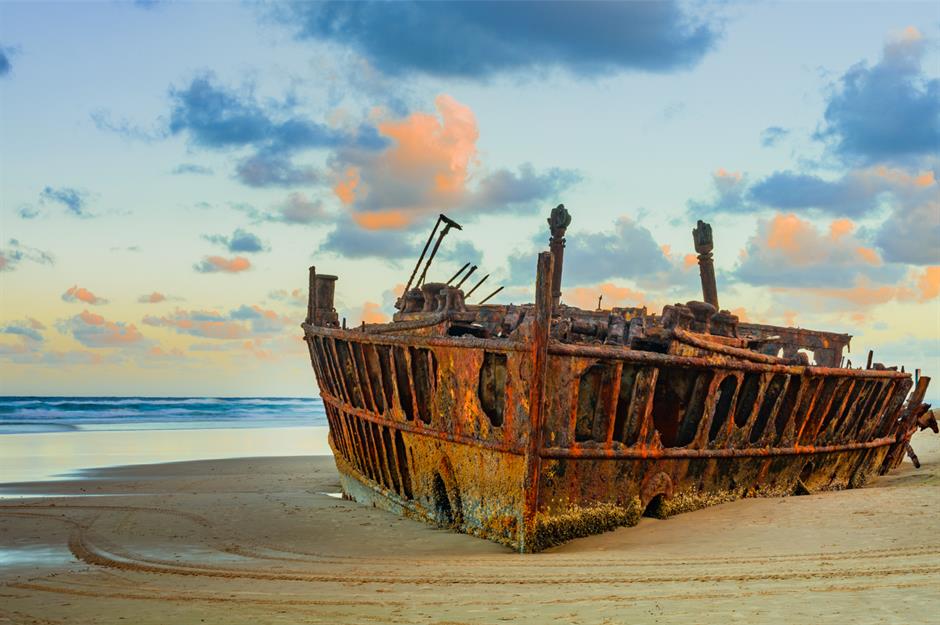
The rusting remains of SS Maheno on Fraser Island’s vast 75 Mile Beach are an arresting sight and have become one of its must-see landmarks. The rotting wreck was once an innovative ocean liner, built in 1905 and used to ferry passengers between Sydney and Auckland.
She met her demise in 1935 on being towed to a Japanese wrecking yard, when a cyclone snapped the chain and she drifted onto the sand island’s shores. And here she’s stayed.
Coal Mines Historic Site, Tasmania
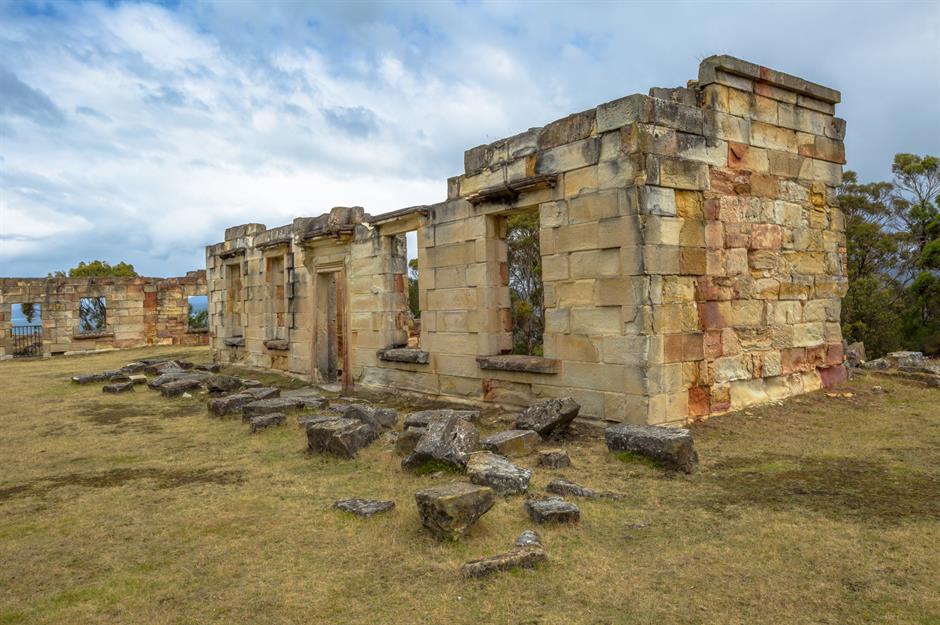
This foreboding place on the wild Tasman Peninsula was the state’s first operational mine. It used the forced labour of convicts from nearby Port Arthur – punishment for the penal colony’s worst repeated offenders. In 1839, 150 prisoners and 29 officers were stationed in its large stone barracks. There was also a chapel, bakehouse and store.
It closed in 1848 on both “moral and financial grounds”. Today, the sandstone ruins and collapsed mine shafts are one of 11 sites that form the UNESCO-listed Australian Convict Sites World Heritage Property.
North British Gold Mine, Maldon, Victoria
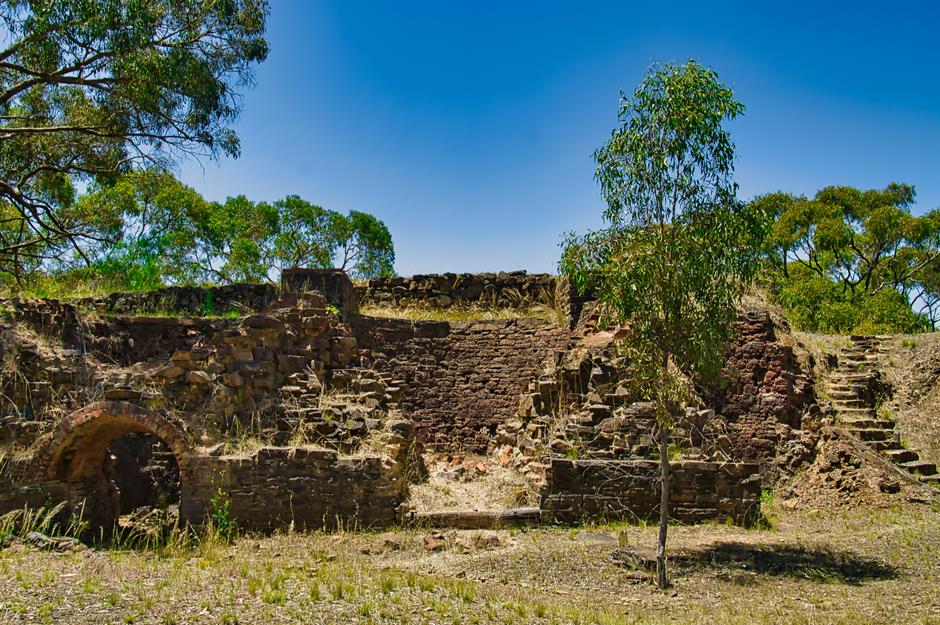
The overgrown ruins of the now defunct North British Gold Mine and Quartz Kilns near gold-rush era town Maldon are full of fascinating relics from the region’s industrial past. A self-guided trail takes walkers around the 19th-century mine's machinery foundations, large mine shaft and well-preserved quartz kilns.
Alluvial gold was first discovered here in late 1853, followed by quartz reef gold a year later. The mine was operational until 1926.
Sponsored Content
Cape St George lighthouse, Jervis Bay, New South Wales
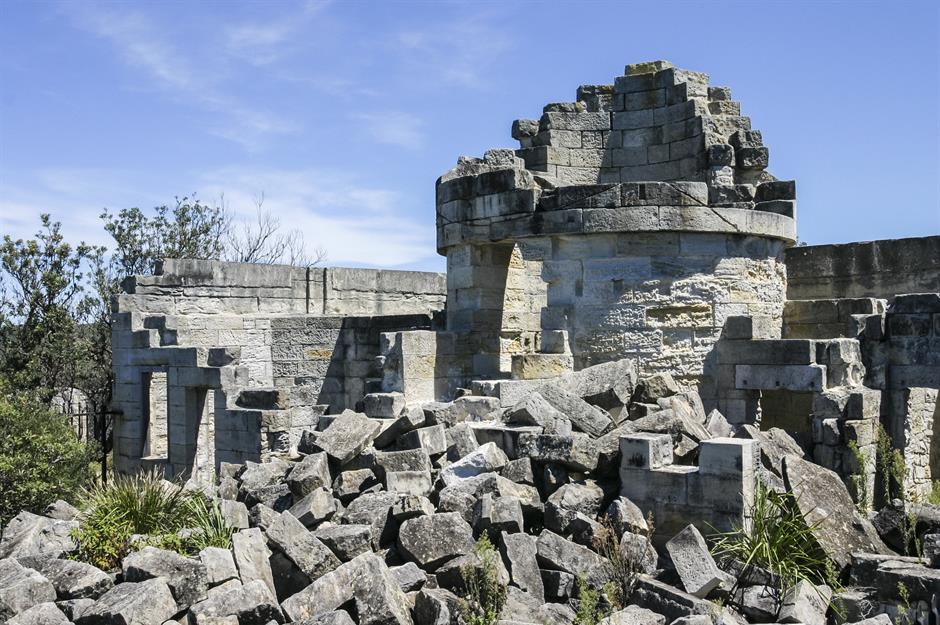
This crumbling ruin can be found on the cliffs in Booderee National Park on the southern coast of New South Wales. Built in 1860 from local sandstone, the historic lighthouse was three storeys in its prime and home to up to 15 people.
The lighthouse keeper and two under-keepers plus their families lived in the eight-room complex – several residents met a grisly end here with causes of death ranging from typhus fever and pleurisy to drowning and being attacked by sharks.
HMVS Cerberus, Melbourne, Victoria
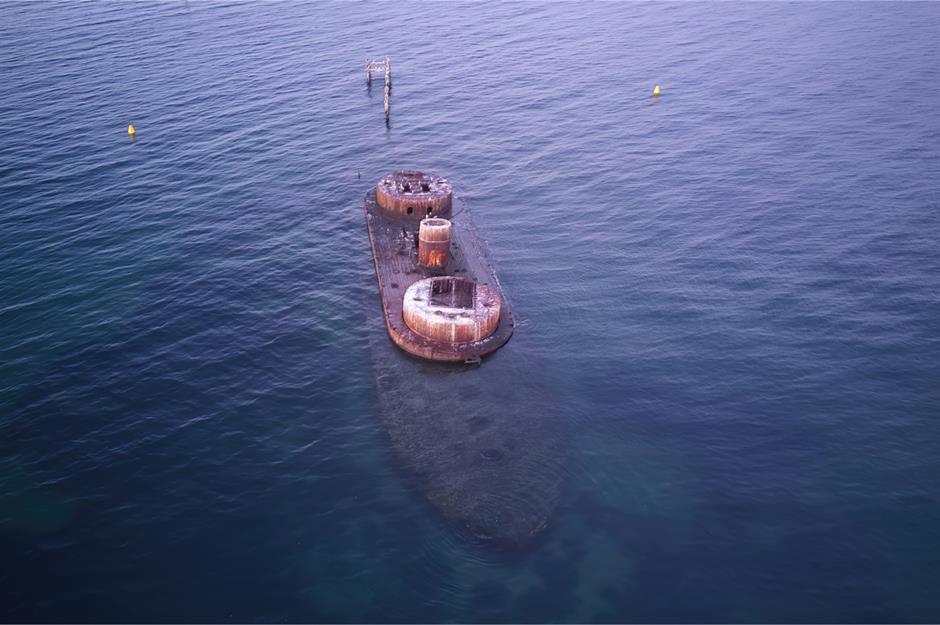
Lying half submerged just off Half Moon Bay are the rusting remains of a warship built for the colony of Victoria in 1870. Once the pride and joy of the Royal Australian Navy, HMVS Cerberus was the first breastwork monitor warship in the world and on active duty for over half a century.
By World War I, her status as a warship was revoked and she became a guardship and munitions store. Retired in 1924, she was towed across Port Phillip Bay to be sunk off Black Rock as a bulwark.
Tower Cinemas, Newcastle, New South Wales
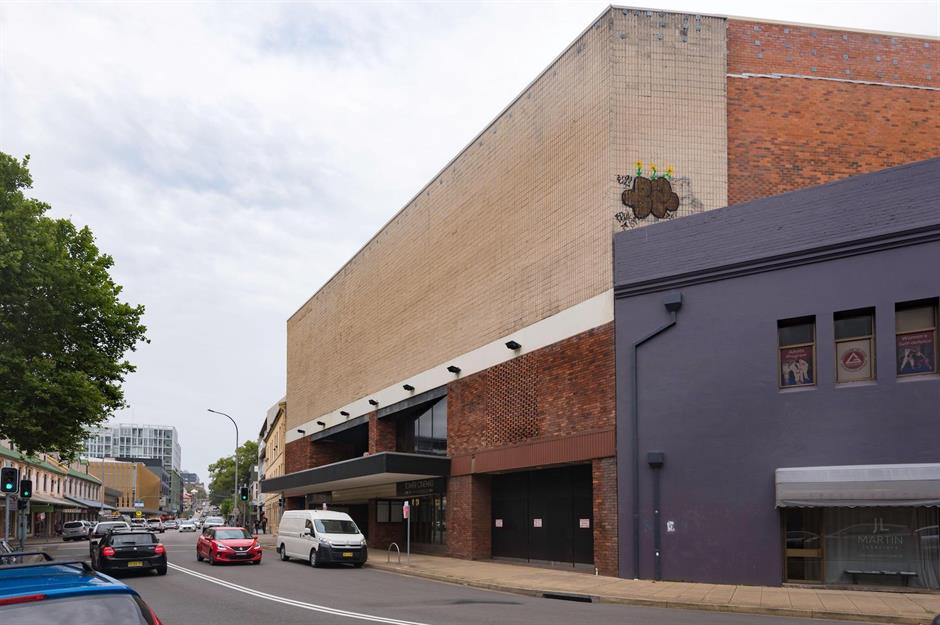
Despite being boarded up since 2018, Newcastle’s Tower Cinemas is still much missed by the community, with calls to reopen the space as a cinema. The three-screen venue, which opened in the coastal city in 1976, was a much-loved local cinema, host of film festivals and known for screening independent and foreign movies in its latter years.
But dwindling customers led to Event Cinemas closing the place. The abandoned building was eventually sold to Five Star Cinemas in April 2024, with plans to open in December that year. However, it remains closed as of summer 2025.
Sponsored Content
Old Helensburgh Railway Tunnel, New South Wales
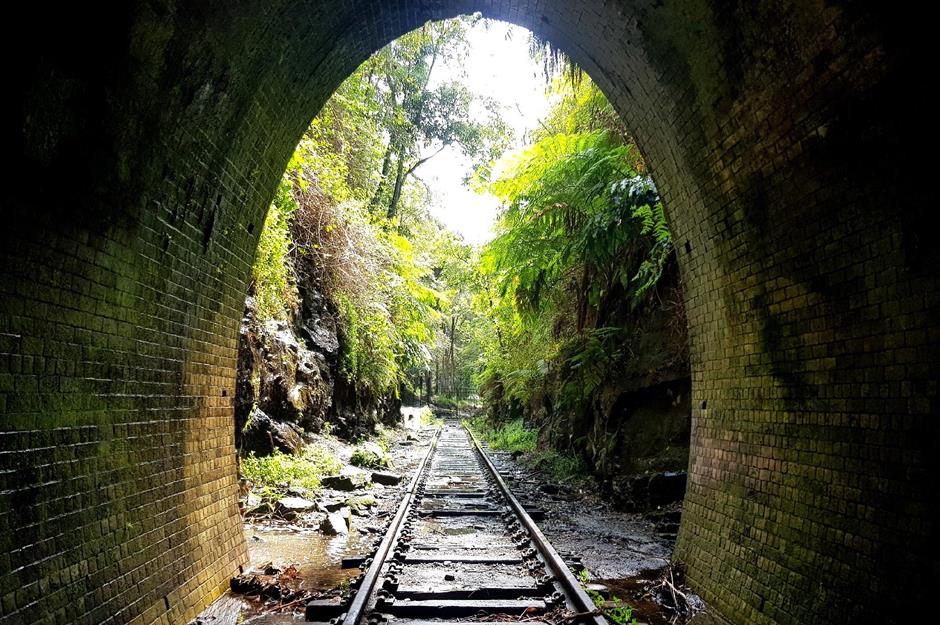
Dank, dark and glowing with a strange blue-green light, this disused heritage-listed railway tunnel in Helensburgh has to be one of Australia’s eeriest spots. It’s said to be haunted by the ghost of a miner who was hit by a train.
But it’s not ghost-hunting that draws most people into its inky depths, but rather the colony of bright glow worms who have made their home here. Public access is permitted but check to see if the tunnel is open when you plan to visit.
Mittagong Maltings, Mittagong, New South Wales
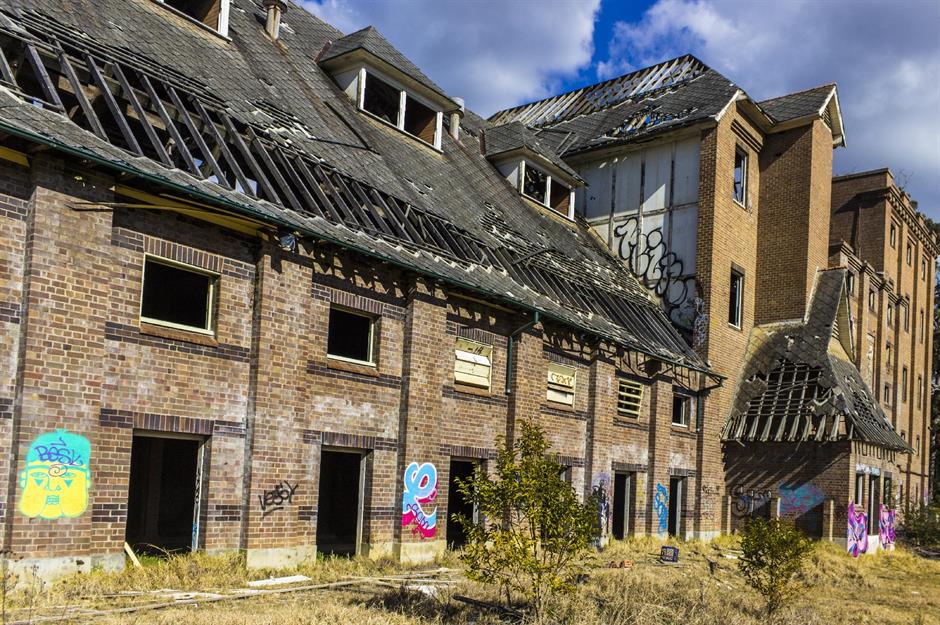
This vast malthouse complex in the Southern Highlands opened in 1899 and operated right up to the 1980s. For many decades it was owned and used by Tooth and Co., a major New South Wales brewery, but a fire and the brewery’s decline saw the historic malthouse abandoned.
Two main buildings remained, albeit ravaged by the weather and vandals, but the creaking structures were still a striking sight. The historic industrial site was bought by Halcyon Hotels in 2019 with restoration plans in progress.
SS Ayrfield, Wentworth Point, New South Wales
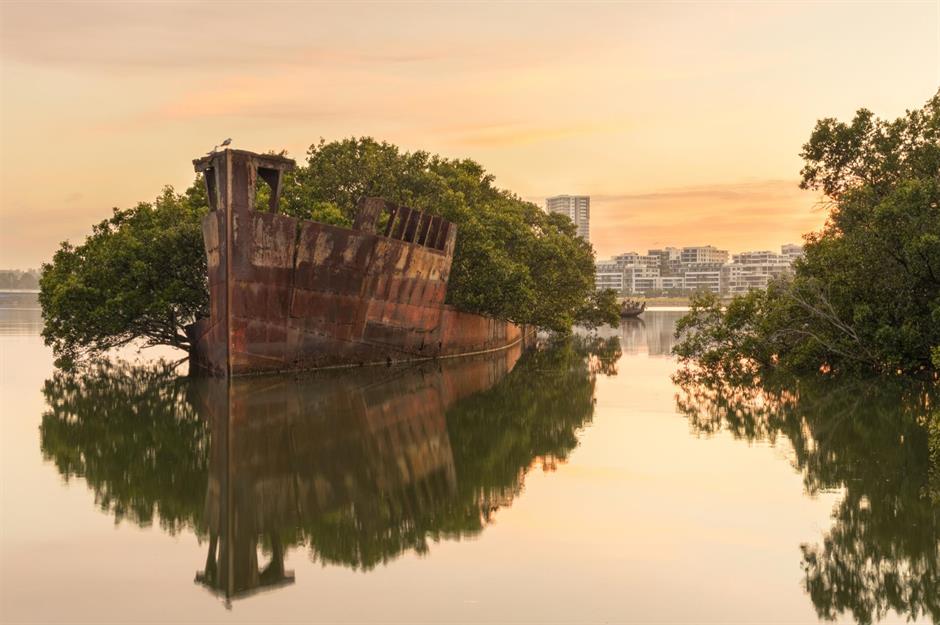
Built in the UK in 1911 and once a working cargo ship, the SS Ayrfield is now a rusting wreck completely overgrown by mangroves. Visible from land in western Sydney, it’s one of several abandoned freighters in Homebush Bay, which were decommissioned and left to moulder in the shipwreck yard. The others include HMAS Karangi, SS Heroic, and SS Mortlake Bank.
To see them, follow the walking track from the Badu Mangroves to the Waterbird Refuge and on to the southern tip of Wentworth Point.
Sponsored Content
Royal George Hotel, Urana, New South Wales
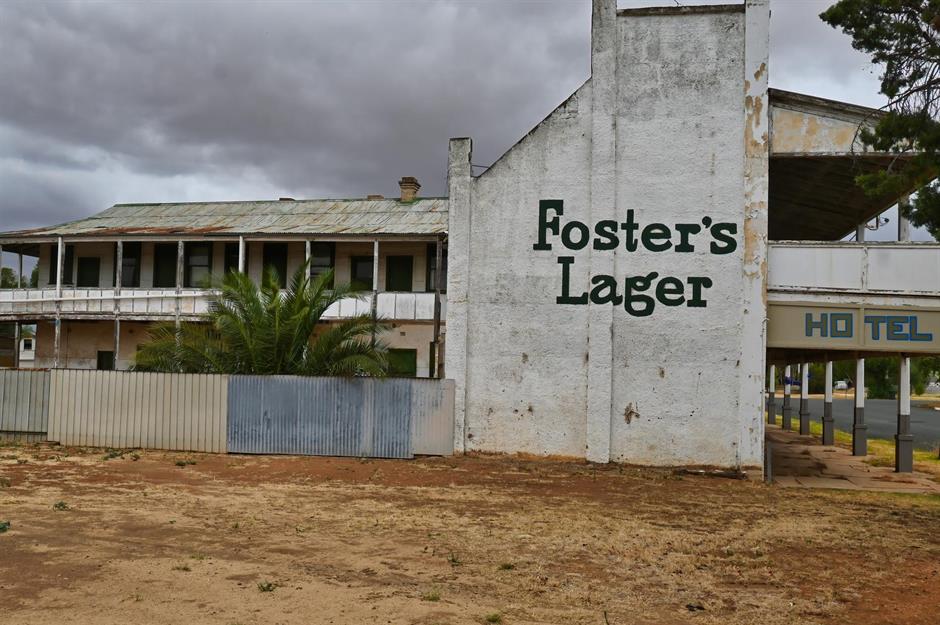
Australia’s country towns are dotted with old pubs where a cold beer, hot pie and yarn await thirsty travellers. Sadly, though, the taps have long dried up at Urana’s Royal George Hotel.
The typical Aussie hostelry, with its corrugated tin roof and verandas, opened in 1926, but closed in 1998. It’s been left to deteriorate since then with sections of it partly demolished.
Kiandra Ski Resort, Kosciuszko National Park, New South Wales
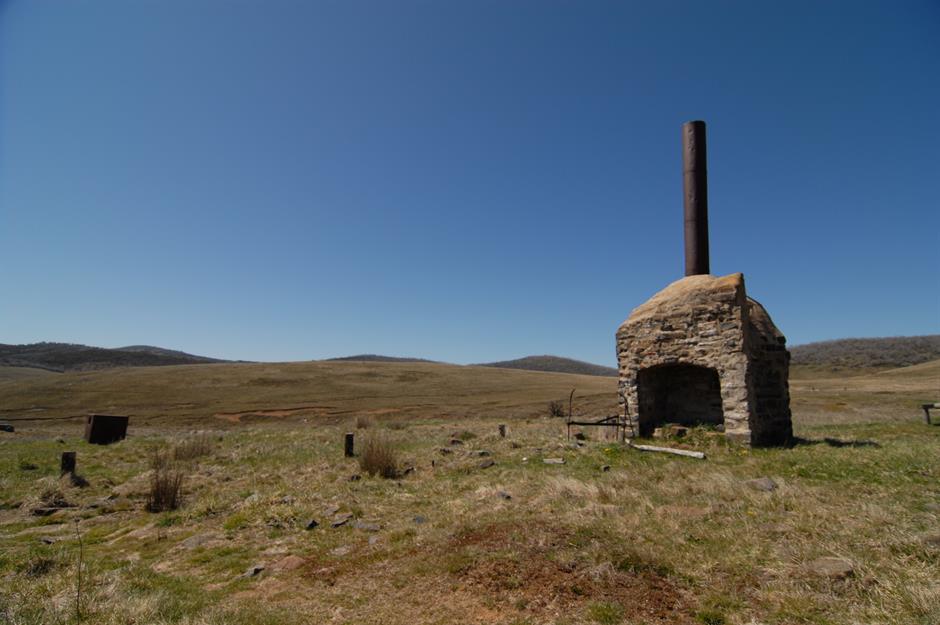
Just a few remnants of historic mining-town-turned-ski-resort Kiandra remain. A heritage trail takes hikers around the haunting site where the country’s first ski slope was located. The settlement, founded in 1859, is famed for having the shortest and coldest gold rush in the country’s history too. It ended just two years later in 1861.
It’s said Norwegian miners began to ski here and it was soon host to ski contests and ultimately became a resort. The Kiama heritage precinct buildings are closed due to severe fire damage.
Laguna Quays Resort, Queensland
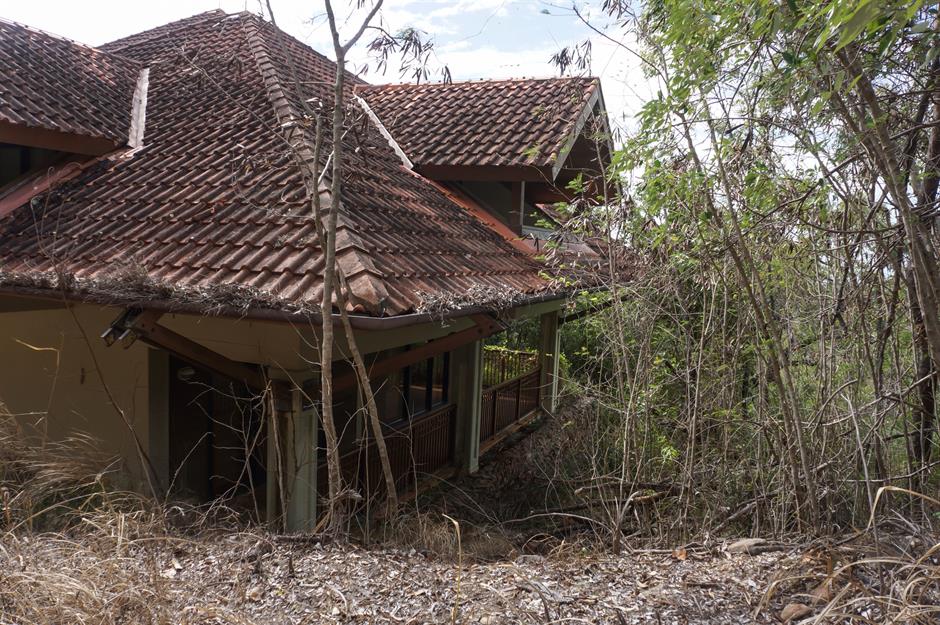
Once filled with the sounds of people splashing in the pool and golf balls being putted, Laguna Quays Resort now sits silent and empty. The large holiday resort opened near Airlie Beach, gateway to the Whitsundays, in 1992 but closed just a few years later after its overseas owners declared bankruptcy.
Its once esteemed golf course, designed by pro Greg Norman, is now overgrown and unrecognisable while its lagoon pool languishes like a swamp.
Sponsored Content
Big Bell Hotel, Western Australia
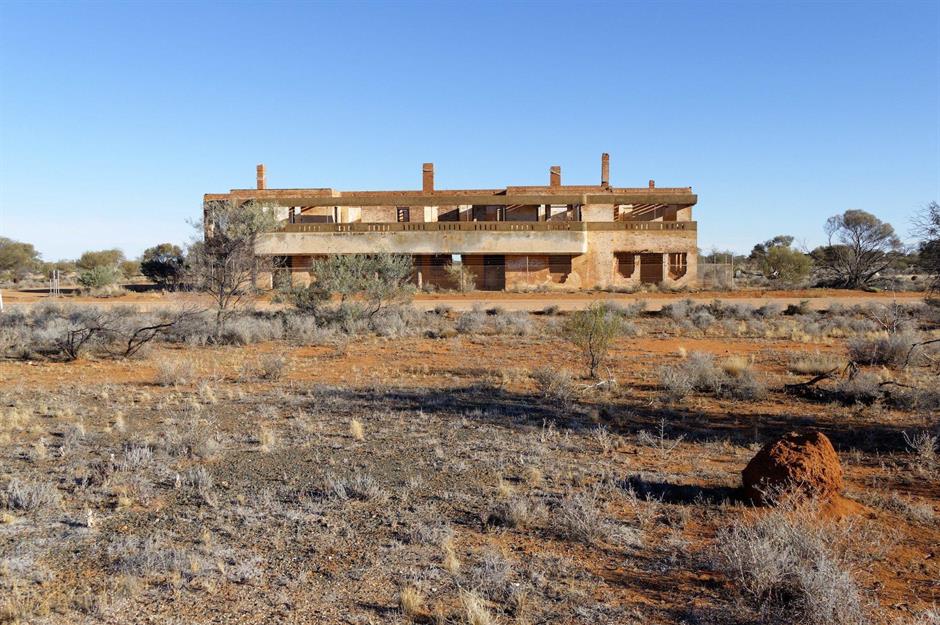
Surrounded by dusty scrub, the empty shell of this Art Deco-style hotel was once the hub of a busy mining settlement known as Big Bell. It was said to have had the longest bar in all of Australia at the time. The Big Bell Mine opened here in the early 1900s and the town was established in 1936, emptying in 1955 when the mine closed.
Now the ghost town is deserted, bar the occasional curious passer-by on their way to nearby Cue, an outback town known for its charming heritage buildings.
Broad Arrow, Western Australia
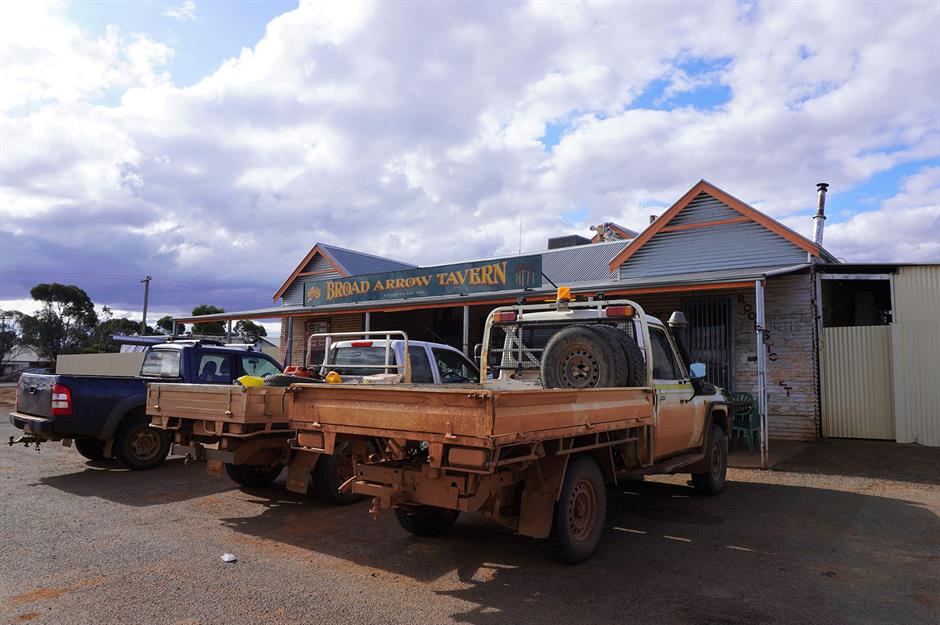
You can sip a coldie in the Broad Arrow Tavern but little else remains operational in this former mining town in Western Australia’s Golden Outback region.
The tavern, which was built back in 1896, once had stiff competition with eight hotels catering to the town’s 15,000 residents until the rush ended in the 1920s and they drifted away.
Peters' Ice Cream Factory, Taree, New South Wales
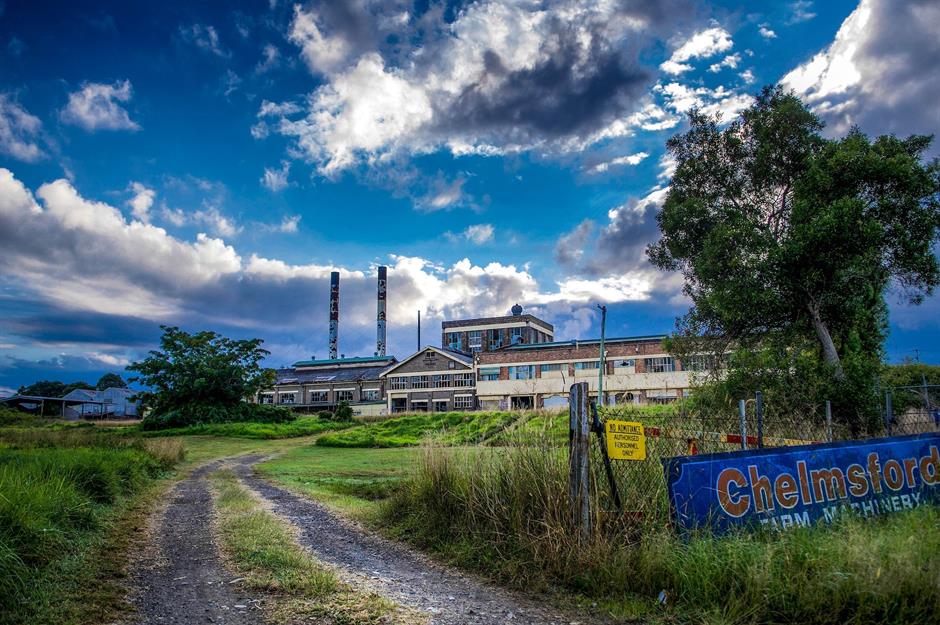
The churns have lain dormant for a long time at this former ice cream factory in Taree on the mid-north coast of New South Wales. Established in 1939, Peters’ Creameries Pty Ltd's factory made butter and ice cream with milk from nearby dairies.
The site closed in the Eighties and the old factory was listed on the heritage register of the Greater Taree City Council in 1990. But the abandoned buildings have been left to decay and are now in a state of disrepair.
Sponsored Content
Port Willunga, Fleurieu Peninsula, South Australia
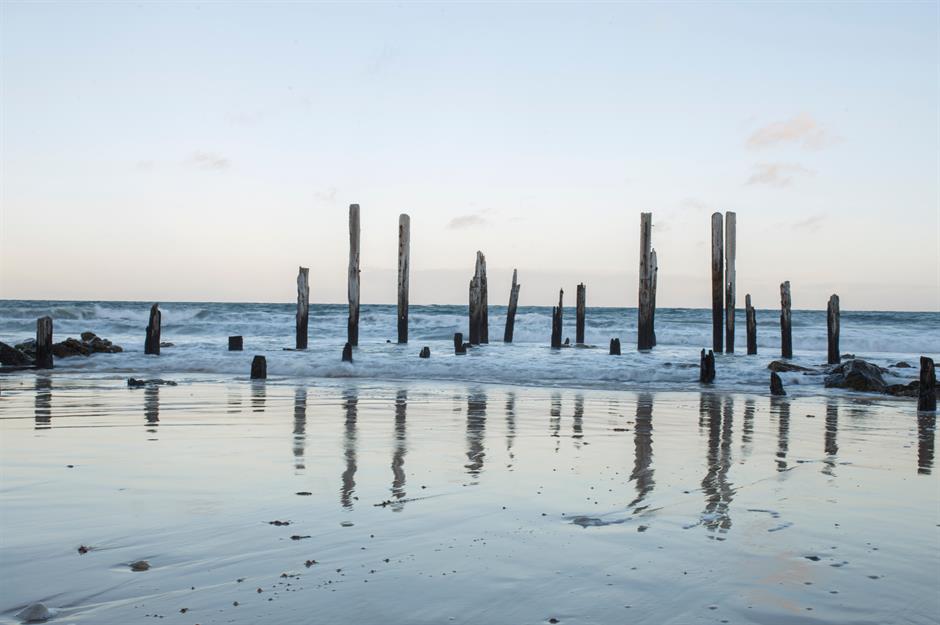
A pretty sandy beach edged by high cliffs, Port Willunga is an intriguing spot for fans of abandoned places. You can spot caves once carved out by fishermen to store boats and nets, while the rotting timbers of the Star of Greece – a three-masted iron cargo ship that wrecked here in 1888 in one of the state’s worst maritime disasters – can be spotted at low tide.
Another atmospheric sight is the pylons of an old jetty sticking out of the sands; it was built for ships to dock when the coastal settlement was a grain port.
Fremantle Prison, Fremantle, Western Australia
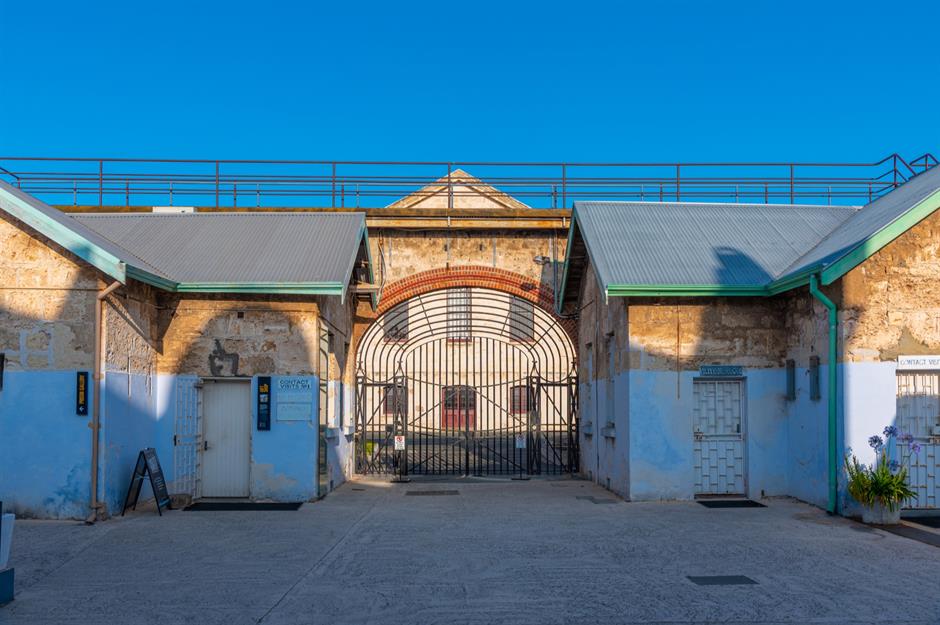
The largest convict-built structure in Western Australia and the most intact convict establishment in the nation, Fremantle Prison was continuously used for almost 140 years. It was only decommissioned as a maximum-security gaol in 1991 and is one of Australia’s UNESCO-listed heritage sites.
Today its empty yard, death row, solitary cells and gallows are an uncomfortable but poignant attraction.
African Lion Safari, Warragamba, New South Wales
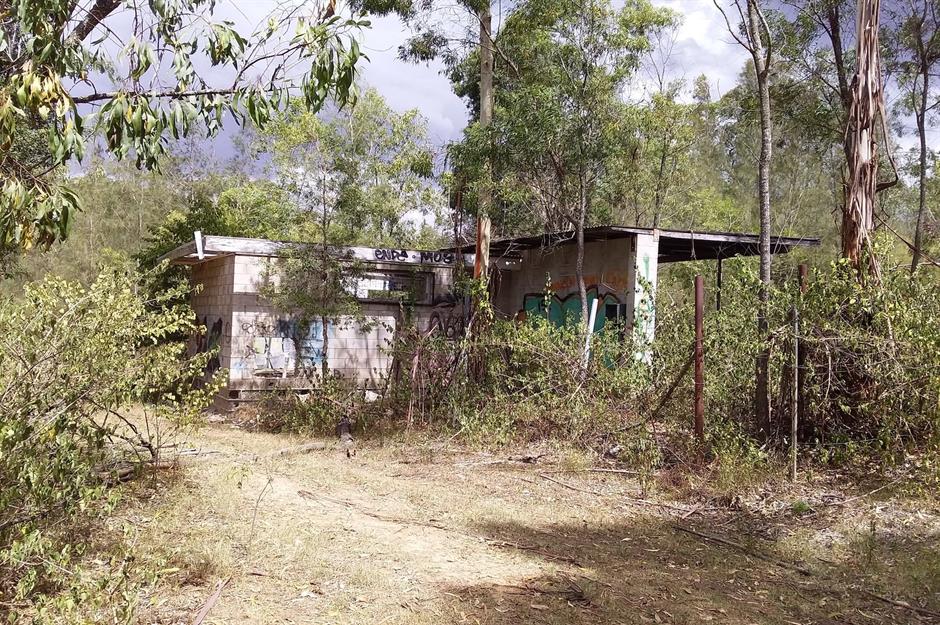
Once home to big cats and other exotic non-native animals, this abandoned safari-style attraction in Warragamba near Sydney is now a forlorn sight. The attraction was opened in 1968 by Stafford Bullen, a circus proprietor, and became a popular day out with its drive-through animal enclosure and miniature safari railway.
However, the park closed in 1991 after numerous problems. Today, some of the park’s buildings remain dotted around the overgrown grounds, fenced off but graffitied.
Sponsored Content
Mandurah Castle Fun Park, Mandurah, Western Australia
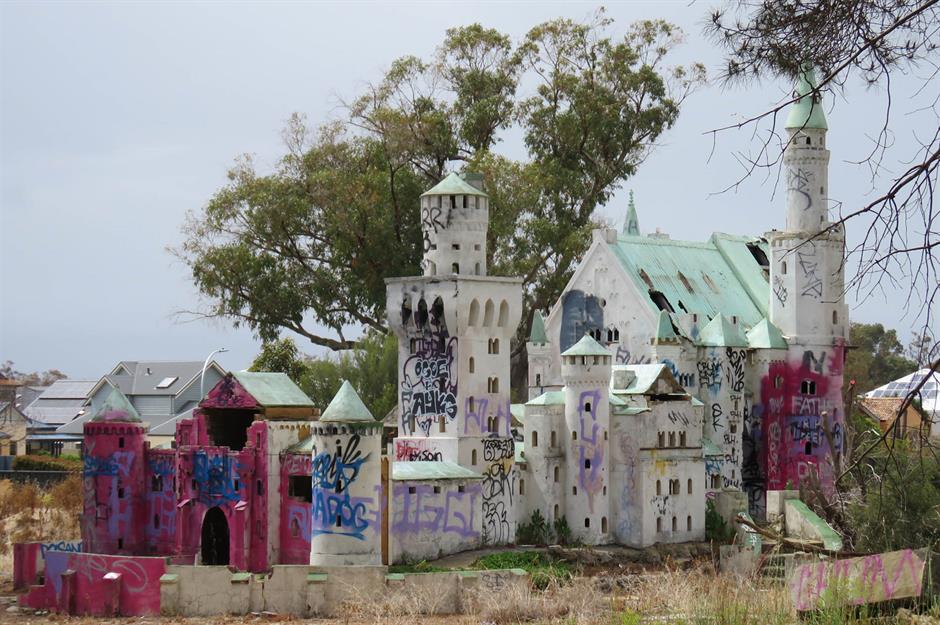
There’s not much sign of fun at this down-at-heel concrete castle to the south of Perth. Opened in 1979, the castle was the centrepiece of Mandurah Castle Fun Park, a guaranteed fun-filled day out back then with its playparks, pool and go-kart track.
But plans are underway to breathe new life back into the fairytale-esque castle by transforming it into a childcare centre. It's scheduled to open in 2026.
Fantasy Glades, Port Macquarie, New South Wales
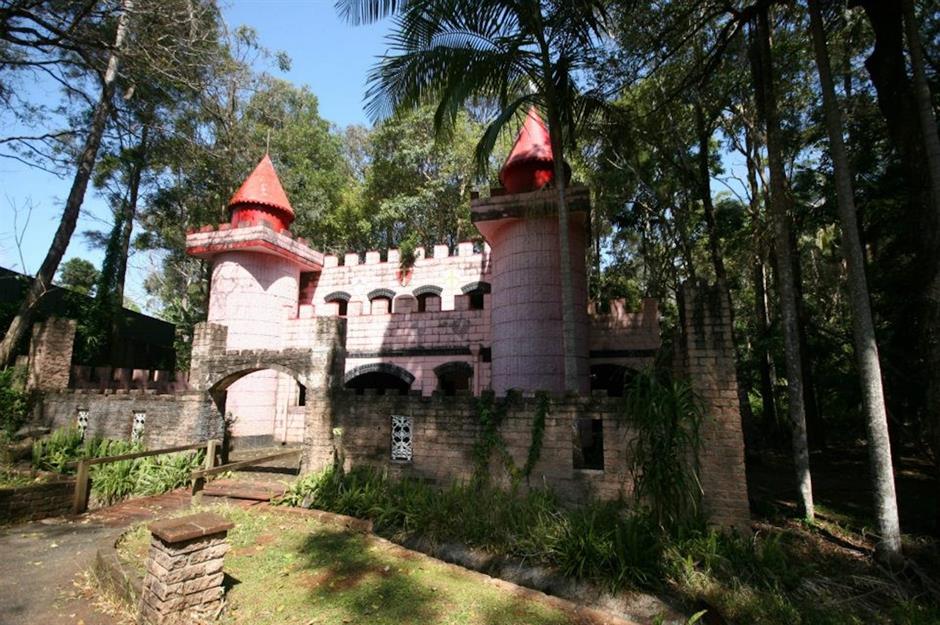
Snow White’s cottage, Cinderella’s castle and the Old Woman’s shoe lie empty and shrouded in bushland near Port Macquarie. These abandoned structures were part of a fairytale-themed amusement park that opened in the Sixties and fell into disrepair after its owners retired in the 1980s.
A new owner came along in 2015 and gave some of the vandalised buildings a refresh with plans to restore it to a holiday cabin park. But concerns the development could disturb the local koala population means the site remains sealed off.
South Fremantle Power Station, North Coogee, Western Australia
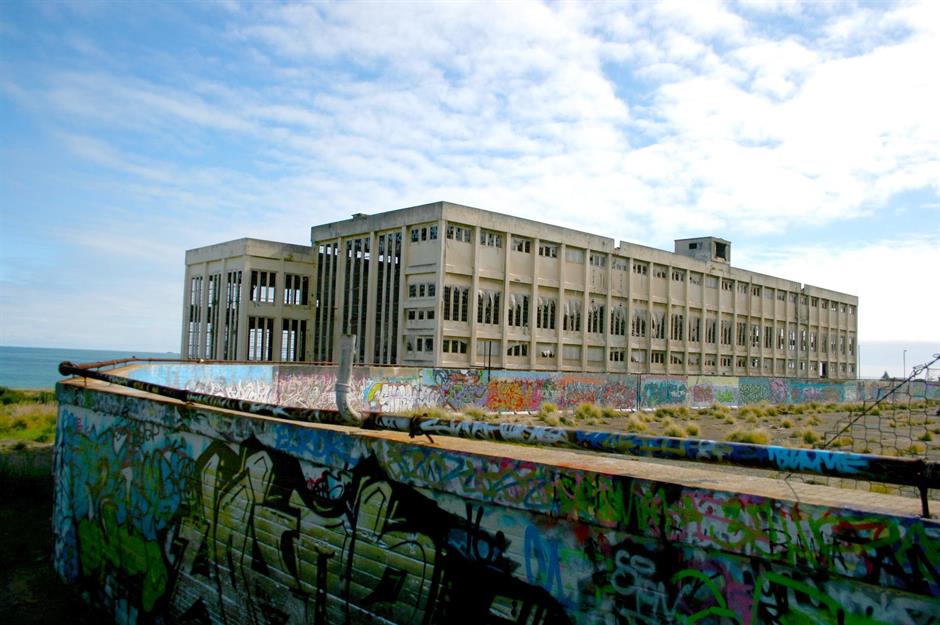
Once considered an eyesore, now hailed as an iconic coastal landmark, the sprawling South Fremantle Power Station opened in 1951 by C Y O'Connor Beach in North Coogee. It closed in 1985 when its chimney stacks were demolished but the rest of the building was left to decline.
There has been much debate over the fate of the power plant, which is now a heritage-listed structure. It was recently sold by the state government to a private buyer so new life may be breathed into its weather-beaten shell yet.
Sponsored Content
Grove Hill Hotel, Grove Hill, Northern Territory
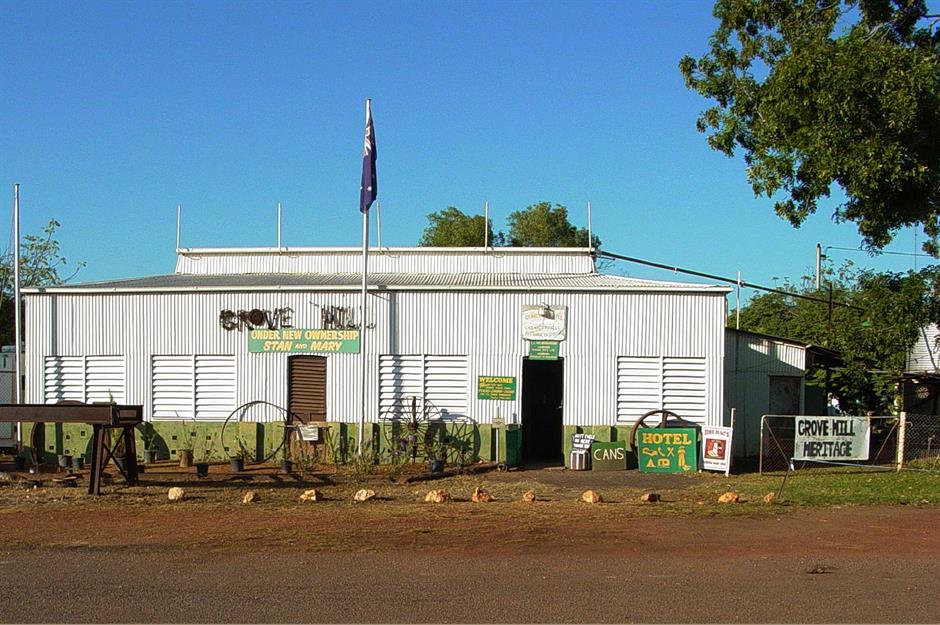
Once a must stop for tired travellers driving along the Stuart Highway and scattered 'locals', the isolated Grove Hill Hotel was one of the outback’s quirkiest watering holes. It opened in 1934 during the period of depression with its resourceful creator using only recycled materials to build and furnish it.
Sadly, the cobbled-together pub, which sits around halfway between Darwin and Katherine, called last orders for good in 2018. Now travellers have to make do with a photo outside its front.
Wallace's Hut, Bogong High Plains, Victoria
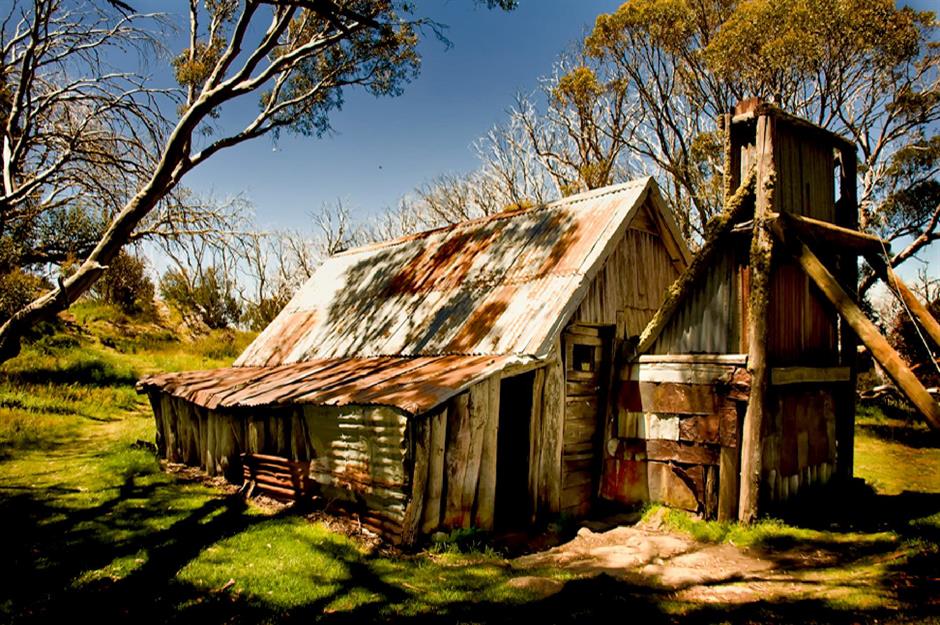
Victoria’s Alpine National Park is peppered with so-called High Country huts, some of which track back to the 1860s when early pastoralists lived and worked on this tough land. Others were built to shelter skiers.
The wonderfully wonky Wallace’s Hut, pictured, is the oldest surviving cattlemen's hut. It was built in 1889 by the three Wallace brothers – Arthur, William and Stewart – and lies along the Wallace's Heritage Trail in the Bogong High Plains.
Boggo Road Gaol, Brisbane, Queensland
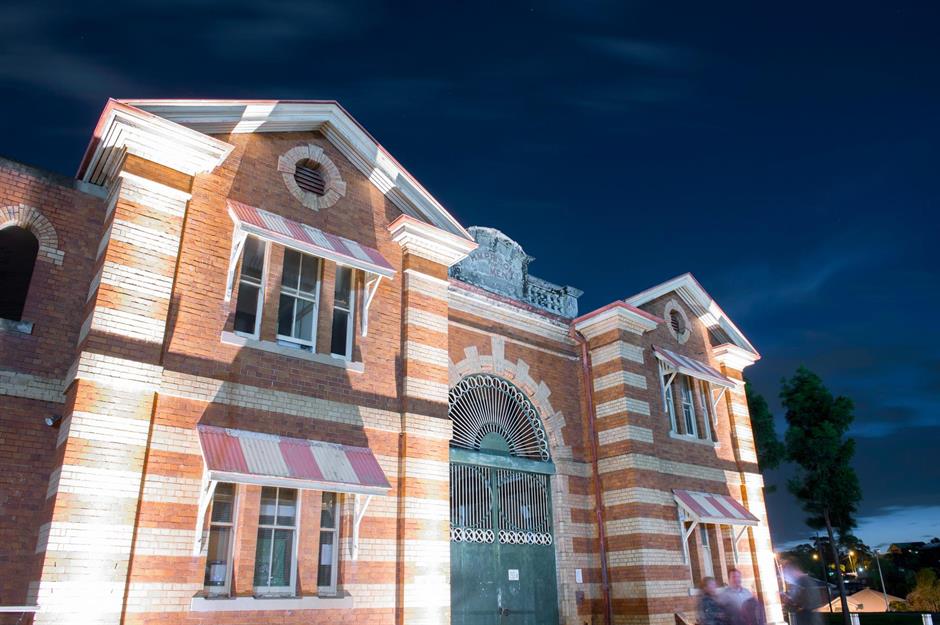
If walls could talk, the redbrick walls of Boggo Road Gaol, officially the Brisbane Prison, would have an awful lot to say. First opened in 1883, the prison has seen escapees, riots, protests, strikes and even capital punishment. A women’s gaol was added in 1903, renamed Number Two Division in the 1920s and used to house the worst offenders including 'lifers'.
That section closed in 1989 and the entire complex shut its doors forever in 2002, after 119 years in operation. Now just the Number Two Division remains and is a creepy tourist attraction (it's temporarily closed due to a redevelopment next door).
Sponsored Content
Hartley, New South Wales
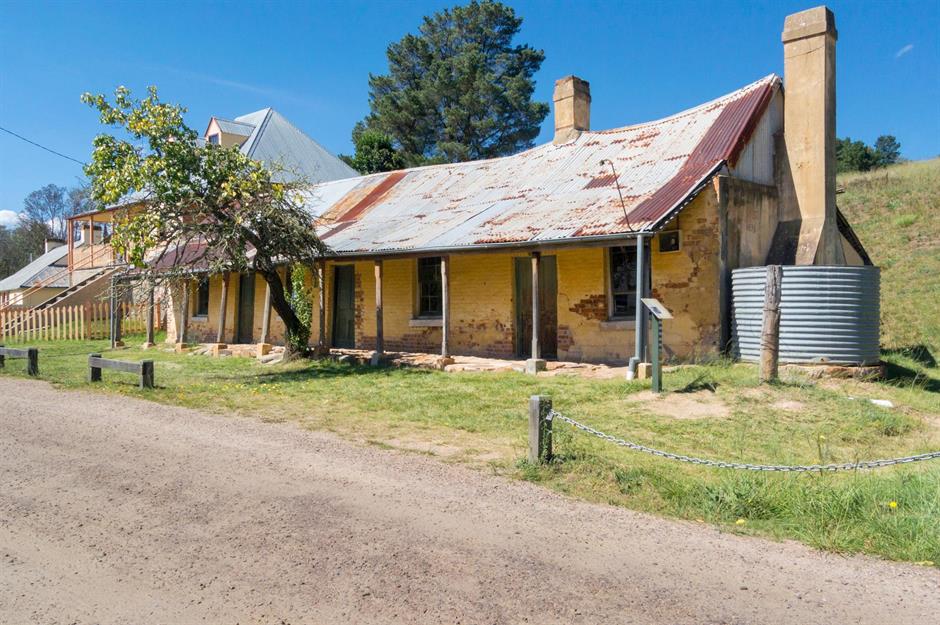
Wander around abandoned cottages and inns, admire the handsome sandstone courthouse and churches, and seek out the ruins of old huts in Hartley and Little Hartley. The Hartley Historic Site lies to the west of the Blue Mountains and is a fascinating insight into the rural region's past.
The settlement was first used as a staging post for the horse-drawn carriages heading out west to the state’s goldfields.
Cook, South Australia
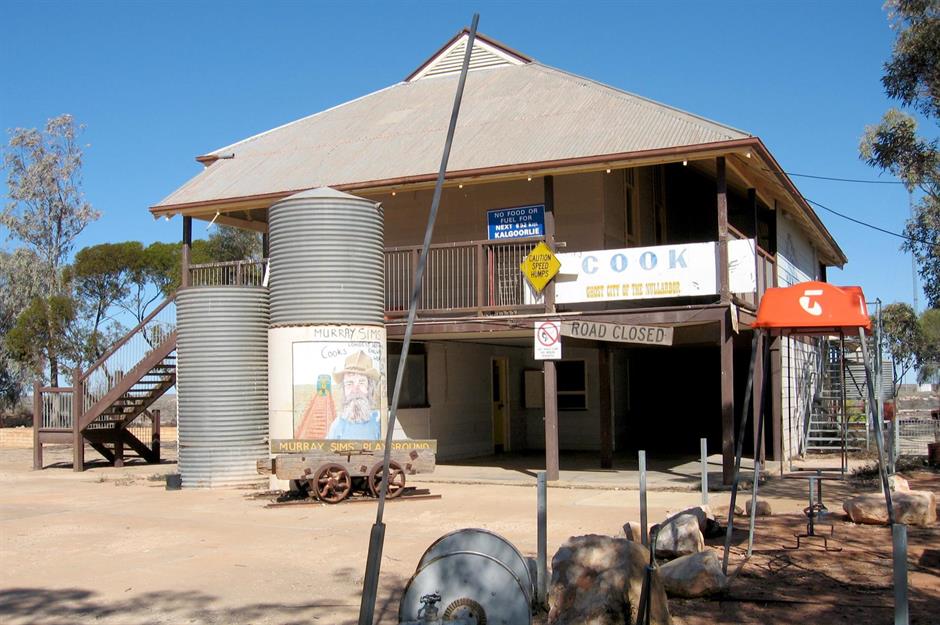
The only stop along the Nullarbor Plain on the Indian Pacific rail journey that runs between Sydney and Perth, Cook is a desolate place that claims just a handful of residents. It wasn’t always this way.
The remote railway settlement, established in 1917, was home to a few hundred people at a time with a hospital, swimming pool and two gaol cells (tin sheds) among its facilities. Now its empty buildings and dusty deserted streets are a novel sight for passengers riding along the inter-state railway.
Kuridala, Queensland
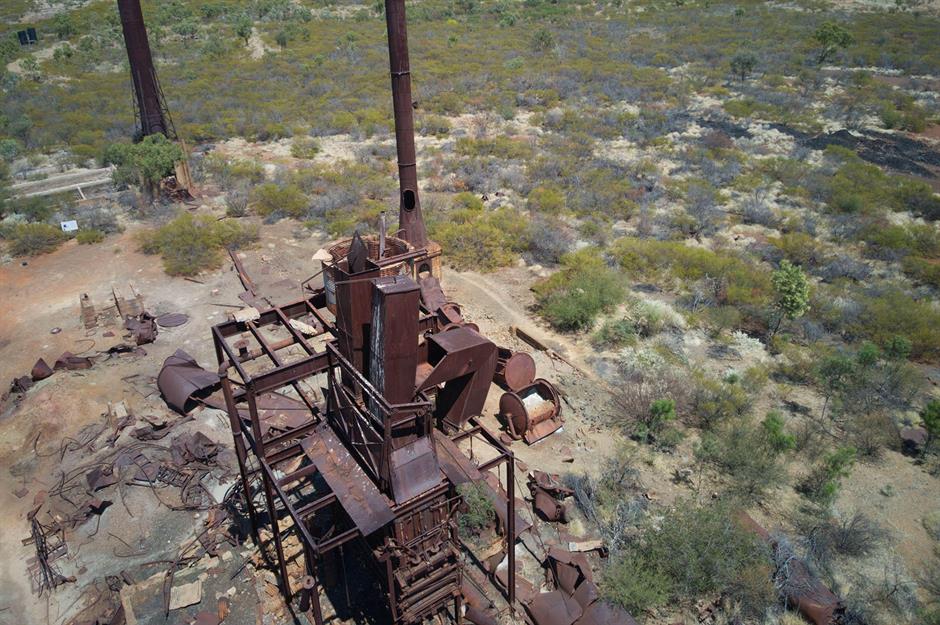
The towering iron chimneys of a disused smelter rising out of the dusty Queensland outback are among the few structures that remain of old mining town Kuridala, near Mount Isa. The town was established after copper, gold and silver were discovered here in 1884.
As workers flocked in it grew to accommodate them with dance halls, hotels, stores and even a picture house opening. By 1928, though, the operations closed, the town pretty much emptied and nature reclaimed the space.
Sponsored Content
Point King Lighthouse, Albany, Western Australia
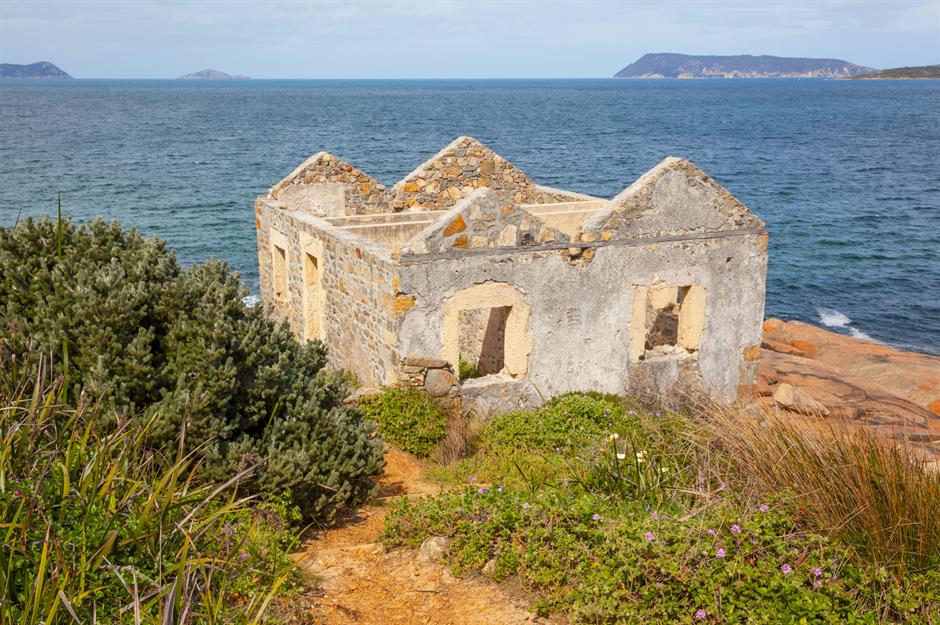
The ruins of the old lighthouse and keeper's house still guard the entrance to Princess Royal Harbour, albeit in a run-down state. Erected under the order of the British government in 1857, the stone lighthouse was the first navigational light for the port of Albany and the second lighthouse ever built on Western Australia's coastline.
The light was first turned on in 1858 with William Hill as its inaugural light keeper. It became automatic in 1913, but fell into disrepair with its original wooden light tower now long gone.
St John's Orphanage, Goulburn, New South Wales
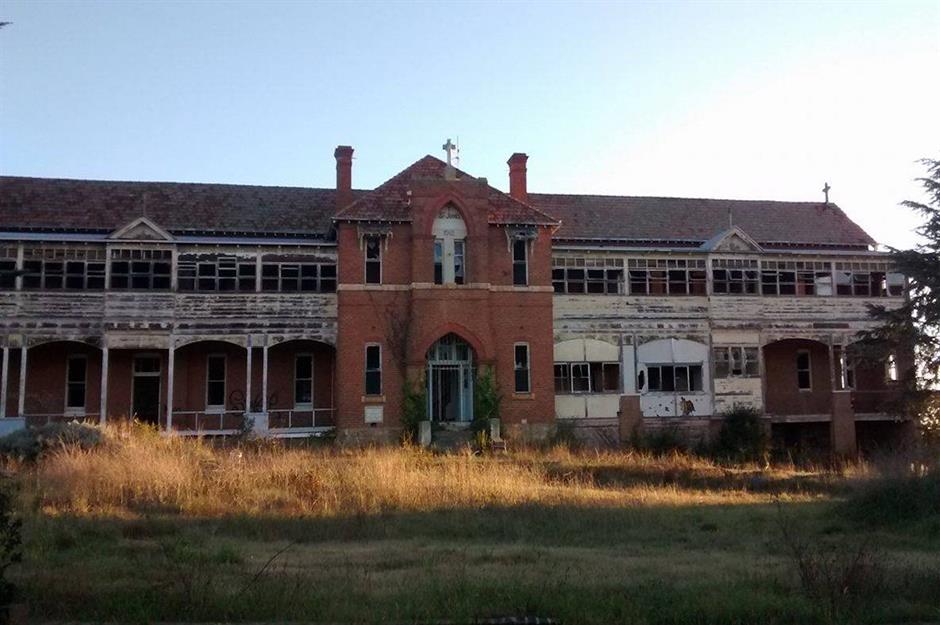
Between 1912 until its closure in 1978, this institution took in around 2,500 boys and a small number of girls in its last years. Run by the Sisters of Mercy and the Catholic Church, the orphanage was in fact mostly home to children from deprived or troubled families rather than orphans.
Abandoned for a few decades, the imposing building was later used as a religious youth training centre, but fell into disrepair again and a fire destroyed part of it in 2015.
Old Telegraph Station, Eucla, Western Australia
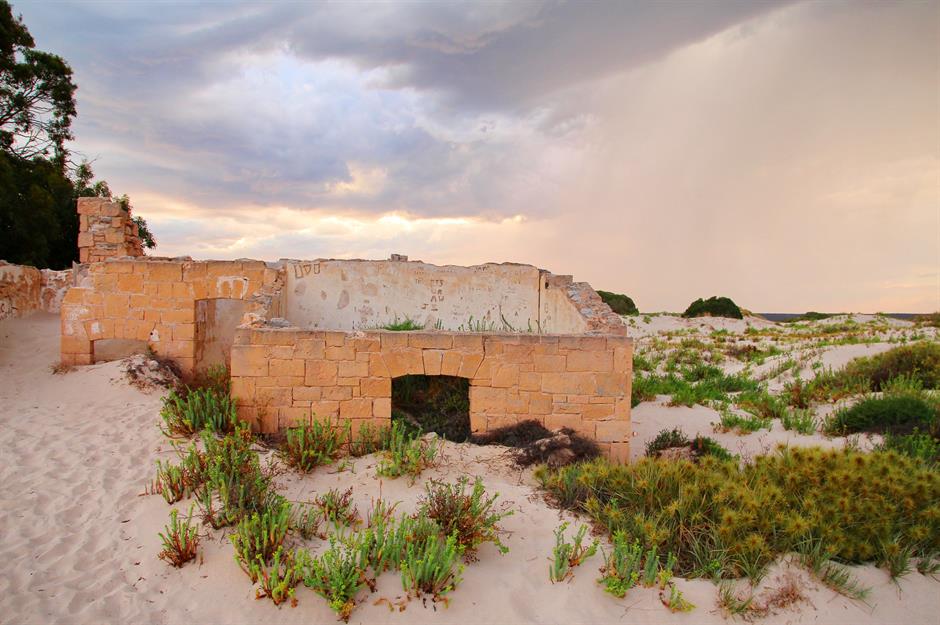
Almost submerged beneath the shifting sand dunes sits what's left of an old telegraph station. Located in what's now isolated Eucla, the original township in the Nullarbor Plain was established in 1877 as a manual repeater station for the overland telegraph. It was the largest telegraph station outside of the main cities.
All that remains of the town lies under the sand, due to large sand drifts caused by a plague of rabbits eating the dune vegetation. These sand-strewn ruins are said to be haunted by a ghost – perhaps a ghostly rabbit?
Sponsored Content
Old Jetty, Eucla, Western Australia
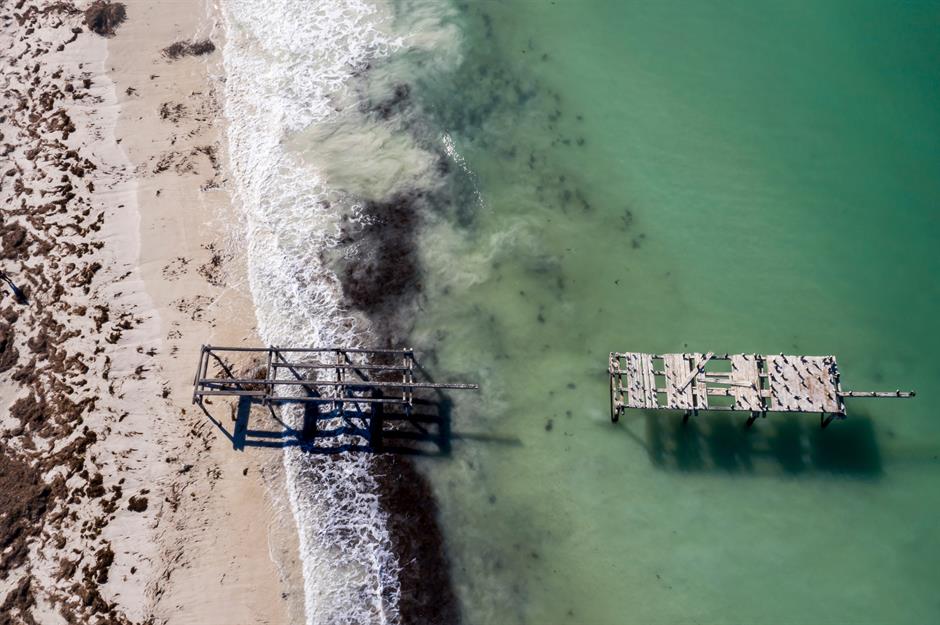
Another decaying remnant of Eucla’s faded glory is the old water-worn jetty that lies half collapsed on a gorgeous white-sand beach. Built in 1887, the faded jetty was used by sail and steam ships to bring stores to the isolated outpost from Albany and Esperance, needed to help maintain the Eucla Telegraph Station.
It was also used to export wool and sandalwood from the region.
Beresford Station, Beresford, South Australia
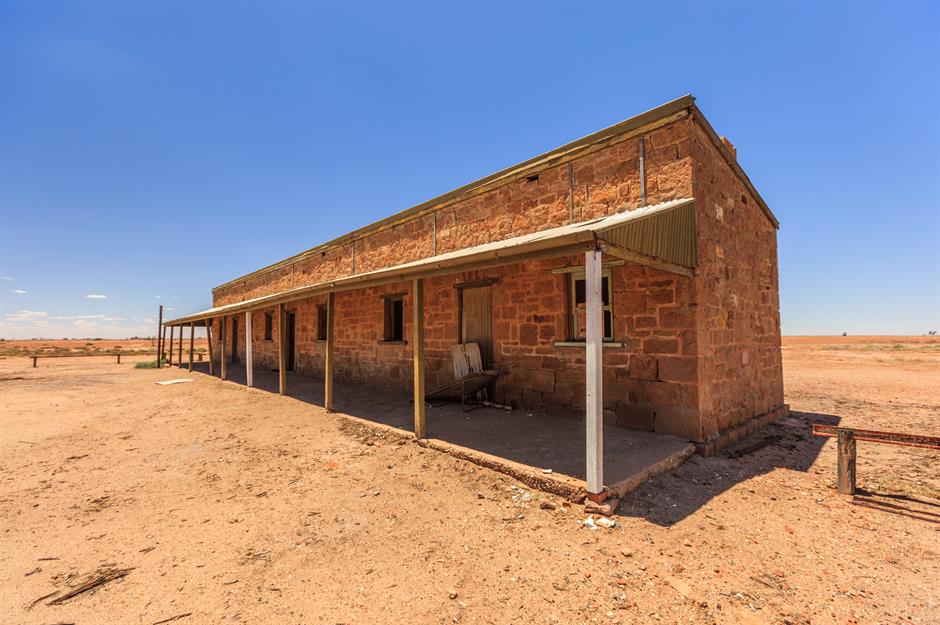
Australia’s outback is scattered with the dilapidated ruins of long-shuttered railway stations such as the Beresford Siding, to the south of William Creek in South Australia. The secluded station was once a refilling stop for the old Ghan train that ran along the Central Australia Railway line between Port Augusta and Alice Springs.
It’s now one of many striking sights along the legendary outback route, the Oodnadatta Track.
Dunk Island Resort, Queensland
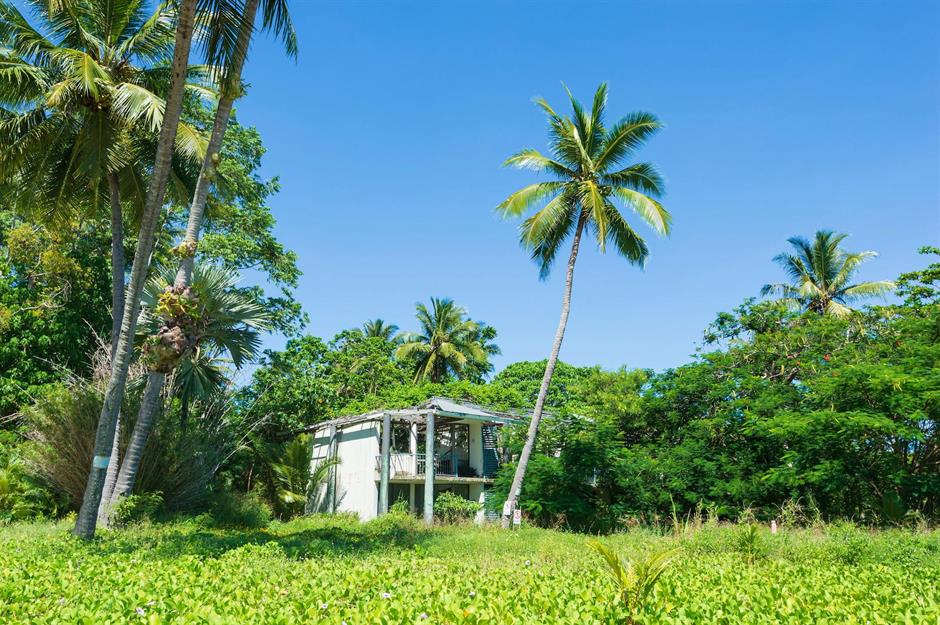
A tropical, rainforest-clad island just off the coast of Mission Beach, Dunk Island is a haven for hardy hikers and campers looking to disappear into its untouched wilderness. There used to be a hotel for reluctant campers, however, it's seen better days.
Dunk Island Resort was ripped apart by the destructive Cyclone Yasi in 2011 and its weather-torn remains have been left to fester since.
Sponsored Content
Battery Hill Mine, Tennant Creek, Northern Territory
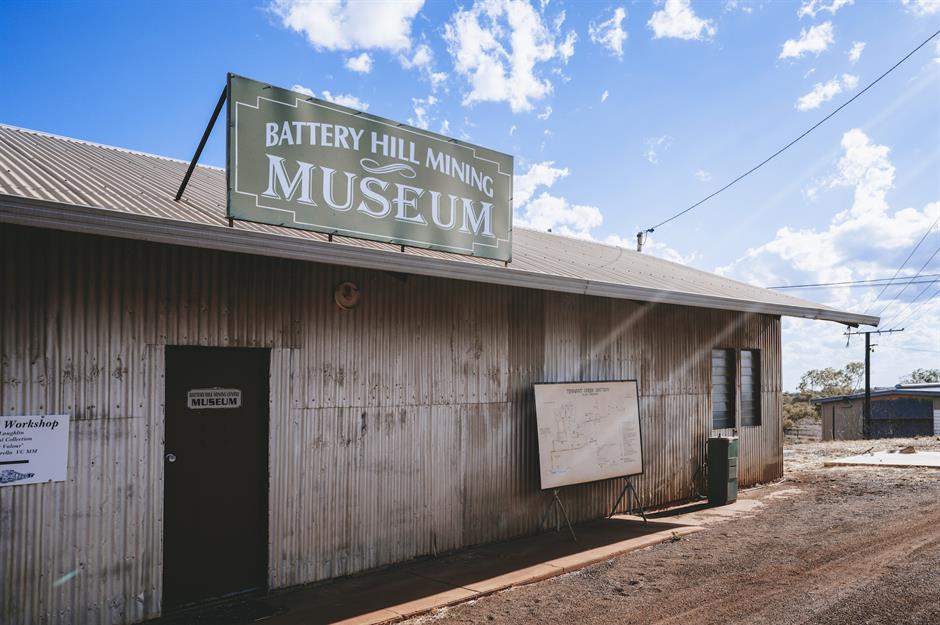
Get a glimpse of what life was like in the mid-20th century at the remains of the historic No 3 Government Gold Stamp Battery near Tennant Creek, where the territory’s outback gold rush (and Australia’s last) started in the late 1930s.
The Battery Hill Mining Centre is open for self-guided tours around the now abandoned machinery and buildings, along with underground mine tours.
Windang Island Wheels, Shellharbour, New South Wales
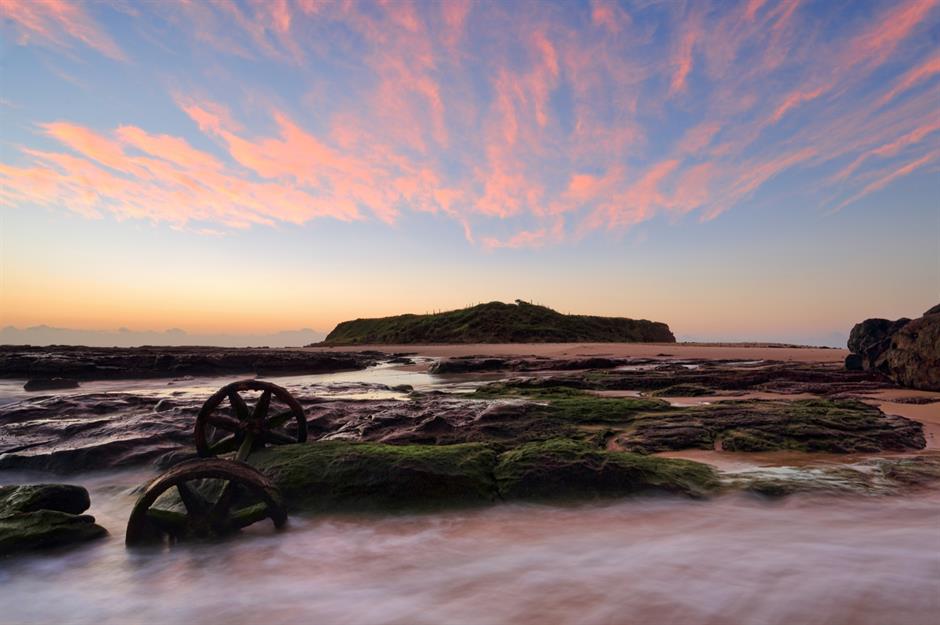
Poking up from the sand and rocks of Warilla Beach are the seaweed-clad remains of wheels and rails. They're all that's left of trolleys used to transport rock for a break wall, which was constructed as part of plans to mine for coal on Windang Island from the 1890s.
According to the local history museum, a tie wall was built from Windang Island to the southern channel wall, but heavy seas destroyed it and the project was abandoned altogether by the 1900s.
Forts, Magnetic Island, Queensland
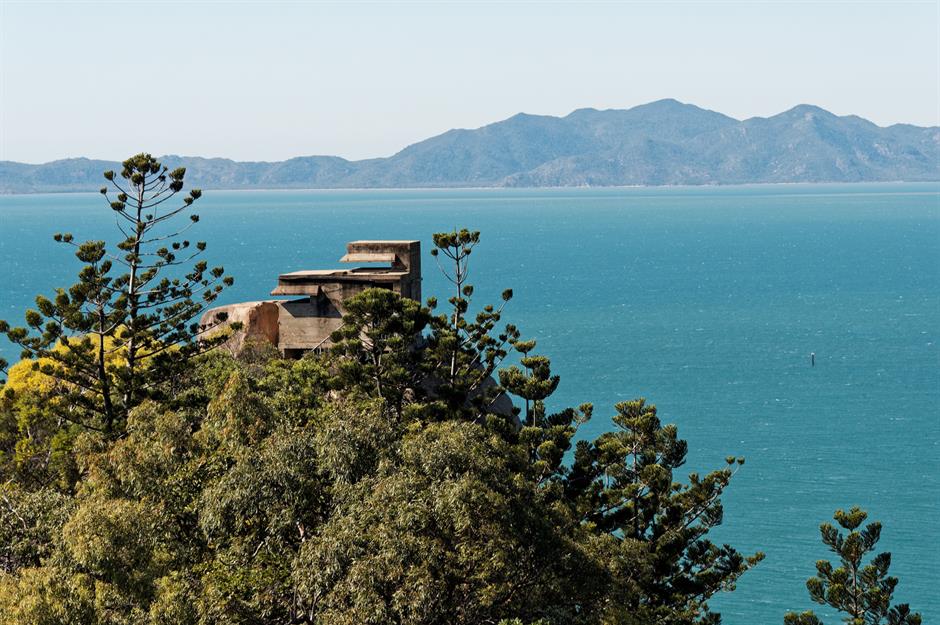
It’s not just the beaches and thriving koala population that captivate walkers on Queensland's lush Magnetic Island National Park. Its old World War II fortifications are both fascinating and picturesque and can be explored on the Forts Walk.
The Australian Coast Artillery Units operated the complex from 1943 until the conclusion of the Pacific War in 1945. Today they’re protected under the Queensland Heritage Act 1992 and considered among the best examples of such fortifications in the state.
Sponsored Content
Pentridge Prison, Coburg, Victoria
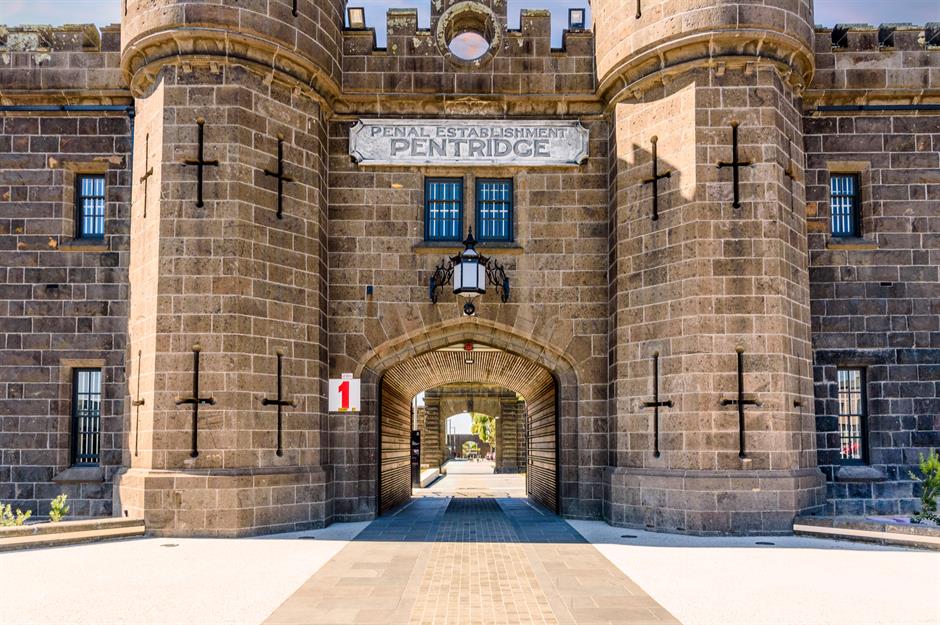
Having opened its doors to the public in 2020, this heritage-listed former state prison was established in 1851 and became the main remand and reception prison for Melbourne after Melbourne Gaol closed in the 1920s. Pentridge housed many notorious criminals until its closure in 1997.
The derelict site was abandoned until 2013, when it was bought and restoration and redevelopment began. Visitors can explore the former prison’s A and B Division, plus the notorious H Division, once reserved for the toughest criminals.
Ammunition storage bunkers, Darwin, Northern Territory
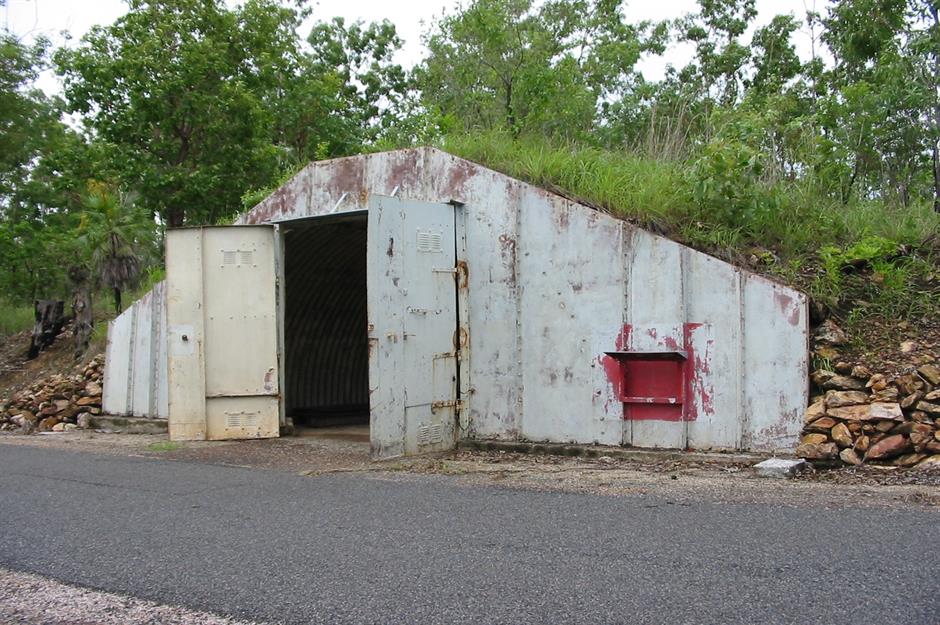
Darwin played a key part in the northern defence of Australia during World War II and was the target of numerous Japanese air raids. Some of its bunkers and historic military structures can be seen in the city's Charles Darwin National Park.
These include testing areas and semi-buried steel shelters that were constructed in the lead-up to the conflict and used for secreting and storing explosives.
East Point Fortifications, Darwin, Northern Territory
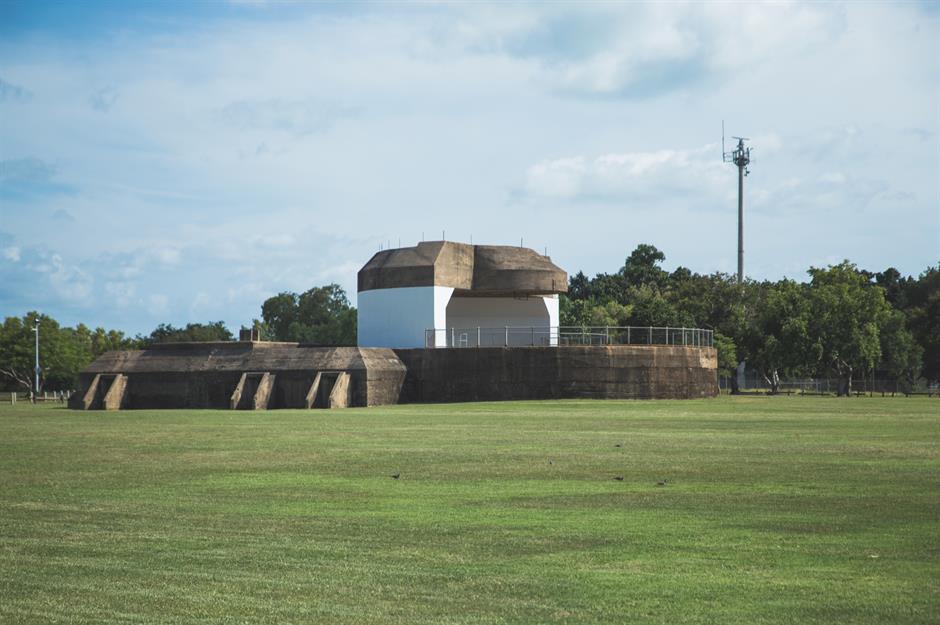
Now a popular recreational reserve, Darwin’s East Point was once key to the naval strategy of Australia and Britain and is scattered with historic fortifications including gun emplacements and lookout towers.
These include the ruins of facilities built for the Darwin anti-submarine boom net, which was the largest such net installed anywhere in the world and was critical to defending Darwin Harbour from Japanese attacks during World War II.
Sponsored Content
Fort Denison, Sydney, New South Wales
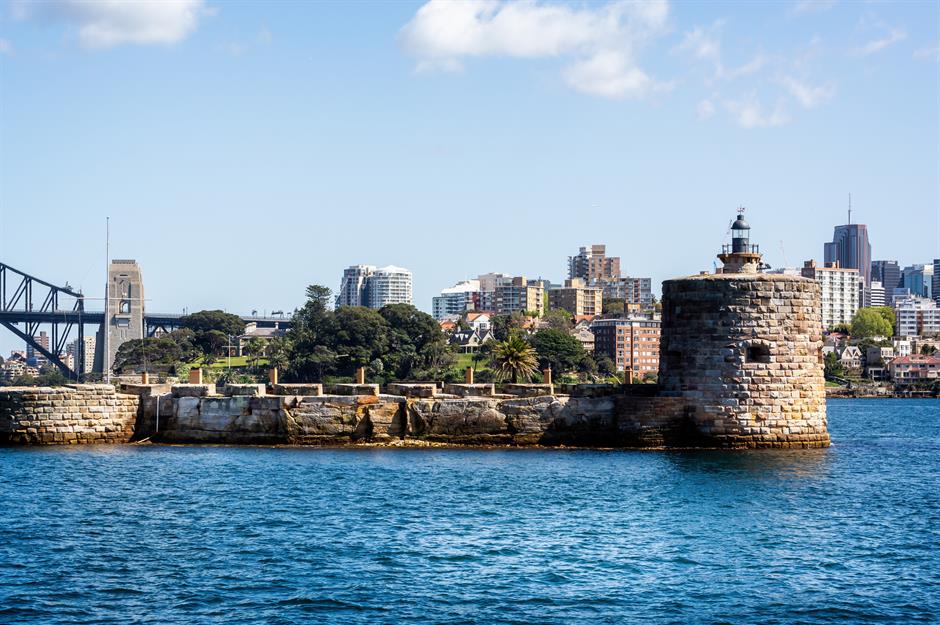
This rocky little island in Sydney Harbour was known as Pinchgut to convicts and colonists and 'Mattewanya' to traditional owners. Fortified from the 1840s, it has the most complete Martello Tower in the world, and is Australia’s only one.
It’s usually possible to visit Fort Denison to explore the fort, museum, gun powder store and winding staircase (though it's currently closed for maintenance and restoration throughout 2025).
Old station, Coonawarra, South Australia
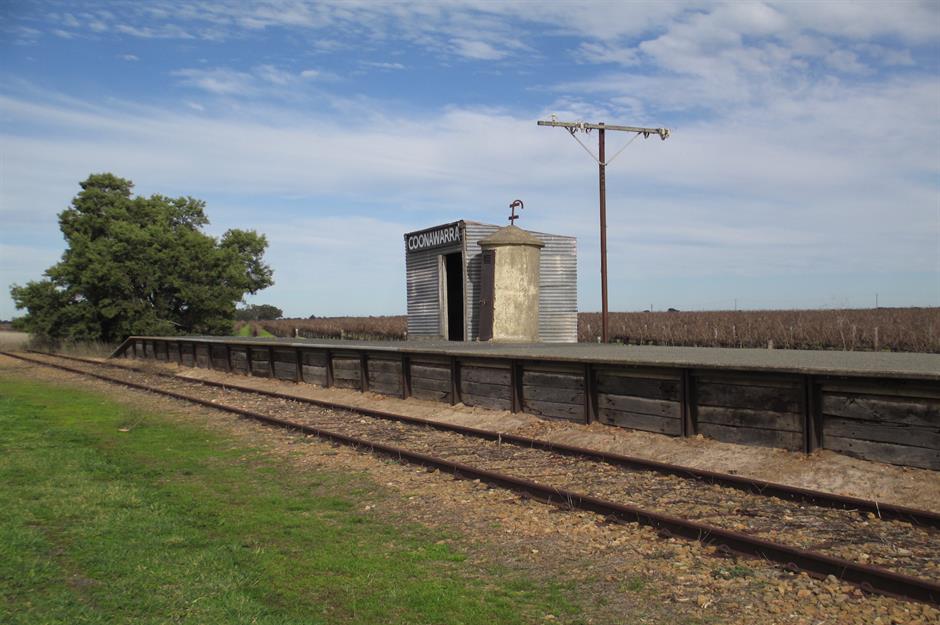
Cabernet is why most people go to Coonawarra on South Australia’s Limestone Coast, but the wine-growing region is brim-full of history too. The old, abandoned Coonawarra Railway Siding (or platform) is one of the bucolic region’s most photographed landmarks.
Critical to the country town’s early settlement, the track was established in 1898 to transport wines and fruits around the country on to ships to Europe and beyond.
St Helena Island National Park, Queensland
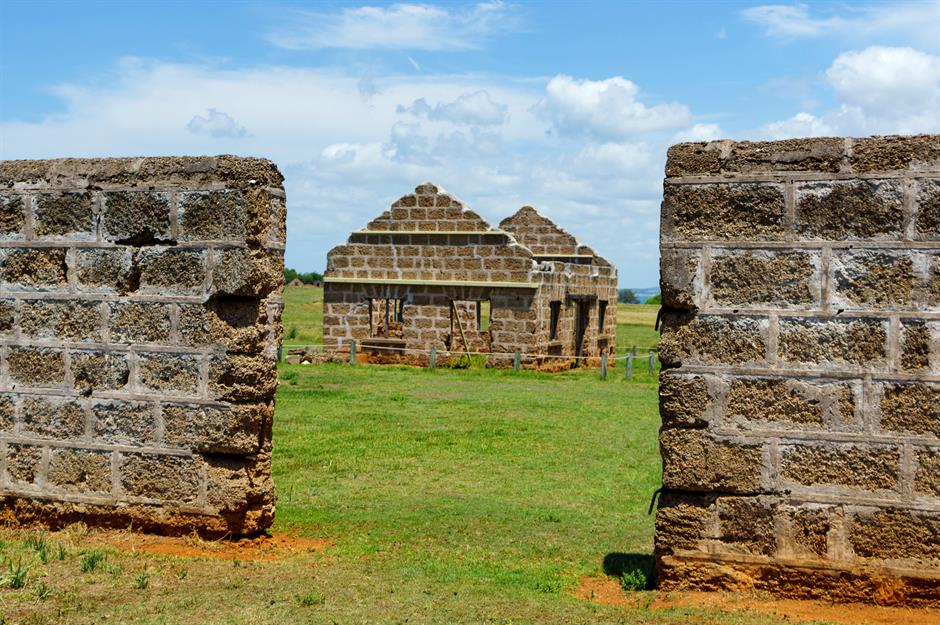
The remains of a prison stockade, including a bakery, workshops and underground tanks, can be seen on a little island in Moreton Bay just near the mouth of Brisbane River.
St Helena was home to Queensland's first penal settlement, which operated here from 1867 until the 1920s. It then became a prison farm until 1932. It also houses the stone ruins of the warder accommodation, a sugar mill and the state’s first tramway.
Sponsored Content
Tarcoola, South Australia
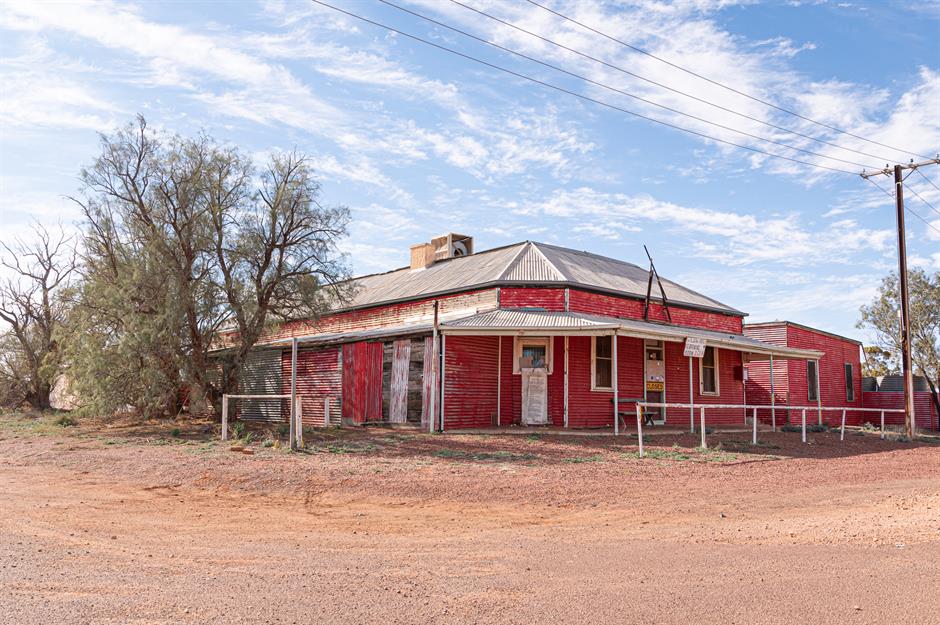
Tarcoola’s long-shuttered corrugated iron pub, the Wilgena Hotel, is a popular photo opp for travellers exploring the arid South Australian outback. The deserted dusty town had its heyday in the early 20th century when gold was mined in the area.
The Trans-Australian Railway was built through the town in 1915 and it served as a service centre for trains – it now marks the junction of the Sydney-Perth and Adelaide-Darwin railways. Today, the township and its goldfields are listed on the South Australian Heritage Register for archaeological significance.
Rapid Bay Jetty, Fleurieu Peninsula, South Australia
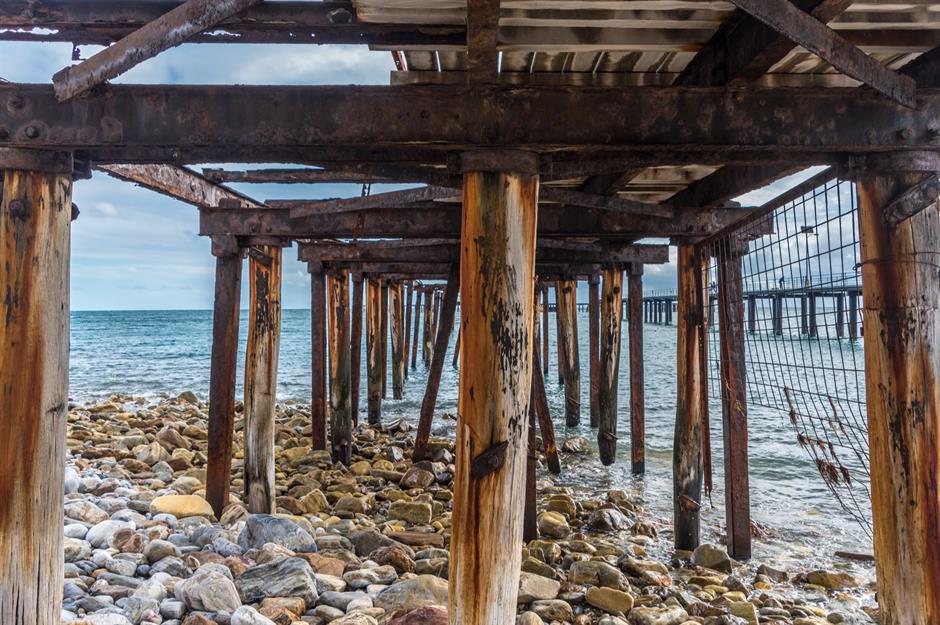
Built as part of works to establish a limestone mine in the 1930s, the old industrial jetty at Rapid Bay is now a historic landmark and well-known dive site on the Fleurieu Peninsula. Last used commercially in 1990, it was closed in 2004 in a severe state of disrepair.
A new jetty was built in the bay in 2009 alongside the original and is used for fishing and diving. Divers swim across from the new to explore under the old structure, which is home to rich marine life including the endangered leafy sea dragon.
Kanyaka Station, Flinders Ranges, South Australia
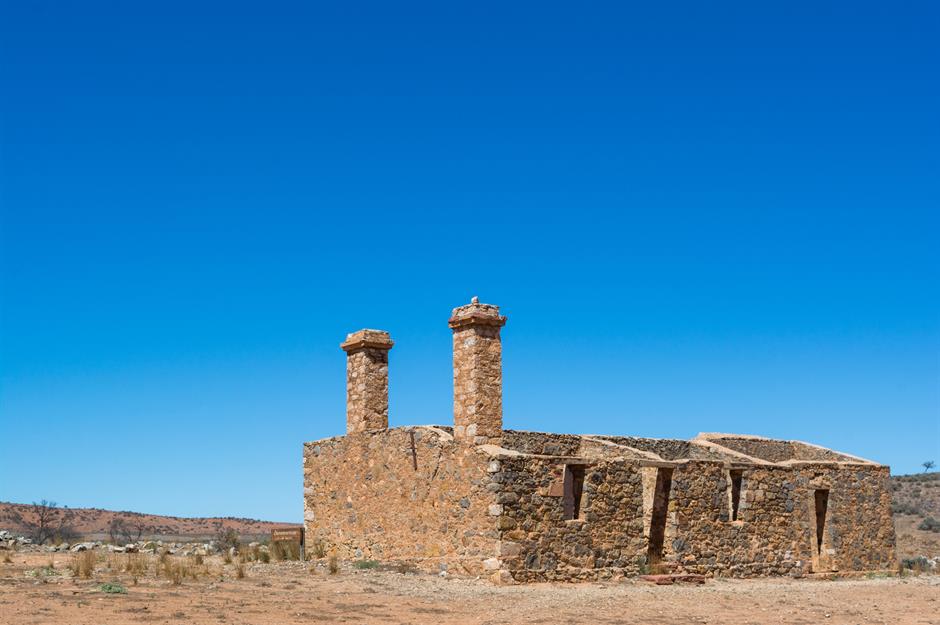
Everything feels big in South Australia’s Flinders Ranges, including its historic ruins. Get a sense of the landscape’s vastness and what life would have been like for the people who toiled here in the eerie ruins of historical sheep station Kanyaka.
The sprawling site includes a colossal woolshed, said to be one of the largest in the state, with room for 24 blade shearers who’d shear thousands of sheep. There are also the remains of the homestead where the manager and his household lived.
Sponsored Content
Ethel wreck, Yorke Peninsula, South Australia
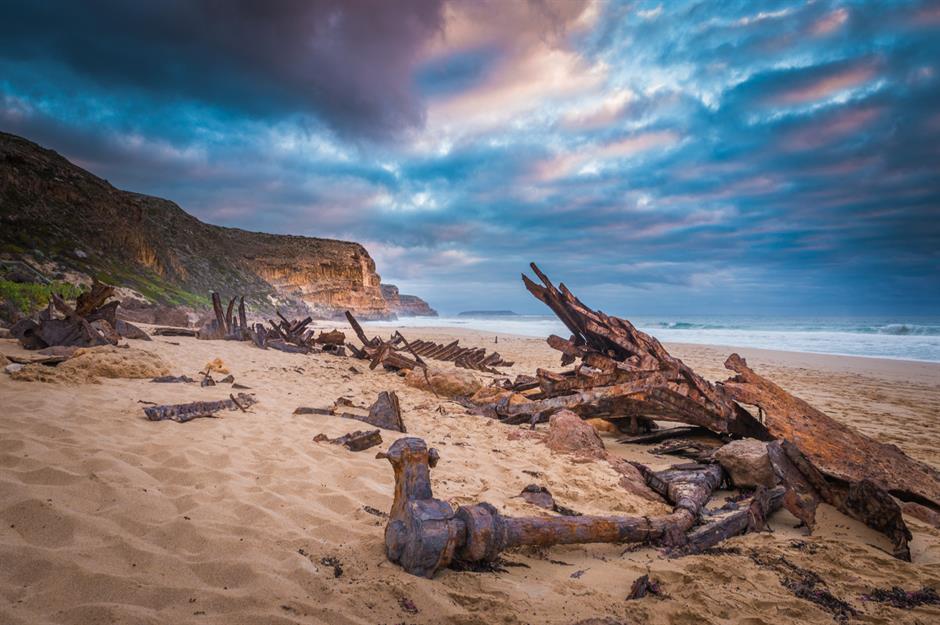
Languishing on the sand in Dhilba Guuranda-Innes National Park, at the tip of the Yorke Peninsula, lie the remains of Ethel. The 1876-built three-masted iron barque ran aground here in a storm en route to Port Adelaide from South Africa in 1904.
The heritage-protected wreck can’t always be seen, as it’s often covered with sand, but when the conditions are right her remains make an arresting sight. The boiler of a second wreck, SS Ferret, can be seen sticking out in the surf nearby too.
Cape Jervis Whaling Station, Fleurieu Peninsula, South Australia
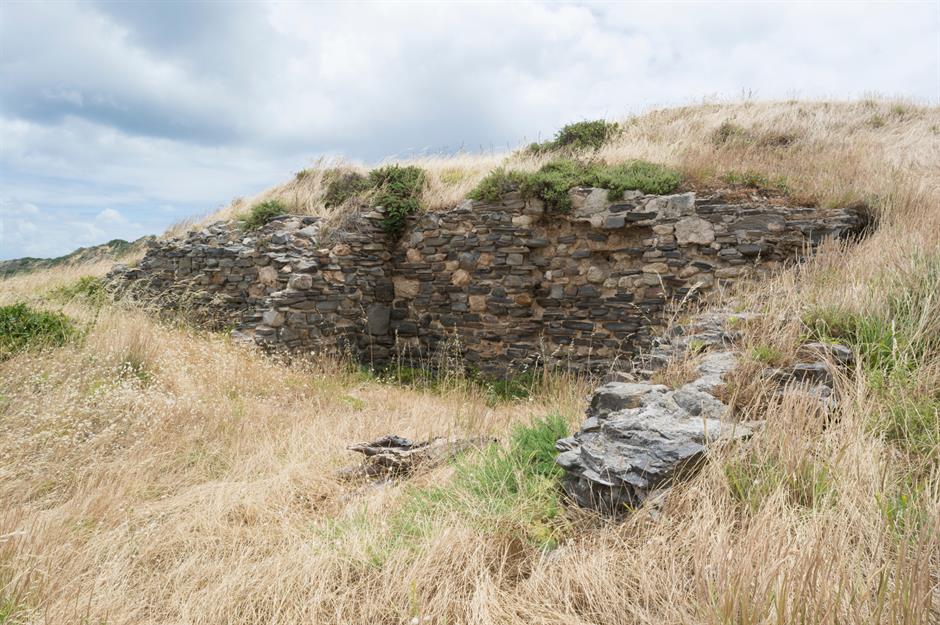
Whaling was the key industry in South Australia in the mid-19th century, with 16 shore-based whaling stations established from 1836 into the 1840s along its coast, including some on Kangaroo island, the Eyre Peninsula and the Fleurieu Peninsula.
Pictured here are the remains of Cape Jervis Whaling Station, which operated at Fishery Beach between 1843 and 1851. The industry stopped in the state altogether in the 1970s.
Atlantis Marine Park, Perth, Western Australia
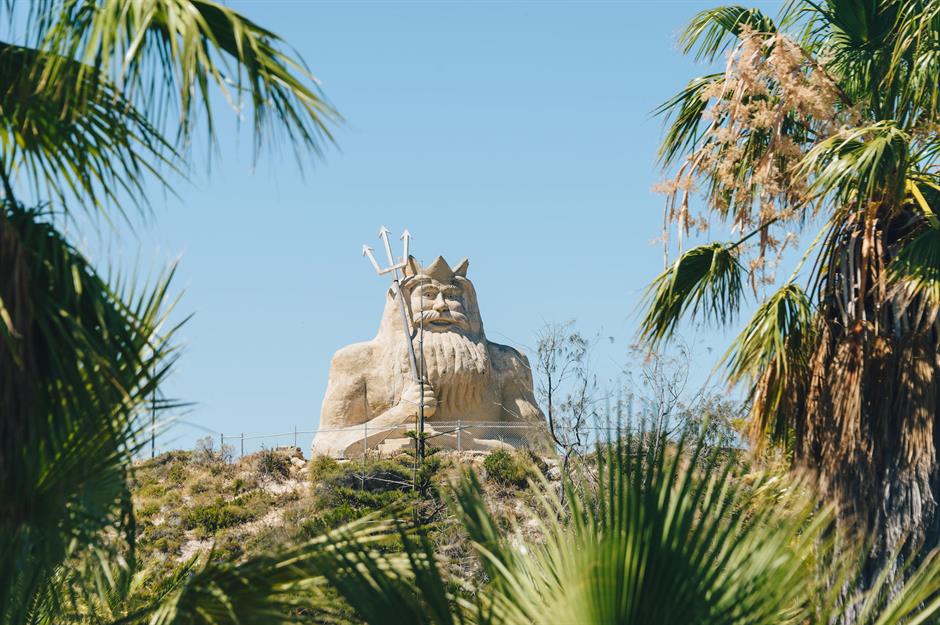
The cheery statue of King Neptune that overlooks the ocean on the way into Two Rocks might seem an odd sight. But ask any local and they’ll fondly recall that the Roman god was once the centrepiece of a marine park that opened here in 1981, known for its classical-themed architecture and dolphin shows.
Its success was short-lived and the resort closed in 1990. After a few decades, the limestone statue was restored. The site is now undergoing redevelopment as part of the Atlantis Beach project, which will include a tourism hub.
Sponsored Content
The Royal Hotel, Birdsville, Queensland
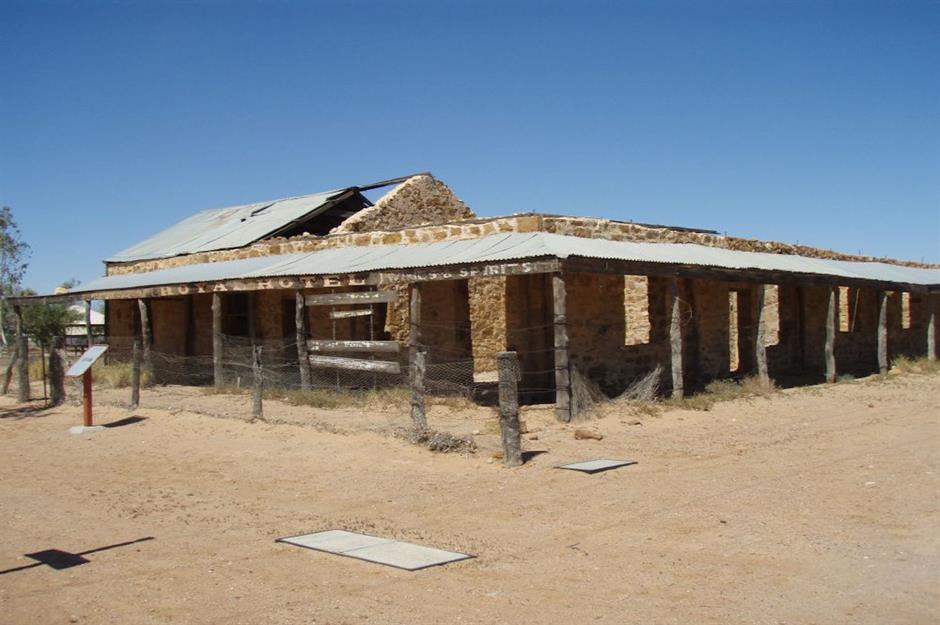
Withered and weathered, the long abandoned Royal Hotel is one of a scattering of historic buildings around Birdsville. It lies on the edge of the fascinating frontier town at the end of the old drovers’ route, the Birdsville Track, on the edge of the Simpson Desert.
Now National Trust-listed, the dilapidated 1880s-built building began life as a hotel but was used as a hospital by the Royal Flying Doctor Service before becoming a private home for a time.
The Capricorn Resort, Yeppoon, Queensland
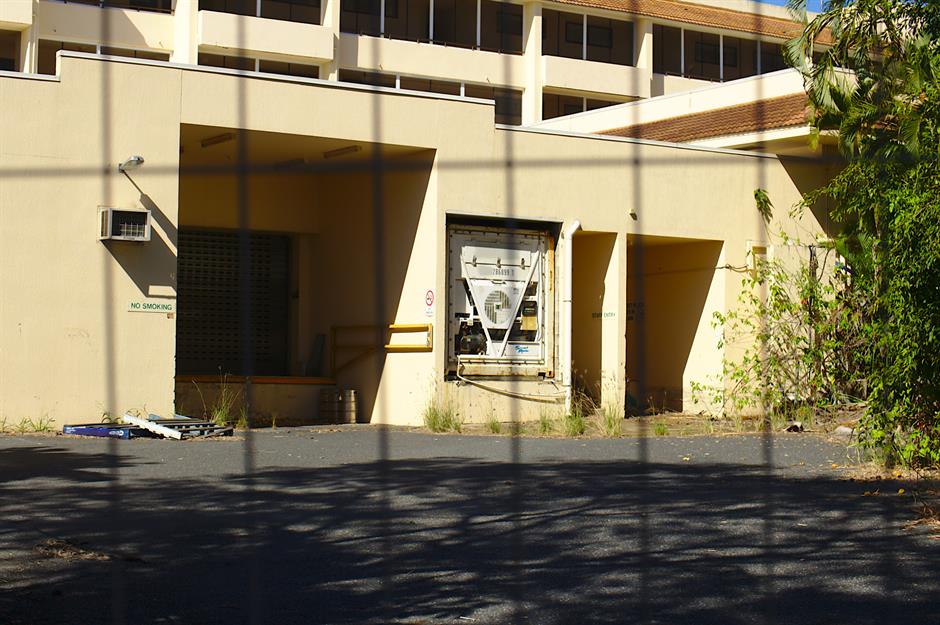
Fenced off and forlorn, the Capricorn International Resort was once a pearl in the coastal town of Yeppoon, known as the gateway to the southern Great Barrier Reef. Drawing families from Australia and overseas through its doors, the now overgrown tropical getaway opened in 1986.
The Japanese-owned resort closed in 2016 and has since been left to fester, much to the concern of locals. However, there have been long-mooted plans to revitalise the 22,000 acres of land in the future.
Paronella Park, Mena Creek, Queensland
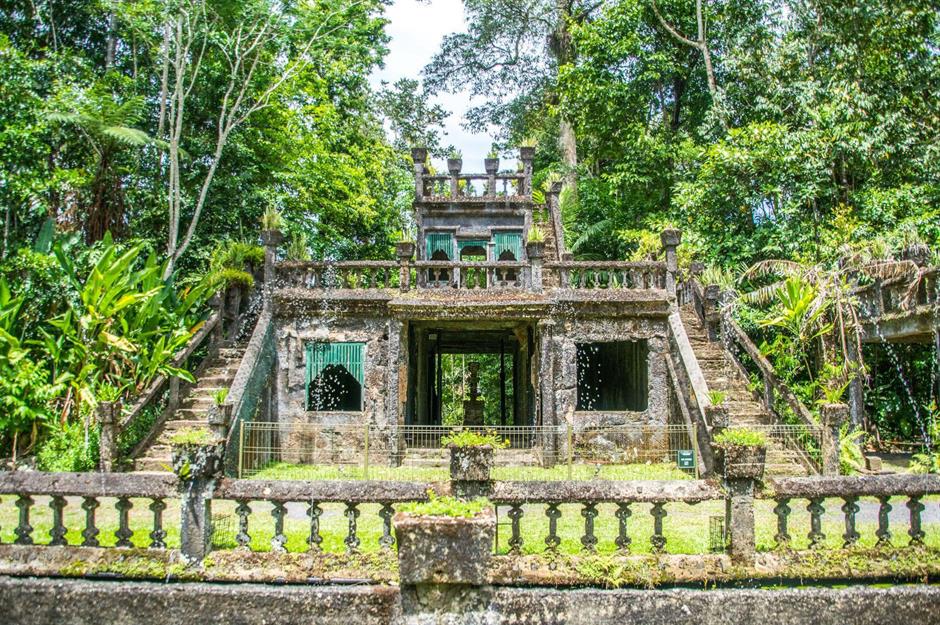
The ruins of a faux castle and ill-fated pleasure grounds have become one of Queensland’s most unlikely tourist attractions. Paronella Park was constructed in virgin scrub near Mena Creek Falls by Spanish immigrant José Paronella from 1929. As well as the castle, he created a picnic area, tennis courts, bridges, tunnel, and planted 7,500 tropical plants and trees, opening it to the public in 1935.
Over the decades, fires, floods and cyclones have left their mark, but thanks to new owners and preservation work the ruins and pretty park are open once again.
Sponsored Content
Z Ward, Glenside, South Australia
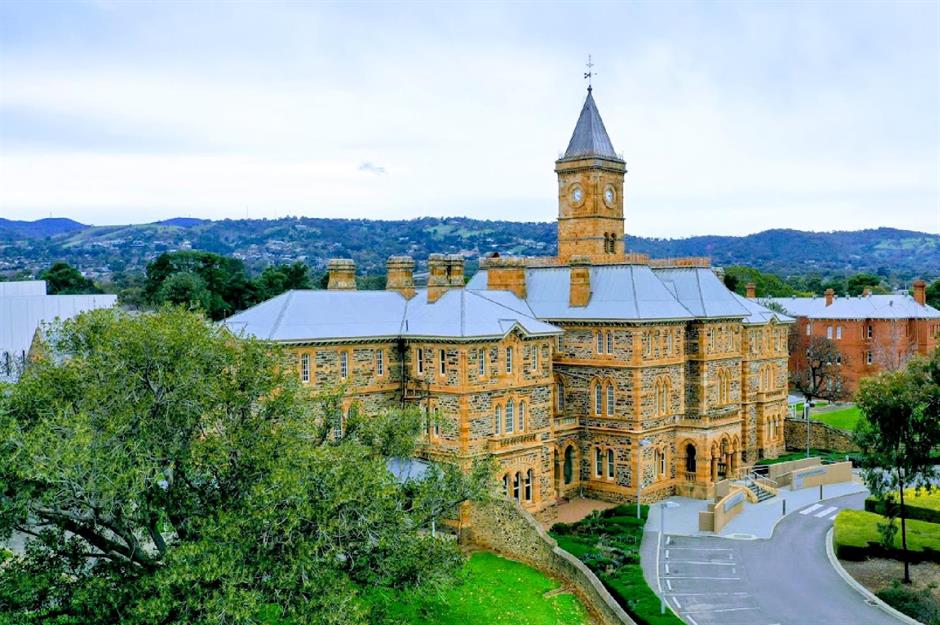
Built in 1885 by an esteemed architect, the grand Glenside Mental Hospital sat empty and forgotten for decades after it was decommissioned in 1973, occasionally used as a storage facility by the Department of Mining.
In 2014, its handsome doors were reopened to the public who can now explore its eerie halls, gaze up at its high ceilings and peer into the cells of its notorious Z Ward, which once housed the “criminally insane”, on guided tours.
Port Arthur, Tasman Peninsula, Tasmania
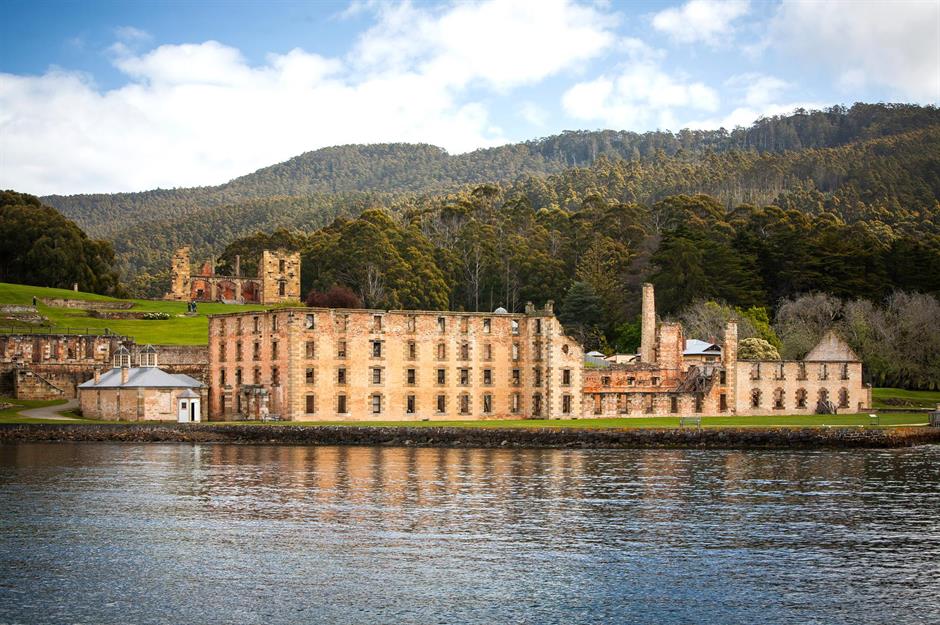
A wretched place established on the wilds of the Tasman Peninsula, Port Arthur was one of the harshest and largest convict settlements in all of Australia. It closed in 1877 and was renamed Carnarvon for a time, with land auctioned in the 1880s and people taking up residence in and around the old site to form a new township.
Fires in 1895 and 1897 destroyed many buildings and gutted its Penitentiary, Separate Prison and Hospital. Today, the complex of ruins is a foreboding but fascinating place to explore.
Tarban Creek Asylum, Sydney, New South Wales
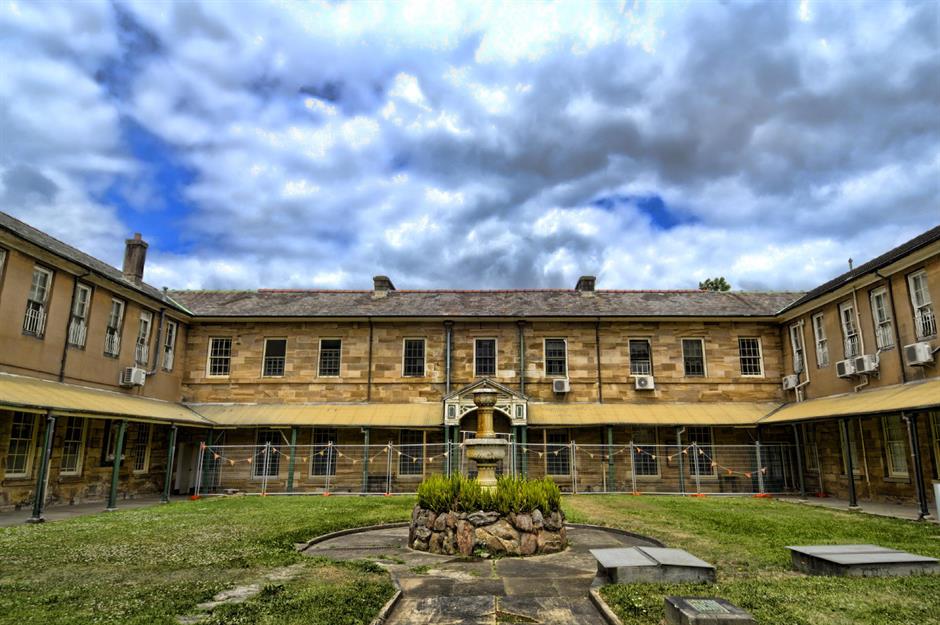
Today, Gladesville is a leafy suburb in Sydney’s lower north shore, but dig a little deeper and you’ll discover a dark past. It was here, on the shores of the Parramatta River, that the Tarban Creek Asylum, later renamed Gladesville Mental Hospital, opened in 1838.
It’s since been revealed that the asylum was dangerously overcrowded, undertook inhumane treatments and was rife with abuse. It closed in the 1990s and today the site is semi-abandoned with some decrepit structures lurking among its grounds.
Sponsored Content
Victoria Settlement, Cobourg Peninsula, Northern Territory
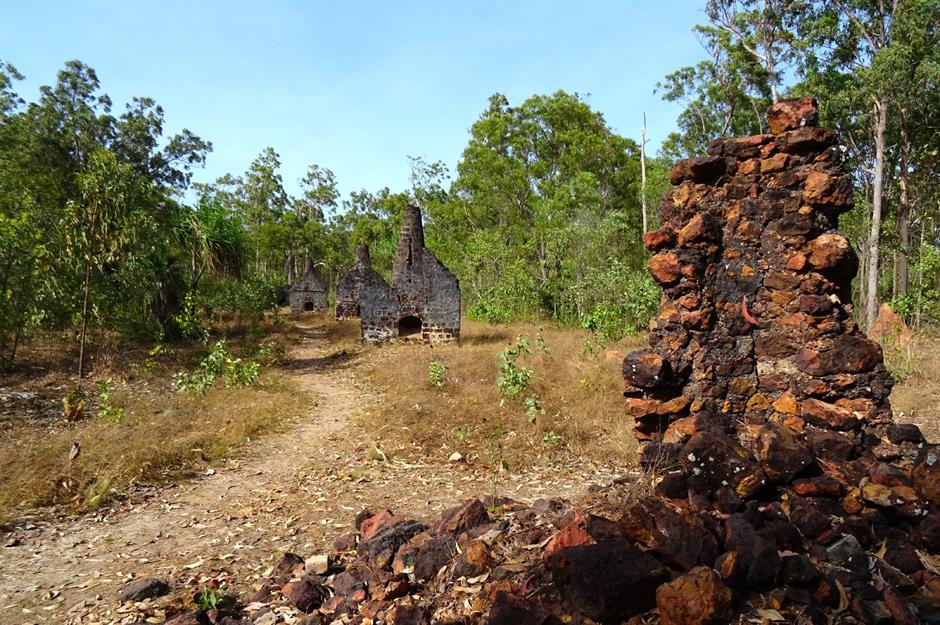
The remote ruins of an ill-fated British settlement can be found in Garig Gunak Barlu National Park on the Cobourg Peninsula. They are the remains of a third endeavour to settle the area in Arnhem Land. It was named Victoria by the British soldiers who came to this isolated area with their families in 1838.
They spent 11 years attempting to establish a settlement – for both defensive and trading reasons – but were eventually driven out in 1849 by disease and numerous deaths.
Beechworth Asylum, Beechworth, Victoria
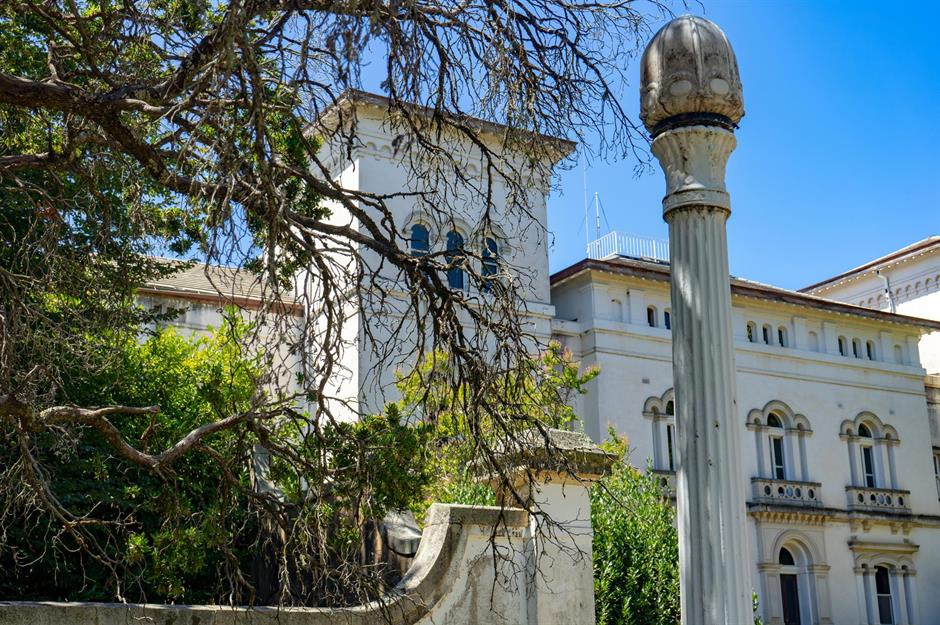
This large and foreboding building is steeped in stories of cruelty, with the historic asylum now known for its crude at best, brutal at worst, treatments such as electro-shock therapy.
The Beechworth Asylum, or Mayday Hills, opened in the 1860s and housed up to 1,200 patients at the peak of its operations – it was one of the largest psychiatric hospitals in Victoria. It was decommissioned in 1995 and now parts of it are open for private ghost and historical tours.
Royal Hotel, Linda, Tasmania
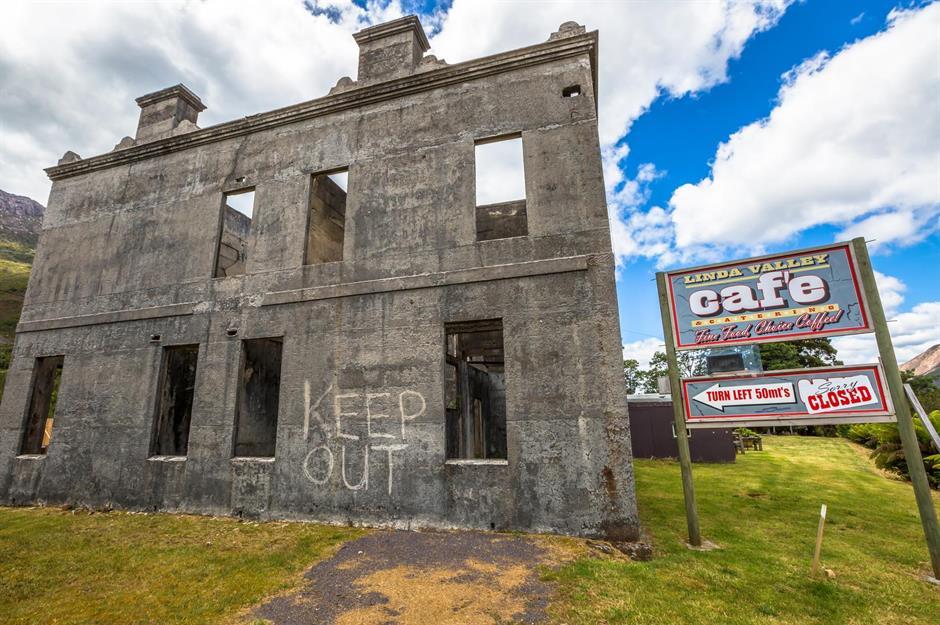
Lying along the Lyell Highway in the Linda Valley in Tasmania’s west lies the lonely concrete shell of an old pub. Bar a few houses, it’s pretty much all that's left of Linda, a town that sprung up after the North Mount Lyell mine opened at the end of the 19th century.
It became the unlikely site of a popular community café which sat next to an abandoned pub, but the café closed in 2025. The site was bought in 2020 and although the owner had ambitions to restore the Royal to a boutique hotel, nothing ever came of it.
Sponsored Content
Wittenoom, Pilbara, Western Australia
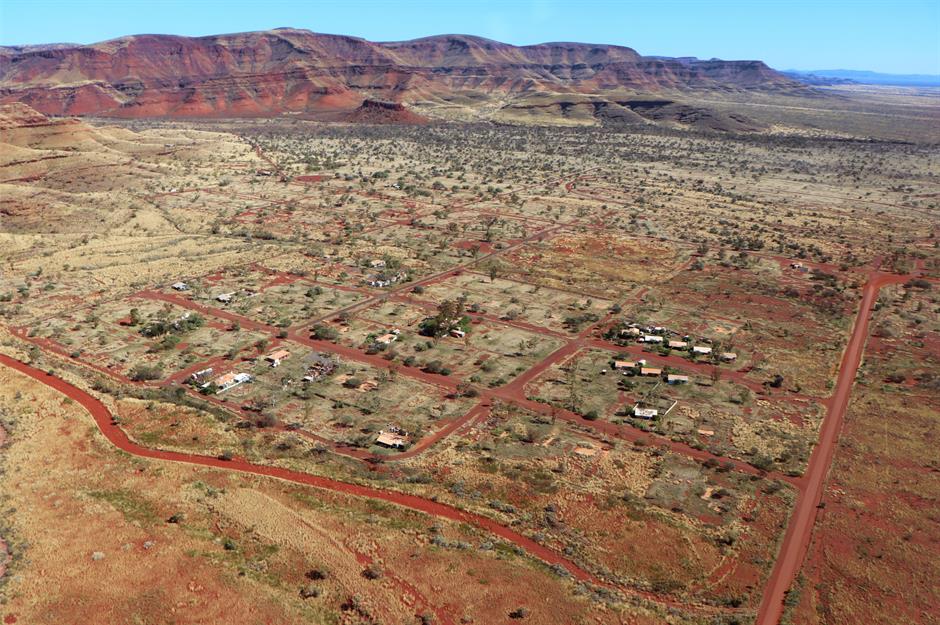
Tucked away in Western Australia's picturesque Hamersley Range is Wittenoom – a former asbestos mining town now a declared contaminated site. Incredibly, a small handful of stalwart residents still remain, though the government removed town status in 2006, cutting off power and services and removing it from maps.
Deserted buildings dot the deadly town, including Doc Holiday's Cafe with its faded sign, peeling paint and air of nostalgia. The WA government warns people not to go anywhere near the town, with signs alerting passersby of the real and present danger.
Darlington Probation Station, Maria Island, Tasmania
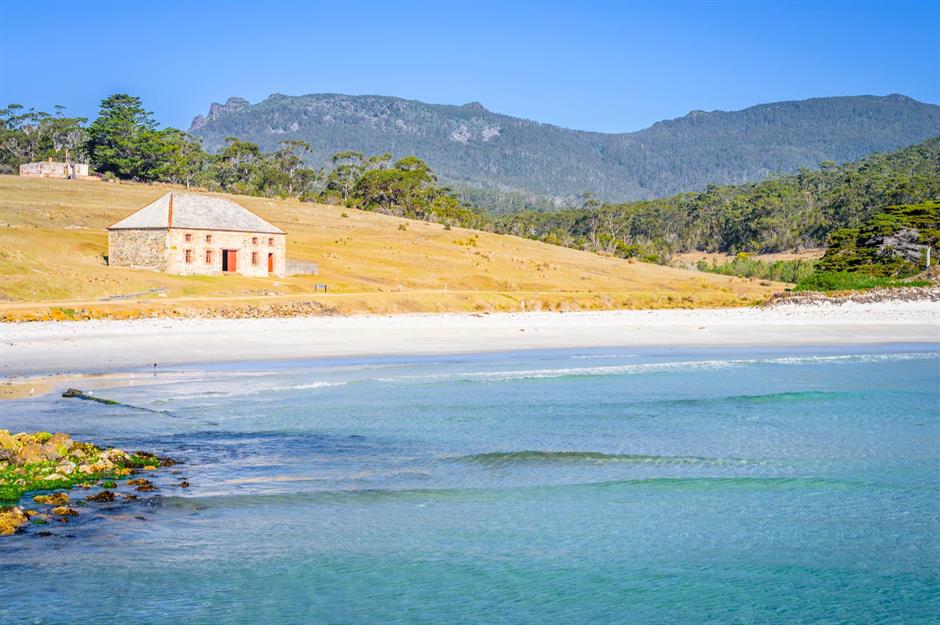
An isolated uninhabited island with natural resources, Maria Island was the perfect location for a penal settlement. The Darlington Probation Station operated from 1825 to 1850 and was used as a place of secondary punishment for convicts who’d committed offences while in the colony.
Now a World Heritage Australian Convict Site, the weathered but well-preserved ruins are open. Some visitors even choose to sleep like a convict in its Penitentiary rooms.
Burra Homestead, Burra, South Australia
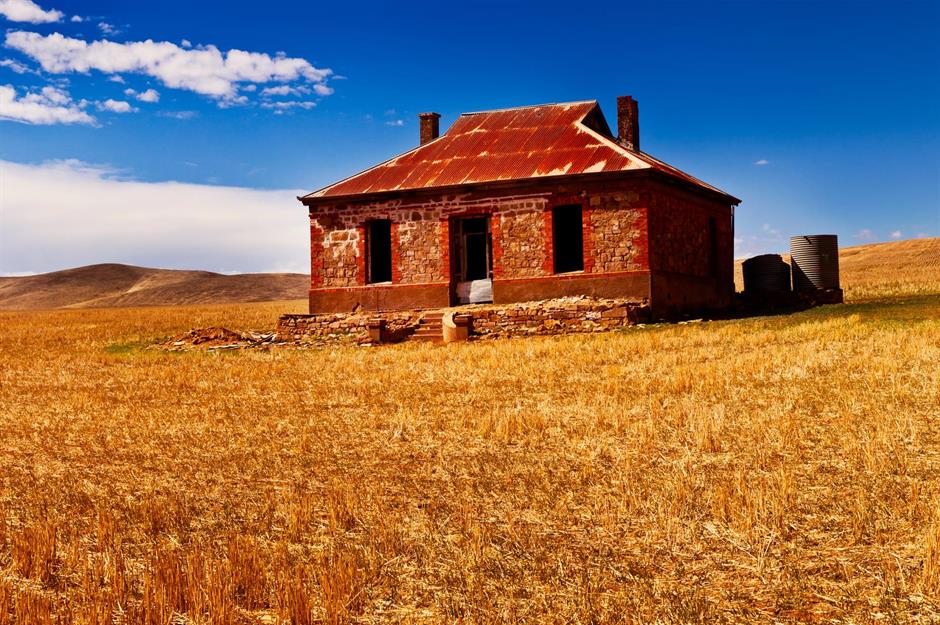
This abandoned homestead in the foothills of the Mount Lofty ranges might not look significant but fans of Australian rock band Midnight Oil will be well familiar with its image. Captured by lauded landscape photographer Ken Duncan, a picture of this humble tumbledown homestead graced the cover of the band's 1987 album Diesel and Dust.
Today it remains in its solitary state, a symbol of both the stark Australian outback and a group of rock legends.
Sponsored Content
Waukaringa, South Australia
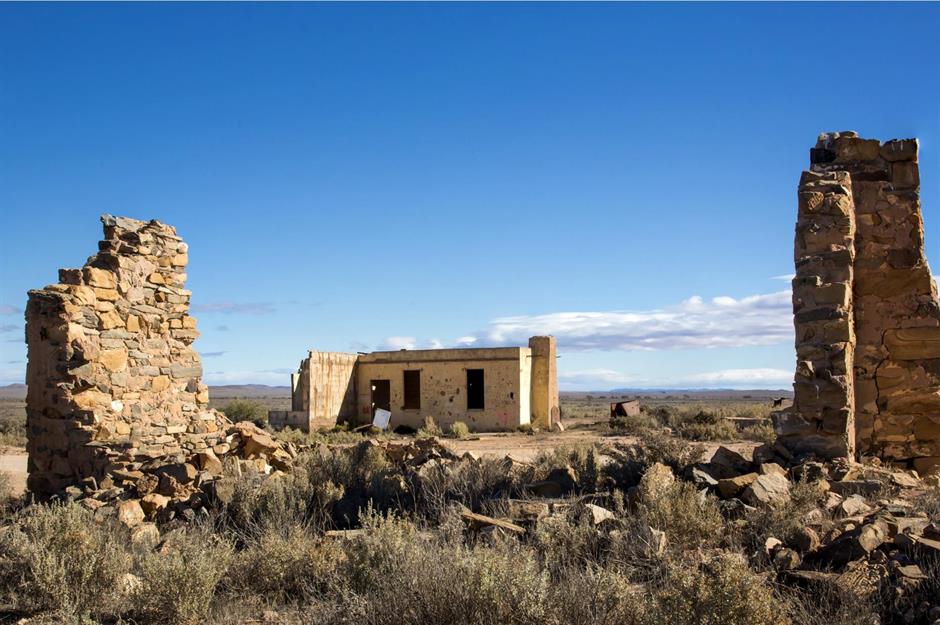
Another haunting remnant of South Australia’s gold-rush era, the husk of the former Waukaringa Hotel lies on the road towards Arkaroola. It hints at the 19th-century mining town that once sat in this dusty landscape near the Flinders Ranges and was home to hundreds of gold diggers.
It was abandoned in the mid 1900s and today all that remains are the graffitied ruins of the pub and a few hollowed-out ruins and signs marking where the town’s post office and other buildings once sat.
Cape Jaffa Lighthouse, Kingston SE, South Australia
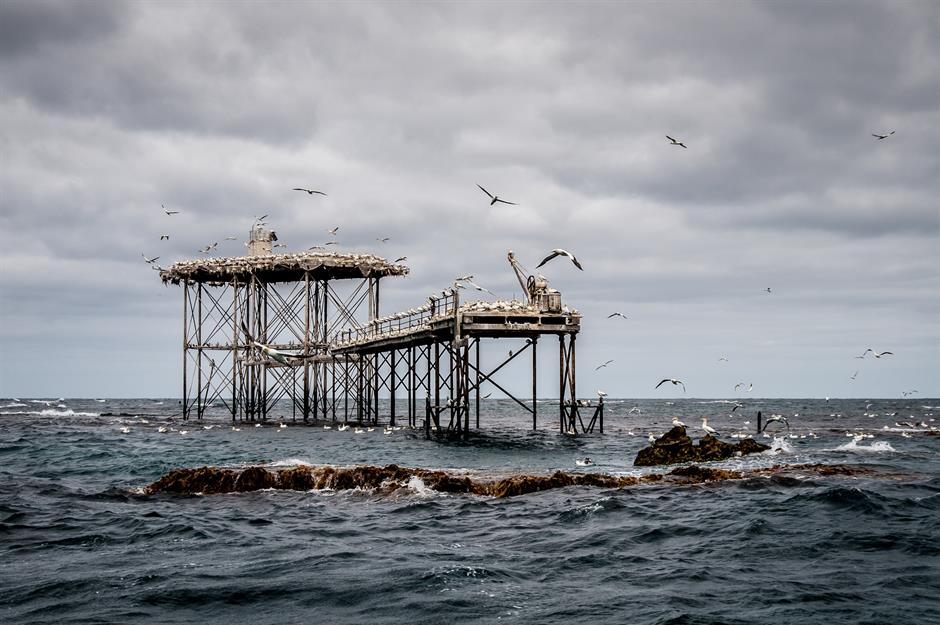
It’s hard to believe that the Southern Ocean-battered remains of this historic offshore lighthouse were home to two hardy lighthouse keepers and their families. They were shipped out to stand guard on the treacherous Margaret Brock Reef with enough supplies to last several weeks.
Opening in 1872, the engineering marvel was operational for 101 years (it was officially decommissioned in 1973). The tower was relocated to the town of Kingston SE in 1976 and offers 45-minute public tours. The degraded platform, fitted with an automatic beacon, is a roost for seabirds.
Glen Innes Railway Station, Glen Innes, New South Wales
The handsome Glen Innes Railway Station building looks in good nick, but the overgrown tracks suggest trains haven't stopped here for a long time. The railway came to the rural town in New South Wales’ Northern Tablelands region in 1884. However, passenger services ceased in 1986 and the line was closed altogether in 1988.
Now heritage listed, the station’s exterior has been repainted and it’s considered a classic example of a Victorian-era country railway station. The town is known for its other historic buildings too.
Sponsored Content
Fort Nepean, Point Nepean National Park, Victoria
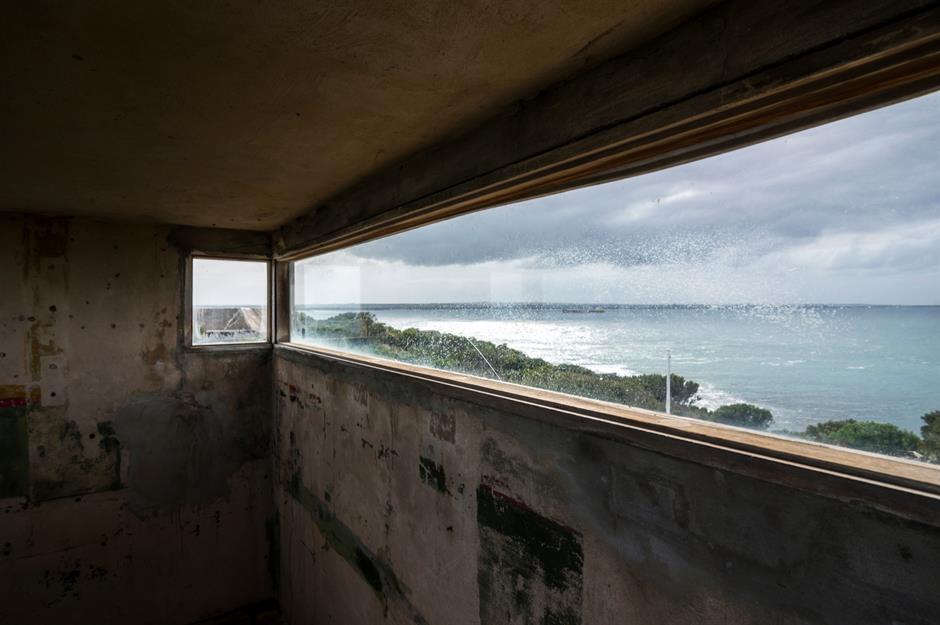
Teetering near the tip of the Mornington Peninsula overlooking Port Phillip Bay, Fort Nepean was a critical part of Victoria’s coastal defences from the 1880s until 1945, originally built to protect the gold-rich state.
Today it forms part of the fascinating military complex of Point Nepean National Park, where visitors can also explore the empty fortifications and creepy tunnel complex, which connects the historic gun emplacements.
Cockatoo Island, Sydney, New South Wales
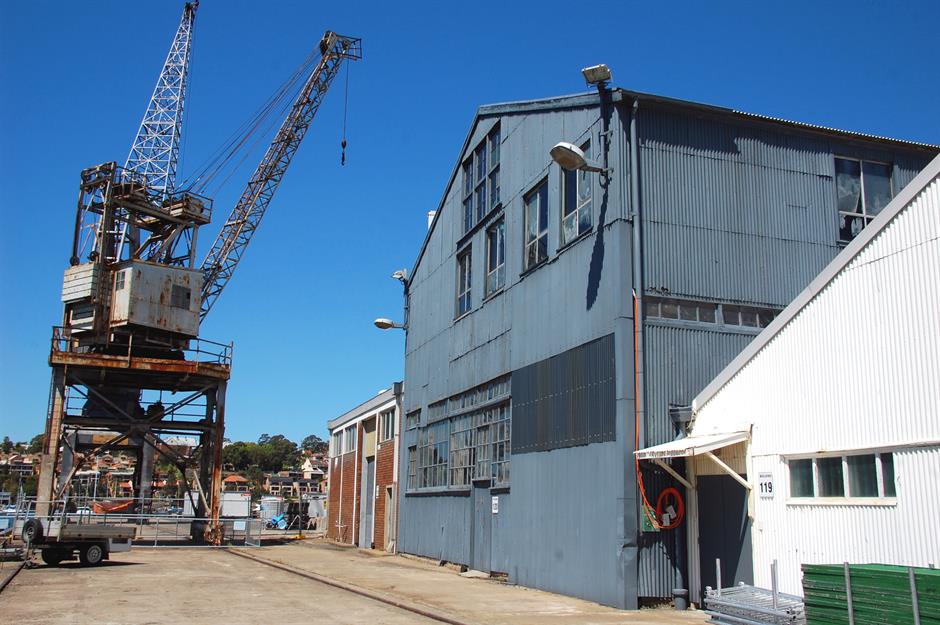
Sydney Harbour's Cockatoo Island oozes history. Now UNESCO World Heritage-listed, the island has been a meeting place for the First Nations, a penal establishment, a reformatory school for girls, a shipyard, a naval dockyard and an industrial centre.
It reopened to the public in 2007 as a leisure attraction with places to stay, a campsite and a bar that lures Sydneysiders with live music sessions in summer. Key sites are the penal centre-turned-school’s old schoolhouse and chapel and the derelict buildings in the Ship Design Precinct.
Town Hall ruins, Darwin, Northern Territory
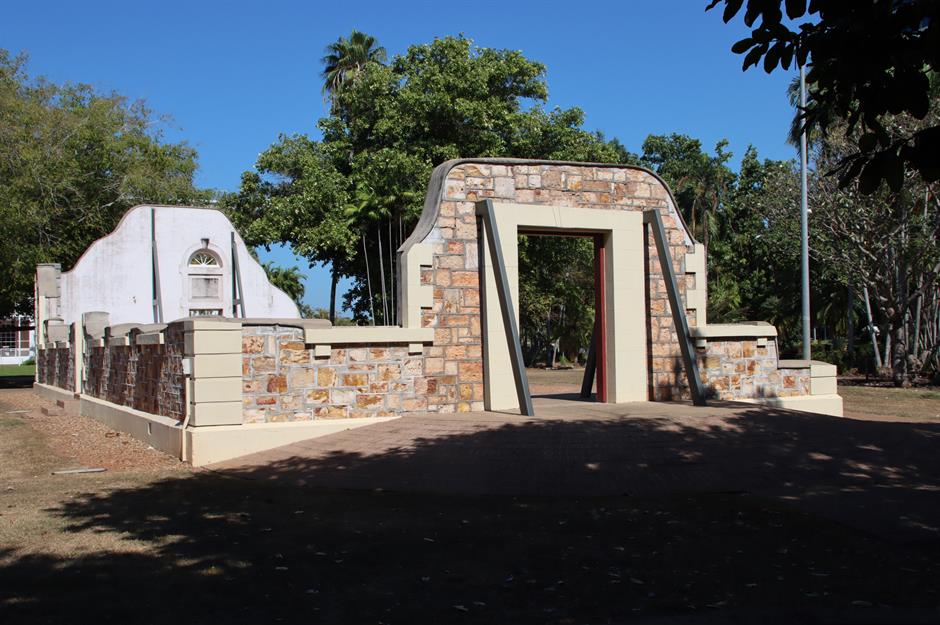
Darwin’s grand Palmerston Town Hall was completed in 1883. The handsome civic building was commandeered by the navy during the war years, when Darwin was at the forefront of the country’s northern defence strategy. It was the catastrophic Cyclone Tracy that eventually caused its demise, when the unexpected storm tore through the city on Christmas Eve in 1974.
The remains were stabilised in 1980 and in 2016 a conservation project saw the structure partly rebuilt using the salvaged rubble. Now a public space, the hall’s remnants stand as a reminder of the tragic events of Tracy and the city's resilience.
Sponsored Content
Farina, South Australia
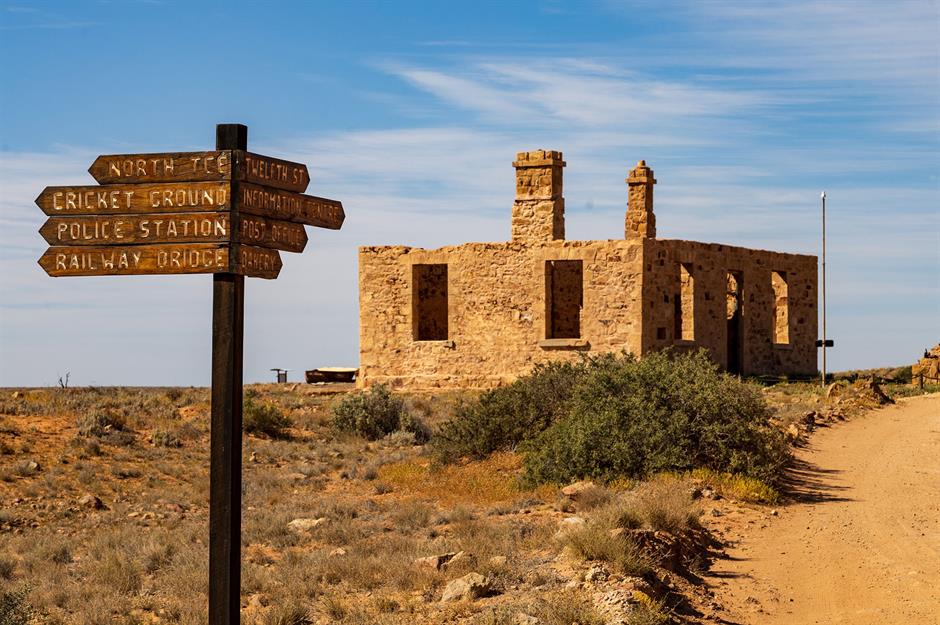
A lonely ghost town within the Lake Eyre Basin, Farina sits on the old alignment of the Great Northern Railway (later known as the Ghan Railway) in a remote part of South Australia. The sun-burnt ruins of the Transcontinental Hotel and the old cemetery are among the most striking sights in this former rail and farming town, which around 600 people called home in the 1890s.
A local restoration group is working to preserve the town, which is home to a pop-up underground bakery at certain times of the year.
Aradale Asylum, Ararat, Victoria
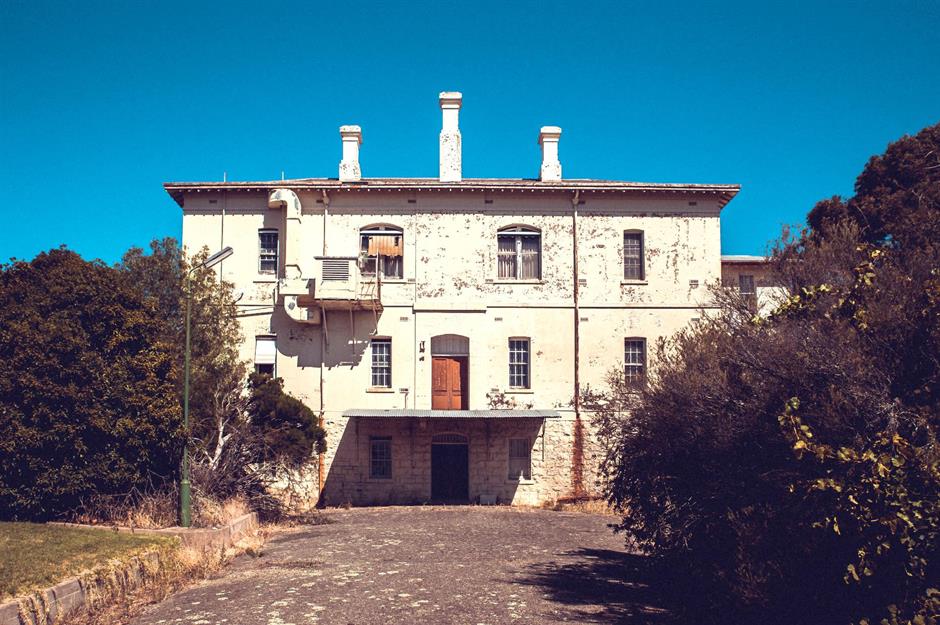
Another of Australia’s creepy Victorian-era asylums that harks back to the days when large institutions were built to “cure” the mentally ill and disabled, Aradale Asylum lies in the rural town of Ararat in the Grampians.
It opened in 1867 and was also known as the Ararat Lunatic Asylum, operating until 1993. Now the rambling, abandoned complex is open to pre-booked tours that take in some of its 70 historic buildings.
Garden Island Ships' Graveyard, Port Adelaide, South Australia
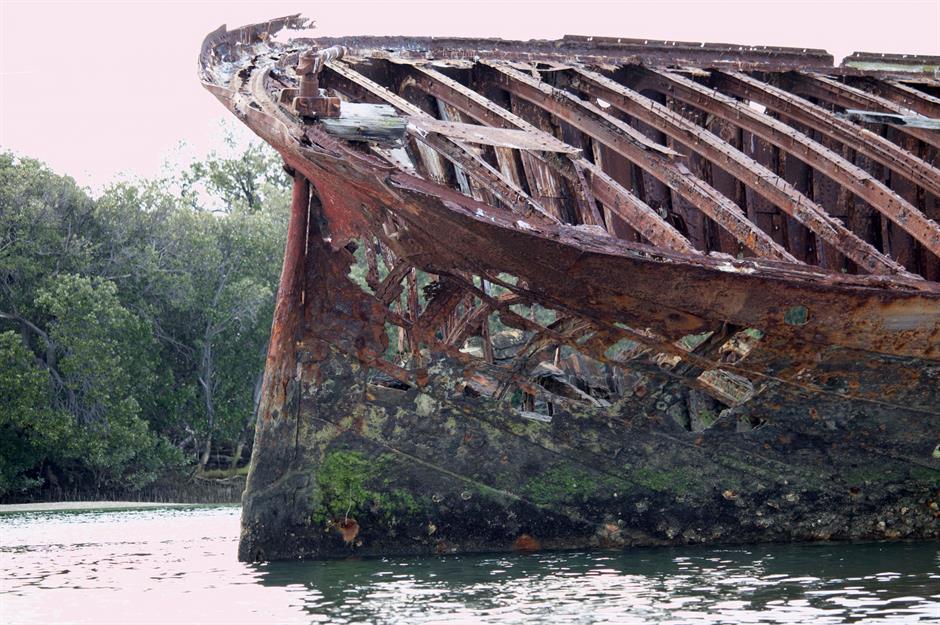
Port Adelaide has five abandonment sites, or ships’ graveyards. The largest is Garden Island, where a decaying collection of 25 varied vessels (including dredges, pontoons, ferries and steamers) gives a unique insight into South Australia’s maritime industry.
The abandoned wrecks now form an unlikely tourist attraction: a unique and moving Maritime Heritage Trail, which can be explored by canoe or small boat. The Jervois Basin Ships’ Graveyard Maritime Heritage Trail is another option.
Sponsored Content
Mutton Cove Ships' Graveyard, Port Adelaide, South Australia
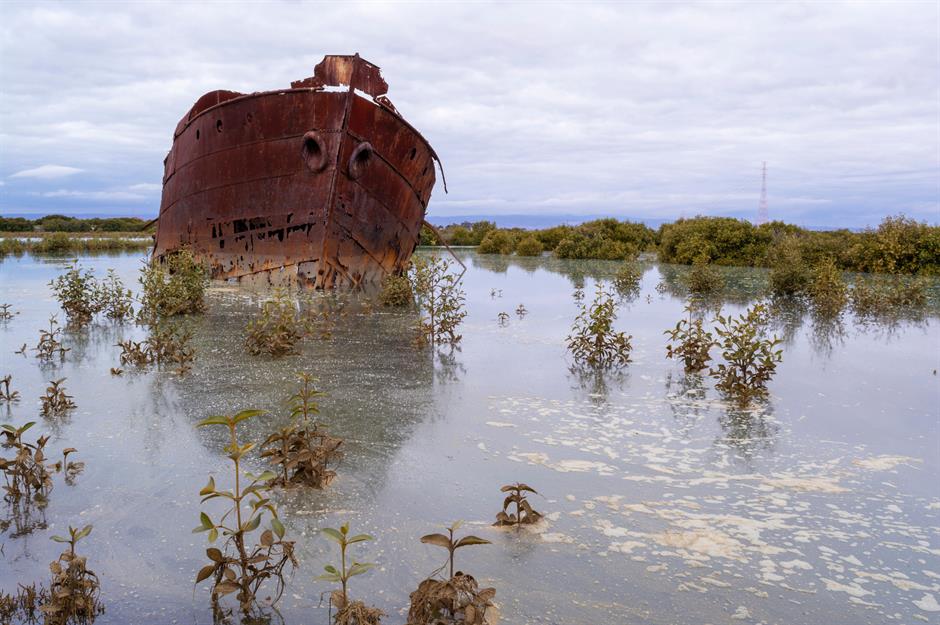
Mangrove-dotted Mutton Cove Ships' Graveyard is another resting place whose wrecks are visible from land. Pictured here is the rusting Excelsior, peering from the backwaters of the Port River – it was a screw steamer built in 1897 and is now partially submerged in the marshland. It's one of 40 vessels left to rot.
Carcory Homestead Ruins, Queensland
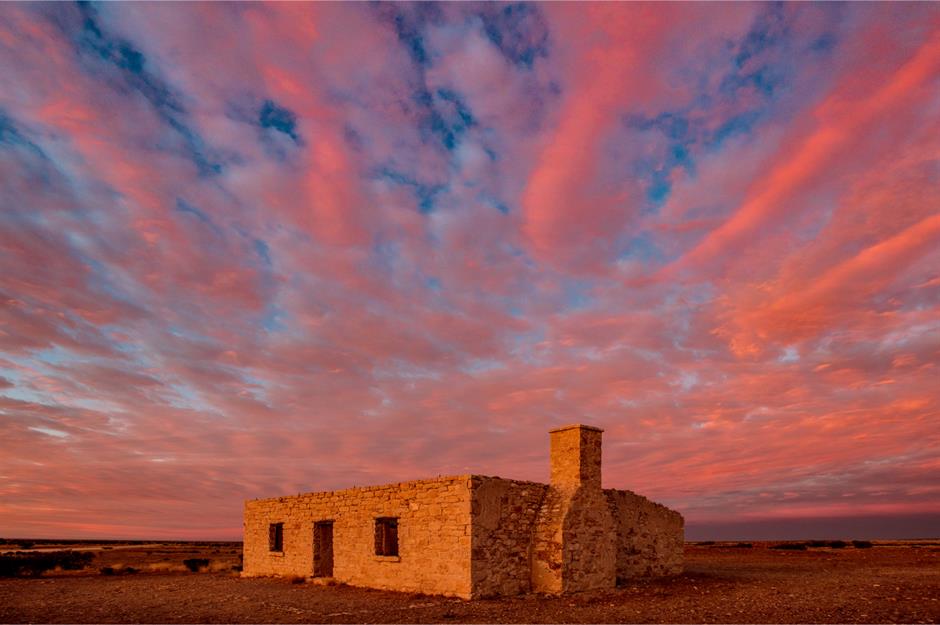
Built in 1877 from local limestone, the ruins of Carcory Homestead lie on the remote stretch of road between Bedourie and Birdsville and stand testament to the difficulties faced by early farmers in this harsh and hostile land.
Located on a cattle route, the homestead was abandoned by its owner Sir Sydney Kidman in 1906 after years of drought and the loss of 4,000 bullocks. Since being heritage listed, the ruins of the old cottage have been stabilised.
Gorrie Airfield, Larrimah, Northern Territory
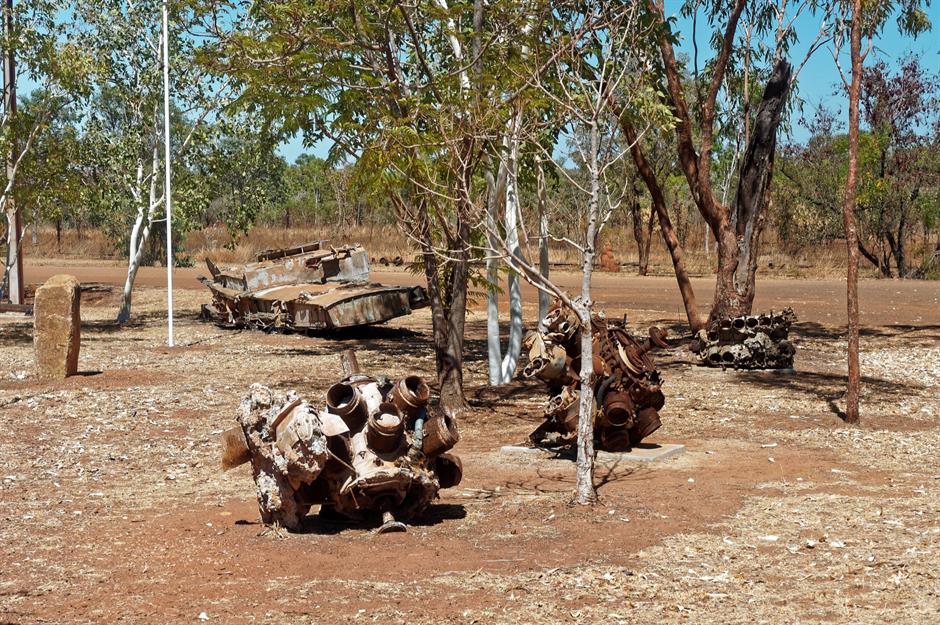
These rusting wrecks and the remains of the runway can be seen just north of Larrimah at an abandoned airfield that was one of the largest and busiest military bases in operation in the Pacific region during World War II.
In 1943 at its peak, 6,500 members of the military were stationed here. The site also had an open-air cinema, a boxing ring, four tennis courts and sports fields.
Sponsored Content
Cresta Valley Ski Resort, Mount Buffalo, Victoria
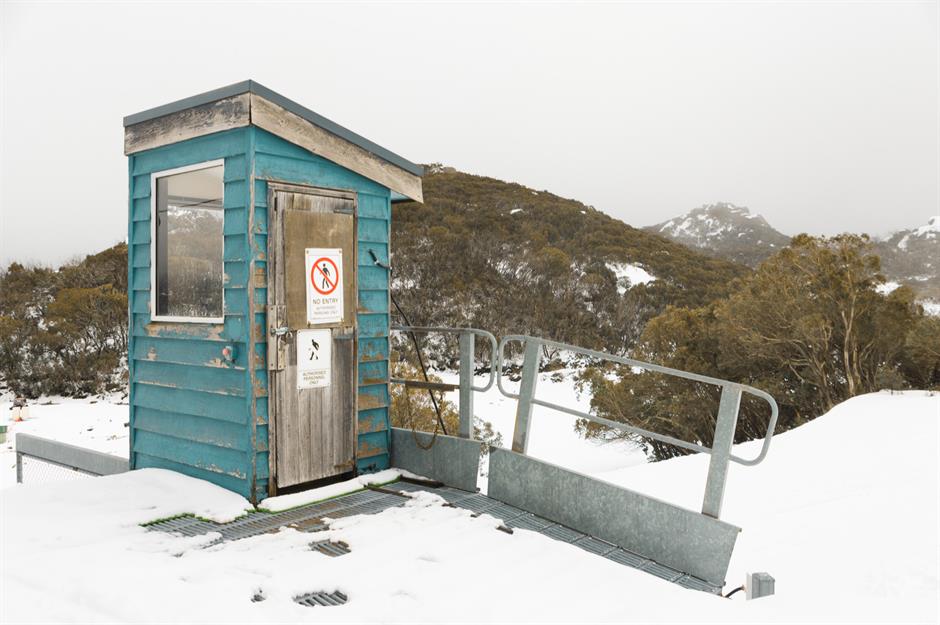
The stationary lifts strewn on the slopes of Cresta Valley are the only sign that this part of Mount Buffalo was once a busy ski area.
It used to be home to a 26-room ski lodge, known as the Cresta Valley Lodge, along with a restaurant, café and ski school, but devastating bush fires in 2006 destroyed the resort and much of its infrastructure. The ski resort was never rebuilt and just the derelict lifts remain.
Silverton, New South Wales
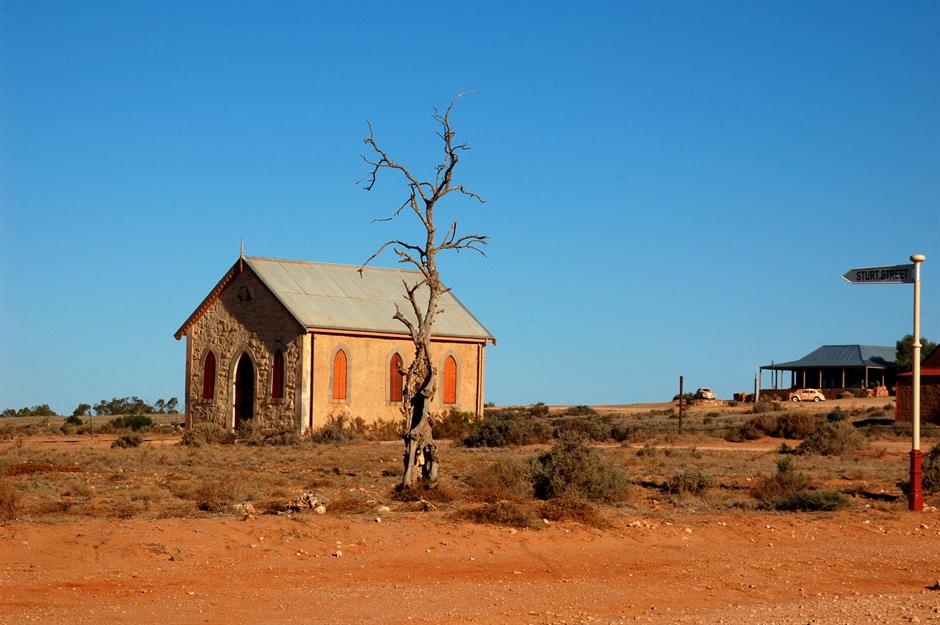
Step back in time along the heritage walking trail that winds around this characterful 'ghost town', now a tourist attraction in the far western reaches of New South Wales. Silverton was home to 3,000 people, but most had left by the 1890s to work in the mines of nearby Broken Hill, many taking their homes with them. They did so literally: buildings were transported by donkeys, camels or bullocks.
After seeing the ruined Methodist church, old schoolhouse, gaol and cemetery, quench your thirst at the modern Silverton Hotel. The ruins of the original, which burnt down in 1918, can be seen next door.
Menzies, Western Australia
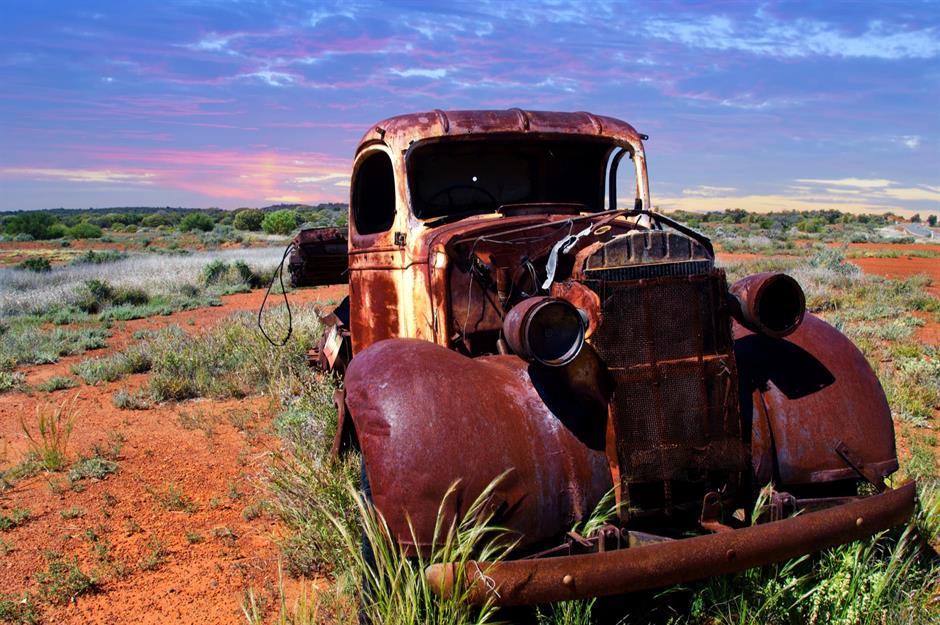
Rusting cars and the crumbling ruins of an old bakery are some of the abandoned places that can be explored in Menzies. Like so many of the small gold mining towns in the state’s goldfields, it went from boom to bust.
After the Lady Shenton mine was founded its population peaked at 10,000 with numerous hotels, breweries and a hospital built. Now the town, whose high street retains some handsome heritage sandstone buildings including its town hall, has around 150 residents.
Sponsored Content
Milparinka, New South Wales
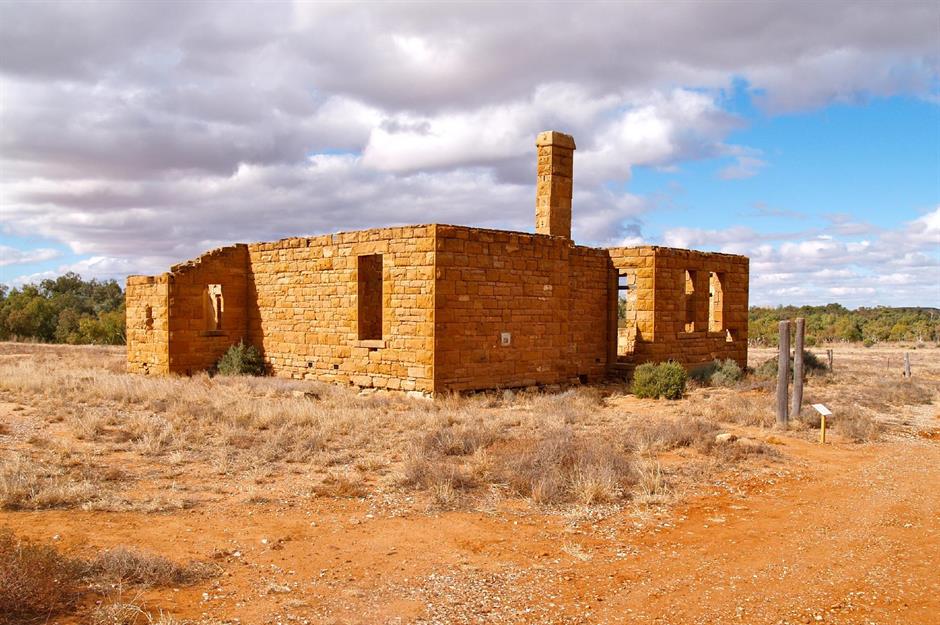
For a slice of mid-19th-century history and a fascinating insight into Australia’s early mining heritage, head to Milparinka, a minuscule historic mining settlement that began life in the 1880s on the banks of Evelyn Creek.
The Milparinka Heritage Precinct, in the extreme northwest of New South Wales, includes the crumbling remains of a 19th-century courthouse, an old post office building (pictured) and a long deserted family home, the Baker House.
Terowie, South Australia
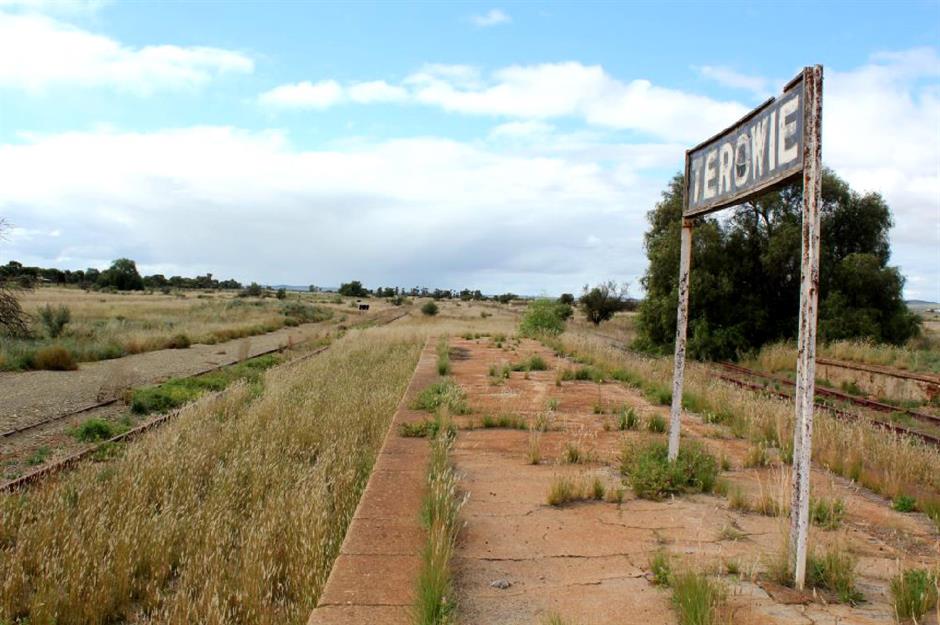
Strewn along an old railway track in South Australia lie a handful of well-preserved heritage homes and a disused station. Terowie was established as a railway town in the 19th century and was home to around 2,000 people at one point.
It’s now a designated historic area and home to less than 200. Stroll along its heritage walk to peep into the preserved façades of its old stores (one of which is now the Terowie Tea Rooms), and spot the town's first building, the Terowie Hotel, as well as its old railway yard and station.
Gwalia, Western Australia
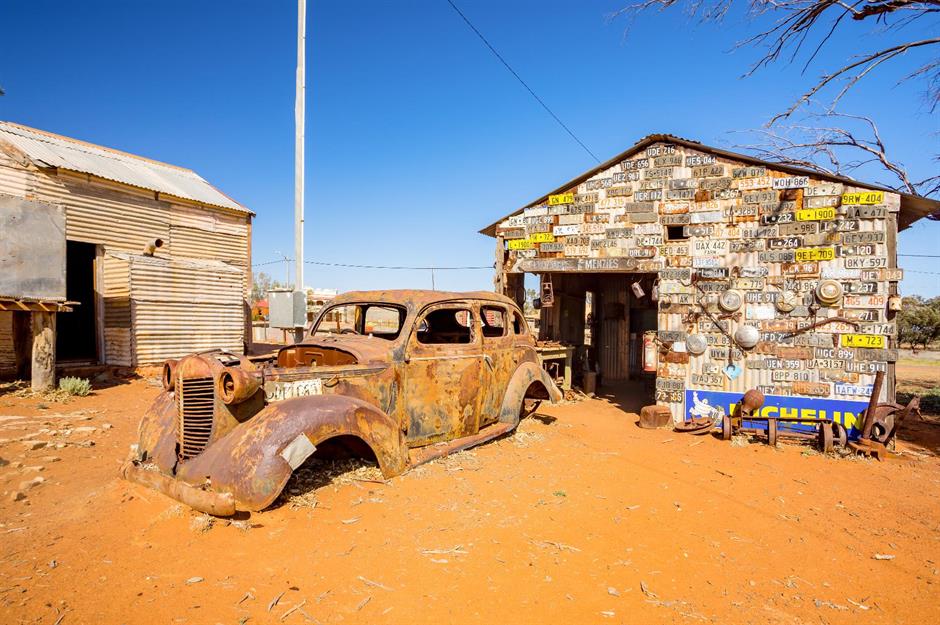
Another gold-rush relic, Gwalia grew around the Sons of Gwalia mine which was built after three prospectors from Coolgardie first discovered a gold reef in 1896. One of the largest gold mines in Australia, it closed in 1963 and within a fortnight pretty much all the residents had left, abandoning their homes and businesses.
It’s now an atmospheric open-air museum where visitors can walk around these empty buildings, including the state’s first government-owned hotel, and visit the museum in the former mine office.
Sponsored Content
Cassilis, Victoria
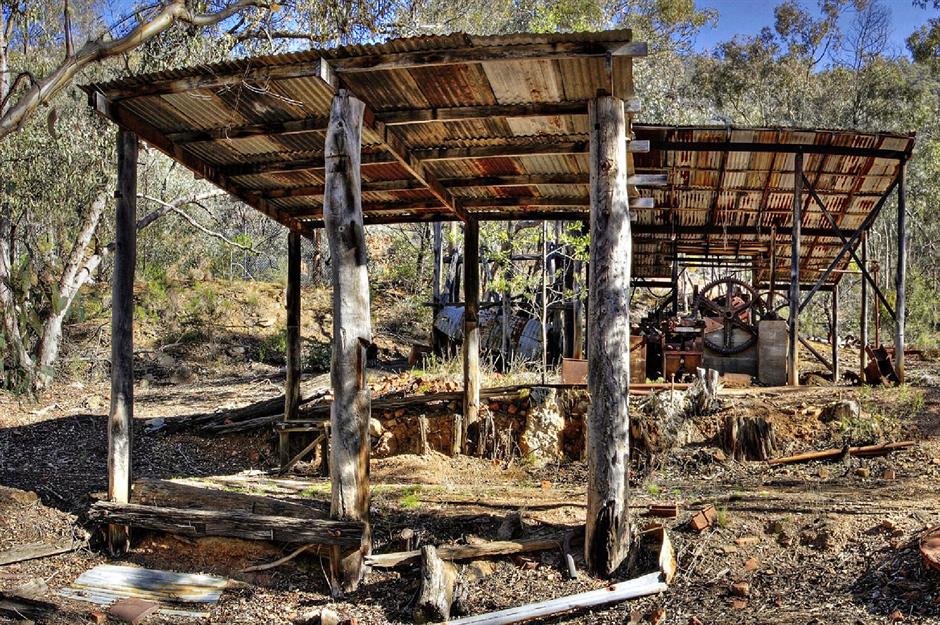
South of Omeo in East Gippsland, the Cassilis Historical Area houses all that remains of the once prosperous King Cassilis Mine. Remnants of the township that started up around the gold mine in the late 19th century can also be glimpsed in this forested site that was at one time home to around 1,000.
Despite devastating bushfires in 1939, some of the town, mine and processing plant buildings remain, including parts of an old explosives magazine store.
Arltunga, Northern Territory
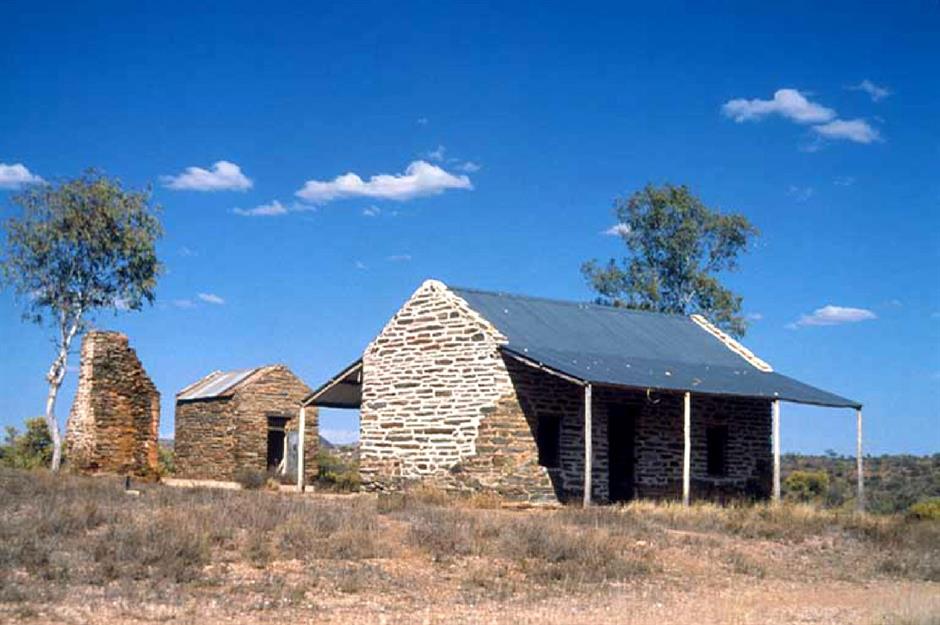
A cluster of resilient stone structures lie in the 5,000-hectare Arltunga Historical Reserve, just to the east of Alice Springs in the East MacDonnell Ranges. They are the long-deserted remnants of the first European settlement in Central Australia, originally established by miners who came to look for gold in 1887.
A few years after the area's alluvial gold had gone in 1896, a government battery and cyanide works opened. The ruins of these works remain, along with parts of the old mines, the police station and jail.
Rothwell Inn, Little River, Victoria
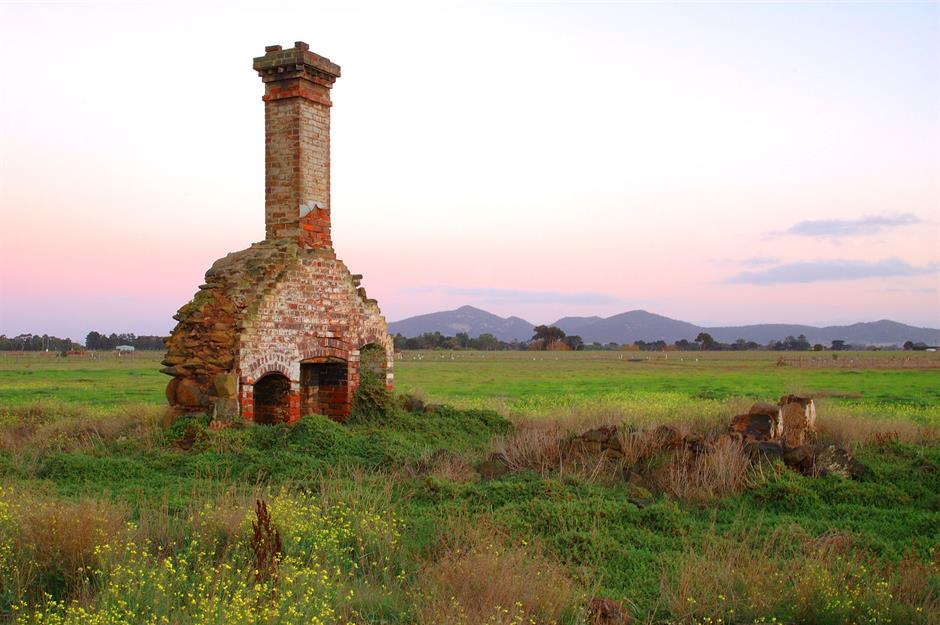
The ruins of the old Rothwell Inn are a striking sight, silhouetted against a backdrop of the You Yangs in southern Victoria.
What remains of the 19th-century inn can be seen by the banks of the river on the overland track between Geelong and Melbourne. Originally named the Travellers’ Rest, the public house was the start of the little rural settlement which began to grow up here in 1839.
Sponsored Content
Weirs Cove, Kangaroo Island, South Australia
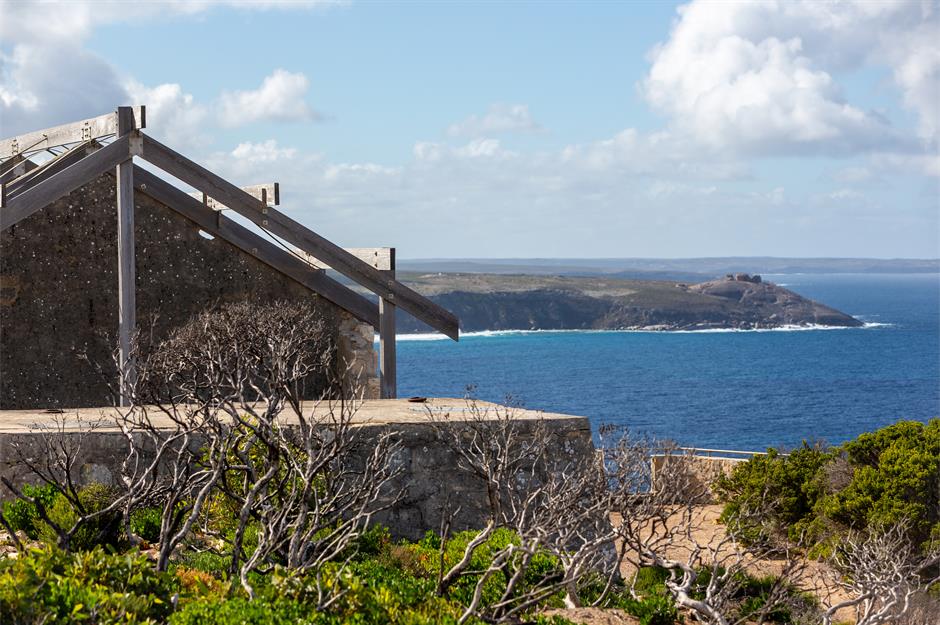
The ruins of Weirs Cove storehouse, which are perched by the cliffs in Flinders Chase National Park, have been partially restored. The storehouse was built in 1908 to house supplies for keepers of the remote Cape du Couedic lighthouse.
On a hike, it’s possible to see the remains of a jetty and flying fox just below, which were constructed to winch goods up the cliff. After the lighthouse was automated in the 1950s, the limestone storehouse was left to deteriorate.
Capertee National Park, New South Wales
Peeping out from the undergrowth of Capertee National Park are the ruins of old mining sites that once operated in this region west of the Blue Mountains. Today hikers can follow historic trails to admire the crumbling ruins and scenic mountain views.
The Capertee Woolshed remains are also worth seeking out: the tumbledown corrugated iron structure is a striking remnant of the region’s pastoral past.
Glen Davis Shale Oil Works, Capertee Valley, New South Wales
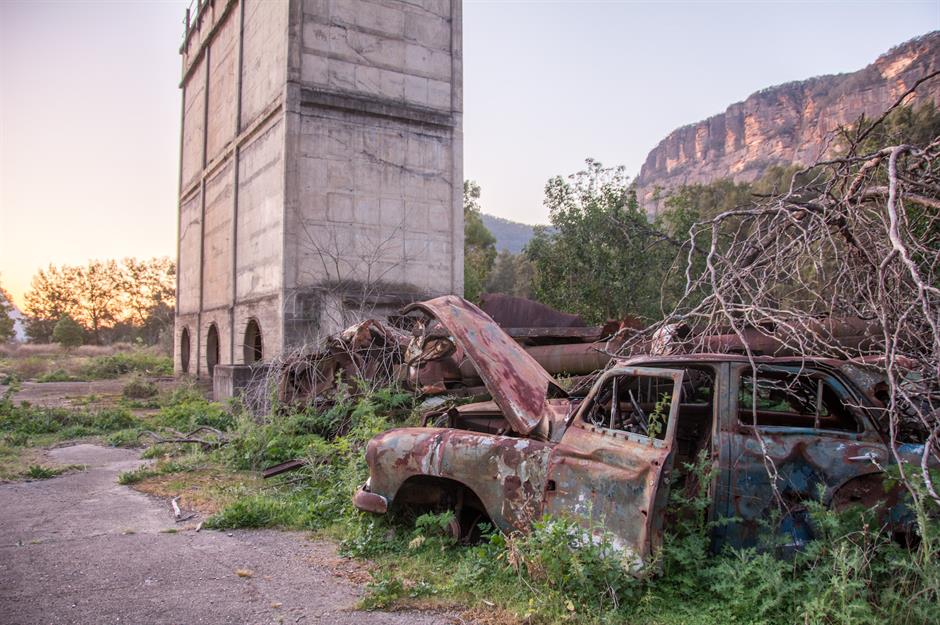
The remains of one of Capertee Valley’s most significant industrial settlements can be seen on its eastern rim. The Glen Davis Shale Oil Works operated from 1938 to 1948 and was one of the largest employers in the area with the settlement home to around 2,500 people at its peak.
Now its dormant machinery and structures, which are encroached on by the bush, can be visited on guided walking tours or guided vehicle tours on Saturdays.
Sponsored Content
Q Station Retreat, Sydney, New South Wales
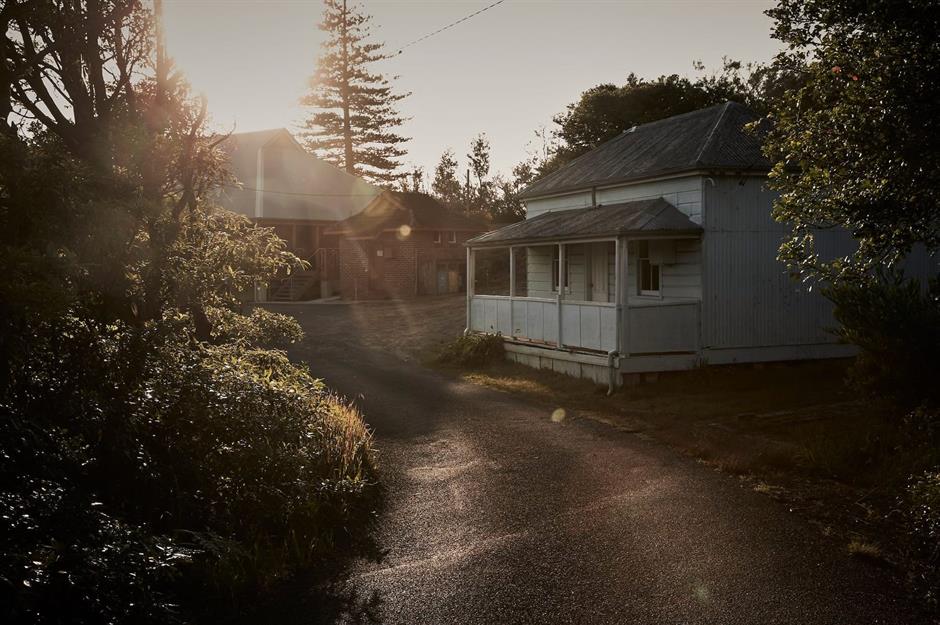
Built on Sydney's North Head in 1832 to contain early immigrants afflicted by disease, the harbour city's old quarantine station was a place of horror for many and is said to be one of Australia’s most haunted buildings. Close to 600 inhabitants died here.
Now a hotel and tourist attraction, Q Station Retreat runs a host of history and ghost tours around its eerie buildings, including the so-called Gravedigger's Cottage (pictured), one of the earliest surviving structures of the old quarantine station.
Lake Harry Homestead Ruins, Birdsville Track, South Australia
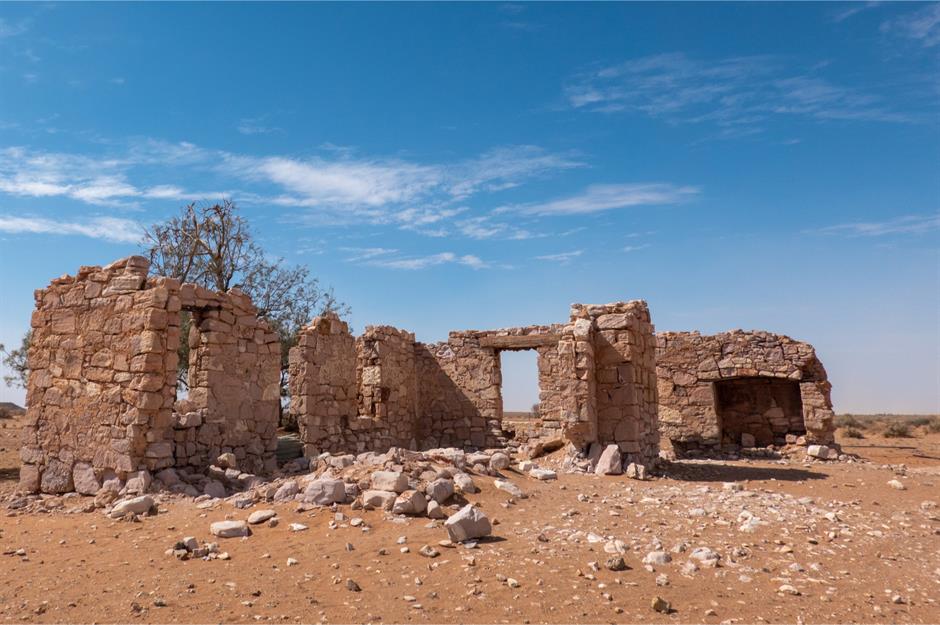
The old stock route that was established between Marree in South Australia and Birdsville in Queensland in the 1880s is scattered with poignant ruins that recall a distant past.
These include the sun-baked remnants of the old Lake Harry Homestead, just to the north of Marree. It was a date palm plantation and camel trading station that failed to prosper in the harsh terrain.
Sacred Heart Church, Leonora, Western Australia
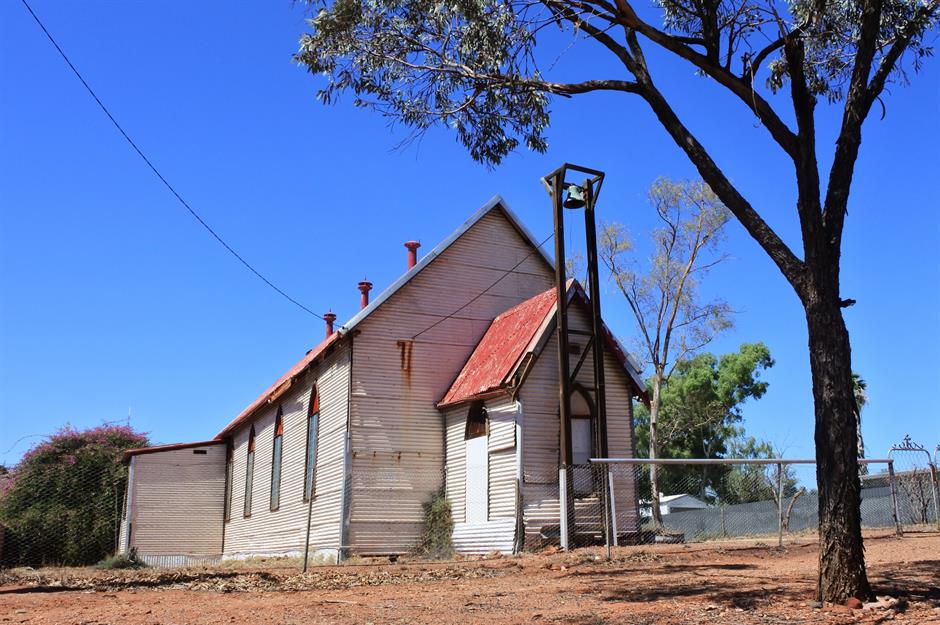
An old mining town just north of Kalgoorlie, Leonora was born in 1896 with its early gold prospectors first living in settlements made of hessian and timber shacks. It was formally gazetted on 21 August, 1900, and a steam tramway linked it with the now-ghost town, Gwalia.
The sleepy town is full of fascinating relics of the past, including the Catholic Sacred Heart Church, established in 1901. Built of corrugated iron and timber, the historic site has no resident priest and is fenced off today.
Sponsored Content
Old Dubbo Gaol, Dubbo, New South Wales
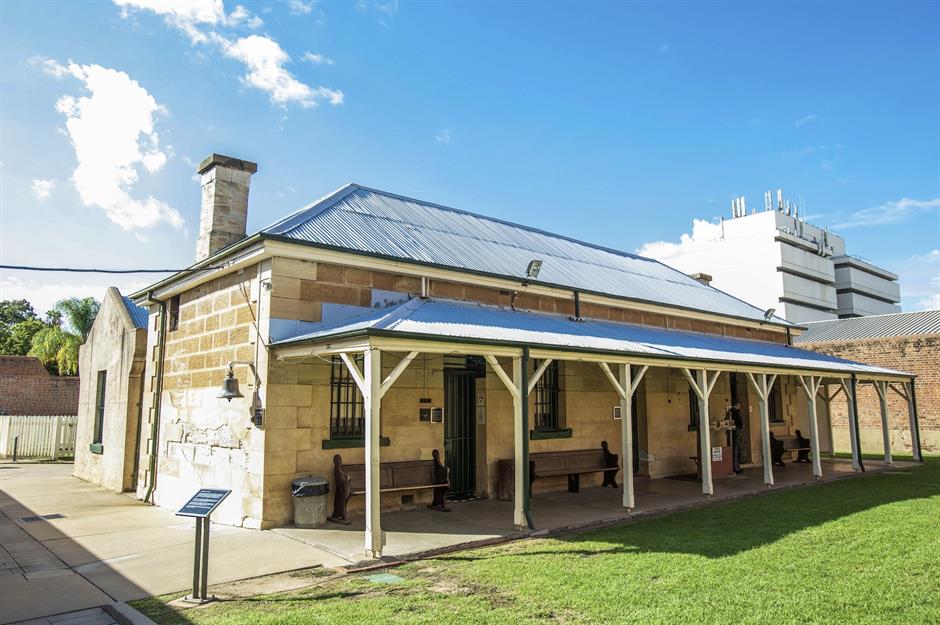
Life was brutal for those unfortunate enough to be incarcerated here. Originally a courthouse lockup in 1847, Old Dubbo had evolved into a notorious country gaol by 1859 as the burgeoning town experienced more crimes fuelled by hunger and poverty.
The gaol closed in 1966 and sat derelict until it was restored and opened as a historic site in 1974. Sign up for an after-dark Beyond the Grave tour – run once a month – to explore by torchlight as you’re regaled with spine-tingling tales.
Pensioner Guard Cottages, Lake Coogee, Western Australia
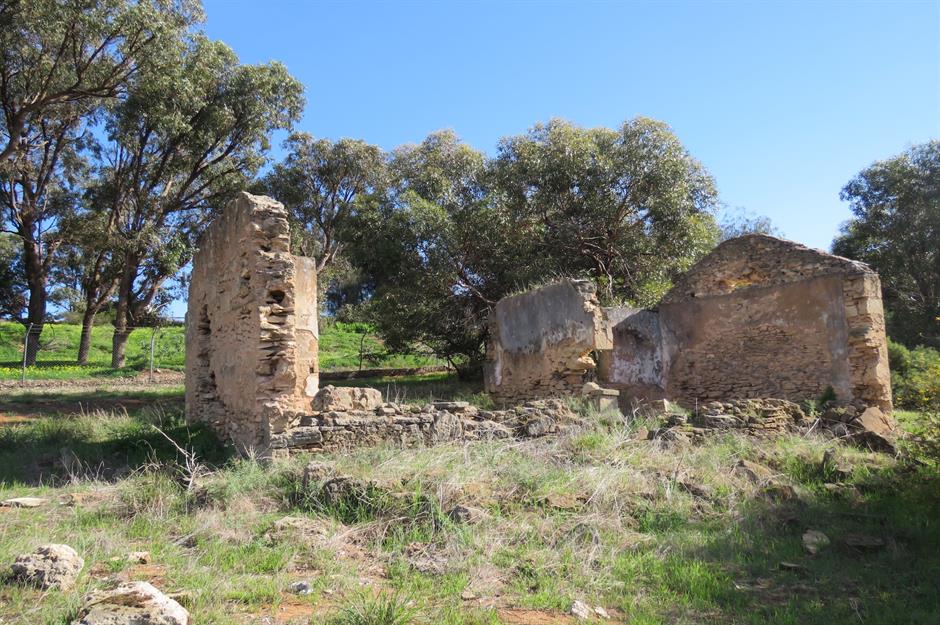
Lying on the shores of Lake Coogee near Perth are the remains of two stone cottages built as part of a settlement for old military pensioners in 1876.
The land was given as payment to soldiers who travelled from Britain to Western Australia as guards on convict ships, and found continuing employment guarding the convicts on land.
The Robe Gaol Ruins, Robe, South Australia
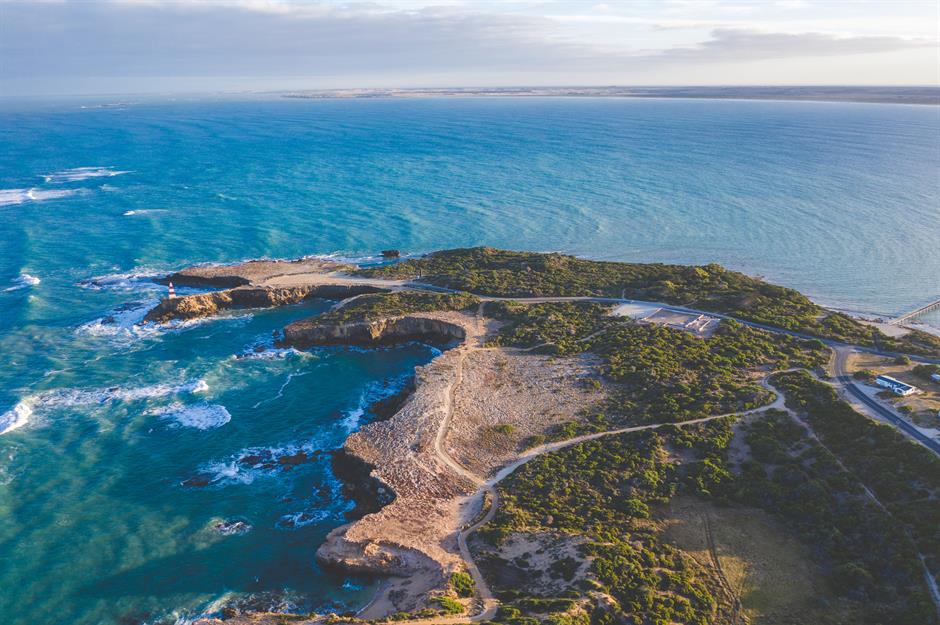
An atmospheric abandoned structure lies along Obelisk Road towards Robe's best-known landmark, the Cape Dombey Obelisk. Opened in 1861, the port's isolated jail featured a large stone building with four holding cells and a keeper's residence.
Due to several escapees and a later lack of prisoners to justify keeping it open, it closed in 1881 and was left to battle the elements. Much of the jail was demolished in the 1940s and used as road rubble. In the 1990s, the historic site was partially restored.
Sponsored Content
Mungo Woolshed, Mungo National Park, New South Wales
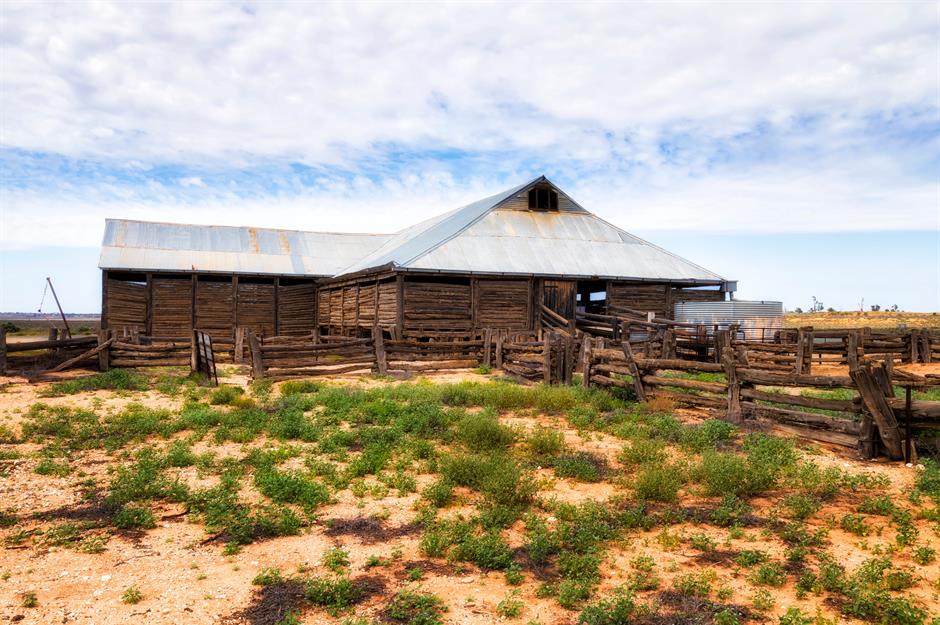
Learn about the pastoral heritage of this remote region of southwestern New South Wales in Mungo National Park. An old woolshed, built in 1869 as part of the historic Gol Gol pastoral station, can be easily explored.
It was made from local long cypress pine trees and would have had capacity for 18 men to hand shear over 50,000 sheep. The park also contains the intriguing remains of the long-abandoned Zanci Homestead.
Glow Worm Tunnel, Wollemi National Park, New South Wales
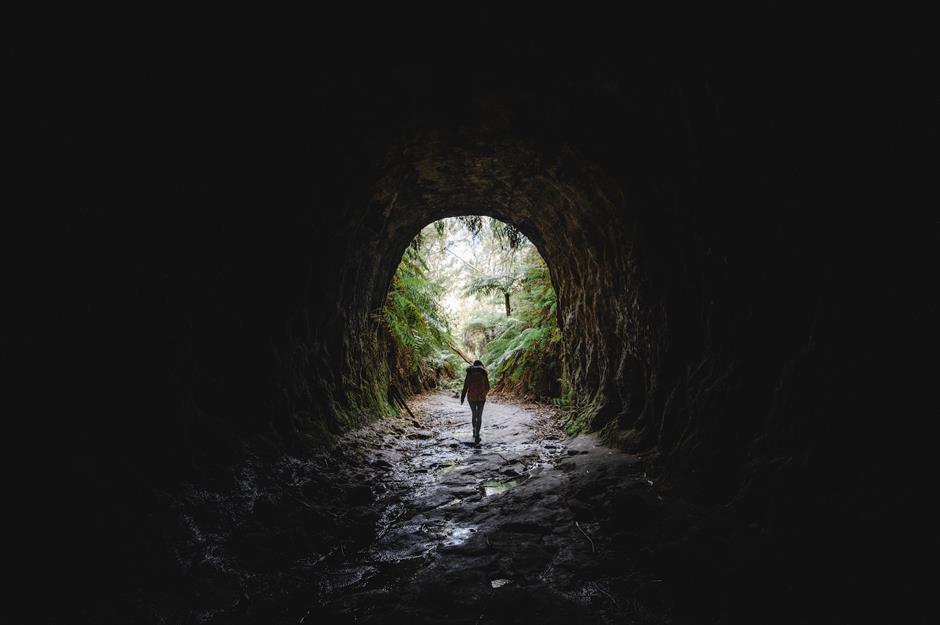
An old mining railway tunnel constructed as part of the Newnes Kerosene Shale Works now lures in head light-clad hikers, keen to see the glow worms that live in its murky depths.
The line, which connected the works at Newnes with the nearest main railway to Sydney, was dismantled around the 1940s and is now a key site for the larvae of the fungus gnat. Near Lithgow, the tunnel can be accessed on foot from the Newnes Plateau or from Wolgan Valley.
Stony Creek Trestle Bridge, East Gippsland, Victoria
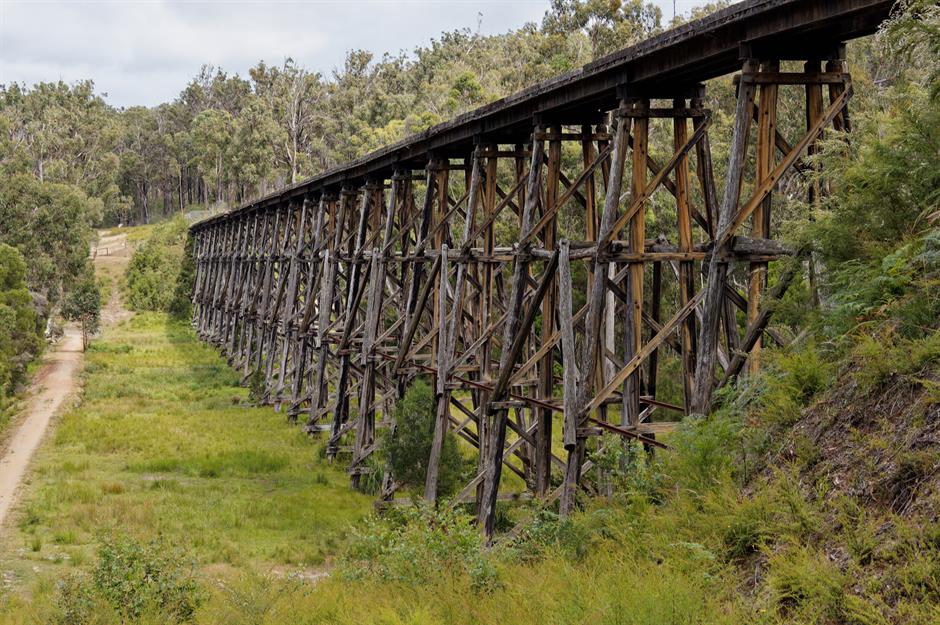
This creaky old railway bridge was built in 1916 from red ironbark and grey-box timber. Its construction was a gruelling project on tough terrain – part of an extension of the rail line between Bairnsdale to Orbost.
Now heritage listed, it's the largest standing bridge of its kind in the state. It was used for over 60 years, but after being damaged by a bushfire in 1980 and subsequently falling into a poor condition, it saw its last train crossing in 1987.
Sponsored Content
Tangalooma Wrecks, Moreton Island, Queensland
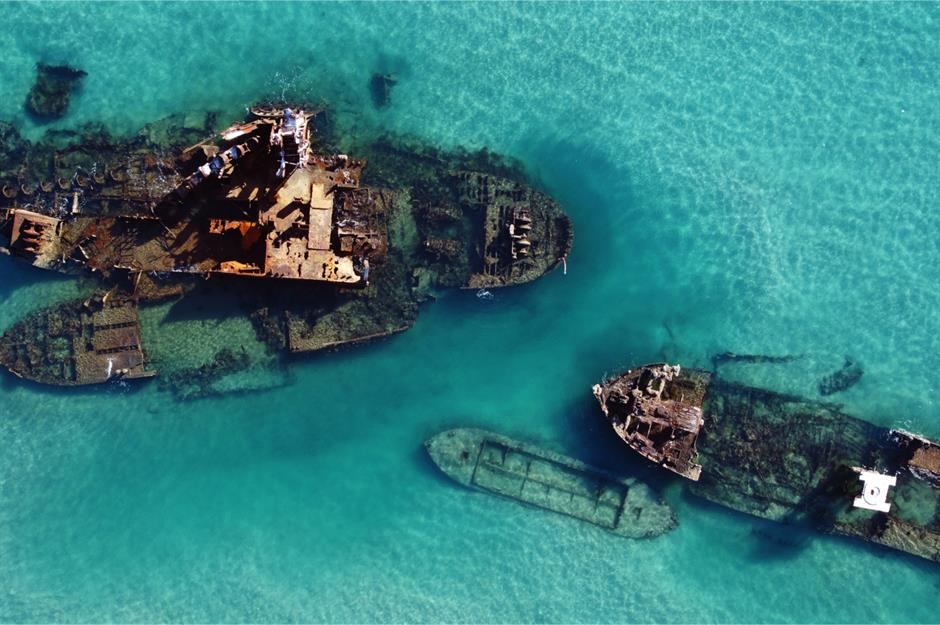
A group of scuttled ships lie just off Moreton Island, north of Tangalooma Island Resort. Known as the Tangalooma Wrecks, the decommissioned vessels were sunk by the Queensland government between 1963 and 1984 to create a safe anchorage spot for boat owners.
Their water-logged carcasses now make for a popular dive and snorkelling site and are alive with assorted reef fish and coral formations, while drawing other marine life including dolphins, wobbegongs and dugongs.
Ravenswood, Queensland
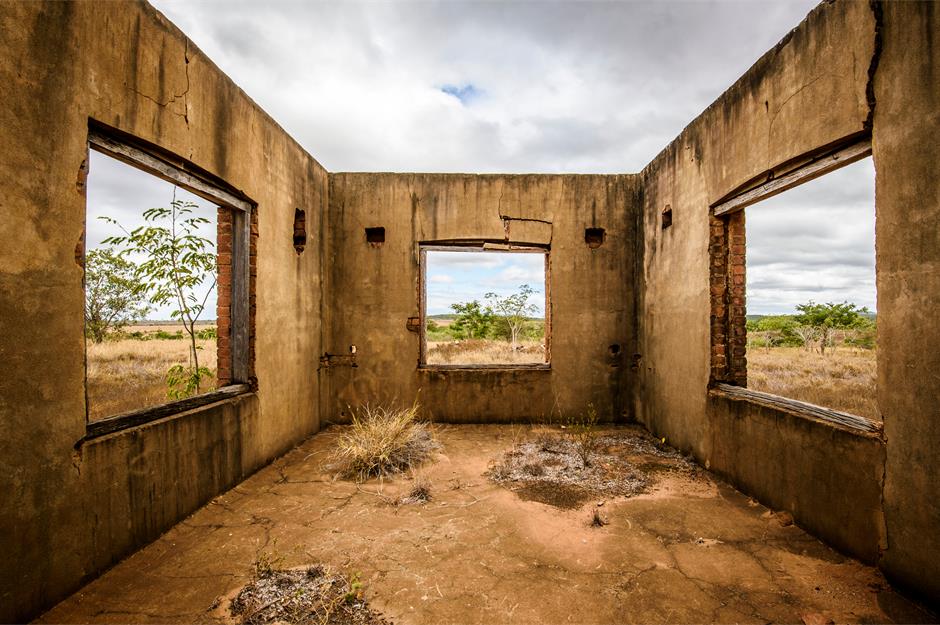
Snug in the rolling hills of Townsville's hinterland lies what remains of a gold mining town. Ravenswood was first settled in the 1860s and mushroomed into a bustling town when gold was discovered in 1868 – it had a population of over 5,000 and 50 pubs at its peak.
Today it's home to a tiny population and is classified by the National Trust. Visitors can see mullock heaps, tall chimneys, crushing mills and discarded machinery, along with the ruins of old miners' homes, well-preserved heritage pubs and a courthouse-turned-museum.
Steiglitz, Victoria
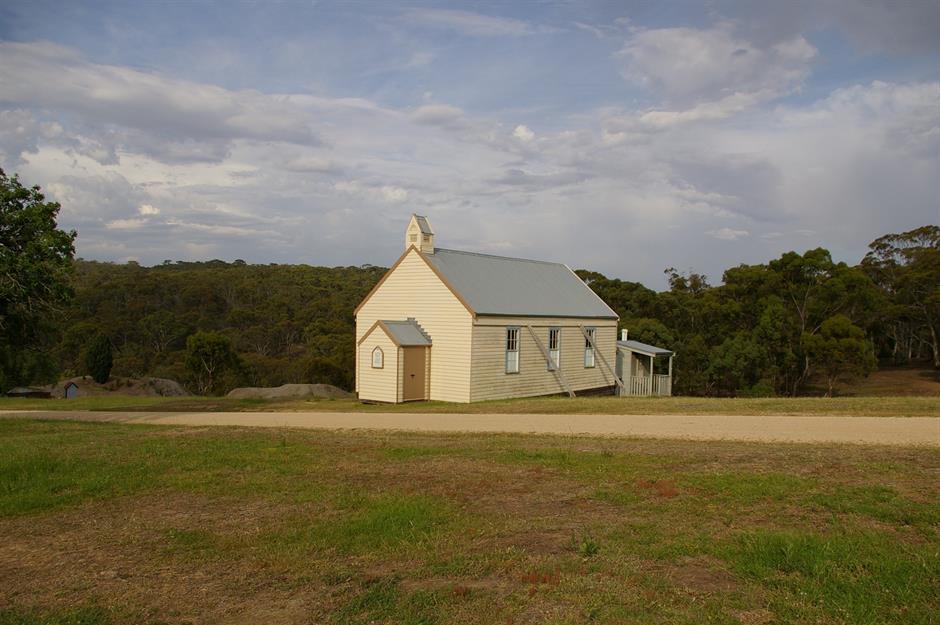
A lonely weatherboard church and old blacksmith cottage are among a handful of interesting buildings in Steiglitz Historic Park, a once-prosperous gold mining town between Geelong and Ballarat.
It’s hard to imagine that this township, now part of Brisbane Ranges National Park and the domain of wallabies, kangaroos, cockatoos and koalas, had over 1,500 residents, along with four hotels and its own newspaper in the 1860s. Take the four-hour circuit trail to see large mullock heaps and remnants of the New Chum Mine, along with great views of the site.
Sponsored Content
Port Stephens keepers cottage, Port Stephens, New South Wales
This remote, wind-torn wreck is all that remains of the old sandstone keeper’s cottage on Fingal Island (or Shark Island) near Port Stephens. A lighthouse was first built at the end of this sand spit in 1862, to warn off ships along a treacherous stretch of the coast known for its wild storms and tragic shipwrecks.
The ruins are now heritage listed and can be a good spot for watching whales migrate along the coast.
Convict Barracks, Stanley, Tasmania
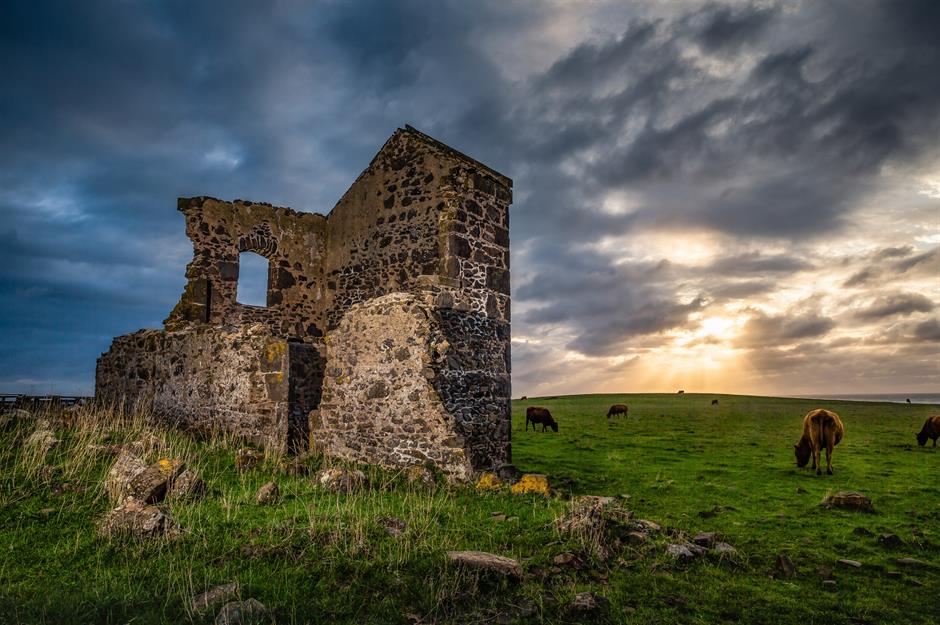
The weathered ruins of the convict barracks near Highfield, just outside the little port town of Stanley, ooze romance with soaring views over Tasmania’s rugged northwest coast. But they belie a darker time.
They housed a group of convicts assigned to construct Highfield, the first HQ of the Van Diemen’s Land Company and the first European occupation in this part of the island. The grand Regency-era house at the centre of the Highfield Historic Site, which was built in 1826 by the convicts, remains in excellent condition.